This site is supported by our readers. We may earn a commission, at no cost to you, if you purchase through links.

A bored snake tells you fast. It paces the glass, pushes at the lid, refuses to settle. Nine times out of ten, the fix isn’t food or heat. It’s height.
Arboreal species climb because their bodies expect it, and a flat tank floor cuts off a instinct they can’t switch off. Good climbing branches for terrariums give them that vertical world back: basking spots up near the lamp, cover down low, a path between the two.
Some branches grip well but rot in humidity. Others hold their shape but scratch soft bellies raw. Below, six picks that solve those problems, plus what to check before you buy.
Table Of Contents
Key Takeaways
- If your snake keeps pacing and pushing at the lid, it’s usually asking for more height, not more food or heat.
- Pick branches with rough, natural grain like grapevine, spider wood, or manzanita, since good grip keeps your snake secure while climbing.
- Always avoid cedar, pine, walnut, and other treated or exotic woods, as their oils and tannins can irritate your snake’s skin and airway.
- Anchor branches firmly, match their diameter to your snake’s size, and keep moisture below 12% to prevent mold and rot.
Top 6 Climbing Branches for Terrariums
Your snake needs the right branches to climb, rest, and feel at home. Not every branch on the shelf gets the job done, though, so picking well matters. Here are six options worth your attention, each suited to different setups and needs.
Once you’ve sorted out the climbing setup, don’t overlook hydration—choosing the right water bowl for balancing humidity and safety matters just as much for keeping your snake healthy and comfortable.
Whether you’ve got an arboreal species that lives for height or a ground-dweller that just likes an occasional perch, this guide to safe climbing branches for snake habitats breaks down which shapes and textures actually suit your pet.
1. Zoo Med Sandblasted Grapevine Branch
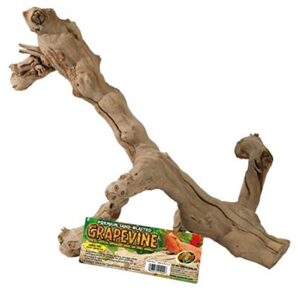
Grapevine wood has a wild, twisted shape that gives any terrarium a natural look right out of the box. Zoo Med’s sandblasted process strips away loose splinters and rough edges while keeping the bark’s texture intact, so your snake gets secure grip without snag risk.
Lengths run from 30 to 40 inches, wide enough for basking under UVB or heat lamps. Just know each piece is unique. Shape, size, and sturdiness vary, so inspect before you buy.
| Best For | Reptile and bird owners looking for a natural-looking climbing branch and basking platform for terrariums, aviaries, or cages. |
|---|---|
| Material | Natural grapevine wood |
| Climbing Support | Yes |
| Size | 30-40 inches |
| Reptile Suitability | Reptiles, birds |
| Habitat Type | Terrarium/aviary |
| Shape Variation | Natural irregular |
| Additional Features |
|
- Sandblasted finish removes loose splinters and rough edges for a smooth, snag-free surface
- Doubles as a basking spot near UVB or heat lamps, plus a climbing structure for enrichment
- Natural grapevine wood gives every terrarium a wild, authentic look
- Shape, size, and sturdiness vary since each piece is natural wood
- Some branches may arrive broken or fragile and need repair
- Actual dimensions or appearance may not always match photos
2. Flukers Bend A Branch Terrarium Vine
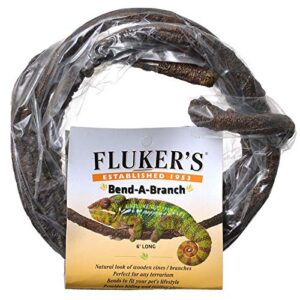
If grapevine’s rugged look isn’t your style, Fluker’s Bend A Branch offers a tidier option. This vine bends to fit tight corners or odd enclosure shapes, holding its curve once you set it.
It comes in three diameters, 1/8 inch to 5/8 inch, so you can match it to snakes, geckos, or tree frogs of different sizes. The surface grips claws well without scratching skin, and the color won’t bleed or fade in humid setups.
| Best For | This vine is best for reptile and amphibian keepers who want a durable, easy-to-shape climbing branch for arboreal pets like corn snakes, geckos, and tree frogs. |
|---|---|
| Material | Rice paper |
| Climbing Support | Yes |
| Size | 6 feet |
| Reptile Suitability | Reptiles, amphibians |
| Habitat Type | Terrarium |
| Shape Variation | Bendable |
| Additional Features |
|
- Bends and holds its shape, making it easy to fit into odd corners or custom enclosure layouts
- Resists rotting and mold better than natural wood or vine decor
- Natural green color gives a realistic, terrarium-friendly look
- Not rated for large or heavy animals, so it isn’t truly load-bearing
- Can fray or tear if scratched or bitten by pets with claws
- Color may fade over time with prolonged UV or heat exposure
3. Exo Terra Forest Branch Small Natural Wood
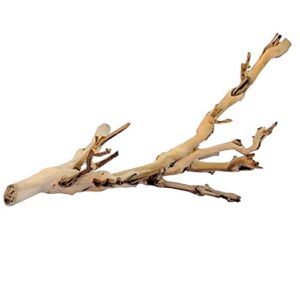
Once you’ve got the bends worked out, small setups need something slimmer and more natural looking. Exo Terra’s Forest Branch fits that gap, with a slender profile built for dense, jungle-style canopies.
The bark texture holds humidity well, which matters if you’re running a rainforest tank between 40-60%. It won’t overpower a small enclosure the way thicker branches can, and it blends right into a planted setup without looking bulky or out of place.
| Best For | small reptiles and amphibians, juvenile pets, or hamster owners looking for a single, natural-looking climbing branch for compact terrariums. |
|---|---|
| Material | Heat-treated wood |
| Climbing Support | Yes |
| Size | 10x6x5 inches |
| Reptile Suitability | Reptiles, amphibians |
| Habitat Type | Terrarium |
| Shape Variation | Fixed branch |
| Additional Features |
|
- Made from real heat-treated wood for a natural branch look and feel
- Sturdy enough for climbing and basking, and versatile for both rainforest and desert setups
- Compact size fits well in small enclosures without overwhelming the space
- Runs smaller than it appears in product photos, according to several reviewers
- Single branch design, not the multi-branched look some images suggest
- Not ideal for larger arboreal reptiles that need more extensive climbing room
4. Zoo Med Spider Wood 8-12 Inches Natural
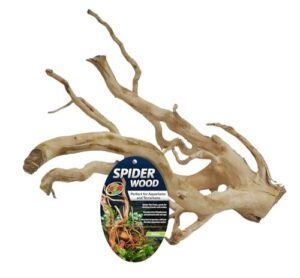
If your tank calls for something with more character, spider wood brings a look no cut branch can match. Its twisted limbs create natural climbing forks with real grip.
At 8-12 inches, it fits small to mid enclosures easily. The low tannin content keeps water clear, and the rough bark gives claws something to hold onto, wet or dry.
Pair it with proper lighting to really make the enclosure feel natural, since reptile UVB lights for corn snake setups help regulate day-night cycles and support healthy shedding.
Just anchor it well since pieces vary in shape.
| Best For | Reptile and amphibian keepers who want a natural climbing feature for small to medium terrariums, paludariums, or planted aquariums. |
|---|---|
| Material | Natural wood |
| Climbing Support | Yes |
| Size | 8-12 inches |
| Reptile Suitability | Reptiles, amphibians |
| Habitat Type | Paludarium/terrarium |
| Shape Variation | Natural irregular |
| Additional Features |
|
- Branching shape offers great climbing and hiding spots for pets
- Low tannin content helps keep aquarium water clear
- Works well in both wet and dry setups, including bioactive tanks
- May float at first and need soaking or boiling to sink properly
- Can still release some tannins early on, just less than Mopani wood
- Size and shape vary, so pieces may come smaller or rougher than expected
5. Extra Long All Glass Terrarium
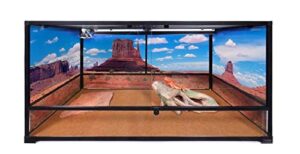
Sometimes the branch matters less than the box it sits in. A 48 to 60 inch glass terrarium gives you room to build real horizontal paths, not just a stick propped in a corner.
Tempered glass panels resist impact and stay clear for years, so you can actually watch your snake use the space. Adjustable ventilation ports help balance humidity, and a removable top panel makes cleaning or adding misting gear simple.
| Best For | Reptile and amphibian keepers who want a spacious, secure, easy-to-monitor glass habitat for pets like snakes that need room to roam. |
|---|---|
| Material | Glass/steel |
| Climbing Support | N/A |
| Size | 48x24x24 inches |
| Reptile Suitability | Reptiles, amphibians |
| Habitat Type | Terrarium enclosure |
| Shape Variation | Fixed enclosure |
| Additional Features |
|
- Deep waterproof base and sliding lock doors keep setups secure and mess-contained
- Tempered glass resists scratches and staining, so visibility stays clear over time
- Full steel mesh top and removable backgrounds make ventilation and customization easy
- At 73 pounds, it’s heavy and can be tricky to move or assemble alone
- Glass surfaces may need specific cleaning products to avoid streaks or damage
- Large 48 x 24 x 24 inch footprint requires a good amount of dedicated space
6. Exo Terra Jungle Vine Large Multi
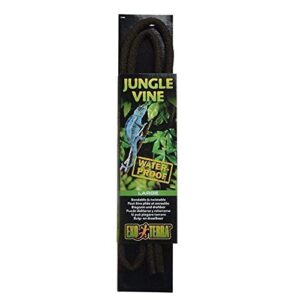
Twist it, bend it, wrap it around anything you like. The Jungle Vine Large Multi stretches up to six feet and stays waterproof, so humidity won’t wear it down.
Its lifelike texture blends into jungle-style setups, and you can combine multiple vines to build 3D pathways across the enclosure. Clean it with mild soap and water, no special tools needed.
For geckos, chameleons, frogs, and snakes alike, it’s a flexible, low-maintenance way to add real climbing structure.
| Best For | Reptile and amphibian keepers who want a customizable, waterproof climbing structure for arboreal species like geckos, chameleons, frogs, and snakes. |
|---|---|
| Material | Plastic |
| Climbing Support | Yes |
| Size | 6 feet |
| Reptile Suitability | Reptiles, amphibians |
| Habitat Type | Terrarium |
| Shape Variation | Bendable/twistable |
| Additional Features |
|
- Bendable and twistable design lets you shape it however your enclosure needs
- Waterproof build holds up well in humid terrarium conditions
- Lifelike texture and multiple vines combine to create naturalistic 3D habitats
- Surface coating can flake or shed bits with frequent bending
- Rough, rigid ends aren’t capped, which may need extra care around delicate animals
- Requires regular cleaning since waste and debris tend to stick to it
How We Evaluated Terrarium Climbing Branches
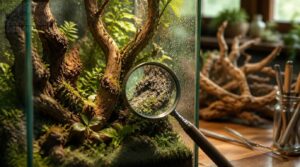
Picking the right branch takes more than a quick look at the shape. You need to check the material, the texture, and how well it holds up over time. Here’s what we looked at before ranking our top picks.
Material Safety and Toxicity
A branch that looks great but leaches toxins isn’t worth the risk to your snake. We start every review by ruling out cedar and pine, since their oils irritate lungs and immune systems.
From there, we favor non-toxic hardwoods like oak and maple, plus reptile-safe synthetic and plastic vines that skip coatings altogether. Every pick gets heat-treated before it earns a spot on your list.
Grip Texture and Diameter
Grip is everything for a climbing snake. Rough bark, like sandblasted grapevine, boosts climbing efficiency by 62% over smooth wood.
Diameter matters too:
- Under 1 inch for slender species
- 1.5 to 3 inches for boas
- Match width to your snake’s coil
Smooth manzanita needs sanding first. Natural grain beats synthetic texture for genuine grip.
Cork bark offers long-term durability in desert enclosures due to its impervious nature to gases and liquids. Cork bark qualities provide sustainable and resilient options for terrarium setups.
Anchoring and Weight Support
A branch that snaps mid-climb can hurt your snake, so anchor types matter as much as looks.
Match load capacity to weight and size of your animal:
| Anchor Type | Load Capacity |
|---|---|
| Suction cups | 3 lbs/cup |
| Screws + plates | 40 lbs |
| Grafted anchors | 25 lbs |
| Concrete mounts | 50 lbs |
| Epoxy resin | Full strength in 72 hrs |
Reinforced joints and V-shaped orientation cut point load by 40%, giving secure mounting you can trust.
Moisture and Mold Resistance
Mold loves damp wood, so moisture control makes or breaks your setup. Keep branches under 12% moisture content to resist mold growth.
Good ventilation and airflow control pull humidity away from bark surfaces. Dry branches within 24 to 48 hours after cleaning, and consider breathable sealants for extra protection against water uptake.
Flexibility and Habitat Fit
Once your branches resist mold, check how they move and fit your space. Good ones show branch curvature adaptation, bending slightly for tight corners without snapping.
Pick a diameter range matching your snake’s size, from slim tips to thicker bases. Confirm humidity compatibility and layout versatility too, since a flexible branch fits more terrarium shapes while keeping that natural, lived-in look.
Natural Versus Synthetic Climbing Branches
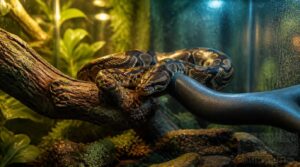
Not every branch belongs in your snake’s enclosure, and the material matters as much as the shape. Natural wood and synthetic options each bring their own strengths, but some choices can put your snake’s health at risk. Here’s what you need to know before picking your branch material.
Snake-safe Hardwood Choices
When picking real wood for your setup, stick with proven safe climbing branches like mopani, spider wood, and manzanita. These options are toxin-free, low in tannins, and won’t leach chemicals into substrate or water.
- Mopani wood
- Spider wood
- Manzanita
- Cork bark
- Jungle vines
Rough grain adds grip. Each holds up to 20 pounds, handling most snakesafe enclosures without sagging.
Toxic Woods to Avoid
Not every branch belongs in your tank. Cedar and pine give off oils that irritate a snake’s airway. Walnut and exotic hardwoods like rosewood carry tannins that stain skin and trigger reactions. Spalted wood hides fungus. Formaldehyde plywood offgasses toxins.
Even the branches you choose for climbing and hiding matter—check out these corn snake enrichment and habitat ideas to pick decorations that support natural behaviors without putting your snake at risk.
| Wood | Risk |
|---|---|
| Cedar/Pine | Airway irritation |
| Walnut | Skin, eye contact |
| Exotic hardwoods | Tannin reactions |
| Plywood | Formaldehyde fumes |
Resin and Coated Branches
Skip risky woods and look at resin coated branches instead. A cured resin seal blocks moisture, resists mold, and holds color under bright UV lighting for years.
Grip matters too: textured or grit finished coatings beat smooth ones for climbing hold. Look for food grade coatings free of VOCs, some even use suction cups for tricky mounting angles.
Plastic and Wire-core Vines
Flexible reptile vines made from PVC or polyethylene give you an easy, low-maintenance option for terrarium climbing decor.
- Green, brown, or variegated colors for a natural look
- Bendable wire cores hold custom shapes and angles
- Smooth coatings that won’t snag scales or shed skin
- Quick cleaning plastic vines with just soap and water
Combine artificial jungle vines with real branches for the best of both worlds.
Best Materials for Humidity
When humidity climbs past 60%, wood choice makes or breaks your setup. Cypress and boxwood resist fungal decay without warping, while alder wood absorbs moisture evenly for better grip. Pecan and mango hold shape in damp enclosures too.
For humidity-regulating moss vines, tropical terrarium moss adds natural color and moisture retention, keeping branches mold-free and looking authentic.
Matching Branches to Your Snake
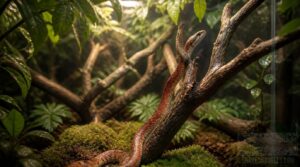
Not every branch works for every snake, so fit matters as much as material. Your snake’s size, habits, and enclosure space all decide what climbing setup actually works. Here’s what to check before you pick a branch.
Arboreal Snake Climbing Behavior
Watch a snake climb and you’ll see a careful negotiator, not a daredevil. It pauses, tests grip, and adjusts posture before committing weight forward. Rough bark gets chosen over smooth surfaces almost every time, since texture preference means safer holds.
A climbing snake is a careful negotiator, testing every grip before trusting its weight to rough bark over smooth
Snakes also track warmth, favoring sunlit routes, and use three-dimensional pathways to explore climbing branches from multiple angles.
Branch Diameter by Snake Size
Grab a branch that’s too skinny, and your snake grips like it’s clutching a pencil. Small snake branch fit means 1.5 to 2.5 cm diameters.
Medium snake grip needs broader wood, while large snake diameter calls for 3 to 6 cm branches.
Mix varying widths for secure climbing stability and easy transitions.
Vertical and Horizontal Pathways
Think of your enclosure as a road map, not just a box. Vertical pathways stack branches upward, giving snakes height-based thermoregulation as warmer air collects near the top.
Horizontal pathways connect branches at the same level, letting snakes patrol without dropping down. Combine both for a circuit that mimics natural travel, and anchor every joint securely so nothing wobbles mid-climb.
Enclosure Dimensions and Clearance
A cramped enclosure turns climbing gear into clutter fast. Keep 18 inches of vertical clearance above branches, plus 8 inches side clearance and 6 inches depth behind glass.
- 12-inch minimum ceiling gap above branches
- 8 inches clearance per side
- 4-inch entry gaps at clusters
- 1.5-inch mounting hardware clearance
- 6-inch depth behind front glass
Match branch diameter to your snake’s size, and always leave room to explore.
Thermoregulation Across Climbing Levels
Once clearance is set, heat becomes the next puzzle. Snakes climb a thermal ladder, seeking 32-34 C near the top and 24-26 C lower down. Branch surface temps should stay between 28-32 C, checked with an infrared thermometer. Thicker branch diameter holds heat longer, so climbing pace slows as your snake settles into its comfort zone.
Installing and Maintaining Climbing Branches
Picking the right branch is only half the job. You still need to set it up correctly and keep it that way over time. Here’s what to cover, from anchoring to daily upkeep.
Secure Anchoring Methods
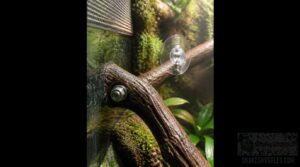
Since a branch only works if it stays put, anchoring matters as much as picking the wood. Use stainless steel anchors with pilot holes drilled first, then secure with proper bolt torque, 8 to 12 Nm.
- Apply silicone sealant around bolt heads
- Check weekly anchor inspection points
- Try suction cups for tank walls
- Maintain enclosure ventilation strategies nearby
Safe Heat Source Placement
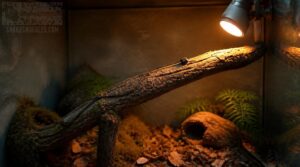
Anchoring keeps a branch steady, but placement near heat sources decides whether your snake stays safe. Keep 8-12 inches of clearance between heat emitters and any branch surface, and never let climbing paths lead closer to the bulb than the intended basking spot.
Set your thermostat probe right at the hotspot, secured so it can’t shift, and check surface temps often to confirm safe thermal gradients.
Preparing Natural Branches
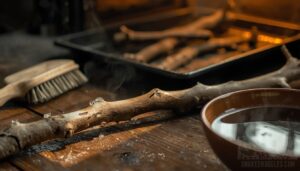
Get temperature right and turn to the branch itself. Scrub natural hardwood like oak or grapevine with a vegetable brush, then rinse under cool water. Strip bark where your snake will grip, since bark traps mold.
Bake at 200°F for two hours to kill parasites, then dry fully for 24 hours. Check for cracks before use.
Routine Cleaning and Inspection
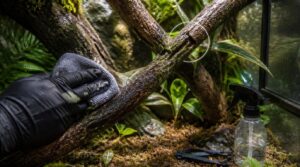
Once a branch goes in, treat it like any other part of the tank. Wipe it down weekly with a damp cloth and reptile safe cleanser to clear saliva and dust.
Monthly, check joints and tighten loose ties. Inspect for cracks at contact points and replace damaged branches immediately. Dry fully after cleaning. Log each check.
Preventing Rot and Mold
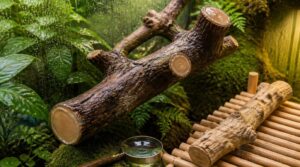
Mold thrives on damp wood, so branch drying procedures matter as much as the branch itself. Air dry natural wood 48 hours before use, seal cuts with a plant safe sealant, and keep humidity in the snake’s comfort range.
| Step | Action | Why |
|---|---|---|
| 1 | Air dry 48 hrs | Removes moisture |
| 2 | Seal exposed grain | Blocks absorption |
| 3 | Weekly mold check | Catches early rot |
Frequently Asked Questions (FAQs)
How often should climbing branches be replaced?
Inspect monthly for cracks, looseness, or bend from snake weight. Natural hardwood lasts 6-12 months in high humidity before rot sets in. Replace resin coatings once they peel, and watch for mold buildup immediately.
Can multiple snake species share the same branch?
Yes, if weight capacity and space allow it. Choose non overlapping species with different feeding habits and grip styles, sturdy diameter matching both sizes, escape routes, and separate basking zones to avoid territorial clashes.
Do climbing branches need to be quarantined first?
Like a new plant needing time to adjust before joining the garden, wild-collected wood needs the same care. Quarantine natural wood for 1 to 4 weeks, inspect for pests, then heat-treat at 200°F before adding safe materials to your terrarium.
Whats the average cost of quality climbing branches?
Basic branches run 6 to 14 dollars.
Mid-range picks like Flukers BendABranch or Zoo Med Sandblasted Grapevine cost 8 to 18 dollars.
Premium options like Galapagos Spider Wood or Exo Terra Forest Branch hit 15 to 30 dollars, with bulk bundles saving money long-term.
Can climbing branches be used with other reptiles?
Funny enough, the same branch holding your snake works for a bearded dragon too. Reptile-safe materials support gecko climbing suitability, chameleon vertical space needs, and lizard habitat compatibility, offering solid habitat enrichment across species and care needs.
Conclusion
Give your snake height today, and you’ll notice the change within days: more exploring, less pacing, calmer basking.
The right climbing branches for terrariums turn a flat box into a world your snake actually wants to live in. Check grip, check moisture resistance, then anchor it firm and walk away. That’s the whole job. Your snake will handle the rest, one confident coil at a time.