This site is supported by our readers. We may earn a commission, at no cost to you, if you purchase through links.

Most impaction cases in captive snakes trace back to one culprit: loose substrate swallowed during feeding strikes. Calcium sand and fine particles cling to prey, riding straight into the gut with every meal. Keepers who switch to substrate liners often expect that risk to vanish.
It mostly does. But "mostly" is doing heavy lifting there.
Degraded reptile carpet sheds fibers, torn paper liners expand into obstructive pulp, and poorly fitted liners create hidden ingestion points. Whether substrate liners cause impaction in snakes depends less on the category and far more on material condition, enclosure setup, and feeding habits.
Table Of Contents
- Key Takeaways
- Substrate Liners Rarely Cause Snake Impaction
- Which Liner Materials Pose Risks?
- Choosing a Safe Snake Liner
- Prevent Substrate Ingestion During Feeding
- Match Substrate to Your Snake
- Support Digestion Through Proper Husbandry
- Respond to Possible Snake Impaction
- Frequently Asked Questions (FAQs)
- How to help a snake with impaction?
- What happens if my snake eats substrate?
- How to tell if your snake has a blockage?
- Can a snake get constipated?
- Can impaction symptoms mimic other digestive conditions?
- Does enclosure size affect a snakes impaction risk?
- How does age influence a snakes digestion efficiency?
- Can feeding frequency increase a snakes blockage likelihood?
- Do substrate liners affect shedding success in snakes?
- Conclusion
Key Takeaways
- Substrate liners are far safer than loose materials like calcium sand, but frayed carpet, torn paper, and poorly fitted liners can still shed fragments your snake may swallow during a feeding strike.
- Fragment size, liner condition, humidity levels, and warm-side temperatures above 85°F all work together to determine how quickly a liner breaks down and how serious the ingestion risk becomes.
- You can cut feeding-time risk significantly by using a ceramic dish, laying plain paper under prey, and watching each strike closely — because what touches the prey before the strike matters just as much as what lines the floor.
- If your snake shows firm abdominal swelling, skips meals without an obvious cause, or goes more than two weeks without passing stool, skip home remedies and call a reptile vet right away.
Substrate Liners Rarely Cause Snake Impaction
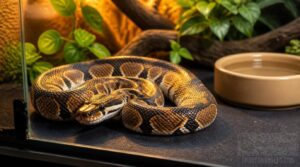
Substrate liners are one of the safer flooring choices you can make for your snake, but they’re not entirely without risk.
Still, choosing wisely matters — a breakdown of corn snake substrate options compared shows how carpet liners stack up against alternatives when it comes to safety and daily comfort.
Understanding how impaction actually starts makes it easier to spot what’s worth worrying about and what isn’t.
Here’s what you need to know about how blockages develop, how liners compare to loose substrate, what happens if a fragment gets swallowed, and which conditions tip the odds against your snake.
How Impaction Develops
Impaction forms when material accumulates inside your snake’s digestive tract faster than its body can move it out.
The primary cause is prey contamination. Loose substrate particles stick to the prey item through particle adhesion, and strike ingestion carries them directly into the gut. Digestive delay then gives that swallowed material more time to compact and form a serious blockage. In severe cases, impacted fecaliths in snakes can only be confirmed and treated through radiographic diagnosis or surgical intervention.
Liners Versus Loose Substrate
Liners remove the main risk entirely. No loose particles means nothing clings to prey during a strike, so substrate ingestion can’t occur the way it does on loose sand.
Calcium sand and fine particles cling to prey during feeding, delivering indigestible material straight into the gut. Liners wipe clean in seconds; loose substrate needs replacement every one to three months.
Swallowed Liner Fragments
That said, liners aren’t entirely risk-free. A degraded substrate liner can shed fragments during feeding strikes, especially reptile carpet and paper liners. Fragments under 2mm pass the esophagus easily but lodge further in the digestive tract.
Long, thin strips pose a bigger concern since they can wrap around intestinal walls. Ball pythons are especially prone to mouthing unfamiliar liner surfaces.
Factors Increasing Blockage Risk
Fragment size matters, but it’s rarely the whole story. Liner material degradation, high ambient humidity, and warm-side temperatures above 85°F can all accelerate how quickly liners break down and shed particles.
A softened vinyl liner under a basking lamp becomes more pliable during feeding strikes, meaning your snake contacts a stickier, less stable surface exactly when substrate ingestion risk peaks.
Which Liner Materials Pose Risks?
Not all liner materials are created equal, and some carry risks worth knowing before you set up your enclosure. A few common choices can cause real problems if they’re damaged, poorly fitted, or made with questionable additives. Here’s what to watch for.
Frayed Reptile Carpet
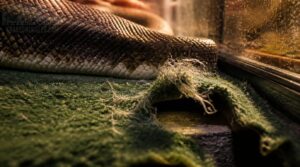
Reptile carpet looks clean until it doesn’t. Once frayed, loose fiber ingestion becomes a real concern, with torn pieces hooking onto scales or getting swallowed during feeding strikes. Heat and humidity accelerate breakdown, and mold growth can appear in frayed areas within 48 hours of moisture exposure. Inspect your liner weekly and replace it at the first sign of wear.
Torn Paper Liners
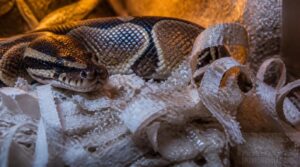
Paper may look harmless, but torn paper liners can expand inside the digestive tract once wet. Moisture absorption is the main problem: paper towels soak up to ten times their weight in liquid, turning into dense pulp that blocks passage.
Multi-ply sheets also separate into loose layers when torn. Strips run 1-2 inches, small enough for most snakes to swallow.
Adhesive Shelf Liners
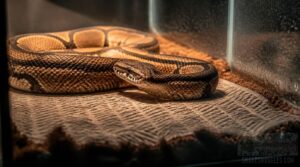
When you slide an adhesive shelf liner into a warm enclosure, vinyl off-gassing starts almost immediately. Basking lights heat the surface past 120°F, and phthalates volatilize directly into your snake’s breathing space.
That’s a respiratory risk before any ingestion even happens. Once the adhesive fully cures, removal becomes quite difficult and often leaves sticky residue your snake can contact directly.
Dyed or Scented Materials
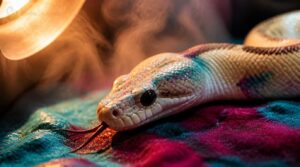
Dyes and fragrances in liner materials aren’t just cosmetic concerns. Chemical dyes can transfer directly to your snake’s scales during normal movement, and some contain heavy metals that slowly accumulate in tissue when accidentally ingested.
Scented liners are worse, as fragrance chemicals persist for months and may reach toxic concentrations near warm basking zones. Always choose fragrance-free, undyed liner materials.
Poorly Fitted Liners
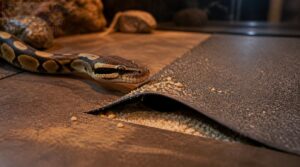
Fit matters more than material. A gap as narrow as 1/8 inch lets small snakes reach substrate underneath, making substrate ingestion a real risk. Watch for these common installation failures:
- Unanchored corners that collect loose substrate
- Rough liner edges after cutting
- Liner shifting during feeding strikes
- Gaps between liner and the enclosure frame
- Lifting or curling adhesive liner at edges
Choosing a Safe Snake Liner
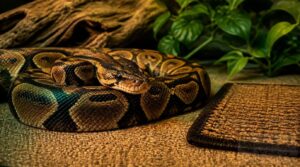
Picking the right liner comes down to a handful of practical factors that work together to keep your snake safe. Each one grips a specific risk — from material toxicity to surface grip — so nothing slips through the cracks. Here’s what to look for before you buy or replace a liner.
Nontoxic Material Options
The safest liner materials share one quality: no chemical treatments. Coconut fiber holds moisture without mold and passes safely if accidentally ingested.
Paper towels are sterile and digestible. Hamiledyi reptile carpet contains no VOCs and washes clean in a machine. Artificial moss from polypropylene is UV-stabilized and non-abrasive. Coconut husk mats resist fungal growth naturally, with no dyes or fragrances.
Correct Enclosure Fit
A liner that doesn’t fit causes problems. Cut it to the exact interior dimensions of your enclosure, leaving no excess your snake can lift or bunch. Seal liner edges with reptile-safe silicone, and check frame gaps every 30 days.
Door fit matters too. For burrowing species, lay at least 4 inches of substrate over the liner to keep it anchored.
Safe Surface Traction
Once the liner fits correctly, surface traction is the next priority. Slick surfaces push snakes to overextend during movement and feeding strikes, raising ingestion risk from off-target contact with the substrate.
Three materials offer reliable grip without impaction risk:
- Reptile carpet with raised, anti-slip texture
- HDPE liners with a naturally rough surface
- Textured vinyl with diamond-plate grip patterns
Inspecting for Damage
Even a correctly fitted liner poses impaction risk once surface damage appears. Run your hand across it monthly.
| Damage Sign | What to Check |
|---|---|
| Cracks or punctures | High-traffic zones, feeding areas |
| Frayed edges | Seams and corners |
| Mold or discoloration | Under hides, damp zones |
Any rough spot or lifted edge is an ingestion hazard. Catch it before your snake does.
Liner Replacement Timing
Spotting damage matters, but don’t wait for problems to appear. A solid replacement schedule prevents impaction risk before it starts.
Replace most substrate liners every 3-4 months, regardless of how they look. After shedding cycles, swap immediately, as shed residue weakens material integrity quickly. High-humidity enclosures and active snakes accelerate wear, sometimes doubling the degradation rate, so adjust your timeline accordingly.
Prevent Substrate Ingestion During Feeding
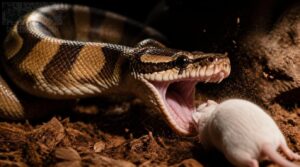
Feeding time carries more risk than most snake owners realize — and the substrate underneath matters more than the prey itself. A few straightforward habits can cut your snake’s chances of swallowing anything it shouldn’t during a strike. Here’s what to keep in mind before every feeding session.
Use Feeding Dishes
A feeding dish removes the main ingestion risk entirely. No loose particles means no blockage risk.
- Place on the cool side of the enclosure
- Use heavy ceramic or thick plastic
- Choose dishes 1.5 to 2 times your snake’s girth
- Clean with reptile-safe disinfectant after each use
- Position in the same spot every feeding
One simple swap protects your snake’s gut.
Keep Prey Debris-Free
What lands on your prey before your snake strikes matters just as much as what lines the enclosure. Substrate particles cling to prey during strikes, especially with loose bedding.
Laying plain paper or butcher paper beneath the prey creates a debris-free feeding surface with no chemical risk. Replace it after every session and check the cleared area for fragments.
Monitor Feeding Strikes
Watch each feeding strike as carefully as the snake watches its prey. Three cues tell you the session stayed safe:
- Pre-strike posture – lateral curves mean the strike is coming.
- Strike accuracy – feeding tongs or a feeding plate keep prey off the substrate liner.
- Post-strike jaw movement – rhythmic chewing confirms clean ingestion, not impaction risk.
Remove Damaged Liner Pieces
A torn liner is a hazard waiting to happen. The moment you spot frayed edges or delamination, remove your snake to a secure holding container before touching anything else.
Cut along the damaged seam with sharp scissors, then pull from the corners outward. Wear cut-resistant gloves throughout. Dispose of torn pieces immediately, then clean and fully dry the enclosure before installing a properly fitted replacement.
Avoid Calcium Sand
Calcium sand is one of the worst substrates you can use near feeding time. It clings to prey, swallows easily during strikes, and once inside your snake’s gut, absorbs moisture and hardens like cement. Surgical removal often becomes the only option.
Coconut fiber, aspen shavings, or a reptile carpet liner are all safer choices that eliminate this risk entirely.
Match Substrate to Your Snake
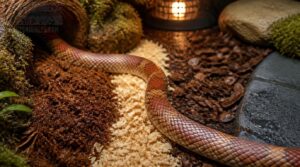
Not every snake thrives on the same floor. Your choice of substrate should reflect your snake’s natural behaviors, climate needs, and how it actually uses its space. Here’s what to think about for each type.
Burrowing Species Needs
Burrowing snakes aren’t built for liners. Species like sand boas and hognose snakes need loose, compactable substrate to dig tunnels deep enough to hide and thermoregulate. Shallow bedding forces them to scrape the floor, cutting off that natural behavior entirely.
Aim for 4–6 inches of coconut fiber or aspen, kept slightly moist so tunnels hold shape without turning muddy.
Surface-Dwelling Snake Needs
Unlike burrowing snakes, surface-dwelling species like corn snakes are where substrate liners genuinely shine. They actively patrol the enclosure floor and need stable footing to execute clean feeding strikes.
- Mount basking platforms 6–12 inches below the heat source
- Maintain surface humidity at 65–75%
- Prioritize horizontal surface area over enclosure depth
- Secure the liner flat for confident, injury-free strikes
Tropical Species Humidity
Tropical snakes like green tree pythons need 60–80% humidity consistently. Liners alone can’t hold moisture, so they cause faster humidity swings without supplemental control.
Coconut fiber or cypress mulch retain water naturally, acting as a reliable buffer between misting sessions. Set up a humidity gradient with a damp hide on the cool side, and place your hygrometer at animal level.
Arid Species Conditions
Where tropical setups push moisture high, arid species like hognose and sand boas need the opposite. Desert humidity balance sits between 20-30%, with a basking spot at 86-90°F and a cool end near 71°F. Place your water bowl on the cool side to limit evaporation. Drop temps 5-8°C at night. Skipping this strains your snake’s digestive tract.
Loose Substrate Alternatives
When liners don’t meet your snake’s needs, loose substrate alternatives fill the gap. Coconut fiber holds humidity well while staying digestible if accidentally swallowed. Aspen shavings work cleanly in drier setups without raising impaction risk.
For feeding safety, swap in paper towels during meal times. Ceramic tile and reptile carpet both clean up fast, cutting bacterial growth between regular uses.
Support Digestion Through Proper Husbandry
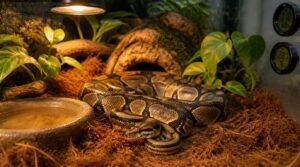
Substrate choice matters, but it’s only one piece of the digestion puzzle. What happens inside the enclosure — temperature, hydration, cleanliness — determines whether your snake processes food safely or struggles with it. These five husbandry habits give your snake’s digestive system the best chance to do its job.
Maintain Warm-Side Temperatures
Warm-side temperature controls digestion speed. When it drops, your snake’s gut stalls and impaction risk rises.
- Heat mat placement: position under the warm hide, covering one-third of the floor
- Thermostat calibration: stay within 2°F of your target
- Surface vs air temps: probe at substrate level
- Nighttime temperature drop: above 75°F for corn snakes
- Temperature monitoring: digital probe plus infrared gun
Provide Reliable Hydration
Hydration helps your snake’s digestive tract directly. Place a nonporous water bowl on the cool side, away from heat zones that speed evaporation. Check for dry or chalky urates, which signal your snake isn’t drinking enough. Consistent drinking means your setup is on track.
| Behavior | What It Means |
|---|---|
| Drinks readily | Setup working |
| Dry urates | Needs water |
| Avoids bowl | Check husbandry |
Control Enclosure Humidity
Humidity quietly drives digestion. A proper humidity gradient setup gives your snake drier and moister zones, reducing impaction risk. Position your hygrometer at both ends for accurate seasonal tracking.
Misting schedule control matters just as much. Winter drops ambient moisture, so increase misting by 25%. Because a substrate liner lacks natural moisture trapping, ventilation adjustment becomes your primary humidity tool.
Clean Waste Promptly
Waste left in the enclosure is a bacterial incubator. Remove feces and urate within a day or two of appearance, using a plastic scraper or gloved hand to lift waste without dragging it across the liner.
Daily spot cleaning keeps odor low, prevents bacterial colonization, and reduces mite pressure. Store your reptile cleaning tools separately from household supplies to avoid cross-contamination.
Prevent Dust and Mold
Mold doesn’t announce itself until it’s already a real problem. Keep the enclosure below 60% humidity, dry wet spots within 48 hours, and fix any moisture source quickly.
- Wipe surfaces with unscented detergent and water weekly
- Replace damp substrate before spores establish
- Ventilate the room when outside air is dry
- Avoid dusty substrates; particles under 50 microns irritate nasal passages
Respond to Possible Snake Impaction
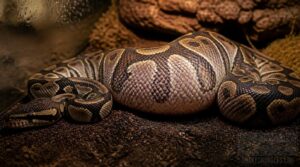
Knowing what to look for can make all the difference when your snake’s health is on the line. Impaction signs aren’t always obvious at first, but a few specific red flags tend to show up before things get serious. Here’s what to watch for and when to act.
Reduced Appetite
A snake that stops eating isn’t automatically impacted, but appetite loss paired with other symptoms should put you on alert. Snakes commonly refuse food during shedding cycles, after environmental changes, or when temperatures drop below 75°F. Parasites and oversized prey can suppress feeding too.
If no obvious cause exists and the fast extends beyond two weeks, gut blockage deserves serious consideration.
Abdominal Swelling
Appetite loss can precede a more visible clue: abdominal swelling along the mid-body. Whether from substrate impaction or a swallowed liner fragment, gut blockage creates a firm, solid bulge, distinct from the soft shift of ascites.
Scales may look stretched or separated. If you notice swelling exceeding 10% of normal diameter or lasting beyond seven days, contact a reptile veterinarian.
Difficult or Missing Stool
Swelling often confirms what stool tracking reveals first. A healthy snake defecates three to seven days after feeding.
Missing or straining bowel movements beyond two weeks signal gut blockage. Dehydration reduces intestinal motility by up to 70%, hardening stool and crystallizing urates into rock-like concretions that block the cloaca entirely. Track your snake’s elimination schedule like a log.
Avoid Home Remedies
Once you spot those warning signs, the instinct to act fast makes sense. But skip home treatments entirely. Mineral oil, warm soaks, and herbal remedies have all failed to resolve impaction in documented cases, and some cause internal injury. Avoid lubricants unless a vet directs you specifically. Attempting disimpaction at home can turn a partial blockage into a complete one.
Home remedies for snake impaction don’t just fail — they can turn a partial blockage into a complete one
Contact a Reptile Veterinarian
Call a reptile vet without delay. Use the ARAV find-a-vet tool to locate a qualified specialist near you, and confirm they treat snakes before booking your visit.
Bring these to your appointment:
- Past medical records and treatment history
- Notes on appetite or behavior changes
- Your current feeding practices
- Substrate type and husbandry details
- Photos of any swelling or stool
Frequently Asked Questions (FAQs)
How to help a snake with impaction?
Start with a warm water soak at 80 to 85°F for 15 to 20 minutes. Correct enclosure temperatures, offer fresh water access, and handle your snake gently. Stop feeding and contact a reptile vet promptly.
What happens if my snake eats substrate?
When your snake swallows bedding, the material travels into the digestive tract and may not pass. Larger pieces, dehydration, and repeated substrate ingestion all increase the risk of a blockage serious enough to require veterinary care.
How to tell if your snake has a blockage?
A gut blockage shows up in layers. Abdominal swelling that feels firm, reduced appetite, missing stool for 7-14 days, lethargy hiding, and pain posturing all signal a problem needing immediate veterinary attention.
Can a snake get constipated?
Darwin’s tree of life placed snakes firmly in the vertebrate column, meaning their digestive tract follows the same rules as yours. When gut motility slows from low temperatures or inadequate hydration levels, waste passage fails.
Can impaction symptoms mimic other digestive conditions?
Yes, impaction symptoms closely mimic constipation, gastrointestinal obstruction, and general illness. Lethargy, swelling, and appetite loss appear across multiple conditions, which is why a reptile vet diagnosis always matters.
Does enclosure size affect a snakes impaction risk?
Like a fish in a tiny bowl, a snake in an undersized enclosure can’t move or feed naturally. Enclosure size directly raises cramped posture risk, increasing the chance of accidental substrate ingestion and gut impaction.
How does age influence a snakes digestion efficiency?
Juvenile metabolic rates run hot, meaning younger snakes process meals faster.
Digestive transit time slows with age as enzyme activity peaks mid-life, then gradually declines, though nutrient absorption efficiency stays strong when prey is sized right.
Can feeding frequency increase a snakes blockage likelihood?
Yes, overloading your snake’s gut is like jamming a drain. Large, infrequent meals slow transit and raise blockage risk. Smaller, frequent portions keep digestion moving and stool passage consistent.
Do substrate liners affect shedding success in snakes?
Substrate liners do affect shedding success. Shedding surface traction and enclosure moisture balance both depend on your liner choice. A slippery or dry liner risks retained shed, while a clean, well-fitted liner helps smooth ecdysis.
Conclusion
Choose the right liner, fit it correctly, and replace it before it frays, and you’ve already solved most of the problem.
Whether substrate liners can cause impaction in snakes depends far less on the liner category and far more on its condition and your daily care routine. Frayed carpet and torn paper carry real risk. Keep surfaces intact, monitor every feeding strike, and act quickly if your snake’s digestion stalls.
Preparation beats intervention every time.
- https://peqaboo.com/knowledge/en/guides/substrate-choices-for-reptiles-and-the-impaction-risk
- https://www.thebiodude.com/blogs/reptile-and-amphibian-husbandry-basics/does-substrates-cause-impaction-in-reptiles
- https://www.birdexoticsvet.com/post/loose-substrate-reptiles-amphibians
- https://reptifiles.com/does-loose-substrate-cause-impaction
- https://www.justanswer.com/pet-reptile/2tf4z-know-snake-impacted.html