This site is supported by our readers. We may earn a commission, at no cost to you, if you purchase through links.
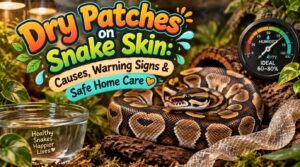
are not a cosmetic flaw. They’re a clinical signal, and I’ve seen owners ignore them until a tail tip turned black and had to be amputated.
A band of retained shed no wider than a rubber band can strangle circulation and kill tissue within days. A cloudy eye cap left behind after shedding can scar the cornea. Low humidity, mites, and a rough screen lid cause most cases, but a few point to septicemia or early respiratory disease.
Inspect before you act. Check the eyes, the tail tip, and the belly, then learn which findings you can treat at home and which demand a veterinarian today.
Table Of Contents
- Key Takeaways
- Dry Patches on Snake Skin: What to Check
- Common Causes of Dry Snake Skin
- Snake Skin Warning Signs Requiring Veterinary Care
- Safe Home Care for Dry Snake Skin
- Veterinary Treatment for Persistent Snake Skin Problems
- Preventing Dry Patches Through Healthy Snake Husbandry
- Frequently Asked Questions (FAQs)
- How to rehydrate dried snake skin?
- What causes dry spots on my snake plant?
- Why does my snake have dry skin?
- How to get rid of dry snake skin legs?
- Can dry patches on snakes spread to other areas?
- How often should I check my snakes skin?
- Does handling my snake too much dry its skin?
- Are dry patches contagious to other snakes?
- Can pet-safe moisturizers be used on snake skin?
- Conclusion
Key Takeaways
- Dry patches are a clinical signal, not a cosmetic flaw, because retained shed on the tail tip or a retained eye cap can cut off circulation or scar the cornea within days.
- Low humidity is the most common cause, but mites, irritating substrate, rough lids, and hot surfaces can also damage your snake’s skin, so check your hygrometer and enclosure first.
- Never peel retained eye caps or use moisturizers; offer a humid hide or a warm soak instead, and match humidity to your snake’s species.
- Call an exotic vet today if you see purplish belly spots, a constricting band, black tissue, eye caps that survive two sheds, or skin changes alongside lethargy or refusing food.
Dry Patches on Snake Skin: What to Check
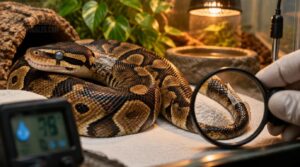
The Dry Patches on your snake aren’t cosmetic: they’re a clinical signal. Inspect before you act.
If dry, flaky patches linger after a shed, check humidity and temperature first, then compare what you see against this guide to common snake health problems to watch for.
Start with the eyes. Cloudy, dull spectacles after shedding mean retained caps. Check the tail tip next: a band of old skin there can strangle circulation and cause necrosis. Then examine the head and vent, where skin sticks last.
Now audit the enclosure. Confirm humidity with a digital hygrometer (usually 50-80% for many species), verify your temperature gradient, and make sure the substrate is clean and dry.
Watch the animal. Orange urates, wrinkled skin, lethargy, or constant rubbing demand attention. Spreading discoloration, blisters, or ulcerated scales point to scale rot. Don’t wait. Complete a husbandry evaluation today, and call a vet if signs worsen.
Common Causes of Dry Snake Skin
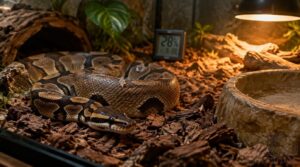
Dry patches on your snake never appear without a reason: something in the enclosure or in the animal’s health is failing. Three causes account for most cases, and each one demands a different fix. Work through them in order, because missing the real cause lets the damage keep spreading.
Low Humidity and Stuck Shed
The most common cause of Dry Patches is Low Humidity: when ambient moisture drops below 50%, old skin dries before it separates, and Stuck Shed follows. Retained Skin clings to joints, tail tips, and eye spectacles.
Don’t ignore it. Untreated Shedding Complications can constrict the tail and kill tissue. Check your hygrometer today, and raise humidity immediately, before it worsens.
Mites and Skin Infections
Humidity isn’t the only culprit: check for mites. Look for black or red specks around the eyes, jaw folds, and vent, plus mite debris in your water bowl. This ectoparasitic infestation raises scales and causes crusty, scabby patches.
If your snake keeps soaking in its bowl, it’s worth learning how gentle, hardy species like the Children’s python, a docile snake breed, handle humidity and routine health checks.
Scratched skin invites bacterial dermatitis, and untreated infectious dermatitis spreads fast. Isolate the snake, upgrade enclosure hygiene, and call your vet today.
Irritation and Skin Injuries
Mites aren’t the only trigger: your enclosure itself can injure skin. Check for these:
- Substrate irritation from cedar, pine, or gravel
- Sharp decor or rough screen lids
- Heat rocks and hot surfaces
Skin lesions and dry patches often follow burns or abrasions. Fix the setup, tighten enclosure hygiene, keep humidity regulation steady, and book a vet visit for open wounds.
Snake Skin Warning Signs Requiring Veterinary Care
Some skin changes aren’t dry patches at all: small purplish red spots on your snake’s belly can signal septicemia, a bacterial blood infection, so don’t wait to call your exotic vet. Other red flags look less dramatic but still demand a professional exam. Call your vet if you see any of these:
- Retained eye caps that survive two consecutive sheds: they can damage the cornea (never pick at them).
- Persistent crustiness or thickening of the skin, especially with an elevated head posture or open-mouth breathing: respiratory disease may be developing.
- Anorexia and lethargy alongside any skin change: your snake is telling you the problem is systemic.
Don’t gamble on home remedies here. Skin trouble often signals concurrent illness: mites, infection, or organ disease can hide behind one visible symptom. Delay lets bacteria spread and turns a treatable problem into a crisis. Book the appointment today, and photograph the affected skin beforehand.
Safe Home Care for Dry Snake Skin
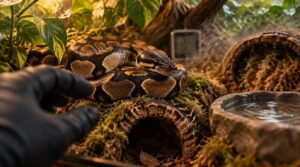
Dry patches on your snake’s skin demand fast, careful action at home: the wrong move can turn a minor problem into a serious one.
Below, you’ll find three home care steps that cover humidity, hydration, and stuck shed. Follow them exactly, and know where your limits are (some mistakes can cost your snake its eyesight).
Species-Specific Humidity and Hydration
Wrong humidity damages skin fast: know your species’ range before you troubleshoot anything else.
Ball pythons need 60-80% enclosure humidity; Kenyan sand boas need 30-40%. Choose substrate for moisture retention: cypress mulch for tropical species, aspen for desert ones. Place a digital hygrometer probe at snake level. Good husbandry means checking it daily, because hydration support depends on accurate readings.
Humid Hides for Stuck Shed
Your ball python’s last shed left Retained Skin on its tail, and now its eyes are milky. Offer a Humid Hide now: it’s safe Shedding Assistance.
- Line it with damp moss, never dripping.
- Place it between warm and cool sides.
- Size it so your snake turns comfortably.
- Check daily: Humidity Management prevents mold.
- Match Enclosure Humidity to species; dry afterward.
Why Not to Peel Retained Eyecaps
Looks loose, so why not just peel?
Dry patches on snake skin, particularly in relation to retained eyecaps (spectacles), are most directly tied to shedding dysfunction, often due to environmental and husbandry factors.
| Choice | Effect | Outcome |
|---|---|---|
| Peel | Tear | Blindness |
| Soak | Soften | Release |
| Wait | Shed | Clear |
Why Not to Peel Retained Eyecaps comes down to proper humidity and avoiding manual intervention.
Veterinary Treatment for Persistent Snake Skin Problems
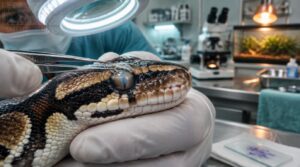
Home care has limits, and ignoring them costs your snake its eyesight or its life. When dry patches persist after proper humidity and soaking, stop experimenting: book specialized veterinary care immediately.
Your vet starts with a magnified eye exam, checking spectacle integrity and the subspectacular space. Expect skin tenting checks for dehydration and a close look at the nostrils and infraorbital pits for retained skin. Then comes diagnostics and treatment:
- Veterinary cytology and microbial culture identify infection and the right drug.
- Topical medication, plus systemic antibiotics for severe cases, treats infection and inflammation.
- Artificial tears soften retained spectacles for gentle removal with forceps.
Corneal damage changes everything: vets may perform spectaculectomy (partial spectacle resection) to protect the eye. Don’t wait.
Preventing Dry Patches Through Healthy Snake Husbandry
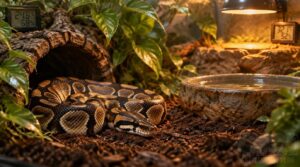
Dry patches rarely appear overnight: they’re the final symptom of weeks of small husbandry failures. Prevention is your job, and it starts with Humidity Management. Place a hygrometer at both the warm and cool ends, check it daily, and match readings to your species’ range (ball pythons need 50-60%, rising to 70% during shedding).
Dry patches on a snake never appear overnight; they are the final symptom of weeks of small husbandry failures
Fix Substrate Moisture at the source. Pre-moisten coconut coir, mix water through the entire layer, and never rely on surface spraying: wet-dry cycles stress the skin.
Practice strict Environmental Hygiene. Spot-clean immediately, replace all substrate every 4-8 weeks, and quarantine new animals.
Offer constant Hydration Support: fresh water, a bowl shallow enough to prevent drowning, positioned near a heat source.
These Husbandry tips prevent most skin disease. Skip them, and you’ll pay with stuck shed and infection.
Frequently Asked Questions (FAQs)
How to rehydrate dried snake skin?
Think of dry skin as a thirsty sponge: it needs slow, gentle moisture.
Offer a humid hide, practice steady humidity management, and watch soaking behavior. Don’t peel anything; shedding assistance means hydration support, not pulling.
What causes dry spots on my snake plant?
Think underwatering causes every dry spot? Wrong. Sunburn, cold drafts, mites, scale, salts, and overwatered roots cause dry patches too.
Inspect leaves now: fix suboptimal humidity, poor sanitation, and hydration support gaps; prioritize environmental hygiene.
Why does my snake have dry skin?
Picture a ball python shedding in a 40% humidity enclosure: the skin tears off in dry, patchy flakes. Dry skin usually means suboptimal humidity, dehydration, or mites. Fix your moisture control and environmental hygiene now.
How to get rid of dry snake skin legs?
Your ball python has no legs, so those dry patches sit along the body. Check humidity levels and hydration status, offer a moisturizing soak, and watch for abnormal shed. Don’t peel anything: call a vet.
Can dry patches on snakes spread to other areas?
Think they’ll stay put? They won’t. Dry patches can spread when skin shedding disorders or scale infection go untreated.
Fix environmental humidity, follow husbandry guidelines, and call your vet promptly if dry patches grow.
How often should I check my snakes skin?
Your snake’s skin is a weather report, so read it often. Check twice weekly for healthy adults, three to four times for juveniles. Tropical species need 2-3 checks. Go daily during pre-shed.
Does handling my snake too much dry its skin?
You’d think a snake’s worst enemy is your gentle hands, yet touch doesn’t dry skin. Excessive handling stresses it, especially mid-shed, when new skin is fragile. Check humidity levels and thermal regulation instead.
Are dry patches contagious to other snakes?
Dry skin isn’t contagious, yet your whole collection can still fall sick.
Mites spread fast between snakes, and Scale Rot thrives when Humidity and other Environmental Stressors hit shared enclosures.
Quarantine newcomers: enforce Biosecurity Measures.
Can pet-safe moisturizers be used on snake skin?
No. Moisturizer application on snakes risks absorption of additives through damaged skin. Fix your humidity levels and offer a warm water soak instead. Spotclean feces. Use a topical antibiotic only when your vet prescribes it.
Conclusion
A ball python owner blamed an eyecap on "bad luck" and waited two weeks. The cornea scarred, and the vision never fully returned.
Treat dry patches on snake skin as a symptom, never a cosmetic issue. Raise humidity, offer a humid hide, and leave retained eyecaps alone. If you see a constricting band, black tissue, or mucus, call your veterinarian today. Early action saves tissue and eyes. Your snake can’t tell you something is wrong.