This site is supported by our readers. We may earn a commission, at no cost to you, if you purchase through links.
You’re more likely to be bitten grabbing “one more stick for the campfire” than hiking through an open trail at noon. Most venomous snake bites in the U.S. happen when someone steps too close, reaches under a log, or tries to move a snake that wanted nothing to do with them.
The good news: with a bit of training, your eyes and brain can spot danger before your boots ever get near it. You’ll learn what head shape, pupil style, heat-sensing pits, rattles, and bold colors say about a snake’s venom—and when to back away and let it have the path.
By the time you’re done, knowing how to tell if a snake is venomous will feel less like a guessing game and more like a safety skill you can trust.
Table Of Contents
- Key Takeaways
- Key Physical Traits of Venomous Snakes
- Color Patterns and Markings to Watch For
- Behavioral Clues of Venomous Species
- Common Venomous Snakes in The U.S
- Safety Tips for Snake Encounters
- Frequently Asked Questions (FAQs)
- How do you identify if a snake is venomous or not?
- How to tell if a snake is poisonous by color rhyme?
- How do you know if a snake bite is venomous or not?
- How do you know if a snake is venomous?
- How to identify a venomous snake in the area?
- Do venomous snakes have round eyes?
- What is the difference between a venomous snake and a non- venomous snake?
- How can you tell if a snake is poisonous or not?
- How can weather affect snake activity levels?
- Do juvenile venomous snakes look different from adults?
- Conclusion
Key Takeaways
- Venomous snakes are best identified by a mix of traits—triangular head, vertical pupils, heat-sensing pits, rattles, and bold warning colors—rather than any single feature.
- Bright banded patterns, especially the coral snake “red touch yellow” pattern, and other high-contrast colors should always be treated as warning signs, though harmless mimics can look similar.
- Behavior and habitat matter: many venomous species freeze, coil, rattle, or gape as warnings and tend to favor specific environments like wetlands, rocky forests, or open grasslands.
- The safest approach is to keep at least several feet of distance from any unknown snake, wear protective clothing outdoors, and treat every bite as a medical emergency without using cutting, suction, or tourniquets.
Key Physical Traits of Venomous Snakes
When you spot a snake, a few quick details can tell you a lot about whether it’s dangerous. Certain physical traits—like head shape, eyes, and tail features—are reliable first clues.
For a deeper look at how these traits vary between species, this detailed snake identification guide with photos and bite facts breaks down common warning signs.
Here’s what to look for before you get too close.
Head Shape—Triangular Vs. Rounded
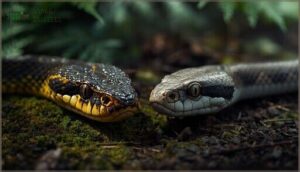
Head shape is one of the clearest Venomous Indicators, but it’s not a perfect test. Pit Vipers often have a thick, Triangular Head because large venom glands sit behind the eyes and widen the Head Structure and Jaw Alignment, while many harmless snakes keep slimmer Snake Skulls. Research shows that harmless snakes mimic vipers by flattening their heads into triangular shapes, which helps them deter predators despite being non-venomous.
- Picture a broad, spade-shaped Pit Viper head, much wider than the neck.
- Picture a smooth, rounded Head Shape that blends into the body on many harmless snakes.
- Picture a coral snake: slender, rounded head, dangerous venom, but no triangle at all.
Pupil Shape—Vertical Vs. Round
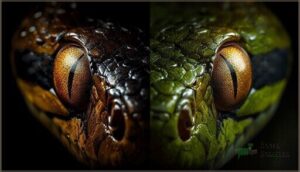
Next, check the pupil shape in that eye structure. Many venomous snakes, like pit vipers, show vertical slits for sharp snake vision in low light.
Round pupils appear in harmless snakes and even coral snakes, so don’t bet your safety on this alone for snake identification.
Vertical pupils hint at danger, but get too close and you’re in trouble already.
Presence of Pit Organs
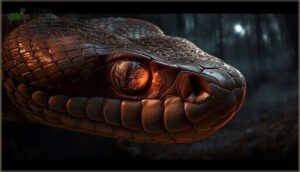
If you’re close enough to see pupil shape, you’re close enough to check for pit organs too. Look along the Snake Anatomy of the face: Pit Vipers carry a loreal pit, a tiny dark dimple between the eye and nostril.
That Pit Organ Function gives them Heat Detection and rough Thermal Imaging, which is why they’re so good at hunting warm‑blooded prey in the dark. These specialized infrared-sensing pits allow the snake to build a thermal image of nearby warm-blooded animals, giving pit vipers a major hunting advantage at night and in dense cover.
- For Venomous Identification in the U.S., clear pit organs between eye and nostril strongly point to a Pit Viper, like a rattlesnake or copperhead.
- Boas and pythons also have heat-sensing pits, but theirs sit as small openings along the lips instead of one big loreal pit.
- Because pits are small and easy to miss, never rely only on spotting them to decide a snake is safe; treat any unknown snake with respect and distance.
Rattles and Tail Features
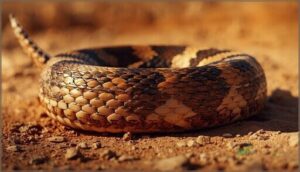
Once you’ve checked Pit organs up near the face, drop your eyes to the tail. True Rattlesnakes have blunt tips with stacked Rattle Segments of keratin that buzz into sharp Rattle Sounds from rapid Tail Vibrations.
For a closer look at how those keratin rings form and grow, check out this detailed guide on rattlesnake rattle formation and development.
That vertical Tail vibration and those chunky Snake Rattles, plus bold Tail Patterns near the tip, are classic Pit Vipers warning you away.
Color Patterns and Markings to Watch For
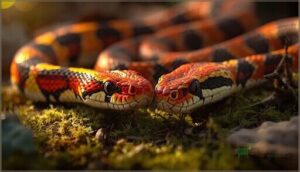
Regarding distinguishing dangerous snakes from harmless ones, their color patterns can say a lot. Bright bands or bold markings often mean “stay back,” but not always.
Here’s what to look for in their colors and markings before you make any assumptions.
Coral Snake Color Rhymes
You’ve probably heard the coralsnake rhyme for snake identification: “Red touch yellow, kill a fellow; red touch black, friend of Jack.” It flags dangerous Color Patterns on coral snakes in the southeastern U.S.
Red touch yellow, kill a fellow; red touch black, friend of Jack warns of dangerous coral snake patterns in the southeastern U.S
- Classic version warns of red bordering yellow bands.
- Rhyme Variations include “red on yellow, kill a fellow.”
- Regional Rhymes adapt locally but stress the same danger.
- Safety Messaging urges caution—don’t get close enough to check.
Use it wisely for venomous snake identification, but back away first.
Mimicry in Non-Venomous Snakes
Mimicry is one of nature’s clever tricks. Many nonvenomous snakes use Snake Impersonation as a Defensive Mimicry tactic—copying the patterns or head shapes of venomous species.
This Venomous Imitation, an Evolutionary Adaptation seen in milk snakes, kingsnakes, and hognose snakes, helps confuse predators and aids in safe snake identification through mimicry and aposematic coloring.
Aposematic (Warning) Coloration
Color Signals act like nature’s flashing signs, using Bright Markings and bold coloration and patterns to say, “Don’t touch.” Aposematic coloring creates strong Visual Cues and Warning Patterns, especially in coral snakes with clear red, yellow, and black bands. To identify a venomous snake, treat such patterns as serious, not decorative Camouflage Strategies—one of your most important venomous snake identification tips.
- Watch for bright red, yellow, and black banding on slim-bodied coral snakes.
- Notice sharp contrast—light against dark often means “back off.”
- When in doubt around bold patterns, assume danger and give the snake space.
Behavioral Clues of Venomous Species
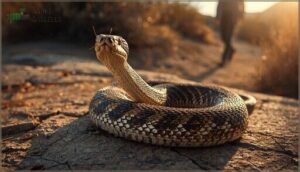
Beyond looks, how a snake acts can tell you a lot about whether it’s venomous. Some species give clear warnings before they strike, while others rely on stealth or specific habitats.
Here are a few behavior patterns worth knowing when you’re trying to judge what you’re seeing.
Defensive Postures and Warning Behaviors
Ever notice how a calm-looking snake can flip into a full warning show in seconds? That shift is your cue to back off. Many venomous snakes exhibit quiet Freezing Behavior at first, then a sudden Coiling Posture, Hooding Displays, or sharp Rattling Signals as Threat Displays. These defensive mechanisms are classic snake behavior in stressed animals trying not to bite if they can help it.
| Threat Display | What You Might See |
|---|---|
| Freezing Behavior | Snake stays still, tense body, hoping you pass by. |
| Coiling Posture | Tight S‑shape, head raised, ready to strike. |
| Hooding Displays | Neck and body flatten, snake looks wider, larger. |
| Rattling Signals | Tail vibrates or rattles, often with hissing. |
Habitat Preferences—Water, Forest, Grassland
Think of venomous snakes as specialists: each one “picks” a neighborhood. For Pit Vipers, Cottonmouths hug wetland ecosystems, water sources, and riparian areas, while Timber rattlesnakes and Copperhead snakes favor cool forest floors near rocky streams. Prairie rattlesnakes rule dry grassland zones.
To boost your wildlife safety and precautions, remember this quick snake habitat and behavior checklist:
- Water sources and wetland ecosystems often mean Cottonmouths and other Pit Vipers.
- Forest floors and rocky ridges can hide Timber rattlesnakes and Copperhead.
- Open grassland zones and prairie edges are classic Prairie rattlesnake country.
Activity Patterns—Day Vs. Night
Not all venomous snakes move at the same hours. Some, like coral snakes, show diurnal habits, basking in daylight. Pit vipers often switch to nocturnal behavior during summer heat, while copperheads favor crepuscular activity around dusk.
These seasonal shifts in animal behavior raise encounter risks, so understanding local snake habitat and behavior sharpens your wildlife safety and precautions.
Common Venomous Snakes in The U.S
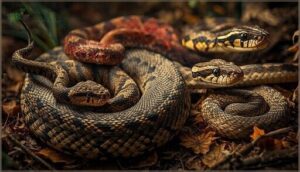
The United States is home to several well-known venomous snakes, each with its own look and habitat. Knowing which ones live in your region can make all the difference in spotting danger early. Here are the main types you should be familiar with.
Pit Vipers—Rattlesnakes, Copperheads, Cottonmouths
Among U.S. Pit Vipers, rattlesnakes, copperheads, and cottonmouths are the big three you really want to recognize. They all have that broad, triangle‑shaped head, heat‑sensing pits, and vertical pupils, but their lifestyles differ.
Rattlesnakes favor drier, open Rattlesnake Habitat. Copperhead characteristics include hourglass bands and great leaf‑litter camouflage. Cottonmouths hug the water, showing classic Venomous Snake Behavior like gaping a white mouth.
Strong Pit Viper Identification like this is a core Snakebite Prevention skill when you share outdoor space with Venomous Snake species such as any rattlesnake, copperheads, or a cottonmouth.
Coral Snakes and Regional Variants
While pit vipers rely on head shape, Coral Snake Identification revolves around Color Patterns. True coral snakes show red touching yellow, unlike harmless mimics. Regional Variants vary in size and hue but share the same Venomous Behavior and rounded heads—an important Snake Identification Technique anywhere these snakes thrive in native Snake Habitat.
- Eastern: red–yellow rings, glossy underside
- Texas: longer body, similar stripes
- Sonoran: white replaces yellow bands
- All: black snout, smooth round pupils
Geographic Distribution and Hotspots
Knowing where coral snakes roam helps you stay alert. Geographic distribution varies widely across the U.S., with regional snake species like Mississippi’s six venomous types, including eastern diamondback and pygmy rattlesnakes. Oklahoma packs seven Viperidae natives, marking prime Snake Habitat Zones.
Check Venomous Species Maps for regional snake density—Texas leads Hotspot Bite Statistics at 550 yearly. Watch Geographic Warning Signs in these areas for better wildlife safety.
Safety Tips for Snake Encounters

Even seasoned hikers can be caught off guard by a snake. The best way to stay safe is knowing what to do before you’re face-to-face with one.
Here are a few simple steps that can keep you calm and out of harm’s way.
Keeping a Safe Distance
Ever wonder how close is too close to a venomous snake? Stick to Safe Distance Rules: keep at least 6 feet away—about three big steps—to stay out of Snake Strike Zones, since rattlers lunge up to one-third their length.
Create Buffer Zones of 10 feet for extra safety. Use Retreat Techniques like freezing briefly, then backing away slowly while watching.
Awareness Strategies double your odds in animal encounters and safety.
Protective Clothing and Outdoor Precautions
From the ground up, think barrier. Snake Proof Boots or other sturdy Outdoor Gear that cover your ankles, paired with thick socks and Protective Fabrics like denim or canvas pants, make Safe Hiking far safer during Venomous Encounters.
Add snake gaiters or chaps, use gloves when lifting brush, and combine this with steady awareness for overall Snake Safety, Animal Encounters and Safety, and Wildlife Safety against a Venomous Snake Snake Bite.
What to Do if Bitten
Act fast but stay as calm as you can. Call 911 immediately and treat every snake bite from a venomous snake as a true emergency response.
Limit movement, keep the limb below heart level, and focus on wound management, not home tricks. Don’t cut, suck, or use a tourniquet; you’re buying time for antivenom treatment, professional snake identification techniques, and proper medical aftercare that aids healing and long‑term snake bite prevention.
Frequently Asked Questions (FAQs)
How do you identify if a snake is venomous or not?
Ever spotted a snake and wondered if it’s friend or foe? Spot venomous snakes by their triangular heads, pit organs, vertical pupils, and rattles—key physical characteristics of venomous snakes.
Watch snake body patterns like coral bands, venomous behavior, and snake habitat for safer snake identification techniques.
How to tell if a snake is poisonous by color rhyme?
The coralsnake rhyme—”red touch yellow, kill a fellow; red touch black, friend of Jack”—helps with snake identification for U.S. coral snakes. Red bands touching yellow signal venomous species; black separates them in harmless mimics.
It’s just a quick warning sign—don’t rely on color patterns alone for safety precautions.
How do you know if a snake bite is venomous or not?
Like reading tea leaves after a storm, Snake Bite Symptoms reveal Venom Effects fast. Bite Mark Analysis shows deep punctures, rapid swelling, pain—hallmarks of Venomous Snakes. Watch for nausea, dizziness. Don’t guess Venom Identification; trigger Emergency Response now.
How do you know if a snake is venomous?
You can tell if a snake is venomous by its triangular head, slit pupils, or heat-sensing pits.
Studying Snake Behavior Patterns and Snake Habitat Analysis helps distinguish Pit Vipers and other Venomous Snakes from harmless species.
How to identify a venomous snake in the area?
Spotting venomous snakes is like reading nature’s warning signs—watch for triangular heads, slit pupils, and bold zigzag patterns.
Use Snake Habitat Analysis and Venom Detection Methods to identify a venomous snake and guide Snake Bite Prevention safely.
Do venomous snakes have round eyes?
No, the eye shape myth that venomous snakes always have vertical pupils is wrong—some venomous species like coral snakes have round pupils.
Pupil shape ties to snake vision and pupil adaptation for day or night hunting, not venomous snake characteristics.
For eye safety tips, check multiple traits.
What is the difference between a venomous snake and a non- venomous snake?
Silent, swift, and secretive, Venomous Snakes carry specialized Snake Venom Types and fangs for Venom Delivery, causing serious Snake Bite Symptoms.
NonVenomous Snakes lack these strong Venomous Snake Characteristics, making Distinguishing Venomous From Nonvenomous Snakes and the Venomous vs Poisonous Distinction medically important.
How can you tell if a snake is poisonous or not?
You can’t reliably judge Poisonous Snake Bites by one feature, so use layered Snake Identification Tips: look at physical characteristics of venomous snakes (head shape, pits, patterns), behavioral indicators of venomous snakes (rattling, gaping, bold defense), and local Venomous Species Classification and Snake Venom Types guides as practical Venom Detection Methods to help you identify a venomous snake and start distinguishing venomous from nonvenomous snakes safely.
How can weather affect snake activity levels?
Weather shapes snake activity through temperature fluctuations, humidity effects, storm patterns, barometric changes, and seasonal shifts. Venomous snakes and other species bask in 20-30°C warmth, hunt more after light rain, and hide during extremes—key for reptile biology, environmental awareness, and wildlife conservation education.
Do juvenile venomous snakes look different from adults?
Juvenile venomous snakes often mirror adults in head shape and patterns, key for snake identification and age identification. Pit vipers show triangular heads even small; brighter colors and tail tips aid juvenile venom hunting, though growth patterns alter proportions. Venom yield is lower but still risky—treat all with caution.
Conclusion
Quiet, careful choices keep you and snakes safely separated. When you slow down and actually look—head shape, pupils, pits, tail, color—you turn fear into a simple safety check.
Now you know how to tell if a snake is venomous without getting close or taking chances. Trust distance, respect every unknown snake, and move away instead of testing your luck.
That habit turns one wild moment into a story you walk away from, every single time.