This site is supported by our readers. We may earn a commission, at no cost to you, if you purchase through links.

A hatchling corn snake sheds its skin faster than you’d change a habit, sometimes every two weeks. That pace slows dramatically as the snake matures, stretching to once every three months by adulthood. This shift isn’t random; it tracks growth rate, metabolism, and overall health.
So how often do corn snakes shed their skin? The honest answer depends on age, but understanding the pattern helps you spot trouble before it starts. Cloudy eyes, dull scales, a sudden urge to hide, these are signals worth reading correctly.
Get the timeline right, and shedding becomes a simple checkpoint for your snake’s wellbeing rather than a mystery you’re guessing at.
Table Of Contents
- Key Takeaways
- Corn Snakes Shed Every 2–12 Weeks
- What Affects Corn Snake Shedding Frequency?
- Signs Your Corn Snake Will Shed
- How to Support Healthy Shedding
- Corn Snake Shedding Problems and Care
- Frequently Asked Questions (FAQs)
- Why is my corn snake shedding so often?
- Is it okay to hold my corn snake while it’s shedding?
- How often will my corn snake shed?
- How to tell if a corn snake is shedding?
- When to move corn snake to fuzzies?
- Is it OK to hold my corn snake while its shedding?
- How long does it take for a corn snake to shed its skin?
- Why is my adult corn snake shedding so much?
- How often does a 2 year old corn snake shed?
- Can corn snakes eat their shed skin?
- Conclusion
Key Takeaways
- Shedding frequency slows dramatically as your corn snake ages, dropping from every 2-4 weeks as a hatchling to roughly every 2-3 months once it reaches adulthood.
- Watch for the telltale sequence of dull skin, cloudy blue eyes, then clearing eyes 1-2 days before the shed—these signs let you prepare rather than get caught off guard.
- Keeping humidity between 60-75% and maintaining a proper temperature gradient are the biggest factors you control to ensure a clean, complete shed.
- If you spot retained eye caps, stuck tail skin, or wrinkled patches after the expected shed date, a warm soak can help, but persistent issues call for a reptile-savvy veterinarian.
Corn Snakes Shed Every 2–12 Weeks
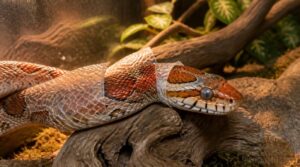
Shedding frequency isn’t fixed. It shifts as your corn snake grows, moving from weeks to months over its lifetime. Here’s what to expect at each life stage.
Young, fast-growing snakes shed most often, so if you’re just starting out, our guide to keeping corn snakes as pets covers what else changes as they mature.
Hatchlings: Every 2–4 Weeks
Rarely does a snake grow as fast as a hatchling corn snake. Expect a shed every 2 to 4 weeks, driven by rapid growth. Watch for eye clouding, dulling skin, and hiding before each shed. Keep humidity at 60-75%.
For comparison, other pet snakes like ball pythons need a slightly higher ideal humidity range of 70-80% to support healthy shedding. Afterward, check the new skin for a clean, single-piece shed, confirming healthy growth and proper husbandry.
Juveniles: Every 4–6 Weeks
Growth slows once your corn snake leaves the hatchling stage, and so does the shedding cycle. Expect shedding frequency to settle into a 4–6 week rhythm as skin renewal keeps pace with steadier growth.
Feeding schedule effects still matter here. Well-fed juveniles on regular meals often shed closer to 4 weeks, while humidity control below 60% can stretch that interval past 6.
Young Adults: Every 2–3 Months
By 18 to 24 months, your corn snake’s shedding frequency stretches to every 2 to 3 months. Growth spurts taper off, and metabolism shifts slow the whole cycle down.
Steady husbandry consistency, especially humidity control, keeps most young corn snakes near 2.5 months. Watch for cloudy eyes as your cue, then expect a short recovery period once shedding wraps up.
Mature Adults: About Every 3 Months
Once your corn snake reaches full maturity, the shedding cycle settles into a predictable three-month rhythm, usually 10 to 14 weeks apart. Growth rate correlation drops off almost entirely here.
Humidity control and steady nutrition keep this cycle stable year-round. Limit handling before a shed, and maintain consistent enclosure setup, since stress or poor humidity can quietly delay the process.
Seniors May Shed Less Often
By the time your snake reaches old age, shedding frequency drops further, often stretching to every 4 to 12 weeks. Aging slows metabolism and skin turnover, so elderly skin renewal simply takes longer.
Growth rate is nearly flat in seniors, which removes one of shedding’s main triggers. Stable humidity and fresh water still matter, keeping the process predictable despite the slowdown.
What Affects Corn Snake Shedding Frequency?
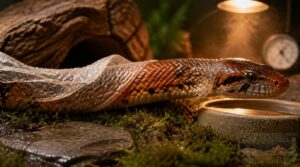
Those age-based timelines are averages, not guarantees. Your snake’s actual shedding schedule depends on several factors working together behind the scenes. Here’s what really drives the pace of shedding.
Temperature and humidity swings also shift your snake’s activity and rest cycles, so tracking nocturnal snake behavior patterns can help you spot early shedding cues.
Age and Growth Rate
Nothing shapes a shedding schedule quite like age. Growth rate drives shedding frequency, and corn snakes slow down predictably as they mature.
- Hatchlings: shed every 2–4 weeks
- Juveniles: shed every 4–6 weeks
- Young adults: shed every 2–3 months
- Mature adults: shed roughly every 3 months
Hatchling development happens fast, packing on inches within weeks. The juvenile growth phase eases up, and adult size progression slows further still. Seniors show the biggest change, with minimal growth meaning even less frequent shedding.
Feeding and Nutrition
What your snake eats matters just as much as its age. A proper feeding schedule fuels the growth rate that drives shedding, and prey size should run one to two times your snake’s width.
Hatchlings eat every 5-7 days, juveniles every 7-10, adults every 10-14. Whole prey delivers balanced nutrients your snake needs for healthy skin turnover.
Humidity and Hydration
Dry air is the enemy of a clean shed. Keep humidity between 60 and 75 percent, and offer a damp hide with moist sphagnum moss to soften the old skin.
Fresh water should always be available, since proper hydration works from the inside out.
Rough bark or cork rounds give your snake something to grip during removal.
Enclosure Temperature
Cold snakes shed poorly. Keep a thermal gradient of 84-86°F basking and 74-78°F cool side, dropping to 70-75°F at night. Use heat mats or ceramic emitters with a thermostat, never heat lamps alone. Check temps with digital probes, not guesswork.
Stable warmth keeps metabolism humming, supporting the humidity and moist hide work you’ve already done for the skin itself.
Health and Genetics
Two snakes of the same age can shed on completely different schedules. That’s genetic shedding variation at work: inherited metabolism differences and growth rate influence timing more than owners expect.
Morph shedding differences matter too. Amelanistic and anerythristic snakes show distinct pigment shedding traits, while hereditary skin traits, like scaleless mutations, raise incomplete-shed risk. Genetic health monitoring and careful breeding help catch skin disorders before they pass to future clutches.
Signs Your Corn Snake Will Shed
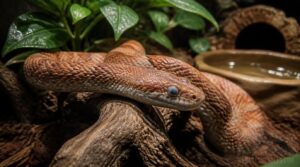
Your corn snake won’t shed without warning. Its body sends clear signals days before the process begins, and you just need to know what to watch for. Here are the five signs that tell you shedding season has arrived.
Dull or Washed-Out Skin
Before anything else changes, you’ll notice your corn snake’s skin losing its usual shine. Colors fade to a washed-out, grayish tone five to ten days before shedding, as the old epidermis starts separating from new skin underneath. This dulling happens gradually, so check your snake daily.
Once the shine returns, you’re closer to full ecdysis.
Cloudy Blue Eyes
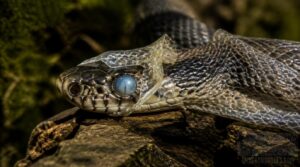
Once the shine fades, watch the eyes next. Both eyes turn a uniform milky blue as ocular fluid buildup separates the eye cap from the cornea underneath.
This blue phase usually lasts several days, causing real pre-shed vision change. Your snake still tracks movement fine, but pupil visibility drops sharply until the cloudiness clears.
Eyes Clearing Before Shedding
That blue phase doesn’t last forever. As tear film returns to normal, the eyes clear and pupils sharpen again, usually a day or two before the old skin splits.
Watch for:
- Ocular cap shift loosening the eye covering
- Returning eye color and pupil definition
- Improved pre-shed vision within 24-48 hours
Hiding and Reduced Appetite
Once vision sharpens again, don’t expect your snake to act normal right away. Many corn snakes still tuck into hides 1-3 days beforehand, staying put for 24-48 hours straight.
Appetite often drops too. This is instinctual, not illness, though prolonged refusal past two weeks warrants a vet check to rule out parasites or infection.
Restlessness and Rubbing
Watch for pacing and head rubbing against the glass. These behavioral changes signal your snake is uncomfortable, often seeking rough surfaces for shedding assistance.
Rubbing on substrate texture or water dishes points to humidity’s role, since dry skin itches. Low humidity is a common restlessness trigger.
Rubbing usually fades once shedding completes, but persistent irritation may reveal health factors like skin infections.
How to Support Healthy Shedding
You can’t control when your corn snake sheds, but you can control how easy it is. A few simple habitat adjustments make the difference between a clean shed and a stressful one. Here’s what your snake’s enclosure needs during this vulnerable stage.
Maintain 60–75% Humidity
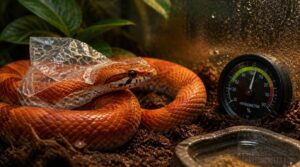
Humidity makes or breaks a smooth shed. Keep your enclosure between 60–75% humidity, checked daily with a digital hygrometer at snake level.
Moisture-retentive substrate, like cypress mulch or coconut fiber, helps stabilize levels between mistings. If readings drift low, mist more; if too high, boost ventilation to prevent mold while keeping skin pliable for a clean, complete shed.
Add a Damp Humid Hide
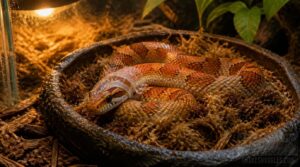
A shallow dish with damp sphagnum moss or coconut husk, tucked on the warm side, gives your snake a moist microclimate for tricky sheds.
Keep the entrance narrow enough to hold moisture but wide enough for easy access.
Don’t oversaturate; standing water invites mold and won’t help skin release any better than proper humidity does.
Keep a Proper Temperature Gradient
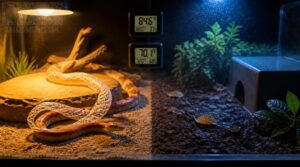
Skin doesn’t peel right in a cold terrarium. Keep the warm end at 88 to 92°F and the cool side between 72 and 78°F, with a heat source at one end and a thermostat to prevent overshoot.
This 10 to 15 degree thermal gradient helps metabolism during shedding.
A digital hygrometer paired with a thermometer keeps both readings honest.
Provide Water and Rough Surfaces
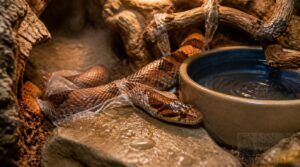
Think of water and texture as shedding tools, not décor. Place a sturdy, non-tipping dish on the warm side, deep enough for soaking behavior.
Add rough surfaces, branches, rocks, or textured décor, so your snake can rub against them to start the tear. Combined with a humid hide, these features loosen skin and speed up a clean shed.
Limit Handling During Pre-Shed
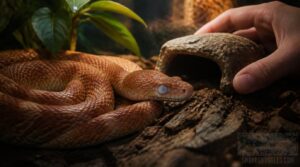
Would you want to be picked up while your skin felt tight and your eyes couldn’t see straight? Once you spot cloudy eyes, wait at least 24 hours before handling.
When cloudy eyes appear, wait at least 24 hours before handling your snake
- Only touch for enclosure care
- Support gently with two hands
- Keep the room quiet, low-vibration
Watch for stress signs. Resume normal handling once shedding finishes and skin loosens.
Corn Snake Shedding Problems and Care

Most sheds go smoothly, but not always. Sometimes humidity or health issues get in the way, leaving skin stuck in places it shouldn’t be. Here’s what to watch for and how to handle it.
A properly sized enclosure with the right humidity levels makes all the difference, so check out this guide on setting up a secure snake habitat to prevent shedding troubles before they start.
If your snake seems unusually irritable during a stuck shed, pause and check its body language first, since safe handling techniques for large snakes can help you avoid a defensive strike while you sort out the problem.
Signs of Incomplete Shed
How do you know a shed went wrong? Look for wrinkled skin patches, especially along the midbody, plus flaky white scales past the expected date. Eye residue or film often lingers too.
Watch behavior: your snake may rub against decor more, hide often, or move stiffly. These signs point to dysecdysis, usually tied to low humidity.
Retained Eye Caps and Tail Skin
Two spots deserve close attention: the eyes and the tail tip. Retained eye caps happen when the ocular scale stays fused, risking corneal irritation or vision problems over time.
Tail tip constriction occurs when old skin clings to the tail, trapping moisture and inviting bacterial issues. Both signal unmet hydration needs and warrant a closer look at your snake’s moist hide setup.
Safe Care for Stuck Shed
Once you spot retained eye caps or tail skin, act with care, not force. Warm soak water to 90-95°F and let your snake soak 15-20 minutes.
After soaking, gently roll the loosened skin between damp fingers—understanding how low humidity triggers incomplete shedding can help you prevent retained caps from becoming a recurring problem.
Check for loosened shed after 15 minutes. If eye caps persist, don’t attempt removal yourself, that’s a job for a reptile-savvy veterinarian.
Post-Shed Inspection and Cleaning
Once the soak resolves stuck shed, shift focus to enclosure maintenance. Remove skin debris from substrate and corners, then complete substrate renewal if odor or residue lingers.
Wipe down accessories with reptile-safe disinfectant. Verify humidity sits between 60-75%, and give your snake a full skin inspection for retained eye caps, sores, or discoloration before resuming normal postshed care.
When to Contact a Veterinarian
Most stuck shed resolves with a soak, but some signs mean it’s time to call your vet. Watch for breathing difficulty, wheezing, eye swelling, or skin discoloration. Lethargy, weakness, or unresponsive behavior also signals trouble.
Persistent retained eye caps, foul odor, or repeated dysecdysis need professional evaluation. Don’t wait if symptoms worsen.
Frequently Asked Questions (FAQs)
Why is my corn snake shedding so often?
Like a growth spurt outpacing your wardrobe, frequent shedding often just means rapid growth. Young corn snakes shed every 4 to 6 weeks. But check humidity levels and feeding schedule too, since poor conditions can also trigger it.
Is it okay to hold my corn snake while it’s shedding?
Best to avoid handling while your corn snake sheds. Delicate new skin tears easily, and cloudy vision raises stress and bite risk. Stick to gentle visual checks, then resume normal handling once the shed’s fully complete.
How often will my corn snake shed?
Think of your snake’s skin as a growing child’s wardrobe: it’s outgrown fast, then less often. Baby corn snakes shed every 2–4 weeks; juveniles, 4–6 weeks; adult corn snakes, every 2–3 months, as growth rate slows.
For breeding females, corn snake egg-laying frequency can also influence nutritional needs and shedding patterns.
How to tell if a corn snake is shedding?
Watch for cloudy eyes, dull skin, and less appetite. Your snake may hide, rub against rough surfaces, or seem restless. These signs signal pre-shed care time, so check humidity before dysecdysis becomes a risk.
When to move corn snake to fuzzies?
Your snake’s weight tells the real story. Once juveniles hit 25–40 grams and swallow prey without hesitation, shift to fuzzies gradually, matching growth milestones, feeding frequency, and steady digestion rather than guessing by age alone.
Is it OK to hold my corn snake while its shedding?
Holding is possible, but not advisable. Cloudy vision and high stress make handling risky during shedding. Skin sensitivity rises sharply, so keep contact brief, gentle, and rare, protecting your snake through this vulnerable stage.
How long does it take for a corn snake to shed its skin?
Most of a corn snake’s shed happens in mere minutes, but the full shed duration timeline runs 6 to 14 days. Juveniles finish in 7 to 9 days; expect three to five days recovery before normal appetite returns.
Why is my adult corn snake shedding so much?
Frequent shedding in adults usually points to low humidity, poor hydration, or inconsistent temperatures disrupting the shedding cycle, rather than normal aging. Check husbandry first; genuine health problems are less common but worth ruling out.
How often does a 2 year old corn snake shed?
Think of it as a growth spurt slowing to a jog. Your two-year-old sheds every 2 to 3 months, four to six times yearly, as growth rate decelerates and skin shedding frequency shifts toward mature adult cycles.
Can corn snakes eat their shed skin?
Eating shed skin won’t harm your corn snake. It’s mostly keratin, so digestion is safe, though accidental ingestion offers no real nutrition. If chewing becomes repeated behavior, mention it during your next veterinary consultation.
Conclusion
Watch closely, and your snake will tell you exactly when a shed is coming. Knowing how often do corn snakes shed their skin turns guesswork into confident care, from a hatchling’s rapid two-week cycles to an adult’s steady three-month rhythm.
Cloudy eyes and dull scales aren’t warning signs, they’re your snake’s way of announcing change. Trust the pattern, support the humidity and heat it needs, and shedding becomes proof of a healthy, thriving reptile under your care.
- https://britexotics.co.uk/blog/corn-snake-shedding-problems-uk
- https://www.allaboutcornsnakes.com/care_shedding.html
- https://reptifiles.com/corn-snake-care-guide/sick-corn-snake-diseases-health/corn-snake-shedding
- https://a-z-animals.com/blog/how-often-do-corn-snakes-shed-facts-about-their-skin
- https://www.inkbird.com/blogs/aquarium-terrarium/corn-snake-care-guide