This site is supported by our readers. We may earn a commission, at no cost to you, if you purchase through links.

Your local pet store stocks over 3,000 snake species worldwide, but only about 30 make practical companions for home keepers. That’s actually good news—because exploring the snake species can feel overwhelming when you’re staring at names like Malayopython reticulatus and wondering if you need a degree in Latin.
The truth is, whether you’re claiming your first scaly sidekick or adding an expert specimen to your collection, matching the right snake to your experience level makes all the difference between a thriving partnership and a stressful situation.
From docile ball pythons that practically handle themselves to rear-fanged specialists that demand expert precision, each species brings its own quirks, care requirements, and personality to your terrarium.
Table Of Contents
- Key Takeaways
- Popular Pet Snake Species
- Ball Python (Python Regius)
- Corn Snake (Pantherophis Guttatus)
- King Snake (Lampropeltis Spp.)
- Milk Snake (Lampropeltis Triangulum)
- Garter Snake (Thamnophis Spp.)
- Rosy Boa (Lichanura Trivirgata)
- Brazilian Rainbow Boa (Epicrates Cenchria)
- Black Rat Snake (Pantherophis Obsoletus)
- Rough Green Snake (Opheodrys Aestivus)
- Beginner-Friendly Snake Species
- Advanced and Unique Pet Snake Options
- Factors to Consider When Choosing a Species
- Snake Species Care and Housing Needs
- Frequently Asked Questions (FAQs)
- What is the best species of snake to have as a pet?
- What snakes can you own as a pet?
- What is the most cuddly pet snake?
- What is the least aggressive pet snake?
- What snake species live the longest?
- Which snakes require the least space?
- Are there venomous beginner pet snakes?
- Whats the most affordable snake species?
- Which snakes are easiest to breed?
- How often should I handle my pet snake?
- Conclusion
Key Takeaways
- Ball pythons and corn snakes dominate the beginner-friendly category because they stay manageable (3-5 feet), tolerate handling without aggression, and thrive on straightforward care routines with frozen rodents and basic temperature gradients.
- Species selection should match your experience level and space capacity—compact rosy boas need 24-40 inches while reticulated pythons demand 20+ feet of length and expert-level confidence to handle safely.
- Advanced options like red-tailed boas, false water cobras, and egg-eating snakes require specialized knowledge including massive enclosures, unique dietary sourcing, or managing rear-fanged venom that disqualifies them from casual ownership.
- Long-term commitment matters more than initial appeal since ball pythons live 20-30 years and every species demands consistent temperature control, appropriate enclosure security, and species-specific humidity levels throughout their entire lifespan.
Popular Pet Snake Species
So you’re ready to break free from the ordinary pet routine and bring home something with scales instead of fur. The snake world offers an amazing variety of species, each with its own personality, size, and care needs.
Let’s explore some of the most popular pet snakes that have won over reptile enthusiasts everywhere.
From unique-looking pet snake species with wild patterns to gentle giants, there’s a snake personality for every keeper.
Ball Python (Python Regius)

If you’re looking for a snake that won’t challenge your patience, the Ball Python (Python regius) is your golden ticket—this shy, coiled beauty from West Africa practically invented the term “beginner-friendly.”
If you’re ready to bring one home, reputable breeders often list ball pythons for sale near you with health guarantees and care guidance included.
Reaching 3–4 feet in captivity, these Pythonidae members offer stunning Ball Python morphs with regius color patterns that’ll make your friends jealous.
If you’re curious about whether more exotic species work for beginners, check out whether rattlesnakes can be kept as pets to see why ball pythons are the smarter choice.
Their docile temperament makes pet snake care feel less like work and more like hanging out with a chill, scaled companion!
Corn Snake (Pantherophis Guttatus)

Corn Snakes (Pantherophis guttatus) take that beginner-friendly vibe and crank it up a notch, stretching out to 4–5 feet of pure, easy-going Colubridae charm! These gorgeous snakes showcase stunning oranges and reds, thriving in various environments with minimal snake health issues.
Here’s why corn snake behavior makes them superstars:
- Docile temperament beats most pet snakes
- Simple feeding techniques—frozen rodents work great
- Adaptable snake habitat design needs
- Breeding methods are straightforward for hobbyists
King Snake (Lampropeltis Spp.)
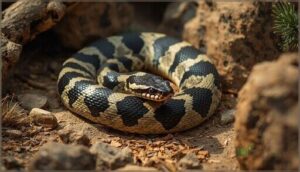
King Snakes (*Lampropeltis spp.
*) bring bold patterns and a fearless attitude to your collection, reaching 4–6 feet of muscular curiosity! These nonvenomous colubrid champions inhabit diverse territories from California to the southeastern United States.
King Snake habitat setup needs moderate temps (warm side 28–32°C), while their King Snake diet includes appropriately sized rodents.
Snake handling tips? Start gentle—juveniles may strike, but regular sessions transform pet King care into pure reptile care rewards!
Milk Snake (Lampropeltis Triangulum)

Those striking tri-color bands? That’s the Milk Snake (Lampropeltis triangulum) flexing its 16–28 inch frame in your Milk Snake habitat! These Pet Snakes thrive with simple Reptile Care—26–30°C gradients and moderate humidity nail the Shedding Process. Snake Color Morphs range from classic banded to stunning aberrant patterns across subspecies!
Why Milk Snakes rock your collection:
- Compact rebels: Perfect for apartment dwellers craving exotic Pet Snake Care without surrendering entire rooms
- Nighttime hunters: Their crepuscular energy matches your unconventional schedule—feed appropriately sized rodents using proven Feeding Techniques
- Living art: Each Snake Species morph showcases nature’s wildest palette combinations
- Beginner-friendly defiance: Calm temperament meets straightforward Breeding Methods for intermediate keepers ready to level up
Garter Snake (Thamnophis Spp.)
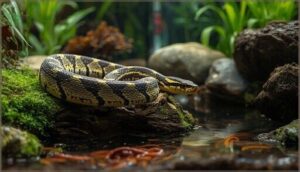
Want variety? Garter Snakes (Thamnophis spp.) dominate with 35 species spanning 18–46 inches! These Pet Snakes conquer grasslands to suburbs with adaptable Snake Behavior Patterns.
Creating the right habitat setup with proper terrarium configurations helps maintain those essential temperature and humidity ranges each species needs.
Garter Diet Needs include fish and earthworms—ditch frozen rodents for fresh protein!
Master Snake Handling Tips: gentle routines reduce skittish tendencies. Monitor Garter Health Issues like respiratory infections through proper humidity.
Your Garter Snake Habitat needs 75–90°F gradients and swimming access for these curious explorers!
Rosy Boa (Lichanura Trivirgata)

Compact rebels rejoice—Rosy Boas (Lichanura trivirgata) thrive in 24–40 inch frames! These Pet Snakes dominate southwestern deserts with a calm Snake Species temperament.
Their low-maintenance setup requires a simple heat gradient, which you can achieve with the reptile lighting solutions that work best for desert species.
Master Boa Handling Techniques through minimal stress sessions while monitoring Snake Health Issues like respiratory conditions.
Your Rosy Boa Habitat demands 75–85°F gradients with burrowing substrate for these crepuscular explorers!
Follow Boa Feeding Tips: adults accept mice every 7–14 days through strategic Pet Snake Care and Reptile Pet Care routines.
Brazilian Rainbow Boa (Epicrates Cenchria)
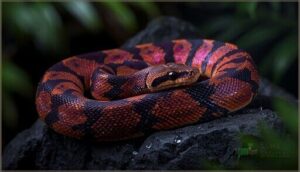
Rainbow shimmer meets bulletproof calm—Brazilian Rainbow Boas (Epicrates cenchria) flash iridescent scales across their 4–5 foot muscular frames! These Pet Snakes demand intermediate Snake Handling skills and precise Boa Care Tips.
Your Brazilian Rainbow Boa success checklist:
- Maintain 80–90% humidity for proper Boa Health Issues prevention
- Master gentle restraint during weekly Snake Species interaction sessions
- Explore stunning Color Morphs beyond wild-type patterns
- Feed appropriately-sized rodents through strategic Pet Snake Care and Reptile and Snake Species protocols
Black Rat Snake (Pantherophis Obsoletus)

Black Rat Snakes (Pantherophis obsoletus) stretch 4–6 feet of docile, beginner-friendly muscle—perfect Reptile Pets for your first serious Snake Care adventure!
These Pet Snakes thrive in straightforward Habitat Creation with 85–90°F warm zones and basic hides.
Master simple Feeding Techniques with appropriately-sized rodents every 1–2 weeks, and you’ll witness calm Snake Behavior that makes handling genuinely enjoyable!
Rough Green Snake (Opheodrys Aestivus)

Rough Green Snake (Opheodrys aestivus) owners break the mold with these delicate, insect-eating beauties—2–3 feet of vibrant Green Coloration that demands skilled Reptile Care beyond typical Pet Snakes!
- Wild Conservation concerns make Captive Breeding populations scarce
- Snake Nutrition focuses on live crickets and soft-bodied invertebrates
- Habitat Creation requires 40–60% humidity with vertical climbing space
- Pet Snake Care suits experienced keepers, not beginners
This Snake Species Overview highlights their shy temperament and specialized needs!
Beginner-Friendly Snake Species

If you’re new to keeping snakes, you don’t need to start with something complicated or temperamental. The best beginner snakes are the ones that stay calm when you handle them, don’t require expert-level care, and forgive small mistakes while you’re learning.
Let’s look at what makes certain species perfect for first-time snake owners.
Species With Docile Temperaments
If you’re breaking free from the anxiety of handling an unpredictable pet, these calm, easygoing species are your ticket to confident snake ownership! Ball pythons and corn snakes top the list of docile breeds—they’re beginner-friendly champions with predictable snake behavior.
These pet snakes rarely strike, making handling techniques a breeze. Their mellow temperament passes every test, giving you the confidence to dive right into pet snake care without second-guessing yourself!
Easy-to-Handle Snakes
You want snake handling tips that actually work? Start with gentle species like corn snakes or rosy boas—both stay under 4–5 feet, perfect for stress reduction during routine interactions. Their calm temperaments mean you’ll grip them comfortably without wrestling a cranky serpent!
These beginner-friendly pet snakes settle into docile behavior with consistent handling, transforming snake species care from intimidating to absolutely manageable.
Low-Maintenance Care Requirements
Pick a snake that won’t chain you to its terrarium—species like garter snakes and king snakes thrive on simple setups with weekly spot-cleaning and monthly feedings!
These low-maintenance reptiles need minimal space and basic hygiene routines, making snake care and handling completely manageable for beginners.
Their easy handling and low cost mean you’ll focus on enjoying your pet snake instead of stressing over complicated beginner-friendly routines!
Advanced and Unique Pet Snake Options

Once you’ve mastered the basics, you might be ready to break free from beginner snakes and explore something truly exotic.
Expert species demand more experience, specialized care, and a bold commitment to their unique needs.
Here’s a look at some remarkable snakes that’ll challenge your skills and reward your dedication.
Red-Tailed Boa (Boa Constrictor)
Red-tailed boas (Boa constrictor) are the heavy-hitters of the pet snake world, reaching impressive lengths of 8–10 feet and demanding respect from anyone who thinks they’re ready to graduate from beginner species. These powerful constrictors need serious reptile care commitment:
- A massive, reinforced snake habitat (minimum 6×3 feet for adults)
- Consistent boa feeding schedule with appropriately-sized frozen prey
- Precise temperature gradients and humidity monitoring
- Regular constrictor health check-ups with an exotic vet
- Strong handling confidence and physical capability
Red-tailed boas aren’t for the faint-hearted, but they’re absolutely rewarding for experienced keepers ready to level up their pet snake game!
Reticulated Python (Malayopython Reticulatus)
Reticulated pythons (Malayopython reticulatus) are the supreme challenge for exotic pet enthusiasts. We’re talking about the longest snake species on Earth, regularly surpassing 20 feet!
Native to Southeast Asia, these stunning constrictors showcase striking net-like python morphs. They require expert-level snake breeding knowledge, massive habitat creation skills, and sophisticated feeding strategies understanding.
You’ll need serious confidence handling a pet snake that embodies pure power and unpredictable behavior.
False Water Cobra (Hydrodynastes Gigas)
Hydrodynastes gigas challenges even seasoned exotic pet enthusiasts with its assertive snake behavior and unique venomous traits—though rear-fanged and mild! This South American colubrid reaches 8 feet, demands expert reptile care expertise, and thrives under precise habitat creation standards.
Key considerations for this pet snake species:
- Observational handling minimizes stress during maintenance tasks
- Temperature gradients (75-90°F) support natural snake behavior and habitat preferences
- Captive breeding specimens adapt better than wild conservation rescues
- Legal restrictions vary—check local permits before acquiring this bold reptile
Asian Vine Snake (Ahaetulla Prasina)
This rear-fanged beauty demands precision in vine snake care—you’ll need vertical space, high humidity (70-80%), and a diet of live lizards or frogs that most keepers can’t source reliably. Prasina handling requires extreme caution; their defensive strikes and mild venom make this pet snake species unsuitable for casual reptile husbandry!
| Habitat Creation | Ahaetulla Diet | Snake Behavior |
|---|---|---|
| 3-4 ft vertical enclosure | Live lizards (anoles, geckos) | Diurnal, arboreal hunter |
| Dense foliage/vines | Occasionally small frogs | Defensive when stressed |
| 75-85°F ambient temp | Refuses frozen prey | Relies on binocular vision |
| Misting 2x daily | Calcium dusting essential | Slow, deliberate movements |
Egg-Eating Snake (Dasypeltis Spp.)
Dasypeltis species showcase some of nature’s wildest feeding habits—these African specialists survive entirely on birds’ eggs, using modified vertebrae to crack shells internally! You’ll face serious reptile husbandry challenges with egg-eating snake care:
- Sourcing fresh quail or finch eggs year-round
- Maintaining 70-75°F temps with controlled humidity
- Accepting that captive breeding remains extremely rare
- Understanding their shy snake behavior makes handling stressful
This pet snake species demands dedication most beginners can’t sustain.
Factors to Consider When Choosing a Species

Picking the right snake isn’t just about falling in love with a cool color pattern or impressive size. You need to think through the practical stuff—like how much space you’ve got, what you’re willing to feed it, and whether your city even allows that species.
Let’s break down the key factors that’ll help you make a smart choice instead of a regretful one.
Adult Size and Enclosure Needs
You’ll want to know upfront: adult snakes vary wildly in space requirements! Ball Pythons (Python regius) stay compact at 3–4 feet, while King Snakes can hit 6 feet or more. Proper enclosure needs scale with your snake species—bigger serpents demand serious real estate.
Here’s what you’re looking at for popular pet snakes and their habitat optimization demands:
| Species | Adult Size | Minimum Enclosure | Ventilation Needs |
|---|---|---|---|
| Ball Python | 3–4 feet | 40 gallons | Moderate airflow |
| Corn Snake | 3–5 feet | 40 gallons | Good circulation |
| King Snake | 3–6+ feet | 55+ gallons | Enhanced ventilation |
| Garter Snake | 2–3 feet | 20–30 gallons | Standard airflow |
Smart enclosure design means planning ahead—that adorable hatchling won’t stay small! Consider size limits before committing to any reptile care journey.
Lifespan and Long-Term Commitment
Owning pet snakes means signing up for decades, not just years! Ball Pythons (Python regius) can live 20–30 years, while Corn Snakes usually reach 15–20 years with solid reptile care.
These longevity factors demand serious commitment levels from snake owners. Health considerations and aging processes require consistent care responsibilities throughout your pet snake species’ entire life—think twice before diving in!
Owning a pet snake means committing to decades of consistent care and responsibility for its health and well-being
Feeding and Dietary Requirements
Your snake’s menu isn’t just about tossing in a frozen mouse—it’s about nutrient balance and prey selection! Most pet snake species thrive on appropriately sized rodents every 7–14 days, depending on their age and metabolism.
Feeding schedules directly impact digestive health and overall snake health and wellness. Caring for pet snakes means understanding reptile behavior: offer fresh water always, monitor weight monthly, and adjust portions to prevent obesity or weakness!
Temperament and Handling Suitability
Feeding right keeps your snake healthy, but temperament tests reveal how they’ll really act in your hands! Ball pythons and corn snakes usually stay calm during handling, while garter snakes can be squirmier—perfect for learning pet snakes and reptile behavior on the move.
Understanding snake behavior and animal behavior patterns helps with stress reduction and owner preparation. Regular, gentle handling tips build trust in even beginner-friendly species!
Legal Restrictions by Location
Before you bring home that dream snake, check your local ordinances and zoning laws—some places ban certain species outright! Permit requirements vary wildly by state, and species bans often target larger constrictors or venomous types.
Border controls restrict the exotic pet trade to protect wildlife conservation efforts. Your reptile ownership journey depends on understanding pet trade regulations first!
Snake Species Care and Housing Needs

Getting your snake’s habitat right isn’t negotiable—it’s the foundation of responsible ownership. Every species has its own non-negotiable requirements for space, temperature, humidity, and substrate that you’ll need to master.
Let’s break down the essential housing elements that’ll keep your snake thriving, whether you’re setting up for a laid-back corn snake or a more demanding rainbow boa.
Enclosure Size and Security
Before you commit to any species, you need a fortress—not a flimsy box. Security and proper ventilation systems make all the difference between peaceful reptile habitat ownership and finding your snake exploring your living room at 2 AM!
Essential Enclosure Priorities for Snake Habitat Creation:
- Ball Pythons demand 30–40 gallon enclosures with secure lid options and locking mechanisms to prevent escape.
- Corn snakes require minimum 40–55 gallon spaces for vertical climbing and proper reptile habitat design.
- King snakes need 40–60 gallon tanks with reinforced enclosure materials to contain their curious, determined nature.
- Garter snakes thrive in 20–40 gallon multi-terrace setups designed specifically for their active exploration habits.
- Every species benefits from escape-proof locking systems—because your pet snake nutrition and snake health and wellness depend on them staying safely inside their reptile habitat!
Temperature and Humidity Preferences
Your fortress needs the perfect climate zones—because environmental controls aren’t optional for snake health and wellness! Ball pythons thrive at 75–80°F daytime with 50–60% humidity levels, while corn snakes prefer 80–83°F and 40–60% humidity. King snakes and milk snakes tolerate similar thermal gradients around 75–85°F.
Temperature fluctuations stress your reptile, so maintain consistent pet snake nutrition through proper reptile husbandry!
Substrate and Habitat Enrichment
The foundation you choose determines your snake’s daily comfort—substrate options range from cypress mulch to aspen bedding for odor control and easy spot-cleaning. Habitat design matters for snake behavior and mental stimulation!
Here’s your enrichment strategies checklist:
- Multiple hides (two minimum) reduce stress through secure retreat spaces
- Branch networks encourage natural climbing and exploration
- Environmental monitoring tracks humidity levels, preventing respiratory issues
Smart reptile husbandry transforms basic enclosures into thriving ecosystems!
Special Lighting or Heating Requirements
Beyond basic setups, your reptile husbandry skills shine when you nail thermal gradients. Aim for 78–88°F daytime temps with proper heat sources like ceramic emitters.
UVB lighting benefits certain species for calcium metabolism and overall reptile and amphibian care!
Temperature control paired with humidity management prevents metabolic disasters. Digital thermostats guarantee animal care quality through precise monitoring and adjustment.
Frequently Asked Questions (FAQs)
What is the best species of snake to have as a pet?
Picking the perfect pet snake species? Ball Pythons and Corn Snakes claim the crown! These beginner-friendly beauties blend docile snake behavior with straightforward handling techniques, making breed selection simple while keeping pet costs and snake health manageable for new keepers.
For more information on suitable species, consider researching pet snake care to find the best fit.
What snakes can you own as a pet?
You can own popular pet snakes like Ball Pythons, Corn Snakes, King Snakes, and Garter Snakes!
Pet Snake Laws vary by location, so check local regulations before bringing home beginner-friendly species from the pet trade.
What is the most cuddly pet snake?
Ball Python (Python regius) wins the cuddly crown! These beginner-friendly pet snakes tolerate handling beautifully, showing exceptional pet temperament.
Corn Snake and Milk Snake follow closely, making reptile bonding accessible while proving snake affection exists in cuddly species.
What is the least aggressive pet snake?
If you’re seeking gentle species, ball pythons top the list for docile temperament and beginner-friendly handling.
Corn snakes and milk snakes follow closely, showing minimal aggression factors when properly socialized—perfect for safe pet safety experiences.
What snake species live the longest?
In terms of maximum lifespan, kingsnakes and ball pythons reign highest—both can hit 30 years or more! Rosy boas follow closely, while corn snakes generally clock in around 15-20 years with proper care.
Which snakes require the least space?
Rosy Boas (Lichanura trivirgata) are your space-saving champions, topping out around 2–3 feet.
Garter snakes and rough green snakes also thrive in compact housing—perfect for minimalist tanks without sacrificing proper beginner-friendly pet care!
Are there venomous beginner pet snakes?
No venomous species make beginner-friendly pet snakes. Handling risks, safety concerns, and strict pet regulations disqualify venomous snakes entirely—stick with docile, non-venomous snakes like corn snakes or ball pythons instead!
Whats the most affordable snake species?
Corn snakes and garter snakes top the budget pet options list, with standard morphs priced around $20–$100.
These beginner-friendly species deliver low-cost care without sacrificing the exotic pet trade experience you’re craving!
Which snakes are easiest to breed?
If you’re itching to hatch your own slithering success story, ball pythons and corn snakes are your beginner-friendly champions!
These snake species consistently produce healthy clutches in captivity, making reptile breeding techniques surprisingly manageable for dedicated keepers.
How often should I handle my pet snake?
Handle your pet snake 1-2 times per week after a 2-4 week acclimation period. Short sessions (5-15 minutes) reduce stress and support snake socialization.
Proper handling techniques help beginners build confidence while caring for pet snakes!
Conclusion
Your terrarium isn’t a cage—it’s a declaration of independence from cookie-cutter pets. Exploring the pet snake species list reveals creatures that match your rhythm, whether you’re commanding space with a boa or mastering subtlety with a rosy companion.
Each species offers liberation from ordinary pet ownership, demanding respect instead of dependency. Choose based on your experience, commitment level, and hunger for something authentically wild. The right snake doesn’t just survive in captivity; it thrives under your expert stewardship.