This site is supported by our readers. We may earn a commission, at no cost to you, if you purchase through links.

Most wild garter snakes never see their fifth birthday. Pull one from a backyard and give it a proper enclosure, though, and you’re often looking at a decade or more of company. That gap isn’t luck—it’s the difference between dodging herons and hawks daily versus living somewhere predators simply don’t exist.
Garter snake lifespan in captivity commonly stretches to 6-15 years, with well-documented cases pushing close to 20. Genetics set the ceiling, but husbandry decides how close you get to it.
What separates a snake that limps to year four from one that thrives past year twelve comes down to specifics: temperature gradients, feeding schedules, stress levels. Those details matter more than most keepers realize.
Table Of Contents
- Key Takeaways
- Garter Snake Lifespan in Captivity
- Captive Versus Wild Garter Snake Lifespans
- Factors Affecting Captive Garter Snake Longevity
- Care That Supports a Longer Lifespan
- Recognizing Aging in Garter Snakes
- Frequently Asked Questions (FAQs)
- How long do garter snakes live as pets?
- Do garter snakes like to be held?
- How can you tell how old a garter snake is?
- Can garter snakes recognize their owners?
- Do garter snakes need hibernation periods?
- How often should garter snakes shed?
- Can pregnant garter snakes be kept?
- What veterinary care do garter snakes need?
- What size tank does a garter snake need?
- Can UVB lighting be skipped for garter snakes?
- Conclusion
Key Takeaways
- Garter snakes in captivity often live 6-15 years (sometimes close to 20), compared to just 4-5 years in the wild, because you’re removing predators, weather extremes, and food scarcity from the equation.
- Stable conditions matter more than perfection: keep temps between 75-95°F with a proper gradient, humidity at 40-60%, and a secure 40-gallon enclosure (55 for pairs) to keep stress and shedding problems at bay.
- Feed adults every 7-14 days with a mix of rodents, fish, and earthworms, but go easy on the fish since too much triggers a vitamin B1 deficiency from thiaminase.
- Daily tank hygiene and annual vet checkups with an exotics specialist catch problems early, and watching for warning signs like open-mouth breathing, retained sheds, or sudden weight loss can mean the difference between a quick fix and a real health crisis.
Garter Snake Lifespan in Captivity

Give a garter snake the right care, and it’ll reward you with years of company well beyond what it’d see in the wild.
If you’re weighing options for your family, garter snakes rank among the most beginner-friendly snake breeds for households with kids.
That longevity isn’t random luck; it comes down to genetics, husbandry, and a few key numbers worth knowing upfront.
Here’s what you can realistically expect, from average lifespans to the outliers that push past 15 years.
Average Captive Lifespan
A well-kept garter snake commonly reaches 6 to 15 years in captivity, with many hitting the 10-year mark under solid husbandry. That gap between wild and captive numbers isn’t a typo—consistent feeding, stable temperatures, and clean enclosures add real years. Skimp on substrate depth or hydration, though, and shedding problems can quietly chip away at that lifespan expectancy.
For context, the Aldabra giant tortoise holds the record for longest-living captive animal at 194 years.
Exceptional Longevity Records
Beyond that 15-year mark, some documented garters approach 20—rare, but proof of what genetics plus consistent husbandry can achieve, echoing how supercentenarians push past average human lifespans.
Validation matters here too: just as Jeanne Calment’s 122 years required documentary proof, standout reptile ages deserve skepticism without solid feeding and health records behind them.
Sex and Species Differences
Records aside, sex shapes ordinary longevity too. Females usually outlive males, often growing longer while males mature sexually earlier and burn energy on breeding pursuits rather than growth. That reproductive cost adds up over years.
Species matters as well—garter snake care specifics vary enough that a common garter’s habitat use and growth rate won’t perfectly mirror a ribbon snake‘s.
Captive Versus Wild Garter Snake Lifespans

Nature isn’t nearly as forgiving as a well-kept tank, and the numbers prove it. Wild garter snakes face a shorter, riskier life than their captive counterparts, shaped by predators, weather, and food that isn’t guaranteed. Here’s how that gap breaks down.
Typical Wild Lifespan
A wild garter snake (Thamnophis sp.) rarely sees old age—4 to 5 years is typical, with tough survivors hitting 6 to 8. Habitat quality, seasonal food swings, disease exposure, and reproduction costs all chip away at longevity.
Compare that to reptile longevity in captivity, where predator impact simply disappears. Wild vs captive reptile behavior tells the story: freedom costs years.
Common Wild Mortality Risks
Ask why so few garters reach old age out there, and the answer’s rarely just one thing—it’s usually several stacked together.
A steady diet of fish alone is a common culprit, since thiaminase in many species quietly wrecks their vitamin B1 levels—something worth understanding through safe natural food sources for garter snakes.
- Predation from birds and larger snakes
- Vehicle collisions during road crossings
- Habitat fragmentation forcing risky travel
- Disease outbreaks in dense populations
- Environmental extremes like drought and floods
Each risk compounds the others, which is why wild survival stays so precarious.
Why Captivity Extends Lifespan
Take away the predators, drought, and traffic, and life stretches out fast. Steady meals, clean water, and stable warmth replace a wild lifespan of just a few short years with captives reaching over 10 years old.
Remove the predators, drought, and traffic, and a garter snake’s lifespan can stretch past ten years
Add routine reptile veterinary care, low-stress housing, and consistent hydration, and captive-born garters simply age slower—safer, calmer, and far better monitored than their wild kin.
Factors Affecting Captive Garter Snake Longevity

A long, healthy life in captivity rarely comes down to just one thing you did right. It’s usually a handful of factors working together, some you control day to day and others baked in from the start. Here’s what actually moves the needle on your snake’s longevity.
Genetics and Starting Health
Longevity often starts before hatching. Genetic diversity lowers disease risk and helps with stress tolerance, so reputable breeders run health screenings before pairing snakes. Captive born baby garter snakes with strong neonatal immunity and varied lineage tend to outlast wild-caught individuals—an ethical point worth weighing.
Epigenetic growth influence matters too: early diet and handling shape lifelong metabolism, appetite, and toughness.
Enclosure Size and Security
Size buys years: a cramped tub breeds stress, and stress shortens lives. Give a single garter snake a 40 gallon equivalent terrarium, or 55 gallons for pairs.
- Secure, escape-proof lid
- Childproof latches
- Space for movement and hiding
- No chew points or gaps
- Room for both temperature zones
Escape attempts often end fatally—dehydration, injury, or worse—so lid integrity isn’t optional.
Temperature and Humidity Stability
A stable thermal gradient does more for lifespan than any supplement: keep ambient temps 75–85°F, basking 90–95°F, nights down to 72°F. Humidity holds 40–60%.
Verify zoning with two thermometers and a hygrometer, checked weekly. Swings stress metabolism and shedding alike—consistency, not flawlessness, is what keeps a garter snake thriving for a decade or more.
Stress and Cohabitation
Ever notice a garter snake refusing food after a new tankmate arrives? That’s stress talking.
Group housing invites competition and, rarely, cannibalism risk among mismatched sizes.
- Watch feeding response
- Separate at first sign of bullying
- Keep ample hiding spots per snake
- Monitor weight monthly
Solo housing remains safest for tracking captive snake health long-term.
Reproduction and Brumation
Beyond social stress, breeding itself taxes longevity. Courtship behavior and mating balls demand energy; sperm storage lets females fertilize eggs later, adding strain.
Brumation triggers—shorter days, cooler temps—must precede any captive breeding of colubrids. Skip this brumation cycle improperly, and post-brumation readiness suffers, risking egg binding or exhaustion. I prefer cooling only healthy, well-fed adults.
Care That Supports a Longer Lifespan
Genetics and enclosure setup only get you so far—day-to-day care is what really decides how long your garter snake sticks around. The good news is that none of it requires guesswork, just a handful of habits you can build into your routine. Here’s what those habits look like in practice.
Balanced Dietary Variety

A few earthworms every week won’t cut it. Rotate rodents, fish, and earthworms for real protein source diversity, since no single prey item covers every amino acid and mineral your snake needs.
Offer thiaminase-rich fish sparingly—too much invites vitamin B1 deficiency. Dust prey with calcium/D3 for nutritional supplementation, especially without UVB.
This balanced diet mirrors natural variety, supporting long-term health.
Safe Feeding Frequency

Getting variety on the menu matters less if you’re overdoing portions.
Adult garter snakes do well eating every 7-14 days, while juveniles need meals every 5-7 days to fuel growth. Cap adults at two feedings weekly unless underweight.
Watch body condition monthly—sunken flanks or fat deposits mean it’s time to adjust before problems set in.
Hydration and Healthy Shedding
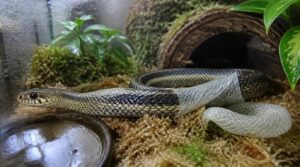
Portion control keeps weight steady, but humidity and shedding go hand in hand. Aim for 40-60% humidity so your reptile water dish and skin stay hydrated. Watch for dull, wrinkled skin—an early hydration signal.
| Sign | Healthy | Concerning |
|---|---|---|
| Shed | Whole piece | Fragmented |
| Skin | Supple | Stuck patches |
| Eyes | Clear caps | Retained shed |
Enclosure Hygiene

Under that same dish sits the real longevity lever: a clean tank. Scoop feces daily, swap substrate monthly, scrub the water bowl each morning, and disinfect surfaces regularly.
- Salmonella risk drops when hands and hides stay clean
- Fresh substrate spares lungs and skin from ammonia buildup
- Daily fecal checks catch illness before it spreads
Consistent hygiene beats reactive cleanup every time.
Preventive Veterinary Care
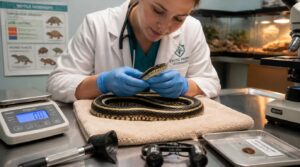
Since illness often hides until it’s late, schedule annual health exams with an exotics vet, ideally one listed with the Association of Reptilian and Amphibian Veterinarians.
Combine this with routine parasite screening, respiratory monitoring, and nutritional assessment. Fecal monitoring catches parasites early, while vaccination protocols and vigilant reptile health tracking round out true preventive veterinary care.
Recognizing Aging in Garter Snakes

A garter snake in its golden years won’t hand you a birth certificate, so you’ll need to read the signs yourself. Some changes are just the normal slowdown of age, while others signal a health problem that needs attention sooner rather than later. Here’s what to watch for, from estimating age to knowing when a vet visit is warranted.
Estimating Your Snake’s Age
How old is your garter snake, really? Without records, you’re reading clues: size patterns (24-40 inches suggests maturity), shedding frequency (adults shed every 1-3 months, juveniles every 4-6 weeks), and scale texture, which smooths with age.
Growth rate slows dramatically after 2-3 years. Watch behavior changes too—steadier activity often signals a settled, older snake.
Concerning Health Changes
Not every change is normal wear. Watch for arthritis progression (stiff coiling), dental wear, dull scale discoloration, or shedding irregularities like retained eye caps.
- Dry skin patches despite good humidity
- Wheezing or labored breathing
- Fecal monitoring shows infrequent, odd-colored droppings
These signal real health changes, not just aging—your Garter Snake’s lifespan depends on catching them early.
Senior Snake Care Adjustments
Slowing metabolism means real changes: widen the temperature gradient slightly, stretch feeding frequency to 10–14 days, and deepen substrate for easier burrowing.
| Adjustment | Senior Target |
|---|---|
| Basking spot | 82°F, short duration |
| Meals | Every 10–14 days |
| Substrate depth | 3–4 inches |
| Handling | 10–15 minutes max |
Keep weight tracking weekly—shifts over 5% warrant attention.
When to Contact Veterinarians
Trust your gut here. Call promptly for open-mouth breathing, cloudy eyes past 48 hours, unhealed lesions, lethargy over 24 hours, or weight loss above 5% weekly.
Monitor fecal consistency and parasite signs regularly, and always wash hands after handling—salmonella risk is real. Aging bodies falter fast; don’t wait out symptoms hoping they resolve on their own.
Frequently Asked Questions (FAQs)
How long do garter snakes live as pets?
Meet Freckles, a pet garter who thrived 14 years on steady husbandry. Captive garter snakes usually live 6-10 years, sometimes reaching 12-15+ with excellent temperature control, hydration, veterinary monitoring, and balanced diet—far surpassing wild counterparts’ average lifespan.
Beyond lifespan, garter snakes surprise many owners with their range of colors and patterns, which you can explore in this detailed guide to common garter snake size, bite risk, and identifying features.
Do garter snakes like to be held?
Not really—garters tolerate short sessions but don’t crave contact. Watch for stress cues like musking or head-flattening; use a gentle grip, open palm, and brief, frequent handling to build trust gradually.
How can you tell how old a garter snake is?
Reading a garter snake’s birthday candles isn’t exact science. Use length-to-age charts, tail thickness, and scale wear as clues, but only documented hatch dates or shedding frequency tracking give you real certainty.
Can garter snakes recognize their owners?
Yes, to a degree. Garter snakes rely on scent recognition and consistent handling to distinguish familiar keepers from strangers, showing calmer behavior and less defensive posturing—evidence of behavioral conditioning and individual temperament rather than true emotional bonding.
By the time they reach adult size around age two, well-handled garters often settle into a relaxed routine, and this guide to garter snakes as pets covers what that day-to-day care looks like.
Do garter snakes need hibernation periods?
Picture your snake slowing its heartbeat as autumn chill sets in—that’s nature’s cue. Brumation isn’t mandatory in captivity, but mimicking this dormant cycle through a gradual temperature drop helps natural thermal regulation and long-term wellness.
How often should garter snakes shed?
Young garters shed every 2-6 weeks while growing fast; adults slow to 2-4 sheds yearly. Watch for milky eyes and dulled color, then keep humidity at 40-60% for a clean, complete shed.
Can pregnant garter snakes be kept?
A swollen belly is nature’s quiet countdown. Yes, keep her secure and low-stress, with stable warmth, deep water for hydration, and reduced handling—she’ll eat less nearing birth, then separate pups promptly after delivery.
What veterinary care do garter snakes need?
Annual routine health exams, fecal monitoring for parasites, prompt wound treatment, and respiratory care keep your snake thriving.
Senior snakes need bi-annual checkups.
Wash hands after handling—reptile salmonella awareness matters for every keeper’s safety.
Good hygiene is especially important when keeping multiple species, so California red-sided garter snake care and identification can help keepers confidently distinguish their animals before and after handling.
What size tank does a garter snake need?
Think of the tank as a snake’s whole world folded into glass. A 40 gallon enclosure suits singles; a 55 gallon equivalent fits pairs. Prioritize length over height for proper thermal regulation and roaming room.
Can UVB lighting be skipped for garter snakes?
Yes, UVB can be skipped if you provide a calcium/D3 powder on prey items. Without it, watch basking behavior and shedding closely—UVB still aids calcium absorption and overall reptile wellness monitoring.
Conclusion
You might think a snake this small can’t need this much care—but that’s exactly why so many die young in captivity.
Garter snake lifespan in captivity isn’t fixed by genetics alone; it’s built day by day through stable temperatures, clean water, varied meals, and a keeper who actually watches for change.
Get those fundamentals right, and your snake won’t just survive. It’ll settle in, grow steady, and quietly outlast every wild expectation stacked against it.
Keep an eye on those small daily cues, like clear eyes and steady sheds, since our grass snake care guide breaks down exactly what healthy looks like week to week.