This site is supported by our readers. We may earn a commission, at no cost to you, if you purchase through links.

A newborn snake can spend 24 to 48 hours with its head poking out of the egg, breathing through a tiny slit while its body quietly absorbs the last of the yolk. Resist the urge to pull it free.
That patience sets the tone for caring for newborn snakes after hatching. Your hatchling won’t eat for a week or two, struggles with stress, and depends on a heat gradient that’s off by just a few degrees. Get the first two weeks right, and you’ll avoid most of the problems that sink new keepers.
Here’s how to set up housing, time that first meal, and read your snake’s signals.
Table Of Contents
- Key Takeaways
- Care for Snakes Immediately After Hatching
- Set Up Safe, Species-Appropriate Hatchling Housing
- Start Feeding Hatchlings After Their First Shed
- Minimize Handling While Hatchlings Settle In
- Monitor Hatchling Shedding, Growth, and Health
- Frequently Asked Questions (FAQs)
- Do mother snakes care about their babies?
- What do baby snakes eat after they hatch?
- How to keep a baby snake alive?
- What do newly hatched snakes eat?
- What happens to baby snakes when they hatch?
- How long can a hatchling snake go without food?
- Do baby snakes need special lighting requirements?
- Will siblings fight when housed together?
- How often should newborns shed skin?
- Can baby snakes recognize their handlers?
- Conclusion
Key Takeaways
- Don’t pull a hatchling out of its egg early, and don’t feed it until after its first shed (7 to 14 days later), because the yolk reserve covers its needs until then.
- Set up a thermal gradient with a warm side at 88–92°F and a cool side at 75–80°F, keep humidity near 50 to 60 percent, and use a tightly sealed enclosure with two hides and a shallow water dish.
- Offer prey no wider than 1.5 times your snake’s mid-body on a species-appropriate schedule, and if it refuses food for four weeks, see a reptile vet.
- Wait five to seven days after the first shed before handling, keep sessions under five minutes, and weigh your snake weekly so you can catch stress, stuck shed, or weight loss early.
Care for Snakes Immediately After Hatching
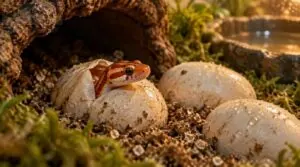
The pipping slit is your first sign that hatching has begun! Don’t rush in and pull the neonate out. Your little one stays inside the egg for 24 to 48 hours, breathing through that slit while absorbing the last of its yolk.
Once the hatchlings are out and settled in their own enclosures, this step-by-step guide to breeding pet snakes covers feeding schedules and early care.
Once it emerges, hold off on feeding. That yolk reserve covers the hatchling diet until the first shed, which arrives 7 to 14 days later. Expect it to hide in dark, tight spaces and maybe strike or coil defensively. That’s normal!
Keep humidity levels at 50 to 60 percent so the skin sheds in one piece, eye caps included. Keep warmth near the incubation temperature too. Support hydration with clean water and save gentle handling for real necessity.
Set Up Safe, Species-Appropriate Hatchling Housing
Your hatchling’s first home matters more than you’d think! A safe, species-appropriate setup keeps your little snake calm, eating, and growing strong. Here’s what you’ll want to get right, starting with heat and humidity and moving on to the enclosure itself.
Temperature Gradients and Humidity
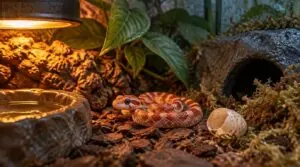
A proper thermal gradient keeps your hatchlings safe! Set the warm side at 88–92°F and the cool side at 75–80°F, using a thermostat to regulate your heat source. Don’t just copy incubation temperature; hatchlings need to move between zones.
Once your hatchlings are feeding well and settled, our ball python breeding tips for long-term success cover how early husbandry shapes healthy growth down the line.
Match humidity levels to your species, and skip the soggy incubation humidity. Then verify your temperature gradient every single day!
Secure Enclosures, Hides, and Water
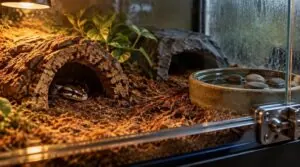
Heat is handled, so now lock it down! A hatchling can squeeze through gaps you’d swear were too small, so your snake enclosure needs tight seams and secure latches.
- Seal every gap with aquarium-safe silicone.
- Offer two hides, one warm and one cool.
- Use shallow water dishes on the cool end.
Keep hiding spots snug, and weigh down that dish.
During this time, a guide to corn snake shedding signs and how to help can show you what a healthy shed looks like and when to step in.
Start Feeding Hatchlings After Their First Shed
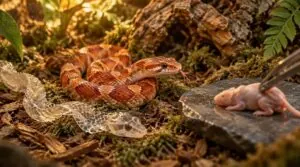
Your hatchling’s first shed is your green light for that first meal! Getting the timing right matters, so you’ll want to know what to offer and how often. Here’s what to cover, plus a plan for when your little one says no thanks.
Species-Appropriate Prey and Feeding Schedules
Picture a 12-gram corn snake hatchling eyeing a pinky mouse! Check that prey is no wider than 1.5 times its mid-body.
Newborn snakes thrive on species-specific meals. Feed colubrids every 5 to 7 days, pythons and boas every 7 to 10, and rough green snakes every 2 to 3. Keep your feeding schedule steady, and your snake diet simple, too.
Since corn snakes are colubrids, a corn snake care sheet for hatchlings can help you fine-tune feeding, housing, and handling during those first fragile weeks.
What to Do About Food Refusal
When your baby snake ignores its first feeding, don’t panic! Most hatchlings simply aren’t ready yet. Try these fixes:
- Scent the prey with chicken broth.
- Wiggle the mouse with tongs.
- Offer food at night, in a dark room.
Skip handling, because it risks regurgitation. Stay patient, and keep temperatures steady. If refusal lasts four weeks, schedule reptile vet health checks.
Minimize Handling While Hatchlings Settle In
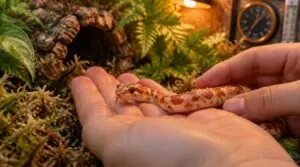
Patience is the secret weapon of smart hatchling care! Your tiny snake needs time to settle, so wait five to seven days after its first shed before you handle it at all. Early handling raises stress hormones and can shut down the feeding response.
Patience is a hatchling snake’s best friend, so wait until a week after its first shed before handling it
Keep sessions under five minutes during the first month, and handle once a week at most until feeding is regular. Approach from the side, never from above, and support the full body midsection without gripping the head or tail. Wash your hands before and after.
Watch for tight coiling, striking, musking, or rapid tongue flicking with retreat. That’s reptile stress, so return your hatchling to its enclosure immediately. Keep humidity control and temperature steady while settling!
Monitor Hatchling Shedding, Growth, and Health
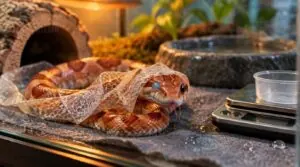
Imagine this: your corn snake hatchling’s eyes go milky blue on Monday, and by Thursday it’s wriggling out of a perfect, see-through sock of skin. That’s textbook shedding, and you’ll want to catch every step of it!
Most hatchlings shed within 7 to 10 days of hatching. Once the process starts, it usually wraps up in 24 to 48 hours. Afterward, check the eye caps, tail tip, vents, and joints for leftover skin. Stuck shed on the tail can cut off blood flow, so don’t skip that look.
Weigh your hatchling weekly on a gram scale. Healthy snakes normally double their birth weight within 2 to 3 months, so steady gains mean good snake development. Two weigh-ins in a row showing loss? Something’s wrong.
Watch for wheezing, bubbles at the nostrils, or open-mouth breathing, and isolate any lethargic hatchling right away.
Frequently Asked Questions (FAQs)
Do mother snakes care about their babies?
Think of a mother snake as a delivery driver who drops the package and vanishes! In snake reproduction, most species skip parental care entirely. Newborn snakes and every hatchling arrive ready, and snake independence starts immediately.
What do baby snakes eat after they hatch?
Most newborn snakes eat small rodents, insects, or amphibians, depending on species.
Your hatchling’s prey should match the width of its head. Hatchlings have undeveloped jaws, so they can only swallow prey small enough for them to overpower.
Wait until after the first shed, then start feeding!
How to keep a baby snake alive?
Your hatchling is a tiny clockwork that runs on warmth and patience! Keep enclosure temperature at 75-85°F, humidity at 50-70%, and offer a shallow water bowl for hydration. Wait for the first shed before feeding.
What do newly hatched snakes eat?
Most newborn snakes eat prey matched to their species. Corn snake hatchlings take thawed pinky mice, rough green snakes need pinhead crickets, and garter snakes eat cut earthworms. Wait until after the first shed!
What happens to baby snakes when they hatch?
Picture a viper hatchling slicing through its shell, tongue flicking right away.
You’ll see newborn snakes use an egg tooth, sample chemical cues, and live off yolk sacs. Feeding still waits; temperature and humidity matter.
How long can a hatchling snake go without food?
Think of your hatchling as a tiny camper with a packed lunch! Healthy newborn snakes can often skip several weeks of feeding thanks to yolk reserves, but refusal beyond four to six weeks needs a vet.
Do baby snakes need special lighting requirements?
Light is a hatchling’s quiet clock. Skip UVB; keep a steady day-night cycle. Reptile husbandry separates light from heat: a thermostat-run basking spot, a thermal gradient, and ceramic emitters. That’s environmental management and temperature regulation.
Will siblings fight when housed together?
In a clutch of ten, one dominant hatchling can claim most meals.
Yes, siblings can fight! Snake behavior shifts when hiding spots run short, and predation risk jumps with size gaps. Choose species-specific, independent housing.
How often should newborns shed skin?
Picture a corn snake shedding every twelve days. Your baby snake’s shedding cycle usually runs 2 to 4 weeks. Incubation temperature and growth shape the shedding process. Keep humidity levels at 50 to 60 percent!
Can baby snakes recognize their handlers?
Say you’ve handled the same hatchling every few days for a month, and it finally stops striking. Cute, right? But your baby snake isn’t recognizing you. It’s just learned your scent and routine are safe.
Conclusion
Picture a coiled hatchling the width of a pencil, tucked inside a hide, warm on one side and cool on the other, tongue flicking at a world that’s still brand new. That’s the scene you’re building.
Caring for newborn snakes after hatching comes down to steady warmth, quiet hands, and patience. Let the first shed pass, offer food on schedule, and trust the slow rhythm. Do that, and you’ll watch a fragile newcomer grow strong.