This site is supported by our readers. We may earn a commission, at no cost to you, if you purchase through links.

A hatchling corn snake is about as long as a pencil and thinner than one. It also holds the whole plan for your next 20 years in that small, coiled body.
Right now, a few degrees of heat or a missed shed can matter more than you’d expect. The good news is that hatchlings thrive on routine, and a solid corn snake care sheet for hatchlings turns guesswork into habits you can repeat every day.
From a 10-gallon enclosure with two hides to a warm 88 to 90°F basking spot, a pinky mouse on the right schedule, and the first gentle handling session, each piece below builds your confidence.
Table Of Contents
- Key Takeaways
- Hatchling Corn Snake Enclosure Setup: Size, Substrate, Hides, and Escape-Proofing
- Temperature, Humidity, and Lighting for Hatchling Corn Snakes
- Feeding Hatchling Corn Snakes: Schedule, Prey Size, and Safe Methods
- Helping Your Hatchling Corn Snake Settle in and Get Used to Handling
- Hatchling Corn Snake Health: Shedding, Warning Signs, and Hygiene
- Frequently Asked Questions (FAQs)
- What do I need to take care of a baby corn snake?
- What bedding is best for baby corn snakes?
- What to feed a hatchling corn snake?
- How long can a baby cornsnake go without eating?
- What do newly hatched corn snakes eat?
- How to take care of baby corn snakes?
- How often should I feed my hatchling snake?
- How often do hatchling corn snakes typically shed?
- What color changes occur during hatchling development?
- When should I separate hatchling siblings?
- Conclusion
Key Takeaways
- You’ll set your hatchling up for success with a small, secure enclosure that has two hides, a safe substrate (skip pine and cedar), and a temperature gradient controlled by a thermostat, since your snake can’t regulate its own body heat.
- You should feed frozen-thawed pinky mice, sized to the thickest part of your snake’s body and offered with tongs in a separate container, then leave your snake alone afterward so it can digest.
- You’ll build trust by giving your snake about a week to settle in, letting it learn your scent near its hide, and keeping early handling sessions short and calm.
- You can catch most health problems early by watching each shed for stuck skin (usually a sign of low humidity) and acting fast on open-mouth breathing, wheezing, or bubbles at the nose.
Hatchling Corn Snake Enclosure Setup: Size, Substrate, Hides, and Escape-Proofing
Because of their tiny size, hatchlings do best in a 10-gallon tank with a secure lid, or any enclosure around 18" x 12" x 12". Too much open space can leave your snake stressed and hesitant to eat.
As your snake grows, you’ll need to upgrade its home in stages, and this ball python tank size guide shows what to move up to and when.
Line the floor with 2 to 3 inches of aspen shavings, which are gentle on tiny lungs. Skip pine and cedar, since their oils irritate breathing. Spot-clean daily and refresh everything every few weeks.
Add two hide boxes, one on the warm end and one on the cool end. This creates a simple temperature gradient your snake can use. Choose enclosed, stable hides with a snug fit.
Corn snakes escape easily, so choose an escape-proof enclosure with locking clasps and tight-weave vents.
Temperature, Humidity, and Lighting for Hatchling Corn Snakes
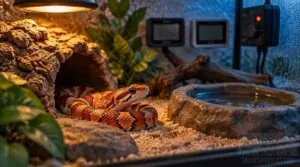
With the enclosure ready, it’s time to dial in the climate. Your hatchling can’t regulate its body heat, so you’ll build a temperature gradient it can move through.
A warm side near 88–90°F and a cooler side in the mid-70s give your hatchling real choices, and it’s one reason newborn ball python aggression often fades once the setup is right.
Aim for 88 to 90°F in the basking area and 78 to 80°F on the cool side. Use a thermostat-controlled heat source, and skip any heat mat under the hide, since it can burn a sleeping snake. Verify with thermometers.
Keep humidity around 55 to 65 percent, checking with a digital hygrometer. Mist lightly once a day only if the air feels dry, and keep a shallow, tip-proof water dish for soaking.
For lighting, run a 12-hour day and night cycle with a basking lamp. UVB is optional and never replaces heat.
A reliable thermostat keeps nighttime temperatures steady while the lights stay off, and this ball python lighting setup guide walks through the whole arrangement.
Feeding Hatchling Corn Snakes: Schedule, Prey Size, and Safe Methods
Now that the climate is steady, your hatchling is ready to eat. Warm temperatures keep digestion working, so feeding goes smoothly.
Start your hatchling feeding schedule once the yolk is absorbed and your snake takes food reliably. Offer a meal every 3 to 5 days, then increase gradually as it grows.
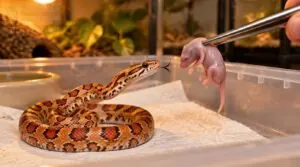
Use prey size matching: pick a pinky about as thick as the widest part of your snake’s body. Frozen-thawed pinky mice work well. Warm them fully before offering.
For feeding safety, use a separate container, hold the prey with tongs, and let your snake strike fully. Skip handling afterward so it can digest, and save gentle handling for later. If it refuses, try a smaller pinky a bit later.
Helping Your Hatchling Corn Snake Settle in and Get Used to Handling
Once your hatchling has eaten and had time to digest, you can start building trust. A stress-free feeding environment helps here, because a snake that eats calmly is far more relaxed afterward.
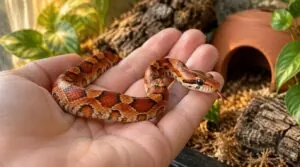
Give your snake a week to settle in before the first session. Start with gentle handling: slide your hand in slowly, let it approach, and support its whole body. Keep early handling sessions to five minutes.
Scent familiarity in snakes matters more than you’d think. Hold your hand near the hide for a few days so your snake learns your smell and stops linking it with food.
Let your hatchling snake learn your scent by resting your hand near its hide, so your smell stops meaning food
Watch its body language. Calm, steady movement means you can add time. Frantic thrashing means stop. Patience shapes hatchling temperament development.
Hatchling Corn Snake Health: Shedding, Warning Signs, and Hygiene
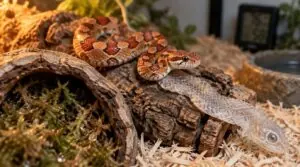
Thanks to a little daily attention, you can catch most health problems early. Shedding is your best clue. A healthy shed comes off in one piece, so check the eyes and tail tip afterward. Stuck patches, called dysecdysis, usually mean low humidity, so confirm it with a hygrometer and add a moist hide filled with damp sphagnum moss.
Watch for open-mouth breathing, wheezing, or bubbles at the nostrils. These point to respiratory issues, and a vet visit shouldn’t wait. A milky eye that stays cloudy after shedding also needs prompt care.
Since stress can bring hidden illnesses to the surface, a proper quarantine period for new snakes lets you catch these warning signs early without risking your other pets.
Weekly weigh-ins make these warning signs easier to spot, and our guide to caring for newborn snakes after hatching explains what healthy early growth looks like.
Keep things clean. Spot-clean waste daily and remove old shed right away, because soggy bedding can lead to scale rot. Keep the basking spot dry and warm every day.
Frequently Asked Questions (FAQs)
What do I need to take care of a baby corn snake?
Worried it’s complicated? It isn’t.
You need a small, secure enclosure size, a temperature gradient, humidity control through a moist hide, frozen-thawed pinkie mice for the hatchling diet, and gentle, safe handling techniques once settled.
What bedding is best for baby corn snakes?
Start with reptile carpet or paper towels for any enclosure setup. They’re easy to clean.
Aspen shavings work later, kept shallow. For substrate safety, skip cedar and pine. Humidity control methods keep the bedding dry.
What to feed a hatchling corn snake?
Most first meals are just 1–2 gram frozen-thawed pinky mice, offered every 5–7 days. That feeding schedule covers hatchling nutrition well.
Thaw prey items to room temperature. Bigger mice join your juvenile snake diet later.
How long can a baby cornsnake go without eating?
One hatchling skipped two meals yet stayed plump.
Most babies manage two missed turns on their feeding schedule. Beyond that point, review hatchling nutrition, growth rate tracking, hatchling weight gain, and a stressfree feeding environment.
What do newly hatched corn snakes eat?
Your hatchling eats frozen/thawed pinky mice, offered every 5 to 7 days. Thaw them fully until warm, then use tongs.
Adjust your feeding schedule to hatchling growth, and keep a fresh reptile water dish filled.
How to take care of baby corn snakes?
Give your corn snake hatchling a secure tank with hides.
Set a temperature gradient with an 80-85°F basking area. Check 40-50% humidity on a hygrometer, offer pinkies on a weekly feeding schedule, plus fresh water.
Beyond daily spot-cleaning, a full boa constrictor enclosure cleaning routine helps keep humidity steady and bacteria from building up.
How often should I feed my hatchling snake?
Offer thawed pinkie mice every 5 to 7 days, sized to your snake’s thickest part.
Since feeding needs shift as hatchlings grow, this guide to the best food for hatchling snakes helps you pick the right prey for your species.
Keep feeding frequency steady, watch growth rate, and skip handling sessions after meals. Fresh water helps hatchling hydration as well.
How often do hatchling corn snakes typically shed?
Your hatchling corn snakes shed every 2 to 4 weeks while growing fast, then settle into a 3 to 6 week shedding cycle. Weekly shedding isn’t normal.
Humidity monitoring matters, so track snake growth stages.
What color changes occur during hatchling development?
Think your snake’s bright colors will last? They won’t. Across hatchling development stages, oranges deepen and markings sharpen toward a mature color pattern. Color morph evolution shapes juvenile snake development, so note sibling separation timing.
When should I separate hatchling siblings?
Separate siblings as soon as they hatch.
Good sibling separation timing means hatchling stress reduction, safer feeding, and steadier juvenile snake development. Individual tubs also make safe snake handling easier through all hatchling development stages.
A simple starter setup uses a 20–50 litre tub with a heat mat covering one third to one half of the floor, a thermostat, two hides, a water bowl, and paper towel or aspen substrate.
Conclusion
Picture a tiny ribbon of orange and red, unspooling across a warm hide as the lights dim. That quiet scene is the payoff for every careful choice you’ve made.
Keep this corn snake care sheet for hatchlings close, and let steady routines do the heavy lifting. Check temperatures, offer meals on schedule, handle gently, and watch each shed. That pencil-thin hatchling becomes a confident, curious companion who trusts your hands. Your twenty years start here.