
This site is supported by our readers. We may earn a commission, at no cost to you, if you purchase through links.

That patch of discolored scales you spotted during feeding time isn’t just a cosmetic issue—it’s your snake’s skin waving a red flag. Skin lesions in pet snakes range from minor irritations that heal with a habitat tweak to serious infections that demand immediate veterinary attention.
The tricky part? Early signs often mimic normal shedding, leaving even experienced keepers second-guessing whether that crusted area or reddened belly needs intervention.
Bacterial invaders, fungal colonizers, parasitic freeloaders, and even seemingly harmless substrate choices can all trigger lesions that compromise your snake’s protective barrier. Understanding what you’re looking at—and what caused it—determines whether your scaly companion recovers quickly or faces complications that spiral into systemic illness.
Table Of Contents
- Key Takeaways
- What Are Skin Lesions in Pet Snakes?
- Causes of Skin Lesions in Snakes
- Identifying and Diagnosing Skin Problems
- Treating Skin Lesions in Pet Snakes
- Preventing Skin Lesions and Recurrence
- Frequently Asked Questions (FAQs)
- What are the symptoms of paramyxovirus in snakes?
- What does snake skin rot look like?
- What does it look like if a snake has mites?
- How do you treat snake dermatitis?
- Can diet deficiencies cause skin lesions in snakes?
- How long does lesion healing typically take?
- Are certain snake species more prone to lesions?
- Can skin lesions spread between housed snakes?
- When should you seek emergency veterinary care?
- Conclusion
Key Takeaways
- Skin lesions in pet snakes signal underlying health or environmental problems ranging from bacterial and fungal infections to parasitic infestations, each requiring specific identification and treatment protocols rather than guesswork.
- Early detection through routine physical examination—checking for discolored scales, crusting, swelling, or abnormal discharge—prevents minor skin issues from escalating into systemic infections like septicemia that demand emergency veterinary intervention.
- Proper husbandry forms your first line of defense: maintaining species-appropriate humidity (40-60%), temperature gradients (75-90°F), weekly substrate changes, and daily water bowl sanitation dramatically reduces lesion occurrence and recurrence.
- Treatment success depends on accurate diagnosis through veterinary testing (cultures, blood work, histopathology) followed by targeted therapy—topical or systemic antibiotics for bacterial infections, antifungals for dermatophytosis, and acaricides for mite infestations—combined with consistent wound care and environmental optimization.
What Are Skin Lesions in Pet Snakes?
Skin lesions in pet snakes are abnormal changes on the skin’s surface that signal something’s wrong with your snake’s health or environment. These aren’t just cosmetic issues—they’re your snake’s way of showing you there’s an underlying problem that needs attention.
Catching these early—along with other warning signs like cloudy eyes or mouth rot—is key to preventing serious snake health issues down the line.
Let’s look at what these lesions actually are, how they’re different from normal shedding, and the key warning signs you shouldn’t ignore.
Common Types of Skin Lesions
Your snake’s skin lesions fall into several key categories. Bacterial infections often show as scale rot with reddened, ulcerated areas.
Fungal lesions appear as crusty, scaly patches, while mite infestations leave tiny dark bugs and irritated skin.
Viral lesions can resemble wart-like growths. Parasite dermatitis causes lifting scales and secondary skin infections requiring prompt attention.
Understanding different types of skin lesions can help guide proper identification and treatment.
How Lesions Differ From Normal Shedding
Normal shedding follows a predictable cycle tied to growth, while lesions don’t align with your snake’s molting schedule. Lesions show irregular borders, abnormal colors, and may ooze or crust—features absent in routine skin renewal.
Unlike uniform shedding patterns, lesion evolution can include changes in size and depth over time, creating diagnostic challenges when distinguishing between normal scale turnover and actual dermatitis or scale rot. For a deeper understanding of how veterinarians distinguish between, reviewing current clinical guidelines can be invaluable.
Visual Signs and Symptoms
Once you spot the difference, look closer at your snake’s skin. Blistering skin or reddened scales around a lesion signal irritation or infection. Crusting scabs form over wounds, while swelling suggests deeper trouble beneath the surface.
Darkened patches or pale areas hint at tissue damage—classic signs of scale rot and dermatitis that distinguish real skin disorders from harmless shedding events.
Causes of Skin Lesions in Snakes

Skin lesions don’t just appear out of nowhere—there’s always a root cause hiding behind those scaly patches and unusual bumps. Understanding what triggers these problems puts you in the driver’s seat regarding protecting your snake’s health.
Bacterial infections often start small but can quickly escalate, so knowing how to treat snake bacterial infections early makes all the difference in recovery.
Understanding what triggers skin lesions puts you in control of protecting your snake’s health
Let’s break down the main culprits you need to watch for.
Bacterial Infections
When bacteria like Staphylococcus or Pseudomonas invade your snake’s skin, they transform minor wounds into moist, foul-smelling sores that can trigger bacterial dermatitis or even septicemia. These bacterial strains thrive in warm, humid enclosures, releasing bacterial toxins that damage tissue and create stubborn abscesses.
Without proper infection control and targeted antibiotic therapy, wound healing stalls and antibiotic resistance becomes a real concern.
Fungal Infections
Mold colonies and yeast don’t wait for an invitation—they invade your snake’s skin through tiny abrasions and multiply fast. Fungal spores thrive in damp enclosures, causing skin mycoses that show up as crusty, scaly patches along the belly or sides. Dermatophyte infections and fungal lesions demand prompt antifungal therapy to stop progression and restore reptile skin health.
- Yellow or brown crusting signals active dermatophytosis
- Damp substrate creates ideal conditions for fungal growth
- Ventral scales often show the first fungal lesions
- Shedding problems frequently accompany snake skin problems
- Antifungal treatment must target the specific organism
Parasites and Mite Infestations
Tiny arachnids—Ophionyssus natricis and Veitchia—feed on your snake’s skin, leaving reddish specks and triggering relentless rubbing. Snake mite infestations spread fast through shared enclosures, interrupting shedding and causing lesions that invite fungal infections.
Inspect ventral scales for live skin mites, then implement parasite control through veterinary acaricides and thorough cage cleaning. Repeat mite eradication treatments over two to three weeks to break the mite life cycle completely.
Environmental and Husbandry Factors
Beyond microbes and parasites, your snake’s habitat itself can cause lesions. Enclosure design with rough edges, improper substrate selection, and unchecked humidity control create friction points and moisture traps.
Temperature gradients outside the 78–90°F range stress skin integrity, while poor reptile husbandry—stale water, inadequate lighting options—compounds snake skin problems.
Monitor habitat conditions daily using thermometers and hygrometers to prevent environmental damage.
Identifying and Diagnosing Skin Problems
Spotting a skin problem early can make all the difference in your snake’s recovery. You’ll want to know what warning signs to watch for during your regular checks, when it’s time to call the vet, and how diagnostic tests pinpoint the exact cause.
Let’s walk through how to identify skin issues and get the right diagnosis for your pet.
Physical Examination and Warning Signs
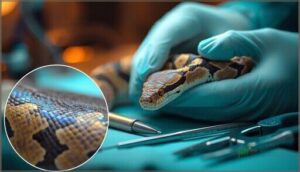
You’ll want to start with a thorough scale assessment, checking your snake’s skin for color changes, lumps, or crusting. Lesion characterization means noting size, location, and texture of any wounds or ulcers.
Watch for behavioral changes like reduced appetite or reluctance to move. Don’t overlook critical signs—track weight, hydration, and body temperature.
Early detection of reptile skin infections and snake skin problems makes all the difference.
Laboratory Tests and Veterinary Diagnostics

Sometimes a visual check isn’t enough—that’s when veterinary care steps in. Blood analysis reveals infection markers and organ stress. Microbiology tests pinpoint bacteria or fungi causing skin problems. Diagnostic imaging detects deeper infectious diseases, while histopathology examines tissue at the cellular level.
Serology screening and culture-sensitivity testing guide targeted treatments, ensuring your reptile health and wellness plan addresses dermatology issues effectively.
Species-Specific Considerations

Not all snakes face the same dermatology challenges. Ball pythons and other species with high humidity tolerance often hide skin problems under retained moisture during shedding cycles.
Scale patterns matter too—constrictors with thick skin show lesions on ventral scales, while colubrids with finer patterns reveal snake skin conditions around the head.
Species variance shapes how you’ll spot reptile skin issues early.
Treating Skin Lesions in Pet Snakes

Once you’ve spotted a skin problem on your snake, acting quickly makes all the difference in recovery. Treatment usually starts with simple steps you can handle at home, then moves to veterinary care if the issue runs deeper.
Let’s walk through what you can do right away, when medications become necessary, and how to support your snake’s healing along the way.
Home Care and First Steps
First aid for snake skin problems starts at home, before you ever reach the vet. Clean the affected area gently with mild, unscented soap and warm water twice daily to support skin hygiene and recovery. Pat the wound dry with clean gauze after each cleaning session. Avoid alcohol or hydrogen peroxide on open skin—they delay healing and irritate tissue. Keep the enclosure spotless and substrate smooth to minimize friction on belly lesions where blister disease often appears.
Here are your essential first steps:
- Inspect daily – Check lesions for changes in size, color, or discharge, documenting with photos for reference.
- Improve habitat conditions – Adjust humidity to species-appropriate levels (usually 40-60%) and guarantee proper temperature gradients to promote healing.
- Monitor eating and behavior – Track appetite and activity; declining interest signals it’s time for professional help.
If redness, swelling, or foul odor develops, don’t wait. Your home treatment sets the stage for recovery, but knowing when to seek veterinary care is just as vital for your pet snake’s health.
Medications and Veterinary Treatments
Once you’ve tackled initial wound care, your vet will guide the next phase. Antibiotic therapy—such as amoxicillin at 10 mg/kg every 12 hours—treats bacterial infections, while antifungal medications like itraconazole target stubborn fungal lesions.
Medication safety matters: dosing depends on your snake’s species and weight. Veterinary guidance ensures accurate reptile disease diagnosis, treatment, and prevention, protecting your pet from complications that home remedies can’t fix.
Supportive Care and Wound Management
Beyond medications, your snake needs daily wound cleaning with lukewarm sterile saline—flush gently twice to remove bacteria. Thermal support means holding temps in your species’ sweet spot so healing kicks in. Nutritional aid and skin hydration prevent setbacks during recovery.
Change nonadherent dressings every 24–48 hours, watch for infection signs, and keep humidity dialed in—your dermatology toolkit against dermal infections and fungal trouble.
Preventing Skin Lesions and Recurrence
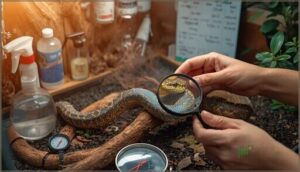
Once you’ve treated your snake’s skin lesions, the real work begins—keeping them from coming back. Prevention isn’t complicated, but it does require consistency in three main areas: keeping the habitat clean, dialing in the right environmental conditions, and staying ahead of problems through regular monitoring.
Let’s walk through each of these strategies so your snake stays healthy and lesion-free.
Habitat Hygiene and Maintenance
Think of your snake’s enclosure as its immune system’s first line of defense—when habitat hygiene falters, snake skin problems multiply fast. Preventing lesions starts with smart sanitation protocols and consistent reptile care routines that eliminate infection risks before they start.
Here’s your weekly enclosure cleaning checklist:
- Scrub surfaces with reptile-safe cleaner to remove biofilm and waste buildup
- Replace substrate weekly to prevent moisture accumulation and bacterial growth
- Sanitize water bowls daily using hot water and thorough rinsing
- Clean ventilation systems monthly to maintain proper airflow and humidity control
- Quarantine new snakes in separate enclosures for at least 30 days
Proper Humidity and Temperature Control
Your snake’s environment walks a tightrope—too dry and skin tears during shedding, too humid and infections bloom. Thermal gradients between 75 and 90 degrees Fahrenheit paired with humidity levels around 40 to 60 percent create the sweet spot for snake health.
Use digital thermometers and hygrometers twice daily, adjusting ventilation systems and water dish placement to fine-tune environmental monitoring and prevent snake skin problems.
Routine Health Checks and Quarantine Practices
Monthly inspections catch skin issues before they spiral—check scales, vent, and mouth for discharge or swelling. Quarantine new arrivals six to twelve weeks in a separate enclosure with dedicated tools to prevent cross-contamination.
Document changes with photos and weights, keeping a health log for your vet. These preventive measures form the backbone of reptile health, safeguarding your snake from persistent pet snake health issues.
Frequently Asked Questions (FAQs)
What are the symptoms of paramyxovirus in snakes?
When paramyxovirus hits, it’s like dominoes falling—respiratory issues appear with nasal discharge and wheezing, followed by neurological signs like head tilting, skin lesions from secondary infections, appetite changes, and odd behavioral abnormalities.
What does snake skin rot look like?
Scale rot symptoms include reddish or brown blotches on scales with crusty edges, often accompanied by swelling, pus, and a foul odor. Blisters may form, turning pink or yellow as infection worsens.
What does it look like if a snake has mites?
An infestation can turn your snake’s world upside down—tiny black specks crawl between scales, crusty patches form, and irritated reptile skin shows redness where mites feed, causing visible skin infections and irritation.
How do you treat snake dermatitis?
Treating bacterial dermatitis starts with gentle saline cleaning and topical antibiotics like mupirocin.
Fungal infections need antifungal therapy—clotrimazole for mild cases, voriconazole for deeper dermatophytosis.
Your vet determines whether systemic medications are necessary.
Can diet deficiencies cause skin lesions in snakes?
Think of your snake’s diet as the foundation of a house—without solid nutrition, the whole structure suffers. Nutrient deficiencies and dietary imbalances absolutely trigger skin lesions, causing dermatological conditions through malnutrition effects that compromise reptile skin health and barrier function.
How long does lesion healing typically take?
Healing time frames depend on lesion depth factors and wound closure rates. Superficial snake skin problems resolve in one to two weeks, while deeper dermatological conditions need three to eight weeks with proper care.
Are certain snake species more prone to lesions?
Yes—pythons and boas top the charts for Species Susceptibility to skin lesions. Their Breed Predisposition stems from humidity demands and retained sheds, making reptile skin health management essential.
Lesion Patterns vary, but Environmental Risks and Snake Genetics play key roles in snake skin conditions like snake fungal disease.
Can skin lesions spread between housed snakes?
Absolutely. Infectious diseases like fungal infections and bacterial skin lesions can jump from snake to snake through direct contact or shared surfaces. That’s why quarantine methods and infection control matter so much for disease prevention.
When should you seek emergency veterinary care?
Seek emergency veterinary care if your snake shows severe distress, open-mouth breathing, uncontrolled bleeding, sudden collapse, suspected toxic ingestion, or rapidly spreading infections that could progress to septicemia within hours.
Conclusion
Here’s the reality: skin lesions in pet snakes don’t resolve through wishful thinking—they demand your action. That questionable spot you’re monitoring right now? It’s either healing or worsening while you debate.
Trust your instincts when something looks off, adjust husbandry before minor issues escalate, and never hesitate to consult your reptile vet.
Your snake’s skin tells its health story in real time. Learn to read it, respond decisively, and you’ll prevent most problems before they become crises.