This site is supported by our readers. We may earn a commission, at no cost to you, if you purchase through links.

A ball python refusing food for three months, then eating an oversized rat and regurgitating it hours later, is not a quirky personality trait. It’s a keeper error with real physiological consequences, including damaged esophageal tissue and a digestive reset that sets the animal back weeks.
Prey sizing, thermal conditions, and feeding intervals work as a system. Get one wrong, and the others can’t compensate. Wild ball pythons eat fewer than a dozen meals per year, which means every feeding decision in captivity carries more weight than most keepers expect.
This snake feeding guide for ball pythons gives you the specific numbers and sequences to get it right.
Table Of Contents
- Key Takeaways
- Choose The Right Prey Type, Size, and Meal Amount for Your Ball Python
- Set a Ball Python Feeding Schedule by Age, Weight, and Body Condition
- Safely Thaw, Warm, and Offer Prey While Preventing Feeding Problems
- Top 5 Essential Products for Ball Python Feeding and Digestion
- Frequently Asked Questions (FAQs)
- What is the best feeding schedule for ball pythons?
- Can you feed ball python 2 days in a row?
- How do you tell if a ball python is hungry?
- How long can a ball python go without feeding?
- What’s a good feeding schedule for a ball python?
- How do I properly feed my ball python?
- Can my ball python go 2 weeks without eating?
- How much should I feed my ball python?
- Should I feed my ball python at night or during the day?
- Can I hold my ball python 24 hours after feeding?
- Conclusion
Key Takeaways
- Prey size, feeding intervals, and enclosure temperature work as one system — get any single variable wrong and the others can’t make up for it.
- Match prey width to the thickest part of your snake’s body, not its head, and adjust at every feeding as girth changes.
- Weigh your snake before every meal using a gram-accurate scale, and let body condition — not appetite or fixed age milestones — drive your schedule.
- After feeding, hold off on handling for at least 48 hours, since stress-triggered regurgitation damages esophageal tissue and sets digestion back by weeks.
Choose The Right Prey Type, Size, and Meal Amount for Your Ball Python

Every prey item you offer carries direct consequences for your ball python’s health. Match the prey size to the widest point of your snake’s midsection, not its head, and you avoid the two most damaging errors: impaction risk and snake obesity prevention failures caused by chronic overfeeding.
Consulting a ball python feeding guide with frozen prey sizing tips can help you calibrate meal frequency and feeder dimensions before regurgitation or impaction becomes a costly problem.
Start hatchlings on pinky mice, shift juveniles to fuzzies, and move adults to small rats once their body weight can support higher caloric density. Rats are more efficient for larger snakes, but mice work fine through early growth stages.
Consult prey sizing charts regularly as your snake grows. A slight lump post-feeding is normal. A severely distorted bulge isn’t. Reassess the prey item at every feeding if your snake’s girth has visibly changed.
Set a Ball Python Feeding Schedule by Age, Weight, and Body Condition
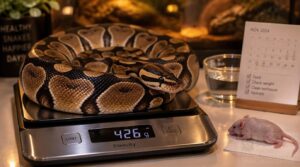
Once you’ve matched prey size correctly, timing is the next variable to lock in. Your ball python feeding schedule depends on three intersecting factors: age, body weight, and body condition.
Hatchlings under 300 grams eat every 5 to 7 days. Juveniles shift to every 7 to 10 days as growth begins plateauing. Sub-adults need feeding every 10 to 14 days, and adults over three years require only every 14 to 21 days.
Don’t guess. Always weigh your snake before every meal. Weight monitoring is your most reliable tool, and any ball python feeding guide worth following makes it non-negotiable. Use a digital scale accurate to 1 gram. Body condition scoring, not appetite alone, tells you when to adjust your schedule. In the wild, ball pythons may eat fewer than a dozen times per year, so skipping meals is normal as long as your snake doesn’t lose more than 10% of its body weight.
Safely Thaw, Warm, and Offer Prey While Preventing Feeding Problems
Once your schedule is locked, execution matters just as much. Thawing frozen prey incorrectly undermines all of it. Refrigerate the prey overnight first, then submerge it in a sealed bag within warm water until the internal temperature reaches 98°F to 105°F. Never microwave it; hot spots cook internal organs and cause the rodent to rupture during constriction.
Thaw prey overnight, then warm to 98–105°F in water — never microwave it
Always check the thickest belly section before offering. If the center’s still frozen, your snake may refuse or, worse, regurgitate after swallowing, which halts enzymatic digestion entirely.
After feeding, don’t handle your snake for at least 48 hours afterward. Stress triggers regurgitation as a defense response. If it does regurgitate, withhold food for two to three weeks to let the esophageal lining recover.
A lightweight snake hook lets you gently reposition your snake into its hide without triggering the stress that causes regurgitation.
Top 5 Essential Products for Ball Python Feeding and Digestion
Getting your feeding routine right depends as much on your tools as your technique. The five products below cover accurate prey weighting, precise temperature control, and proper digestion support. Each one directly combats a variable that determines whether your ball python feeds reliably and stays healthy.
Pairing the right tools with accurate prey sizing for ball pythons removes the guesswork that causes most feeding refusals before they start.
1. Ozeri Pronto Digital Kitchen Scale

A single gram difference in prey weight can push your feeding ratio off target. The Ozeri Pronto reliably catches it.
Its Variable Graduation Technology reads to 0.1 g for weights under 1,000 g, covering every juvenile and most adult ball pythons you’ll weigh. Above that, it shifts to 0.5 g increments up to 6,000 g total capacity. That range covers both snake and prey in one tool.
Use the tare function to zero out a deli cup or small container before placing prey inside. No estimation, no math. The unit button cycles through six measurement options, including grams and ounces, with audible click feedback confirming each press.
One caveat: the default 2-minute auto-off activates during inactivity. Switch it to 5 minutes if you need more time between weighing steps.
| Best For | Reptile keepers who need precise prey and animal weights without buying a dedicated herp scale. |
|---|---|
| Tare Function | Yes |
| Max Capacity | 6,000 g |
| Auto Shutoff | 2–5 min |
| Max Temperature | N/A |
| Thermostat Required | N/A |
| Material | Polycarbonate |
| Additional Features |
|
- Reads to 0.1 g for weights under 1,000 g, catching small differences in prey size that matter for accurate feeding ratios
- Tare function zeros out a deli cup or container so you get a clean prey weight with no mental math
- Covers a wide range up to 6,000 g, handling both prey items and larger adult snakes in one tool
- The default 2-minute auto-off can cut out mid-session if you’re moving slowly between animals or prey items
- Very light items (a few grams) read more accurately when placed in a tared container rather than directly on the platform
- The polycarbonate body has mixed durability reviews, with some users reporting cracks or breaks after several months of regular use
2. Amazon Basics Digital Kitchen Scale
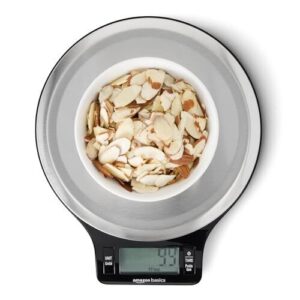
Five thousand grams of capacity and a stainless steel platform make this scale more than adequate for tracking your ball python’s prey intake without overspending. The 2 g minimum increment won’t satisfy you if you’re weighing hatchlings under 100 g, but for any snake past 500 g, it’s completely sufficient for accurate meal sizing.
The tare function lets you zero out a container and weigh prey directly, keeping your workflow clean and your logs accurate. It reads in grams, ounces, pounds, and milliliters, and the LCD updates within 1-2 seconds of stabilization. Auto-off kicks in after two minutes of inactivity, which helps extend the battery life between feedings.
If you’re consistently feeding an adult ball python, this scale gets the job done reliably and without unnecessary complexity.
| Best For | Budget-conscious snake keepers who want reliable, no-frills measurements for ball pythons over 500 g |
| Power Source | 2 AAA batteries (included) |
| Material | Stainless steel/BPA-free plastic |
| Auto Shutoff | 2 minutes of inactivity |
| Max Capacity | 11 lb / 5,000 g |
| Min Increment | 2 g |
| Display Units | Grams, ounces, pounds, milliliters |
| Additional Features | Tare function, stainless steel platform |
| Best For | Budget-conscious reptile keepers who want a reliable, no-frills scale for tracking prey intake for ball pythons over 500 g. |
|---|---|
| Tare Function | Yes |
| Max Capacity | 5,000 g |
| Auto Shutoff | 2 min |
| Max Temperature | N/A |
| Thermostat Required | N/A |
| Material | Stainless steel/plastic |
| Additional Features |
|
- 5,000 g max capacity with a stainless steel platform covers the full range of adult ball python feeding needs
- Tare function lets you zero out a container and log prey weight directly, keeping records clean and accurate
- Reads in multiple units (grams, ounces, pounds, milliliters) with a clear LCD and quick stabilization
- The 2 g minimum increment makes it unsuitable for weighing hatchlings or very young snakes under 100 g
- Some units have reported sporadic weight fluctuations and calibration issues over time
- Plastic components, while BPA-free, may not hold up as well as an all-metal build after drops or heavy use
3. Exo Terra Outback Terrarium
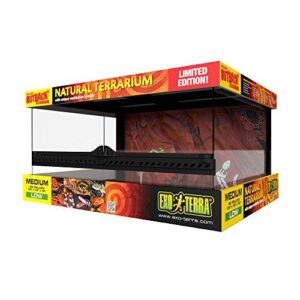
Enclosure choice directly affects feeding success, and the Exo Terra Outback Terrarium (model PT2604P, made by Hagen) earns its place here. Measuring 25 x 19.6 x 13.3 inches, it gives a medium-sized ball python usable floor space for roaming, plus the front-opening double doors that make feeding far less stressful.
Why does that matter? Reaching in from the front means you’re not looming over your snake like an aerial predator. That single design detail reduces feeding strikes and stress responses, especially during a consistent feeding window.
The stainless-steel screen cover is secured by four twist locks, so escape risk stays near zero. A removable styrofoam background with aboriginal artwork hides cable management, though handle it carefully; it sheds foam flakes when moved. Note the cord access holes sit only at the back, so plan your heat and lighting placement accordingly.
| Best For | Reptile owners with medium-sized terrestrial species like bearded dragons or leopard geckos who want a spacious, escape-proof enclosure with easy front-access feeding. |
|---|---|
| Tare Function | N/A |
| Max Capacity | N/A |
| Auto Shutoff | N/A |
| Max Temperature | N/A |
| Thermostat Required | N/A |
| Material | Stainless steel screen |
| Additional Features |
|
- Front-opening double doors let you feed without hovering over your animal, reducing stress and feeding strikes
- Four twist-lock stainless-steel screen cover keeps escape risk extremely low
- Removable background with hidden cable management keeps the setup clean and tidy
- The styrofoam background sheds foam flakes when handled or moved
- Cord access is limited to the back of the enclosure, requiring careful planning for heat and lighting
- Running cords along the sides blocks use of the mesh top cover
4. Zilla Medium Terrarium Heat Mat
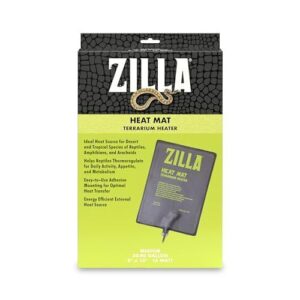
Poor digestion is the most common consequence of an inadequately heated enclosure. Ball pythons need consistent belly heat to metabolize prey properly, and the Zilla Medium Terrarium Heat Mat delivers exactly that without high operating costs.
Its carbon fiber heating element self-regulates at a maximum of 113°F, spreading infrared warmth evenly across the tank floor without creating dangerous hot spots. At just 16W, it’s one of the most energy-efficient options for 30-40 gallon setups.
The adhesive backing mounts directly to glass, but plan on reinforcing it with tape over time since the grip weakens during repeated heat cycles. Always pair this mat with an external thermostat set to 30-33°C for ball pythons. Without one, surface temperatures can fluctuate and expose your snake to burns or inadequate warmth during critical digestion periods.
| Best For | Reptile and amphibian keepers who want an affordable, energy-efficient under-tank heat source for small to medium enclosures housing species like ball pythons, corn snakes, or leopard geckos. |
|---|---|
| Tare Function | N/A |
| Max Capacity | N/A |
| Auto Shutoff | N/A |
| Max Temperature | 113°F |
| Thermostat Required | Yes |
| Material | Carbon fiber element |
| Additional Features |
|
- Self-regulating carbon fiber element caps at 113°F, reducing the risk of dangerous hot spots on the tank floor.
- Infrared heat distributes evenly across the surface, supporting consistent belly warmth that aids digestion.
- At 16W, it draws very little power, making it a cost-effective option for 30–40 gallon setups.
- The adhesive backing tends to lose grip over time with repeated heat cycles, requiring tape or other reinforcement.
- Does not emit infrared A or B spectrum light, so it can’t replace UVB or basking sources that some species need.
- May struggle to heat larger tanks or enclosures with thick substrate without a supplemental heat source.
5. Sweeter Infrared Side Mount Heater
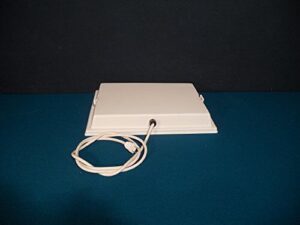
Imagine your ball python pressing against the cool wall because floor heat isn’t reaching the upper third of its enclosure. That’s a thermal gradient failure, and it triggers feeding refusals fast.
The Sweeter Infrared Side Mount Heater fixes this by delivering radiant heat directly to your snake rather than warming the surrounding air. Its 50W output through an 11×16-inch panel covers 176 square inches, and the lens surface holds steady between 160 and 180°F with no hot spots. Mount it 6 to 20 inches above your snake, on the basking side, and track your gradient with a temperature log over 14 days to verify stability.
You must run it through an external thermostat. Without one, lens temps can climb past 200°F. Its sealed construction also lets you wash it down between cleanings, which most heaters can’t handle.
| Best For | Reptile keepers, poultry breeders, and pet owners who need targeted radiant heat delivered from the side or above rather than through the floor. |
|---|---|
| Tare Function | N/A |
| Max Capacity | N/A |
| Auto Shutoff | Snap action |
| Max Temperature | 160–180°F |
| Thermostat Required | Yes |
| Material | Sealed construction |
| Additional Features |
|
- Delivers radiant heat directly to the animal instead of warming the surrounding air, making it ideal for creating precise thermal gradients in enclosures.
- Sealed construction allows the unit to be washed down, a rare and practical advantage over most heaters used in animal setups.
- Mounts to walls or ceilings and covers 176 square inches with a stable, consistent surface temperature and no hot spots.
- Requires an external thermostat to operate safely — without one, lens temperatures can exceed 200°F and become a burn hazard.
- Emits fumes during initial use, so the unit needs to be run in a ventilated area before placing it near animals.
- Heat distribution is stronger at the center than the edges, which can create uneven coverage depending on enclosure layout.
Frequently Asked Questions (FAQs)
What is the best feeding schedule for ball pythons?
Feed your ball python by weight: hatchlings under 200 grams every 5–7 days, juveniles 200–500 grams every 7–10 days, and adults over 700 grams every 14–21 days. Adjust your feeding schedule using body condition, not age alone.
Can you feed ball python 2 days in a row?
No, don’t feed two days in a row. Regurgitation risk climbs when the prior meal isn’t digested, and overfeeding follows quickly. Wait your normal interval; only juveniles on tight schedules justify closer spacing.
How do you tell if a ball python is hungry?
Many keepers assume a roaming python is starving, but activity alone proves nothing. Check tongue-flicking, prey-scent tracking, front-of-encounter pacing, and a healthy body weight. Recent meals, low temperatures, or digestion explain most feeding refusal.
How long can a ball python go without feeding?
Surprised by a week-long feeding refusal? Healthy adults can fast for 1 to 3 months safely, but juveniles can’t. They need food every 2 weeks. Weigh your snake monthly and apply the 10% weight rule.
What’s a good feeding schedule for a ball python?
Ball pythons eat 14 to 21 days apart as adults, but that shifts by age. Hatchlings need prey every 5–7 days, juveniles every 7–10, and adults every 10– Feeding frequency drops as body weight climbs.
Since every species has its own habits and prey preferences, a reptile diet plan matched to your pet’s feeding style helps you adjust portions as it grows.
How do I properly feed my ball python?
Think the details don’t matter here? Offer a thawed, warmed whole rodent sized to 10–15% of your ball python’s body weight, presented with tongs every 10–21 days, timed to its active feeding period at night.
Can my ball python go 2 weeks without eating?
An adult ball python can go two full weeks without eating just fine. Juveniles aren’t as forgiving, since younger snakes need more consistent prey to support healthy growth and maintain steady weight gain throughout early development.
How much should I feed my ball python?
Picture each meal as a slight bulge moving slowly down. Feed hatchlings every 5 to 7 days, juveniles every 7 to 10 days, and adults every 14 to 21 days, at 10% of body weight.
Since every snake is different, check body condition monthly and stretch or shorten the gap as needed, and this guide to what corn snakes eat in captivity covers prey choices too.
Should I feed my ball python at night or during the day?
Want to know why your snake refuses daytime meals? Feed at night. Offer prey shortly after lights out, usually 8–11 PM, when your snake’s natural feeding response peaks.
Dim lighting, quiet surroundings, and cooler evening temperatures trigger hunting behavior. Avoid postfeeding handling for 48 hours.
Can I hold my ball python 24 hours after feeding?
24 hours isn’t enough. Wait 48 to 72 hours before postfeeding handling, as digestion is still active and stress can trigger regurgitation. That’s a traumatic event your ball python may need weeks to recover from.
Conclusion
A keeper who drops prey size by one grade, confirms the warm side holds at 88-92°F, and waits the full two weeks between meals will often watch a stubborn pattern of refused meals disappear within one or two feeding cycles.
That’s not coincidence. This snake feeding guide for ball pythons works because prey size, temperature, and timing function as one connected system. Get all three right, and your snake eats cleanly and consistently for years.