This site is supported by our readers. We may earn a commission, at no cost to you, if you purchase through links.

Your snake looks healthy to you. Round, thick, comfortable. But that "healthy" girth could be fat pushing its scales apart, and the damage is already underway inside.
Snake obesity health risks don’t announce themselves. Fat creeps around the liver until it fails. It crowds the oviduct until a breeding female can’t pass her eggs. By the time you notice, you’re managing a crisis, not preventing one.
The good news: obesity in snakes is entirely preventable, and reversible if you catch it early. Here’s how to spot it, stop it, and fix it safely.
Table Of Contents
- Key Takeaways
- What Causes Obesity in Pet Snakes?
- How Can You Tell if Your Snake is Overweight?
- What Are The Health Risks of Snake Obesity?
- How Do Veterinarians Diagnose Snake Obesity?
- How Can You Prevent Snake Obesity?
- How Can an Obese Snake Lose Weight Safely?
- Frequently Asked Questions (FAQs)
- What happens if a snake overeats?
- Is morbid obesity curable?
- Is eating snake meat healthy?
- How much do morbidly obese people eat?
- Can obese snakes survive without food longer?
- Which snake species are most obesity-prone?
- How often should I weigh my snake?
- What temperature helps prevent snake weight gain?
- Do young snakes get obese faster?
- How often should I weigh my adult snake?
- Conclusion
Key Takeaways
- Obesity in snakes silently damages organs — especially the liver — long before any outward signs appear, making early detection through monthly body condition checks essential.
- The two deadliest consequences of snake obesity are fatty liver disease and egg-binding in breeding females, both of which can be fatal if left unaddressed.
- Overfeeding with oversized prey combined with small, unstimulating enclosures is the primary driver of obesity, and fixing both is necessary for meaningful prevention.
- Safe weight loss in snakes requires a slow, vet-guided approach — targeting just 1–2% body weight loss per month — because cutting food too fast can trigger the very liver disease you’re trying to prevent.
What Causes Obesity in Pet Snakes?

Snake obesity almost always comes down to a handful of controllable root causes. Most of them are things you’re doing — or not doing — every day. Here’s what’s actually driving the problem.
If you want to see how these habits stack up in real-world setups, this breakdown of what causes snake obesity covers each one in detail.
Overfeeding And Large Prey
The most common feeding mistake is overfeeding with large prey. Prey size appropriateness matters: most snakes do well on prey around 10-15% of body weight. Go bigger repeatedly and calories stack up fast.
Powerfeeding and careless prey item selection create a sustained calorie surplus. Your snake simply won’t burn it off, and reversing that fat takes months of deliberate adjustment.
Limited Activity
Overfeeding stacks calories. Low activity in captivity locks them in.
Sedentary lifestyle compounds the problem. Snakes in small enclosures rarely move enough to offset even modest meals, pushing energy balance toward fat.
Watch your snake carefully for:
- Extended time coiled without moving
- Soft, poorly toned musculature
- Sluggish feeding response
- No exploratory behavior
- Ignoring available enrichment
Activity promotion simply isn’t optional.
Improper Enclosure Conditions
Poor enclosure conditions compound low activity. Your snake’s world is small. Set it up wrong, and fat accumulates faster than you’d expect.
And when bad conditions start throwing off your snake’s shed cycle, an irregular shedding frequency guide can help you spot the warning signs early.
| Enclosure Factor | Effect on Weight |
|---|---|
| Too-small enclosure | Prevents movement, reduces burn |
| No temperature gradient | Metabolism slows, fat builds |
| Humidity imbalance | Disrupts shedding, limits activity |
| No regular light-dark cycle | Disrupts feeding patterns and timing |
| No enrichment | Eliminates foraging behavior |
Species And Genetic Factors
Your snake’s biology stacks the deck. Some lines simply store fat faster, and a species comparison proves it: a ball python balloons on meals a corn snake shrugs off. Watch for these:
- Slower metabolism in certain morphs
- Stronger feeding drive in some lines
- Ground-dwellers gaining faster than climbers
- Breeding females holding extra mass
Feed prey size 10-15% body weight, use body condition scoring monthly, and remember: genetic factors make some snakes far more vulnerable to Snake Obesity Health Risks than others.
Since even a properly sized meal can add up over time, this guide to picking the right feeder mouse size for your corn snake makes portion decisions easier at a glance.
How Can You Tell if Your Snake is Overweight?
You can’t rely on looks alone. Snakes hide fat well, and by the time you notice, it’s serious. Start with a Body Condition Score (BCS), the same tool vets use.
Check these three things monthly:
- Scale spreading: healthy scales lie flat; fat pushes them apart, showing skin between rows.
- Visible fat rolls: bulges near the vent or tail base that persist between meals.
- Spine definition: on a lean snake, you can feel the spine through muscle. If you can’t, that’s a red flag.
Also watch behavior. An overweight snake moves sluggishly and explores less.
Keep weight monitoring records. Steady gain on stable feeding schedules means portions exceed energy needs. Compare measurements at the same point in the shed cycle to rule out normal fluctuation.
What Are The Health Risks of Snake Obesity?

You’ve spotted the signs. Now here’s the hard truth: excess fat isn’t cosmetic. It’s actively damaging your snake’s organs right now, and the two conditions below can kill.
Veterinarian Dr. Eric Los Kamp breaks down exactly how obesity in reptiles triggers fatty liver disease and other fatal complications.
Fatty Liver Disease
Here’s the scariest one: fatty liver disease. Your snake’s liver fills with fat, a condition called hepatic lipidosis, and it simply stops working. Early on? Reversible. Wait too long? Permanent organ dysfunction or death. Watch for refusal to eat, lethargy, and yellowish discoloration. Years of visceral fat accumulation and sloppy reptile nutrition cause this. Don’t let it reach that point.
Egg-binding in Breeding Females
Picture a female straining on her perch for days, an egg stuck just inside the cloaca. That’s egg-binding, and it kills.
Obese breeders face the worst odds. Excess fat crowds the oviduct, and fatty liver disease disrupts hormones that drive ovarian follicle development. Eggs stall, harden, obstruct.
Fix it before breeding season: body condition scoring, feeding frequency optimization, proper calcium, correct thermal gradients. Retained eggs mean emergency surgery.
How Do Veterinarians Diagnose Snake Obesity?

Last spring, a corn snake owner brought in a pet she swore was "just big-boned." One exam later, the truth was clear: three years of oversized prey had packed fat around everything.
Your vet won’t guess. They’ll work through a process like this:
- Body condition scoring against species norms, not a universal chart.
- Body palpation techniques to feel subcutaneous fat along the girth.
- Weight monitoring records, tracked against feeding history.
- Veterinary diagnostics, like radiographs or ultrasound, if fat isn’t the whole story.
That last step matters. Fluid, eggs, or organ disease can mimic a chubby silhouette. Expect a body condition index baseline too, so future visits show whether your snake is improving or sliding. Bring your feeding log. It changes everything.
How Can You Prevent Snake Obesity?

Prevention beats treatment, every time. Your snake can’t count calories, so you must.
Start with the feeding schedule. Adults don’t need weekly meals. Feed for body condition, not appetite, and size prey modestly. A snake that strikes eagerly isn’t starving. It’s just a good hunter.
Then fix the environment. Small, barren enclosures create sedentary, fat snakes. Give them room to work:
- Thermal gradients that force movement between warm and cool zones
- Climbing branches, hides, and obstacles that encourage exploration
- Proper humidity, so activity and health stay on track
How Can an Obese Snake Lose Weight Safely?
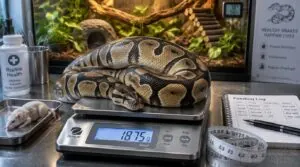
Here’s the truth most snake owners learn too late: your snake can’t crash diet, because cutting food too fast can push an overweight reptile into fatty liver disease faster than the extra pounds ever would. Weight loss in snakes happens in months, not weeks. Your vet builds a measured feeding plan based on body condition, then you follow it exactly.
Crash dieting an overweight snake can trigger fatal fatty liver disease faster than the extra weight ever would
A proper protocol looks like this:
- Feeding frequency adjustment: drop from every 7 days to every 10-14 days for adults, keeping prey size modest
- Gradual reduction: never skip meals entirely; anorexia triggers hepatic lipidosis, the very disease you’re fighting
- Enclosure size and enrichment upgrades: more space and climbing structure means more calories burned, no diet change required
Weigh your snake every 2-4 weeks on a gram scale and log it. Target 1-2% body weight loss monthly. Slow is safe. Fast is fatal.
Also watch protein load. Overfeeding high-protein diets can drive chronic hyperuricemia and gout, so proper weight management means smarter prey choices, not just fewer of them.
Frequently Asked Questions (FAQs)
What happens if a snake overeats?
When your snake overeats, it stores extra calories as fat. That’s a caloric imbalance. The surplus builds into visceral adiposity, crowding organs and triggering fatty liver disease if overfeeding continues.
Is morbid obesity curable?
Curable? Partially. Morbid obesity in snakes is reversible with intervention, but only if you fix the overfeeding and husbandry problems driving it. Organ damage, like fatty liver, may persist. Veterinary intervention and sustained weight loss protocols determine your snake’s outcome.
Is eating snake meat healthy?
It depends on sourcing and preparation. Snakes caught in the wild can carry dangerous pathogens and parasites. Proper cooking reduces risk, but hygiene during handling matters just as much. Always make sure your source is legal.
How much do morbidly obese people eat?
Picture a bottomless bowl. Nobody logs exact calories, but morbidly obese snakes eat more than they burn: oversized prey, constant overfeeding reptiles. The surplus drives fatty liver disease and organ compression. Proper weight management reverses it.
Can obese snakes survive without food longer?
More fat, more time without eating, right? Not quite. Obesity in snakes does extend fasting, but reptile metabolism still scales with temperature, and fatty liver disease makes burning stored fat during long fasts genuinely risky.
Which snake species are most obesity-prone?
Keepers report that over 90% of pet boas are overweight. Ball pythons, boas, and corn snakes consistently top the obesity risk list. Reticulated pythons and arboreal species like green tree pythons are right behind them.
How often should I weigh my snake?
Numbers on a scale don’t lie, but a single reading can. Weigh your snake once a week, and log every result with date and feeding context. The monthly trend is where real fat gain hides.
What temperature helps prevent snake weight gain?
Ironically, your snake needs more heat to actually stay lean. A proper temperature gradient, with an 85-92°F basking spot, drives thermoregulation and digestion, while a 75-85°F cool zone lets it regulate its metabolic rate naturally.
Do young snakes get obese faster?
Yes. Juvenile snakes have higher metabolic rates and bigger appetites than adults. If you’re not adjusting feeding schedules as they grow, chronic overfeeding starts early, setting the stage for obesity in snakes well before adulthood.
How often should I weigh my adult snake?
Weigh your adult snake once a month, always on an empty stomach, at least 48 hours post-feeding. Log every result. Consistent monthly weigh-ins catch dangerous weight trends before they become serious problems.
Conclusion
The cruelest irony in reptile keeping: the snake that looks the most "cared for" is often the sickest. That round, heavy body isn’t thriving. It’s struggling.
Snake obesity health risks build silently, from a failing liver to a breeding female who can’t pass her eggs. But you control every meal, every enclosure, every decision. Catch the signs early, adjust the plan, and your snake gets the long, lean life it was built for.
- https://www.healthwellfoundation.org/realworldhealthcare/obesity-and-fatty-liver-disease-the-link-between-metabolic-disorders-and-nash
- https://www.facebook.com/AmerGastroAssn/posts/did-you-know-obesity-can-affect-the-liver-obesity-can-have-harmful-health-effect/712924824200868
- https://thetyedyediguana.com/blog/is-obesity-unhealthy-for-snakes