This site is supported by our readers. We may earn a commission, at no cost to you, if you purchase through links.

A hatchling corn snake straight out of the egg weighs less than three grams and can strike at prey with surprising precision. Get the feeding wrong, and that precision turns into a problem: a mouse that’s too large causes regurgitation, and a thaw that’s too cold triggers refusal.
Understanding what baby corn snakes eat isn’t just about choosing a prey item. It shapes digestion, growth rate, and long-term feeding behavior. A misstep in the first weeks often creates habits that take months to correct.
This breakdown covers prey sizing, feeding schedules, thawing protocols, and the warning signs you shouldn’t ignore.
Table Of Contents
- Key Takeaways
- What Do Baby Corn Snakes Eat?
- How Often Should You Feed a Baby Corn Snake?
- What Size Mouse Should a Baby Corn Snake Eat?
- How Do You Safely Thaw and Offer Frozen Prey?
- Why Won’t a Baby Corn Snake Eat?
- Frequently Asked Questions (FAQs)
- Are baby corn snakes aggressive?
- How to care for a baby corn snake?
- What can I feed my corn snake if I don’t have mice?
- How often do baby corn snakes need feeding?
- What can you feed baby corn snakes?
- How do you take care of a baby corn snake?
- Should I feed my baby corn snake 2 pinkies?
- How do baby corn snakes hunt in the wild?
- Can baby corn snakes recognize their owners?
- What are signs of a hungry baby snake?
- Conclusion
Key Takeaways
- Feed baby corn snakes pinky mice sized to the widest point of their body (prey no more than 25% of their girth) once every 5–7 days, since an oversized meal causes regurgitation and can set back growth for weeks.
- Thaw frozen prey completely in a sealed bag using cool-to-lukewarm water, warm it to roughly body temperature so scent cues trigger a strike, and never refreeze prey that’s thawed too long.
- Most feeding refusals trace to shedding, stress, or low temperatures—fix husbandry first (warm side near 85°F, skip feeds during sheds), but treat refusal lasting three weeks or more as a veterinary emergency.
- Avoid wild-caught prey, insects as staples, and unverified supplements; hatchlings are rodent specialists, and consistency in schedule and environment matters more than precision.
What Do Baby Corn Snakes Eat?
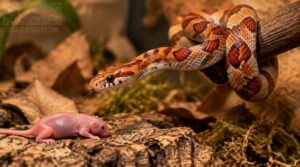
Baby corn snakes have straightforward dietary needs, but getting the details right from the start matters. What you feed them—and how—directly affects their growth, digestion, and long-term health. Here’s what you need to know about their diet.
Factors like feeding frequency, prey size, and the snake’s age all tie together, so reviewing a complete corn snake feeding schedule can help you build a consistent routine from day one.
Pinky Mice as Staple Prey
A pinky mouse is the go-to first food for baby corn snakes. At 1-2 inches, they’re sized perfectly for a hatchling’s jaw.
- Aim for one to two pinkies per week
- Always use frozen prey, thawed completely before offering
- Keep prey diameter under 25% of the snake’s girth
Stick to this routine, and your baby corn snake’s appetite will stabilize quickly.
Wild Versus Captive Diets
In the wild, corn snakes encounter a diverse diet, grabbing whatever prey fits their gape. Captive diet management standardizes prey selection, putting your reptile diet under full control.
| Wild Diet | Captive Diet |
|---|---|
| Irregular prey encounters | Consistent weekly schedule |
| Varied prey types (lizards, birds) | Primarily rodent-based |
| Seasonal gaps in feeding | Controlled prey size progression |
| Natural girth-matched prey | Commercially sourced frozen mice |
Foods and Supplements to Avoid
That control only works if you screen out the wrong items. Skip wild-caught prey, anything exposed to pesticides or rodenticides, and insects as staples; hatchlings are rodent specialists.
For the full thawing and presentation process that makes appropriate prey items work, this ball python feeding guide walks you through each step safely.
Avoid unverified supplements, since improper calcium ratios harm growing snakes. Scented bedding and water additives risk impaction or irritation.
Poorly handled frozen prey invites regurgitation and food refusal, so keep sourcing and thawing clean.
How Often Should You Feed a Baby Corn Snake?
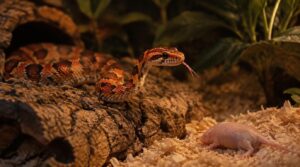
Now that you know what to offer, the next question is timing. Baby corn snakes grow fast, so they need frequent meals. Feed hatchlings every 5 to 7 days, and some keepers offer pinkie mice every 4 to 5 days during peak growth. As your snake moves into juvenile size, stretch intervals to 7 days or longer.
As metabolism naturally slows with age, you can find a complete corn snake feeding schedule by life stage to help you dial in the right intervals without guesswork.
Feeding frequency depends on appetite and body condition. If your snake finishes every meal and maintains a rounded but not bulging body, your schedule is working. If meals sit untouched, adjust before assuming illness.
Feeding schedule optimization tips:
- Feed at the same time each day, ideally evening
- Offer one appropriately sized prey item per session
- Skip feeding during or just after a shed
- Lengthen intervals as your snake grows
- Watch for refusals or regurgitation, and adjust accordingly
Consistency matters more than precision in snake care.
What Size Mouse Should a Baby Corn Snake Eat?

You should size prey by the widest part of your snake’s body, not its age. Match each mouse to that mid-body width so the baby corn snake swallows with minimal effort. For most hatchlings, that means 1–2 gram pinky mice to start. Stocking a few sizes of frozen pinky mice feeders lets you match prey to your hatchling’s exact girth without scrambling between feedings.
As your snake grows, scale prey toward 2–3% of its body weight per feeding. Move up to fuzzies, then hoppers, only when the snake takes them comfortably, without visible straining. If a meal leaves a pronounced bulge or gets regurgitated, drop back one size.
Track every feeding: prey weight, number eaten, and swallowing behavior. Use those notes to guide prey size adjustment, keeping the progression smooth between feedings every 5–7 days.
A digital gram scale for reptiles makes it easy to log precise prey weights each session, turning your feeding notes into a reliable growth record.
How Do You Safely Thaw and Offer Frozen Prey?
When you’re ready to feed, follow these prey thawing protocols step by step: A reptile feeding bowl thawing dish keeps the process clean and consistent, giving you a dedicated spot to warm prey safely every time.
- Seal the pinky in a plastic bag to limit water contact.
- Submerge it in cool, then lukewarm water for 20–30 minutes.
- Verify the middle is fully thawed; a cold center slows swallowing.
- Warm the surface to roughly body temperature so scent cues trigger a strike.
- Feed promptly, because frozen prey loses heat fast once it’s out of the water.
Never refreeze prey that’s thawed too long; discard it. Use dedicated tongs and utensils for prey handling, and sanitize surfaces after each feeding to maintain safe feeding practices. Offer the pinky at your feeding station, not near hides, so it can’t be dragged into substrate and lost. Watch intake directly.
Why Won’t a Baby Corn Snake Eat?

A baby corn snake refusing food is frustrating, but it’s rarely random. Most refusals trace back to shedding, stress, or temperature, and each has a straightforward fix. Work through the three causes below before assuming something serious is wrong.
Shedding, Stress, and Temperature
Refusal often isn’t illness, it’s illness, it’s timing. Before ecdysis, skin turns cloudy and appetite drops; skip feeding until the shed clears.
Stress management matters too: new enclosures and frequent handling suppress feeding. Then check your thermal gradients. If the warm side dips below 80°F, digestion slows and strikes stop.
Correct ambient temperature first, then retry prey warmed properly at dusk, when your snake’s naturally active.
Safe Feeding Environment
Picture a baby corn snake coiled near the cool end, ignoring the prey you’ve just offered with tongs.
The environment’s often to blame. Check your thermal gradient first: the warm side should sit near 85°F. Warm prey to ambient temperature before each feeding, and offer it in the same enclosure spot every time to limit scent spread and reduce stress.
When to Contact a Vet
Most refusal to eat resolves with husbandry corrections. But persistent feeding refusal beyond three weeks, regurgitation after swallowing, open-mouth breathing, or abnormal droppings aren’t waiting games. These are snake health indicators that demand reptile veterinary care immediately.
When a baby corn snake refuses food for three weeks or more, that is a veterinary emergency, not stubbornness
If multiple husbandry fixes still fail, don’t delay further. Internal parasites, respiratory infection, or impaction can look exactly like stubbornness from the outside.
Frequently Asked Questions (FAQs)
Are baby corn snakes aggressive?
No. Baby corn snakes aren’t aggressive; they’re defensive, like a clenched fist. Fear-based behavior, not predation, drives strikes. Handle gently, keep temperatures stable, and avoid feeding before sessions to minimize defensive bites.
How to care for a baby corn snake?
Keep your hatchling warm: 80–85°F gradient, never below 75°F at night. Maintain 40–60% humidity with a moss hide.
Feed pinkie mice every 5–7 days, sized to body girth. Proper husbandry prevents regurgitation. Avoid handling for 48 hours after feeding.
Learn more about corn snake health problems to keep your hatchling thriving.
What can I feed my corn snake if I don’t have mice?
Run out of mice? Offer day-old quail chicks, green anoles, or house geckos sized to your snake’s gape. Reptilinks work too. Scent prey with pinky juice, rotate options, and source captive-bred feeders only.
How often do baby corn snakes need feeding?
Feed your baby corn snake once every 5–7 days. Hatchlings grow fast on this weekly cadence, but scale back if body condition gets too heavy. Consistent appetite means you’re on schedule.
What can you feed baby corn snakes?
Offer pinky mice as the staple: whole, frozen/thawed prey matched to your snake’s girth. Skip insects, fish, and supplements. Feed weekly, thawing prey fully in the refrigerator before offering it.
How do you take care of a baby corn snake?
Worried hatchlings are fragile? They’re hardy with proper husbandry. Set the enclosure to 80–85°F, feed pinky mice every 5–7 days per your feeding guide, handle gently, monitor sheds, and watch for illness.
Should I feed my baby corn snake 2 pinkies?
You can, if your snake weighs under 30 grams. Two pinky mice roughly match one fuzzy in meal mass, so keep your feeding frequency at every 5–6 days and monitor body condition to avoid overfeeding.
How do baby corn snakes hunt in the wild?
You might assume hatchlings chase prey actively. They don’t. Baby corn snakes are ambush predators: forked tongues collect scent particles, stealth and camouflage position strikes, and constriction secures small rodents and lizards, swallowed whole.
Can baby corn snakes recognize their owners?
Picture your hatchling flicking its tongue as you approach: that’s Jacobson’s organ sampling your scent. True recognition is unproven, but baby corn snakes habituate to your odor and routine. Handle consistently, keep conditions stable, and expect calmer snake behavior within weeks.
What are signs of a hungry baby snake?
Watch for increased activity, especially at dusk, plus rapid tongue flicking toward the glass. Restless pacing, striking posture, and a slim body profile signal hunger. Adjust feeding frequency if cues appear within 24–48 hours post-meal.
Conclusion
A three-gram hatchling can down a pinky twice its own head width, yet one oversized mouse sets back weeks of growth. That’s the margin you’re working with.
Master the basics: match prey to the snake’s widest body point, feed every five to seven days, thaw fully, and warm to body temperature. Knowing what do baby corn snakes eat is only half the job. Consistency does the rest, and it turns a fragile hatchling into a confident feeder.