This site is supported by our readers. We may earn a commission, at no cost to you, if you purchase through links.
A snake doesn’t sleep through winter the way a bear does. Its heart keeps beating — slower, yes, but still working. Its brain stays alert enough to register a warm afternoon and drag itself toward sunlight. What looks like sleep is something far more precise: a state of suspended animation calibrated to temperature, daylight, and fat reserves down to the cellular level.
Snake brumation operates on thresholds most people never think about. When ambient temperatures drop below 60°F and daylight shrinks under 10 hours, the biological shutdown begins — heart rate falling from 60 beats per minute to fewer than 20, digestion halting completely, metabolism suppressed by up to 90%.
The timing, the triggers, the shelters — none of it is random.
Table Of Contents
- Key Takeaways
- What is Snake Brumation?
- When Do Snakes Hibernate?
- What Triggers Snake Brumation?
- Where Do Snakes Go in Winter?
- What Happens During Snake Brumation?
- Frequently Asked Questions (FAQs)
- Do snakes hibernate in the winter?
- When do grass snakes hibernate?
- What is snake hibernation?
- When do snakes start their winter rest?
- How do snakes behave when they come out of hibernation?
- Do snakes hibernate in winter?
- How does climate affect snake hibernation?
- What month do snakes go away?
- How to tell if a snake is hibernating or just?
- What is the best time of day to avoid snakes?
- Conclusion
Key Takeaways
- Snakes don’t hibernate — they brumate, a lighter form of dormancy where metabolism drops up to 90% but the animal stays alert enough to stir on a warm afternoon.
- Two environmental thresholds trigger brumation: ambient temperatures falling below 60°F and daylight shrinking under 10 hours, making timing highly predictable by region and elevation.
- Where a snake shelters matters as much as when — frost-line burrows, rock crevices, and rotting logs all maintain the 5–15°C range snakes need to survive without freezing.
- Pre-brumation hydration and adequate fat reserves are the two variables that determine whether a snake makes it to spring, since dehydration — not cold — is often the real killer.
What is Snake Brumation?
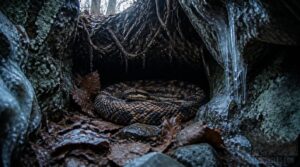
Snakes don’t hibernate the way bears do — their winter slowdown works quite differently. The process is called brumation, and understanding it changes how you read a snake’s behavior from fall through spring. Here’s what’s actually happening beneath the surface.
Unlike true hibernation, snake brumation and winter heat requirements are closely linked — brumating snakes still need some warmth to survive, just far less than usual.
Brumation Vs Hibernation
Most people use "hibernation" loosely — but snakes don’t actually hibernate. They brumate. The distinction matters.
Hibernation belongs to endothermic animals like bears, whose bodies maintain warmth internally. Snakes are ectothermic reptiles, meaning their body temperature tracks the environment directly.
That’s why snakes don’t truly hibernate—they enter a dormant state called brumation, and knowing when snake season in Texas peaks can help you anticipate their activity.
During snake brumation, metabolic rate drops sharply but never fully shuts off, and snakes can rouse briefly when temperatures climb. Unlike hibernating mammals, brumating reptiles remain aware of their surroundings.
Why Snakes Slow Down
That distinction between brumation and hibernation isn’t just semantic — it directly explains what’s happening physically when a snake goes still.
As temperatures drop, blood viscosity increases, making movement genuinely costly. Neural processing slows, reflexes lag, and digestion halts. Rather than fight physics, snakes shift to energy-efficient locomotion — slower, deliberate gaits that burn less fuel. Stillness isn’t laziness. It’s precision resource management.
When cold thickens a snake’s blood and stills its reflexes, stillness becomes precision resource management, not laziness
Ectotherms and Cold Weather
Snakes are ectothermic reptiles — they generate no internal heat. Cold weather doesn’t just slow them down; it controls them. Four environmental factors shape their cold-weather response:
- Dropping ambient temperatures reduce metabolic rate by up to 90%
- Frost exposure can be lethal without active freeze avoidance
- Microclimate selection buffers body temperature in burrows or crevices
- Energy management shifts entirely to stored fat reserves
Wild Vs Pet Snake Dormancy
That distinction matters when you keep snakes. Wild snakes follow natural environmental triggers — temperature drops, shortening days, dwindling prey — entering brumation on nature’s schedule.
Pet snakes won’t unless you deliberately simulate those cues. Without a controlled temperature drop, captive snakes often skip winter dormancy entirely, which can disrupt their metabolic rate and long-term health. Your enclosure becomes the season.
When Do Snakes Hibernate?
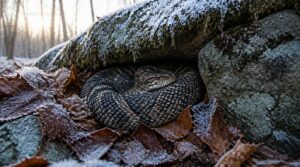
Snakes don’t follow a single universal schedule — timing shifts depending on where they live and what the local climate throws at them. A few key patterns hold true across most temperate species, though, and knowing them helps you understand what to expect season by season. Here’s how the calendar usually plays out.
Typical Fall Start Dates
Like a fall semester calendar, snake dormancy doesn’t land on one fixed date — timing shifts measurably by region and elevation.
Regional brumation windows differ noticeably:
- Late September — northern, high-elevation species
- Early October — mid-latitude populations
- Mid-October — lowland and coastal residents
- Late October — southern species
- Early November — warm-climate populations
The real trigger is ambient temperatures dropping below 60°F — that threshold matters most.
Spring Emergence Timing
Spring doesn’t announce itself — snakes wait for proof. Once daytime temperatures consistently exceed 65°F and nighttime frosts stop, emergence begins, usually between March and May depending on latitude.
Photoperiod cues strengthen the signal. Longer days suppress brumation hormones, nudging snakes toward active metabolism.
Urban heat islands can advance this window by several days, while sudden cold snaps temporarily push brumating snakes back underground.
Northern Climate Timing
Up north, snake brumation starts weeks earlier. Ground frost arrives mid-to-late October — well before the first hard freeze.
- Arctic amplification speeds autumn cooling
- North Atlantic Oscillation shifts cold air timing
- Snow cover lingers into April or May
- Maritime air delays coastal freezes
- Inland temperature thresholds drop below 60°F by early November
Coastal zones always lag behind.
Southern Climate Timing
Southern snakes don’t follow the same calendar. Where northern populations retreat by October, brumation onset shifts toward December — or skips entirely in frost-free coastal zones. Coastal temperature moderation keeps ambient temperatures above the critical 60°F threshold well into winter, delaying key environmental triggers for quite a while. Elevation matters too: highland reptiles enter dormancy weeks ahead of lowland counterparts sharing the same latitude.
| Region Type | Brumation Start | Brumation End |
|---|---|---|
| Coastal lowland | December–January | February–March |
| Inland southern | November–December | March–April |
| Southern highland | October–November | April–May |
Warm Winter Exceptions
Brumation isn’t always a clean commitment. When ambient temperatures climb above 60°F mid-winter — even briefly — snakes can break dormancy for short movement or foraging bouts. Garter snakes and rat snakes show this most often.
Climate anomalies and unseasonal warm spells can shorten the brumation window by two to four weeks, disrupting energy budgets and seasonal activity patterns established over generations.
What Triggers Snake Brumation?
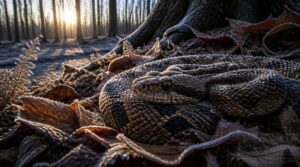
Brumation doesn’t just happen because it gets cold outside — snakes respond to a combination of environmental signals, and the timing can shift depending on where they live. Several specific triggers set the process in motion, some more obvious than others. Here’s what actually cues a snake to shut down for winter.
Dropping Temperatures
Temperature is the master switch. When ambient air drops below 60°F, a snake’s ectothermic body has no internal mechanism to resist — it simply cools with its surroundings, forcing metabolic slowdown.
A passing cold front accelerates this fast. Denser cold air displaces warmth rapidly, and microclimates in shaded areas plunge sharper than open ground. That contrast alone can push a snake toward its hibernaculum days earlier than expected.
Shorter Daylight Hours
Cold temperatures don’t act alone. Photoperiodic cues — specifically, daylight dropping below 10 hours — trigger brumation as powerfully as the thermometer.
Three signals your snake reads from shortening days:
- Fading afternoon light compresses its active window
- Circadian rhythm shifts reduce appetite and movement
- Latitude-driven darkness arrives weeks earlier for northern populations
By the winter solstice, those biological rhythms have already committed.
Food Availability Changes
Daylight and temperature don’t work alone — prey availability drops just as sharply. As seasonal harvests wind down and small mammals shift behavior, snakes face genuine prey scarcity heading into winter.
Hunting burns energy; if the return doesn’t justify the cost, stopping makes biological sense. That calculation accelerates metabolic rate reduction, nudging snakes toward dormancy even before the first hard frost arrives.
Latitude and Elevation
Where you’re on the map matters as much as the calendar. Latitude and elevation work like dials — snakes at higher altitudes or northern latitudes feel the cold weeks earlier than lowland or southern populations.
Temperature drops roughly 6.5°C per 1,000 meters gained, compressing the active season fast. Tropical species, by contrast, skip brumation entirely — warmth stays consistent year-round.
Sudden Warm Spells
Latitude and elevation set the stage, but a mid-January thaw can scramble the whole script. When temperatures briefly spike 2–8°C above seasonal norms, snakes may stir prematurely — burning through stored fat reserves at exactly the wrong time.
That early emergence carries real risk. Cold returns within days, leaving snakes exposed without adequate thermal buffering or energy to retreat safely.
Where Do Snakes Go in Winter?
When temperatures drop and daylight fades, snakes don’t simply disappear — they relocate to very specific places that keep them just warm enough to survive. The spot a snake chooses can mean the difference between making it to spring or not. Here’s where they actually go.
Underground Burrows
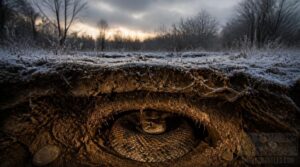
When winter closes in, snakes don’t simply disappear — they engineer a retreat, trading the surface world for the insulated silence of underground burrows that hold just enough warmth to keep them alive.
Burrow depth is everything. A snake needs to reach below the frost line — often 18 to 36 inches down — where soil thermal buffering stabilizes temperatures between 5°C and 15°C, protecting them from lethal freezes above.
Dry, loose soil matters too. Excess moisture accelerates heat loss and invites fungal threats.
Rock Crevices and Caves
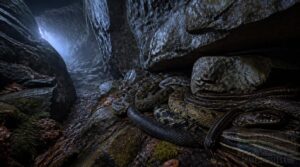
Carved by gravity and weathering, rock crevices and caves serve as ideal hibernacula — passages that buffer extreme cold and hold temperatures between 5°C and 15°C.
- Thermal buffering rocks stabilize temperatures
- Narrow cave passage geometry restricts cold drafts
- Cave microhabitats retain moisture, limiting dehydration
- Calcium carbonate walls signal stable, humid conditions
That tight geometry isn’t incidental — it’s the shelter’s entire value.
Tree Stumps and Logs
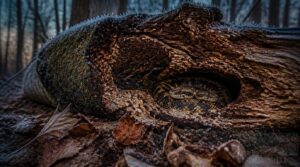
Dead stumps and rotting logs offer snakes reliable winter refuge — not because they’re warm, but because their decaying interiors hold surprisingly steady microclimates. Wood density determines how fast a stump hollows; denser hardwoods resist collapse for years. Fungal filaments break down cellulose, enlarging galleries snakes exploit during brumation. Insect larvae tunneling through the wood only deepen those passages.
| Decay Stage | Shelter Value for Snakes |
|---|---|
| Fresh stump | Minimal — bark intact, no usable cavities |
| Early decay | Small crevices form along cracking surfaces |
| Mid decay | Hollowing increases; functional galleries emerge |
| Late decay | Loose, crumbly wood — moist but unstable |
| Complete decay | Soil mound remains; shelter value gone |
Carbon reservoir value keeps these structures ecologically significant long after snakes leave in spring.
Communal Brumation Sites
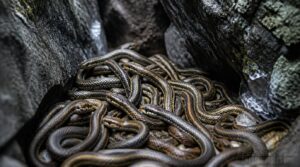
Some snakes don’t winter alone. Species like garter snakes pack into shared hibernacula — rock crevices, cave hollows, or dense log clusters — where dozens of individuals overlap in the same thermal pocket.
That grouping isn’t social bonding; it’s physics. Shared body mass slows heat loss. Moisture retention inside the den prevents desiccation. The tradeoff: pathogen and fungal spread rises sharply in crowded sites.
Backyard Winter Hiding Spots
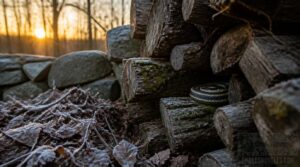
Your backyard may already serve as an accidental hibernaculum. Crawlspaces, woodpiles, and rock piles offer the thermal buffering snakes actively seek.
Three structures that shelter overwintering snakes:
- Brush pile shelters — layered branches trap heat and block wind
- Loose woodpiles — interior cavities insulate against hard frost
- Stone refugia — sun-warmed crevices radiate overnight warmth
Leaf litter along perimeters adds critical insulating depth.
What Happens During Snake Brumation?
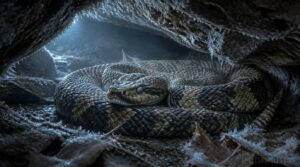
Brumation isn’t just sleep — it’s a full physiological shutdown, and what happens inside a snake’s body during those winter months is truly fascinating. Every system slows down in measurable, specific ways to keep the animal alive until spring. Here’s what’s actually going on beneath the surface.
Slower Metabolism
Think of brumation as the body hitting a dimmer switch — not off, just dialed way down. A snake’s metabolic rate drops 50–90%, slashing the energy it needs to survive weeks without food.
Cellular maintenance continues, but nutrient processing stalls completely. That dramatic metabolism suppression isn’t a flaw — it’s precision engineering, letting stored fat and glycogen carry the animal straight through winter.
Reduced Heart Rate
Metabolism isn’t the only system that powers down. A snake’s heart rate drops from a resting 40–60 beats per minute to somewhere between 10–20 — a shift driven by parasympathetic nervous system dominance as temperatures fall.
That slowdown slashes myocardial oxygen demand, letting cardiac muscle run almost entirely on stored fatty acids. The drop is gradual — abrupt changes would compromise brain perfusion entirely.
No Winter Feeding
Feeding stops entirely once brumation begins. With metabolic slowdown suppressing energy demand by up to 90%, there’s simply no need for calories.
Digestion halts to prevent undigested food from rotting in the gut — a real risk during winter dormancy. Fat reserves and glycogen shoulder the load, quietly fueling cellular maintenance across weeks of stillness.
Stored Fat Reserves
Fat doesn’t just sit idle — it’s actively working. Adipose tissue releases fatty acids through lipolysis, delivering roughly nine calories per gram to keep essential functions running without a single meal.
Hormones like insulin and leptin regulate how quickly those reserves deplete. Subcutaneous and visceral fat depots both contribute, drawn down gradually to protect muscle tissue and sustain cellular maintenance across months of stillness.
Water and Survival Needs
Stored fat carries snakes through winter — but water is the quiet variable most people overlook. During brumation, metabolic water recovery from fat digestion helps offset losses, yet it isn’t enough alone.
Snakes selecting damp hibernacula minimize evaporative loss through skin and respiration. Dry shelters accelerate dehydration, often the real killer. Pre-brumation drinking — your snake’s last act before stillness — matters more than most realize.
Frequently Asked Questions (FAQs)
Do snakes hibernate in the winter?
Snakes don’t truly hibernate — they brumate. This reptile dormancy slows metabolism, stops feeding, and keeps them sheltered but alive, relying on stored fat reserves to survive winter without the deep unconsciousness mammals experience.
When do grass snakes hibernate?
Grass snakes usually enter brumation in October or November, once temperatures drop below 10°C. They emerge again in March or April as spring warmth returns and daylight hours extend.
What is snake hibernation?
Nature runs on borrowed time." When temperatures fall below 60°F, reptiles enter snake brumation — a metabolic slowdown functioning as the reptile version of hibernation, conserving energy through winter’s harshest months.
When do snakes start their winter rest?
Once daytime temperatures consistently dip below 60°F, most temperate snakes begin winding down. That threshold — roughly 15°C — signals the body to slow. Shorter days drive the shift.
How do snakes behave when they come out of hibernation?
Like a soldier returning from a long campaign, an emerging snake is sluggish, dehydrated, and cold. It basks first — warming muscles to feeding temperature — then drinks and hunts urgently to replace months of lost fat reserves.
Do snakes hibernate in winter?
Yes, snakes do hibernate in winter — though the correct term is brumation. When temperatures drop below 60°F, their cold-blooded biology forces a dramatic metabolic slowdown, keeping them dormant until spring warmth signals it’s safe to resurface.
Unlike true hibernation, snake brumation behavior in winter still allows occasional activity — a brumating snake might stir during a warm spell to drink or reposition before settling back into dormancy.
How does climate affect snake hibernation?
Climate and altitude together dictate whether a snake brumates at all. Northern populations enter dormancy by September; southern or coastal snakes may stay active well into November — or skip brumation entirely.
What month do snakes go away?
Think of it like a slow fade rather than a hard stop. Snakes usually disappear between October and November — earlier at northern latitudes, later in the south — once temperatures consistently drop below 60°F.
Of course, sunlight and shelter play a role too, so if you want the full picture on what temperature makes snakes come out, it’s worth digging a little deeper than the calendar alone.
How to tell if a snake is hibernating or just?
A brumating snake stays tightly coiled and completely still — but it’s not lifeless. Touch it gently, and it’ll react. Winter dormancy slows the metabolic rate and drops body temperature, yet breathing persists, faint but steady.
What is the best time of day to avoid snakes?
Snakes run on the sun’s schedule. Early morning before 10 AM and evening after 6 PM are your safest windows — cooler temperatures below 59°F suppress movement. Midday heat peaks drive peak basking and hunting activity.
Conclusion
Long before wildlife biologists coined "brumation," ancient farmers read winter snake disappearances as nature’s own almanac — a signal the cold had truly arrived. That instinct holds.
Understanding when do snakes hibernate isn’t just academic curiosity; it’s the difference between a dangerous backyard encounter and a calm, informed one. Snakes follow thresholds — temperature, daylight, fat reserves — with biological precision you can’t negotiate. Respect the timing. The snake already has.