This site is supported by our readers. We may earn a commission, at no cost to you, if you purchase through links.

A rattlesnake can drop its body temperature preference by 15 degrees just by sliding into the right rock crevice, no burrow required. That single trick explains why these snakes turn up in places you’d never expect, from Canadian prairies to Andean foothills 11,000 feet up.
So where do rattlesnakes live, exactly? The honest answer spans 33 U.S. species alone, plus dozens more scattered from British Columbia to central Argentina, each one keyed into specific terrain, temperature, and shelter needs. Understanding those patterns tells you far more than a range map ever could, especially if you’re wondering why one showed up near your woodpile last week.
Table Of Contents
- Key Takeaways
- Rattlesnakes Live Across The Americas
- Common Rattlesnake Habitats
- Where Rattlesnakes Shelter and Den
- How Seasons Affect Rattlesnake Locations
- Why Rattlesnakes Appear Near Homes
- Frequently Asked Questions (FAQs)
- Where do rattlesnakes live in the winter?
- Where do rattlesnakes live?
- Where do rattlesnakes live in South America?
- Where do ratsnakes live?
- Why do rattlesnakes live in different habitats?
- What are the most common Rattlesnakes in North America?
- How Can I Protect Rattlesnakes From Persecution?
- What Do Rattlesnakes Typically Eat?
- How Long Can Rattlesnakes Live?
- What is the Most Toxic Rattlesnake Venom?
- Conclusion
Key Takeaways
- Rattlesnakes range across an enormous stretch of the Americas, from southern Canada down to central Argentina, adapting to everything from sea-level deserts to mountain slopes 11,000 feet high.
- You’ll find them wherever three things line up: reliable prey (mostly rodents), sun for warming up, and good shelter like rock crevices, burrows, or woodpiles.
- Where they live shifts with the seasons—winter sends them into shared dens for warmth, spring wakes them up gradually, and summer has them hunting at dawn and dusk to dodge the heat.
- If rattlesnakes are showing up near your home, it’s usually because your yard has what they want: rodents to eat and hiding spots like wood or rock piles, so clearing that clutter is your best defense.
Rattlesnakes Live Across The Americas
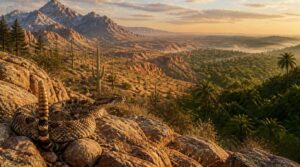
Rattlesnakes cover an enormous stretch of the Western Hemisphere, and their range says a lot about where you’re likely—or unlikely—to cross paths with one. From chilly northern edges to tropical lowlands, each region tells its own part of the story. Here’s how that range breaks down, area by area.
Their habitats even stretch into wetlands and waterways, and if you’re curious how they handle that terrain, it’s worth reading about whether rattlesnakes can swim.
Southern Canada to Central Argentina
A continent-spanning reptile, the rattlesnake’s geographic distribution stretches from southern Canada’s rocky grasslands to Argentina’s Andean highlands.
- Northern range limits: southern British Columbia and Ontario
- Southern extent: central Argentina’s Patagonian foothills
- Canadian populations favor grasslands and rocky outcrops
- Central American corridor links diverse climates
- Seasonal activity shifts with brumation in rocky crevices and abandoned mammal burrows
This southern edge of the range overlaps with the rugged Patagonian plateau, a windswept region of sparse vegetation and minimal precipitation.
United States Rattlesnake Range
No country holds more rattlesnake diversity than the United States, home to most of the genus’s 33 species. Arizona alone hosts 13, the continent’s richest count.
Range stretches from coastal California to Texas scrublands, with northernmost sightings in southern Canada’s border states. Elevation runs from sea level to 11,000 feet, and roadside encounters remain common across the Southwest’s warming asphalt.
Mexico and Central America
Cross the border south and diversity explodes. Mexico alone claims over 40 species, with Zacatecas hosting nine, C. atrox, C. molossus, and C. scutulatus among the most encountered.
Crotalus simus works through Central American dry forests and coastal scrub into Costa Rica. Habitat fragmentation and human conflict now threaten many populations, most already listed as regionally threatened.
South American Range Limits
South of Central America, one species carries the torch: Crotalus durissus, the South American rattlesnake. Its geographic distribution traces the dry diagonal corridor, Caatinga, Cerrado, Chaco, Pampa, staying below 1,000 meters.
The Andean dispersal barrier and Amazon rainforest gap wall off Chile, Ecuador, and the basin interior, while eleven subspecies geographic zones mark distinct elevation temperature limits and arid biome specialization.
Areas Without Native Rattlesnakes
Not every corner of North America hosts these snakes. Hawaii has no native rattlesnakes, Alaska sits outside their climatic range, and Rhode Island, Maine (where timber rattlesnakes were extirpated), and Delaware report zero or near-zero populations. Even British Columbia’s northern reaches stay snake-free.
If you’re hiking in these areas, you can breathe easy, geography and cold winters simply don’t favor rattlesnakes here.
Common Rattlesnake Habitats
Rattlesnakes don’t settle just anywhere, they gravitate toward landscapes that offer the right mix of cover, prey, and sun exposure. That preference shows up across a surprisingly wide range of terrain types throughout their range. Here’s a look at the habitats you’re most likely to find them calling home.
Wetter habitats host other snakes too, and this guide to water snakes in Texas shows which favor wide rivers versus coastal marshes.
From arid deserts to rocky foothills, rattlesnakes adapt their den sites to local conditions, much like the varied terrain covered in this black mamba range guide for Africa.
Even wild rattlesnakes rely on pockets of damp shelter when shedding, a need pet owners can replicate at home with a DIY humidity hide box for pet snakes.
Deserts and Arid Scrublands
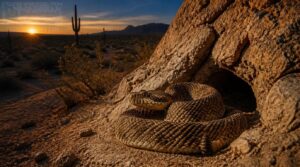
Hot dry deserts push physiology to its limits, yet rattlesnakes thrive there. Heat tolerance traits let them endure surface soil temperatures topping 140°F, while nocturnal foraging keeps activity within cooler hours. Sandy soil burrowing offers refuge from extremes, and sparse vegetation cover means little shade beyond rocky outcrops.
Xeric environments like the Sonoran and Chihuahuan deserts remain classic rattlesnake territory, despite scarce desert water sources.
Grasslands and Prairies
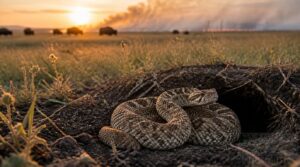
Open grassland biomes reward patience. The prairie rattlesnake relies on prairie dog colonies and burrows for shelter, ambushing rodents drawn to fertile soil.
Bison grazing patterns and periodic fire keep grass short, aiding visibility. Beneath the surface, deep root systems lock carbon into rich soil, while habitat fragmentation from farming increasingly squeezes these snakes into shrinking, disconnected grassland patches.
Forests and Woodlands
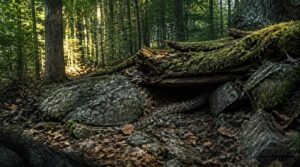
Picture a timber rattlesnake vanishing beneath a log pile, near invisible against bark and shadow.
Forests need canopy closure above 50%, plus:
- Woody debris shelter for cover
- Talus den sites in rock crevices
- Forest edge basking zones
- Underground dens near ledges
Older stands, oak, hickory, ash, hold richer debris, supporting year-round survival.
Rocky Slopes and Canyons
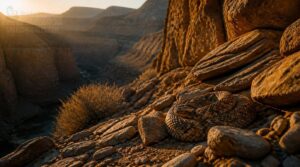
Why do rattlesnakes love a good rockpile? Rocky slopes and canyon walls offer everything: talus slope shelter, rock crevice dens, and sun-warmed south faces for basking.
| Feature | Function |
|---|---|
| Talus slopes | Cover, thermoregulation |
| Canyon corridors | Shade, prey access |
| Rock crevices | Denning, refuge |
| South faces | Morning/evening warmth |
Canyon microclimates stay cooler by day, ideal for year-round activity.
Wetlands and Waterside Areas
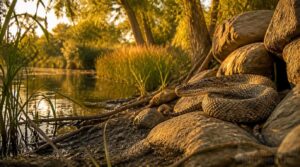
Ever wonder why creek banks draw so many snake tracks? Water proximity means reliable aquatic prey, and rattlesnakes patrol marsh edges and riparian zones for rodents drawn to moisture.
Floodplain habitats offer rock crevices and underground dens nearby. Even irrigation oases in dry country mimic these wetland edges, pulling snakes toward unexpected creek banks and canal margins across the arid West.
Where Rattlesnakes Shelter and Den
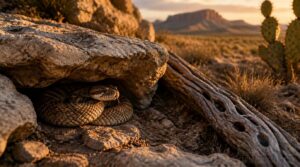
A rattlesnake’s shelter choice isn’t random; it’s tied directly to temperature, safety, and access to prey, which means the same landscape can offer very different hiding spots depending on the terrain.
You’ll find these snakes tucked into spaces that seem barely large enough to notice, let alone hide a body several feet long.
Here’s a closer look at the specific spots where rattlesnakes commonly take cover.
Rock Crevices and Talus Slopes
Wedge yourself into a rock crevice and you’ll notice something immediately: it’s cooler, sometimes 5 to 15 degrees. Rattlesnakes exploit this.
A rock crevice can run 5 to 15 degrees cooler, and rattlesnakes know exactly how to exploit that chill
Crevice microclimates buffer heat and retain moisture, while talus slopes, angular rubble piled at 30 to 40 degree angles, create shaded pockets. These sites concentrate prey and offer den site stability lasting multiple seasons.
Burrows and Abandoned Dens
Not every den starts as rock. Rattlesnakes readily take over prairie dog burrows and other abandoned dens, entrances 6 to 12 centimeters wide leading into escape tunnel systems and chamber networks meters below ground.
Collapsed burrows aren’t wasted either; snakes reuse them as secondary shelter, valued for moisture regulation when humidity drops elsewhere.
South-Facing Basking Sites
Once a burrow’s secured, you still need warmth. That’s why south-facing slopes matter: sunlit rocky outcrops absorb heat early, creating morning warmth zones for thermal basking.
- Sun-warmed rocks and dirt banks heat faster than shaded ground
- Thermal refuges reach activity-ready temperatures sooner
- Basking sites cluster near rodent runs, boosting prey proximity basking
Solar heat absorption fuels digestion and mobility alike.
Communal Winter Hibernacula
Basking gets you through the day, but winter demands something bigger: shared shelter. Rattlesnakes gather by the dozens in communal hibernacula, tucked into talus slopes and old rock slides where crevices trap stable air.
Temperatures hold near 4-7°C, humidity stays moderate, and body-to-body contact conserves warmth. Multiple entrances allow quick retreat, and sometimes other snake species den alongside them entirely.
High-Elevation Mountain Habitats
Climb past 8,000 feet and rattlesnakes still turn up, tolerating thinner air and highs of just 50-60°F.
You’ll find rocky talus shelter and sunlit outcrops used for thermal basking behavior, plus subalpine forest edges where fallen logs hide prey.
Alpine meadow basking spots dot the grass between wind-sheltered shrubs.
Come winter, mountain brumation dens in crags keep them insulated at this elevation range.
How Seasons Affect Rattlesnake Locations
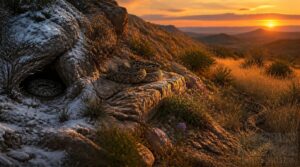
A rattlesnake’s address changes with the calendar, shifting as temperatures rise and fall throughout the year. You’ll find these animals moving between distinct locations depending on the season, each tied to survival needs like warmth, food, and safety.
Here’s how that seasonal map unfolds, from winter dens to summer hunting grounds.
Winter Brumation Dens
Rocky outcrops hide a slow-motion survival strategy: brumation. Rattlesnakes select dens with stable cool temperatures, moderate humidity, and low disturbance, often reusing prairie dog burrows or talus crevices for insulation.
Key traits include:
- South-facing slopes for residual warmth
- Underground pockets for temperature regulation
- Communal den use among multiple individuals
Even suburban areas sometimes offer inadvertent shelter within rock walls.
Spring Den Emergence
As mid to late spring warms the air past 50°F, snakes stir from their rock crevices and underground dens. Temperature triggers emergence, though not all at once, staggered population emergence spreads exits across days or weeks. Basking sessions precede full departure.
Juveniles disperse within 1 to 2 weeks, timing their movements to rising rodent activity and renewed prey availability nearby.
Summer Foraging Grounds
Once settled into summer range, you’ll find rattlesnakes hunting sunlit ledges and rocky outcrops, where lizards and rodents cross often.
Edge habitats, where grassland meets scrub brush, offer dense prey with quick retreat cover.
Water source proximity matters too: amphibians and small fish draw snakes closer during wetter months, making these summer foraging grounds surprisingly predictable once you know what to look for.
Dawn and Dusk Activity
Why hunt at high noon when the desert’s baking? You’ll find rattlesnakes shift to crepuscular activity, favoring dawn emergence and dusk foraging as ectothermic regulation demands cooler air.
- Rodents and lizards move most at twilight
- Predation risk drops in low light
- Thermal microhabitat selection eases overheating
Pupils widen for contrast, and tail rattling quiets, keeping hunts efficient during these light-sensitive hours.
Temperature-Driven Habitat Changes
Temperature is the invisible map redrawing rattlesnake range every year. As nights stay warmer, thermal range shifts push populations upslope through altitudinal zonation.
| Trigger | Response | Effect |
|---|---|---|
| Night above 12°C | Upslope migration | New foothill range |
| Heat waves | Deeper burrowing | Prey scarcity |
| Cooling below 20°C | Dusk foraging | Wider hunting window |
Den temperature selection and urban heat island effects now steer where you’ll encounter them.
Why Rattlesnakes Appear Near Homes

Rattlesnakes don’t wander into your yard by accident—they’re following food and shelter that your property might be offering without you realizing it. Phoenix’s suburban sprawl has pushed new neighborhoods straight into snake territory, and the same landscaping features that make your yard comfortable often make it appealing to them too.
Here’s what usually draws rattlesnakes closest to home.
Rodents and Reliable Prey
Rodents drive the whole equation. Irrigation and landscaping attract mice and pocket gophers, and where rodent pests cluster, rattlesnakes follow. Population cycles tied to rainfall mean a wet spring can flood your yard with prey within weeks.
Rodent population control matters most here; fewer small mammals foraging near your foundation means fewer snakes finding a reason to stay.
Woodpiles and Rock Walls
Rodents bring snakes in, but woodpiles and rock walls give them a reason to stay. Gaps between logs create microhabitats ideal for shelter and predator avoidance. Piles reaching ground level trap moisture-free crevices, while sunny edges serve as basking surfaces.
Rock walls mimic natural talus slopes, the same rocky benches snakes favor along hiking trails.
Irrigation Ditches and Landscaping
Water changes everything in a desert setting, and irrigation ditches prove it. Gravity-fed channels create damp margins that draw rodents and amphibians, the same prey base rattlesnakes track by scent.
Ditch bank cover, thick with vegetation and debris, offers shade during hot afternoons. Combined with landscaping debris shelter near rock piles and woodpiles, these corridors become reliable snake highways through residential terrain.
Roads and Hiking Trails
Pavement holds heat long after sunset, which pulls snakes onto roadside basking spots during cool mornings. Rocky benches and south-facing slopes near trailheads create the same draw.
Trail surface temperatures rise fast on exposed rock, and roadkill rodent attraction concentrates prey nearby.
Hiker-snake encounter zones cluster where maintenance work clears brush but leaves rock piles and woodpiles untouched.
Reducing Yard Shelter Sites
Underneath and around most yards sit the very features rattlesnakes look for: cover and calories. Debris removal and brush clearance strip away hiding spots, while woodpile management (stacked off the ground, away from walls) closes off dark crevices.
Seal gaps in concrete foundations with hardware cloth, and control irrigation ditches to limit damp zones that draw rodents, a snake’s main food source.
Frequently Asked Questions (FAQs)
Where do rattlesnakes live in the winter?
Summer’s baskers become winter’s ghosts. Once nights turn cold, rattlesnakes vanish into rock crevices and underground burrows, often joining communal hibernacula that shelter dozens together, conserving warmth until spring’s rising temperatures coax them back to the surface.
Where do rattlesnakes live?
You’ll find rattlesnakes from southern Canada to central Argentina, spanning deserts, forests, wetlands, and prairies across elevations from sea level to 11,000 feet, wherever rodents and suitable denning sites support their year-round survival.
Where do rattlesnakes live in South America?
From dry Chaco woodlands to windswept Cerrado grassland, from Caatinga scrub to coastal savannas Guyana, the South American rattlesnake spans it all. Crotalus durissus stretches across Venezuela’s lowlands to northern Argentina, even climbing Tepui highlands near 1,500 meters.
Where do ratsnakes live?
Good question, since the name sure sounds related. Ratsnakes are non-venomous and unrelated to true rattlesnakes, favoring wooded edge zones, farmland perimeters, and suburban garden borders across temperate North America, wherever rodent habitat overlap and barns offer easy shelter.
Why do rattlesnakes live in different habitats?
Habitat choice comes down to prey availability, thermoregulation needs, and shelter access. Rattlesnakes track rodents, sun-warmed rock, and cover across deserts, grasslands, and canyons, adapting to elevation range and climate wherever those essentials line up.
What are the most common Rattlesnakes in North America?
Picture a hiker in Big Bend spotting a diamond-patterned coil near the trail. That’s likely a Western Diamondback. Five species dominate: Western and Eastern Diamondbacks, Prairie, Timber, and smaller Pygmy rattlesnakes, each with distinct size, range, and venom potency.
How Can I Protect Rattlesnakes From Persecution?
Support legal protections advocacy, report sightings to wildlife management instead of acting alone, and back community education programs. Choose humane snake removal over killing, since habitat loss and misplaced fear, not the snakes themselves, drive most conflict.
What Do Rattlesnakes Typically Eat?
A rattlesnake’s stomach is a patient hunter’s ledger. Small mammals like mice and ground squirrels fill most entries, though rodent populations, lizards, and even birds keep the diet flexible across desert and grassland ecosystems through ambush predation.
How Long Can Rattlesnakes Live?
Wild rattlesnakes usually live 10 to 20 years, with larger species like timber and eastern diamondback rattlesnakes reaching 20 to Well-cared-for captives can exceed 25 years. Predation, vehicle strikes, and habitat loss remain the leading threats shortening survival.
That impressive lifespan reflects a body built for endurance, a theme explored further in these fascinating rattlesnake facts and survival adaptations.
Understanding these lifespan differences also sheds light on key rattlesnake facts and behavior patterns that shape how these snakes survive in the wild.
Body length typically tracks age too, so checking a rattlesnake size and growth rate guide can help you roughly estimate how old a snake might be.
What is the Most Toxic Rattlesnake Venom?
Size doesn’t determine venom potency. Crotalus tigris carries the lowest LD50 among rattlesnakes, near 07 mg/kg, thanks to a minimalist proteome dominated by fast-acting Type II neurotoxins that antivenom formulas specifically target.
Conclusion
You might assume rattlesnakes stick to lonely deserts, but that’s not the whole picture. Where do rattlesnakes live? Anywhere offering shelter, sun, and prey, from prairie burrows to talus slopes above 11,000 feet. Your backyard qualifies if it has woodpiles, rock walls, or rodents.
Knowing their den sites and seasonal patterns turns fear into awareness. Respect their range, secure your yard, and you’ll share the landscape safely, without needing a close encounter to prove it.