This site is supported by our readers. We may earn a commission, at no cost to you, if you purchase through links.

Most corn snakes never touch a branch in captivity and live perfectly fine. But watch a wild one work its way through a brushy field, and you’ll notice something: they’re constantly using low stems and tangled vegetation to navigate, rest, and regulate their body temperature.
That instinct doesn’t disappear just because they moved into a glass box. Corn snake climbing branches aren’t a luxury upgrade—they’re a missing piece of the habitat puzzle that affects muscle tone, stress levels, and daily activity.
Getting the setup right comes down to material, size, and placement.
Table Of Contents
- Key Takeaways
- Do Corn Snakes Need Climbing Branches?
- Why Climbing Enrichment Helps
- Best Safe Branch Materials
- Choosing The Right Branch Size
- How to Install Branches Safely
- Ideal Placement in The Enclosure
- Preventing Falls, Escapes, and Stress
- Cleaning and Replacing Branches
- Top 10 Climbing Products
- 1. EONMIR Flexible Reptile Habitat Vines
- 2. Fluker Labs Small Animal Habitat Vines
- 3. Emours Natural Wood Terrarium Branch
- 4. Carolina Custom Extra Long Glass Terrarium
- 5. Zilla Bark Bends Terrarium Hide
- 6. Galápagos Green Mossy Cave Hide
- 7. Fluker Medium Reptile Cavern Hide
- 8. Zilla Reptile Rock Hideout
- 9. Zoo Med Sandblasted Grapevine
- 10. Exo Terra Forest Branch
- Frequently Asked Questions (FAQs)
- Do corn snakes like to climb branches?
- Do corn snakes need branches?
- Do corn snakes need climbing space?
- What makes a corn snake happy?
- Can corn snakes climb glass or smooth surfaces?
- How often should climbing branches be replaced?
- Do baby corn snakes need climbing branches?
- What branch diameter works best for corn snakes?
- Can live plants replace artificial climbing branches?
- How often should corn snakes climb each week?
- Conclusion
Key Takeaways
- Corn snakes don’t need branches to survive, but low-angled climbs reduce stress, build muscle, and keep your snake mentally active every day.
- Stick to untreated hardwood, cork bark, or latex‑free artificial vines — and skip anything pressure‑treated, painted, or prone to splintering.
- Match branch diameter to your snake’s size (0.5–1.0 cm for juveniles, 1.5–2.5 cm for adults) and keep the highest point no more than 18 inches off the substrate.
- Check branches monthly for mold, cracks, and wobble — replace natural wood every 12–24 months, and swap it out sooner if damage shows up first.
Do Corn Snakes Need Climbing Branches?
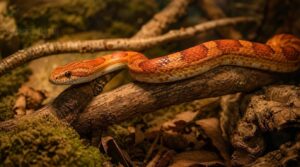
Corn snakes aren’t natural climbers, but that doesn’t mean branches are useless in their setup. A few well-placed options can make a real difference in how comfortable and active your snake feels day-to-day.
Even if your snake rarely ventures up high, branches give it choices—and that sense of control matters more than you’d think, as covered in this complete guide to corn snake habitat and enrichment.
Here’s what you need to know before adding anything to the enclosure.
Why Corn Snakes Benefit From Low Climbing Options
Low climbing options do more than fill space — they mirror your corn snake’s natural habitat. A bendable branch set at a gentle angle invites exploration without stress or strain.
Newly acquired snakes often exhibit stress‑induced climbing behavior as they adjust.
- Thermoregulation support from low‑angled climbs near warm zones
- Stress relief through natural habitat mimicry and added enclosure choice
- Exercise benefits that boost confidence and energy efficiency over time
When Branches Are Optional Versus Helpful
Branches aren’t always necessary — but they’re rarely a bad idea.
For juvenile habitat needs, a single angled branch near the warm side often does enough.
Adults with higher activity levels benefit more from a fuller setup.
Here’s a quick guide to help you decide:
| Situation | Branch Status |
|---|---|
| Small enclosure, space constraints | Optional |
| Active adult, room to explore | Helpful |
| Temperature zone alignment needed | Helpful |
| Docile snake, prefers ground | Optional |
Behavioral observation is your best tool.
Signs Your Corn Snake Wants to Climb
Your snake will tell you when it’s ready. Watch for tail twitching near branches, nose rubbing on bark, or that classic head s-hump posture along the glass.
Hesitant looping around a vine followed by a quick ascent is a beginner testing its grip.
Tongue flicking along branch edges means route planning is already underway — vertical climbing opportunities are calling.
Why Climbing Enrichment Helps
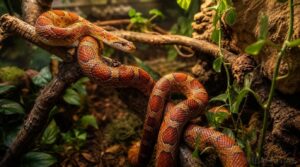
Climbing branches do more than fill empty space in your corn snake’s enclosure. They give your snake something to do, keep its muscles working, and quietly reduce everyday stress.
Climbing branches keep your corn snake active, mentally engaged, and quietly stress-free
Here’s a closer look at why that matters.
Supporting Natural Exploration and Curiosity
Think of your corn snake’s enclosure as more than a box — it’s a world waiting to be explored. A Flexible Habitat Layout with Sensory Stimulus Paths and Environmental Enrichment Toys satisfies that natural curiosity. Here’s what good exploration support looks like:
- Interactive Hide Integration at branch intersections reduces anxiety
- Variable Light Gradients guide movement naturally
- Choosing safe climbing toys for corn snakes keeps exploration stress‑free
Improving Muscle Tone and Coordination
Every climb your corn snake takes is a full-body workout. Gripping varied surfaces builds Grip Strength and Core Stability, while traversing angled branches develops balance and coordination through natural Proprioceptive Feedback. These exercise benefits for corn snakes add up fast — improving muscle use and Range of Motion over time.
Choosing safe climbing toys for corn snakes, combined with smart placement strategies for climbing elements in snake habitats, keeps every session productive.
Reducing Stress With More Enclosure Choice
Choice is calming — even for snakes. When your corn snake can pick between Varied Habitat Zones, shift across Adjustable Temperature Gradients, or duck into Multiple Hiding Options, it feels in control. That lowers stress fast.
- Reduces anxiety through stress reduction through environmental complexity
- Encourages exploration with naturalistic reptile décor
- Provides climbing enrichment for snakes at every height
- Offers Customizable Visual Barriers near resting spots
- Uses Adaptive Lighting Schemes to signal safe zones
Adding Exercise Without Overcomplicating The Habitat
You don’t need a jungle gym to keep your corn snake moving. A couple of Simple Climb Modules — think one angled branch and a Low‑Impact Perch near a hide — give plenty of exercise without cluttering the space.
Rotating Habitat Accessories every few weeks maintain interest through Minimalist Enrichment.
Modular Exercise Structures snap in and out easily, so setup stays clean and your snake stays active.
Best Safe Branch Materials
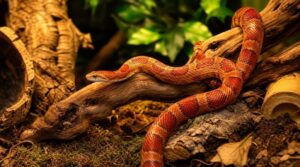
Not every branch belongs in a corn snake’s home. The material matters more than most people realize — it affects grip, hygiene, and your snake’s long-term safety.
Here’s what actually works and what you should leave on the shelf.
Untreated Hardwood Branches for Natural Grip
Untreated hardwood from oak, maple, or beech is your safest starting point. The surface roughness gives your corn snake real traction—something smooth finished wood simply can’t offer.
Natural oil in the wood actually helps with moisture interaction, keeping grip longevity strong in warm enclosures. Just stay on top of texture maintenance: inspect regularly, sand rough splinters, and replace any piece showing mold.
Cork Bark and Reptile-safe Décor Options
Cork bark is one of the best material considerations for reptile décor because it does so much at once.
Thanks to sustainable harvesting from cork oak forests, it’s safe and renewable.
Its texture grip keeps your snake steady, while natural moisture buffering stabilizes humidity.
Cork also adds thermal mass near basking zones.
Easy repositioning means you can adjust the Zilla Pet Reptile Bark Bends or a hollow bark log anytime, ensuring nontoxic and stable climbing options without hassle.
Artificial Vines and Non-porous Alternatives
Artificial vines are a smart, low‑maintenance pick when natural wood isn’t working for your setup.
Options like the Artificial Jungle Vine Climbing Branch and Eonmir Flexible Jungle Climber Vines use latex‑free materials, PU material, and moisture‑proof coatings that stay waterproof and clean easily.
UV‑resistant finishes hold color under bright lighting.
Suction cup attachment keeps them fixed to glass, and flexible stem shaping lets you route climbs exactly where your snake needs them.
Materials to Avoid Because of Splinters or Toxins
Not every branch belongs in your corn snake’s home. Pressure-treated wood carries arsenic compounds. Lead paint bark and oil‑based finish coatings off‑gas VOCs in tight spaces. Porous driftwood traps moisture fast, creating serious mold risk in wooden décor. Skip allergenic hardwoods like rosewood too.
The real test for material considerations for reptile décor? Ensuring nontoxicity and chew resistance of climbing toys beats aesthetics every time.
- Avoid synthetic versus natural climbing structures with VOC-heavy coatings
- Skip natural wood that splinters or warps easily
- Never use pressure-treated or painted pieces
Choosing The Right Branch Size
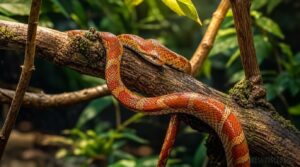
Branch size matters more than most people expect. Getting it wrong means your snake won’t grip well, won’t feel secure, and probably won’t climb at all.
Here’s what to look for before you buy.
Picking Branch Thickness for Juveniles and Adults
Branch thickness is one of those details that quietly makes or breaks your setup. Age-specific grip matters more than most keepers realize.
Juveniles do best with 0.5–1.0 cm diameters, while adults need 1.5–2.5 cm for weight-adjusted thickness and real support.
| Age Stage | Ideal Diameter |
|---|---|
| Juvenile | 0.5–1.0 cm |
| Adult | 1.5–2.5 cm |
Match thickness to developmental strength needs, and your snake will move with confidence.
Matching Length to Enclosure Size
Thickness sorted? Good. Now think about length.
A 6-foot-long branch works well in most adult setups, and a 78‑inch length can span nearly the full enclosure floor‑to‑upper‑zone. Match branch length to your corn snake enclosure using these Length Ratio Guidelines:
- Space branches 6–12 inches apart vertically for gradual climbing
- Keep horizontal perches 6–8 inches apart for steady footing
- Align longer branches along the warm side for Temperature Gradient Matching
- Flexible Habitat Layout thinking — add branches as your snake grows
Using Multiple Diameters for Better Footing
Once you’ve matched length, think about mixing diameters. A diameter gradient — pairing a wider 25 mm branch with a narrower 10 mm vine (roughly the 1 cm vine diameter standard) — creates stepped footholds, your snake can actually grip.
This mixed size traction approach helps juveniles and adults alike navigate intermediate zones smoothly, turning a basic vine climbing opportunity into real climbing enrichment for confident, balanced movement.
Choosing Textures That Help Secure Movement
Texture matters more than most keepers realize.
Rough bark friction gives your snake firm footing on natural wood, while cork micro-roughness adds grip even when humidity climbs.
Silicone slip resistance keeps artificial options safe on damp days.
Mixed texture gradients across soft PU material and textured surfaces encourage confident movement throughout the enclosure.
Moisture-resistant grip and chew resistance round out what makes a branch truly reliable.
How to Install Branches Safely
A wobbly branch is the last thing you want when your corn snake decides to go exploring. Getting the installation right comes down to a few simple choices about anchoring, stability, and how you work with your specific tank setup.
Here’s what you need to know to make every branch feel rock solid.
Anchoring Branches With Clips, Wires, or Bases
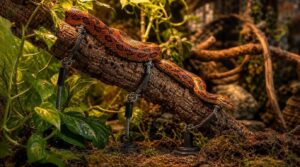
A loose branch is an accident waiting to happen. Here’s how to lock things down:
- Use quick-release clips every 6–8 inches for even clip load distribution without damaging bark.
- Loop 22-gauge steel wire through protective tubing to prevent wire corrosion management issues.
- Install adjustable base anchors with rubber feet for humid enclosures.
- Run material compatibility checks before mixing metal rod, vine attachment clips, or suction cups.
- These installation methods for terrarium vines and branches keep everything firmly in place.
Keeping Structures Stable During Climbing
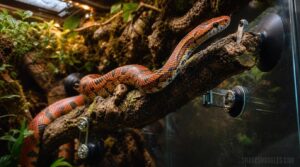
Even a well-anchored branch can flex under a snake’s full weight mid-climb. That’s why load distribution across multiple contact points matters more than one strong anchor alone. Use clip strength testing before setup, and pair suction cups with mounting adhesive selection suited to your glass.
| Stability Factor | Recommended Method |
|---|---|
| Anchor Redundancy | Two clips per branch section |
| Vibration Damping | Rubber-footed base anchors |
Preventing Shifting When The Snake Explores
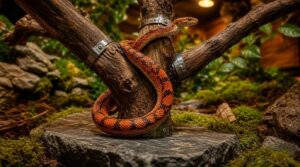
A shifting branch mid-climb is how accidents happen. Clip reinforcement at each junction keeps things from rotating under your snake’s weight, while solid base support design stops the whole structure from twisting sideways.
Do a quick mount stability check monthly, tighten any loose points, and test grip consistency before your snake ever touches it. Small adjustments now prevent big problems later.
Securing Accessories on Glass Terrariums
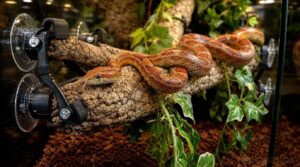
Glass tanks need the right anchor for each accessory. Use reptile-rated silicone adhesive for lightweight pieces, and let it cure fully before your snake explores.
Suction cups work well on clean, smooth glass—replace them when grip weakens.
Clamp brackets handle heavier branches without pinching edges.
Add silicone pads under contact points for vibration-damping stability.
Magnetic mounting systems need a soft protective layer to prevent scratches.
Ideal Placement in The Enclosure
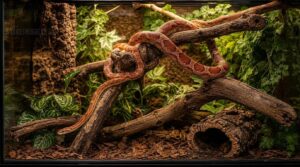
Where you put branches matters just as much as which ones you choose. A little thought about height, angles, and temperature zones goes a long way toward making your corn snake actually use them.
Here’s what to keep in mind when deciding where each piece goes.
Keeping Branches Low to Moderate in Height
Keep Branch Height Limits simple: no higher than 12 to 18 inches from the substrate. That’s roughly your snake’s body length, which is the safest rule of thumb.
Low angled climbs and gentle slopes encourage movement without creating dangerous drop zones.
Incremental Height Adjustments, proper Substrate Edge Clearance, and Safety Buffer Zones around perches maintain Airflow Around Perches while keeping your corn snake confident and secure.
Creating Angled Paths and Horizontal Perches
Once you’ve set your height limits, think about how your snake actually moves — not just up, but across and through the space.
Angled paths with a 15–30-degree incline guide natural movement between levels. Pair them with wide horizontal perches so your snake can settle, turn, and rest.
Here’s what makes a solid layout:
- Use Gradient Angle Planning to keep inclines gentle and consistent
- Choose Incline Grip Texture surfaces so your snake doesn’t slip mid-climb
- Add Modular Path Sections with a branch that’s bendable for flexible routing
- Attach sections using suction cups or Stability Support Brackets for a firm hold
- Set Horizontal Perch Width wide enough for your snake to rest comfortably
Optimizing branch placement for ideal snake exercise means weaving low‑angled climbs and gentle slopes together into one connected path — not just scattering branches randomly.
Leaving Space for Warm and Cool Zones
Branches shape more than just movement — they shape temperature too. Think of Gradient Zoning as your guiding principle: warm side branches sit near your heat source, cool side branches offer retreat.
Thermal Partitioning keeps those zones clear and predictable. Buffer Zones between them let your snake slide between Humidity Microclimates without stress. Good Heat Source Placement means no branch sits directly above a heater.
Adding Elevated Resting Spots Near Hides
Your temperature zones are set — now think about where your snake actually rests.
Placing a small platform or flat branch near each hide creates a Hide Proximity perch that doubles as a Temperature Buffer between active climbing and retreat.
That Visual Access point lets you track Behavioral Observation without disturbing your snake, making providing hiding and climbing options feel easy and intentional.
Preventing Falls, Escapes, and Stress
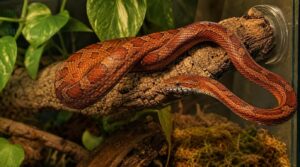
Getting the branches in place is only half the job. The other half is making sure snake stays safe, calm, and where it’s supposed to be.
Here’s what to keep in mind before you call the setup done.
Limiting Height to Reduce Injury Risk
How far is too far up? For corn snakes, height thresholds matter more than most keepers realize.
Safe elevation levels stay within 20–25 cm to minimize drop distance limits during unexpected dismounts. Controlled climb steps with gap spacing guidelines of 8–12 cm between perches keep movement deliberate and safe.
- Stay under 30 cm total branch height
- Space perches 8–12 cm apart
- Prioritize horizontal paths over vertical ones
Avoiding Unstable or Wobbly Structures
A wobbly branch is an accident waiting to happen. Test each one with gentle lateral pressure before your snake ever touches it.
Lever arm shortening—keeping branches under 18 inches—dramatically cuts flex. Pair that with base width expansion and diagonal bracing for locked angles.
| Stability Fix | Why It Works |
|---|---|
| Tension Tightening Schedule | Monthly checks prevent wobble buildup |
| Grip Surface Consistency | Uniform texture stops mid-climb slips |
Keeping Branches Away From Escape Points
Think of your enclosure like a puzzle — every branch endpoint is a potential stepping stone toward freedom. Keep a six-inch escape gap buffer between any branch tip and lid gaps, corners, or door edges.
Strategic anchor placement and clearance distance guidelines help eliminate leverage points. Edge proofing methods, like secure clip positioning along glass panels, close off routes before your corn snake even finds them.
Using Climbs to Support Confidence, Not Overwhelm
Start with two or three branches at hip height — these low-impact paths let your corn snake explore without panic. Watch how it responds; that observation feedback loop tells you when to add gradual height steps.
If it retreats, that’s feedback too. Always keep a clear exit path on every branch so confidence builds naturally, not by force.
Cleaning and Replacing Branches
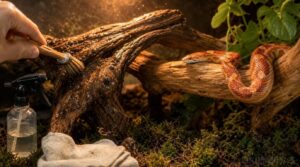
A clean branch is a safe branch—and that rule applies whether it’s natural wood or a plastic vine. Before you place anything in your corn snake’s enclosure, and throughout its life there, a simple cleaning routine keeps things safe and mold‑free.
Here’s what you need to know to stay on top of it.
Cleaning Natural Wood Before First Use
Before that branch goes anywhere near your corn snake, it needs a proper cleaning. A quick warm water soak of 15–30 minutes loosens dust and debris. Brush debris removal with a stiff scrub clears sap and grime. Air drying for 24–48 hours finishes the job.
- Soak in warm water for 15–30 minutes
- Scrub thoroughly with a stiff brush
- Air dry completely in a ventilated space
- Use vinegar odor neutralization (1:10 solution) for stubborn smells, then rinse well
Mold inspection before placement is non‑negotiable — mold risk management for wooden terrarium décor starts here. Skip alcohol; it dries wood and irritates skin. Solid branch sanitation ensures nontoxicity and keeps your snake safe from day one.
Sanitizing Artificial Vines and Décor Regularly
Artificial vines don’t clean themselves — and skipping maintenance invites bacteria, odor, and mold into your snake’s home.
Wipe vines weekly with a microfiber cloth and a pH neutral cleaner. Always spot test first on a hidden area. Dry completely before reinstalling.
| Task | Frequency |
|---|---|
| Wipe with damp cloth | Weekly |
| Full soap rinse | Bi-weekly |
| Spot test new cleaners | Before first use |
| Full dry before reinstall | Every cleaning |
Checking for Mold, Cracks, and Wear
A quick monthly check can catch small problems before they become big ones. Look for visual mold signs — dark spots, fuzzy patches, or musty smells near the branch.
Run your fingers along the surface to spot texture degradation, like slick or splintered areas.
Watch for crack progression too; a hairline fracture today can split under your snake’s weight tomorrow.
Moisture accumulation speeds everything up.
When to Remove and Replace Damaged Pieces
Once you spot a problem, don’t wait. Some damage is a clear signal to act now:
- Structural Cracks that spread or deepen under light pressure
- Mold Contamination that returns after cleaning, signaling biofilm buildup
- Attachment Looseness that wobbles more than a pencil-width
- Bending Damage or surface wear that can’t hold your snake’s weight
Replace it. Simple as that.
Top 10 Climbing Products
Finding the right climbing setup doesn’t have to feel overwhelming. These ten products cover everything from flexible vines to natural wood branches, so there’s something here for almost every enclosure style and budget.
Here’s what made the list.
1. EONMIR Flexible Reptile Habitat Vines
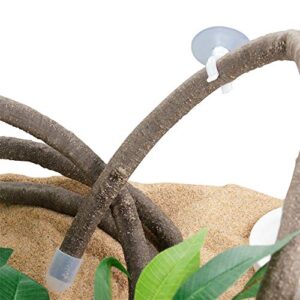
The EONMIR Flexible Reptile Habitat Vines give you 8 feet of bendable, PU-coated iron vine to work with — enough to build a real climbing network inside almost any terrarium. Twist it into diagonals, loop it across corners, or link the ends with a second vine for a 3-D structure your corn snake can actually explore.
Six suction cups handle glass mounting easily, though you’ll want zip ties for heavier setups.
Just rinse it before use to clear any manufacturing residue.
| Best For | Reptile and amphibian owners who want to give arboreal animals like chameleons, geckos, and tree frogs a naturalistic, customizable climbing setup. |
|---|---|
| Material | PU-coated iron wire |
| Species Suitability | Snakes, lizards, frogs |
| Ease of Cleaning | Rinse or wipe |
| Primary Function | Climbing enrichment |
| Size / Dimensions | 8 ft (2.5 m) length |
| Indoor Use | Yes |
| Additional Features |
|
- Eight feet of flexible vine gives you a lot to work with — you can reshape it, link multiples together, and build out a real 3-D climbing structure.
- The soft PU coating is gentle on delicate feet and skin, so your animals can climb without getting scraped up.
- Suction cups make repositioning quick and easy, so refreshing the enclosure layout takes minutes.
- Suction cups can lose grip under heavier loads, so you may need zip ties or floss for a more secure hold.
- Not built for large or heavy snakes — anything in the 10–15 lb range can rip or warp the vine.
- Some users have received vines with surface tears or texture inconsistencies straight out of the package.
2. Fluker Labs Small Animal Habitat Vines
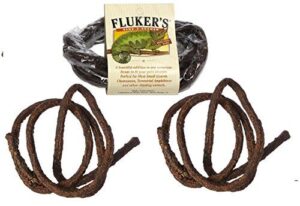
If you want something lighter and easier to reposition, Fluker Labs Small Animal Habitat Vines are worth a look. Each vine runs 6 feet long, made from non-toxic polyethylene that resists mold and won’t fade under your terrarium lights.
They’re flexible enough to bend into custom shapes without kinking. Suction cups keep them flush against glass, and cleanup takes about a minute with mild soap and water.
Just check the mounting points weekly — they can loosen over time.
| Best For | Arboreal reptiles and small mammals that need climbing enrichment, especially if you like rearranging your setup often. |
|---|---|
| Material | Flexible synthetic |
| Species Suitability | Snakes, geckos, chameleons |
| Ease of Cleaning | Soak in vinegar solution |
| Primary Function | Climbing & perching |
| Size / Dimensions | 6 ft (72 in) per twig |
| Indoor Use | Yes |
| Additional Features |
|
- Six feet of flexible vine gives you a lot to work with when designing climbing paths or hideaways
- Non-toxic, mold-resistant material holds up well under terrarium lighting without fading
- Super easy to clean — a quick soap-and-water rinse and you’re done
- Bend the same spot too many times and it’ll start to crack
- Some buyers have gotten only two vines instead of the three they paid for
- The "large" label can be misleading — a few customers received pieces noticeably smaller than expected
3. Emours Natural Wood Terrarium Branch
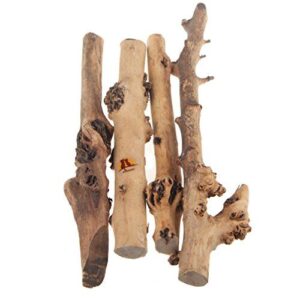
For a more natural look, the Emours Natural Wood Terrarium Branch delivers where plastic can’t.
Each pack includes four hand-selected hardwood pieces ranging from about 9.8 to 15.7 inches long, with diameters between 0.6 and 1.6 inches — solid variety for building low, angled climbing paths your corn snake will actually use.
The textured surface gives real grip, not just decoration.
Just inspect each piece before setup, since splinters and mold can appear on untreated wood if you skip that step.
| Best For | Reptile and amphibian owners who want a natural, affordable climbing setup for small-to-medium arboreal species like bearded dragons or tree frogs. |
|---|---|
| Material | Natural hardwood |
| Species Suitability | Reptiles, amphibians |
| Ease of Cleaning | Bleach soak or oven dry |
| Primary Function | Climbing & basking |
| Size / Dimensions | 25–40 cm length each |
| Indoor Use | Yes |
| Additional Features |
|
- Four unique, hand-selected hardwood branches give your terrarium a genuinely natural look and feel
- Works in both dry and wet setups, so it’s flexible depending on your pet’s habitat needs
- Textured surface gives reptiles real grip for climbing and basking
- Branch sizes vary a lot — likely too small for larger species like full-grown iguanas
- Untreated wood can develop mold, so you’ll want to inspect and prep each piece before use
- No suction cups or mounting hardware, meaning branches can shift or fall when climbed
4. Carolina Custom Extra Long Glass Terrarium
Before you pick a single branch, you need the right enclosure to put it in. The Carolina Custom Extra Long Glass Terrarium gives you 48 × 18 × 18 inches of tempered glass space — plenty of room to arrange multiple branches at different heights and angles.
The front sliding doors make installation easy, and the steel mesh top keeps airflow steady. Suction-cup vines grip the glass walls without slipping, and the waterproof base tray manages any substrate mess during rearranging.
| Best For | Reptile owners who need a spacious, easy-access enclosure for active or larger species like adult bearded dragons, ball pythons, or arboreal lizards. |
|---|---|
| Material | Tempered glass & steel |
| Species Suitability | Snakes, lizards, geckos |
| Ease of Cleaning | Wipe with cloth |
| Primary Function | Full habitat enclosure |
| Size / Dimensions | 48 × 18 × 18 in |
| Indoor Use | Yes |
| Additional Features |
|
- Tons of room — 67 gallons across a 48-inch footprint gives your reptile space to actually move around and lets you build out a real habitat.
- Sliding front doors make daily feeding and spot-cleaning way less stressful, no need to reach in from the top.
- The steel mesh top plays nicely with UVB and basking setups, and the waterproof base tray keeps your floors safe from substrate spills.
- At 65 lbs, moving this thing solo is a workout — you’ll want a second person or a dolly handy.
- The sliding doors don’t have handles, so fingerprints pile up fast and gripping the glass gets annoying.
- The plastic screws on the top cross-brace can loosen over time, which is a problem if you’re running heavy lighting rigs.
5. Zilla Bark Bends Terrarium Hide
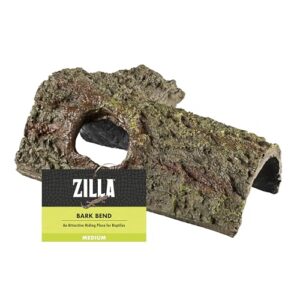
Sometimes your corn snake doesn’t need height — it needs a solid place to feel hidden and secure. The Zilla Bark Bends Terrarium Hide does exactly that.
It measures about 8.3 × 3.6 × 3 inches, fits neatly inside a 20-gallon long enclosure, and its curved bark texture doubles as a low climbing surface.
The non-porous synthetic resin won’t rot or harbor bacteria, and the open-ended design lets you observe shedding behavior without lifting a thing.
| Best For | Corn snake and ball python owners who want a realistic-looking hide that’s easy to clean and lets them watch their snake without disturbing it. |
|---|---|
| Material | Synthetic resin plastic |
| Species Suitability | Snakes, lizards |
| Ease of Cleaning | Mild soap wash |
| Primary Function | Hiding & shelter |
| Size / Dimensions | 8.3 × 3.6 × 3.0 in |
| Indoor Use | Yes |
| Additional Features |
|
- The bark-style design looks natural and blends right into most terrariums
- Non-porous resin means no rot, no bacteria buildup, and easy cleanup with mild soap
- Open-ended front lets you watch shedding and nesting without lifting the hide
- Some units arrive with rough or jagged edges that may need sanding before use
- Actual dimensions can run slightly different from what’s advertised
- A bit on the heavier side, which can be awkward in smaller tanks
6. Galápagos Green Mossy Cave Hide
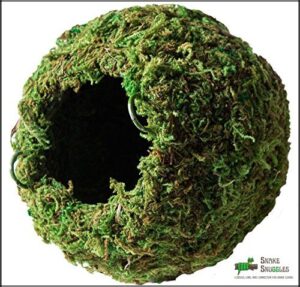
If your corn snake craves a damp retreat, the Galápagos Green Mossy Cave Hide delivers. Its textured moss exterior gives climbing snakes a secure grip, while the natural cave shape mimics forest crevices, your snake instinctively wants to explore.
Place it on the warm side near a water dish, and it quietly raises local humidity to support easier shedding.
The corner-fit design saves floor space, and at roughly 4 to 7.5 inches wide, it suits most juvenile and adult corn snakes comfortably.
| Best For | Corn snake owners who want a natural-looking hide that doubles as a humidity boost and fits neatly into a corner of the enclosure. |
|---|---|
| Material | Wood, wire mesh & moss |
| Species Suitability | Snakes, geckos, tarantulas |
| Ease of Cleaning | Soak before use |
| Primary Function | Hiding & enrichment |
| Size / Dimensions | 6.5 × 6.5 × 6 in |
| Indoor Use | Yes |
| Additional Features |
|
- The sphagnum moss exterior holds moisture well, quietly raising local humidity to help your snake shed cleanly.
- Corner-shaped design makes smart use of space without cluttering the enclosure floor.
- Versatile enough for a wide range of species — from leopard geckos to tarantulas — so it works across multiple tanks.
- Moss can shed and the hide often arrives with debris, so you’ll want to give it a good soak before it goes in the tank.
- Not safe for aquatic or high-submersion setups, which limits where it can be used.
- Rough edges fresh out of the box may need some filing, and cleaning the whole thing can be a bit of a hassle over time.
7. Fluker Medium Reptile Cavern Hide
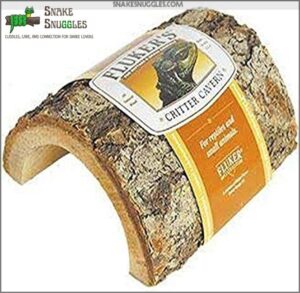
The Fluker Medium Reptile Cavern Hide earns its place in almost any corn snake setup. At roughly 5.5 × 5.5 × 3.5 inches, it’s compact enough to tuck into a 20-gallon long without eating up floor space.
The molded plastic shell is easy to wipe clean, and if bugs sneak in, a quick oven run at 250°F takes care of them.
Just remove the label staples first — those little metal bits aren’t doing your snake any favors.
| Best For | Small reptile and amphibian owners — think geckos, corn snakes, small frogs, or tarantulas — who want an affordable, easy-to-clean hide that won’t take over their tank. |
|---|---|
| Material | Molded rigid plastic |
| Species Suitability | Reptiles, amphibians, inverts |
| Ease of Cleaning | Oven sterilizable |
| Primary Function | Hiding & shelter |
| Size / Dimensions | 5.5 × 5.5 × 3.5 in |
| Indoor Use | Yes |
| Additional Features |
|
- Solid and heavy enough to stay put, even in humid or bioactive setups
- Super easy to sterilize — just pop it in the oven at 250°F and you’re good
- Compact size fits neatly in a 20-gallon long without wasting floor space
- Too small for larger reptiles like a full-grown ball python or big bearded dragon
- Label staples can be tricky to remove and are a potential hazard if left in
- Some buyers have run into shipping damage or a dirty surface straight out of the box
8. Zilla Reptile Rock Hideout
The Zilla Reptile Rock Hideout pulls double duty — it’s both a hide and a basking platform in one solid piece. At 9 × 6.5 × 3.5 inches, it fits comfortably in most adult corn snake setups.
The non-porous plastic exterior won’t harbor bacteria, and cleanup is just warm soapy water. Its rough texture even helps with shedding.
One heads-up: rinse it well before first use to clear that initial plastic smell. Smaller snakes will love it; larger adults may feel a bit cramped.
| Best For | Small to medium reptiles and amphibians who need both a hide and a basking spot in one piece. |
|---|---|
| Material | Rigid plastic |
| Species Suitability | Reptiles, amphibians, fish |
| Ease of Cleaning | Warm soapy water |
| Primary Function | Basking & hiding |
| Size / Dimensions | 9 × 6.5 × 3.5 in |
| Indoor Use | Yes |
| Additional Features |
|
- Non-porous plastic won’t absorb bacteria or water, so it stays cleaner longer
- Works in both dry terrariums and aquatic setups thanks to its water-resistant build
- Doubles as a basking platform and a hide, saving you space and money
- Interior is tight — larger or fast-growing reptiles will quickly outgrow it
- Can float in water tanks unless you weigh it down or let it fill first
- May have a noticeable plastic smell out of the box that needs a good rinse before use
9. Zoo Med Sandblasted Grapevine
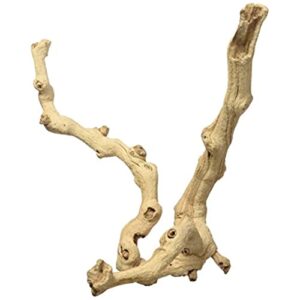
Zoo Med’s Sandblasted Grapevine is the kind of branch that looks like it came straight from the forest floor. The sand-blasted surface gives your corn snake real grip without any splinters to worry about.
At 12 inches long, it works best in smaller or mid-sized setups. The irregular texture and branch-like shape encourage natural movement and make a solid basking platform near a heat source.
Just inspect it periodically for cracks and wipe it down with a reptile-safe cleaner to keep it safe long-term.
| Best For | Small reptiles, birds, and rodents that need a natural-looking climbing spot and a reliable place to bask under a heat or UVB lamp. |
|---|---|
| Material | Plastic |
| Species Suitability | Reptiles, birds, mammals |
| Ease of Cleaning | Wipe clean |
| Primary Function | Climbing & basking |
| Size / Dimensions | 12 × 2 × 4 in |
| Indoor Use | Yes |
| Additional Features |
|
- Sand-blasted finish means no splinters — your animal gets real grip without the risk
- Branch-like shape encourages natural climbing and movement, which keeps pets engaged
- Doubles as a chew toy for birds and rodents, so it earns its spot in more than one type of enclosure
- At 12 inches, it’s going to feel pretty small in a larger tank or for a bigger species
- Some users have found sharp edges on certain units, so a quick inspection before use is a good idea
- Plastic doesn’t quite feel or look like real wood, and the actual product can differ from what you see in photos
10. Exo Terra Forest Branch
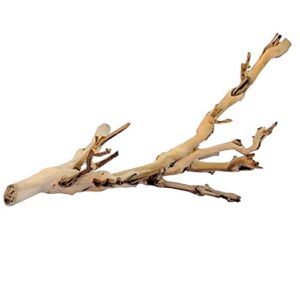
If you want something a little more compact and natural‑looking, the Exo Terra Forest Branch is worth a spot in your setup. It’s made from heat‑treated grapevine wood, so pests and mold spores aren’t hitching a ride inside your enclosure.
The sandblasted surface gives your corn snake real footing without rough edges. At roughly 10 × 6 × 5 cm, it fits smaller terrariums nicely.
Just check it occasionally for cracks, especially at higher humidity levels.
| Best For | Small reptiles, geckos, juvenile lizards, and amphibians that need a compact, natural-looking climbing and basking spot. |
|---|---|
| Material | Heat-treated natural wood |
| Species Suitability | Reptiles, amphibians, mammals |
| Ease of Cleaning | Optional sanding, wipe clean |
| Primary Function | Climbing & basking |
| Size / Dimensions | 10 × 6 × 5 cm |
| Indoor Use | Yes |
| Additional Features |
|
- Heat-treated wood means no pests or mold spores sneaking into your enclosure
- Realistic branch shape encourages natural climbing and basking behaviors
- Compact size fits well in smaller terrariums without taking over the space
- Shape and size can vary between units, so you might get a wonky piece
- Sharp edges or small wire remnants may need filing before use, especially with soft-skinned animals
- At higher humidity, mold can still develop over time, so regular cleaning is a must
Frequently Asked Questions (FAQs)
Do corn snakes like to climb branches?
Yes, corn snakes do like to climb — just not like tree pythons. They prefer low, angled surfaces and gentle inclines over tall vertical climbs.
Do corn snakes need branches?
Corn snakes don’t strictly need branches, but they do benefit from having them.
Low climbing options support natural movement, help with thermoregulation, and keep your snake mentally engaged inside its enclosure.
Do corn snakes need climbing space?
Not exactly — but here’s the thing: space to stretch, explore, and occasionally climb does matter.
A mix of horizontal room and low vertical options keeps your corn snake active, curious, and mentally engaged.
What makes a corn snake happy?
A happy corn snake needs a stable temperature gradient, secure hides, gentle handling, and a consistent feeding routine.
Add enrichment like climbing branches, and you’ve got a very content little explorer.
Can corn snakes climb glass or smooth surfaces?
Think of a tiny rock climber without chalk or shoes — that’s your corn snake on glass.
It can grip briefly using its belly scales, but smooth surfaces offer little real traction for long.
How often should climbing branches be replaced?
Replace natural wood every 12 to 24 months. Swap it sooner if you spot mold, cracks, warping, or loose bark. Artificial vines last longer but still need checks every three months.
Do baby corn snakes need climbing branches?
Baby corn snakes don’t need climbing branches, but low options help.
Short branches encourage gentle exploration, build trunk muscles, and reduce stress — making them a smart, optional addition to any hatchling setup.
What branch diameter works best for corn snakes?
Like a handshake, the fit has to feel right. For most adult corn snakes, branches between 5 and 5 inches diameter work best. Juveniles do well with thinner ones around 1 to 25 inches.
Can live plants replace artificial climbing branches?
Live plants can add natural texture and climbing paths, but they need regular upkeep to stay safe.
Artificial branches stay cleaner, last longer, and won’t harbor pests or unexpected humidity spikes.
How often should corn snakes climb each week?
There’s no magic number. Corn snakes climb when they feel like it — often a few short sessions per week, mostly at night.
Just provide the option and let your snake decide.
Conclusion
Studies show that snakes given environmental enrichment explore up to 40% more of their enclosure daily. That movement isn’t restlessness—it’s a healthy, curious animal doing exactly what it was built to do.
Corn snake climbing branches needed in your setup aren’t just decoration; they’re the difference between a snake that simply exists and one that genuinely thrives. Get the size right, secure it well, and watch your corn snake show you what it’s been missing.