This site is supported by our readers. We may earn a commission, at no cost to you, if you purchase through links.

A ball python will choose a tight, hidden corner over an open space every time. In the wild, these snakes vanish beneath logs, disappear into burrows, and wedge themselves between roots, relying on cover for survival.
Captive ball pythons don’t lose this instinct—without the right hides, stress rises, appetite drops, and health problems creep in. A bioactive setup can mimic their native habitat, but only if you choose hides that fit their bodies, hold the right heat and humidity, and blend with the living landscape.
Mastering ball python hides for bioactive setups means giving your snake security, comfort, and a thriving home.
Table Of Contents
- Key Takeaways
- Why Ball Pythons Need Hides in Bioactive Setups
- Types of Hides Suitable for Bioactive Enclosures
- Placement and Arrangement of Hides
- Integrating Hides With Plants and Decor
- Maintenance Tips for Hides in Bioactive Setups
- Frequently Asked Questions (FAQs)
- Can a ball python have a bioactive enclosure?
- What hides are best for ball pythons?
- Can I put isopods in a ball python enclosure?
- How long do bioactive terrariums last?
- How many hides does a ball python need?
- Can hides be too small or too large?
- What materials are unsafe for bioactive hides?
- How often should hides be replaced or upgraded?
- Do ball pythons prefer open or enclosed hides?
- Conclusion
Key Takeaways
- Ball pythons are shy, ground-dwelling snakes that feel safest in tight, enclosed hides, so they need snug, body‑hugging hide spots to reduce stress, support normal behavior, and keep eating well.
- In a bioactive enclosure, hides must work with your heat and humidity setup—at least one warm hide, one cool hide, and a humid hide for shedding—so your snake can regulate body temperature and skin health without leaving cover.
- The best hides use natural, safe materials like cork bark, logs, leaf litter, moss, terracotta, or bamboo that hold moisture, resist mold, and blend into the environment, while treated wood, harsh resins, metals, and strong chemicals should be avoided.
- Where and how you place hides matters as much as what they’re made of, so you should anchor them securely, connect them with clear paths, blend them with plants and decor for visual cover, and maintain them with regular cleaning, humidity checks, and rotation.
Why Ball Pythons Need Hides in Bioactive Setups
Ball pythons rely on hides for comfort, health, and natural behavior in a bioactive enclosure.
For ideas on arranging snug, layered hide spots, see these custom snake tank layout suggestions for ball pythons.
The right options can make all the difference in how safe and secure your snake feels.
Here’s what to look for when choosing hides for your setup.
Natural Hiding Behaviors and Security
Because the Ball Python is a shy, nocturnal ambush hunter, your Snake Habitat in Bioactive Ecosystems and Terrariums must center on hiding opportunities.
- Thigmotaxis Preference: Tight‑Fit Hides that press along every curve.
- Burrow Mimicry using cork and leaf litter.
- Visual Barrier Use with plants and wood.
- Nighttime Concealment built into Reptile Care and Maintenance. active Vivarium.
Make sure the habitat meets the minimum enclosure size for adult ball pythons.
Stress Reduction and Well-being
When your snake has reliable hides in a bioactive vivarium, stress drops like a stone in a pond. Secure cover and cluttered spaces mirror their natural snake habitat and ecology, letting them relax and show natural behaviors. This enrichment, paired with microbial balance and stable lighting cycles, promotes overall well‑being—making reptile care and maintenance smoother for you and healthier for your Ball Python.
Reliable hides in a bioactive vivarium slash your ball python’s stress and boost long-term health
Maintaining proper temperature gradient is essential for digestion and stress reduction.
Thermoregulation and Humidity Needs
stress melts away when hides support your python’s body heat and moisture needs. A bioactive vivarium thrives on precise temperature gradients and microclimate monitoring, so use this checklist:
- Place heating elements for a warm hide (88–92°F).
- Design a humid hide for moisture retention.
- Use UVB lighting.
- Choose moisture‑holding substrate.
- Regularly check and maintain terrarium conditions.
Types of Hides Suitable for Bioactive Enclosures
Choosing the right hides is key to building a natural, secure space for your ball python.
For deeper guidance on size, placement, and materials, ball python cage setup tips walk you through creating hides your snake will actually use.
There are several types that work especially well in bioactive enclosures.
Here’s what you can consider for your setup.
Cork Bark Flats and Tubes
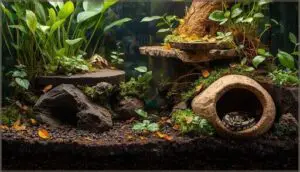
Think of cork bark flats and tubes as the Swiss Army knife of vivarium design—they’re sustainably harvested, mold‑resistant, and available in a wide range of size variations.
You can easily wedge them into your bioactive ecosystem, offering thermal benefits and secure hides.
Compared to pricier options, cork bark delivers excellent value, supporting both reptile care and responsible habitat choices.
Naturalistic Log and Wood Hides
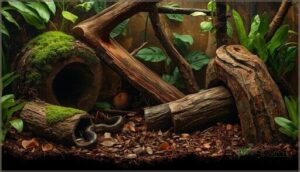
Logs and natural wood hides do more than just look the part—they echo the microhabitat diversity Ball Pythons crave.
Choose animal-safe woods to avoid wood toxicity, and use logs for moisture retention during shed cycles. Rotating these hides seasonally enriches your bioactive ecosystem, encourages predator mimicry, and promotes best practices in reptile care and vivarium design.
Leaf Litter and Moss Hides
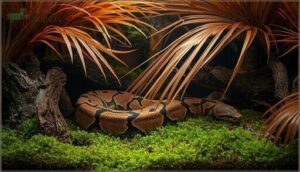
Beneath a layer of Oak Leaf Litter or Southern Palm Leaves, your Ball Python finds both shelter and a microfauna habitat.
Sphagnum Moss and Dried Sheet Moss work as natural humidity buffers, supporting Moss Moisture Retention and Hide Material Sustainability.
As Leaf Litter Decomposition occurs, you create a thriving, bioactive enclosure with:
- Enhanced humidity stability
- Microfauna support
- Eco-friendly hide materials
DIY Eco-friendly Hide Options
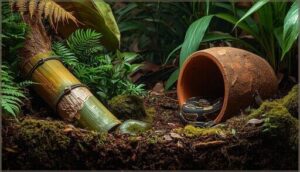
Building your own eco-friendly hides puts control in your hands and promotes sustainability.
Try splitting a Terracotta Pot for a natural, humidity-retaining shelter, or use a Bamboo Section for an easy-clean hide. Cardboard Tubes work well for temporary setups.
Compare options below for your bioactive tank:
| Material | Benefits |
|---|---|
| Terracotta Pot | Humidity, stability, natural fit |
| Bamboo Section | Renewable, easy to clean |
| Cardboard Tube | Recyclable, affordable, replaceable |
Placement and Arrangement of Hides
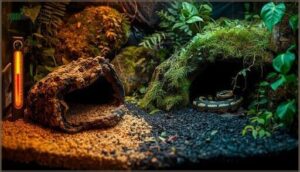
Getting the placement of hides right makes a big difference for your ball python’s health and comfort. Where you put each hide can help with temperature, humidity, and your snake’s sense of security.
Here’s what to keep in mind as you arrange hides in your bioactive setup.
Warm Side Vs. Cool Side Hides
Warm and cool side hides are the backbone of a Ball Python Bioactive Tank.
You’re creating a Temperature Gradient: warm hide 90–95°F directly under the Heat Source Placement, cool hide 75–80°F in shade for a Humidity Microclimate.
Provide identical hides to separate Snake Preference from design, using Material Conductivity intelligently for Bioactive Enclosure, Bioactive Vivarium Care, and Reptile Enclosure Setup.
Creating a Humid Hide for Shedding
Think of the humid hide as a targeted spa for your ball python’s skin.
Pack the floor with Sphagnum Moss over a Tropical Substrate or other Moisture Retention Materials, topped with Oak Leaf Litter as textured Substrate.
Keep a small Hide Entrance Size, use Humidity Monitoring Tools, plan Seasonal Humidity Adjustments, and factor Microfauna Management into Bioactive Vivarium Care routines.
Ensuring Accessibility and Snake Comfort
A ball python won’t use a hide it can’t easily enter or feel safe inside.
Prioritize Entrance Size—about 1.5 times body width—so your snake slides in naturally.
Verify Interior Fit touches all sides, offering security.
Pathway Clearance matters: create clear routes between hides.
Choose Material Texture and Stability Anchoring to prevent shifting, supporting both comfort and long‑term vivarium design and construction.
- Entrance Size: just snug enough for natural entry
- Interior Fit: cozy, supporting the snake on all sides
- Pathway Clearance: unobstructed ground routes between hides
- Stability Anchoring: secure hides to prevent tipping or shifting
Mimicking Natural Environments
Once your hides are positioned for comfort, the next step is making the whole setup feel like West Africa.
Layer your substrate with Oak Leaf Litter and Sphagnum Moss to recreate that forest floor texture.
Tuck Cork Bark Flats against plants to create microclimate gradients naturally.
A dose of BioShot keeps the ecosystem alive, supporting native plant species through natural light cycles and seasonal temperature shifts.
Integrating Hides With Plants and Decor
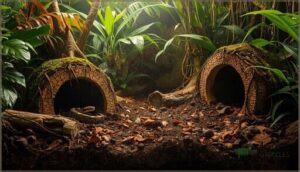
Blending hides with plants and other natural decor helps your ball python feel secure and encourages natural behaviors.
The right setup can turn a simple enclosure into a thriving, enriching habitat.
Here’s how you can integrate hides with plants and decor for the best results.
Using Live Plants for Additional Cover
Layering live plants around your hides boosts Canopy Density and Groundcover Selection, giving your python cover and Microclimate Creation in a Tropical Pet Habitat.
Choose fast‑growing, non‑toxic species to avoid Plant Toxicity, tuck Sphagnum Moss, Oak Leaf Litter, and Southern Palm Leaves around Cork Bark Flats, and use Pruning Strategies to keep foliage thick, humidity stable, and air flow healthy.
Combining Hides With Branches and Substrates
When you anchor cork bark flats with sturdy branches, you create Vertical Habitat Zoning and safe climbing routes. Tuck hides into textured substrate layers—think moss, leaf litter, and soil from your Ball Python Plant Kit—for a natural look and Camouflaged Entrance Strategies.
This Moisture Gradient Design aids your Clean Up Crew, while BioShot enriches the ecosystem and keeps burrows stable.
Enhancing Visual Barriers and Enrichment
Think of visual barriers as more than just decoration—they’re what makes your snake feel truly at home. Strategically placed Cork Bark Flats, combined with your Ball Python Plant Kit, create rich Background Scenery with natural Texture Variation and Color Contrast.
- Use Cork Flats to break sightlines and reduce stress
- Layer live plants for Light Diffusion and Interactive Elements
- Support your CleanUpCrew Bioactive Bundle with layered ground cover
- Rotate decor seasonally for ongoing Snake Care and Maintenance
Maintenance Tips for Hides in Bioactive Setups
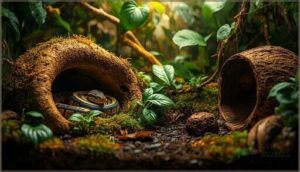
Keeping your ball python’s hides in top shape is key to a healthy, stress‑free enclosure. A little routine care goes a long way in a bioactive setup.
Here’s what to focus on as you maintain your snake’s hides.
Cleaning and Mold Prevention
Ever notice how mold sneaks up where you least expect it?
To keep it at bay, use sealant materials on porous hides, position them for airflow, and rely on mold-resistant bedding.
Stick to a spot cleaning routine, rotate hides regularly, and let your Clean Up Crew and BioShot support terrarium maintenance.
Eco-friendly Products like the Clean Up Crew Bioactive Bundle make upkeep easier.
Monitoring Humidity and Substrate Moisture
Dialing in humidity is where your hide strategy either works with you or against you.
Use Digital Hygrometer Placement low in the Substrate and inside key hides to guide Humidity Gradient Management and Moisture Gradient Tracking.
Pair Substrate Moisture Retention with:
- Sphagnum Moss hide
- Cork Flats over damp zones
- Misting Schedule Optimization using BioShot and Terrarium Maintenance
Rotating Hides for Enrichment and Inspection
Rotating hides every few weeks, as part of your Hide Rotation Schedule, keeps your ball python’s environment fresh and stimulating.
Use this time for Material Inspection—check for mold on cork or wood, and note any Stress Indicators like reduced feeding.
Seasonal Adjustments and Traffic Pattern Analysis reveal how your Animal Enclosure Design and BioBedding TROPICAL support healthy, eco‑friendly Snake Care and Maintenance.
Frequently Asked Questions (FAQs)
Can a ball python have a bioactive enclosure?
ball pythons thrive in bioactive Animal Enclosures when humidity compatibility, moisture balance, and substrate health are managed.
using BioBedding TROPICAL, BioShot, appropriate lighting needs, thoughtful vivarium setup, enrichment variety, reliable snake care and maintenance.
What hides are best for ball pythons?
Choose dark, secure hides like natural log refuges that support good snake health.
Snug Fit, Humidity Retention, Mold Resistance, Thermal Gradient, Material Safety, Animal Enclosures, Vivarium Setup, BioBedding TROPICAL, Cork Flats, EcoFriendly Products, and Sustainability.
Can I put isopods in a ball python enclosure?
Measure twice, cut once: in ball python enclosures, Isopod Safety, Species Selection, Moisture Compatibility, Feeding Competition.
Bioactive Benefits, BioShot, BioBedding TROPICAL, Cork Flats, Dried Sheet Moss, Animal Enclosures and Zookeeping together make isopods generally appropriate.
How long do bioactive terrariums last?
A well-maintained bioactive terrarium generally lasts 3 to 5 years.
With stable Environmental Stability Period conditions, proper Substrate Renewal Cycle, Cleanup Crew Longevity, and healthy Plant Turnover Timing, some setups thrive even longer.
How many hides does a ball python need?
A ball python needs at least two hides — one on the warm side, one on the cool side.
Add a third humid hide during shedding for microhabitat diversity and smoother skin removal.
Can hides be too small or too large?
Yes, hides that are too small or large undermine Stress Indicators, Thermoregulation Impact, and Pet Care in Animal Enclosure;
apply Fit Measurement, Seasonal Size Changes, Sourcing Guidelines, Cork Flats, BioBedding TROPICAL, and EcoFriendly Products for overall stability.
What materials are unsafe for bioactive hides?
It’s no coincidence that these choices cause trouble: Treated wood, Resin offgassing, Metal corrosion, Adhesive fumes, Toxic cleaning agents compromise Substrate.
while Cork Bark Flats, BioBedding TROPICAL, Dried Sheet Moss, and Magnolia Leaf Litter remain dependable.
How often should hides be replaced or upgraded?
Replace cork flats every 12–18 months. Check dried sheet moss monthly. Near heat sources, inspect quarterly. BioBedding TROPICAL’s humidity accelerates wear—your inspection checklist keeps replacements timely and your setup thriving.
Do ball pythons prefer open or enclosed hides?
Like choosing booths, ball pythons prefer enclosed hides;
Preference Trends, Stress Indicators, Temperature Influence, Humidity Impact, Behavioral Observation, Substrate, Cork Bark Flats, Dried Sheet Moss, Magnolia Leaf Litter, EcoFriendly Products and Sustainability shape hide choices.
Conclusion
Every log, curve of cork, and pocket of leaf litter work together, not by accident, but by design, to give your snake what it needs most: safe, invisible calm.
When you treat the enclosure like a living map of hiding places, stress drops, feeding improves, and health stabilizes.
Watch where your python chooses to disappear and adjust.
Over time, those small choices stack up into real mastery of ball python hides for bioactive setups everywhere.
- https://frogtownexoticsllc.com/blogs/news/ball-python-care-guide
- https://www.thebiodude.com/blogs/snake-caresheets/ball-python-care-guide?srsltid=AfmBOop8Zg6kO8v8FWZNCekULf2tnAgKE1svXDy45WT9BU-7SnqQFueh
- https://www.allanglescreatures.com/blogs/news/ball-python-enclosure-setup-complete-beginners-guide?srsltid=AfmBOoosogfl3lJNDxI2FR34HtrV0xUBAnRijOVF18eBM3Bb7Na4kkyn