This site is supported by our readers. We may earn a commission, at no cost to you, if you purchase through links.
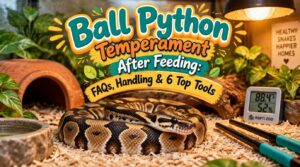
Your ball python just swallowed a rat twice the width of its head. Now it’s curled in a hide, and you’re wondering whether that sluggish lump is fine or in trouble.
Most ball python temperament after feeding follows a predictable arc. Curious and alert at first, then quiet and tucked away. A soft bulge behind the head shrinks over a day or two. Pick your snake up too soon, though, and that meal can come right back up.
You can read the signs with confidence. Here’s what calm looks like, what warrants a vet call, and which tools make feeding safer.
Table Of Contents
- Key Takeaways
- What is Normal Ball Python Temperament After Feeding?
- When is Post-Feeding Behavior Concerning?
- When Can You Handle Your Ball Python?
- How Do Enclosure Conditions Affect Digestion?
- Top 6 Products for Ball Python Feeding Care
- Frequently Asked Questions (FAQs)
- How do ball pythons typically behave after eating?
- Can pet snakes get attached to you?
- What are the signs that a ball python is happy?
- How long does a ball python hunger strike last?
- What is a ball python temperament?
- How to keep a ball python healthy?
- Are ball pythons gentle?
- How often do ball pythons eat?
- How do ball pythons act after eating?
- Are snakes aggressive after feeding?
- Conclusion
Key Takeaways
- After a meal, your ball python will get quiet and hide while the bulge behind its head shrinks, and most snakes are back to normal within 24 to 48 hours.
- Wheezing, mouth discharge, a half-digested meal in the enclosure, or a bulge that isn’t shrinking means you should call a reptile vet, especially after a second regurgitation.
- Don’t handle your snake for at least 48 hours after a meal, and wait until the bulge is gone, since picking it up too soon can make it regurgitate.
- Keep the warm side at 88–92°F and humidity at 50–60%, and give your snake hides at both ends so it stays calm and digests properly.
What is Normal Ball Python Temperament After Feeding?

Snakes need quiet after a meal, and your ball python is no exception. During the postfeeding resting phase, expect your snake to stay alert and curious at first, then settle down. You’ll notice decreased activity and increased hiding, because your python prefers a secure, covered spot while digesting.
Once digestion wraps up, it helps to follow ball python handling frequency guidelines so you know when it’s safe to pick your snake up again.
Check for a visible lump and digestion indicators, like a soft bulge a few inches behind the head. That’s normal. Keep disturbance minimal for the first 24 hours, since stress signals after feeding can upset digestion.
Most pythons return to baseline within 24 to 48 hours. Respect recommended waiting periods before handling, and your snake will thank you. Think of it as a nap after Thanksgiving dinner. Nobody wants to be poked.
Give your ball python a day or two of peace after eating, because nobody wants to be poked during a post-meal nap
When is Post-Feeding Behavior Concerning?

A sleepy python is normal. A sick one isn’t. How do you spot the difference?
Watch for regurgitation indicators first. Wheezing, mouth discharge, or a half-digested meal in the enclosure all signal trouble. Restlessness right after eating matters too, along with stress signals after feeding like frantic roaming or constant hiding that doesn’t ease.
Check the visible lump and digestion indicators daily. The bulge should shrink steadily. Extreme lethargy after regurgitation isn’t typical.
Know when to consult a reptile veterinarian: any wheezing, ongoing refusal, visible weight loss, or a second regurgitation. Until then, follow recommended waiting periods before feeding again. After a regurgitation, that means at least two weeks. Your snake depends on your eyes. Trust your gut. Call early.
When Can You Handle Your Ball Python?
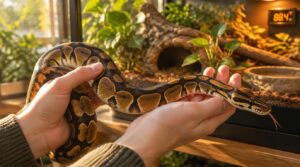
Wait at least 48 hours after a meal. Handling too soon raises regurgitation risk from premature handling, and you’ve already seen how that ends.
Begin with observing behavior before handling no visible lump: the bulge is gone and your python explores calmly. Then follow these safe handling techniques postdigestion:
- Keep sessions to 5–10 minutes.
- Choose late afternoon, when your python’s most active.
- Support the whole body, never squeezing the midsection.
- Wash your hands and skip strong scents.
- Return your snake to its enclosure promptly.
Keep temperature steadiness throughout digestion in mind too, since a chilled snake digests slowly and grips poorly. Check your warm side before every session. Patience pays off every time.
How Do Enclosure Conditions Affect Digestion?
Your enclosure does half the digestive work, which is why a chilled snake digests slowly. Nail the temperature and humidity requirements, and meals move smoothly.
New keepers can dial in heat, humidity, and feeding-tool hygiene with this ball python beginner care guide.
- Keep the warm side at 88–92°F, with gaps under 6°F.
- Hold humidity near 50–60%, since 70% or more stresses breathing.
- Keep nights above 70°F so gut movement doesn’t slow.
- Offer fresh water in a shallow bowl at the cool end.
- Provide hides at both ends, because stress stalls digestion.
Avoid enclosure rearrangement causing tighter coiling. A consistent enclosure setup keeps your python calm and your gut moving. Aim for temperature steadiness throughout digestion, from first bite to last bulge. Keep monitoring health and digestive progress daily: is the lump shrinking, and is your snake relaxed?
Top 6 Products for Ball Python Feeding Care
The right feeding care tools keep you safe and keep your snake calm at mealtime. Below are six products I trust, from tongs and tweezers to a water dish and a portable habitat box. Let’s look at what each one does best.
1. Zxglxinyao 15 Inch Stainless Snake Tongs
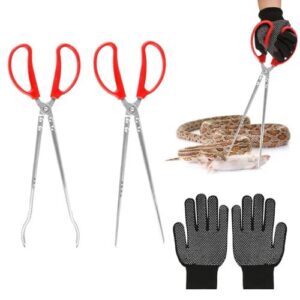
Ever felt your heart jump when a hungry python lunges? Keep your hand out of the picture with these stainless steel tongs.
Built from rust-resistant 410 stainless steel, they measure 380 mm (about 15 inches) and weigh 0.38 kg. The serrated straight and elbow jaws give you a steady hold on prey, and the anti-slip handle keeps things secure. Wipe them down after every single feeding. The included nylon gloves won’t stop sharp punctures, so don’t rely on them alone.
| Best For | Reptile keepers who feed live or frozen prey to animals like bearded dragons, geckos, and aquatic turtles and want to keep their hands at a safe distance. |
|---|---|
| Material | 410 stainless steel |
| Weight | 0.38 kg |
| Length/Dimensions | 380 mm (15 in) total length |
| Feeding Use | Distance feeding of reptiles |
| Target Animals | Bearded dragons, geckos, turtles |
| Unit Count | N/A |
| Additional Features |
|
- Rust-resistant 410 stainless steel construction holds up to regular use.
- Serrated straight and elbow jaws give a steady hold on prey, and the 380 mm length keeps your hand well back.
- The anti-slip ergonomic handle provides a secure grip, and the tongs also work for handling aquarium plants and live corals.
- The included nylon gloves may not resist punctures from sharp objects, so they shouldn’t be your only protection.
- Measurements may be off slightly because they were taken by hand.
- Color may look a little different from the listing photos because of monitor settings.
2. Fri4Free Long Aquarium Tweezers Set
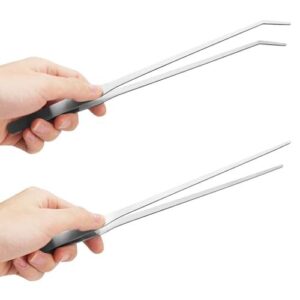
Thanks to their 10.6-inch stainless steel build, the Fri4Free Long Aquarium Tweezers keep your hands well back from a hungry ball python. The set includes one straight and one curved tweezer, so you can pick the angle that suits your enclosure.
Serrated tips grip small feeders securely, though feedback on grip is mixed, so test a firm hold before you lower prey in. These tweezers can bend under resistance, and their edges are sharp and unpolished. Always treat them gently.
| Best For | Aquarium and reptile keepers who want to feed live or frozen prey, or arrange plants and decor, from a safe distance. |
|---|---|
| Material | Stainless steel |
| Weight | N/A |
| Length/Dimensions | 10.6 in (27 cm) |
| Feeding Use | Protects hands during feeding |
| Target Animals | Reptiles and aquarium tanks |
| Unit Count | 2 count |
| Additional Features |
|
- Stainless steel build resists corrosion and works in both saltwater and freshwater tanks
- The 10.6-inch length keeps your hands well away from feeding animals
- Comes with one straight and one curved tweezer, so you can choose the best angle
- Can bend easily when under resistance
- Sharp, unpolished edges on the sides
- Customers report mixed results on how well the serrated tips grip items
3. Heavy Duty Stainless Steel Snake Tongs
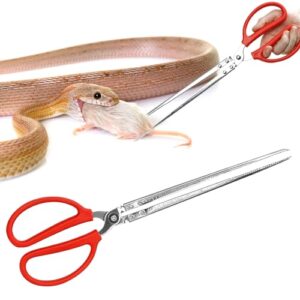
Picture a ball python coiled tight and drowsy after dinner, while you work nearby without a flinch. That’s the calm these heavy duty stainless steel tongs give you.
At 15 inches and just 0.16 kg, they keep your hand well clear of the mouth. The serrated non-slip tips hold prey firmly, and they also handle lizards, spiders, and terrarium upkeep.
Rinse and dry them after every use. Keep them away from children and pets. Check the joints before each feeding.
| Best For | Reptile and arachnid keepers who want to feed snakes, lizards, or spiders and maintain terrariums while keeping their hands a safe distance away. |
|---|---|
| Material | Stainless steel |
| Weight | 0.16 kg |
| Length/Dimensions | 15 in |
| Feeding Use | Feeding snakes, lizards, spiders |
| Target Animals | Snakes, lizards, spiders |
| Unit Count | 1 count |
| Additional Features |
|
- Heavy duty stainless steel construction built to last
- Serrated non-slip tips hold prey securely
- 15-inch length keeps your hand well clear of the animal’s mouth
- Needs to be rinsed and dried after every use
- Must be kept away from children and pets
- Sold as a single unit only
4. Zoo Med Reptile Ramp Bowl
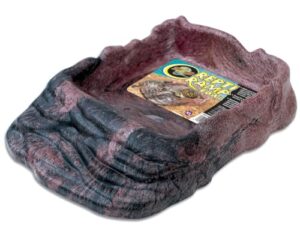
A gentle slope rises from the substrate like a tiny boat launch, and your snake glides up to it. That’s the Zoo Med Reptile Ramp Bowl (RRB12). It’s plastic, weighs 1.9 pounds, and measures 12.7 x 9.3 inches, so check your space first. The easy access ramp helps prevent drowning and keeps water or prey reachable.
Set it on a non-slip mat, near a secure hide, away from door seals. Some owners say it runs small, and color opinions vary.
| Best For | Owners of medium to large box turtles, lizards, frogs, or snakes who want a drinking and soaking bowl that animals can get in and out of easily. |
|---|---|
| Material | Plastic |
| Weight | 1.9 pounds |
| Length/Dimensions | 12.7 x 9.3 x 0.4 in |
| Feeding Use | Feeding hatchling turtles |
| Target Animals | Lizards, turtles, frogs, snakes |
| Unit Count | N/A |
| Additional Features |
|
- The easy access ramp helps prevent drowning.
- It works for many species, including lizards, terrestrial turtles, frogs, toads, salamanders, and snakes.
- Reptiles and amphibians can easily get in and out for drinking and soaking.
- It may be too deep for baby turtles to enter and exit easily.
- Some users report the bowl is smaller than expected.
- Feedback on color is mixed, and some people dislike certain shades like green.
5. Hamiledyi Portable Reptile Habitat Box
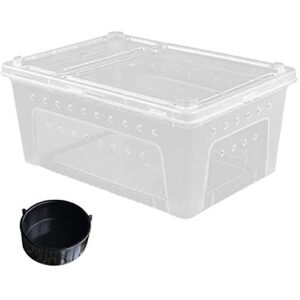
Need a safe spot for feeding, hatching, or quarantine? The Hamiledyi Portable Reptile Habitat Box fits the job.
It’s made of odorless PP plastic, so your snake won’t deal with strange smells. Air holes keep fresh air moving, and the 360-degree clear viewing lets you check on your ball python without opening the lid.
At 12.6 x 8.6 x 5.9 inches and 12.64 ounces, it travels easily indoors or out.
Keep in mind the lid can be stiff, and the air holes may be large for tiny animals.
| Best For | Reptile keepers who need a portable, clear container for feeding, hatching, or quarantining small to medium pets like geckos, turtles, snakes, and tarantulas. |
|---|---|
| Material | PP plastic |
| Weight | 12.64 ounces |
| Length/Dimensions | 12.6 x 8.6 x 5.9 in |
| Feeding Use | Feeding and hatching |
| Target Animals | Snakes, turtles, geckos, tarantulas |
| Unit Count | N/A |
| Additional Features |
|
- Made of odorless PP plastic, so it won’t bother sensitive pets
- Air holes keep fresh air flowing through the box
- The 360-degree clear walls let you check on your pet without opening the lid
- The air holes may be too large for some small animals
- The lid can be difficult for some users to open
- Not suited for larger or stronger animals that could push out of the lid
6. Zoo Med Reptile Rock Corner Water Dish
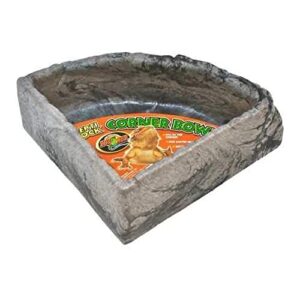
Does your snake need a water bowl that won’t tip the moment she slithers in? The Reptile Rock Corner Water Dish (Model KB40) tucks into a tank corner, so it stays put and frees floor space.
It measures 9.3 x 8.2 x 3 inches and weighs 1.8 pounds, roomy enough for ball pythons and boas to soak. You can use it for food. Plastic, assorted colors, indoor use only. There’s no lid, so keep water shallow after meals.
| Best For | Owners of large snakes like ball pythons and boa constrictors who want a sturdy corner water dish big enough for soaking and for holding food. |
|---|---|
| Material | Plastic |
| Weight | 1.8 pounds |
| Length/Dimensions | 9.3 x 8.2 x 3 in |
| Feeding Use | Water or food dish |
| Target Animals | Ball pythons, boas, large reptiles |
| Unit Count | 1 count |
| Additional Features |
|
- Fits into the corner of the tank, so it stays put and frees up floor space
- Roomy 9.3 x 8.2 x 3 inch size works well for soaking large reptiles
- Can be used for either water or food
- Has no lid or cover, so water can get dirty or spill more easily
- Made for indoor use only
- Sold as a single unit in assorted colors, so you may not get to pick your color
Frequently Asked Questions (FAQs)
How do ball pythons typically behave after eating?
A fed ball python sinks into a heavy, lumpy coil.
Ball python temperament turns calm. How do ball pythons act after eating? Expect reduced activity, tight coils, and increased body heat. That’s normal postprandial behavior.
Can pet snakes get attached to you?
Can they bond? Not like a dog does. Your ball python learns your scent and routine, and calm, consistent handling builds trust. That’s real tolerance, not affection, so track eating habits and behavior changes.
What are the signs that a ball python is happy?
A happy ball python shows relaxed posture and smooth, unhurried movement. You’ll notice gentle tongue flicks toward you.
After meals, reduced activity, extended resting periods, and calm hiding are normal. Faint digestive sounds? Perfectly fine.
How long does a ball python hunger strike last?
Your hunger strike duration usually runs two weeks to three months. Adults may fast up to six months in winter.
Juveniles usually rebound within four to six weeks. Weigh weekly and keep handling frequency low.
What is a ball python temperament?
Picture a shy coil tucked inside a dark hide. That’s ball python temperament: calm, reclusive, and easygoing.
Your snake won’t seek attention, but stress shows fast, so watch for head shaking, tail flicking, and gaping.
How to keep a ball python healthy?
Keeping a ball python healthy starts with temperature and humidity requirements: warm side 88-92°F, cool side 78-80°F, humidity 50-60%. Offer appropriately sized prey, then leave your snake alone. Clean water and monitoring health and digestive progress matter.
Are ball pythons gentle?
Your ball python glides calmly onto your arm once a stressfree environment settles in. Are ball pythons gentle? Yes, mostly.
Ball python temperament is docile, but always respect postfeeding resting and handling risks after feeding.
How often do ball pythons eat?
Hatchlings eat every 7 days, adults every 1 to 2 weeks. Keep your feeding routine steady, enclosure temperature correct, and a stressfree environment to support calm ball python temperament.
How do ball pythons act after eating?
Expect calm, quiet behavior.
Ball python temperament after feeding shifts toward stillness while the digestive process runs. Head shaking, tail flicking, or gaping can signal stress from environmental changes. Risks of premature handling include regurgitation.
Are snakes aggressive after feeding?
Rarely. Most stay sluggish while digesting. Defensive head shakes as jaw alignment reset are normal, and irritation tail flicks signaling need for space mean back off. Respect individual behavioral cues.
Conclusion
A keeper I once treated waited a full 48 hours after every meal, and her python never regurgitated once.
Now you know what ball python temperament after feeding looks like: quiet, tucked away, and a little lumpy. You also know the red flags, from hard swelling to refusing water. Keep the enclosure warm, hold off on handling, and use long tongs so your hands stay safe.
Your snake needs calm, not company. Dinner stays down.