This site is supported by our readers. We may earn a commission, at no cost to you, if you purchase through links.

Most corn snakes that develop health problems in captivity don’t have bad genetics or bad luck—they have bad enclosures. A snake living on the wrong substrate, in a tank that’s too cold or too humid, with nowhere quiet to hide, is fighting its own environment every single day.
That chronic stress chips away at immune function long before any visible symptoms appear.
Captive environment corn snake health comes down to dozens of small, specific decisions: the temperature gradient you maintain, the substrate you choose, how often you handle them.
Get those details right, and you give your snake a genuinely long, healthy life.
Table Of Contents
- Key Takeaways
- Why Captive Environment Matters
- Choosing a Healthy Corn Snake
- Setting Up The Enclosure
- Best Enclosure Size for Juveniles and Adults
- Secure Lids, Locks, and Escape Prevention
- Safe Substrate Options for Corn Snakes
- Warm Hide, Cool Hide, and Humid Hide Placement
- Climbing Branches, Tunnels, and Enrichment
- Water Bowl Size, Placement, and Cleanliness
- Ventilation Without Drafts or Humidity Loss
- Bioactive Enclosure Health Considerations
- Managing Heat and Humidity
- Preventing Health Problems
- Feeding Schedule by Age and Size
- Safe Frozen-thawed Prey Practices
- Preventing Obesity and Regurgitation
- Handling Rules That Reduce Stress
- Monitoring Weight, Appetite, and Shedding
- Respiratory Infection Warning Signs
- Mites, Retained Shed, and Dehydration
- When to Contact a Reptile Veterinarian
- Cleaning Routines and Salmonella Prevention
- Frequently Asked Questions (FAQs)
- Conclusion
Key Takeaways
- Your corn snake’s enclosure setup — temperature gradient, substrate choice, hide placement, and humidity — is the single biggest factor in its long-term health, far more than genetics or luck.
- Chronic stress from a poorly designed environment quietly suppresses your snake’s immune system before any visible symptoms appear, making environmental consistency your first line of defense.
- Choosing a captive-bred snake, quarantining it for 60–90 days, and sourcing from a reputable breeder dramatically reduces parasite risk and sets a healthier foundation from day one.
- Staying ahead of problems through weekly weight logs, monthly body condition checks, and annual vet exams is what separates snakes that survive captivity from ones that genuinely thrive in it.
Why Captive Environment Matters

Your corn snake’s health starts long before it ever sees a vet — it starts with the environment you build for it. Everything from the temperature gradient to the hide placement shapes how your snake eats, sheds, and manages stress over its lifetime.
A well-chosen hide — especially during shed cycles — can make all the difference, so it’s worth exploring the best corn snake hide types for every stage of life before you set up your enclosure.
Here’s what every keeper needs to understand about why the captive environment is the foundation of long-term health.
How Husbandry Affects Corn Snake Health
Everything your corn snake experiences inside its enclosure directly shapes how healthy it becomes. Smart enclosure design and escape prevention, paired with temperature gradient setup and humidity control, determine whether your snake thrives or struggles. Ensuring a proper temperature gradient is necessary for metabolic health.
- Microclimate zoning lets your snake choose the right temperature
- Substrate selection affects skin health and hygiene
- Enrichment rotation reduces chronic stress
- Water quality testing prevents hidden bacterial buildup
- Preventive veterinary care and health monitoring catch problems early
Captive-bred Versus Wild-caught Health Risks
Where your snake comes from matters more than most new keepers realize.
A captive-bred corn snake arrives with far lower parasite load and pathogen exposure than its wild-caught counterpart, which may carry hidden respiratory infections, mites, or even Inclusion Body Disease.
Wild-caught vs captive-bred isn’t just a preference — it’s a zoonotic risk and transmission potential conversation worth having before you ever bring one home.
Stress, Immunity, and Long-term Wellness
Stress hits harder than most keepers expect. Chronic stress hormones quietly suppress immune function over time, making your snake more vulnerable to infections it might otherwise fight off easily.
Chronic stress quietly dismantles your snake’s immune defenses, leaving it vulnerable to infections it would otherwise defeat
That’s why environmental consistency isn’t optional — it’s your first line of defense.
Build your long-term care planning around these four stress reduction pillars:
- Routine Handling Frequency — Keep sessions short and predictable; limit handling to 2–3 times weekly.
- Environmental Consistency — Stable temperatures, humidity, and layout reduce constant searching behavior.
- Immune-Boosting Enrichment — Hides, tunnels, and climbing structures support calm, natural activity patterns.
- Long-Term Health Tracking — Monthly weight checks and preventive veterinary care catch immune strain early.
Signs of a Healthy Captive Corn Snake
stress reduction work pays off in visible ways. A healthy corn snake shows clear eyes, smooth scales, and a steady appetite — with no skipped meals for weeks at a time.
Regular shedding happens in one clean piece. Active exploration replaces long, motionless stretches.
Keep a body condition score log through regular weight monitoring, and your temperature gradient will tell the whole story.
Common Environment-related Health Problems
Even small husbandry gaps can quietly snowball into serious problems. These are the most common issues keepers face:
- Thermal stress from an uneven temperature gradient slows digestion and weakens immunity
- Respiratory infections caused by poor ventilation and stale, damp air
- Scale rot linked to excess humidity and substrate moisture control failures
- Mold growth from persistently damp hides and condensation
- Ammonia buildup when humidity levels trap waste in dirty substrate
Choosing a Healthy Corn Snake
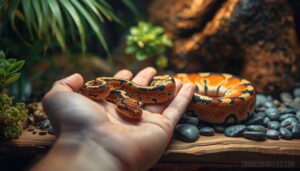
Getting your corn snake off to a strong start means making smart choices before you ever bring one home.
Where you get your snake, what questions you ask, and what to watch out for all matter more than most new keepers realize.
Here’s what to look for every step of the way.
Why Captive-bred Corn Snakes Are Preferred
Choosing a captive-bred corn snake is one of the smartest decisions you can make from the start.
Captive-bred snakes also adapt more easily to the temperature and humidity ranges outlined in these corn snake habitat and care essentials.
These snakes benefit from controlled early development, meaning temperature, feeding, and handling are consistent from hatch day. That foundation promotes predictable growth rates, morph stability, and genetic consistency.
Reduced parasite exposure is another real advantage — captive breeding benefits your snake’s long-term health by eliminating many risks wild origins quietly carry.
How to Evaluate a Reputable Breeder
Selecting a reputable breeder starts with asking direct questions. Good breeders walk you through their temperature gradient documentation, explain prey size consistency across clutches, and describe their isolation procedures without hesitation.
Breeding facility cleanliness should be visible, not just claimed.
They’ll offer post-sale support and discuss genetic selection openly, including genetic markers and morph-specific longevity — real captive breeding benefits you can verify before committing.
Health Guarantees and Purchase Records
A solid health guarantee is your safety net — but only if the paperwork backs it up. When choosing a reputable breeder, confirm the Purchase Ledger includes hatch date, morph, and feeding history.
Guarantee Documentation should define the Claim Process clearly, requiring Vet Verification from a licensed reptile vet.
Keep Timing Evidence like delivery receipts and dated feeding logs ready from day one.
Quarantine Steps for New Corn Snakes
Think of quarantine as your new snake’s decompression chamber. Set up a Dedicated Quarantine Room with separate enclosures, secure lids, and proper enclosure ventilation.
Use Separate Feeding Tools and follow a strict Biosecurity Cleaning routine. Your Health Monitoring Protocol should track weight and appetite weekly. The quarantine period runs 60–90 days, resetting if health concerns arise.
Red Flags Before Bringing One Home
Some corn snakes are already sick before you bring them home. Watch for these red flags the moment you see the animal:
- Open Mouth Breathing or wheezing sounds
- Sunken Eyes or crusted, swollen eyelids
- Visible Weight Loss, with sharp, defined ribs
- Regurgitation Frequency mentioned by the seller
- Abnormal Shedding, mites, or lesions on the skin
Don’t overlook these — they signal respiratory infections, mouth rot, or active parasite infestations.
Setting Up The Enclosure
Getting your corn snake’s enclosure right from day one makes everything else easier. There are a few key decisions you’ll need to make — from size and security to substrate and enrichment — and each one has a real impact on your snake’s health.
Here’s what you need to know for each part of the setup.
Best Enclosure Size for Juveniles and Adults
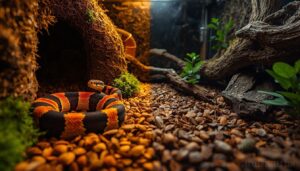
Getting the floor space ratio right from the start saves you from costly mid-growth scrambles.
Juveniles do well in 10–20 gallon tanks, but raising baby corn snakes to adult size means planning an upgrade path early.
Adults need a 40-gallon enclosure — ideally a 4×2×2 foot enclosure — with enough gradient length and footprint dimensions to support proper thermoregulation and growth stage scaling.
Secure Lids, Locks, and Escape Prevention

Once you’ve nailed the right enclosure size, security is your next priority. Corn snakes are determined escape artists — they’ll probe every seam.
Use lockable latching lids with tamper-resistant release mechanisms that require a deliberate push-then-lift action.
Follow a Keyed Lock Protocol in shared homes, perform Latch Alignment Checks after every cleaning, verify Seated Closure Verification tactilely, and confirm Clamp Strap Tension stays uniform around the perimeter.
Safe Substrate Options for Corn Snakes

Your substrate choice shapes everything that follows. Stick to these three proven options:
- Aspen shavings — Low-Dust Bedding that facilitates Particle Size Burrowing without toxic aromatic oils.
- Paper bedding or cypress mulch — Reliable Odor-Control Hygiene with easy spot-cleaning.
- Coconut fiber or bioactive mix — Moisture-Retaining Fiber using Non-Toxic Materials that keep humidity stable.
Avoid cedar and pine entirely.
Warm Hide, Cool Hide, and Humid Hide Placement

Once your substrate is sorted, hide placement is next. Put one warm hide on the warm side and one cool hide on the cool side — that’s your temperature gradient at work.
For your humid hide, warm side or middle zone hides work best; warmth drives evaporation, boosting humidity where it counts.
Multiple hide placement eliminates forced choices during pre-shed.
Climbing Branches, Tunnels, and Enrichment
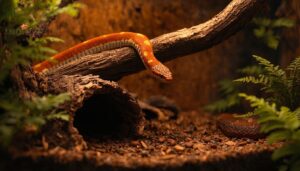
Adding environmental enrichment turns a bare box into a living space your snake will actually use. Keep these guidelines in mind:
- Branch Material Safety — Use smooth, sanded non-toxic wood; check for splinters regularly.
- Angled Branch Placement — Position branches so your snake can coil and climb without stretching awkwardly.
- Tunnel Size Guidelines — Choose tunnels wide enough to enter freely but snug enough to feel secure.
- Surface Texture Variety — Mix cork bark and natural wood grain for better grip, clearance, and access between levels.
Water Bowl Size, Placement, and Cleanliness
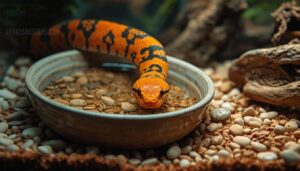
Your water bowl does more than quench thirst — it aids shedding, hydration management, and overall comfort.
Choose a shallow water dish wide enough for your snake to submerge fully, with a low rim for easy entry.
For ideal bowl position, place it on the cool side to follow stagnation prevention tips.
Rinse daily using your daily cleaning routine, scrub weekly with reptile-safe soap, and discard water immediately if soiled.
Ventilation Without Drafts or Humidity Loss

Good ventilation design keeps your enclosure fresh without turning it into a wind tunnel. Vent placement matters — intake low, exhaust high, with fine insect screening covering every opening.
- Use diffuser airflow to blend air gently along walls
- Apply ducted fan control on low speed settings
- Practice condensation management using insulating materials
- Prioritize humidity regulation and ventilation uniformity
- Use humidity control techniques during shedding with a humid hide
Bioactive Enclosure Health Considerations

bioactive terrarium can practically run itself — but only if the foundation is solid. Start with a proper drainage layer design using hydro balls to prevent stagnant water, then build upward with substrate rich in microbial diversity.
cleanup crew of springtails and isopods manages waste, but cleanup crew balance depends on moisture buffering staying consistent.
Watch for plant toxicity, and boost humidity control techniques during shedding.
Managing Heat and Humidity

Getting the temperature and humidity right is one of the most important things you can do for your corn snake’s health. Too hot, too cold, or too dry — and problems show up fast.
Here’s what you need to know to keep conditions dialed in year-round.
Ideal Warm-side Temperature Range
Your corn snake’s warm side should sit between 85°F and 88°F, measured at the spot where your snake actually rests — not the glass wall. A reliable thermostat, whether a heat mat thermostat or ceramic emitter controller, keeps that temperature stable through the day.
Spot thermometer placement matters here: check the hide floor directly. A temperature gradient across the warm zone lets your snake self-regulate comfortably.
Safe Cool-side Temperature Range
The cool side of your enclosure should stay between 70°F and 75°F — that temperature gradient gives your snake real choices when thermoregulating. Cool-side monitoring with a digital probe near the hide entry catches heat leak prevention issues early, like substrate heat transfer from a poorly calibrated heater.
Temperature stability here matters as much as the warm side, so thermostat calibration affects the whole setup.
Nighttime Temperature Drops
Nighttime temperature drops are normal — your snake can handle a dip to 68–70°F. What matters is preventing overcooling through smart thermal gradient design:
- Use Nighttime Heat Source settings via thermostat regulation to hold safe lows.
- Check Hide Insulation — tighter hides act as Heat Buffer Materials.
- Deep substrate adds Enclosure Insulation overnight.
- Keep Temperature Gradient Monitoring consistent with a digital thermometer.
- Position warm hides strategically for thermal gradient design stability.
Thermostats, Probes, and Digital Thermometers
Once you’ve locked in your nighttime settings, the next step is making sure you can actually trust what your thermometer reads.
Probe Placement Accuracy matters more than most keepers realize — your digital probe thermometer only measures where its tip sits, so place it at basking-zone level, not against the heater wall.
Pair that with a reliable thermostat using Sensor Type Selection suited to reptile ranges, solid Thermostat Control Modes, and Calibration & Resolution you’ve verified, and your temperature gradient stability becomes something you can genuinely count on.
Alarm & Alert Settings add a helpful safety net overnight.
Preventing Burns From Heat Sources
Even with accurate temperature monitoring tools in place, burns are still possible if your heat source selection or setup creates hot spots. Four practices protect your snake:
- Use heat pad safety covers and keep bedding coverage even so no bare heater surface is exposed.
- Apply Heat Source Guarding around ceramic emitters.
- Enable Temperature Overshoot Prevention through a quality thermostat.
- Maintain Cool Zone Accessibility always — avoid heat rocks entirely.
Normal Humidity for Corn Snakes
Temperature control keeps your snake safe from burns — but humidity is just as important for daily health. Your ideal humidity range sits between 40% and 60%.
Too dry, and you’ll see dull, cracked scales. Too damp, and respiratory infections creep in.
hygrometer placed mid-tank, away from direct airflow, gives you the most reliable moisture retention reading possible.
Raising Humidity During Shedding
When your snake’s eyes cloud over and its skin dulls, that’s your signal to act. Rather than soaking the whole enclosure, use a Microclimate Humid Hide — a small hide packed with damp substrate — for targeted moisture increase.
This Pre-shed Soak Protocol, combined with Damp Substrate Application and careful Monitoring Shedding Humidity, gives your snake the shedding support it needs without disrupting normal humidity levels.
Optional UVB and Lighting Schedules
Corn snakes don’t strictly need UVB lighting, but a low-output T5 UVB setup can support their overall wellness. If you choose to use one, UVB Timer Settings matter — run it 10 to 12 hours daily for a consistent daily lighting cycle.
Position the Basking Spot Placement close enough to receive usable UVB Exposure Safety levels, and consider gradual Seasonal Photoperiod adjustments to match natural rhythms.
Preventing Health Problems
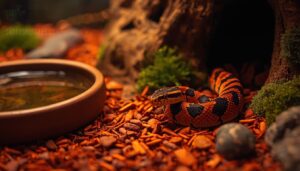
Most corn snake health problems are preventable when you stay consistent with the basics. Feeding the right prey, handling your snake thoughtfully, and watching for early warning signs all make a real difference.
Here’s what to focus on to keep your snake healthy long-term.
Feeding Schedule by Age and Size
Age-based frequency is your first guide: hatchlings eat every 5–7 days, juveniles every 7–10 days, and adults every 10–14 days. Pair that with size-appropriate prey — matching the prey’s width to your snake’s midsection keeps regurgitation risk low.
During molting, skip meals if appetite drops.
Growth stage nutrition shifts constantly, so use body condition adjustments alongside the calendar, not instead of it.
Safe Frozen-thawed Prey Practices
Frozen-thawed prey is the safest choice — but how you thaw it matters just as much as what you’re feeding. Use the Thawing Water Method: seal the prey in a bag and submerge it in warm water. Always avoid Microwave Thaw, which creates hot spots that burn your snake’s mouth.
- Do a Prey Temperature Check with an infrared thermometer — aim for 100–105 °F before offering
- Use feeding tongs for safe Feeding Tool Hygiene, keeping about 12–15 inches between your hand and the strike zone
- Discard Uneaten Prey after 30–45 minutes; never refreeze thawed items
Follow these feeding and diet guidelines consistently, and your corn snake’s meals stay safe every time.
Preventing Obesity and Regurgitation
Two quiet killers in captive corn snake care are overfeeding and improper prey sizing. Match feeding frequency to age — adults need meals every 7–14 days, not weekly like juveniles.
Prey size selection matters too: keep it no wider than your snake’s mid-body.
After eating, prioritize Post-Feeding Rest and Temperature Stability so digestion completes smoothly.
Monthly body condition scoring keeps weight gain from sneaking up on you.
Handling Rules That Reduce Stress
Your snake reads your energy — and your habits. Stress Reduction and Handling Practices start with a Predictable Routine: always approach from the front, use slow movements, and keep sessions short.
Gentle Support along the full body keeps your corn snake calm. Maintain a Low-Noise Environment, follow a Clear Transfer Path, and always enforce Post-Feeding Rest as part of every handling protocol.
Monitoring Weight, Appetite, and Shedding
Beyond consistent handling, keeping written records is where real care begins.
Log your corn snake’s weight weekly at the same time of day, note feeding refusal patterns, and maintain a shed timing chart. Together, these three tools reveal trends — slow weight loss, appetite hesitation, or delayed sheds — that signal a hydration or body condition scoring concern well before visible symptoms appear.
Respiratory Infection Warning Signs
Those weight logs and shed charts you’re keeping? They can also tip you off to respiratory trouble early.
Watch for these warning signs:
- Wheezing and open-mouth breathing at rest — not just after handling
- Nasal discharge that’s thick, foamy, or keeps coming back
- Coughing episodes or repeated gasping between meals
- Lethargy with dyspnea — low energy paired with labored, rapid breathing
Any of these means a reptile vet visit, not a wait-and-see approach.
Mites, Retained Shed, and Dehydration
Mites, stuck shed, and dehydration often show up together — fix one, and you’re already helping the others.
| Problem | What to Watch For |
|---|---|
| Snake mites | Tiny moving specks, skin irritation, frequent rubbing |
| Dysecdysis | Patchy, incomplete shed on head or tail tip |
| Dehydration | Dull skin, sluggish shedding despite appearing "blue" |
For Mite Spotting Tips, check the water bowl — mites often float there. Shedding Humidity Boost means raising enclosure humidity to 60–70% before the shed starts, not after. Moisture Retention Solutions, like a damp hide and cypress mulch, dramatically reduce Skin Irritation Management issues. Dehydration Detection Signs include a wrinkled, loose skin texture between scales.
When to Contact a Reptile Veterinarian
Some problems can’t wait. Sudden appetite loss paired with weight drop, open-mouth breathing, neurologic abnormalities like tremors or loss of coordination, visible injuries, and egg-laying problems all need a reptile vet promptly.
Preventive veterinary care and health monitoring keep small issues from becoming serious ones.
Schedule annual vet exams that include:
- Blood panels to catch internal issues early
- Fecal screening for parasites
- Physical assessment of body condition and shed quality
Cleaning Routines and Salmonella Prevention
Keeping your snake’s enclosure clean isn’t optional — it’s health monitoring in action. Spot clean droppings daily, and schedule full deep cleans with a reptile disinfectant, following proper disinfectant contact time before rinsing.
Use a glove use protocol during water bowl sanitization and scrub bowls separately. Practice tool segregation to avoid cross‑contamination.
Always wash hands thoroughly after — Salmonella prevention starts there.
Frequently Asked Questions (FAQs)
What are signs of illness in corn snakes?
Once in a blue moon, a corn snake gives clear signals that something’s off — mouth breathing, wheezing sounds, skin discoloration, eye cap retention, or abnormal droppings all point to an illness needing prompt attention.
Can corn snakes live safely with other snakes?
No, corn snakes are solitary by nature. Cohabitation raises real risks: territorial aggression, feeding competition, and disease transmission. Separate enclosures are always the safer, healthier choice for each individual snake.
How long do corn snakes typically live in captivity?
These snakes are in it for the long haul — most live 10 to 15 years, with impressive individuals reaching 20-plus. Your commitment today shapes their lifespan tomorrow.
What is the best age to begin handling a hatchling?
Wait two to three weeks and confirm feeding stability before starting your early handling window.
Brief, calm sessions work best — hatchling maturity matters more than any fixed date on your week-by-week schedule.
How does breeding season affect a corn snakes behavior?
During breeding season, males increase territorial movement and pheromone tracking while appetite fluctuations are common.
Courtship activity, stress hormones, and thermoregulation demands rise, so ease up on handling and behavior training until things settle.
Conclusion
Every decision you make today—the substrate you lay down, the hide you position, the thermometer you check—shapes the health your snake will carry for the next decade.
Captive environment corn snake health isn’t a one-time setup; it’s a quiet, daily practice. Get the details right consistently, and your corn snake won’t just survive captivity—it’ll thrive in it.
That’s the standard worth building toward, one careful choice at a time.
- https://www.rspca.org.uk/adviceandwelfare/pets/other/cornsnake
- https://reptifiles.com/corn-snake-care-guide/
- https://www.thebiodude.com/blogs/snake-caresheets/care-guidelines-for-corn-snakes
- https://www.petmd.com/reptile/corn-snake-care-sheet
- https://blackatlantic.uga.edu/7-corn-snake-secrets-for-a-healthy-pet