This site is supported by our readers. We may earn a commission, at no cost to you, if you purchase through links.

Most snake keepers never think about outdoor housing until a warm Saturday afternoon changes everything—your reptile pressed against the glass, the patio empty, the weather perfect. Moving your snake outside sounds straightforward until you realize standard enclosures weren’t built for wind, humidity swings, or the raccoon that visits at 2 a.m.
The right snake enclosure for your outdoor patio demands sealed gaps, UV-stable materials, escape-proof latches, and a thermal gradient you can actually maintain. These features address critical challenges like temperature fluctuations, predator intrusion, and material durability under sunlight.
These seven options deliver all of it, combining security, climate control, and resilience to create a safe, stable environment for your reptile.
Table Of Contents
- Key Takeaways
- Top 7 Patio Enclosure Options
- 1. Agitree Reptile Enclosure Adjustable Lighting Wheels
- 2. Aivituvin Large Wooden Tortoise House Weatherproof
- 3. Moguobin Tortoise Habitat Indoor Outdoor Enclosure
- 4. Aivituvin Wooden Tortoise Habitat
- 5. Oykomeoko Wooden Multi Pet Enclosure with Tray
- 6. MoNiBloom Wooden Tortoise Habitat Enclosure
- 7. Magazoopet Wooden Tortoise Habitat
- Best Outdoor Snake Enclosure Materials
- Patio Safety and Escape Prevention
- Temperature, Shade, and Ventilation
- Choosing The Right Patio Setup
- Frequently Asked Questions (FAQs)
- What is the best enclosure for a snake?
- Is a glass or plastic snake enclosure better?
- Can snake tanks be outside?
- Can wild snakes enter an outdoor enclosure?
- How often should outdoor enclosures be cleaned?
- What humidity levels do outdoor snakes need?
- Are outdoor enclosures safe during heavy rain?
- Should outdoor enclosures be covered at night?
- Conclusion
Key Takeaways
- PVC or HDPE panels with galvanized hardware cloth beat wood every time outdoors — they won’t warp, rot, or let predators tear through.
- Your enclosure needs a real thermal gradient (85°F warm side, 75°F cool side) with a thermostat on every heating device, no exceptions.
- Gaps are your biggest enemy — seal every door edge, panel joint, and cord hole before your snake finds them.
- Match the enclosure size to your snake’s actual length (a 4-foot snake needs at least a 48×24-inch floor) and leave a 10–20% growth buffer.
Top 7 Patio Enclosure Options
Finding a solid outdoor enclosure for your snake takes more than a quick search. These seven options stood out for their build quality, weather resistance, and patio-friendly design.
Once you’ve locked in the right enclosure, pairing it with the best material makes all the difference — check out this guide to snake cage substrate options to finish the setup right.
Here’s what made each one worth a closer look.
1. Agitree Reptile Enclosure Adjustable Lighting Wheels
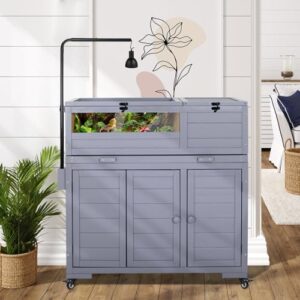
The Agitree Reptile Enclosure (Model AG-C6302) offers flexibility and convenience. Measuring 33.47 × 15.75 × 35.67 inches, it provides snakes with ample space to move comfortably.
Its adjustable lighting wheel allows precise control over UVB distance and minimizes hot spots, eliminating guesswork.
Brakable swivel wheels enable effortless mobility, letting you reposition the enclosure without lifting.
Cleaning is simplified by a slide-out tray, ensuring hassle-free maintenance.
Note: Air it out first—new units may emit noticeable off-gassing initially.
| Best For | Reptile owners who want a stylish, easy-to-move habitat for small-to-medium turtles, lizards, or snakes. |
|---|---|
| Dimensions | 33.47 x 15.75 x 35.67 in |
| Weight | 37 lb |
| Frame Material | Cedar wood |
| Cleaning Tray | Slide-out waterproof plastic tray |
| Ventilation | Dense metal mesh top |
| Dual Compartments | Viewing area + sleeping compartment |
| Additional Features |
|
- Swivel wheels make it easy to roll the enclosure into sunlight or fresh air without any heavy lifting.
- The slide-out tray and clear acrylic window make cleaning and daily observation genuinely painless.
- Built-in storage cabinets keep all your supplies tidy and right where you need them.
- May feel cramped for larger or fast-growing reptiles, so you might need to upgrade sooner than expected.
- New units can have a strong chemical smell—give it a few days to air out before putting your pet inside.
- Assembly instructions aren’t the clearest, and shipping costs can run $20–$40 higher than similar products.
2. Aivituvin Large Wooden Tortoise House Weatherproof
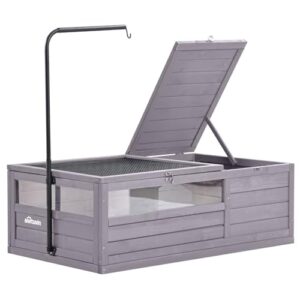
If mobility matters less and durability tops your list, the Aivituvin Large Wooden Tortoise House is worth a look. It’s built from 100% solid wood — no plywood shortcuts — with a sealed plastic bottom that prevents moisture from wicking into the frame.
The roof sheds rain effectively, while a weatherproof coating shields exposed surfaces from UV damage. Viewing windows on multiple sides allow you to observe your tortoise without lifting the lid.
You’ll need to seal the seams yourself before outdoor use to ensure full weather resistance.
| Best For | Pet owners who want a solid, no-frills enclosure for small reptiles or rodents and don’t mind doing a little extra prep work to get it outdoor-ready. |
|---|---|
| Dimensions | 15.51 x 9.45 x 4.88 in |
| Weight | 23.94 lb |
| Frame Material | Solid wood |
| Cleaning Tray | Pull-out plastic tray |
| Ventilation | Dense top wire lid |
| Dual Compartments | Private sleeping + public viewing area |
| Additional Features |
|
- Solid wood construction (no plywood) feels sturdy and holds up better than cheaper alternatives
- Plastic bottom tray makes cleaning quick and keeps moisture from soaking into the frame
- Acrylic windows on multiple sides let you keep an eye on your pet without disturbing the habitat
- Seams aren’t fully sealed out of the box, so you’ll need to caulk them yourself before outdoor use
- Latches are on the flimsy side and may need replacing with stronger hardware
- Thin wood panels can splinter, and some units arrive with a noticeable paint or finish odor
3. Moguobin Tortoise Habitat Indoor Outdoor Enclosure
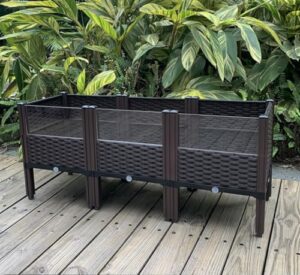
Solid wood is great, but not every setup needs it. The Moguobin Tortoise Habitat offers a multi-room layout with separate basking and shaded zones, catering to cold-blooded animals’ need to self-regulate their temperature.
Built for versatility, it accommodates both indoor and outdoor use. Its durable design features reinforced panels, corrosion-resistant hardware, and a raised base that protects the substrate from moisture.
Maintenance is simplified by the pull-out tray, which streamlines cleaning.
To complete the setup, just add a thermostat and UVB strip, transforming it into a functional, flexible habitat ready for use.
| Best For | Pet owners housing small reptiles or amphibians who want a multi-zone enclosure they can use both indoors and outdoors. |
|---|---|
| Dimensions | 47.2 x 15.7 x 20.5 in |
| Weight | 13 lb |
| Frame Material | PVC plastic |
| Cleaning Tray | Removable pull-out plastic tray |
| Ventilation | Mesh panels and windows |
| Dual Compartments | Resting area + visual play area |
| Additional Features |
|
- Three-room layout lets you create warm and cool zones, so your pet can regulate its own temperature naturally.
- Acrylic observation windows make it easy to keep an eye on your animal without stressing it out.
- The pull-out tray makes cleanup quick — no scooping around awkward corners.
- Assembly can be a real headache with 59 pieces, no printed instructions, and only a video tutorial to guide you.
- Build quality is hit or miss — loose legs and broken pieces are common complaints.
- It’s not a great fit for larger or more active tortoises; some owners found it couldn’t hold up under normal daily use.
4. Aivituvin Wooden Tortoise Habitat
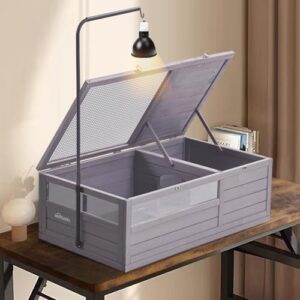
The Aivituvin Wooden Tortoise Habitat earns its place on a covered patio, designed to withstand outdoor conditions. Its solid fir framing, galvanized, predator-proof wire, and acrylic viewing panels combine structure, security, and visibility in a single unit.
Pair it with the right heating setup—tortoise habitat temperature and basking zone tips can help you dial in those critical warm and cool sides.
Cleanup is effortless with the removable plastic tray, requiring no tools and minimizing hassle.
At roughly 38 inches long, the habitat offers ample space to incorporate hides and enrichment elements, enhancing your tortoise’s environment.
Padlock-compatible latches ensure raccoons and cats stay out permanently, prioritizing safety and durability.
| Best For | Small and juvenile reptiles like turtles, tortoises, geckos, and lizards whose owners want a dual-zone enclosure with built-in lighting support at a budget-friendly price. |
|---|---|
| Dimensions | 38.1 x 22.4 x 13.1 in |
| Weight | 20.5 lb |
| Frame Material | Fir wood |
| Cleaning Tray | Removable waterproof plastic base |
| Ventilation | Metal mesh roof panel |
| Dual Compartments | Sleeping area + activity zone |
| Additional Features |
|
- The dual-chamber design gives your reptile a cozy hide and an open area to roam — great for natural behavior
- The adjustable lamp stand with 360° rotation makes dialing in the right heat and UV coverage pretty straightforward
- The plastic base resists water and heat damage, so cleanup is easy and you’re not ruining the floor underneath
- The wood is on the thinner side, so it’s not built for larger or heavier adult reptiles — stick to smaller species
- Some buyers have noticed a chemical smell out of the box, meaning you’ll want to air it out for a few days before putting any animals inside
- Assembly can be hit or miss — a few units have shown up with missing screws or rough edges, so give it a good once-over before use
5. Oykomeoko Wooden Multi Pet Enclosure with Tray
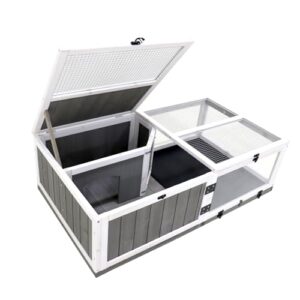
The Oykomeoko stands out for one simple reason: it is built for multi-pet flexibility without sacrificing security. At 45 inches long and 36.4 inches tall, there is genuine room to work with. Its waterproof-coated wood ensures durability in patio environments, outperforming untreated materials in humidity resistance.
The included shade cover offers practical protection from afternoon sun exposure, while the removable tray simplifies cleanup, keeping the space odor-free. Non-slip feet enhance stability on surfaces like concrete or gravel, preventing shifts during use.
For households with mixed small-pet setups, this design addresses key needs effectively, combining functionality with safety.
| Best For | Pet owners with multiple small animals — like tortoises, rabbits, or lizards — who want one well-organized enclosure that keeps everyone safely separated. |
|---|---|
| Dimensions | 43.1 x 24 x 12.8 in |
| Weight | 25.48 lb |
| Frame Material | Solid wood |
| Cleaning Tray | Detachable sliding tray |
| Ventilation | Wire-mesh side panels |
| Dual Compartments | Roaming area + shelter compartment |
| Additional Features |
|
- Dual-compartment layout lets you house different species or isolate a sick animal without needing a second cage
- Removable sliding tray makes daily cleanups quick and keeps odors from building up
- Acrylic panels and wire mesh keep things well-ventilated and easy to see into
- Wood is vulnerable to moisture, so outdoor or humid setups will need extra protection or regular maintenance
- At 25 lbs and over 43 inches long, it’s not easy to move around — especially in a smaller home
- Wire mesh gaps aren’t fully sealed, so it’s not the best fit for escape artists or strong climbers
6. MoNiBloom Wooden Tortoise Habitat Enclosure
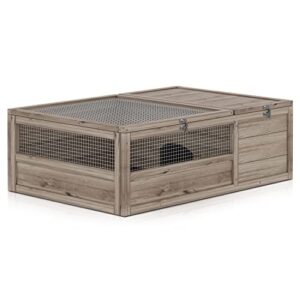
The MoNiBloom keeps things simple — and that’s actually a strength. At 37 inches long and 25 inches wide, it provides small snakes with sufficient space to move without wasting room. Its compact design is ideal for efficient, low-maintenance setups.
The removable bottom tray ensures fast clean-up, while dual lids allow easy access to the interior without disrupting the habitat. These features prioritize practicality and minimize handling stress for both keeper and snake.
Safety is addressed through blunt wood edges, reducing injury risks during maintenance. However, the enclosure’s size limits its long-term suitability for fast-growing species. For compact patio setups, it remains a practical, low-maintenance option worth considering.
| Best For | Small reptile and amphibian owners — especially tortoise, gecko, or lizard keepers — who want a compact, easy-to-maintain habitat for younger or smaller species. |
|---|---|
| Dimensions | 37 x 25.5 x 12 in |
| Weight | 24.6 lb |
| Frame Material | Fir wood |
| Cleaning Tray | Waterproof enclosed bottom panel |
| Ventilation | Top wire lid with mesh windows |
| Dual Compartments | Hiding spots + open habitat area |
| Additional Features |
|
- Dual top doors make feeding, cleaning, and adding heat plates genuinely hassle-free.
- The waterproof bottom panel holds substrate and moisture well, which is a big plus for reptiles that need humidity.
- Mesh windows on both sides keep airflow strong and let you keep an eye on your animals without opening the enclosure.
- Wood can warp or crack over time, especially if you’re keeping it in a humid setup — gaps can become a real escape risk.
- Wire mesh edges are sometimes sharp right out of the box, which could scratch or cut both animals and handlers.
- The plastic locks feel flimsy, and the size will quickly become too small for any fast-growing species.
7. Magazoopet Wooden Tortoise Habitat
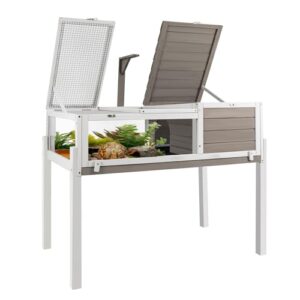
The Magazoopet brings outdoor-ready construction to a price point worth considering. Natural wood panels with reinforced corners handle weather better than basic fir builds, while the sloped roof sheds rain without any extra effort on your part.
A built-in hide area gives your snake a retreat it’ll actually use, and removable trays keep cleaning quick—practical touches for daily maintenance.
Secure door latches and a raised base add a solid layer of predator and escape protection, making this a smart choice for any patio setup.
| Best For | Reptile owners who want a spacious two-room enclosure for tortoises, lizards, or small reptiles and need something that works both indoors and outside. |
|---|---|
| Dimensions | 37 x 23 x 32 in |
| Weight | 23.1 lb |
| Frame Material | Fir wood |
| Cleaning Tray | Two removable bottom trays |
| Ventilation | Metal mesh cover top |
| Dual Compartments | Sitting area + play room |
| Additional Features |
|
- Two-room layout gives your reptile separate spaces for resting and moving around — more room than a basic single-chamber setup
- Removable trays make waste cleanup fast and low-effort
- Detachable legs let you shift between indoor use and outdoor sunlight without much hassle
- Stability can be hit or miss — some users report gaps where the two rooms connect and an overall lack of sturdiness
- Assembly is a bit of a puzzle, with lots of pieces and painted-on numbered markings that can’t be removed
- Fir wood needs sealing before use since it’s porous and can crack or absorb bacteria over time
Best Outdoor Snake Enclosure Materials
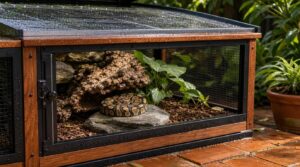
The material your enclosure is built from can make or break your snake’s safety outdoors. Weather, predators, and humidity all test the limits of whatever you choose.
Here’s what actually holds up on a patio.
PVC Panels for Moisture Resistance and Humidity Control
PVC panels are a solid choice for outdoor snake enclosures. Their closed-cell core blocks moisture intrusion and resists swelling during humidity swings. Tongue-and-groove seams ensure tight gaps, critical for containing small species. An anti-mold finish prevents mildew, while low thermal conductivity minimizes condensation buildup.
For patios with direct sunlight, prioritize panels with a UV-stable coating. Ensure a minimum thickness of 1/2 inch for durability.
These panels provide a non-porous moisture barrier, preventing water migration to underlying surfaces.
HDPE Panels for UV-stable Patio Durability
HDPE panels hold up where other materials quit. Built with carbon black UV inhibitor chemistry, they retain color retention longevity of 8–12 years on a sun‑baked patio — no fading, no brittleness.
- Impact resistance rating exceeds 15 kJ/m² — withstands hail without cracking
- Minimal maintenance needs: soap, water, done
- End-of-life recycling keeps it an eco‑conscious pick for environmental protection
Solid fence durability for your pet snakes, zero compromise.
Galvanized Hardware Cloth for Predator Protection
Raccoons don’t quit — and neither should your enclosure walls. Galvanized hardware cloth built with hot dip galvanized steel mesh provides real corrosion resistance lasting over a decade outdoors.
Choose 19–23 gauge for wind load resistance and mesh gauge selection that blocks foxes, cats, and birds.
Edge skirt design buried 4–6 inches stops diggers cold.
Zinc self-repair fixes minor scratches automatically, and fastener compatibility with standard wood or metal framing ensures straightforward installation.
That’s animal exclusion fencing done right.
Why Untreated Pine and Cedar Should Be Avoided
Hardware cloth effectively manages predators, but the frame’s material is equally critical. Untreated pine and cedar frames deteriorate rapidly outdoors. Moisture absorption causes structural warping within a season, leading to wood rot and eventual termite infestation.
Key vulnerabilities include:
- UV weathering strips surface protection and accelerates cracking
- Swelling joints break seams and create escape gaps
- Aromatic resins in cedar and pine are toxic to snakes on contact
- No corrosion resistance compared to PVC-coated galvanized steel or metal snake fence rolls
In contrast, durability and corrosion resistance make metal fencing the superior choice. Maintenance-free fencing solutions constructed from PVC-coated steel consistently outlast wooden alternatives—no debate.
Weatherproofing Considerations for Patio Placement
Angle the base 2–5 degrees away from the interior to shed rain naturally. Where you place your enclosure matters as much as what it’s made from.
Seal all joints with silicone — it resists wind-driven moisture better than foam tape. UV coatings prevent panel yellowing, while moisture barriers stop capillary wicking into frames.
PVC coated galvanized steel and hot dip galvanized mesh deliver the durability and corrosion resistance of metal fencing that truly earns its maintenance-free reputation outdoors.
Patio Safety and Escape Prevention
A snake that wants out will find the one gap you forgot. Outdoor enclosures need to be locked down — literally — from the door latches to the ground line.
A determined snake will find the one gap you forgot to seal
Here’s what actually keeps your snake inside and everything else out.
Sealing Small Gaps Around Doors and Panels
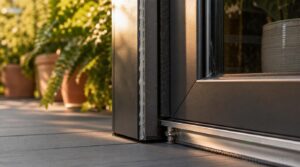
Snakes find gaps you’d never notice. Foam weatherstripping accommodates irregular door edges up to 1/4 inch, while EPDM rubber holds up through UV exposure and freezing temps. Use silicone caulk on panel joints — it flexes with outdoor expansion. Magnetic strips seal metal-framed doors tight.
Adjustable sweeps cover threshold gaps up to 3/8 inch.
Don’t overlook any opening. Juveniles need almost nothing to slip through.
Secure Locks, Clips, and Latch Upgrades
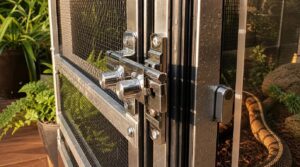
Gaps sealed? Good. Now make sure nothing can push, force, or pry its way out. Raccoons are surprisingly clever with basic latches. Upgrade to a twin bolt or multi-point lock — both resist forced entry far better than standard clips.
Top three upgrades worth your time:
- Anti-snap cylinder locks with weather-sealed gaskets
- Magnetic catch clips for thin panel doors
- locking set screws on post connections
Solid Grommets for Cords and Probe Openings
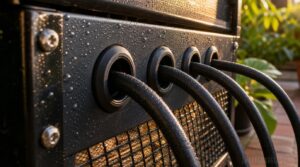
Every cord hole is a potential escape route. Solid grommets seal those openings tight — no wiggle room for curious snakes.
| Feature | What to Look For |
|---|---|
| Material | Silicone or EPDM for UV and weather resistance |
| IP Rating | IP65 or higher for outdoor sealing performance |
| Installation Tools | Snap-in types need zero tools |
Pair them with PVC coating and corrosion-resistant metal hardware for a lasting seal.
Buried Barriers Around Outdoor Enclosure Bases
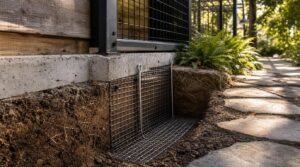
Even the most secure walls mean nothing if something — or someone — can tunnel right under them. Bury galvanized hardware cloth 150–300mm deep using ground sleeves and overlap and staking techniques for fence security.
Soil type adaptation matters: sandy soil requires deeper burial. Concrete base integration resists frost heave and seasonal shifting.
Add inspection ports to check buried sections without dismantling everything.
Preventing Escapes From Sliding Glass Doors
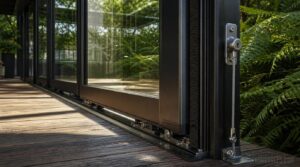
Sliding glass doors are one of the sneakiest escape routes in any patio setup. Install anti-pry rollers and hidden anchoring brackets in the reinforced track to block lifting and prying.
Upgrade to tempered glass with a roller bearing track for smooth, secure operation.
Add wire locks and door wraps to close panel gaps — critical for small species that exploit the narrowest openings.
Temperature, Shade, and Ventilation
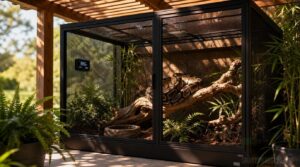
Getting the temperature right outdoors is harder than it looks — too much sun, too little airflow, and your snake pays the price.
A safe patio setup needs a real thermal gradient, proper shade management, and ventilation that actually moves air.
Here’s what to know before you build or buy.
Creating a Safe Warm-side and Cool-side Gradient
Your snake needs options — not a cage that’s uniformly hot. Set up a Heat Source Offset at one end, targeting 85°F on the warm side and 75°F on the cool side. Use Basking Spot Markers so your snake finds the gradient fast.
Add Insulating Edge Strips to stop heat bleed, and position Gradient Probe Placement away from direct heat for accurate readings.
Using Thermostats on All Outdoor Heating Devices
A thermostat isn’t optional outdoors — it’s the difference between a healthy snake and a medical emergency. Every heating device needs one.
Look for an IP65 Rating to handle rain and humidity. A Wireless Thermostat simplifies placement without messy wiring. Use Zonal Temperature Control to manage warm and cool sides independently.
Set Energy Saving Schedules and commit to Sensor Calibration every six months.
Protecting Enclosures From Direct Afternoon Sun
Adjustable Sun Sails or Radiant Barrier Roofing overhead — both cut solar radiance by 70–90%. Double-Layered Panels with low-emissivity glass reduce heat transfer without blocking visibility.
Strategic Tree Placement adds natural shade.
Keep shields slightly elevated to let hot air escape.
Vent Placement for Natural Airflow
Once you’ve handled the shade, airflow becomes your next job. Place intake vents low on the cooler side and exhaust vents higher on the opposite wall — that’s Cross-Wall Flow working naturally.
Mid-Height Vents prevent drafts at resting spots.
Use Adjustable Louvers with wire mesh and 1/4-inch mesh size selection to fine-tune airflow without letting pests in.
Fan-assisted Ventilation for Warm Patios
Natural airflow gets you far, but when your patio runs hot, fans close the gap. Mount an IP55-rated, corrosion-resistant metal fan outside the upper vent to pull warm air out steadily.
- Variable Speed controls to match airflow to outdoor temps
- Misting Fans drop ambient heat 5–15°F in dry climates
- Smart Coordination with your thermostat prevents overheating spikes
Quieter motors won’t stress your space.
Choosing The Right Patio Setup
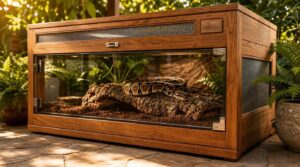
Getting your patio setup right comes down to a few key decisions—and each decision affects how safe and comfortable your snake will be outside.
The factors below cover everything from enclosure material to predator threats and substrate choices. Work through these factors before committing to any outdoor housing solution.
Glass Vs Plastic Enclosures for Outdoor Use
Glass and plastic each have real trade-offs for patio use. Glass offers near-zero air gaps and clear visibility, but it is heavy and scratches easily. Polycarbonate wins on impact resistance, UV longevity, and maintenance ease — it’s lighter, more affordable, and withstands hail without cracking.
For most patio setups, poly snake fence panels are the practical pick: a corrosion-resistant, maintenance-free barrier with customizable fence configurations for wildlife control.
Full-time Outdoor Housing Vs Supervised Patio Time
Polycarbonate panels get you halfway there — but how you use the space matters just as much. Full-time outdoor housing demands higher upfront costs, weatherproof construction, monitoring technology, and lower maintenance frequency once established.
Supervised patio time costs less but requires constant human interaction.
Snake fence kits with customizable fence heights and burrowing prevention give full-time setups the seasonal adaptability and snake climbing prevention they need.
Matching Enclosure Size to Snake Species
Size matters more than you’d think. Match your species’ length ratio to the enclosure footprint — a 4-foot snake needs at least a 48×24-inch floor. Apply growth margin planning with a 10–20% size buffer.
Fossorial depth requires deep substrate; arboreal height requirements add vertical climbing space.
Footprint shape guidelines favor rectangular layouts for terrestrial species, square for burrowers.
Predator Risks From Cats, Raccoons, and Birds
Raccoon-proof wiring using galvanized hardware cloth outperforms standard chicken wire, as raccoons will tear through weaker mesh.
Cat Access Deterrents like motion-activated alarms and scent repellent strategies effectively keep felines away from the perimeter fencing.
Adding Aerial Predator Shields over the top addresses bird threats.
Corrosion-resistant metal framing and solid wildlife exclusion barriers provide comprehensive protection, handling the remaining vulnerabilities.
Substrate and Enrichment for Outdoor Snake Comfort
What’s under your snake matters as much as what’s around it. Start with a Moisture Retaining Mix — 40% topsoil, 40% coconut fiber, 20% play sand — for natural Thermal Substrate Zones and healthy shedding.
- Burrowing Substrates at 4–6 inches deep for species that dig
- Foraging Enrichment like hidden scent cues to trigger hunting instincts
- Leaf litter baked at 300°F for safe, naturalistic cover
- A consistent Cleaning Regimen — spot clean weekly, full swap every 1–3 months
Frequently Asked Questions (FAQs)
What is the best enclosure for a snake?
The best enclosure matches your snake’s size, behavior, and climate. Prioritize corrosion resistance, proper mesh opening size selection for escape control, and fence height.
Snake fence kits with ground overlap keep escapes and predators out reliably.
Is a glass or plastic snake enclosure better?
Glass looks stunning but shatters. Plastic survives. For outdoor use, plastic wins on impact resistance, heat retention, and moisture sealing.
Glass loses points fast when wind, weight considerations, and UV degradation enter the equation.
Can snake tanks be outside?
Yes, tanks can go outside — but only with the right setup.
You’ll need weatherproof wiring, corrosion-resistant metal, secure locks, and a solid thermal gradient to keep your snake safe and healthy.
Can wild snakes enter an outdoor enclosure?
Yes, they can — and will. Wild snakes follow habitat edges, exploit seasonal activity peaks, and slip through mesh openings as small as 1–2 cm.
Ground overlap depth, barrier overhang length, and mesh opening size selection determine whether your barrier holds.
How often should outdoor enclosures be cleaned?
Spot clean daily. Deep sanitize weekly. Refresh substrate every one to two weeks. After rain, dry it out fast to stop mold. A seasonal deep clean keeps everything reset.
What humidity levels do outdoor snakes need?
Ironically, the drier your patio feels, the more your snake suffers silently. Desert species need 20–40% humidity, temperate snakes need 50–70%, and tropical species require 70–90%. Use a hygrometer to track it daily.
Are outdoor enclosures safe during heavy rain?
They can be effective—if built right. Use IP66-rated panels, continuous gaskets, and an elevated base design.
After every storm, run a quick storm seal inspection. Skipping that step means water wins.
Should outdoor enclosures be covered at night?
A night cover isn’t optional in cool climates — it’s thermal retention in action. It buffers nighttime temperature drops, controls moisture, and adds predator deterrence without replacing your thermostat.
Conclusion
Your snake doesn’t need a fortress—it needs a thoughtfully managed environment. The best snake enclosures for outdoor patios aren’t just boxes with latches; they’re controlled systems that handle heat, predators, and weather before problems start. Pick materials that won’t warp, gaps that won’t open, and locks that don’t forgive carelessness.
Get those details right, and your patio becomes something worth having: a second habitat your snake can actually thrive in.
- https://www.zenhabitats.com/collections/spacious-and-secure-snake-enclosures-tanks-terrariums-and-cages-for-all-snake-species?srsltid=AfmBOoot3FK-rHO34zrCVblRUne0I6gJDH69DV-3kDM1tnw8UN0Zm7kn
- https://www2.parklanejewelry.com/how-to-build-a-reptile-enclosure/
- https://reptile-cage-plans.com/archive/2006/ed1_2006.html
- https://permies.com/t/160147/alternatives-buried-hardware-cloth-digging
- https://www.twpinc.com/blog/5-tips-on-how-to-install-wire-mesh-snake-fence.html?srsltid=AfmBOop_kEzASjJx6UvSas5SyjvjPHrof7J55gB8EawqFOq64adaQVNL