This site is supported by our readers. We may earn a commission, at no cost to you, if you purchase through links.

Your ball python just nosed a piece of lettuce and slithered off, uninterested. Good instinct. Snakes have zero business eating salad, and their bodies make that clear from the jaw down to the gut.
Every one of the roughly 4,000 known snake species is an obligate carnivore, meaning animal tissue isn’t a preference, it’s biological law. No cellulase to break down plant walls, no gut bacteria built for fermentation, no exceptions found in over a century of herpetological study.
So is there such a thing as a vegetarian snake? The short answer is no, and the reasons why reveal just how specialized these hunters really are.
Table Of Contents
- Key Takeaways
- Is There Such a Thing as a Vegetarian Snake?
- No—All Snake Species Are Carnivores
- Why Snakes Cannot Survive on Plants
- Pet Snakes That Don’t Eat Rodents
- What if You Cannot Feed Animal Prey?
- Frequently Asked Questions (FAQs)
- Are there any vegetarian pet snakes?
- What animal is 100% vegetarian?
- Is there a snake that doesn’t eat meat?
- What snakes can you not eat?
- How often should I feed my snake if it is not eating rodents?
- Can snakes digest any plant matter accidentally consumed?
- What happens if a snake refuses all food?
- Are there any snake species with shorter lifespans?
- How often should captive snakes be fed?
- Do baby snakes have different dietary requirements?
- Conclusion
Key Takeaways
- Every snake species on Earth—all 4,000-plus of them—is an obligate carnivore, meaning eating meat isn’t a preference, it’s a biological requirement with zero documented exceptions.
- Snakes physically can’t digest plants because they lack cellulase (the enzyme that breaks down plant fiber) and have no gut bacteria for fermentation, so any greens they swallow just pass through undigested.
- If your snake nibbles a leaf, it’s an accident, not a dietary choice, so keep toxic plants like oleander out of the enclosure to avoid real poisoning risks.
- For squeamish owners, frozen-thawed whole prey (properly thawed to 95–100°F) is the safest, most nutritionally complete option—skip homemade diets and pinky-only feeding, which often lead to serious deficiencies.
Is There Such a Thing as a Vegetarian Snake?

You’ve probably heard someone swear their pet snake munched on lettuce or fruit. So is a plant-eating snake actually possible, or just a good story? Let’s sort out what "vegetarian" really means for an obligate carnivore, and where the confusion comes from.
The truth is snakes can’t digest plant matter at all, so if you’re ever curious about what’s really going on when reptiles nibble on greens, this guide on safe vegetables for pet snakes clears up the myth for good.
Herbivores Versus Obligate Carnivores
So why can’t a snake just switch to salad? Because it’s an obligate carnivore, wired for animal tissue only.
Herbivores host complex gut microbiomes that ferment cellulose; snakes lack that machinery entirely.
In fact, obligate carnivores like felids require animal flesh for taurine and other essential nutrients unavailable from plants.
Amino acid requirements demand meat-derived protein, not plants.
That’s a fundamental dietary adaptation barrier, not a preference, one carved in by evolutionary constraint over millions of years.
Accidental Plant Ingestion
Ever spot your snake gnawing a leaf and wonder if it’s gone rogue vegetarian snake style? Relax, it’s a mistake, not a dietary adaptation. Phylogenetic constraints don’t allow herbivorous diets.
Real risk lies in toxic plant risks: oxalate crystals, saponins, or oleander’s cycasin. Documented plant ingestion cases mean enclosure plant safety matters, especially during seasonal plant hazards like holiday poinsettias, before veterinary poisoning treatment becomes necessary.
No—All Snake Species Are Carnivores

Here’s the short answer: every single snake species on Earth eats other animals, full stop. That’s over 4,000 species, from tiny thread snakes to massive pythons, all running on the same basic rule. Let’s look at what that actually means across the snake world.
Animal-Based Diets Across Species
Picture the menu across 4,000-plus species: rodents, birds, fish, frogs, eggs, even other snakes. Prey size variation is huge too, some swallow items 1.5 times their head width. Jaw morphology diversity lets tree snakes snag birds while aquatic hunters chase fish. Whatever the target, it’s always animal. That’s the obligate carnivore rule, no exceptions, no vegetarian snake anywhere in the wild.
Even snakes that seem to nibble on odd things, like fruit or plants, are really after the animals living there, as this explanation of why vegetarian snakes don’t exist shows.
No Documented Herbivorous Snakes
Search every field report, every zoo record, every citizen-science database: you’ll find zero herbivorous reptile snakes eating plants as a primary strategy. That’s not for lack of looking.
The evolutionary carnivore constraint runs deep, backed by taurine requirement evidence showing snakes need animal-derived nutrients their bodies simply can’t get from botanicals. No exceptions, no undiscovered vegetarian snake waiting in the wings.
Vegetarian Snake Misconceptions
Where do these dietary myths come from? Usually a photo of a snake near fruit, or a viral post mistaking accidental ingestion for choice.
For a clearer picture of what these snakes really eat, this guide to garter snake diet and habitat breaks down how prey preferences shift by region and environment.
Scientific consensus stays firm: no herbivorous reptile exists among snakes.
Myth busting matters here because pet owner choices depend on accuracy, not folklore about a vegetarian snake thriving on greens alone.
Why Snakes Cannot Survive on Plants
So why can’t a snake just switch to salad? The answer isn’t one thing—it’s five, stacked from the gut up to the jaw. Here’s what makes a plant-based diet biologically off the table for every species out there.
Short, Simple Digestive Tracts

Open a snake up and you’ll find a surprisingly minimal setup: mouth, stretchy stomach, short intestine, cloaca. That brevity isn’t an accident.
- Faster gut transit speed for quick protein breakdown
- Concentrated protein absorption zone in the upper intestine
- Efficient cloacal waste handling ending digestion efficiently** lean digestive tract works great for meat. Plants? They’d just right
This lean digestive tract works great for meat. Plants? They’d just pass through, undigested.
No Cellulose-Breaking Enzymes

Chew on this: even if a snake swallowed a salad, it couldn’t break down the cellulose. Snakes simply lack cellulase, the enzyme that unlocks plant fiber. No gut fermentation, no microbial helpers, nothing. Their digestive enzyme profile is built for protein, not plants.
Cellulose digestion limits mean any vegetarian snake fantasy dies fast, undigested fiber just passes straight through.
Animal-Based Nutrient Requirements

Here’s the real kicker: snakes aren’t just picky, their whole biology runs on animal proteins. Essential amino acids like lysine and methionine come only from prey, since snakes can’t make them.
Fatty acid requirements, calcium, and vitamin needs all trace back to whole animal nutrition, no plant substitute covers it. Mineral ratio balance depends entirely on bone and tissue.
Carnivorous Jaws and Teeth

Ever notice how a snake never chews? It can’t. Snake anatomy relies on hinged jaws and jaw dislocation mechanics to swallow prey whole, no grinding required.
Teeth stay recurved, hooking prey inward, not slicing it. A constant teeth replacement cycle keeps them sharp, while venom delivery systems and serious bite force evolution seal the deal for true carnivorous adaptation.
Evolutionary Barriers to Herbivory

So why didn’t some snake, somewhere, ever go vegetarian? Blame phylogenetic constraints. A hundred million years locked ancestral snakes into hunting mobile prey, and evolution doesn’t hand out do-overs.
Even mass extinctions that opened fresh ecological niches couldn’t nudge them toward plants. Jaw specialization limits meant that gape-and-swallow mechanics never developed grinding surfaces. Worse, detox pathway absence left snakes unable to process plant toxins, and no gut microbiome ever evolved to ferment cellulose.
Shifting to herbivory now would demand total anatomical redesign, new enzymes, fresh fermentation chambers. That evolutionary innovation cost simply never paid off. Obligate carnivores they became, obligate carnivores they’ve stayed. Vegetarian snakes remain, quite literally, evolutionary fiction.
Snakes never rewrote their biology for plants: obligate carnivores they became, obligate carnivores they remain
Pet Snakes That Don’t Eat Rodents
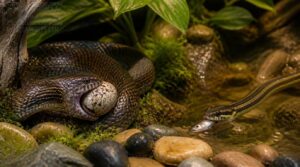
Not every pet snake is waiting on a frozen mouse. Some species have carved out their own niche, hunting eggs, fish, or worms instead of rodents. Here’s a look at the snakes that skip the rodent menu entirely.
African Egg-Eating Snakes
Picture a snake that never touches a rodent. The African egg-eating snake (Dasypeltis) swallows bird eggs whole, then relies on vertebral spine crushing to break shells internally.
Nest foraging behavior involves careful probing, using scent to locate eggs without alarming parent birds. Size selection matters too, juveniles start small and graduate to larger eggs as they grow.
Garter Snakes and Worms
Egg-crushing is a neat trick, but garter snakes take a plainer route: they hunt earthworms. Soil moisture drives everything here, damp loam near gardens and riverbanks holds worms, dry dirt doesn’t. Juveniles start small, snapping up thin worms before graduating to bigger prey. Worms won’t turn any snake vegetarian though. They’re protein and moisture, not plant matter, and that’s exactly what carnivorous physiology demands.
Ribbon Snakes and Fish
Water’s where ribbon snakes make their living. These slender hunters patrol edges of ponds and streams, snapping up minnows and small sunfish with swimming speed few snakes match. Tadpoles and juvenile frogs round out the menu. Warmer months shift the balance further toward fish, when aquatic prey runs thick. Still animal protein, still zero plant matter.
Invertebrate-Eating Snake Species
Fish aren’t the only alternative menu. Crayfish snakes crush shells with hinged teeth, tolerating freshwater to track molting crayfish by season. Others specialize as insectivores, favoring worms, beetles, larvae:
- Mouth shape grips soft prey
- Habitat diversity widens prey options
- Digestive enzymes stay carnivore-specific, no gut microbiome shift needed
Dietary adaptations, not plants, explain the variety.
Non-Rodent Feeding Challenges
Swap rodents for greens, though, and trouble starts fast. Enzyme deficiency blocks cellulose digestion; no gut microbiome shift can fix that. Fiber digestion issues cause regurgitation, while tannin mineral interference and taurine deficiency compound amino acid shortage.
| Plant Compound | Effect on Snakes |
|---|---|
| Tannins | Blocks mineral absorption |
| Cellulose | Undigestible, causes bloating |
Dietary adaptations run one direction only. Vegetarian snakes simply don’t exist.
What if You Cannot Feed Animal Prey?
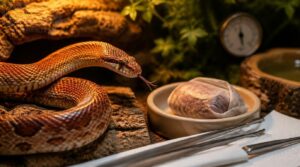
So squeamish about mice and rats that feeding time feels impossible? You’ve got real options that don’t involve a live rodent anywhere in sight. Here’s what actually works, and what to leave on the shelf.
If your snake grips your hand at feeding time, learning how to get a snake to stop constricting keeps everyone calm and safe.
Choosing Frozen-Thawed Prey
Frozen prey isn’t a compromise, it’s the safer default. Frozen food benefits include eliminated injury risk and lower parasite load versus live feeding.
Use refrigerator thawing (24–48 hrs) or cold water thawing (1–3 hrs, bags sealed). Verify temperature at the head and chest, 95–100°F for heat-sensing species.
- No live-prey injuries
- Reduced parasites
- Consistent nutrition
- Easier storage rotation
Providing Complete Whole-Prey Nutrition
Feeding whole doesn’t mean feeding random. A mouse or rat carries complete nutrition: muscle, organs, bone, all in natural ratio.
| Component | Nutrient Role |
|---|---|
| Muscle | Protein |
| Organs | Vitamins A, B12 |
| Bone | Calcium, phosphorus |
| Fur/skin | Fiber, minerals |
| Blood | Iron |
Skip calcium supplementation with true whole prey. Vary prey size and species occasionally, it keeps nutrient profiles honest.
Avoiding Unsafe Homemade Diets
Whipping up a "custom" snake diet at home sounds resourceful, but the numbers tell a grim story: most homemade recipes carry multiple deficiencies at once.
- Thiamine awareness: goldfish and feeder fish harbor thiaminase, which destroys B1
- Calcium monitoring: pinky-only diets trigger metabolic bone disease
- Skip parasite control shortcuts, freezing briefly won’t kill cestodes
- Follow strict supplement guidelines, don’t eyeball dosages
Considering Herbivorous Reptile Pets
Want a pet that actually thrives on kale? Skip the snake entirely. Iguanas and many tortoises are true herbivores, built with longer guts for fermenting plant fiber, something snake anatomy simply can’t replicate.
| Need | Herbivore Reptile | Snake |
|---|---|---|
| Diet | Leafy greens | Whole prey |
| UVB | Essential | Minimal |
| Calcium | Dusted greens | Prey bones |
Choosing a Pet Responsibly
A snake isn’t a starter pet you grab on impulse. Before bringing one home, weigh time commitment, space, and finances honestly. Feeding frequency, lifespan (often 10+ years), and ethical feeding of whole prey all matter.
- A properly sized enclosure
- Consistent feeding supplies
- Years of steady care
Follow real reptile care guidelines, not guesswork, and you’ll set both of you up for success.
Frequently Asked Questions (FAQs)
Are there any vegetarian pet snakes?
Funny enough, keepers searching for low-maintenance pets often land here by coincidence. But no, vegetarian pet snakes don’t exist. Every species needs animal protein, reptile nutrition simply can’t come from plant matter alone, no matter how appealing that idea sounds.
What animal is 100% vegetarian?
True herbivores commit fully: giant pandas on bamboo, koalas on eucalyptus, cows and elephants grazing plants all day. Snakes can’t join that club. No cellulase, no fermentation chamber, just a gut built strictly for meat.
Is there a snake that doesn’t eat meat?
Nature closed this door long ago. Every one of the 4,000+ known species is an obligate carnivore, no exceptions. Evolutionary diet constraints and missing cellulose enzymes mean herbivory simply isn’t on the menu, despite persistent meat-free snake myths.
What snakes can you not eat?
Think venomous snake hazards and protected wildlife snakes like king cobras or endangered pythons. Eating these risks toxin exposure, legal penalties, or ecological harm. Some cultures also treat certain species as taboo, off the table for reasons beyond biology.
How often should I feed my snake if it is not eating rodents?
Match feeding frequency to prey type: garter snakes take worms twice weekly, egg-eaters manage quail eggs every 7 to 10 days.
Track weight monitoring, adjust for age, and give refusals a full cycle before switching alternative prey items.
Can snakes digest any plant matter accidentally consumed?
No cellulase, no gut bacteria for fermentation. Plant matter transit happens fast, often intact, sometimes triggering regurgitation or minor gut irritation. It’s a locked door snakes simply can’t open, whatever leaves show up in feces.
What happens if a snake refuses all food?
Skip past two weeks and trouble starts: weight loss accelerates, muscle atrophy sets in, shedding suffers, and stress signs like tongue-flicking spike. Some snakes risk hepatic lipidosis. Persistent refusal needs a vet, not force-feeding.
Are there any snake species with shorter lifespans?
A garter snake barely outlasts a decade; a ball python can shrug off three.
Predation pressure and small species mortality shorten wild lifespans, while stable captive care, steady feeding frequency, and lower stress push many snakes well past their wild expiration date.
How often should captive snakes be fed?
Adults usually eat every 7 to 14 days, juveniles every 5 to Prey size, temperature, shedding, and weight monitoring all shape the right feeding frequency for your snake’s nutritional needs and long-term health.
Do baby snakes have different dietary requirements?
Every acorn holds an oak, but only if the soil’s right. Hatchling snakes need neonate prey selection suited small, feeding every 5 to 7 days, with calcium support and steady humidity for healthy shedding and growth.
Conclusion
Picture a garter snake side-eyeing a kale salad, unimpressed, because its jaw simply wasn’t built for that nonsense. Is there such a thing as a vegetarian snake? Not one, not ever, not in 4,000 species. That lettuce leaf your ball python nudged wasn’t a dietary statement, just curiosity.
Snakes are wired for meat, from teeth to gut chemistry. Respect that biology, feed accordingly, and your snake rewards you with a healthy, thriving life.