This site is supported by our readers. We may earn a commission, at no cost to you, if you purchase through links.
A shed that comes off in one clean, paper-thin sleeve is one of the quiet satisfactions of keeping snakes—but when it comes off in fragments, or not at all, the situation can turn serious fast.
Retained skin around the eyes or tail tip isn’t just cosmetic; it can cut off circulation, cause permanent damage, and signal that something in the enclosure isn’t working.
The good news is that most shedding problems respond remarkably well to simple, targeted interventions when you catch them early. Knowing the safe ways to assist shedding makes the difference between a quick fix and an emergency vet visit.
Table Of Contents
- Key Takeaways
- Recognizing Shedding Challenges in Snakes
- Optimizing Habitat Humidity for Safe Shedding
- Temperature Control During Snake Shedding
- Providing Rough Surfaces and Hides
- Safe Warm Water Soaks for Shedding Snakes
- Using Shedding Aid Sprays Safely
- Gentle Manual Assistance for Stuck Shed
- Minimizing Stress During The Shedding Cycle
- Post-Shedding Care and Skin Health Monitoring
- When to Consult a Reptile Veterinarian
- Frequently Asked Questions (FAQs)
- Can brushing help with shedding?
- What can I use to help with dog shedding?
- How to help with excessive shedding?
- What can help with hair shedding?
- Can I feed my snake during shedding?
- How often do different snake species shed?
- What rough surfaces work best for shedding?
- Is it normal for snakes to be aggressive while shedding?
- Should I remove the shed skin from the enclosure?
- How often should I mist my reptiles enclosure?
- Conclusion
Key Takeaways
- Keeping humidity between 50–70% and adding a sphagnum moss hide are your two most effective tools for preventing a stuck shed before it starts.
- Retained skin on the eyes or tail tip isn’t just cosmetic — it can cut off circulation and cause permanent damage if you don’t act quickly.
- A warm water soak at 31–34°C for 15–20 minutes softens stubborn shed safely, but skip it for ball pythons, who do better with a humid hide.
- If you see open wounds, pus, foul odor, or swelling that won’t quit after a shed, stop the home remedies and call a reptile vet immediately.
Recognizing Shedding Challenges in Snakes

Shedding should be a smooth, natural process for your snake — but sometimes things go sideways, and it helps to know what to watch for. A few key signs can tell you early on whether your snake is struggling or sailing through just fine.
If you want a full breakdown of what’s normal and what’s not, cloudy eyes before shedding explained walks you through each stage of the process.
what to look out for.
Signs of Problematic Shedding
Even when you’re careful, common shedding problems in captive reptiles can sneak up on you. Watch for these signs:
- Cloudy eyes and uneven sloughing—especially stuck shed at joints or tight tail rings.
- Dull coloration that doesn’t return after shedding.
- shedding related behavior changes in reptiles, like appetite loss during shedding.
Identifying preshed signs in reptiles early helps you act before trouble builds.
[stress related shedding](https://willowbrookvetclinic.com/all-about-shedding-is-my-pet-shedding-too-much/) can also affect reptiles during molting.
Health Risks From Retained Skin
When stuck shed lingers, your snake faces real trouble—moisture gets trapped, fueling Bacterial Infection and Fungal Overgrowth. Skin Inflammation and Painful Mobility can make every slither a struggle, and healing slows to a crawl.
That’s why shell rot prevention and careful eye cap removal technique matter. Here’s what your snake might feel:
| Stuck Shed | Skin Irritation Relief | Shedding Complications |
|---|---|---|
| Burning | Comfort | Frustration |
| Soreness | Calm | Delayed Healing |
| Itching | Relief | Infection Risk |
Behavioral Changes During Shedding
Beyond the physical risks, your snake’s personality shifts too. Watch for these shedding-related behavior changes in reptiles:
- Increased Hiding — retreating to the hide for days
- Cloudy Eyes — milky appearance signals active pre-shed
- Reduced Feeding — food refusal is completely normal
- Restless Rubbing — purposeful scraping against decor
- Irritable Mood — increased defensiveness during reptile handling stress
Optimizing Habitat Humidity for Safe Shedding
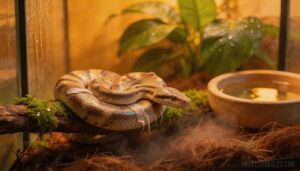
Humidity is one of the biggest factors in whether your snake sheds cleanly or struggles through the process. Getting it right doesn’t require fancy equipment — just a few simple, consistent habits.
Here’s what actually works.
Maintaining Proper Humidity Levels
Humidity is the backbone of healthy reptile ecdysis — get it wrong, and snake shedding issues multiply fast. For most species, aim for 50–70% relative humidity.
Your Water Dish Placement matters: keep it away from direct airflow to slow evaporation swings.
Practice smart Substrate Moisture Control and Ventilation Flow Management to prevent mold.
Seasonal Humidity Adjustments may be needed as indoor conditions shift throughout the year.
Using Humidity Retreat Boxes With Sphagnum Moss
When you’re using humidity retreat boxes for shedding reptiles, the right Moss Packing Density makes all the difference. Loosely fill with sphagnum moss, then apply your Hydration Timing Method—wet it down, let it sit, and check texture.
Lid Venting Design keeps moisture in, while Box Placement Warmside encourages snake use.
Stick to a Moss Replacement Schedule for healthy reptile ecdysis and safe handling.
Monitoring Humidity With a Hygrometer
If you want reliable humidity control for reptiles, a hygrometer is your best friend. Place the sensor at breathing height, away from drafts, and keep batteries fresh for accurate readings.
For reptile enclosure maintenance, check calibration procedures often, and use data logging to spot trends. If readings seem off, accurate troubleshooting helps—especially when following temperature and humidity guidelines for reptile baths and retreat boxes.
Temperature Control During Snake Shedding

Temperature plays a bigger role in shedding than most snake owners realize. When your enclosure isn’t balanced right, even a well-hydrated snake can struggle to shed cleanly.
If your snake seems off during the process, watching for snake discomfort and stress signals during handling can help you decide when to step back and give it space.
Here’s what you need to know about keeping temperatures where they should be.
Ideal Enclosure Temperature Ranges
Temperature isn’t one-size-fits-all for snakes. Each species needs a thermal gradient in terrarium setups — a spectrum from warm to cool.
Basking spot targets generally run 32–38°C (90–100°F), while your ambient zone setpoint sits around 26–30°C. The cool zone retreat drops to roughly 24–27°C. At night, allow a 2–4°C nighttime temperature drop.
Always follow species-specific ranges — ball pythons, corn snakes, and others each have unique needs.
Warm Side Vs. Cool Side Balance
Think of your enclosure as two neighborhoods — a warm side and a cool side — and your snake as the one deciding where to hang out.
Heat Gradient Placement matters here: mount your heat source on one end, then confirm both zones with separate thermometers.
Position your Thermostat Probe at the warm zone specifically.
Substrate Heat Retention and Airflow Management keep each side stable, supporting smooth Zone Shift Design throughout the shed cycle.
Avoiding Temperature Spikes That Stress Snakes
A sudden spike can derail an entire shed cycle. Keep these controls tight:
- Thermostat Probe Placement directly on the basking surface ensures accurate Heat Source Cycling control
- Basking Spot Stability prevents stress spikes; target 85–90°F consistently
- Thermal Gradient Calibration gives your snake real movement options
- Minimize Ambient Room Fluctuations by shading windows
- Follow temperature and humidity guidelines for reptile baths to avoid shocking temperature drops
Providing Rough Surfaces and Hides
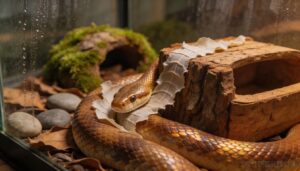
Your snake’s enclosure setup plays a bigger role in shedding than most people realize. The right textures and hides give your snake something to push against, making the whole process easier and less stressful.
Here’s what works best.
Best Textures for Assisted Shedding
Not all textures work equally well. Your snake needs surfaces with just enough friction to catch loose skin without tearing it.
Cork Bark and Wood Grain items offer natural micro-grooves that grip gently. Paper Substrate keeps contact clean and consistent.
Avoid Fine Sandpaper or Sponge Texture — both are either too harsh or too slick.
These methods for assisting reptile shedding work best when textures are placed where your snake already moves naturally.
Rocks, Branches, and Cork Bark Options
Once you’ve nailed the right texture, the next step is choosing your materials wisely. Here’s what actually works:
- Virgin cork bark shapes grip loosening skin without scratching.
- Cork branch lengths from 60 cm up give full-body contact.
- Rough rocks offer firm, stable pressure points snakes seek out.
- Hollow branch hide integration lets them rub while staying sheltered.
Rock moisture retention stays low — that’s a good thing.
Positioning Hides for Shed Support
Where you place the hide matters as much as what it’s made of. Keep the entrance facing interior so your snake enters without awkward twisting.
A low entrance placement lets it stay partially coiled. Use a snug hide fit with damp substrate inside — sphagnum moss works beautifully here for humidity control for reptiles.
| Hide Placement Factor | Why It Matters |
|---|---|
| Entrance Facing Interior | Prevents body strain during entry |
| Low Entrance Placement | Helps coiled shedding posture |
| Snug Hide Fit | Maintains humid microclimate |
| Damp Substrate Inside | Softens retained skin naturally |
| Sturdy Hide Base | Stops tipping mid-shed |
Safe Warm Water Soaks for Shedding Snakes
A warm water soak can make a real difference when your snake is struggling to shed. Done right, it softens stubborn skin and helps everything come off cleanly.
Here’s what you need to know to do it safely.
Correct Water Temperature Guidelines
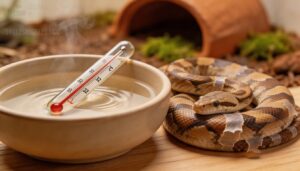
Aim for soak water between 31°C and 34°C — warm to your inner wrist, never hot. Before mixing water, verify temperature using a floating aquarium thermometer; thermometer placement matters, so keep it away from the snake’s body for accurate readings.
Skipping microwaved water avoidance isn’t just a tip — it’s essential, since hot spots form invisibly. Mix hot and cool water gradually, keep water depth shallow, and confirm temperature stability before your snake enters.
Soak Duration and Frequency
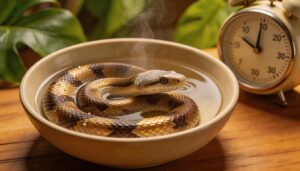
Once the water temperature is confirmed, timing matters just as much. Keep most soaks to 15–20 minutes — that’s your ideal soak length for softening stuck shed without stressing your snake.
Larger snakes may need closer to 30 minutes.
Follow soak frequency guidelines: soak only when retention issue indicators appear, not routinely.
One well-timed, temperature-stable soak often does the trick.
Species-Specific Soaking Considerations
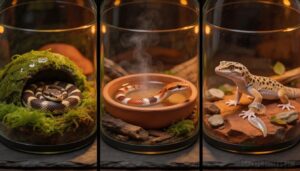
Not every snake needs a soak. Ball Python Moisture chamber do best with a Ball Python Moisture chamber — a humid hide packed with damp sphagnum moss — since soaking causes them real stress.
Corn Snake Bath temps should hit 85–90°F for a stuck shed. Try a Boa Humidity Box lined with a damp towel.
Leopard Gecko Shallow soaks work well, while Bearded Dragon Dry shedding needs no water at all.
Using Shedding Aid Sprays Safely
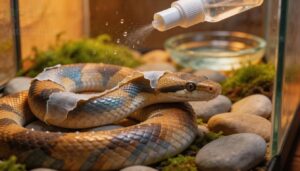
Shedding sprays can be a real lifesaver when your snake needs a little extra help getting out of its old skin. Used correctly, they’re safe, effective, and easy to work into your care routine.
Here’s what you need to know about how they work, when to use them, and how to avoid overdoing it.
How Zoo Med Repti Shedding Aid Works
Think of Zoo Med Repti Shedding Aid as a mini spa treatment for your snake’s skin. This shedding aid works through a smart blend of ingredients designed to support the reptile molting process from the outside in:
- Glycerin Moisture Binding draws water to dry skin, keeping it pliable
- Jojoba Soothing Action conditions and calms irritated scales
- Vitamin E Antioxidant helps healthy skin conditioning
- Oil Base Penetration spreads the formula across stuck shed areas
- Solubilizing Hydrotrope System keeps ingredients evenly mixed for consistent application
Safe handling of reptiles during shedding starts with having the right tools — and proper reptile humidity levels make this spray even more effective.
When and How to Apply Shedding Sprays
Timing your shedding spray correctly makes all the difference. Apply it during pre-shed moisture buildup — when skin feels damp but patches are still stuck.
Use targeted mist from your spray bottle, shifting angle variation so you cover areas evenly without pooling. Let dwell time do the work before gently spreading the product.
A humidity retreat box with Sphagnum moss and a nearby heat lamp round out your setup nicely.
Avoiding Overuse and Skin Irritation
More isn’t better regarding shedding aid — overuse is one of the most common mistakes keepers make. Stick to spot-only applications and follow product label adherence closely to avoid skin irritation.
Practice low-force assistance and minimal soak intervals to protect fragile forming skin. Residue removal practices matter too; leftover product can worsen irritation as your snake rubs against substrate.
Spray application limits, consistent humidity control, and safe handling keep everything on track.
Gentle Manual Assistance for Stuck Shed
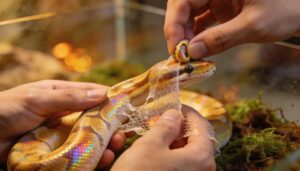
Sometimes, even after a good soak, a little stuck shed just won’t budge on its own. That’s when gentle manual help can make a real difference — done right, it’s safe and straightforward.
Here’s how to handle the three most common trouble spots without causing harm.
Safely Loosening Retained Skin
Stuck skin doesn’t have to become a crisis. Start with Moisture Softening — a warm soak loosens dry skin gently.
Then use Light Contact Technique: slow, guided movements with clean fingers or Clean Tool Usage only.
Short Session Timing matters; stop if resistance builds.
Stop When Swelling appears — that’s your cue to pause and reassess before continuing.
Eye Cap Removal With Mineral Oil
Eye caps are surprisingly stubborn — even after a good soak.
That’s where mineral oil shines as a shedding aid.
Your Oil Application Technique matters: use a cotton swab (Swab Selection is key) to apply a small, controlled amount directly onto the retained cap.
Allow adequate Exposure Time before attempting removal.
Always follow Safety Precautions — light pressure only.
When in doubt, Veterinary Guidance beats guessing every time.
Special Care for Toes and Tail Tips
Toes and tail tips need the same careful attention as eye caps. Daily Toe Band Inspection catches those tight, cloudy rings before they restrict circulation.
Your Skin Softening Routine starts with humidity control in terrariums — aim for consistent levels, never dramatic swings.
- Shield the tail tip from rough bedding (Tail Tip Shielding)
- Follow Careful Handling Steps — slow, supportive movements only
- Apply skin shedding aids if skin isn’t lifting naturally
- Prioritize Stuck Skin Prevention through steady temperature regulation for reptiles and reptile stress reduction
Minimizing Stress During The Shedding Cycle

Shedding is already taxing on your snake’s body, and stress can make the whole process harder than it needs to be. calm, predictable environment goes a long way toward helping your snake shed smoothly and safely.
Here’s what you can do to keep things steady from start to finish.
Reducing Handling Before and During Shed
When your snake’s eyes turn cloudy, that’s your cue to step back. Minimal Handling Timing isn’t just a guideline — it’s respect for the process.
Pre-shed Enclosure Adjustment means double-checking temperature and humidity guidelines before shedding begins, not after.
Handler Distance Management and a Soft Contact Strategy reduce reptile stress substantially.
Think of it as giving your snake the quiet it deserves to work through its molt.
Keeping The Enclosure Quiet and Stable
Once you’ve pulled back on handling, the next layer of care is the environment itself.
Quiet Placement matters more than you’d think — keep the enclosure away from TVs, speakers, and high-traffic areas.
Vibration Dampening, Stable Substrate, and Silent Filtration work together to hold everything steady.
Sound-Absorbing Materials nearby help, too.
A calm, undisturbed space lets your snake shed on its own terms.
Recognizing Stress-Induced Shedding Problems
Even a calm enclosure won’t fully protect your snake if stress hormones are already disrupting its cycle. Watch for these warning signs:
- Abnormal Shedding Volume or Elevated Shedding Frequency beyond normal cycles
- Diffuse Hair Thinning patterns along the body
- Delayed Shedding Onset lasting weeks
- Stress Hormone Spike behaviors like erratic movement or refusal to eat
When in doubt, veterinary consultation for shedding concerns is always the right call.
Post-Shedding Care and Skin Health Monitoring
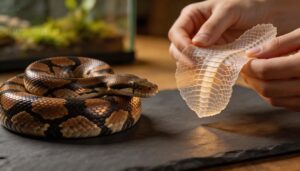
Once your snake has shed, the work isn’t quite over. A quick check and a little follow-up care can make a big difference in their long-term skin health.
Here’s what to look at after every shed.
Checking for Incomplete or Retained Shed
Once the shed is done, your detective work begins. Check the Shed Sheet Consistency — did it come off in one clean piece, or jagged strips? Inspect Scale Edge Transparency along the belly and body bends for opaque fragments. Pay close attention to Tail Tip Retention and watch for Digit Swelling Indicators or Eye Cap Cloudiness.
| Area to Check | Warning Sign |
|---|---|
| Tail tip/digits | Swelling or tight skin ring |
| Eyes | Cloudy film remaining |
Hydration and Skin Condition After Shedding
Once your snake has finished shedding, moisture retention becomes your next priority. Fresh, clean water helps skin elasticity and keeps new scales looking smooth and uniform — post-shed dullness is often a quiet signal of poor reptile hydration.
Watch your hydration indicators: wrinkled or matte-looking skin means humidity dropped too fast. Maintain your water access routine daily, and your snake’s skin regeneration stays on track.
Nutrition and Supplements Supporting Healthy Skin
What your snake eats directly shapes how cleanly it sheds.
Omega-3 Fatty Acids support skin barrier moisture, while Zinc Skin Healing aids cellular repair after each cycle.
Vitamin D Support promotes healthy skin cell growth, Selenium Antioxidant defenses protect against oxidative stress, and Vitamin C Collagen synthesis keeps new scales supple.
Nutritional supplementation for reptiles—always vet-approved—is the quiet foundation behind every successful shed.
When to Consult a Reptile Veterinarian

Most snake sheds go smoothly with the right setup, but sometimes home care just isn’t enough. Knowing when to call a reptile vet can make the difference between a quick fix and a serious health problem.
Watch for these signs that it’s time to get professional help.
Warning Signs That Require Professional Care
Some warning signs during stuck shed simply can’t wait. If you notice Clouded Eyes that stay murky well past the shed cycle, Open Wounds, Rapid Swelling, Foul Odor, or Sudden Weakness, contact a reptile vet immediately. These aren’t minor hiccups — they signal infections, corneal damage, or systemic illness.
Cloudy eyes, open wounds, or foul odor after shedding mean one thing: call a reptile vet immediately
- Identifying pre-shed signs in reptiles early prevents complications
- Eye cap removal technique gone wrong risks permanent vision loss
- Veterinary consultation for shedding beats guessing every time
Blood, Pus, or Prolonged Difficulty Shedding
Blood spot identification and pus accumulation signs are red flags you should never ignore.
Fresh blood on shed skin or enclosure surfaces often means tearing from dangerously tight retained skin.
Pus — thick, milky discharge — signals infection in soft tissue.
Chronic shedding triggers like poor humidity or repeated incomplete sheds worsen skin irritation management.
These situations demand emergency vet consultation immediately.
Finding a Qualified Reptile Vet Near You
Not every veterinarian knows reptiles well — so credential verification matters. Look for vets with ABVP Reptile and Amphibian Practice certification, which requires five-plus years of hands-on experience.
Ask about caseload proportion: how often do they treat snakes? Use online directory listings to build your shortlist, confirm species expertise with bearded dragons or your specific snake, and always check emergency hours.
Solid herpetology advice starts with the right vet.
Frequently Asked Questions (FAQs)
Can brushing help with shedding?
Unlike mammals, snakes don’t benefit from brushing — their scales replace the need for it. Focus on humidity, warm soaks, and rough surfaces instead for healthy, complete sheds.
What can I use to help with dog shedding?
Try a deshedding brush, omega supplements, and a high-protein diet for starters. Coat shampoo, regular brushing, vacuum tools, and professional grooming also help manage shedding.
Omega-3 fatty acids and dietary supplements support coat health too.
How to help with excessive shedding?
Shedding got you in a "scale" of worry? Start with proper humidity, warm water soaks, and Nutritional Support — your snake’s Regular Shedding Schedule depends on a stable, enriched enclosure.
What can help with hair shedding?
Protein Intake, Biotin Supplementation, Iron Boost, Gentle Scalp Care, and Stress Management all play a role.
For snakes, focus on methods for assisting reptile shedding, temperature and humidity guidelines, and a DIY humidity box.
Can I feed my snake during shedding?
You can feed your snake during shedding, but don’t be surprised by food refusal signs — it’s normal. Wait until after the shed for better results, and keep meals small.
How often do different snake species shed?
It depends on age and species. Juveniles shed every 2–4 weeks during rapid growth. Adults slow to every 4–12 weeks. Large constrictors like boas may shed just 1–3 times yearly.
What rough surfaces work best for shedding?
Give a snake the right surface, and it does the work itself.
Cork bark, aquarium rock, and untreated branches offer ideal micro-roughness benefits — safe, friction-rich textures that help shed lift cleanly without tearing.
Is it normal for snakes to be aggressive while shedding?
Yes, it’s completely normal.
Pre-shed aggression patterns stem from sensory disruption response and vision impairment effects — your snake simply can’t see clearly, and defaults to defensive posture triggers until shedding completes.
Should I remove the shed skin from the enclosure?
Once shedding is complete, remove the skin. Old shed attracts mites and causes substrate contamination.
Spot cleaning works best — seal shed in a bag for proper shed disposal and maintain enclosure cleanliness.
How often should I mist my reptiles enclosure?
Mist once or twice daily, but let your hygrometer calibration guide you. Species-specific targets matter — ball pythons need 60–80%, while ventilation impact and substrate absorption affect how fast humidity drops.
Conclusion
You’ve now clarified the best practices for assisting your snake’s shedding process. By mastering the safe ways to assist shedding, you’ll help your pet slither into a healthier, happier life.
A well-informed approach can make all the difference between a smooth shed and a stressful situation. With these vet-approved tips, you’re equipped to provide the care your snake needs to thrive, ensuring a strong bond and a life free from shedding struggles always.
- https://dashingdawgs.com/blogs/dashing-dawgs-featured-articles-blogs/10-tips-to-control-pet-shedding
- https://www.torontohumanesociety.com/seasonal-shedding-managing-your-pets-coat-in-the-fall/
- https://roboticsandautomationnews.com/2024/02/22/4-effective-strategies-for-managing-pet-hair-in-your-home/80165/
- https://www.madisonpetclinic.com/articles/966742-june-newsletter-how-to-reduce-excessive-dog-shedding
- https://naturallyunleashed.com/blogs/news/shedding-season-solutions-managing-pet-hair-at-home