This site is supported by our readers. We may earn a commission, at no cost to you, if you purchase through links.
Pair two het albino boas, and math takes over: 25% hatch visual, 50% carry the gene silently, 25% come out normal. No guessing, no luck, just Mendelian ratios doing their thing. That’s the part new keepers miss, morphs aren’t random flair, they’re the visible result of allele pairs working exactly as inheritance predicts.
Locality variants play a different game entirely, preserving regional bloodlines without a single morph gene in sight. Confuse the two and you’ll misprice an animal or misread a pairing before it happens.
This boa constrictor color morph guide breaks down the genetics, the standout morphs, and the identification tricks that separate a confident breeder from a hopeful one.
Table Of Contents
- Key Takeaways
- How Boa Constrictor Morph Genetics Work
- Popular Boa Constrictor Morph Types
- Designer Boa Morph Combinations
- How to Identify Boa Morphs
- Choosing a Healthy Boa Morph
- Frequently Asked Questions (FAQs)
- How often do boa constrictors shed their skin?
- Can morphs breed with wild-type locality boas?
- What permits are required to breed boas?
- Do certain morphs have shorter lifespans than others?
- How do you transition juveniles to larger prey?
- How many boa constrictor morphs exist today?
- Can two different morphs be bred together safely?
- Do morphs affect a boas temperament or behavior?
- Whats the average lifespan of a morph boa?
- Are certain morphs legal to own in every state?
- Conclusion
Key Takeaways
- Pairing two het albino boas gives you predictable Mendelian odds—25% visual, 50% carriers, 25% normal—while locality variants preserve regional bloodlines without any morph gene involved, so confusing the two can lead to a misread pairing or mispriced animal.
- Not every trait follows simple recessive rules: incomplete dominant genes like Motley blend intensity based on allele dosage, and polygenic color traits stack multiple genes together, which is why even clutch-mates rarely match exactly.
- Flashy phenotypes can mask real problems, since albino-to-albino lines risk eye degeneration, hypo/albino skin faces UV cancer risk, and Super Aztec pairings often cause near-total infertility, so health screening matters more than chasing rarity.
- Before buying, demand documented pedigrees with DNA-verified parentage and watch for red flags like cash-only pressure or missing lineage records, since designer stacks can run $1,000 to $5,000 and proven recessive lines can climb past $15,000.
How Boa Constrictor Morph Genetics Work
Before you sink a dollar into any boa, you need to understand what’s actually driving that color and pattern on the animal in front of you. Genetics isn’t just breeder jargon—it’s the difference between predicting your next clutch and getting blindsided by it. Here’s what’s really happening under the hood, gene by gene.
If you want the full breakdown of dominant, recessive, and co-dominant traits before you breed, this guide to ball python morph genetics explained walks through exactly how those combos play out in real clutches.
Morphs Versus Locality Variants
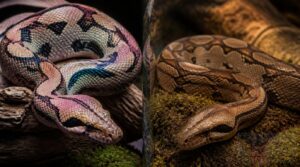
Confusion trips up new keepers fast: not every striking boa carries a morph gene. Some are locality variants, geographic strain differences shaped by regional genetics, not inherited color alleles.
- Allele copy requirements differ sharply between the two
- Morphs breed true; localities preserve regional diversity
- Phenotype expression varies by origin, not gene count
- Locality traits pass only within geographic lineages
- True morphs show predictable inheritance patterns
Genotype Versus Phenotype
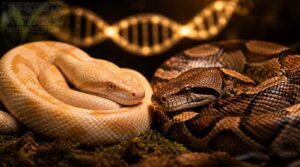
Once you’ve sorted morph from locality, you need the vocabulary underneath it. Genotype is the actual allele set a boa carries; phenotype is what you see on the animal. A het albino carries the allele without showing it. That gap between genetic expression and visible trait expression is exactly why pairing two hets still surprises breeders every hatch season.
This mismatch reflects the broader genotype–phenotype mapping process, where visible traits emerge only after genetic information passes through layers of regulation, timing, and environmental context.
Dominant and Recessive Traits
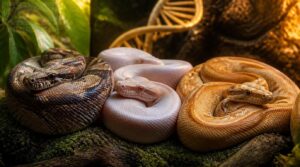
Now layer in dominance. Albino is recessive: pair two hets and Mendelian genetics gives you 25% visual, 50% carrier, 25% normal. Aztec runs codominant, showing intermediate traits at heterozygous status.
Allele dominance masking hides recessive genes in carriers, which is why recessive traits skip generations until two hets land in the same clutch.
Incomplete Dominant Inheritance
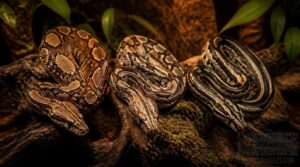
Incomplete dominance throws Mendel’s clean ratios out the window. Heterozygotes show a blended phenotype, landing between both homozygous parents instead of copying either one. Think Motley: one allele produces partial striping, two intensifies it. This is allele interaction at its finest, non-Mendelian, dosage-dependent, and genuinely useful for breeders chasing intermediate looks nobody’s fixed yet.
- Blended, not dominant
- Dosage drives intensity
- Age shifts expression
Polygenic Color and Pattern
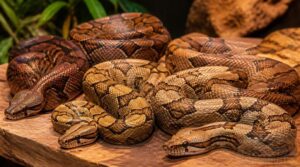
Not every trait comes from one gene flipping on or off. Polygenic color stacks many genes together, each nudging hue and saturation slightly, which is why two boas from the same clutch rarely match exactly.
| Factor | Effect | Example |
|---|---|---|
| Lineage | Sets baseline range | Line-bred saturation |
| Lighting | Shifts intensity | Brighter basking spots |
| Genetics | Adds continuous variation | No fixed morph |
Selective breeding gradually narrows that range over generations.
Popular Boa Constrictor Morph Types
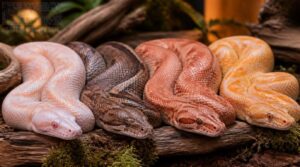
Once you understand the genetics behind these traits, it’s time to meet the morphs themselves. Each one carries its own signature look, from stripped-down pigment work to patterns that shift as your boa matures. Here’s what you’ll actually be looking at in the collection world.
If you’re curious how similar visual traits play out in other species, this guide to carpet python pattern variations offers a fascinating side-by-side comparison.
Albino Boa Morphs
Ruby red eyes and a snow white body: that’s your instant tell for an Albino Boa. This recessive gene wipes out melanin, so pattern shows faint against cream, with yellow-orange tail hints.
- Ruby eyes, constant marker
- Recessive gene inheritance
- Bright light sensitivity
Watch UV exposure closely; albino phenotype needs shaded setups to protect color and eye health.
Anerythristic Boa Morphs
Grayscale drama defines the Anerythristic Boa: no red, no orange, just black, white, and silver saddles. This recessive gene demands two carrier parents.
| Trait | Expression | Notes |
|---|---|---|
| Pigment | Red/orange absent | Grayscale phenotype |
| Inheritance | Recessive gene | Two carriers required |
| Pattern | Saddles intact | Sharpens with age |
Ethical breeders track carrier lineage carefully, avoiding blind pairings.
Hypomelanistic Boa Morphs
What happens when black pigment fades but warmth stays? You get hypomelanistic boas: reduced melanin, saturated oranges, softer saddles.
Inheritance runs dominant or co-dominant depending on lineage, so pairing two hypo carriers boosts your odds of visual offspring.
Key markers:
- Cream to tan ground color
- Dark eyes against lighter skin
- Faded tail banding
Selective breeding here rewards careful pedigree tracking, not guesswork.
IMG and Blood Boas
Want boas that look dipped in blood? IMG and Blood Boas deliver deep scarlet grounds with bold, high-contrast patterning that holds sharp edges into adulthood.
These morphs stem from planned pairings favoring dominant color bias, not a recessive gene. Track color intensity across clutches, verify lineage before buying, and expect prices to swing with rarity and pedigree quality.
Motley, Jungle, and Leopard
Break down a saddle pattern and you’ll find three distinct stories.
Motley fuses blotches into a connected dorsal stripe with white-outlined edges. Jungle stretches those saddles into elongated stripes down the spine. Leopard spaces blotches wider, cutting pattern density.
Combine them, Motley Jungle or Leopard Motley, and you get disrupted banding, unique to each animal, no two ever identical.
Designer Boa Morph Combinations
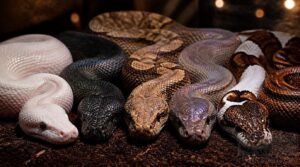
Once you understand single-gene morphs, stacking them together is where things get interesting—and expensive. Combine two or three recessive or incomplete dominant traits, and you get phenotypes that look nothing like their parent morphs.
Here are five combos worth knowing, from the palest whites to the darkest blacks.
Snow and Moonglow Boas
When you stack anerythristic and Kahl albino, both recessive, you get Snow: pale cream-white body, faint pattern, dark eyes. Add hypo and you’ve got Moonglow, whiter still, muted contrast.
Document lineage carefully; clean, well-pedigreed Moonglows command premium pricing.
Health stays solid when breeders screen pairings responsibly rather than chasing rarity blindly.
Sunglow and Ghost Boas
Where Snow chases pale minimalism, Sunglow and Ghost chase warmth. Sunglow’s dominant genetics push yellow-to-orange ground color with dark, consistent eyes. Pair it with recessive Ghost and melanin drops further, softening pattern into cream, faded blotches.
Ventral scales run clean, nearly unmarked. Track both allele pairs carefully; sourcing from documented lineage keeps this combo predictable, not a genetic guessing game.
Paradigm and Sharp Snow
If Ghost softens color, the morph and Sharp Snow chase contrast. Both trace back to Snow lineage, pairing albino and anerythristic recessives, but modifiers push phenotype toward brighter white grounds and crisper dark edges.
Sharp Snow keeps eyes dark against pale scales, resisting yellowing through molts. The morph’s polygenic influence means high contrast breeding demands documented pairs, not guesswork, for reliable visual identification.
Eclipse and Sterling Boas
While Sharp Snow chases contrast through albino and anery stacking, Eclipse trait genetics work differently, layering onto Sterling for yellow-to-tan backgrounds with reduced melanin. Eye color shifts copper to amber by lineage. Speckled dorsal contrast defines phenotype.
Always verify Eclipse Boa and Sterling Boa status through documented breeder lineage records, not visual guesswork alone.
Hypo Jungle Leopard Boas
Three genes converge here, hypo lightens, jungle breaks the jungle breaks the dorsal stripe, leopard scatters irregular blotches.
This recessive triple-stack needs two copies each to fully express, so breeding strategies rely on proven het pairings.
Ground color runs tan to ivory, phenotype sharpens with age, and pattern development stays crisp scale to scale, a genuine collector’s payoff.
How to Identify Boa Morphs
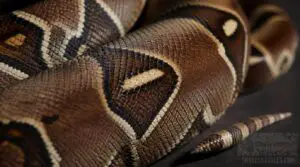
Identifying a morph on sight takes more than a quick glance at color. You need to know exactly what to look for, from pattern edges down to the tail tip. Here’s what separates a confident ID from a guess.
Color and Pattern Markers
Can you read a boa’s genetics just by looking at it? Mostly, yes. Check three things:
- Dorsal marking patterns (blotch count, connectivity)
- Pattern contrast against background color
- Border outline sharpness
Anerythristic boas run gray-white with black markings; Hypos lighten backgrounds while sharpening contrast. Scale texture and color intensity variation round out phenotypic expression clues before you even check tails.
Eye and Tail Color
When you’re eyeballing eye color, don’t rely on tail shade as a shortcut, they’re separate genetic markers.
Eyes range dark brown to copper, occasionally pale yellow, with pigment genes driving the variation. Bright lighting can highlight pinkish iris tones or brighter whites. Dehydration or intense light may temporarily shift perceived brightness, but true eye coloration stays consistent within a given morph.
Appearance Changes With Age
That bright hatchling coloring won’t stay put; color shifts over time as your boa matures. Expect pattern softening with age, deeper base tones, and duller gloss by year two to four. Watch for regional pigmentation shifts too, especially head and flank darkening. Genetics set the baseline, but ontogenetic changes reshape it gradually.
Shedding and Lighting Effects
Ever notice how a fresh-shed boa looks like a different snake? That’s not your imagination, it’s biology. Keep humidity at 50-60% and check for retained eye caps. Full spectrum lighting boosts vibrancy post-shed.
- Mist during shed cycles
- Watch for tail-end fragments
- Use low-glare bulbs
- Track shed frequency (4-6 weeks)
Lineage and Locality Clues
A boa’s paper trail tells you as much as its scales do. Solid provenance and birth records confirm farm origin and hatch year. Sire dam pedigree tracing links offspring to documented lineages, while registry microchip data locks in clutch identity.
When offspring resemble one collector’s stock closely, that’s your locality health risk prediction working in your favor.
Choosing a Healthy Boa Morph
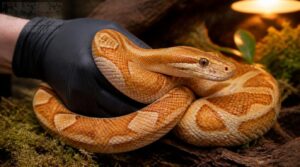
A flashy morph won’t mean much if the genetics behind it come with hidden problems. Picking the right boa takes more than a good eye for color—it takes knowing what to check before you commit. Here’s what actually separates a sound investment from a costly mistake.
Morph-Linked Health Risks
Pretty phenotypes hide real cost. Albino-to-albino lines risk eye degeneration; hypo/albino skin risks UV cancer; Super Aztec pairings cause near-total infertility; inbred lines spike IBD.
Pretty phenotypes hide real cost: eye degeneration, UV cancer, infertility, and inbred disease all trace back to careless morph pairings
Watch for:
- Bug eyes
- Lesions
- Failed clutches
- Stargazing
- Photophobia
Genetic inheritance shapes phenotype and vulnerability alike. Prioritize health monitoring over trait-chasing, and demand ethical breeding, not tighter inbreeding.
Pedigree and Genetic Records
Health checks only get you so far; paper trails close the gap. A solid pedigree tracks sire, dam, and grandparents, with registration numbers, birth dates, and DNA-verified parentage.
| Field | Purpose | Standard |
|---|---|---|
| Animal ID | Prevents inbreeding | Microchip/tattoo |
| Genetic record | Tracks alleles, zygosity | DNA-confirmed |
| Correction log | Documents reassignments | Timestamped |
Demand this before you buy.
Ethical Breeder Warning Signs
If a seller balks at documentation, that’s your cue to walk. Watch for these deal-breakers: no verifiable health certs, no facility visits, and cash-only pressure to rush the sale.
Missing lineage records, ghosted references, unresponsive vets, these gaps signal a hobbyist cutting corners, not an ethical breeder building captive-bred reputation worth trusting.
Boa Morph Price Factors
Once documentation checks out, the number on the tag makes sense fast. Rarity impact pricing rules here: single-gene basics stay under $300, while designer stacks hit $1,000-$5,000. Recessive premium value and proven genetics push standout lines toward $15,000.
| Factor | Price Effect |
|---|---|
| New lineage | Above average |
| Proven pairing | Higher trust, higher cost |
| Local stock scarcity | Prices climb |
| Documented offspring | Adds value |
Morph Care Requirements
Bring that morph home ready to commit, because genetics don’t excuse you from husbandry basics.
- Secure enclosure sized 10-20 gallons per foot
- Temperature gradient of 88-92°F to 78-82°F
- Humidity control near 60-70% during sheds
- Feeding schedule every 7-10 days, thawed only
- 24-48 hour handling precautions post-meal
Get these right and even pricey designer morphs thrive for decades.
Frequently Asked Questions (FAQs)
How often do boa constrictors shed their skin?
Growth drives the schedule. Hatchlings shed every 2 to 4 weeks, adults settle into four to five sheds yearly. Proper humidity, 60 to 80 percent, and steady temperatures keep each cycle clean and complete.
Can morphs breed with wild-type locality boas?
Wild against captive-born, yet genetically they’re one and the same. Morphs and locality boas cross freely, producing fertile offspring with full genetic compatibility, blending phenotype variation while diluting locality purity, though outcrossing boosts diversity and cuts inbreeding risk.
What permits are required to breed boas?
You’ll usually need a breeding authorization beyond basic ownership, state permit applications, proof of secure housing, and background check screening. Commercial sales permissions and business licenses apply once you sell offspring, so ethical breeding always means documented compliance.
Do certain morphs have shorter lifespans than others?
You reap what you sow, and that’s true in breeding pens too. Color alone won’t shorten a boa’s life; inbreeding depression from careless pairings does. Husbandry, genetics, and veterinary care determine longevity, not morph label.
How do you transition juveniles to larger prey?
Bump prey 10–15% in girth every 2–4 weeks, matching diameter to mid-body width. Feed juveniles every 5–7 days early on, stretching to 7–10 days as growth slows, watching weight and shed cycles closely.
How many boa constrictor morphs exist today?
Count them by lineage, count them by name, count them by market listing, you’ll get different numbers. Breeder reported totals put active morphs around 80 to 150, with market listings pushing past 200 once you include experimental combos.
Can two different morphs be bred together safely?
Yes, when both parents show clear lineage and good health. Confirm genetic compatibility, screen for inherited defects, and track pedigrees carefully. Expect unpredictable clutches, since morph combos rarely breed true, so plan pairings with a defined genetic goal.
Do morphs affect a boas temperament or behavior?
The prettiest snake can still have the plainest nerves; color says nothing about temperament. Genetics drive pattern, not personality. What actually shapes behavior is handling history, environmental enrichment, and consistent, stress-reducing routines built over time.
Whats the average lifespan of a morph boa?
With solid husbandry, expect 15 to 25 years, sometimes 30 plus. Genetic disorders, environmental stability, and vet care frequency all shape longevity, IMG and Blood lines often reach their mid 30s when growth rates and health stay consistent.
Are certain morphs legal to own in every state?
Not everywhere. Legal ownership hinges on state permit variations, not morph type; Hawaii bans all snakes, NYC’s municipal ban covers the whole Boidae family, and New Jersey requires permits specifically for B. c. imperator subspecies.
Conclusion
The genes don’t lie, and neither do the ratios you breed by. Master this boa constrictor color morph guide and you’ll stop guessing at pairings, reading punnett squares like a roadmap instead of a riddle.
Locality animals deserve respect for their bloodlines, morphs deserve respect for their math. Know which one you’re holding. That distinction, more than any price tag, separates keepers who understand their collection from those who simply own one.