This site is supported by our readers. We may earn a commission, at no cost to you, if you purchase through links.

Step on a copperhead and you’ll likely walk away. Nearly a quarter of their bites deliver no venom at all, a defense strategy known as a dry bite. That statistic surprises most people, given the snake’s fearsome reputation across the eastern and central United States.
Genetics reshuffled the picture in 2015, splitting what scientists once called one species into two distinct ones based on scale patterns and geography. Knowing the difference matters if you’re hiking rocky slopes or clearing brush near your home.
This copperhead snakes species profile breaks down what actually happens during a bite, how to spot one by its hourglass markings, and where these pit vipers make their dens.
Table Of Contents
- Key Takeaways
- Copperhead Snake Species Profile
- Copperhead Identification and Pictures
- Copperhead Range and Habitat
- Copperhead Behavior, Diet, and Reproduction
- Copperhead Bites, Treatment, and Prevention
- Frequently Asked Questions (FAQs)
- What do copperheads hate the most?
- Has a copperhead ever killed a human?
- How to tell if a copperhead is near?
- What state has the most copperheads?
- How bad is a copperhead snake bite?
- What is the difference between a copperhead and a southern copperhead?
- What percentage of copperhead bites are fatal?
- What bite is worse, copperhead or cottonmouth?
- What are some interesting facts about copperheads?
- What does a copperhead bite look like?
- Conclusion
Key Takeaways
- Nearly a quarter of copperhead bites are dry bites that inject no venom at all, so a strike doesn’t always mean poisoning.
- A 2015 genetic study split copperheads into two separate species, the eastern copperhead and the broadbanded copperhead, based on DNA and physical differences.
- You can spot a copperhead by its copper-colored head, hourglass-shaped bands, and (in juveniles) a bright green or yellow tail tip used to lure prey.
- Copperhead bites are painful but rarely fatal, especially with prompt antivenom treatment like CroFab, which speeds up recovery significantly.
Copperhead Snake Species Profile
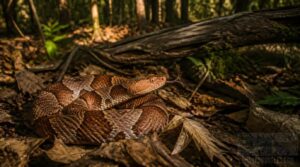
If you’ve ever spotted a snake with a copper-colored head and wondered exactly what you’re dealing with, you’re not alone. Copperheads have a distinct taxonomic story, from their scientific classification to a major reclassification that changed how experts group them. Here’s what you need to know about their identity, names, and place in the wild.
Since these snakes often turn up closer to home than people expect, learning how to spot copperheads and other snakes near suburban homes can help you tell them apart at a glance.
Scientific Name and Pit Viper Classification
Every copperhead you’ll ever meet belongs to Agkistrodon contortrix, nested within Viperidae and the pit viper subfamily Crotalinae.
That classification matters because it explains what you’re looking at:
- Heat-sensing facial pits for locating warm prey
- Solenoglyphous hinged fangs feeding from developed venom glands
- Keeled, rough-textured scales
- Close kinship with the cottonmouth, Agkistrodon piscivorus
Herpetology uses these traits to sort every pit viper you’ll encounter. Crotalinae is the largest of the four recognized viperid subfamilies, comprising 22 genera and 174 species.
2015 Copperhead Taxonomy Revision
For decades, taxonomists lumped copperhead snakes into one species, Agkistrocontortrix, with five recognized subspecies. A 2015 genetic analysis changed that. Mitochondrial and nuclear DNA revealed clear divergence between eastern and broad-ranged populations, backed by scale count differences and hemipenal morphology. The subspecies reclassification prompted field guide updates and conservation reassessment, giving you sharper species boundaries to work with.
Eastern and Broad-Banded Copperheads
Genetic divergence split the group into two full species: eastern copperhead (Agkistrodon contortrix) and broadbanded copperhead (Agkistrodon laticinctus). Morphological variation shows up in banding shape and scale counts. Hybridization zones exist where ranges overlap in Texas and Oklahoma, complicating snake identification.
- Range separation
- Band pattern shifts
- Scale count differences
- Hemipenal structure
- Population genetics markers
Common Names and Conservation Status
That taxonomic split hasn’t erased folk naming habits. You’ll still hear northern copperhead and southern copperhead used loosely alongside "highland moccasin" or "chunk head," depending on the region.
Formally, Agkistrodon contortrix carries Least Concern status on the IUCN Red List, with stable, widespread populations, though some states apply localized handling protections despite no broad collection ban.
Ecological Role in Native Habitats
Where copperheads thrive, ecosystems quietly stay balanced. As an ambush predator, this snake anchors local food webs through steady predator prey balance, targeting rodents that carry disease and seed-eating pests.
Their impact runs deeper than diet:
- Nutrient cycling impact via prey decomposition
- Disease vector reduction in rodent populations
- Seed predation regulation supporting forest regrowth
- Habitat microclimate influence near dens and leaf litter
- Juvenile caudal luring aids insect and amphibian control
Copperhead Identification and Pictures
Knowing what to look for can make all the difference when you come across a snake in the woods or your own backyard. Copperheads have a handful of distinct traits that set them apart, from head shape to pattern to color changes as they grow. Here’s what you’ll want to check first.
If you’re still unsure after checking these traits, this guide to snakes commonly mistaken for copperheads breaks down the side-by-side differences that trip most people up.
Copper-Colored Head and Facial Pits
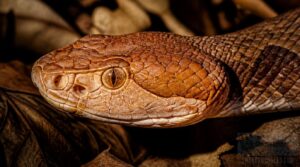
That warm, penny-bright head is your fastest field clue. In Agkistrodon contortrix, the coppery colored head sits distinct from a darker body, a sharp head color contrast you’ll notice before any pattern.
Look between eye and nostril for small, shallow facial pits, heat sensors giving pit vision ability. Vertical pupils and rough, keeled scales complete this snake’s unmistakable head markings.
Hourglass Crossbands and Keeled Scales
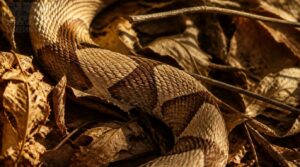
Down the trunk, dark bands pinch narrow at the spine and flare wide along the sides, the classic hourglass shape you’ll see repeated on Agkistrodon contortrix. Bands vary by region, and keeled scales add a gritty texture underfoot.
- Beige patterns closely resembling fallen leaves
- Ridged, keeled texture over smooth scales
- Symmetrical bands on both flanks
- Habitat blending against forest litter
Adult Size, Shape, and Color
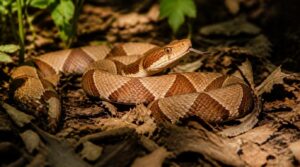
Pick one up (figuratively) and you’ll notice 2 to 4 feet of stout muscle, females often outsizing males in length and girth. Reddish-brown heads sit atop bodies banded in light and dark brown or greenish hourglass shapes.
Size varies regionally, 80 centimeters isn’t unusual, and coloration shifts seasonally, deepening in damp habitats, fading slightly as leaf litter dries out.
Juvenile Yellow Tail Identification
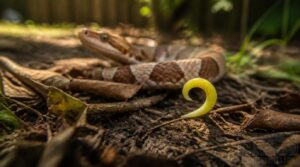
A bright greenish-yellow tip gives away a young Agkistrodon contortrix long before the hourglass bands do. Newborns hatch with green tails that brighten to true yellow within months, a lure they wiggle to draw frogs close.
- That flicker of color can mean a snake is nearby, right where kids play
- Tail pattern recognition helps you distinguish juveniles from harmless look-alikes
- Yellow tail persistence fades by age three or four
- Knowing this marker keeps your yard walks safer
Copperhead Lookalikes in Pictures
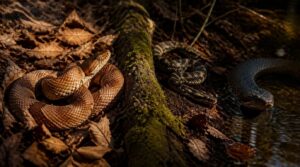
Water snakes and juvenile rat snakes fool most people online, since photos flatten depth and color. Check head shape: copperheads show a triangular head, lookalikes a rounder one. True hourglass bands narrow at the spine; broken bands don’t. Cottonmouths lack copper coloring. Habitat context (leaf litter versus water’s edge) and keeled scale texture offer more clues than color alone.
Copperhead Range and Habitat
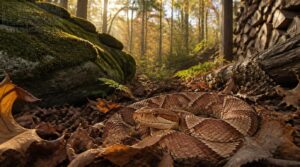
Copperheads turn up in more places than most people expect, from quiet woodlands to backyards at the edge of town. Where you might cross paths with one depends a lot on region, season, and terrain. Here’s a closer look at the habitats that make up their range.
Eastern United States Distribution
Ask any herpetologist where copperheads live in North America, and Appalachian foothills top the list. The Eastern copperhead (Agkistrodon contortrix) ranges from southern New York’s northern range limit down through Georgia, covering:
- River valleys
- Coastal plains
- Piedmont uplands
- Florida’s southern extent
That’s broad snake distribution across the eastern US, shaped entirely by microhabitat availability.
Forests, Wetlands, and Rocky Slopes
Beyond river valleys, copperheads favor leafy forests with dense canopy cover, where shaded, moist leaf litter offers perfect camouflage. You’ll also find them along wetland edge habitats and tucked into rocky slope crevices on hillsides.
This habitat preference isn’t random. It’s survival strategy, blending forest floor, rock outcroppings, and moisture into one effective hiding system.
Stream Banks and Desert Arroyos
Water isn’t the only draw. Copperheads track it closely, following bank erosion patterns and undercut ledges along streams for shelter.
In the Chihuahuan Desert, their geographic range shifts to arroyos, where flash floods carve seepage pools between dry spells.
Riparian vegetation zones, willows, mesquite, offer shade and microhabitat refuges tied to sediment transport processes.
Suburban Yards and Leaf Litter
Not every copperhead lives near a stream. Suburban yards mimic that same shelter, and leaf litter is the giveaway: 2 to 5 centimeters deep hides insects and amphibians perfectly.
Add brush piles, shrubby edges, or a bird feeder drawing rodents, and you’ve built prime snake habitat. This is the copperhead’s camouflage at work, right past your back door.
Seasonal Dens and Brumation Sites
Cold weather sends copperheads underground into abandoned rodent burrows, rock crevices, and south-facing ledges offering thermal refuge. Den site selection favors humid, stable microclimates; den reuse patterns bring the same individuals back yearly.
| Den Feature | Function |
|---|---|
| South-facing slopes | Thermal inertia |
| Rock outcroppings | Predator avoidance |
| Leaf litter cover | Humidity control |
Brumation timing shifts with spring breeding activity near streams and woodland edges.
Copperhead Behavior, Diet, and Reproduction
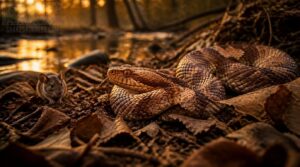
A copperhead’s daily life runs on patience, timing, and instinct, from how it hunts to how it raises the offspring. Understanding these habits gives you real insight into what makes this snake so successful across its range. Here’s what shapes a copperhead’s behavior, diet, and reproduction, from ambush to birth.
Ambush Hunting and Camouflage
A motionless copperhead is nearly invisible, and that’s the point. Its hourglass banding breaks up its outline against leaf litter, while keeled scales add a texture mimicking bark or pine needles. Coiled near rock outcroppings, it waits.
- You could walk within inches and never know
- Fallen leaves hide the next strike
- Stillness becomes its deadliest weapon
- Shadows swallow its outline whole
- One twitch of its tail seals prey’s fate
Rodents, Frogs, Insects, and Prey
A copperhead’s menu shifts with the seasons, favoring rodent prey selection like cotton rats when it’s cool, frogs near streams come spring, and insects when summer runs dry.
| Prey Type | Peak Season | Handling Style |
|---|---|---|
| Rodents | Fall/Winter | Fangs strike, quick swallow |
| Frogs | Spring/Summer | Soft-bodied, easy envenomation |
| Insects | Late Summer | Small meals, fast consumption |
Prey size and venom composition both dictate the strike.
Daily and Seasonal Activity Patterns
Timing is everything for an ectothermic hunter. Copperheads favor crepuscular activity, hunting dawn and dusk, then shift fully nocturnal on scorching summer nights. Rainfall triggers movement bursts by softening leaf litter and stirring prey.
Cool months bring seasonal brumation, with snakes clustering in rocky hibernation dens, emerging only during warm spells for brief, energy-conserving forays before retreating again.
Mating, Gestation, and Live Birth
Breeding season for Agkistrodon contortrix runs March to May, but females often mate in autumn, using sperm storage for delayed fertilization until spring warmth arrives.
- Gestation lasts 90–110 days
- Nutrients pass via placental connection
- Litters hold 6–12 young
- Live birth traits mean no eggs
Newborns emerge fully formed, complete with those telltale green tails you’ll learn about next.
Juvenile Caudal Luring Behavior
A bright green tail tip is your best clue you’re looking at a newborn Copperhead Snake. Juveniles wag this tail lure to draw curious frogs and insects close, favoring crepuscular hours when small prey moves most. It’s an efficient trick, though visibility cuts both ways: exposure invites predators too. By adulthood, this lure fades as hunting skill takes over.
A newborn copperhead’s bright green tail tip is nature’s lure, wagged to draw prey close before fading with age
Copperhead Bites, Treatment, and Prevention
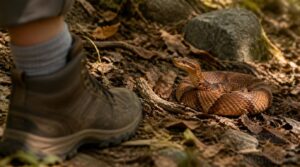
A copperhead bite is painful and serious, but it’s rarely fatal when you know what to do next. Your outcome depends less on luck and more on recognizing symptoms early and acting fast. Here’s what you need to know, from venom effects to keeping encounters from happening in the first place.
Venom can vary within a single species, and this Mojave rattlesnake species profile explains how its venom shifts from one desert population to the next.
Venom Effects and Bite Severity
When a copperhead strikes, its venom triggers hemotoxic enzyme action that damages tissue locally. Phospholipase A2s dominate the toxin profile, with metalloproteinases making up roughly 25 percent.
Together they alter the coagulation cascade, causing bleeding time changes and platelet count variation. With an LD50 of 109 mg/kg and a venom yield of 40-75 mg per bite, most bite symptoms stay moderate, not deadly.
Common Symptoms and Dry Bites
Not every bite injects venom. Roughly 20-25% of copperhead strikes are dry bites, showing fang marks without swelling, redness, or systemic symptoms within 24 hours.
- Minimal or absent pain despite puncture wounds
- No progressive swelling over 12 to 24 hours
- Normal bloodwork with no detectable venom
- Mild, brief tenderness or itching only
- Onset, if any, appears within 1 to 6 hours
Observation remains key for accurate snakebite treatment decisions.
Immediate First Aid Steps
Whether it’s a dry bite or venomous, treat every human encounter as an emergency. Do a scene safety check, then call for help. Limit movement, remove rings or tight clothing, and hold the limb at heart level.
| Do | Don’t | Why |
|---|---|---|
| Call emergency services | Apply a tourniquet | Prevents complications |
| Keep limb still | Use ice or suction | Avoids tissue damage |
| Cover wound loosely | Cut the bite | Reduces injury risk |
Antivenom, Recovery, and Prognosis
Once emergency responders take over, treatment shifts to venom neutralization. CroFab antivenom, dosed at 4 vials initially, works best within 5.5 hours, cutting recovery from 28 to 17 days.
- Watching swelling creep past your elbow, wondering if you’ll play guitar again
- Missing work for weeks waiting on limb function
- Fearing serum sickness two weeks later
- Facing a year of stiffness untreated
Avoiding Copperhead Encounters Safely
Since most human-snake encounters happen by accident, awareness beats reaction every time. Wear sturdy protective footwear, stay alert on trails, leash pets, and clear yard clutter where copperheads hide in camouflage during nocturnal activity.
| Practice | Action | Why It Helps |
|---|---|---|
| Footwear | Boots, long pants | Blocks fangs |
| Lighting | Outdoor lights | Reveals snakes |
| Yard care | Remove debris | Cuts hiding spots |
Frequently Asked Questions (FAQs)
What do copperheads hate the most?
A skunk sprays musk when cornered. Copperheads do something similar: loud vibrations, strong citrus scents, and bright sunlight exposure rank high, but human disturbance and predator presence top the list, triggering their own defensive musk response.
Has a copperhead ever killed a human?
Rarely. Confirmed snakebite fatalities are extremely scarce, usually involving delayed treatment or pre-existing health issues rather than venom alone.
With prompt antivenom treatment and basic first aid, healthy adults almost always survive a copperhead bite today.
How to tell if a copperhead is near?
A hiker near a rocky ledge once smelled fresh cucumber, a known copperhead cue, then heard leaf litter rustle. Watch for tail vibration, head stillness, greenish-brown banding, or a juvenile’s yellow tail flash near streams.
What state has the most copperheads?
Georgia holds the highest population density, thanks to humid climates and abundant prey. North Carolina trails close behind, backed by its notable bite rate of 8 per million people, reflecting dense populations across its forests and piedmont regions.
How bad is a copperhead snake bite?
Painful, but rarely deadly. Expect intense local pain, swelling, and bruising within hours. Systemic reactions are uncommon. With prompt first aid and care if needed, healing takes days to weeks, far milder than a rattlesnake’s bite.
What is the difference between a copperhead and a southern copperhead?
Southern copperhead" just names a regional subspecies variation within Agkistrodon contortrix, distinct from the northern copperhead.
Range overlap occurs across the Southeast, though pattern contrast, habitat specificity, and slight venom yield variance separate them from broadbanded copperhead Agkistrodon laticinctus populations further west.
What percentage of copperhead bites are fatal?
Like a paper cut compared to a deep wound, a copperhead’s venomous bite rarely turns fatal. With prompt care, deaths are extremely rare, thanks to antivenom effectiveness and modern treatment reaching most of the roughly 2,920 annual bites nationwide.
What bite is worse, copperhead or cottonmouth?
Cottonmouths generally cause more severe tissue damage than copperheads, thanks to stronger hemorrhagic and necrotic venom components. You’ll find cottonmouth bites need antivenom more often too, since swelling and coagulopathy tend to hit harder and faster.
Bite outcomes also vary by season, with cases during summer water-seeking activity often showing faster symptom onset, as detailed in this cottonmouth bite symptom and venom effects guide.
What are some interesting facts about copperheads?
Old folklore claims copperheads smell like cucumbers when threatened, a real trait tied to musk glands. Newborns sport neon-green tails as lures, venom’s LD50 sits at 9 mg/kg, and roughly 1,809 bites occur annually nationwide.
What does a copperhead bite look like?
You’ll see two puncture marks with swelling, redness, and bruising spreading outward. A pale line may ring the wound as venom disrupts local tissue, sometimes causing blistering as damage progresses beneath the skin.
Conclusion
The snake most feared in eastern woodlots is often the one least likely to kill you. That’s the irony coiled beneath every copperhead encounter.
This copperhead snakes species profile with bite information facts and pictures shows a pit viper built for camouflage, not conquest, striking only when cornered and often holding its venom back.
Learn its hourglass pattern, respect its space, and you’ll walk rocky slopes with calm confidence instead of dread. That’s real control.