This site is supported by our readers. We may earn a commission, at no cost to you, if you purchase through links.

Most people think of snakes as cold or unpredictable, but the truth is they thrive on routine and careful care—much like any other pet. Spend a little time observing them, and you’ll see each species has its rhythm: a Ball Python’s patient stillness, a Corn Snake’s curious glide, a Rosy Boa’s quiet tolerance of handling.
Learning how different snake breeds live and what they need can turn hesitation into confidence. With the right balance of warmth, humidity, and respect for their instincts, these reptiles become calm, striking companions that reward attention with trust.
Table Of Contents
- Key Takeaways
- Popular Snake Breeds for Beginners
- Small and Medium-Sized Snake Species
- Large and Colorful Snake Breeds
- Essential Snake Care by Breed
- Health and Handling Considerations
- Frequently Asked Questions (FAQs)
- What is the easiest snake breed to care for?
- Can Earth survive without snakes?
- Which snake is the silent killer?
- What are the top 10 friendliest snakes?
- How often should I handle my pet snake?
- Can snakes recognize their owners over time?
- What sounds or noises do snakes make?
- Do snakes need UV lighting in their enclosures?
- How do I safely transport my snake?
- How can I safely introduce two snakes together?
- Conclusion
Key Takeaways
- Different snake species have unique care needs based on their natural habitat, including specific temperature, humidity, and enclosure size.
- Beginner-friendly snakes like corn snakes, ball pythons, and rosy boas are calm, manageable in size, and adapt well to simple setups.
- Good husbandry—regular feeding schedules, clean water, humidity control, and gentle handling—builds trust and keeps snakes healthy.
- Routine health checks, proper hygiene, and access to a reptile vet prevent illness and ensure safe, stress-free ownership.
Popular Snake Breeds for Beginners
When you’re just starting out, the right beginner snake makes everything feel calmer and more manageable. Some species stay a comfortable size, handle well, and have care needs that are easier to learn.
If you’re unsure how to win your family over, this guide on convincing your parents to get a pet snake shares smart, stress-free tips that actually work.
In a moment, you’ll see a list of beginner-friendly snakes and the basic enclosure setups that work well for each one.
Ball Pythons – Temperament and Basic Care

Ball Pythons are calm, shy snakes that thrive when you respect their slow pace. Good Snake Care means balancing space and security. Focus on these basics:
- Keep a warm, humid Snake Enclosure for comfort.
- Offer moderate meals—Python Feeding Tips prevent stress.
- Practice Gentle Handling Techniques and routine Reptile Health Checks to maintain steady Ball Python Behavior in your Pet Snake.
For age-appropriate prey size and timing, consult customized to your pet’s growth stage.
Corn Snakes – Traits and Maintenance

If Ball Pythons are the introvert of pet snakes, the Corn Snake is the curious neighbor who still stays polite. Corn snakes stay a manageable 3–5 feet, with many Corn Snake Morphs that range from near-white to deep red, so you get calm Snake Behavior Patterns in a body that still looks striking.
With simple Snake Habitat Design—a secure Snake Enclosure around 30–40 gallons, a warm side, cool side, and a couple of hides—you cover most daily Snake Care needs for this Pet Snake. A straightforward Snake Diet works well: use basic Feeding Techniques like offering one frozen‑thawed mouse about as wide as the thickest part of the body every 7–14 days for adults, and let the longer Shedding Process and appetite dips be your early “check engine” light rather than a panic trigger. To keep your corn snake relaxed and easy to handle over time, rely on that prioritize calm movements and respect for stress signals.
| Aspect | What to Aim For | Why It Matters |
|---|---|---|
| Size | 3–5 ft adult Corn Snake | Easy to handle and house |
| Snake Enclosure | 30–40 gal, secure lid, two hides | Prevents escapes, assists Snake Care |
| Snake Habitat Design | Warm and cool side, climb and burrow spots | Encourages natural Snake Behavior Patterns |
| Snake Diet | Frozen‑thawed mice, single prey per meal | Safe Feeding Techniques, steady growth |
| Shedding Process | Whole, clean sheds, slightly higher humidity | Signals good health and husbandry |
California Kingsnakes – Appearance and Husbandry
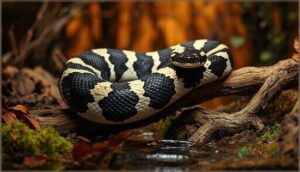
California kingsnakes stand out with bold black-and-white bands and unique Snake Morphs like reddish-brown or dotted patterns. Their confident Snake Temperament—calm yet active—makes them an appealing choice.
These snakes thrive in a 4x2x2 foot California Habitat. For their King Snake Diet, offer mice every 10-14 days. Solid Reptile Husbandry ensures this Pet Snake Species remains healthy.
Handle them gently to build trust and foster a strong bond.
Rosy Boas – Gentle Nature and Enclosure Needs
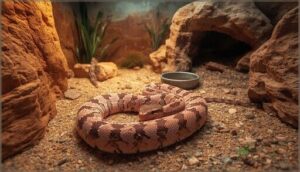
If you liked the calm nature of kingsnakes, you’ll love the Rosy Boa. Known for its friendly Rosy Boa Behavior, it tolerates gentle handling well.
A 36‑inch Snake Enclosure Design with warm and cool zones helps proper Snake Care and Maintenance.
Keep humidity low using simple Humidity Control Methods, and follow steady Boa Feeding Habits for lasting health.
Gopher Snakes – Pattern, Size, and Care
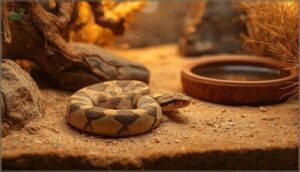
Gopher snakes offer a bold pattern and a solid, beginner-friendly Snake Species in one package. Their dark blotches on a pale body make Pattern Recognition easy, even for new keepers, and most settle with calm Snake Handling and steady Reptile Care and Handling.
For a safe, happy Pet Snake, focus your Snake Care and Maintenance on three basics:
- Roomy Snake Habitat with a long, low enclosure.
- Consistent heat gradient and simple décor.
- Balanced Gopher Diet of frozen‑thawed rodents and a clear feeding schedule.
Small and Medium-Sized Snake Species

Small and medium-sized snakes give you a lot of options if you want a pet that stays manageable in size but still feels active and interesting. In this next section, you’ll see species that fit well in modest enclosures without feeling cramped.
For guidance on keeping these smaller snakes healthy over time, see the annual vet care recommendations for ball pythons and similar species.
Let’s walk through these snakes one by one so you can picture which setups make the most sense for your home.
Milk Snakes – Coloration and Diet
Ever spot a snake with red, black, and yellow bands that scream danger? That’s snake mimicry at work—milk snakes copy venomous coral snakes to stay safe in their wild habitat. This beginner snake grows to four feet, with glossy scales and milk snake morphs from color pattern genetics.
| Aspect | Wild Milk Snakes | Pet Snakes |
|---|---|---|
| Coloration | Bold bands, some blotchy | Morphs like albino |
| Diet Variations | Rodents, lizards, eggs | Frozen-thawed mice |
| Feeding | Every 1-2 weeks | Juveniles: every 5-7 days |
Kenyan Sand Boas – Size and Habitat
Kenyan sand boas make a solid pick for sand boa care in your pet snake enclosures and habitat. Females top out at 24-36 inches, males stay smaller at 15-18 inches—these snake species love their desert habitat with loose sands for burrowing behavior.
Set up your snake enclosure with 4-6 inches of substrate depth so they can plunge in like pros. That’s key for reptile care and happy snake care and handling.
Ringneck Snakes – Suitability for Small Spaces
Ringneck snakes fit right into compact enclosures, perfect for your small apartment as a beginner snake. Adults stay tiny at 10-15 inches, so a 5-10 gallon tank works fine with proper substrate depth management for burrowing.
Use small space heating to keep temps at 21-24°C, humidity control methods like damp mulch, and snake escape prevention with tight lids. These pet snakes stay hidden and happy.
Garter Snakes – Diet and Enclosure
Garter snakes are surprisingly active little reptiles — and their enclosure needs to reflect that. For snake care basics, keep these in mind:
- Enclosure Size: At least 48×24×24 inches for adults.
- Feeding Frequency: Juveniles eat every other day; adults, weekly.
- Garter Snake Diet: Rotate frozen-thawed mice, earthworms, and occasional feeder fish.
Maintain humidity control between 35–60% using a moisture-friendly snake substrate.
Smooth Green Snakes – Care and Special Needs
Smooth green snakes thrive when their world feels like a damp meadow, not a desert tank. Focus on Habitat Creation that stays cool and moist, with plenty of plants to hide in.
Their Snake Nutrition relies on Insect Feeding only, so skip rodents.
Gentle Stress Management, steady Humidity Control, and calm handling protect Reptile Health and Wellness.
Large and Colorful Snake Breeds

Large and colorful snakes catch the eye with their bold patterns and sizes. These species need more space and specific setups than smaller pets.
Let’s look at carpet pythons, rainbow boas, green tree pythons, and Amazon tree boas next.
Carpet Pythons – Size and Housing
Carpet pythons impress with their size and calm confidence. Adults can reach 2–3.6 meters, so your Snake Enclosure Design must match.
For proper Python Habitat Creation and Large Snake Care, remember these Reptile Housing Tips:
- Minimum 6.5x3x3 ft space
- 95°F basking spot
- 40–60% humidity
- Stable climbing branches
- Secure ventilation.
Brazilian and Colombian Rainbow Boas – Iridescence and Care
If carpet pythons are like living tree art, the Brazilian Rainbow Boa is a prism come to life, with Iridescence Patterns that glow under bright light and make Boa Morphs look almost unreal.
Strong Humidity Control maintains that shine and good Snake Behavior, since this species needs high moisture, careful temperature, and steady Exotic Pet Care as part of responsible Reptile Pet Ownership.
Rainbow Boa Genetics and long‑term Snake Care are essential for serious Pet Snakes.
Green Tree Pythons – Display and Handling
If rainbow boas shimmer like gems, the Green Tree Python shines through stillness and poise. This Pet Snake thrives in tall, front-opening enclosures with controlled Enclosure Ventilation and secure Perch Design. To match its calm yet alert Temperament Traits, focus Snake Care on gentle Handling and quiet observation for balanced Snake Behavior and Handling.
- Provide multiple sturdy perches
- Keep humidity between 60–80%
- Avoid frequent handling sessions
Amazon Tree Boas – Unique Appearance and Requirements
Amazon Tree Boas are a stark contrast to the serene Green Tree Pythons, embodying energy and edge in their lean, prehensile bodies and vibrant color morphs. As arboreal pets, they require specific care to thrive.
For these exotic pets, a suitable habitat is crucial. Tall, vertical enclosures with strong branches mimic their natural environment, allowing them to climb and perch. Humidity control is essential, maintaining levels around 60–80% with regular misting to ensure their well-being.
| Feature | Amazon Tree Boa Care |
|---|---|
| Arboreal Habitat | Tall, branch-filled vertical enclosures |
| Color Morphs | Garden and bright “colored phase” forms |
| Prehensile Bodies | Strong grip on high perches |
| Humidity Control | Around 60–80% with regular misting |
| Handling Style | Short, cautious sessions using a hook |
When it comes to handling, these snakes prefer short, cautious sessions. Using a hook is recommended to ensure both the snake’s and the handler’s safety, promoting safer snake behavior.
Essential Snake Care by Breed

Every snake species has its own comfort zone, so their setups can’t all look the same. You’ll want to match the enclosure, heat, humidity, and even décor to the way your specific snake lives in the wild.
In the next section, you’ll see how these core needs break down into clear options you can actually use at home.
Enclosure Size and Setup
Ever wonder how much room your pet snake really needs? Good Enclosure Planning makes all the difference in Reptile Care. A balanced Snake Habitat fosters healthy behavior through space, hides, and Ventilation Systems. Aim for:
- Secure lids and tight seals.
- Natural clutter and sturdy décor.
- Proper layout for Temperature Control and Humidity Management.
Solid design equals better Animal Care and lasting Snake Health.
Temperature, Humidity, and Lighting Needs
When setting up your pet snakes, focus on Thermal Gradients first. Ball pythons need 88-92°F on the warm side and 76-80°F on the cool side. Corn snakes prefer a basking spot of 90°F, with cooler areas ranging from 75-82°F.
Humidity Control is also crucial—ball pythons thrive at 60-80%, while rainbow boas require 75-90%.
Implement 12-hour Lighting Cycles and low UVB Exposure to support Snake Health. This foundation ensures solid Reptile Care and promotes natural Snake Behavior.
Substrate Choices and Environmental Enrichment
For better Snake Health, choose Substrate Options that match each species’ needs. Aspen suits dry keepers, while coconut husk maintains Humidity Control.
To improve Environmental Enrichment in Reptile Husbandry, rotate textures and add occasional novelty. Try these:
- Burrowing Materials like sand or soil mixes
- Stable Climbing Structures
- Hidden tunnels for active Pet Snakes.
Feeding Schedules and Dietary Preferences
Feeding your Pet Snake takes more than dropping in a mouse—it’s about balance and timing. Meal Planning depends on Prey Size, age, and metabolism. Hatchlings eat more often, adults less. Right-sized prey keeps digestion smooth and promotes healthy Snake Nutrition.
Check this quick Snake Feeding and Nutrition guide for simple Reptile Care:
| Species | Feeding Frequency |
|---|---|
| Ball Python | Every 10–14 days |
| Corn Snake | Every 7–10 days |
| Garter Snake | Every 5–7 days |
| Rosy Boa | Every 10–14 days |
| Milk Snake | Every 7–10 days |
Hydration and Water Sources
Snake hydration is just as critical as feeding, and good water habits are a huge part of safe Reptile Care. For solid Snake Care and Reptile Husbandry, give your Pet Snake clean Water Bowls with good Water Quality, changed daily.
Use Misting Systems and smart Humidity Control based on species, since Snake Behavior and Health often reflect how well you manage moisture.
Health and Handling Considerations

Your snake’s health and how you handle it go hand in hand, and both affect how safe and relaxed it feels with you.
In this next section, you’ll see what to watch for, how to hold your snake, and how to avoid common problems. Use it as a quick guide so you know what to check and what to do before you set up or adjust any enclosure.
Common Health Issues by Species
Think of common health issues as a checklist you use to keep your Pet Snake one step ahead of trouble in Reptile Care and daily Snake Care. Different Snake Species tend to run into different problems:
- Respiratory Issues in ball pythons and corn snakes.
- Mouth rot in pythons, boas, and colubrids.
- Parasite Control for mites and worms.
- Skin Problems like stuck shed or blisters.
- Feeding Disorders and weight change needing prompt Veterinary Care and attention to Snake Behavior and Health.
Signs of Stress and Illness
After you know the common health issues, you also want to spot early warning signs in your Pet Snakes. Watch for Respiratory Issues like open-mouth breathing, wheezing, or bubbles at the nose, Abnormal Posture such as holding the front body propped up to breathe, Feeding Problems, Skin Infections, and sudden Behavioral Changes in normal Reptile Behavior.
| What you see | What it may mean | What you can feel |
|---|---|---|
| Heavy, noisy breaths | Fear for Reptile Conservation and Welfare | Worry you’ll miss something |
| Refusing favorite food | Stress in Snake Care or Snake Breeding | Guilt you caused it |
| Dull skin, stuck shed | Hidden illness needing fast help | Urge to act right away |
Safe Handling Practices
When you’re already worried about stress and illness, the way you handle your snake matters just as much as the meds or the heat. Safe Handling Techniques start before you even touch them: approach from the side or rear, move slowly, and watch Snake Behavior for Defensive Postures like hissing or sudden coiling. Use Gentle Restraint by lifting from the middle of the body and supporting the rest with calm, steady hands; let the snake flow through your grip instead of squeezing or pinning.
That kind of Reptile Behavior-aware handling builds trust and fits right into your Pet Ownership Responsibilities and solid Reptile Husbandry.
For extra Safety Precautions, skip handling for 24–48 hours after feeding, avoid working with venomous species unless you’re formally trained, and keep tools like snake hooks or soft towels nearby for more reactive individuals often seen in some Snake Breeding and Morphs.
Preventing Parasites and Infections
Good handling habits go hand in hand with strong parasite control and infection prevention in everyday snake care. As a keeper, you protect pet snakes by using clear Quarantine Protocols for new arrivals, strict Enclosure Hygiene with daily spot cleaning and regular disinfection, and basic biosecurity like handwashing and separate tools between snake habitats.
Add Immunity Support with correct heat, humidity, and nutrition, and you stack the deck in your favor.
Veterinary Support for Snake Owners
Strong parasite control pairs well with smart veterinary care for your pet snakes. Yearly wellness exams at reptile clinics catch hidden problems early and keep your snake care grounded in real veterinary science and animal welfare. In true snake emergencies, you want a clinic lined up in advance, plus telemedicine services and maybe exotic pet insurance to soften surprise costs.
- Find a reptile vet using reptile-focused directories and local clubs.
- Schedule routine wellness exams and fecal tests for your snakes.
- Ask about video telemedicine services for mild concerns and rechecks.
- Keep emergency numbers, travel plans, and insurance details ready.
Frequently Asked Questions (FAQs)
What is the easiest snake breed to care for?
The easiest BeginnerSnakes to care for are usually corn snakes, thanks to their steady feeding, simple heating needs, and easy handling.
Among popular pet snakes, they’re classic low-maintenance snakes and a top beginner-friendly snake species for pet reptiles and pet snake basics in most snake care tips lists, though a calm ball python can also work well for some beginner breeds.
Can Earth survive without snakes?
Snakes quietly hold Ecosystem Balance together as predators and prey, rodent controllers, and seed movers. Earth itself would survive without them, but their absence would trigger Food Chain Impact, Biodiversity Loss, and deep Environmental Consequences.
These disruptions would push Wildlife and Conservation and Reptile Conservation into constant Animal Conservation Efforts and emergency Snake Conservation and Legal Status battles.
Which snake is the silent killer?
When people talk about a “silent killer” among venomous snakes, they usually mean the common krait. Its snake venom causes subtle Venom Effects Symptoms at first, so Venomous Snake Bites often go unnoticed, leading to deadly snake encounters.
Silent Killer Snakes like this show why snake bite prevention matters in areas they live. This snake species is venomous, not a harmless constrictor, and its neurotoxic venom effects highlight key venomous vs nonvenomous snake characteristics.
What are the top 10 friendliest snakes?
The top 10 friendliest snakes include ball pythons, corn snakes, California kingsnakes, milk snakes, rosy boas, Kenyan sand boas, western hognose snakes, ringneck snakes, garter snakes, and gopher snakes. They exhibit docile temperaments, handling tolerance, and size management, making them ideal for beginners.
These snakes are nonvenomous and popular as pets due to their care impact and ease of management. You’ll love their friendly nature and suitability for first-time snake owners.
How often should I handle my pet snake?
“Less is more” applies here. For most beginner snakes, aim for a Handling Frequency of 2–3 short sessions per week, skip handling for 48–72 hours after feeding, and watch Snake Behavior and Stress Signs to fine‑tune your Care Routines and Owner Interaction in everyday snake care, reptile care, and pet ownership with pet snakes.
Can snakes recognize their owners over time?
Yes, pet snakes can show snake recognition through Scent Recognition and Sensory Cues rather than faces, using Snake Memory to learn your unique smell and routine.
Over time, consistent Handling Techniques build Owner Familiarity and calmer snake behaviour in good reptile care and animal behavior practice.
What sounds or noises do snakes make?
Snakes rely on Hissing Behavior and Rattling Sounds as key Snake Vocalizations and Defensive Noises. These Auditory Cues reveal fascinating Wild Snake Behavior, showing how animal behavior and unique snake adaptations act as protective defensive mechanisms.
Do snakes need UV lighting in their enclosures?
Not strictly, but most reptile pets do better with some UVB lighting benefits in a proper lighting cycle.
Gentle UV index levels support basking behaviors, snake vision, vitamin D3, and overall reptile care and husbandry in captivity.
How do I safely transport my snake?
Regarding travel, better safe than sorry. Use Secure Containers or soft Travel Bags for Snake Wrapping, maintain Temperature Control, and practice Safe Handling.
Responsible Pet Ownership and careful Reptile Husbandry keep Reptile Pets secure.
How can I safely introduce two snakes together?
Before any Shared Enclosures, follow strict Quarantine Protocols. Use Neutral Introductions in separate spaces to assess Snake Compatibility.
Watch body language closely—Cohabitation Risks rise fast, especially with Ball Pythons or Corn Snakes in Beginner Snake Pet Ownership.
Conclusion
Steady, simple steps make snake care feel safe. You’ve seen how each species has its own pace, needs, and quirks. When you match heat, hide spots, and handling to the animal, stress drops and trust grows.
Use what you’ve learned about different snake breeds and their care to shape daily habits. Watch, listen, and adjust. Your calm, consistent actions become the quiet promise that keeps your snake healthy, secure, and truly at ease each day.
- https://www.petmd.com/reptile/ball-python-care-sheet
- https://reptifiles.com/ball-python-care-guide/ball-python-humidity-temperatures/
- https://www.inkbird.com/blogs/aquarium-terrarium/corn-snake-care-guide
- https://www.reptilecentre.com/pages/info-milk-snake-care-sheet
- https://www.petpost.com.au/blogs/reptile/a-guide-to-pet-snake-care