This site is supported by our readers. We may earn a commission, at no cost to you, if you purchase through links.
That tiny peach hatchling in the tub looks like a snow corn snake. Or a blizzard. Or maybe an amelanistic with a washed-out day. Breeders have made this exact mistake, and it costs real money.
Baby corn snake morph identification gets tricky because hatchlings lie. Ruby eyes darken, butter yellows brighten after the first shed, and a candycane hides its red barring until later. One misread and your "rare" pairing produces a clutch of ordinary normals.
You need a reliable system, and it starts with color, pattern, and belly checkering. Here’s how to read each clue, and how to know when to stop guessing.
Table Of Contents
- Key Takeaways
- What Are Baby Corn Snake Morphs?
- Visual Clues for Baby Corn Snake Morphs
- Common and Rare Baby Corn Snake Morphs
- How Baby Corn Snake Colors Change
- Confirming Baby Corn Snake Morphs Beyond Appearance
- Frequently Asked Questions (FAQs)
- How to identify corn snake morphs?
- How do I tell if my baby corn snake is a boy or girl?
- What is the rarest morph of corn snake?
- How to tell snake morphs?
- Are some morphs more expensive than others?
- How quickly do hatchling colors change as they age?
- Do certain morphs require special care or diets?
- Which morphs are most prone to health issues?
- How often should baby corn snakes be fed?
- Why is my hatchling refusing its first meal?
- Conclusion
Key Takeaways
- Your hatchling’s looks can fool you, since eye color, saddle shape, and head markings shift as it grows, so treat each one as a hint rather than proof.
- Check color, pattern, and belly checkering together, because belly markings stay steady and give you the most reliable anchor when look-alike morphs like snow and blizzard get confusing.
- Give the colors time to settle, since most development happens between 6 months and 3 years, and monthly photos and weights will help you track the changes.
- When your eyes hit a wall, a genetic test from a dry shed or trusted parentage records will settle the question and reveal hidden carriers before you breed.
What Are Baby Corn Snake Morphs?
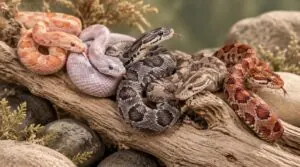
Color, pattern, and scale structure set one corn snake morph apart from the next. Each is a genetically inherited variation, bred from naturally occurring genetic mutations. Same species, Pantherophis guttatus. Totally different look.
Beyond looks alone, breeders often look to visually striking corn snake morphs when choosing pairings, since dominant and recessive traits decide which colors and patterns show up in the offspring.
Most mutations are recessive, so your snake needs two copies of the gene to show it. Some are incomplete dominant or co-dominant, which keeps things interesting.
Morphs alter pigment (melanin, erythrin, xanthin), pattern, or scales. Stack them and you get morph combinations like snow or blizzard.
So why does this matter? Because baby corn snake morph identification is tricky. Hatchling traits can fool you, since colors shift as pigment cells develop, and similar morphs can look identical at birth. That white-and-pink baby? Maybe amelanistic. Maybe not yet.
Visual Clues for Baby Corn Snake Morphs
Your hatchling just wiggled out of the egg, and now you’re squinting at it, wondering what you’ve got. Good news: a few visual clues can narrow it down fast, even on a snake the size of a pencil. Here are the four to check, starting with color and ending with the scales and head.
If the colors leave you guessing, a corn snake morph identification guide book with clear photos can help you match your hatchling.
Body Colors and Pigment Differences
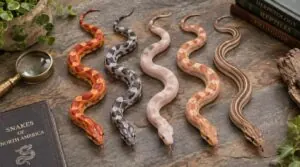
Most baby corn snakes give away their genetics through body color first. Ready to play detective?
Spot the pigment differences:
- Amelanistic: red, orange, yellow, no black
- Anerythristic: black, grey, white
- Snow: pale cream and pink
- Hypomelanistic: softer, lighter borders
Compare color variations side by side, and you’ll sort most hatchlings fast. Dark pigment is the biggest clue, so check it. Corn snakes also vary in pattern, and a distinct dorsal stripe running the length of the body is the hallmark of the striped morph.
Eye Color and Its Limitations
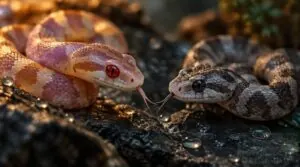
Eye color can mislead you. Some fresh hatchlings, like Ultramel, show ruby pupils that darken with age. Treat eye color as one visual trait assessment, never proof.
Because ruby eyes can fade as a hatchling matures, it helps to check your snake against this illustrated guide to snake morphs before drawing any conclusions about its genetics.
| Morph | Eye color | Caveat |
|---|---|---|
| Amelanistic | Pink or red | Het carriers invisible |
| Anerythristic | Dark gray, black | Fairly reliable |
| Hypomelanistic | Black pupils | Ruby possible |
| Snow | Red or white | Blizzard matches |
Pair it with genetic verification.
Saddle, Stripe, and Belly Patterns
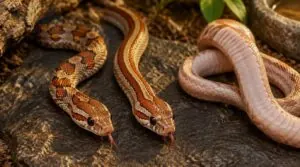
Eyes fooled you? Patterns might too, but they talk more. Start with your hatchling’s saddle shape. Normal babies wear black-outlined blocks down the back. A stripe morph swaps those blocks for long lines.
Flip it over for belly checkering. Motley often wipes it out, while striped snakes can keep their checkers. Still stumped? Pattern types overlap. Color variations muddy things.
Scale Texture and Head Markings
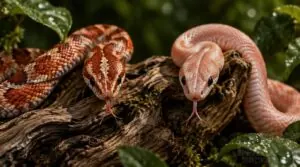
Scales on most corn snakes feel the same, so don’t trust your fingertips. A dehydrated or pre-shed baby can feel rough without any genetic mutations involved. Scaleless is the exception: look for bare skin and belly scutes. If roughness keeps showing up, a digital reptile hygrometer thermometer can confirm whether your enclosure’s humidity is actually causing the dehydration.
Head markings overlap too. That spear shape fades with age and shifts in pattern types like Motley or Tessera. Treat both as hints, not proof.
Common and Rare Baby Corn Snake Morphs
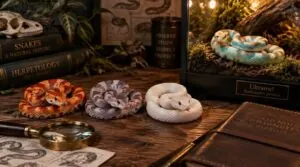
Ready to sort the common and rare baby corn snake morphs by sight? The pairs and groups below put look-alikes side by side, so you can spot what sets each one apart. Keep your hatchling close and start matching.
Normal Versus Amelanistic
Think every orange baby is an amel? Not so fast.
Your normal baby corn snake wears black-bordered saddles. An amelanistic hatchling doesn’t. Check these:
- Saddles: bright yellow, orange, or peach, with clean edges
- Ground color: white or pale
- Eyes: ruby-red or pink
- Belly checkers: pale yellow to white
Het amels look normal, so pattern genetics needs proof.
Anerythristic Versus Hypomelanistic
One snake lost its reds. The other kept them but lost its punch. Sound similar? They’re not.
In baby corn snake morph identification, an anerythristic hatchling shows gray or brown ground color with black saddles. A hypomelanistic one keeps red, orange, and yellow, but its outlines look washed out. Both are genetic mutations, and gray alone proves nothing, so check lighting and age.
Snow Versus Blizzard
Snow looks pale but present; Blizzard looks like a blank page. Both share red eyes, so you’ll need to look closer.
- Snow hatchlings show faint pink-peach saddles.
- Blizzard hatchlings? Nearly patternless and ghostly.
- Adult Snow may keep a yellow throat; Blizzard won’t.
Genetic inheritance patterns explain it: Snow’s double recessive, Blizzard triple recessive. Color variations and pattern contrast levels follow.
Motley, Striped, and Tessera
Spotting a Motley morph hatchling? Look at the back. Saddles melt into circles, ovals or connected blotches, and belly checkering fades.
A Striped morph shows a clean dorsal line instead, and Motley/Stripe snakes look Motley, never in-between.
Tessera morph? Think bold dorsal stripe with broken, checkered sides. Motley adds a plain belly. Check pattern contrast levels and scale texture too.
Butter, Candycane, and Miami Phase
Ever spotted a hatchling and thought, "Normal, right?" Think twice. Butter hatchlings start with subdued yellow, then brighten after the first shed. Candycane babies hide their red barring until later, so they pass for hypos.
Miami Phase hatchlings look silvery and muted, almost anerythristic. Color variations and pattern overlap make early calls risky. Wait, compare, and keep detailed growth notes.
Lavender, Ghost, and Ultramel
Pastel babies are the trickiest. Lavender hatchlings look washed out, pale gray-pink with faint plum saddles, but burgundy eyes give them away. Ghost babies are dull lavender, tan, and gray, with color variations that bloom in year one. Since those colors keep shifting through the first year, a secure baby corn snake enclosure kit keeps hatchlings comfortable while you track each change.
Ultramel? Check for ruby pupils, not black. Ultras have black ones. Practice pattern recognition, but trust parental photos.
Bloodred, Honey, and Avalanche
Now for the rare morphs that fool beginners. Bloodred babies show clear saddles that fade to solid red, and their bellies run pale, not checkered. Honey hatchlings glow golden with black-edged blotches and a funky head stamp. Avalanche? Gray-white, blurry saddles, clean belly.
Sharpen your pattern recognition on those bellies. They never lie. Flip the hatchling, check, then trust it.
Palmetto and Scaleless
Belly checks work on most babies, but two rare morphs break the rules. Palmetto hatchlings come out pink with faint color specks, then turn white and speckled as they grow. Scaleless babies look bug-eyed, smooth and glossy.
- Pink body, barely visible flecks
- Possible color patch on the head
- Missing dorsal scales, ventral scales intact
- Combined: speckled and scaleless
How Baby Corn Snake Colors Change
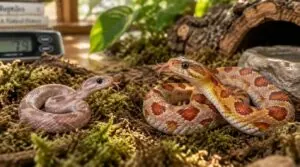
Matched your hatchling to a photo, then watched it change a month later? Welcome to the club. Hatchling development stages come with a built-in plot twist, and the shifts are permanent pigment changes, not mood swings.
Melanin and carotenoids build up as your snake grows, and melanin-based color often becomes easier to see around 40g. Think of a hatchling label as genetics plus a likely range, not a promise.
Here’s what to watch during color morph identification:
- Yellow neck and body tones often creep in with age.
- Anerythristic snakes drift toward grey, black, and brown.
- Amelanistic snakes build reds, oranges, and yellows.
- Saddle-to-ground contrast softens in adults.
Belly markings stay steady, which makes them a handy anchor when pattern overlap gets confusing. For selective breeding practices, track your snakes monthly with photos.
Pair those photos with monthly weights from a digital kitchen scale for snakes, since gram-level accuracy helps you spot growth and color shifts together.
Confirming Baby Corn Snake Morphs Beyond Appearance
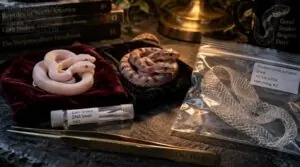
You can stare at a hatchling all day and still not know what’s hiding in its genes. That’s the gap between genotype and phenotype, and it trips up even seasoned keepers.
You can stare at a hatchling all day and still never know what its genes are hiding
When visual identification hits a wall, genetic testing steps in. Snow versus opal? Tessera versus motley? A dry shed in a Ziploc bag settles it. Clean and dry matters, so don’t toss it in a damp tub.
Testing also exposes carrier snakes. Recessive panels flag het status for amelanism, lavender and more, no breeding trial needed. That saves you from guessing before F2 generations ever hatch.
Want sex too? Shed-based tests skip the probing entirely. Until your results arrive, a reptile scale inspection loupe lets you check subcaudal scale pairs and ventral keels for a quick, reliable sex guess.
Rare morphs like palmetto may need founder sheds. Worth it? Absolutely.
Frequently Asked Questions (FAQs)
How to identify corn snake morphs?
Ever stared at a hatchling and wondered what you’re actually holding? Start with visual identification: check pigment, then pattern recognition. Look at saddles, stripes, and belly checkers. Still unsure? Genetic traits and known parentage settle it.
How do I tell if my baby corn snake is a boy or girl?
Looks won’t tell you. Phenotype variation hides sex, whatever your morph classification system says, and a temperature gradient won’t help. Let a vet probe or run DNA. Trust breeder records only with genetic lineage verification.
What is the rarest morph of corn snake?
The rarest morph of corn snake? Most breeders point to the Palmetto morph, a single-mutation lineage. Blizzard Tessera looks flashy, but morph rarity factors favor Palmetto.
Buying one? Demand proper genetic lineage verification first, always.
How to tell snake morphs?
Sure, your eyes alone will nail it. Right? Not quite.
Use these morph identification tips: check pigment, eye color, and pattern. But pattern overlap and hidden recessive genes fool everyone, so trust breeder records first.
Are some morphs more expensive than others?
Yes, and the gap can be huge. Morph pricing follows rarity. Common morphs like Normal or Amelanistic stay cheap, while Scaleless and Palmetto climb fast. Check the morph market before you buy.
How quickly do hatchling colors change as they age?
Think of your hatchling as a rough sketch, not the finished painting. Most color development happens between 6 months and 3 years, and shifts come gradually, never overnight. Shedding cycles can briefly dull the picture.
Do certain morphs require special care or diets?
A breeder once swore her lavender hatchling needed pricey "special mice." It didn’t. Honey, palmetto, bloodred? Same standard corn snake care. Only scaleless babies need softer furnishings, so skip rough bark.
Which morphs are most prone to health issues?
Stargazers top the list. That recessive gene trait causes neurological trouble.
Scaleless compound morphs scrape and dry out, and shedding cycle impacts hit them hard. Lavender kinks and Palmetto bug eye add health predisposition risks.
How often should baby corn snakes be fed?
Your hatchling will swear it’s starving every single day. Don’t cave.
Stick to a hatchling feeding schedule of one pinkie every 5 to 7 days, sized to its widest point. Skip meals during a shed.
Why is my hatchling refusing its first meal?
Don’t panic. Most hatchlings stall for simple reasons. Check your temperature gradient first, since a warm side under 85°F stalls digestion. Cloudy eyes mean shed. Trim the prey size, cut stress, wait.
Conclusion
Picture a hatchling coiled in your palm, peach one week, buttery gold the next. That shifting paintbox is why snap judgments fail.
Strong baby corn snake morph identification means reading color, pattern, and belly checkering together, then giving the colors a few weeks to settle. Still unsure? Trust the pairing records, not your eyes. If doubt lingers, a genetic test or proven breeding settles it. Patience beats pride, and your next clutch will thank you.