This site is supported by our readers. We may earn a commission, at no cost to you, if you purchase through links.

Getting Python regius breeding right the first time means the difference between a clutch of healthy hatchlings and a dead female from egg binding. That’s not meant to scare you—it’s the reality experienced breeders learn fast.
Ball pythons are forgiving in many ways, but reproduction isn’t one of them. Females under 1,200 grams face serious risk the moment eggs start forming, and pairing too early is one of the most common mistakes newcomers make.
The good news? When you understand what your animals need—the right weight, the right season, the right environment—breeding becomes genuinely rewarding. This guide walks you through every stage.
Table Of Contents
- Key Takeaways
- Ball Python Breeding Requirements
- Preparing Pairs for Breeding
- Ovulation and Egg Laying
- Incubation and Hatchling Care
- Top 6 Ball Python Breeding Supplies
- Frequently Asked Questions (FAQs)
- What does Python regius mean?
- When do ball pythons reach reproductive maturity?
- How to breed a ball python?
- When do ball pythons breed?
- How long do you leave ball pythons together when breeding?
- How do you know when a male ball python is ready to breed?
- Can I let my ball python incubate her own eggs?
- How to tell if a female ball python is ovulating?
- How to address breeding complications?
- First-time breeding success rates?
- Conclusion
Key Takeaways
- Female ball pythons must reach at least 1,200–1,500 grams before breeding, as pairing underweight animals significantly raises the risk of fatal egg binding.
- Successful breeding depends on mimicking seasonal cues — cooling nighttime temps to 78–82°F and maintaining 70–90% humidity to trigger natural reproductive cycles.
- Eggs incubated at a steady 88–90°F with humidity held between 70–90% will typically hatch within 55–60 days, with temperature stability being the single biggest factor in hatch success.
- Roughly 60–70% of first-time breeders succeed when females exceed 1,500 grams and pairings happen within the natural breeding window.
Since dragon snakes remain the sole species in their monotypic genus, breeders rely on dragon snake incubation and care guidelines rather than data borrowed from related species.
Ball Python Breeding Requirements
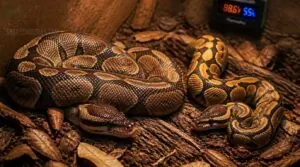
Before a single pairing happens, you need to know your animals are genuinely ready — not just old enough, but physically and seasonally prepared. Getting these fundamentals right is what separates a productive breeding season from a frustrating one. Here’s what to assess before you ever introduce a male to a female.
For a deeper look at the signs that distinguish true readiness from mere age, reptile breeding preparation and seasonal care tips walks you through the key indicators to watch before pairing.
Breeding Age and Weight
Three numbers govern every responsible Python regius pairing and breeding decision: age, weight, and body condition.
Females need 1,200–1,500 grams before breeding — anything less raises serious egg binding risks that can prove fatal.
- Reach reproductive maturity at 18–24 months
- Track monthly growth rate impacts on readiness
- Hit ideal breeding weight before first pairing
- Meet female weight requirements to prevent complications
Male Versus Female Readiness
Males reach testicular development earlier than females hit peak follicle growth — a timing gap you can’t ignore during breeding python regius morphs.
| Signal Type | Male | Female |
|---|---|---|
| Behavioral | Courtship circling, tail vibration | Passive receptivity, proximity |
| Physiological | Hemipenal prominence | Abdominal swelling |
| Hormonal | Rising testosterone | Estrogen/progesterone fluctuation |
Seasonal cues synchronize both, but female reproductive health demands careful monitoring before any pairing decision.
Healthy Body Condition
Reproductive health starts long before pairing begins. A snake carrying visible vertebral definition or sharp rib edges isn’t ready — period.
Watch for these signs of solid condition:
- Smooth, flat-lying scales with no lesions
- Clean, dry vent area
- Single-piece shed completion
- Stable weight between feedings
Active tongue-flicking and alert handling posture confirm readiness where numbers alone can’t.
Seasonal Breeding Timing
Body condition sets the stage — but timing is what pulls the curtain back.
Ball pythons respond to photoperiod and temperature shifts, with breeding naturally running mid-September through mid-November. Shortening days and a modest cooling of ambient temperatures signal reproductive readiness. Nutritional reserves must already be solid, since energy-deficient females won’t cycle reliably. In captivity, you control these cues directly. Understanding environmental triggers for breeding can help you better manage your reptile’s cycle.
Responsible Pairing Decisions
Pairing two animals isn’t just logistics — it’s a long-term investment in your collection’s health. Genetic diversity protects offspring from inherited defects, so avoid pairing close relatives when breeding Python Regius morphs.
Pairing ball pythons is a long-term investment — genetic diversity safeguards your collection’s future
Run health screening on both animals first. Limit females to one clutch annually, and document every pairing outcome. Those records quietly become your most valuable breeding tool.
Preparing Pairs for Breeding
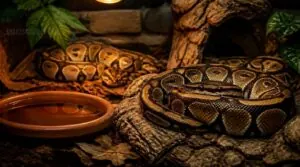
Getting your breeding pair ready isn’t just about putting two snakes together and hoping for the best. Before introductions happen, a few key conditions need to be in place — from nutrition to environmental cues — that signal to your animals it’s time to breed. Here’s what to focus on first.
Feeding Before Pairing
Getting nutrition right before pairing matters more than most breeders realize. Target a body condition score of 2.5–3.5, offering prey sized at 8–12% of body weight weekly.
A well-conditioned female is also far more likely to produce healthy clutches, so pairing good nutrition habits with careful ball python breeding and egg incubation practices gives your hatchlings the strongest possible start.
Three readiness indicators to watch:
- Consistent meal acceptance over four or more consecutive weeks
- Steady, measurable weight gain each week
- Zero recent regurgitation episodes
Skip feeding entirely the pairing week to reduce stress.
Temperature and Humidity Cycling
Simulating seasonal temperature shifts triggers the biological cues ball pythons need to breed. Drop ambient temps to 82–84°F nightly, while maintaining daytime temperature gradients steadily at 88–90°F. Gradual thermal ramp rates help prevent undue breeding stress.
| Phase | Temperature | Humidity |
|---|---|---|
| Daytime | 88–90°F | 70–80% |
| Nighttime | 78–82°F | 75–85% |
| Basking | 95–100°F | 60–70% |
Keep your humidity levels between 70–90% with careful microclimate management. Watch for condensation risk on cooler enclosure surfaces — trapped moisture invites respiratory complications fast.
Introducing Breeding Adults
Place your Python regius pair in a neutral introduction environment — never the resident snake’s home enclosure.
- Confirm both animals completed a recent pre-pairing health check
- Assess temperament and overall body condition
- Watch for signs of territorial aggression
- Monitor stress signals like tight coiling or freezing
- Verify reproductive maturity and readiness before any contact
Remove either snake immediately if aggression escalates.
Monitoring Lock Behavior
Lock behavior — when your male and female make sustained cloacal contact — is the clearest confirmation of successful mating engagement. Watch for coiling, tail alignment, and the male’s hemipene insertion.
Mutual exclusion matters here: one male per female per session prevents contention. If a second male is introduced, competition escalates fast. Log each lock’s duration and frequency across your resource cycles to track reproductive progress reliably.
Reducing Pairing Stress
Stress during pairing can quietly derail an otherwise promising season. Before introductions, offer each snake a 15-minute warm soak to relax muscle tension, then follow with brief, gentle acclimation handling.
Use a neutral, unscented enclosure — territorial pheromones trigger defensive responses fast. Apply a gradual thermal ramp rather than sudden shifts, and watch for gaping or persistent hissing. Separate if distress extends past 48 hours.
Ovulation and Egg Laying
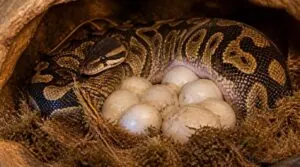
Once your female has successfully locked with a male, the waiting game begins — and knowing what to watch for makes all the difference. From follicle development through to safe egg collection, each stage has clear physical signs that tell you exactly where she is in the process. Here’s what to look for and how to respond at every step.
For a full breakdown of timelines and what to expect at each stage, this guide on breeding ball pythons from pairing to egg collection walks you through the process start to finish.
Follicle Development Signs
Early follicle activity in Python regius begins subtly. Ultrasound tracking reveals follicles measuring 4 to 6 mm, gradually enlarging as granulosa cell proliferation drives estrogen surges. Antral fluid accumulates within the follicle cavity, marking the change to tertiary stage.
Rising estradiol signals the dominant follicle’s growth, while an LH peak ultimately gets ready the oocyte for ovulation.
Ovulation and Swelling
Once follicles mature, ovulation swelling becomes visually unmistakable — a pronounced mid-body bulge caused by fluid retention and hormonal shifts. Estrogen peaks drive this temporary fullness, lasting roughly one to three days.
You’ll notice the swelling travel posteriorly as the eggs pass. In captive breeding of Python regius morphs, tracking this event accurately marks the start of your gestation countdown.
Pre-lay Shed Timing
After ovulation swelling fades, the pre-lay shed follows roughly 28 to 35 days later. You’ll spot it through skin dullness cues and the characteristic blue, milky eye color changes signaling active ecdysis. Vent swelling indicators and substrate rubbing behaviors often intensify beforehand.
Most females complete this shed 10 to 20 days before depositing their clutch of eggs.
Nest Box Preparation
Once the pre-lay shed wraps up, your female is days away from depositing her clutch. Set up a hide box with substrate — coconut fiber or cypress mulch works well — deep enough to retain humidity control between 70–90%.
Key box requirements:
- Untreated wood, ¾-inch thick minimum for insulation
- Drainage holes to prevent moisture pooling
- Removable lid for cleaning accessibility
- Entrance sized snugly to reduce drafts
Keep it dark, warm, and undisturbed.
Safe Egg Collection
Collect eggs within hours of laying, handling each one gently to avoid rotating them — orientation matters for embryo development. Use food-grade containers with ventilation and label each batch with clutch date and morph pairing to support genetic diversity tracking.
Cool storage to 10–15°C slows bacterial growth. Sanitize all surfaces and change gloves between clutches to prevent cross-contamination.
Incubation and Hatchling Care
Once your female has laid and you’ve collected the eggs, the real work begins. Getting incubation right — temperature, humidity, timing — is what separates a successful clutch from a heartbreaking one. Here’s what you need to know to take your eggs from collection to healthy, feeding hatchlings.
Incubator Temperature Range
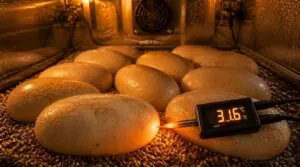
Temperature is everything during incubation. ideal set points between 88°F and 90°F give Python regius morphs the best start.
- Target 88–90°F as your ideal set point
- Keep fluctuations within ±0.5°C to prevent embryo stress
- Use dual sensor feedback for consistent thermal regulation
- Place sensors at multiple chamber locations
- Calibrate monthly for reliable environmental parameters
Genetic diversity in breeding demands precision.
Egg Box Setup
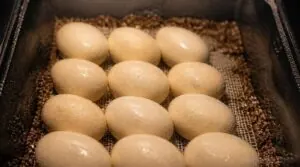
Three variables define a solid egg box: tray spacing, moisture retention, and consistent temperature monitoring.
| Setup Element | Specification |
|---|---|
| Substrate depth | 1–2 inches vermiculite or perlite |
| Humidity range | 70–90% relative humidity |
| Tray cell size | 4–6 inches per egg |
Embryo safety starts with minimal movement. Keep eggs flat and undisturbed, with a breathable barrier between clutch and substrate to block fungal growth.
Candling Fertile Eggs
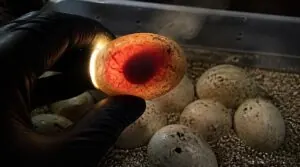
Light passes through the shell, telling you more than you’d expect.
- Day 5–7: check for early vascularization around the embryo
- Day 14: confirm a branching vessel network
- Blood ring: signals embryo death — remove the egg promptly
- Clear interior: infertile egg — discard to maintain clutch sanitation
Evaluating fertility this way actively protects your humidity levels and helps maintain a healthy hatch rate.
Hatching Timeline
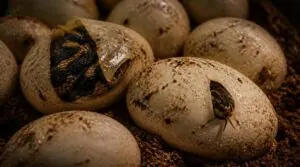
At 88°F to 90°F, expect hatchlings to break through within 55 to 60 days. The first crack — called pipping — usually appears 1 to 3 days before full emergence, followed by zipping, where the hatchling rotates and cuts its way free.
Humidity swings can shift timing by a day or two, so keep levels stable and monitor closely once pipping begins.
First Shed and Feeding
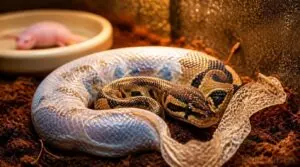
Within 5 to 7 days post-hatch, eye cap slippage signals the shed is imminent — clouded eyes and dull skin tell you it’s time. Maintain 70 to 90 percent humidity throughout.
Once the skin drops clean, wait 2 to 7 days before offering your first pinky. Match prey width to the hatchling’s body — no oversized meals.
Top 6 Ball Python Breeding Supplies
The right supplies don’t just make breeding easier — they make the difference between a stressful season and a successful one. From incubation to housing your growing hatchlings, each item on this list fulfills a specific purpose in your setup. Here are six supplies worth having on hand before your next breeding season begins.
1. HovaBator Reptile Egg Incubator Kit
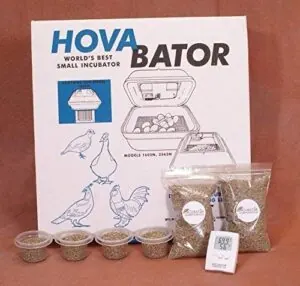
Two models stand out for ball python breeders: the HovaBator 1602N and the upgraded 2370 kit.
The 1602N uses a radiant heat tube with natural convection airflow, making it an economical entry point for small clutches. The 2370 steps things up with digital temperature control holding tolerances within ±0.5–1.0°C, an adjustable fan, clear substrate cups, and a viewing lid — so you can monitor egg development without cracking the chamber open. For consistent 88–90°F incubation, that precision matters.
| Best For | Beginner reptile breeders looking for an affordable, easy-to-set-up incubator for small clutches of gecko, bearded dragon, or turtle eggs. |
|---|---|
| Primary Use | Egg incubation |
| Material | Plastic/wafer thermostat |
| Size Options | Two models (1602N, 2370) |
| Reptile Safe | Yes, designed for reptiles |
| Easy Cleaning | Wipe-clean interior |
| Durability | Lightweight plastic build |
| Additional Features |
|
- Complete starter kit with everything you need out of the box, including hatching medium and holding cups
- Lightweight and portable, making it simple to set up in any space
- Economical option for small-scale incubation without a big upfront investment
- The wafer thermostat requires manual calibration and can cause temperature swings if not dialed in carefully
- Included thermometer and hygrometer accuracy can be inconsistent, especially for less experienced users
- Mold risk increases if the water-to-substrate ratio isn’t carefully managed, and the provided containers may not be enough for larger egg batches
2. Rubbermaid EasyFindLids Meal Prep Containers
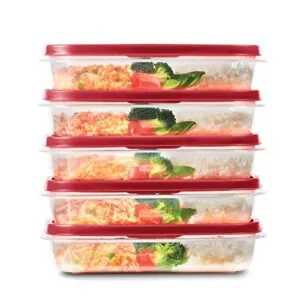
Once your incubator is dialed in, you need somewhere reliable to house those eggs. Rubbermaid EasyFindLids containers handle that job well — each holds 5.5 cups, fits standard egg-laying substrate depths, and the BPA-free plastic won’t off-gas near developing embryos.
Lids snap securely, reducing accidental displacement during daily checks. They’re freezer and microwave safe, though you’re using them for incubation media, not meal prep. Modular nesting keeps your setup organized when you’re managing multiple clutches simultaneously.
| Best For | Home cooks and meal preppers who want a flexible, organized container system that works across the fridge, freezer, and microwave. |
|---|---|
| Primary Use | Egg storage |
| Material | BPA-free plastic |
| Size Options | 5.5 cup capacity |
| Reptile Safe | BPA-free construction |
| Easy Cleaning | Dishwasher safe |
| Durability | Snap-secure locking lids |
| Additional Features |
|
- The EasyFindLids system means one lid fits multiple base sizes, so you’re never hunting for a match
- Bases nest and lids stack, which keeps your cabinets from turning into a plastic avalanche
- BPA-free construction and dishwasher-safe design make them both safe and easy to clean
- Tomato-based foods can stain or etch the clear plastic over time
- High-fat foods get dangerously hot in the microwave, so you’ll need to be careful
- Hot food can cause pressure to build up and pop the corners loose if you forget to use the vent
3. Reptile Prime Coconut Fiber Bedding
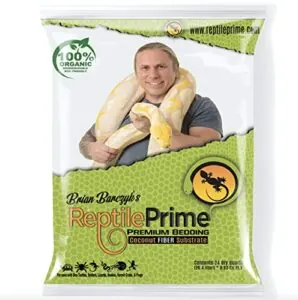
Substrate choice shapes incubation success more than most keepers expect. Reptile Prime Coconut Fiber Bedding delivers excellent moisture retention without becoming waterlogged, keeping humidity stable around developing eggs.
Its dust-free composition protects respiratory health during routine clutch checks. The organic coconut husk material absorbs waste odors and holds its structure well — critical when you’re managing several egg boxes across a single season.
Use it dry or slightly damp depending on your setup’s baseline humidity.
| Best For | Reptile, amphibian, and invertebrate keepers who need a reliable, humidity-stable substrate for incubation, burrowing species, or tropical and desert enclosures. |
|---|---|
| Primary Use | Incubation substrate |
| Material | Coconut husk fiber |
| Size Options | Multiple bag sizes |
| Reptile Safe | Dust-free, organic material |
| Easy Cleaning | Reusable packaging |
| Durability | Holds structure over time |
| Additional Features |
|
- Excellent moisture retention keeps humidity consistent without becoming waterlogged — ideal for egg incubation and tropical setups
- Dust-free formula reduces the risk of respiratory irritation during routine handling and clutch checks
- Eco-friendly coconut husk composition is safe to compost or recycle, and the packaging is reusable
- Thick layers can interfere with basking spot temperatures and create uneven heat distribution from heat pads
- The substrate gradually breaks down into finer particles over time, which may affect tunneling stability
- Packaging can be prone to accidental tears or damage during unboxing
4. Rubbermaid Brute Heavy Duty Storage Bin
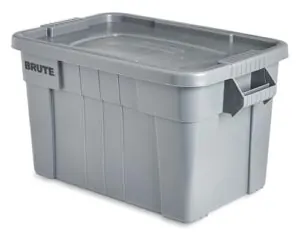
Once you’ve sorted your substrate, you need somewhere to house breeding adults and growing hatchlings at scale. The Rubbermaid Brute delivers exactly that — heavy-duty HDPE construction resists cracking under stacked weight, and UV inhibitors slow degradation in warm reptile rooms. Its smooth interior wipes clean in seconds.
At 44 or 50 gallons, it aids bulk storage without bowing. The ergonomic molded aids make repositioning straightforward, even loaded.
| Best For | Reptile keepers, food service workers, and anyone needing a rugged, food-safe container that can handle heavy loads and frequent cleaning at scale. |
|---|---|
| Primary Use | Adult/hatchling housing |
| Material | HDPE plastic |
| Size Options | 44 or 50 gallon |
| Reptile Safe | NSF-certified food-grade |
| Easy Cleaning | Smooth wipe-clean HDPE |
| Durability | Crack-resistant ribbed base |
| Additional Features |
|
- NSF-certified food-grade HDPE construction makes it safe for a wide range of uses, from reptile rooms to commercial kitchens
- Ergonomic handles and a reinforced ribbed bottom make it easy to move and drag even when fully loaded
- Stackable design with a secure snap-on lid keeps contents protected and storage spaces tidy
- Protruding handles increase the overall footprint, which can be awkward on tighter shelves
- No molded locking hole, so there’s no straightforward way to add a padlock for extra security
- Higher price than standard plastic totes, which may be hard to justify for lighter-duty needs
5. Zoo Med Aspen Snake Bedding
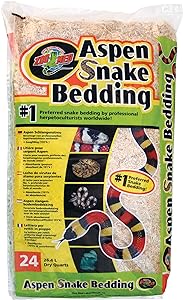
Aspen bedding doesn’t get the spotlight it deserves, but Zoo Med’s version earns its place in any serious breeding setup. Its 191% absorbency rating pulls moisture away from skin efficiently, stabilizing humidity without creating soggy patches. The 99.9% dust-free formula matters most during hatchling stages, when respiratory sensitivity runs high.
No cedar oils, no toxicity concerns. Spot cleaning stays quick, and the texture encourages natural burrowing — instincts your animals will act on.
| Best For | Reptile and tarantula keepers — especially breeders who need reliable moisture control and a safe, low-dust environment for hatchlings and sensitive species. |
|---|---|
| Primary Use | Hatchling bedding |
| Material | Aspen wood shavings |
| Size Options | Multiple bag sizes |
| Reptile Safe | No cedar oils or toxins |
| Easy Cleaning | Easy spot cleaning |
| Durability | Degrades with extended use |
| Additional Features |
|
- Exceptional 191% absorbency rating keeps enclosures dry without creating wet spots
- Low dust and no cedar oils make it safe for animals with respiratory sensitivity
- Encourages natural burrowing behavior and is easy to spot clean
- Not suitable for aquatic or semi-aquatic habitats
- Absorbency decreases with use, so it needs regular replenishment
- Tends to cost more than basic wood-shaving alternatives
6. Pangea Black Reptile Hide
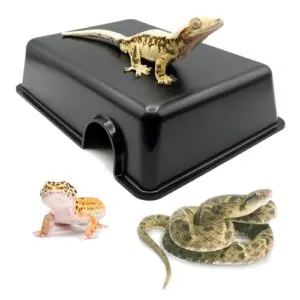
Every hide in your rack is a decision — and the Pangea Black Reptile Hide makes it an easy one. Built from 1/8-inch ABS plastic, it resists warping, cleans in seconds, and stacks without collapsing.
The offset door placement mimics natural shelter hollows, so animals settle faster and show fewer defensive behaviors over time. Five sizes cover hatchlings through large adults. Non-porous surfaces handle disinfectant cycles without degrading — exactly what high-volume breeding demands.
| Best For | Reptile breeders and hobbyists running rack systems who need a practical, easy-to-clean hide that keeps snakes, geckos, and other terrestrial species feeling secure. |
|---|---|
| Primary Use | Snake hide/shelter |
| Material | ABS plastic |
| Size Options | Mini to Extra Large |
| Reptile Safe | Rounded edges, smooth surface |
| Easy Cleaning | Non-porous smooth surface |
| Durability | Crack and warp resistant |
| Additional Features |
|
- Non-porous ABS plastic wipes down and disinfects quickly, making it ideal for high-volume breeding setups
- Offset door placement helps animals settle in faster with less stress and fewer defensive behaviors
- Available in five sizes, so you can cover everything from hatchlings to large adults with one product line
- Lightweight build can shift around inside the enclosure, so you may need to add weight to keep it in place
- Purely utilitarian look — if you want something that blends into a naturalistic display setup, this isn’t it
- Sizing needs to be chosen carefully; too loose and it loses its security benefit, so measure your enclosure before ordering
Frequently Asked Questions (FAQs)
What does Python regius mean?
What does Python regius actually mean? The genus Python places it among Africa’s great constrictors, while regius — Latin for "royal" — gives the species its regal identity, formalized by Shaw in
When do ball pythons reach reproductive maturity?
Males mature at 16–18 months, females at 27–31 months. Weight matters more than age — females need at least 1,500 grams before breeding, males around 700–800 grams.
How to breed a ball python?
Breeding a ball python is equal parts science and patience — timing, weight, and health must align before pairing. Get these fundamentals right, and the rest of the process falls naturally into place.
When do ball pythons breed?
Fall through early spring marks peak breeding activity, triggered by cooler temperatures and humidity shifts. In captivity, most pairings occur from late September to November, with ovulation following into spring.
How long do you leave ball pythons together when breeding?
Leave pairs together for 2 to 3 days once a lock is confirmed. Without a lock, remove after 4 to 48 hours. After mating, return the male within 24 to 72 hours.
How do you know when a male ball python is ready to breed?
Weight and behavior together signal male readiness. He should weigh 700–1,000 grams and display active cruising, chin rubbing, and tongue flicking — clear signs he’s hormonally primed and ready to pair.
Can I let my ball python incubate her own eggs?
Yes, she can. Ball pythons are natural maternal incubators — coiling around their clutch to regulate heat and humidity. Just keep enclosure temps stable at 88–92°F and humidity high.
How to tell if a female ball python is ovulating?
Swelling signals she’s ovulating — a firm, visible bulge appears in her posterior midsection, lasting 24 to 48 hours. You’ll notice her actively seeking heat and spending more time near the basking surface.
How to address breeding complications?
Prompt veterinary assessment immediately if you notice abnormal swelling, unusual discharge, or prolonged distress. Early intervention — whether obstetric repositioning, lubrication, or surgical delivery — prevents dystocia from becoming fatal.
First-time breeding success rates?
First-time breeders achieve roughly 60–70% success rates when females exceed 1,500 grams and pairing occurs during the defined seasonal window. Proper conditioning and weight monitoring before introduction greatly improve your odds.
Conclusion
Roughly 60% of breeding failures stem from pairing animals before they’re genuinely ready. That single mistake collapses an entire season’s effort.
Every piece of python regius breeding information in this guide exists to prevent exactly that. Weight thresholds, cycling temps, incubation humidity—these aren’t suggestions, they’re the scaffolding your success is built on.
Get the fundamentals right, and the process rewards your patience. Healthy hatchlings don’t happen by accident. They happen by design.