This site is supported by our readers. We may earn a commission, at no cost to you, if you purchase through links.

Most new snake owners obsess over heat lamps and feeding schedules—then grab whatever substrate looks natural at the pet store. That one choice quietly shapes everything else: how well your snake sheds, how how fast bacteria builds up, and whether a burrowing species ever feels truly settled.
The wrong bedding doesn’t just cause inconvenience; it can trigger respiratory issues, stuck sheds, and stress behaviors that mimic illness. Snake substrates for beginners come down to matching material to species—a ball python and a corn snake have almost nothing in common regarding moisture needs.
The five options ahead cut through the noise.
Table Of Contents
- Key Takeaways
- What Snake Substrate Does
- Best Beginner Substrate Types
- Match Substrate to Snake Species
- Top 5 Beginner Substrate Products
- Safe Setup and Depth Tips
- Cleaning, Costs, and Replacement
- Frequently Asked Questions (FAQs)
- What is the best substrate to use for snakes?
- What is the easiest snake to care for for beginners?
- How often should I mist my snakes enclosure?
- Can I mix two different substrates together?
- What substrate works best for baby snakes?
- How do I transition my snake to new substrate?
- Does substrate depth change as my snake grows?
- Can substrate affect a snakes stress levels?
- How does substrate interact with under-tank heaters?
- Should substrate change as a snake ages?
- Conclusion
Key Takeaways
- Your substrate choice controls humidity more than almost anything else — get it wrong and you’re fighting stuck sheds, respiratory issues, and a stressed snake before you even realize the bedding is the problem.
- Match the material to your snake’s species first: dry-climate snakes like corn snakes thrive on aspen, while tropical species like ball pythons need moisture-retentive options like coconut fiber or cypress mulch.
- Paper towels aren’t just a lazy option — they’re the smartest choice for new arrivals, hatchlings, and sick snakes because they make it easy to spot health issues early.
- Cheap substrate isn’t always the budget win it looks like: paper towels cost the least upfront but need weekly swaps, while coconut fiber costs more initially and lasts up to six weeks.
What Snake Substrate Does

Substrate is the material lining the bottom of your snake’s enclosure — and it does a lot more than just look natural. The right bedding controls humidity, aids shedding, and keeps your snake feeling secure enough to behave normally.
For a deeper look at which options actually work in practice, this ball python bedding buyer’s guide breaks down the top substrates by humidity retention, ease of use, and overall snake comfort.
Here’s what you need to know before choosing one.
Definition of Snake Substrate Bedding
Snake substrate is the floor covering inside your enclosure — the bedding material your snake lives on daily. Think of it as the enclosure base that ties everything together. Good habitat flooring does more than look natural:
- Absorbs waste between cleanings
- Holds hides, bowls, and decor
- Reduces stress by mimicking natural ground
- Keeps your snake comfortable and secure
Choosing the right snake substrate is the foundation of solid snake husbandry. Aspen shavings for burrowing provide excellent burrowing for corn snakes, making them a top choice for beginners.
How Substrate Affects Humidity and Shedding
Your substrates choice controls humidity more than almost anything else in the enclosure. Moisture-retentive materials like coconut coir and cypress mulch drive evaporation control by releasing water slowly — creating stable microclimate zones your snake actually lives in. That steady humidity gradient matters most during scale shedding. Dry bedding like aspen drops humidity fast, which leads to stuck sheds.
| Substrate | Humidity Support |
|---|---|
| Coconut coir | High — ideal for 60–80% range |
| Cypress mulch | Moderate — balanced moisture gradient |
| Sphagnum moss | Highest — rainforest species only |
| Aspen shavings | Low — dry-climate snakes only |
| Paper towels | None — quarantine use only |
Regular humidity monitoring with a hygrometer confirms whether your substrate is actually doing its job.
Why Substrate Matters for Hygiene and Odor Control
Humidity isn’t the only thing your bedding controls. The right substrate manages hygiene and odor control by working on four fronts at once — Absorbency Efficiency, Waste Isolation, Microbial Suppression, and Airflow Management.
- Dry bedding slows ammonia buildup between cleanings
- Loose substrate isolates waste so it doesn’t spread
- Porous materials reduce odor-causing anaerobic bacteria
- Good structure keeps air moving through the enclosure floor
- Safe bedding options for beginner snake keepers eliminate most bacterial hotspots
Together, they make Maintenance Simplicity possible.
How Bedding Supports Security and Natural Behavior
Bedding does more than keep things clean — it shapes how your snake feels inside the enclosure. Good substrate creates Cover Continuity across the whole space, not just inside a hide box.
Snakes use Partial Concealment and Microspace Choice to control how exposed they feel.
Texture Comfort and burrowing behavior support calmer, more natural movement every day.
Best Beginner Substrate Types
Not every substrate works for every snake, and picking the wrong one can cause real problems down the line.
The good news is that a handful of beginner-friendly options cover most common species without much fuss. Here’s what’s worth knowing before you choose.
Aspen Shavings for Dry-climate Snakes
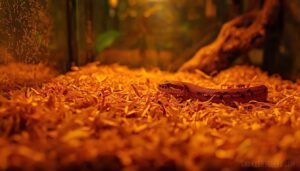
Aspen shavings are a natural starting point for dry-climate snakes — and for good reason. Here’s what makes them work:
- Lightweight makes spot cleaning fast and easy
- Easy Waste Spotting keeps hygiene simple
- Natural Insulation aids Temperature Stability in the enclosure
- Low cost and widely available everywhere reptile supplies are sold
- Eco-friendly Disposal — fully biodegradable
Just keep it dry. Wet aspen shavings mold fast, raising impaction risk and odor.
For corn snakes and king snakes, it’s one of the safest bedding options for beginner snake keepers.
Since it’s made from pure coconut fiber with no chemicals or added scents, it’s also a smart pick for curious feeders — check out this guide to choosing the right boa constrictor substrate if you’re thinking about scaling up to larger species.
Coconut Fiber for Higher Humidity Enclosures
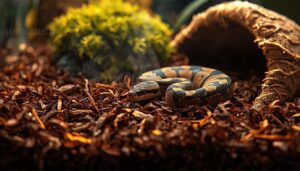
Coconut fiber is the go-to for ball pythons, boas and other tropical species that need steady moisture. Its natural Moisture Retention keeps humidity in the 60–80% range without constant misting — a real advantage for beginners.
Use a 3–4 inch layer for effective Layering Techniques, maintain Ventilation Balance to support Mold Prevention, and enjoy the Cost Effectiveness of bulk compressed bricks.
Safe, organic, and beginner-friendly.
Cypress Mulch for Balanced Moisture Retention
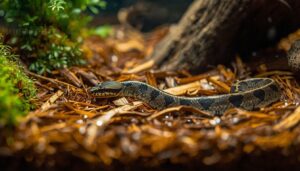
Cypress mulch hits a sweet spot that most substrates can’t. It offers genuine Humidity Buffering — absorbing water slowly and releasing it steadily — so humidity regulation in terrariums stays consistent without turning the floor soggy.
You get real Adjustable Moisture and Moisture Fine-tuning by simply adding water as needed. Its Lightweight Volume makes layering easy, while natural Evaporation Control keeps moisture retention balanced.
This makes it a solid, safe bedding option for beginner snake keepers.
Paper Towels or Butcher Paper for Quarantine
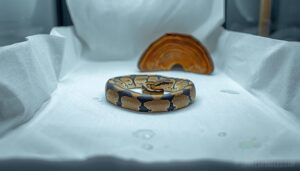
When you bring home a new snake, paper towels or butcher paper are your best first move. Both offer low impaction risk and high contrast visibility — white backgrounds make mite monitoring easy, as droppings and mite specks stand out clearly. Use paper towels for juveniles or sick snakes without hesitation.
These substrates offer practical benefits:
- Facilitates rapid disinfection between cleanings
- Provides temporary substrates for quarantine and sick snakes
- Folding layers under hides to create layered humidity zones
- Fits all cleaning and maintenance schedules for reptile enclosures
Bioactive Mixes for Naturalistic Setups
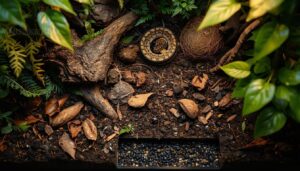
Bioactive mixes go further than any other substrate — they actually work for you. A solid bioactive mix combines topsoil, coconut coir, leaf litter, and orchid bark.
Your drainage layer design keeps roots and soil from waterlogging, ensuring proper water management.
Springtails and isopods handle cleanup crew roles naturally, breaking down waste daily.
Get the ABG mix recipe right, and your naturalistic setup practically maintains itself.
Match Substrate to Snake Species
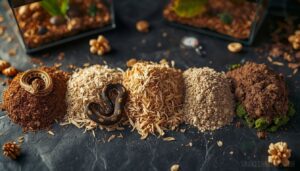
Not every snake needs the same setup — what works for a corn snake can actually stress out a ball python. The right substrate depends on your specific species, and getting it wrong can affect shedding, humidity, and overall health.
Here’s a breakdown of what works best for the most common beginner snakes.
Best Options for Corn Snakes and King Snakes
Aspen shavings are the go-to for corn snakes and king snakes — both prefer 40–60% humidity, and aspen manages that range without fuss.
Lay 2–3 inches for natural burrowing, and always use a feeding platform to cut impaction risk.
It maintains temperature stability, aids mite prevention, and keeps enclosure size manageable.
Safe bedding options for beginner snake keepers don’t get simpler.
Best Options for Ball Pythons and Boas
Ball pythons and boa constrictors require consistent humidity levels of 60–80%, making coconut fiber and cypress mulch ideal choices. Both substrates support humidity management, resist mold, and are eco‑friendly materials that won’t break the bank.
Safe bedding options for beginner snake keepers in this category include:
- Coconut fiber – retains moisture, aids healthy shedding, compostable
- Cypress mulch – intermediate moisture retention, excellent mold resistance
- Bioactive mixes – temperature stability, impaction safety, naturalistic feel
Dry-climate Vs Tropical Species Needs
Dry-climate snakes like corn snakes and king snakes thrive at 40–60% humidity—aspen shavings manage this perfectly. Tropical species, such as ball pythons, require 60–80% humidity, where coconut fiber excels in water retention comparison.
Getting your Humidity Gradient Design right directly impacts Respiratory Health Impact and reduces impaction risk for both groups.
Temporary Bedding for Hatchlings and Sick Snakes
For hatchlings and sick snakes, paper towels or newspaper are your safest call. There’s zero impaction risk, and hygiene spotting is easy — white backgrounds reveal mites, mucus, or irregular droppings fast.
Use a single flat layer; layer thickness control matters in small tubs.
Spot clean daily, and follow a clear progression scheduling plan: move to loose substrate only after two clean sheds and steady feeding.
When to Mix Substrates for Better Performance
Once your hatchling graduates to a permanent enclosure, mixing substrates for ideal performance becomes worth considering. A 60/40 coco coir-sand blend aids ball pythons through seasonal humidity shifts without sogginess.
For corn snakes, growth phase blending—adding aspen to cypress mulch—manages temperature-driven mixing naturally.
Quarterly texture renewal keeps burrowing behavior of snakes engaged and substrate moisture balance stable.
Top 5 Beginner Substrate Products
Knowing which substrate types work best is one thing — finding the right product to buy is another.
These five picks are beginner-friendly, widely available, and match the most common pet snake species. Here’s what’s worth your money.
1. Zilla Jungle Mix Organic Terrarium Bedding
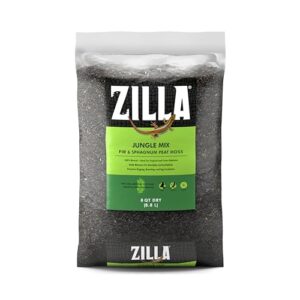
Zilla Jungle Mix is a solid pick if your snake needs steady humidity without constant misting. It’s a 100% organic blend of aged Douglas fir bark and sphagnum peat moss — soft, loamy, and built to hold moisture well. It encourages natural burrowing and nesting instincts, which matters more than most beginners realize.
Keep the depth at 1–2 inches and spot-clean daily.
One downside: it dries out fast, so you’ll need to mist regularly to keep humidity stable.
| Best For | Snake and reptile owners keeping humid-loving species like rainforest geckos, frogs, or snakes who want a natural, low-maintenance substrate that supports burrowing and nesting. |
|---|---|
| Material | Fir bark & peat moss |
| Biodegradable | Yes |
| Humidity Control | High absorption |
| Burrowing Support | Yes |
| Price | $10.95 |
| Odor Control | Moderate |
| Additional Features |
|
- 100% organic blend of Douglas fir bark and sphagnum peat moss holds moisture well and naturally regulates humidity
- Encourages natural behaviors like digging, burrowing, and egg incubation — great for species that need it
- Biodegradable and chemical-free, so it’s easy on the environment and safe for sensitive animals
- Dries out quickly — sometimes within a day — so you’ll need to mist frequently to keep humidity where it needs to be
- Some larger, sharper fir pieces can cause splinters, making it a risky sole substrate for delicate species like salamanders
- The bag runs smaller than it looks, so bigger enclosures may need multiple bags to get adequate coverage
2. Riare Coconut Fiber Terrarium Substrate
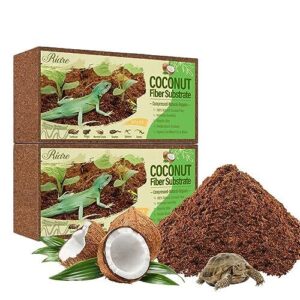
Two compressed bricks for $12.34 — that’s the Riare Coconut Fiber substrate. Soak them in water, squeeze out the excess, and you’ve got soft, fluffy bedding ready to go.
It holds humidity well, breaks down waste, and controls odor better than most wood shavings. Fully biodegradable, cleanup is simple — compost it or toss it in the garden.
One heads-up: it can dry out within a day or two, so check moisture levels regularly.
| Best For | Reptile, amphibian, and invertebrate owners who need a natural, humidity-friendly substrate that’s easy to clean up and gentle on their animals. |
|---|---|
| Material | Coconut fiber |
| Biodegradable | Yes |
| Humidity Control | Moderate retention |
| Burrowing Support | Yes |
| Price | $12.34 |
| Odor Control | Good |
| Additional Features |
|
- Holds moisture well and helps control odor, making it great for tropical or burrowing species
- Fully biodegradable — used substrate can go straight into your garden as fertilizer
- Soft and non-dusty, so it’s easy on your animals’ lungs (and yours)
- Two bricks might not be enough for larger tanks, so budget for extras
- Dries out fast — you’ll likely need to re-hydrate every few days
- No instructions included, so first-timers have to figure out the soaking process on their own
3. Zilla Coconut Husk Reptile Bedding
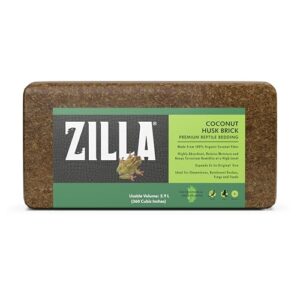
At $6.79 per brick, the Zilla Coconut Husk is one of the most cost-effective options on this list. Drop it in hot water, wait ten minutes, and one compressed block expands to cover a full 55-gallon enclosure.
Made of 100% organic coconut fiber with no dyes, no chemicals, this substrate ensures safety if your snake accidentally ingests some bedding. That matters when your snake occasionally ingests a mouthful of bedding.
Humidity remains stable, burrowing feels natural, and cleanup is straightforward. Just don’t oversaturate it—soggy substrate compresses fast and invites mold.
| Best For | Tropical reptile and amphibian owners who need reliable humidity control in large enclosures without spending a lot. |
|---|---|
| Material | Coconut fiber |
| Biodegradable | Yes |
| Humidity Control | High retention |
| Burrowing Support | Yes |
| Price | $6.79 |
| Odor Control | Moderate |
| Additional Features |
|
- Expands to fill a full 55-gallon tank from one small brick — great value at $6.79
- 100% organic coconut fiber, no dyes or chemicals, safe if accidentally ingested
- Holds moisture well and supports natural burrowing behavior
- Rehydrating with hot water can get messy and takes some prep time
- Easy to oversaturate — soggy substrate compresses quickly and can grow mold
- Fine texture isn’t a great fit for species that prefer coarser bedding, like jumping spiders
4. Flukers Tropical Cypress Reptile Bedding
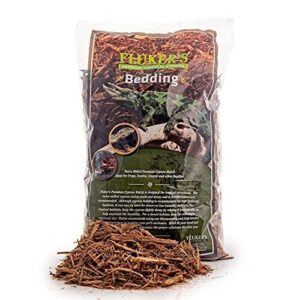
Flukers Tropical Cypress Reptile Bedding keeps things simple without cutting corners. At $6.96 for a 1.76 lb bag, it’s an affordable pick for beginners who want reliable humidity control without overthinking it.
The twice-milled cypress resists mold better than most softwoods—a real plus in humid setups. It works for ball pythons, boas, and tortoises.
One thing to watch: mist it regularly, or it dries out fast. Also, check for any sharp pieces before laying it down.
| Best For | Beginners and budget-conscious reptile keepers who need a simple, reliable substrate for ball pythons, boas, tortoises, or tropical setups. |
|---|---|
| Material | Cypress mulch |
| Biodegradable | Yes |
| Humidity Control | Moderate retention |
| Burrowing Support | Yes |
| Price | $6.96 |
| Odor Control | Good |
| Additional Features |
|
- Twice-milled cypress resists mold and holds moisture well when misted regularly
- Soft, natural texture supports burrowing and works across a wide range of species
- Affordable at $6.96 and easy to spot-clean with low dust and odor
- Small bag for the price—won’t last long in larger enclosures
- Dries out quickly without regular misting, limiting its use as a solo substrate
- Occasional sharp pieces reported, so a quick check before use is a good idea
5. ReptiChip Coconut Terrarium Substrate
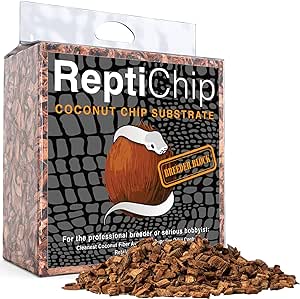
ReptiChip might be the most no-fuss coconut substrate you’ll find. Each compressed 10 lb brick expands to 72 quarts — plenty for multiple enclosures.
The chip size options (¼–½ inch for smaller snakes, ½–¾ inch for larger pythons and boas) eliminate guesswork about suitability.
It holds humidity well, controls odor naturally, and stays mold-free with basic spot-cleaning every few days.
While requiring a higher upfront cost than aspen, it lasts 3–6 months — so the math works out.
| Best For | Reptile and amphibian owners who want a low-maintenance substrate that handles humidity and odor without constant upkeep. |
|---|---|
| Material | Coconut husk chips |
| Biodegradable | Yes |
| Humidity Control | Weeks-long retention |
| Burrowing Support | Partial |
| Price | ~$30+ |
| Odor Control | Excellent |
| Additional Features |
|
- One brick goes a long way — expands to 72 quarts, so it covers multiple enclosures from a single purchase.
- Keeps humidity stable for weeks and naturally cuts down on smell, which is a big deal in multi-tank setups.
- Stays clean with just a quick spot-check every few days, way less work than paper or aspen substrates.
- Costs more upfront than basic alternatives, even if the long-term value is there.
- Takes a bit of time and water to fully expand — not an instant setup if you’re in a hurry.
- The chunky pieces aren’t ideal for species that like to burrow deep into their substrate.
Safe Setup and Depth Tips
Getting the substrate right is only half the job — how you set it up matters just as much. The depth you use, what substrate you use, and what you keep out of the enclosure all play a role in keeping your snake safe.
Here’s what you need to know before you add a single scoop of bedding.
Recommended Substrate Depth by Snake Type
Depth isn’t one-size-fits-all. Species-specific substrate recommendations exist for good reason — the wrong layer thickness undermines humidity, burrowing stability, and thermal gradients.
Ball pythons require a minimum depth of 2–4 inches, though bioactive setups often use 4–6 inches. Corn snakes thrive with 3–4 inches, while juveniles need less depth (around 2 inches). Non-burrowing species function fine with just 1–2 inches.
Burrowing Needs Vs Non-burrowing Setups
Burrowing snakes don’t just sleep on substrate — they live in it. Corn snakes, milk snakes, and hognose snakes need loose, diggable bedding at least 3 inches deep for tunnel comfort and natural stress relief.
Watch for stress indicators like restless pacing — it often signals inadequate depth.
Non-burrowing species do fine with 1–2 inches, where heat distribution stays more consistent and substrate compaction is less of a concern.
How to Reduce Impaction Risk During Feeding
Impaction risk doesn’t stop at substrate depth — feeding habits matter just as much. Follow prey size guidelines: nothing wider than your snake’s thickest point. Feed during active hours for better feeding temperature control, and always offer fresh water for hydration support.
Post-meal handling should wait 48–72 hours. A consistent feeding schedule also keeps digestion smooth and stress levels low.
Unsafe Materials to Avoid for Beginners
Cedar toxicity is a serious concern — thujone, cedar’s natural oil, triggers respiratory distress fast. Pine oil irritation damages lung tissue even in kiln-dried forms.
Walnut impaction from sharp shell fragments can require expensive surgery.
Corn cob mold develops quietly and clumping litter solidifies inside a snake’s gut. Avoid all of them.
Preventing Mold, Dust, and Excess Moisture
Once unsafe materials are off the table, your next job is keeping the bedding environment clean and stable. A hygrometer gives you a direct humidity reading — catch rising moisture before mold takes hold.
- Place water dishes away from burrowing zones
- Use cypress mulch for natural mold prevention techniques
- Boost airflow with mesh tops or vent fans
- Keep dust-free bedding lightly moist, never muddy
- Dry wet spots within 48 hours to stop mold growth
Cleaning, Costs, and Replacement
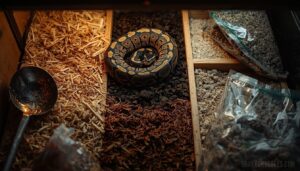
Picking the right substrate is only half the job — keeping it clean and knowing when to swap it out is what actually keeps your snake healthy. Costs add up fast if you don’t plan ahead, so it helps to know what you’re getting into before you buy.
Here’s what you need to know about cleaning routines, replacement schedules, and getting the best value from each option.
Daily Spot-cleaning Best Practices
Think of spot cleaning as your daily safety check — not a chore. A simple spot-cleaning schedule catches problems early and keeps your snake healthy long-term.
| Task | Tool Kit Essentials | Frequency |
|---|---|---|
| Waste removal technique | Tongs, small scoop, fresh substrate | Daily or within 24hrs |
| Water bowl sanitation | Dedicated brush, unscented soap | Daily |
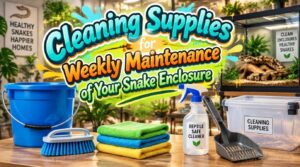
| Surface disinfecting | Reptile-safe spray, clean cloth | Daily |
Consistent hygienic reptile husbandry practices — including substrate sanitation and cleaning protocols for reptile habitats — prevent ammonia buildup before it becomes a real problem.
Partial Refresh and Full Replacement Schedules
Beyond daily spot-cleaning, your reptile enclosure maintenance schedule needs two more layers: partial refresh and full replacement.
- Partial Refresh Frequency — Remove 20–30% of soiled substrate every 2–4 weeks. Humid setups may need this weekly.
- Full Replacement Interval — Swap everything every 3–8 weeks depending on enclosure size effects and humidity timing adjustments.
- Mold Trigger Alerts — Visible mold or persistent odor means replace immediately — no waiting.
How Long Aspen, Coconut, and Cypress Last
Each substrate comes with its own decomposition timeline. Aspen shavings usually last 3–4 weeks before texture degradation sets in — once they feel matted, they’re done. Coconut fiber holds up for 4–6 weeks, though humidity-driven wear shortens its lifespan significantly. Cypress mulch offers the strongest long-term durability among bedding options, lasting 4–8 weeks.
Choosing the right snake bedding involves monitoring these lifespan benchmarks, not just relying on the calendar.
Budget Vs Long-term Value Comparison
Cheap isn’t always cheap. Paper towels have the lowest upfront price but require weekly replacements, making them the priciest long-term option. Aspen and cypress offer solid budget-friendly snake bedding with moderate replacement frequency.
Paper towels cost least upfront but demand weekly swaps, making them the priciest substrate long-term
Coconut fiber costs more initially but delivers real long-term durability due to its extended lifespan. Bulk purchasing benefits add up fast, further enhancing its value over time.
Always match bedding to your species first—prioritizing species-specific needs ensures value that outperforms shelf price every time.
Storing Unused Substrate Safely
Bad storage ruins good substrate fast. Keep unused bedding fresh with these four steps:
- Dry Storage — Store in cool, dark spots below 70°F.
- Airtight Containers — Use sealed buckets or vacuum bags to block pests and air.
- Moisture Control — Add silica gel packets; never seal damp substrate.
- Labeling Practices — Date every container for contamination prevention and easy rotation.
Frequently Asked Questions (FAQs)
What is the best substrate to use for snakes?
There’s no single "best" substrate—it depends on your snake’s species and humidity needs.
Aspen suits dry-climate snakes, while coconut fiber works better for tropical ones. Always match the substrate moisture retention to your snake first.
What is the easiest snake to care for for beginners?
Corn snakes are the easiest choice. They have a calm temperament, compact size, and simple feeding schedule — every 14 to 21 days. Low maintenance and long lifespan make them perfect starters.
How often should I mist my snakes enclosure?
Mist timing depends on your snake’s species. Check your hygrometer first — if humidity sits in range, skip the spray. Most setups need misting two to three times weekly at most.
Can I mix two different substrates together?
Yes, you can. Mixing substrates for peak performance works best with two-ingredient mixes where grain size matching keeps layers stable.
Focus on humidity tuning, zone-based blending, and impaction prevention over complexity.
What substrate works best for baby snakes?
Paper towels are your safest bet for baby snakes. They’re flat, easy to swap out, and make it simple to spot health issues early — stress reduction starts with clear visibility.
How do I transition my snake to new substrate?
Move your snake to a secure holding tub first. Do a partial substrate swap, keeping some old bedding for scent retention.
Watch behavior closely — post‑change observation and minimal décor rearrangement help your snake settle fast.
Does substrate depth change as my snake grows?
As your snake grows, substrate depth should scale with body size. Bigger snakes compact bedding faster, so regularly top up layers to maintain the right humidity gradient and facilitate natural burrowing behavior.
Can substrate affect a snakes stress levels?
Absolutely. Substrate affects cortisol spikes, scent retention, and habitat familiarity more than most beginners expect.
Poor bedding choices trigger stress signaling and behavioral anxiety — impacting feeding, shedding, and overall snake health daily.
How does substrate interact with under-tank heaters?
Substrate depth directly affects heat transfer from under-tank heaters. If it is too thick, warmth barely reaches the surface; if too thin, burn risk spikes.
A thermostat keeps temperatures safe. Always use one.
Should substrate change as a snake ages?
Not really — but sort of. Growth-driven switches happen when size, behavior, or health cues demand it. Juvenile to adult transitions mean deeper, species-specific substrate recommendations matter more than age alone.
Conclusion
Choosing snake substrates for beginners is like picking the right soil before planting—get it wrong, and everything else struggles to take root. The substrate under your snake isn’t a background detail; it’s the foundation of their health, comfort, and daily behavior.
Match it to your species, keep it clean, and replace it on schedule.
Do that consistently, and you’ve quietly solved most husbandry problems before they ever have a chance to start.