This site is supported by our readers. We may earn a commission, at no cost to you, if you purchase through links.
Ball pythons don’t strike without reason.
When yours suddenly lunges or coils tightly and refuses to move, something specific triggered that response—and it’s almost never about temperament.
These snakes communicate through body language long before they bite, and missing those early signals usually makes things worse.
Most aggression traces back to a handful of causes: enclosure conditions that create constant stress, feeding habits that blur the line between hand and prey, or health issues that go unnoticed until the behavior becomes impossible to ignore.
Knowing which category you’re dealing with changes everything about how you respond.
Table Of Contents
- Key Takeaways
- Signs Your Ball Python is Defensive
- Why New Ball Pythons Strike
- Enclosure Stress That Triggers Aggression
- Feeding Mistakes Behind Striking
- Handling Habits Making Behavior Worse
- Health Problems Mistaken for Aggression
- Top 5 Products to Help
- Frequently Asked Questions (FAQs)
- Do ball pythons get more aggressive as they get older?
- Why is my snake trying to bite me?
- Can ball pythons become aggressive as they age?
- Do male and female ball pythons differ in temperament?
- How does breeding season affect ball python aggression?
- Can other pets nearby make a ball python aggressive?
- Does handling frequency change aggression over time?
- Conclusion
Key Takeaways
- Ball pythons always warn before striking — an S-curve neck, tight coiling, hissing, or tail vibration means you should back off before things escalate.
- Most aggression traces back to fixable problems: wrong temperatures, missing hides, inconsistent feeding, or handling too soon after meals.
- Your hands can smell like dinner, so wash thoroughly before handling and always use tongs at feeding time to avoid being mistaken for prey.
- When calm snakes suddenly turn defensive, rule out health issues first — shedding discomfort, mites, mouth rot, and respiratory infections all mimic aggression.
Signs Your Ball Python is Defensive
Ball pythons don’t bite out of nowhere — there’s almost always a warning first. The trick is learning to read what your snake is telling you before things escalate.
Once you know what to look for, ball python bite warning signs like an S-curve posture or sudden stillness become hard to miss.
Ball pythons always warn before they bite — your job is learning to listen
Here are the key defensive signs to watch for.
S-shaped Neck and Raised Head
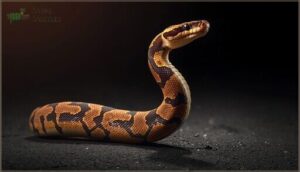
When your ball python lifts its head and bends its neck into an S-shaped body posture, that’s a clear warning sign. This neck curvature signaling means it feels threatened.
The head tilt direction usually faces the perceived threat, while body tension cues make the upper body look firm and set. Defensive posture timing matters — the longer it holds, the more stressed it is.
Tight Coiling, Hissing, and Lunging
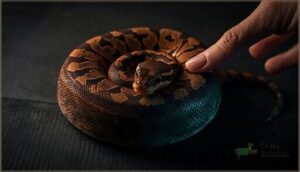
Beyond the S-curve, watch for coil tension signals — your ball python pulls tight into a rigid ball. That compressed posture is stress-induced aggression building quietly.
Hiss frequency patterns matter too: one hiss is a warning, but repeated hissing means back off.
Lunge trigger timing often follows fast hand movement. Slow down. Remember to practice hand hygiene before handling to reduce stress and health risks.
Stress cue recognition and handling speed effects work together — move calmly, and most defensive postures ease.
Head Hiding Versus Active Striking

defensive posture means a strike is coming. Head hiding — where your python tucks its head low into its coil — is actually a stress indicator, not a launch signal.
strike position looks different: head forward, body language shift toward you, line of sight locked on. trigger window timing matters.
A tucked head means "leave me alone," not "I’m about to bite.
Tail Vibration, Puffing, and Body Tension
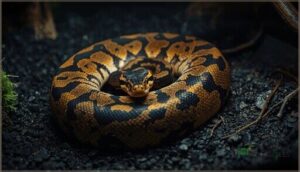
Three pre‑strike signals often show up together: tail vibration, stress puffing, and body tension. Your snake may vibrate its tail, start puffing up, and begin coiling tightly — all at once.
That stiff S-shaped neck and rigid body are body tension triggers worth reading quickly. Hissing adds confirmation.
These cue interpretation moments matter — they’re your warning before a strike. Ensuring adequate hiding spaces can reduce stress and prevent aggressive displays.
Defensive Behavior Vs Feeding Response
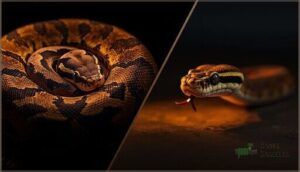
Telling defensive behavior apart from a feeding response saves you from a bite.
A hungry snake tracks movement and scent with focus — that’s Scent Discrimination at work.
defensive one retreats or freezes. Watch for these differences:
- Defensive: hissing, tight coiling, head hidden
- Feeding-related aggression: forward tracking, tongue flicking, prey-oriented striking
- Neutral: slow exploration, relaxed body
Tongs help with Visual Cue Differentiation and Behavioral Conditioning during handling.
Why New Ball Pythons Strike
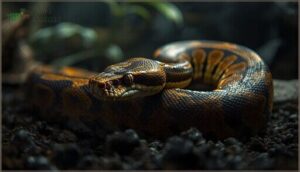
Bringing a ball python home is exciting, but the first few weeks can be rocky. Your new snake doesn’t know you yet, and almost everything in its new world feels like a potential threat.
Here’s what’s actually driving that defensive behavior — and what you can do about it.
Relocation Stress After Coming Home
Moving to a new environment hits ball pythons hard. Fresh smells, unfamiliar sounds, and new airflow disrupt their settling routine immediately.
Keep your snake in a low-traffic housing spot, away from ambient noise and harsh lighting. Adjustment lighting helps too.
Allow 5–7 days before interaction, monitor stress indicators like tight coiling, and delay gradual feeding introduction until the snake explores freely.
Lack of Trust During The Settling-in Period
Trust takes time — your ball python doesn’t know you yet. Gradual Habitat Introduction means letting the snake settle on its own terms first.
Speed up trust-building with three steps:
- Keep it in a low traffic room with clutter for cover
- Practice Quiet Observation Sessions without handling too soon
- Build Positive Scent Association by placing a worn shirt nearby
Consistent Daily Routine matters more than contact.
Too Much Early Handling
Handling too soon is one of the fastest ways to build stress-induced aggression. Routine Instability from Unpredictable Contact — especially repeated short bursts — makes your python associate your presence with interruption, not calm.
Avoid Overhead Reaching into the enclosure, wash off any Food Scent Transfer before contact, and skip handling during Nocturnal Light Stress periods.
handling frequency guidelines: wait until after 2–4 successful feeds.
Enclosure Changes That Feel Threatening
Even small changes to a new environment can put your ball python on edge.
Rearranging cover objects, swapping hides, or shifting clutter placement resets the mental map your snake just built.
Add noise dampening, steady lighting timing, and a solid temperature gradient, and the enclosure starts feeling predictable.
Visual barriers and environmental enrichment stay consistent — that consistency is what keeps defensive strikes from spiking.
Wild-caught Vs Captive-bred Temperament Differences
Where your ball python came from shapes how quickly it settles down. Wild-caught individuals carry a stronger hormone stress response, higher parasite load impact, and a longer adaptation timeline than captive-bred snakes.
- Wild-caught snakes lack socialization history with humans
- Captive-bred animals show genetic behavior shifts toward calmer temperaments
- Differences between captive-bred and wild-caught ball pythons affect aggression triggers in reptiles
Choose captive-bred when possible.
Enclosure Stress That Triggers Aggression
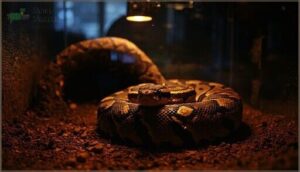
Your ball python’s enclosure isn’t just a tank — it’s their entire world. When something feels off in that space, defensive behavior is often the first signal you’ll notice.
Here are the most common enclosure problems that trigger aggression, and what you can do about each one.
Missing Hides on Warm and Cool Sides
Without a hide on each thermal side, your ball python never gets a true retreat. Missing hides force constant exposure, which drives ball python aggression through stress.
Your Hide Placement Strategy matters: one warm-side hide, one cool-side hide. This Thermal Side Balance ensures Retreat Consistency, cuts stress, and is the simplest enclosure enrichment win you can make today.
Incorrect Temperature Gradient and Cold Stress
Your hides are set — now check your temps. A Cool Side Threshold below 75°F creates Cold Stress Physiology that triggers stress‑induced.
.
Watch for these Thermal Drift Impact warning signs:
- Constant tight coiling and shadow‑striking
- Refusing food for two weeks straight
- Lethargy and hiding all day
- Tail vibrating more than usual
Gradient Measurement Errors with digital probe thermometers placed at substrate level. Your Warm Side Deficiency starts below 88°F — that kills digestion and mood. Nail your temperature gradients: 88°F warm, 78°F cool.
Low Humidity and Shedding Discomfort
Temperature is only half the puzzle. Humidity matters just as much.
When your Humidity Gradient drops below 50%, your ball python’s shed turns sticky and incomplete — a classic Skin Dryness Effect that builds real aggression.
Invest in a Humid Hide Design with damp moss, follow a consistent Misting Schedule, and keep levels at 55–60% for reliable Stuck Shed Prevention.
Too Much Light, Noise, or Vibration
Humidity isn’t the only invisible stressor hiding in plain sight. Your ball python’s noise sensitivity is real — speakers, door slams, and washing machines all register as threats. Bright Light Stress keeps them tense and hidden. Vibration Isolation matters too; footsteps near the tank feel like a predator approaching.
A quiet, dimly lit spot with Lighting Cycle Consistency does wonders for stress reduction.
Large Exposed Tanks Without Clutter
A big, bare tank might look clean, but your ball python sees a threat zone. Strategic Hide Placement on both warm and cool sides gives it an escape route at every temperature zone. Without Visual Barrier Integration and smart Heat Source Positioning, your snake stays exposed and stressed.
Clutter and environmental enrichment for security — rocks, plants, décor — aren’t just decoration. They’re survival anchors.
Poor Substrate Causing Irritation
What’s under your ball python matters more than you’d think. Soiled Bedding Irritants, Biofilm Skin Contact, and Trapped Moisture Issues all create low-grade discomfort that quietly drives stress-induced aggression.
Chemical Residue Risks from cedar or scented woods add another layer of irritation.
Abrasive Particle Damage from gravel or dusty bedding wears on scales daily.
Smart cage substrate selection removes these environmental stressors before they escalate into striking behavior.
Inadequate Enclosure Size and Security
A cramped floor area leaves your ball python with nowhere to feel safe. Tight enclosure size forces the snake to stay tense and always exposed.
- Unsecured lid — escape attempts increase defensiveness
- Improper tank shape — limits thermoregulation zones
- Limited vertical height — reduces movement options
- Weak barrier design — constant disturbance spikes stress
Proper cage design to prevent defensive behavior means low-traffic housing, snug hides, and real cage security.
Feeding Mistakes Behind Striking
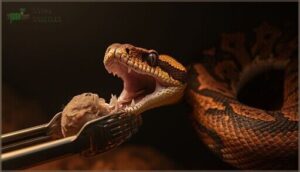
Food is one of the most overlooked triggers for ball python aggression. How you feed — not just what you feed — can make a huge difference in how your snake behaves.
Here are the feeding mistakes most likely to cause striking.
Hunger From Inconsistent Feeding Schedules
Skipping a feeding here and there might seem harmless, but your ball python runs on Meal Timing Cues and Appetite Rhythms. Inconsistent schedules create a Calorie Gap Stress cycle — hunger builds, Behavioral Arousal spikes, and Scent Cue Confusion kicks in.
Your snake can’t tell handling from feeding. That confusion drives feeding-related aggression in ball pythons.
A steady feeding schedule keeps hunger and temperament predictable.
Prey That is Too Small or Too Large
Prey size matters more than most keepers realize. When prey falls below the Size Ratio Threshold, your snake’s Energetic Payoff drops — triggering repeated lunges that look like food aggression in snakes.
Too large, and Swallowing Difficulty spikes Strike Frequency and Prey Handling Risk. Follow prey size guidelines based on snake age and weight: right sized prey matches your snake’s widest body point.
Hand Mistaken for Food
Your hand can smell exactly like dinner. Ball pythons rely on Warm Finger Heat and prey scent together to locate food — so Scent Transfer from rodents triggers a prey identification response quickly.
Build these habits:
- Follow a Hand Washing Routine before every interaction
- Practice Prey Odor Management by changing clothes after feeding
- Use tongs when feeding — always
- Consider Glove Use during early sessions
This eliminates feeding-related striking behavior immediately.
Live Prey Increasing Predatory Responses
Live prey takes things further. Movement Cue Amplification kicks in fast — a wriggling mouse triggers Chemical Scent Surge and Unpredictable Motion Patterns that your snake can’t ignore. Escape Loop Escalation keeps the strike cycle going, and Prey Distance Dynamics pull repeated lunges.
Switch to frozen/thawed prey. It eliminates feeding-related aggression in ball pythons without removing prey stimulation.
Overfeeding, Underfeeding, and Irritability
Frozen prey helps, but your feeding schedule matters just as much. Overfeeding leaves your python squishy, round, and sluggish—underfeeding creates a sharp spine and irritability warning signs.
Body Condition Scoring and a Weight Monitoring Schedule keep you on track. Stick to Prey Size Guidelines and Feeding Consistency Impact to prevent dietary health influencing aggression and feeding-related aggression.
Safer Feeding With Tongs
Tongs are your best tool against feeding-related striking behavior. Use tongs when feeding every single time—12-inch stainless steel tongs keep your hand well outside the strike zone.
Non-locking design lets the prey release cleanly after a strike. Rubber-coated tips protect the snake’s mouth.
Warm prey to body temperature first.
Proper Tong Length Selection and Prey Temperature Control together cut ball python aggression at mealtimes dramatically.
Handling Habits Making Behavior Worse

How you handle your ball python matters just as much as how you set up its enclosure. Even well-meaning habits — like picking it up too soon after eating or moving too quickly — can chip away at the trust you’ve built.
Here are the common handling mistakes that make aggression worse.
Handling Right After Meals
After a meal, your ball python needs one thing: to be left alone. Handling too soon puts pressure on a digesting stomach and can trigger feeding-related aggression in ball pythons.
Stick to these rules:
- Wait 48–72 hours minimum before any contact
- Keep a quiet enclosure environment with temperature gradient stability maintained
- Skip enclosure checks — even lid removal adds stress
That Post‑Meal Rest window is non‑negotiable.
Rough Lifting and Tail Grabbing
Grabbing your ball python by the tail is one of the fastest ways to trigger stress-induced aggression. It signals danger — not safety.
| Handling Mistake | What Happens |
|---|---|
| Tail Grip Injury | Causes Balling Response and spine stress |
| Sudden Lift Startle | Mimics predator attack, triggers striking |
| Mid-body Support skipped | Hand Positioning errors cause defensive lunging |
Slide both hands under the snake using gentle handling techniques instead.
Sessions That Are Too Frequent or Too Long
Overdoing handling sessions is one of the easiest mistakes to make. Aim for 1–3 sessions per week, keeping the ideal duration between 10–20 minutes.
Your handling routine should feel predictable, not overwhelming. Watch for stress cues like tight coiling or rigidity — those mean stop now.
New snake acclimation takes patience. Frequency of handling directly shapes behavior, so less, when done calmly, builds more trust.
Moving Too Fast Around The Enclosure
Fast body positioning near the tank is one of the sneakiest aggression triggers. Rapid hand entry, shadow shifts across the enclosure floor, and quick enclosure disturbances all read as predator cues.
Escape path obstruction makes it worse — your snake can’t reach its hide, so it strikes instead.
cage disturbances stack fast. Slow every movement down deliberately.
Using Slow, Supported Handling to Rebuild Trust
Trust isn’t built in one session — it’s earned rep by rep.
Start with gradual exposure sessions of 10–15 minutes on a consistent handling schedule.
Use gentle body support, keeping one hand near the front and one under the body.
Move deliberately, stay quiet, and let calm environmental cues do the work.
Positive reinforcement feeding after sessions reinforces safety.
These docile handling techniques and behavioral conditioning rewire the association your snake has with your hands.
Health Problems Mistaken for Aggression
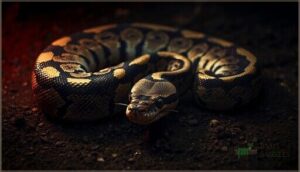
Sometimes what looks like aggression is actually your ball python telling you something hurts. A sick or uncomfortable snake can’t speak up, so it strikes instead.
The health issues below are the ones most commonly mistaken for a bad temperament.
Shedding Stages That Increase Defensiveness
Shedding turns even the calmest ball python into a coiled nerve.
During Blue Phase Aggression, cloudy Eye Cap Cloudiness cuts their vision, so every movement feels like a threat.
Pre‑Shed Hiding is normal — don’t push them out. Post‑Shed Sensitivity means fresh skin still hurts to the touch. Retained Skin Stress lingers if humidity drops low. Skip handling until the shed completes cleanly.
Respiratory Infections, Mites, and Internal Parasites
illness looks just like aggression. Respiratory infections cause wheezing, open-mouth breathing, and thick mucus — all signs your snake feels miserable.
Mite detection is straightforward: look for tiny moving dots near the eyes and cloaca. Parasite fecal testing catches internal parasites, causing weight loss indicators like unexpected thinning.
These health issues leading to aggression need proper treatment protocols from a reptile vet.
Pain From Injury or Mouth Problems
Pain can turn even a calm snake defensive fast. Mouth rot indicators — red gums, drooling, or pus — are classic illness indicators in ball pythons that owners miss. Jaw swelling signs, swallowing difficulty, and pain driven refusal to eat all point to oral injury or infection.
Oral injury treatment needs a vet. Don’t wait.
Loss of Appetite, Lethargy, and Abnormal Feces
Beyond mouth problems, watch for these illness detection red flags in snakes: skipped meals, slow movement, and abnormal feces.
Digestive blockage, Metabolic Imbalance, or Gut Microbiota disruption can each trigger hunger and stress hormones that make your snake defensive.
Dry, clumped, or watery droppings signal health issues fast.
Follow ball python feeding guidelines consistently — irregular schedules worsen Vitamin Deficiency and stress indicators quickly.
Stress Signs Vs Illness Signs
Knowing the difference between stress indicators and illness signs can change everything. Stress-related Breathing Patterns resolve quickly once you remove the threat.
But Mucus Discharge, persistent open-mouth breathing, or worsening Scale Condition signal something deeper.
Watch for:
- Head Rubbing without a shed coming
- Behavioral Gasping that doesn’t stop at rest
- Discharge that builds daily
These are illness signs, not aggression triggers.
When to Call a Reptile Vet
Once illness signs stack up — respiratory distress, mouth rot, severe weight loss, or eye cap retention that won’t clear — it’s time to call a reptile vet.
Vent prolapse is an emergency, not a wait-and-see situation.
Regular veterinary care and health monitoring catch problems early, before health issues leading to aggression become the only sign that something’s wrong. Don’t guess when illness detection in snakes points you toward professional help.
Top 5 Products to Help
Sometimes the right gear makes all the difference between a stressed snake and a calm one. A few simple tools can help you manage temperature, feeding, and enrichment without guesswork.
Here are five products worth having in your setup.
1. Etekcity Infrared Temperature Gun
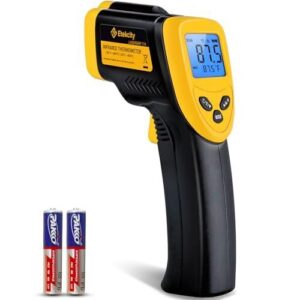
Temperature is one of the biggest triggers for ball python aggression, and guessing just doesn’t cut it.
The Etekcity Infrared Temperature Gun lets you check your enclosure’s warm side, cool side, and basking spot in under half a second — without opening the lid or disturbing your snake. Its 12:1 distance-to-spot ratio means accurate readings from about 14 inches away.
Just point, click, and confirm your gradient sits where it should: 88°F warm, 78°F cool.
| Best For | Reptile keepers, hobbyists, and homeowners who need quick, reliable surface temperature readings without breaking the bank. |
|---|---|
| Primary Use | Habitat temp monitoring |
| Material | Plastic housing |
| Reptile Compatible | Yes |
| Price Range | Under $20 |
| Indoor Use | Yes |
| Ease of Use | Single-button operation |
| Additional Features |
|
- Gives you a reading in under half a second — point, click, done
- Works from about 14 inches away, so no need to disturb your snake or open the enclosure
- Simple single-button operation with a clear backlit display
- Fixed emissivity of 0.95 means readings on shiny or reflective surfaces can be off
- Can’t measure internal food temps — you’ll still need a probe thermometer for that
- Not accurate enough for body temperature or any medical/scientific use
2. Buywell Retro Metal Tin Python Poster
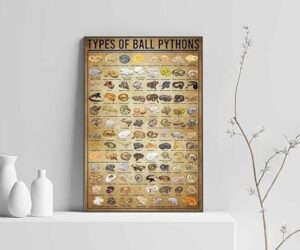
Not every addition to your reptile space needs to be functional — sometimes it’s just about celebrating the hobby. The Buywell Retro Metal Tin Python Poster is a small but satisfying nod to your passion.
Made from rust-free aluminum with UV-stable printing, it won’t fade under sun or moisture.
At $5.98 in two sizes (8×12 or 5.5×8 in), it’s an easy pick for a reptile room, garage, or home bar.
Pre-drilled holes make hanging simple — no tools required.
| Best For | Reptile enthusiasts and python keepers who want a fun, affordable way to add some personality to their space. |
|---|---|
| Primary Use | Enclosure decoration |
| Material | Aluminum/tin-plate |
| Reptile Compatible | Yes |
| Price Range | Under $10 |
| Indoor Use | Yes |
| Ease of Use | Pre-drilled mounting holes |
| Additional Features |
|
- Super affordable at $5.98 — easy impulse buy or low-cost gift idea
- UV-stable, rust-free aluminum means it holds up well over time without looking worn
- Pre-drilled holes make hanging a breeze — no measuring or guessing
- No mounting hardware included, so you’ll need to grab your own nails or hooks
- Only two size options — nothing bigger if you want a bolder statement piece
- The rust look is purely printed, so it won’t have that authentic aged texture some collectors prefer
3. KNINE OUTDOORS Infrared Laser Temperature Gun for Cooking

Getting your ball python’s enclosure temperatures right isn’t guesswork — it’s a daily habit.
The KNINE OUTDOORS Infrared Laser Temperature Gun makes it easy. Point, aim, and get a reading in under a second across a wide range of –58°F to 1,112°F.
The 12:1 distance-to-spot ratio lets you check warm and cool sides without reaching in and stressing your snake.
At $17.97, it’s a practical, low-cost tool that removes one of the most common triggers of defensive behavior.
| Best For | Ball python keepers who want a fast, hands-off way to monitor enclosure temps without disturbing their snake. |
|---|---|
| Primary Use | Habitat temp monitoring |
| Material | Plastic housing |
| Reptile Compatible | Yes |
| Price Range | Under $20 |
| Indoor Use | Yes |
| Ease of Use | Single-button operation |
| Additional Features |
|
- Wide range (–58°F to 1,112°F) handles both the cool side and basking spot with no swapping tools
- The 12:1 ratio means you can read temps from a comfortable distance — no need to reach in
- At under $18, it’s one of the cheaper ways to stay on top of husbandry basics
- Plastic build feels a little flimsy for something you’ll use daily long-term
- No data logging, so you’re eyeballing trends rather than tracking them over time
- Accuracy can drift on shiny or reflective surfaces unless you dial in the emissivity settings
4. Vodolo 15 Inch Snake Feeding Tongs
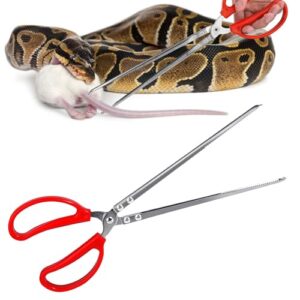
Feeding time is one of the most common moments for accidental bites. The Vodolo 15 Inch Snake Feeding Tongs put real distance between your fingers and your ball python’s strike zone.
The serrated stainless steel tips grip frozen-thawed prey securely, so food doesn’t slip mid-presentation. The silicone handle keeps your hold steady even when things get damp.
At 15 inches, you can mimic natural prey movement without crowding the snake — making meals safer and less stressful for both of you.
| Best For | Snake owners — especially those keeping ball pythons or other strike-prone reptiles — who want a safer, more confident feeding experience. |
|---|---|
| Primary Use | Reptile feeding aid |
| Material | Silicone & stainless steel |
| Reptile Compatible | Yes |
| Price Range | Under $20 |
| Indoor Use | Yes |
| Ease of Use | Ready to use |
| Additional Features |
|
- 15 inches of distance keeps your fingers well out of strike range during feeding
- Serrated tips grip prey firmly so it doesn’t slip or drop mid-presentation
- Non-slip silicone handle feels secure even with damp hands
- The grippy teeth can be a problem for snakes that tend to latch onto food and thrash
- Some users find the handle bulky or the overall build a bit flimsy for the price
- If your snake is already calm with hand-feeding, these may be more tool than you need
5. MEPHAN Artificial Reptile Terrarium Plants

A bare tank makes your ball python feel exposed — and that stress shows up as defensive behavior. The MEPHAN Artificial Reptile Terrarium Plants help fix that.
The set includes a 47-inch flexible vine, two hanging leaf vines, and two mini ivy plants, all mounting easily with suction cups. Dense coverage breaks up sightlines and gives your snake visual security between hides. The non-toxic plastic is waterproof and bendable, so you can shape it around any enclosure layout.
| Best For | Reptile and amphibian owners who want an affordable, easy-to-install way to add climbing enrichment and visual cover to their pet’s enclosure. |
|---|---|
| Primary Use | Enclosure enrichment |
| Material | Plastic & iron wire |
| Reptile Compatible | Yes |
| Price Range | Under $20 |
| Indoor Use | Yes |
| Ease of Use | Suction cup install |
| Additional Features |
|
- Comes with a solid variety of pieces — a 47-inch main vine, hanging vines, mini ivies, and suction cups — so you get good coverage right out of the box.
- Fully bendable and repositionable, making it easy to customize the layout as your animal grows or your setup changes.
- Non-toxic, waterproof plastic holds up well under heat lamps and humid conditions without breaking down.
- Strong plastic odor out of the box means you’ll need to wash everything before putting it in the tank.
- Smaller leaves can be fragile — aggressive climbers or heavy-bodied snakes may snap them with regular use.
- Suction cups work best on smooth glass; textured surfaces or prolonged moisture exposure can weaken the hold over time.
Frequently Asked Questions (FAQs)
Do ball pythons get more aggressive as they get older?
Not exactly. Ball pythons don’t automatically get more aggressive with age. What you’re usually seeing is stress, discomfort, or a change in routine — not aging itself driving the shift.
Why is my snake trying to bite me?
Your snake bites when it feels scared, hungry, or threatened.
Common causes include handling too soon after feeding, mistaking your hand for prey, stress from a poor setup, or shedding discomfort.
Can ball pythons become aggressive as they age?
Most ball pythons actually mellow with age, not the opposite. But that’s only true with consistent handling and stable care.
Without those, even an older snake can stay defensive or become more reactive over time.
Do male and female ball pythons differ in temperament?
Male and female ball pythons are generally similar in temperament. Sex matters less than handling history and enclosure setup.
Individual personality is usually the bigger factor in how calm or defensive your snake turns out to be.
How does breeding season affect ball python aggression?
Breeding season shifts hormones, and that alone can flip a calm snake into a defensive one.
Males grow restless and reactive. Females guarding eggs may strike more readily. It’s temporary, tied to the reproductive cycle.
Can other pets nearby make a ball python aggressive?
Yes, other pets can stress a ball python.
Dogs, cats, and their scents, sounds, and movements near the enclosure can trigger defensive behavior, cause food refusal, and keep your snake in a constant state of alert.
Does handling frequency change aggression over time?
Yes, it does. Gentle, consistent handling a few times weekly builds tolerance over time. Too much too soon keeps your snake on edge. Short, calm sessions are the key.
Conclusion
Imagine a ball python striking every time you open its enclosure. This often stems from a missing hide on the cool side, forcing the snake to feel exposed.
Addressing why a ball python is acting aggressive starts with observing its environment and habits. Correct enclosure setup, consistent feeding, and gentle handling rebuild trust.
Always check for health issues, as pain mimics aggression. With patience and these fixes, your python will show calm body language, signaling safety and comfort.