This site is supported by our readers. We may earn a commission, at no cost to you, if you purchase through links.

Most snake keepers obsess over hides, lighting, and humidity—then toss in whatever bowl they have lying around. It’s an afterthought that quietly causes problems: tipping dishes, soaking the substrate, water temperatures that stress the snake, or bowls too shallow to support a proper shed.
Bioactive setups demand more precision because every element affects the living system underneath.
The wrong dish can destabilize your drainage layer, spike moisture in the wrong zones, or become a bacterial hotspot within days.
Choosing the right snake water dishes for bioactive setups isn’t complicated—but it does require knowing exactly what to look for.
Table Of Contents
- Key Takeaways
- Choosing The Right Water Dish
- Best Water Dish Materials for Snakes
- Top 4 Bioactive Setup Essentials
- Cleaning Snake Water Dishes Safely
- Placing Dishes in Bioactive Terrariums
- Frequently Asked Questions (FAQs)
- What to use as a snake water bowl?
- How big should my snakes water dish be?
- Can snakes drink enough water from misting alone?
- Should water dishes be elevated above the substrate?
- How often should soaking dishes be replaced entirely?
- Do isopods and springtails enter and contaminate water dishes?
- Can water additives harm a bioactive cleanup crew?
- Conclusion
Key Takeaways
- Dish size, shape, and weight aren’t cosmetic choices — they directly protect your bioactive drainage layer from overflow, moisture spikes, and bacterial buildup.
- Match bowl diameter to your snake’s body width (always 3+ inches wider) and depth to its use case — shallow for drinking, 3–5 inches for shedding support.
- Food-grade resin and ceramic are the top material picks for bioactive setups because they’re nonporous, easy to disinfect, and won’t throw off your humidity balance.
- Placement is half the battle: keep the dish 30+ cm from heat sources, consider a slight 2–4 cm elevation, and change the water daily to protect both your snake and your cleanup crew.
Choosing The Right Water Dish
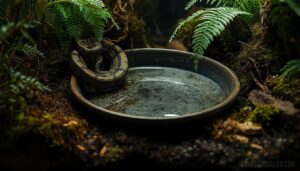
Not every water dish works in a bioactive setup — size, shape, and stability all matter more than you’d think. Getting the right fit for your snake means looking at a few key factors before you buy.
A closer look at water dish options for corn snakes can help you weigh material and cleaning trade-offs before committing to one.
Here’s what to focus on.
Bowl Diameter for Small, Medium, and Large Snakes
Size matters more than you’d think when picking a dish. For a juvenile under 18 inches, a Small Snake Diameter of 6–8 inches works perfectly — something like The Bio Dude Rock Water Bowl Small fits without crowding. Medium Snake Diameter hits 8–10 inches for 2–4 foot snakes; try The Bio Dude Rock Water Bowl Medium. Large Snake Diameter means a minimum of 10–12 inches — The Bio Dude Terra Bowl or an Extradeep Water Dish accommodates adults well.
Make sure the water reaches the water level half of the snake’s body for proper hydration.
Match your snake water dish options to actual body size using this Diameter Body Ratio and Size Scaling guide:
- Juveniles (12–18 in): 6–8‑inch bowl interior
- Mid-size (2–4 ft): 8–10‑inch bowl interior
- Adults (4 ft+): 10–12‑inch minimum diameter
- General rule: diameter should always exceed body width by at least 3 inches
Ideal Depth for Drinking and Soaking
Diameter gets you started, but depth is where hydration actually happens. For drinking, snakes prefer a Drinking Edge Depth of just 1–2 inches — shallower at 1 inch for smaller species, shallower at 3–4 inches for mid-size. Soaking Comfort Level needs more water bowl depth considerations.
| Use Case | Ideal Depth | Best For |
|---|---|---|
| Drinking only | 1–2 inches | Juveniles, small snakes |
| Soaking/shedding | 2–3 inches | Mid-size snakes |
| Deep soaking | 3–5 inches (Extradeep Water Dish) | Adults, shedding support |
A deeper water bowl retains warmth longer — that’s your Heat Retention Depth advantage. Just keep Safety Breathing Space in mind: never fill past chest height. Hydration Enrichment improves considerably when snakes can comfortably curl and soak without struggling.
Low-profile Shapes That Prevent Tipping
Depth sorted? Now think shape. A Curved Bottom Base spreads contact evenly across uneven substrate — no rocking, no spills.
Wide Rim Edge designs resist lateral nudges when your snake climbs in.
Look for Stability Ribs along the outer lip and a Textured Foot Base that grips bioactive soil.
Low Center Gravity keeps the whole dish planted, even during an enthusiastic soak.
Heavy Bases for Uneven Bioactive Substrate
Shape gets you halfway there — weight seals the deal. A bowl hits 600 grams minimum before it earns a spot in a bioactive build.
Weighted Base Geometry lowers the center of gravity so crawling snakes can’t tip it.
Textured Bottom Grip and Rubber Vibration Dampening handle soft, shifting substrate.
Extended Rim Overhang and Base Drainage Integration keep water in the dish, not the drainage layer.
Best Water Dish Materials for Snakes

The material your snake’s water dish is made from matters more than most keepers realize. It affects how easy the dish is to clean, how stable it sits in a bioactive setup, and whether it actually looks like it belongs in a naturalistic build.
Here are the four materials worth considering.
Food-grade Resin for Non-porous, Easy-clean Use
Food-grade resin is quietly one of the smartest choices you can make for snake water dishes. That nonporous, smooth surface means bacteria can’t dig in — wipe it down, done.
Pairing your resin dish with reptile humidity gauges for ball pythons helps you catch moisture imbalances before they become a health issue.
Here’s why it works so well in bioactive builds:
- UV Stabilization prevents yellowing under full-spectrum lighting
- Temperature Tolerance holds up to around 70°C without warping
- Chemical Resistance tolerates diluted disinfectants without retaining residue
Safe resin water bowls for reptiles also carry Certification Standards confirming food-contact safety — no leaching, no odor, free formulation concerns.
Ceramic Bowls for Weight and Stability
Ceramic is the go-to when you need a very stable, not easily tipped over by snakes kind of solution.
High base material density and weighted core design keep the bowl planted — even when your corn snake decides it’s bath time.
Glaze texture and a friction enhancing rim grip loose bioactive substrate naturally. That nonporous and smooth surface cleans easily, and a naturalistic rock bowl fits bioactive terrarium hydration solutions perfectly.
Stainless Steel for Durability and Sanitation
Stainless steel punches above its weight as one of the most reliable reptile water dish options out there. That nonporous, smooth surface means bacteria have nowhere to hide—making bacterial prevention almost simple.
Here’s why keepers love it for bioactive terrarium hydration solutions:
- Corrosion Resistance — Manages moisture and cleaners without rusting
- Smooth Surface Hygiene — Easy to clean after every soak session
- Thermal Stability — Won’t warp under sterilization heat
- Impact Toughness — Survives heavy-bodied snakes without denting
Easy sterilization is the real win here.
Natural-looking Finishes That Fit Bioactive Builds
Your water dish doesn’t have to look like a hardware store reject. Modern reptile water dish options now nail terrarium clay textures, moss and lichen finishes, driftwood and roots patterns, leaf litter aesthetic surfaces, and stone illusion details that disappear into your bioactive terrarium.
Safe resin water bowls for bioactive habitats use a naturalistic rock finish — realistic rock finish, sealed, non‑toxic — so the dish blends, not clashes.
Top 4 Bioactive Setup Essentials
A solid bioactive setup doesn’t happen by accident — it comes down to the right building blocks working together.
From drainage to decomposers, each layer plays a real role in keeping your snake’s enclosure stable and self-sustaining.
Here are four essentials worth adding to your setup.
1. PGN Hydroponic Clay Pebbles
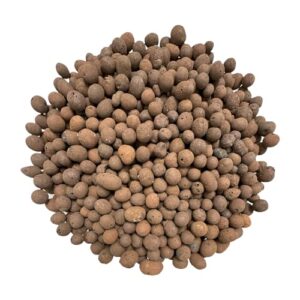
Think of PGN Hydroponic Clay Pebbles as the foundation crew working quietly beneath your setup. These pH-neutral, LECA-style beads sit in the drainage layer around your water dish, letting moisture pass through fast while keeping air pockets open for beneficial bacteria to colonize.
They won’t mess with your water chemistry, and they hold their shape after countless wet-dry cycles.
Rinse them before use to clear the dust, and you’re good to go.
| Best For | Hydroponic and aquaponic growers who want a reusable, pH-neutral growing medium that keeps roots aerated and drainage flowing smoothly. |
|---|---|
| Primary Use | Hydroponics/Aquaponics |
| Ecosystem Role | Drainage medium |
| Package Weight | 4 lb (1.8 kg) |
| Reusability | Reusable |
| Moisture Interaction | Retains and drains moisture |
| Live Organisms | None |
| Additional Features |
|
- PH-neutral, so it won’t throw off your nutrient solution
- Reusable and inorganic — a solid long-term alternative to perlite or rock wool
- Works double duty as a top-layer mulch for potted plants, orchids, and succulents
- Actual volume runs closer to 1.5 L, not the 10 L the packaging claims
- Beads are on the coarser side, which isn’t ideal if you want something finer for decorative use
- Fresh beads can float for up to 24 hours after soaking, so you’ll need to plan ahead before planting
2. SCOTTY BUGS Mulched Leaf Litter
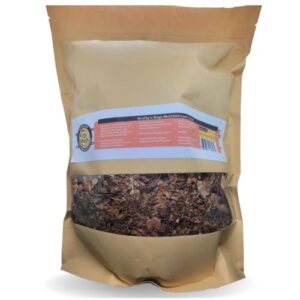
Leaf litter is the unsung hero of a bioactive floor. SCOTTY BUGS Mulched Leaf Litter blends sterilized elm, maple, and oak leaves into a medium-mulch mix that mimics a real forest floor — without the hitchhikers.
Moisten it slightly before adding it around your water dish area, and it’ll hold humidity right where you need it. Your isopods will thank you too, since it gives them both shelter and a steady food source as it breaks down.
| Best For | Bioactive terrarium keepers who want a natural, forest-floor substrate that supports isopods, springtails, frogs, snails, and other moisture-loving critters. |
|---|---|
| Primary Use | Terrarium Substrate |
| Ecosystem Role | Floor covering |
| Package Weight | 12.6 oz (357 g) |
| Reusability | Single use |
| Moisture Interaction | Retains humidity |
| Live Organisms | None |
| Additional Features |
|
- Sterilized and ready to use — no worrying about unwanted hitchhikers sneaking into your enclosure
- Holds humidity well without getting soggy, which is a big deal for amphibians and invertebrates that need consistent moisture
- Breaks down over time and feeds your cleanup crew, helping isopod and springtail colonies thrive naturally
- Medium particle size won’t work if your setup calls for fine, sand-like substrate
- May kick up a faint leaf-dust smell, which could be a concern in sensitive invertebrate enclosures
- One 12 oz bag only covers the bottom of a 10-gallon tank, so larger or layered builds will need multiple bags
3. Eco Culture Live Springtails Charcoal Substrate
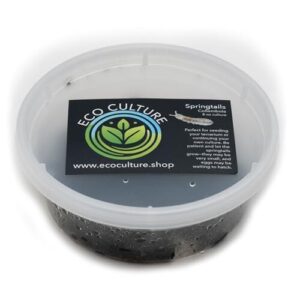
Once your leaf litter is breaking down, you need something to handle the microbial heavy lifting — that’s where Eco Culture Live Springtails come in. Each 8 oz container ships with 1,000+ springtails packed in charcoal substrate, ready to seed a tank up to 30 gallons.
They’ll consume mold, waste, and decaying matter before it becomes a problem. The charcoal base also buffers moisture and cuts odor.
One container, $15.49, and your cleanup crew is officially on the clock.
| Best For | Dart frog and gecko keepers who want a low-maintenance, self-sustaining bioactive setup without constant manual cleaning. |
|---|---|
| Primary Use | Bioactive Terrarium |
| Ecosystem Role | Waste decomposer |
| Package Weight | 8 oz (227 g) |
| Reusability | Self-sustaining colony |
| Moisture Interaction | Requires humidity control |
| Live Organisms | Yes, springtails |
| Additional Features |
|
- 1,000 springtails ready to go — one container seeds tanks up to 30 gallons right out of the box
- Pulls double duty as both a cleanup crew and a live food source for small insectivorous pets
- The charcoal substrate buffers moisture and helps keep odors in check naturally
- Springtails are sensitive to overwatering and overfeeding, so getting the balance wrong can crash the colony fast
- Shipping stress from heat, cold, or delays can hit viability before they even reach your tank
- Numbers may look low at first — it can take a few days to see the population pick up, which is easy to mistake for a dead shipment
4. TC INSECTS Live Powder Blue Isopods
Springtails handle the invisible work.
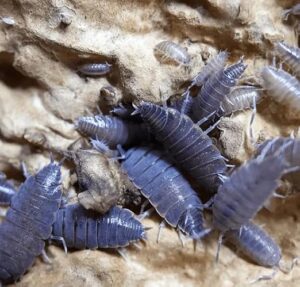
Isopods handle the visible mess — and TC INSECTS’ Powder Blue Isopods are genuinely good at it.
Each 10 g pack arrives alive, carrying Porcellionides pruinosa in that distinctive pale-blue color.
They’ll chew through decaying matter, leaf litter, and organic debris across your substrate surface, then burrow in and keep working.
Keep humidity steady between 70–85°F and toss in crushed eggshell for calcium.
Small crew, big impact.
| Best For | Terrarium hobbyists who want a low-maintenance clean-up crew to break down organic waste and keep their enclosure naturally balanced. |
|---|---|
| Primary Use | Terrarium Cleanup Crew |
| Ecosystem Role | Waste decomposer |
| Package Weight | 10 g |
| Reusability | Breeding colony |
| Moisture Interaction | Requires humidity control |
| Live Organisms | Yes, isopods |
| Additional Features |
|
- That powder blue color actually looks great in a vivarium — not just functional, but a little fun to watch
- They go after leaf litter and decaying debris consistently, doing the dirty work so you don’t have to
- Double duty as a live feeder for small reptiles, amphibians, or invertebrates
- Ten grams is a small starting colony — population growth takes patience and the right conditions
- They’re tiny, so if your lighting isn’t great, you might not see much happening
- Survival isn’t guaranteed out of the box; humidity and habitat need to be dialed in fast
Cleaning Snake Water Dishes Safely
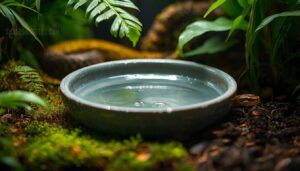
Keeping your snake’s water dish clean isn’t complicated, but it does require consistency. A dirty dish can quietly become a breeding ground for bacteria, algae, and slime that put your snake’s health at risk.
Here’s what you need to know to stay on top of it.
Daily Water Changes for Better Hygiene
Changing your snake’s water daily isn’t optional — it’s your first line of defense. Ammonia and bacteria build up fast, especially in a bioactive terrarium where organic matter is always breaking down. Stick to a consistent schedule, and you’ll stay ahead of odor reduction and bacterial control before they become problems.
Daily water changes are your first line of defense against the ammonia and bacteria that silently threaten your snake’s health
- Do a temperature check — refill with lukewarm water (78–86°F) to avoid stressing your snake
- Swap water at the same time daily for routine stability
- Inspect the dish for slime or discoloration — early algae management starts here
- Use proper sanitation equipment — dedicated gloves, a rinse bowl, and hot water only
Treating Tap Water Before Refilling
Once your daily change routine is locked in, the water going back in matters just as much as taking the old out. Tap water straight from the faucet carries chlorine, chloramines, and heavy metals — all problematic for your snake’s health.
Start with Pipe Flushing: run the tap for a full minute before collecting water. This clears stagnant metal buildup from the supply line. Then apply Pre Filtration using an activated carbon filter to strip sediment and improve chlorine removal from water.
For chemical treatment, Bleach Dosage is simple — 8 drops per gallon, plain unscented household bleach only. Let it sit 30 minutes, then rinse thoroughly.
Prefer a reptile-specific solution? ReptiSafe Water Conditioner 4.25 oz manages ammonia detoxification and water quality enhancement for captive reptiles and amphibians instantly. Aquatize works similarly to remove harmful heavy metals, chlorine, and chloramines in one step.
Store prepped water in Opaque Storage containers — dark walls limit algae-triggering light exposure. Always allow Water Cooling before refilling so you’re not shocking your snake with temperature swings.
| Step | Method | Purpose |
|---|---|---|
| Pipe Flushing | Run tap 1 minute | Clears metal buildup |
| Treatment | ReptiSafe or Aquatize | Neutralizes chlorine, ammonia, heavy metals |
| Storage | Opaque, dark container | Prevents algae, preserves water quality |
| Temperature | Cool to 78–86°F | Avoids cold shock during refill |
Preventing Algae, Slime, and Bacterial Buildup
Low light placement is your first line of defense — algae can’t photosynthesize what it can’t see. Position the dish away from UV and direct heat.
Daily rinsing routine with hot water disrupts biofilm before it hardens. Gentle water flow and surface aeration techniques prevent stagnant zones. Nonporous and smooth, coated surfaces resist slime.
A vet-approved probiotic water additive promotes hygiene and bacterial control without harsh chemicals.
Disinfecting Bowls Without Leaving Residue
Even the cleanest-looking dish can harbor invisible bacteria — so disinfecting properly matters. Luckily, you’ve got solid options that won’t leave harmful residue behind:
- Wipe bowls with HOCl spray or a 3% hydrogen peroxide solution — both food‑safe sanitizers that air‑dry clean
- Run a UV-C light briefly over the surface for chemical-free microbial control
- Always finish with a hot water rinse and full air dry
Food-grade resin shines here — nonporous and smooth, coated to prevent the development of harmful bacteria, and genuinely easy to clean. Hygiene and bacterial control in terrarium water dishes don’t have to be complicated.
Placing Dishes in Bioactive Terrariums
Where you place your water dish matters more than most keepers realize. Get it wrong and you’ll deal with soggy substrate, algae blooms, and a snake that skips the bowl entirely.
Here’s what to get right before you set anything down.
Positioning Away From Heat and UVB

Your water dish is basically a heat magnet if you place it wrong.
Keep it at least 30 cm from the basking zone — heat lamps and UVB lamp radiation both degrade water quality quickly. Use Heat Shield Barriers or UVB Blocking Screens to block stray rays without trapping humidity.
| Placement Factor | Wrong Spot | Right Spot |
|---|---|---|
| Distance from heat | Under basking zone | 30+ cm away |
| UVB exposure | Direct light path | Behind screen/barrier |
| Surface beneath dish | Reflective material | Slate or ceramic tile |
Cool Zone Placement matters. Reflective Surface Avoidance keeps UV scatter low. Use Thermal Sensor Monitoring to confirm substrate temps stay cool around your reptile water dish inside your bioactive terrarium — protecting your thermal gradient without guesswork.
Protecting Drainage Layers From Overflow
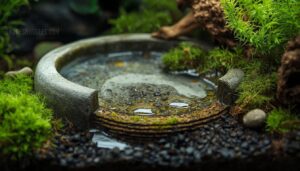
Overflow is the silent killer of bioactive drainage layers. Install overflow gates at the dish edge to redirect excess water before it saturates your substrate.
A micro sump beneath the dish catches spills instantly. Add raised edging and a moisture ring to guide water away cleanly.
Barrier barcoding helps you track cleaning cycles too. A stable water dish to prevent tipping and spillage makes all of this easier.
Managing Humidity Without Soaking Substrate

Humidity control isn’t about drowning your substrate — it’s about working smarter. Run a low-velocity fan for 10–20 minutes, several times daily, for Airflow Optimization, and pair it with Humidity Trays and Misting Strategies that target the air, not the ground.
Smart Vent Placement drives vertical circulation.
Sensor Monitoring near your reptile water dish options to keep bioactive terrarium hydration solutions dialed in perfectly.
Keeping The Dish Accessible During Shedding
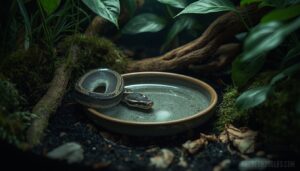
Shedding turns your snake into a slow, cautious explorer — so don’t make hydration a puzzle.
Place a low profile rim dish in a quiet corner spot, away from heat, with a non-skid bottom so it stays put.
The easy access lip lets them drink without straining.
Keep a secondary backup dish nearby, and change water daily.
Frequently Asked Questions (FAQs)
What to use as a snake water bowl?
snake’s water dish as the town square of its enclosure — everything revolves around it. Food-grade resin, ceramic, or stainless steel all work well.
The Bio Dude Rock Water Bowl Small nails the natural rock bowl aesthetic perfectly.
How big should my snakes water dish be?
Size comes down to snake length and coiling space. A 3–4 foot adult needs a 10–12 inch wide bowl, 2–4 inches deep. Scale up as your snake grows.
Can snakes drink enough water from misting alone?
Misting hydration efficiency is real, but it’s supplemental. Snakes will drink from their water bowl as their main source. Droplet drinking behavior exists, yet misting alone won’t cut it.
Should water dishes be elevated above the substrate?
Yes — a little elevation goes a long way. Raising your dish 2–4 cm improves substrate preservation, cuts mold prevention issues, and keeps water cleaner longer without disrupting your bioactive balance.
How often should soaking dishes be replaced entirely?
Replace soaking dishes every 6–12 months with daily use.
Watch for scratches, persistent odors, or discoloration — those are your wear indicators that hygiene thresholds have been crossed and material degradation has begun.
Do isopods and springtails enter and contaminate water dishes?
Both will crash your water dish like uninvited guests.
Dwarf White Isopods and springtail water activity are mostly harmless, but detritivore drowning risk and microbial film formation are real — daily changes fix it fast.
Can water additives harm a bioactive cleanup crew?
Yes, they can.
Chemical residue toxicity, pH imbalance effects, and salt concentration stress all threaten your clean up crew. Even a misdosed water conditioner causes microbial food suppression — starving springtails and isopods quietly.
Conclusion
The smallest detail in a bioactive setup often carries the most weight—and snake water dishes for bioactive setups prove that perfectly. A bowl isn’t just a bowl when it’s sitting inside a living ecosystem.
Get the size, material, and placement right, and everything else flows: stable humidity, clean water, a thriving cleanup crew, and a snake that actually drinks.
Nail the dish, and you’ve quietly solved problems you didn’t even know were coming.