This site is supported by our readers. We may earn a commission, at no cost to you, if you purchase through links.

Your ball python glides across the couch, climbs onto your chest, and settles into a loose coil right over your heartbeat. It feels like affection. But is it?
Snake owners ask this question constantly, and the honest answer sits somewhere between yes and not exactly. Snakes lack the brain structures that produce human-style love, so what you’re seeing isn’t a hug. So can pet snakes be affectionate to their owners in any real sense? The science says something more interesting: your snake recognizes you, tolerates you, and may even seek you out for reasons that have nothing to do with sentiment and everything to do with comfort and safety.
Table Of Contents
- Key Takeaways
- Can Pet Snakes Be Affectionate? Yes—but Differently
- What Does Snake Affection Look Like?
- What Emotions Can Pet Snakes Feel?
- Do Pet Snakes Recognize Their Owners?
- How Can You Build Trust With a Snake?
- Frequently Asked Questions (FAQs)
- What is the most cuddly pet snake?
- Do snakes like being petted?
- How can you tell if a pet snake likes you?
- What’s the friendliest snake to own?
- What are some signs that a snake is stressed or unhappy?
- How can I make my snake more comfortable with being handled?
- What is the lifespan of different snake species kept as pets?
- How long do pet snakes typically live?
- What snake species bond best with humans?
- How often should I handle my snake?
- Conclusion
Key Takeaways
- Snakes can’t feel love the way people do, but they can build real trust with you through scent recognition, routine, and consistent handling.
- What looks like cuddling is usually your snake seeking body heat or feeling calm around a familiar scent, not an emotional bond.
- You can read your snake’s comfort level through body language, like loose coiling and slow tongue flicks for contentment, or tight coils and rapid flicking for stress.
- Building trust takes patience and care, including short handling sessions, a secure habitat, and waiting 48 to 72 hours after feeding before picking your snake up.
Can Pet Snakes Be Affectionate? Yes—but Differently

So can your snake actually like you? Sort of, but it’s not the same kind of love you’d get from a dog or cat. Here’s what that affection really looks like, and why it happens.
What looks like love is usually just comfort with your scent and warmth—snakes are wired for survival, not bonding, as this breakdown of how snakes actually perceive their owners explains.
Comfort Rather Than Human Love
When your snake climbs onto your lap, it’s likely Body Heat Seeking, not love. This Thermoregulatory Snuggling reflects instinctive closeness tied to survival, not bonding.
Snake affection really means:
- Reduced stress near you
- Habituation comfort over time
- A comfortable environment they trust
Physical Comfort Needs drive most contact, though owner recognition still grows through consistent, gentle handling.
Affection Versus Familiarity
Here’s where owners get tripped up: what looks like affection is usually familiarity-based behavior. Your snake isn’t loving you, it’s recognizing you. Tongue flicking drops, movement smooths out, coils loosen. That’s trust, not romance.
| Familiarity Signal | What It Means |
|---|---|
| Slower tongue flicks | Less investigation needed |
| Calm approach | Comfort with your scent |
| Relaxed coiling | Reduced stress response |
Limits of Snake Attachment
Trust has a ceiling. Environmental stability limits how far a bond can grow, so a snake stressed by shifting temperatures won’t warm up to you no matter how gentle your handling is. Scent memory lasts weeks, but individual variation tolerance means some snakes simply won’t seek you out.
Consistent handling frequency helps, yet it can’t manufacture what a snake’s brain isn’t built to feel. Researchers studying snake identification and behavior data have found that individual variation across species is significant, underscoring why some snakes bond more readily than others regardless of an owner’s efforts.
What Does Snake Affection Look Like?
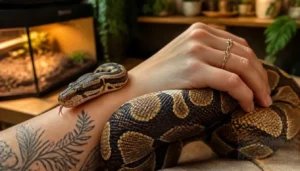
So what does this "affection" actually look like day to day? It shows up in small, specific behaviors you can learn to spot once you know what you’re watching for. Here are the signs worth paying attention to.
Tongue Flicking and Investigation
That flickering tongue isn’t a threat display, it’s chemosensation in action. The forked tip samples two spots at once, feeding scent to the vomeronasal organ. Tongue Sampling Rate rises near your hand or new gear. Watch for:
- Rapid bursts near novel objects
- Slow flicks during calm exploration
- Head lifting for air sampling
- Stillness paired with steady flicking
Calmly Approaching Their Owner
Watch how your snake moves toward you. A slow, deliberate glide, rather than a quick dart, signals comfort and trust building, not predatory intent.
If you’re curious about other subtle cues your pet is content, this guide to signs your snake feels safe and secure breaks down the body language worth watching for.
These Slow Approach Signals, paired with calm Body Language Cues, show Consistent Proximity over time builds confidence. Temperature Influence matters too: snakes often approach for warmth. This Handling Readiness reflects real affection, a genuine owner pet bonding moment worth noticing.
Relaxed Handling Behavior
A snake that stays loose in your hands, rather than coiling tight, is telling you it feels safe. Good Environmental Setup and steady handling frequency, two to three sessions weekly, build trust over time.
- Loose, uncoiled posture
- Slow tongue flicks
- Calm hand to hand crawling
- Normal post handling calm
This tolerant of handling behavior reflects genuine bond and affection, not just habit.
Warmth-Seeking Versus Bonding
Since your body runs warmer than a snake’s enclosure air, it’s tempting to read heat seeking behavior as love. It’s really thermal bonding process: warmth driven interaction for survival, not connection.
That said, comfort vs connection isn’t all or nothing. Repeated warmth-seeking builds temperature based trust, which can grow into real ownerpet bonding and snake affection over time.
What Emotions Can Pet Snakes Feel?

Your snake can’t feel love, but that doesn’t mean nothing’s going on inside its head. Its brain still controls a handful of basic emotional states, and each one shows up in specific, recognizable ways. Here’s what your snake is actually capable of feeling.
Fear and Defensive Responses
Fear is real and instinctual. Threats trigger a startle reaction, freezing, or escape behavior in seconds. You’ll notice defensive postures like hissing, gaping, or tight coiling.
Keeping your snake’s enclosure clean reduces environmental stressors that can trigger these fear responses, so following proper snake hygiene and enclosure cleaning techniques supports a calmer, more secure animal over time.
During vulnerable shedding periods, consult this snake shedding cycle guide to distinguish normal behavior from fear.
Handling stress often shows up as tension or quick retraction. Loud noises and sudden movements are common fear triggers. Slow, supported handling keeps aggression and defensive behaviors from escalating.
Contentment and Security
A content snake looks calm, not thrilled, but the signs are clear once you know them.
- Smooth, even breathing
- Head aligned, body evenly coiled
- Resting near a scented hide
- Loose, relaxed posture in your hands
Stable temperature and humidity levels, plus secure hiding spots and predictable handling, build the trust behind that calm.
Stress and Boredom
A bored snake often paces the same glass corners for hours, a clear boredom sign. Stress signs include rapid tongue flicking and food refusal. Habitat enrichment, climbing branches, puzzle feeders, novel scents, cuts cortisol and lifts activity. Environmental enrichment isn’t a luxury, it’s basic care that keeps your snake curious instead of shutting down.
| Sign | Boredom | Stress |
|---|---|---|
| Activity | Low, repetitive pacing | Hiding constantly |
| Feeding | Disinterested | Refuses food |
| Tongue Flicking | Reduced | Rapid, frequent |
Pain and Discomfort
Boredom looks quiet, but pain often hides in plain sight. Watch for skin irritation signs like redness or crusting, open-mouth gaping (a mouth pain indicator), or blistered patches from heat burn risks.
Squeezing causes real handling pressure effects, straining muscles. Wheezing signals respiratory stress. These stress indicators and defensive behaviors demand gentler snake handling safety habits, not dismissal.
Reptile Emotional Limitations
Pain and pleasure aside, snakes run on a simpler emotional system than we do. A limited limbic system means no real capacity for love, only survival-based reactions.
That’s why instinctual affection looks like habituation and trust, not bonding. Snake cognition favors:
- Scent based recognition
- Fear vs contentment
- Handling stress limits
- Owner recognition through routine
Do Pet Snakes Recognize Their Owners?

Your snake probably does know you’re the one holding the food dish, but not the way a dog knows its owner. Recognition here works through scent, patterns, and habit rather than any real understanding of who you are. Here’s how that recognition actually builds over time.
Scent Recognition
How does your snake know it’s you? Through scent recognition, powered by the vomeronasal organ and tongue flicks.
| Scent Cue | What It Signals |
|---|---|
| Owner’s odor | Safety, non-threat |
| Unfamiliar scent | Caution, investigation |
| Feeding-linked smell | Positive association |
| Consistent habituation | Builds trust over time |
Scent memory lets snakes recognize you long after handling.
Familiar Routines and Movements
Scent isn’t the only cue snakes pick up on. Predictable routine matters too, so your snake learns your movement patterns, footsteps, and handling schedule through habituation.
Regular handling builds familiarity-based behavior, whether you approach with calm lateral undulation nearby or rectilinear crawling across a table. Over time, this owner-pet interaction shapes relaxed body language, not emotional bonding.
Feeding-Based Associations
When mealtime rolls around, your snake isn’t thinking of you, just food. Meal cue anticipation builds through consistent feeding schedules, shaping tongue flicking and calmer approaches over time.
This creates real benefits:
- Steadier, less defensive behavior
- Predictable activity patterns
- Better handling tolerance near feeding times
It’s scent association learning, not affection, but it still smooths your bond.
Owner Recognition Over Time
Given weeks of consistent contact, your snake builds a real recognition pattern, not affection, but genuine familiarity. Gradual scent familiarity and repeated handling exposure drive this.
| Timeframe | Behavior | Cause |
|---|---|---|
| Week 1 | Startle response | Unfamiliar scent |
| Week 3 | Tongue flick reduction | Routine prediction learning |
| Week 6+ | Body posture shifts | Owner recognition |
That’s snake scent recognition and familiarity-based behavior building your snake owner relationship, gradually.
Can Snakes Learn Names?
Call your snake "Buddy" all day, and it won’t answer to it, since name learning potential just isn’t there. Owner recognition relies on scent over sound, not vocal recognition.
Tapping the glass before feeding creates conditioned response training, an auditory cue association tied to food, not identity. That’s the real vocal recognition limits at play.
How Can You Build Trust With a Snake?
Trust with a snake isn’t something you win overnight, but you can build it through small, consistent choices. Your snake won’t love you the way a dog might, but it can learn that you’re safe, predictable, and worth staying calm around. Here’s how to make that happen, one habit at a time.
Use Calm, Supported Handling

How you hold a snake shapes how it feels about you. Use Body Support Basics: support the whole body, hands relaxed but firm.
Try the Side Approach Method instead of reaching from above, it feels less predatory. The hand-over-hand technique lets your snake crawl naturally. Keep a calm handling pace and watch for stress signs throughout.
Keep Sessions Short

More isn’t better here. Short interaction benefits your snake more than long ones, since brief handling sessions limit stress buildup and cooler room exposure. Aim for 10-15 minutes, then stop.
This handling time management approach keeps quality time positive, reduces stress duration, and builds real trust through steady, low-pressure interaction frequency rather than marathon cuddle sessions.
Respect Stress Signals

Your snake talks to you constantly, just not in words. Watch for tight coiling, rapid tongue flicks, or hiding after normal exploring. These are real stress signs, not attitude.
If you see them, back off. Respectful interaction means pausing handling, not pushing through. Ignoring these cues doesn’t build trust, it erodes it, and turns future affection into avoidance.
Ignoring a snake’s stress signals doesn’t build trust, it erodes it and turns future affection into avoidance
Avoid Post-Feeding Handling

Timing matters just as much as touch. Wait 48 to 72 hours after feeding before picking your snake up, since digestion raises regurgitation risk and stress can trigger it. Warmer enclosures speed digestion; cooler ones slow it. Keep handling sessions rare during this window.
Skipping this step doesn’t just risk mess, it can undo the trust you’ve built.
Provide a Secure Habitat

Trust doesn’t stop at your hands, it starts with the space your snake lives in. A secure lid latch, escape proof seams, and a stable temperature gradient all lower stress before you even open the enclosure.
Add snake hide boxes, safe substrate choice, and steady humidity control, and you’ve built a habitat that says "safe" long before you say "hello.
Frequently Asked Questions (FAQs)
What is the most cuddly pet snake?
Docile doesn’t always mean cuddly, but ball pythons come close. Their calm nature, plus easygoing corn snakes and rosy boa temperament, makes them top picks for gentle, low-stress handling and steady snake bonding techniques.
Do snakes like being petted?
Some do, some don’t. Many tolerate gentle midsection touch, avoiding head and tail, showing relaxed body language through slow movement, tongue flicks, but hissing or tight coiling means it’s time to stop.
How can you tell if a pet snake likes you?
Watch its body language: loose coiling, voluntary approach, and scent investigation via tongue flicking signal comfort. Reduced hissing, calm exploratory behavior, and relaxed handling all point to a genuinely happy snake near you.
What’s the friendliest snake to own?
No single species wins outright, but corn snakes and ball pythons top most lists. Both show calm temperaments, tolerate handling well, and rarely bite, making them ideal for building genuine owner-pet interaction and confidence.
What are some signs that a snake is stressed or unhappy?
A stressed snake will coil up with its head hidden, hiss, or flick its tail rapidly. Body tension, food refusal, and defensive strikes signal discomfort, so treat these behaviors as clear stress indicators needing attention.
How can I make my snake more comfortable with being handled?
Trust builds the way a friendship does, slowly, through small honest moments. Start with scent familiarization, gentle touch, and a routine handling schedule. Watch for stress signals, keep sessions short, and let familiarity guide every interaction.
What is the lifespan of different snake species kept as pets?
Ball pythons and boa constrictors often live 20 to 30 years, corn snakes and king snakes 15 to 25 years, while garter snakes reach just 8 to 15 years. Genetics, husbandry quality, and reptile husbandry practices all shape each species’ life expectancy.
How long do pet snakes typically live?
Funny enough, the snake curled on your couch might outlive your dog. Life expectancy for pet snakes runs 15 to 30 years: corn snakes reach 15-20, ball pythons often hit 30 with solid reptile husbandry, feeding, and habitat care.
What snake species bond best with humans?
Corn snakes, king snakes, and rosy boas rank among the calmest species for handling.
Unlike pythons, whose multiple rows of teeth work together to grip prey, these gentler species rarely bite and are far easier for beginners to handle.
Ball python bonding develops through predictable routines, while corn snake sociability and rosy boa calmness make daily interaction smooth, low-stress, and genuinely rewarding for beginner keepers.
How often should I handle my snake?
Handle your snake enough and it practically begs for more, or so it seems. Really, two to three sessions weekly, 10-15 minutes each, builds trust and a predictable routine without stressing your reptile buddy out.
Conclusion
Your snake isn’t planning your anniversary or pining for you at work, so retire that fantasy now.
But can pet snakes be affectionate to their owners? In their own quiet, cold-blooded way, yes. That warm coil on your chest reflects trust built from scent, routine, and safety, not romance. Respect its signals, keep handling calm, and you’ll earn something real: a snake that chooses you as its safest place to be.