This site is supported by our readers. We may earn a commission, at no cost to you, if you purchase through links.

A snake stretched motionless under a heat lamp looks like it’s doing nothing at all. It isn’t. That stillness is active physiology, a deliberate effort to push internal temperature high enough for digestion, immune defense, and dozens of other processes your snake’s body can’t run on its own.
Unlike you, a snake can’t generate its own metabolic heat, so every meal it digests and every infection it fights depends on borrowed warmth. Get the thermal setup wrong, and you’re not just risking a sluggish pet, you’re risking organ stress and slow death by inches.
Understanding snake basking behavior means understanding the mechanics behind the stillness, and why that sunlit pose is doing more work than it appears.
Table Of Contents
- Key Takeaways
- What Snake Basking Means
- Why Snakes Need to Bask
- How Snakes Absorb Heat
- Safe Basking Setup for Pet Snakes
- What Basking Behavior Reveals
- Frequently Asked Questions (FAQs)
- Why do snakes bask?
- What is basking in animals?
- Are basking snakes ectotherms?
- How do snakes gain heat?
- What does it mean when a snake basks?
- How does basking differ between ball pythons and corn snakes?
- Do juvenile snakes bask more often than adults?
- Does basking frequency change with the seasons?
- Why do lamp guards matter for snake enclosures?
- Why do snake species need different basking temperatures?
- Conclusion
Key Takeaways
- Snakes rely entirely on external heat to power digestion, immune defense, and cellular repair, making a properly structured thermal gradient in their enclosure a biological necessity, not a comfort feature.
- A basking snake pressing its ventral scales flat against a warm surface is actively maximizing heat absorption through conduction, a purposeful posture that drives faster internal temperature rise than any coiled position allows.
- Shifts in basking duration, zone preference, or posture are reliable early indicators of health problems — from respiratory infection to thermal burns — and should be read as signals, not dismissed as personality quirks.
- Heat rocks lack thermostat control and create dangerous localized hotspots that can cause tissue damage before your snake registers the threat, making them an unacceptable risk in any captive setup.
What Snake Basking Means

When you watch a snake stretch out under a heat lamp or press itself flat against a warm rock, it’s doing something far more purposeful than simply resting.
This behavior is called thermoregulation — a deliberate, instinct-driven process you can learn more about through a closer look at corn snake behavior patterns and what they reveal.
Snakes are ectotherms, meaning they depend entirely on external heat sources to regulate their internal body temperature and keep their physiology running properly. Understanding what basking actually is — and why it’s non-negotiable for your snake’s health — starts with these four essential concepts.
Since basking helps power the very senses snakes rely on after dark, it’s worth exploring how snakes navigate and hunt at night to see the bigger picture.
Basking Behavior Defined
Why does a snake stretch out in a sunny spot and stay put? It’s basking—lying or positioning itself against a heat source to soak up warmth it can’t generate alone.
- Maximizes surface contact with sun or warm substrate
- Raises body temperature for digestion and activity
- Allows quick retreat if conditions shift
This daily ritual reflects pure thermal absorption basics, the foundation of reptile husbandry you’ll manage for years. This behavior is essential for regulating vitamin D3 levels through UV exposure.
Ectotherms and External Heat
Snakes belong to a category of animals whose body temperature tracks the environment rather than self-generating heat internally.
Every metabolic process — digestion, immune response, tissue repair — depends on warmth absorbed from outside. Solar radiation and warm substrates drive these functions the way fuel drives an engine. Without reliable external heat availability, those processes simply stall.
Sun Versus Artificial Heat
The sun delivers a full infrared spectrum that penetrates skin and warms tissues broadly, while artificial heat sources emit narrower wavelength bands targeting specific zones. Natural sunlight also warms surrounding substrates — rocks, soil — which retain that energy and release it gradually, buffering temperature swings.
Artificial setups can’t replicate this thermal mass effect, but they offer something the sun can’t: consistency on cloudy days or at night.
Normal Basking Body Posture
Regardless of whether the heat source is sunlight or a lamp, the posture your snake adopts tells you whether it’s absorbing efficiently.
A relaxed, stretched body flat against the surface maximizes ventral scale contact, driving conductive heat uptake across the broadest possible area. The head lifts slightly above the substrate — ideal head alignment — while the tail extends straight, signaling genuine thermal stability, not stress.
Why Snakes Need to Bask

Basking isn’t optional for snakes — it’s the engine behind nearly every biological process that keeps them alive and well.
Without consistent access to the right heat, basic functions like digestion, immune response, and reproduction start to break down in ways that aren’t always obvious until the damage is done. Here’s why each of those functions depends on basking more than you might expect.
Digestion and Metabolism
Heat isn’t just comfort for a snake — it’s the engine that drives digestion. Without adequate warmth, the metabolic enzymes responsible for breaking down prey simply can’t activate efficiently.
Proteins won’t convert to amino acids, fats won’t yield usable energy, and undigested prey can putrefy inside the gut. Maintaining your snake’s basking zone temperature isn’t optional; it’s biochemically essential.
Immune System Support
Often overlooked, body temperature quietly governs your snake’s defenses against disease. As an ectotherm, its immune cells depend on adequate metabolic activity to function—something only proper thermoregulation provides.
When temperatures drop too low for too long, a sluggish immune system can let bacteria take hold, so it’s worth knowing how to spot the early signs of scale rot before it spreads.
Cold snakes can’t fight pathogens efficiently. Warmth also enhances:
- Zinc-driven wound healing
- Vitamin A’s tissue protection
- Vitamin C’s antibody production
- Skin barrier hydration against microbes
Chronic stress or cold further weakens this system, leaving your snake vulnerable.
Healthy Shedding Cycles
Every shed begins with thermoregulation. When your snake basks adequately, ecdysis proceeds smoothly—warmth activates the metabolic processes that loosen old skin and support follicle health beneath.
Without consistent heat, hormonal shedding rhythms fall out of sync, hydration drops, and incomplete sheds around the eyes or tail become likely. Nutritional shedding support—particularly zinc and vitamin A—compounds these effects when thermoregulation is already compromised.
Energy and Activity Levels
Basking isn’t passive rest — it’s how your snake charges itself for everything that follows. Without adequate body temperature, resting metabolic rate drops, leaving too little energy for movement, digestion, or immune response.
Think of thermoregulation as the throttle. When basking keeps metabolism running at the right level, your snake stays alert, feeds reliably, and recovers efficiently between activity bouts.
Thermoregulation is the throttle that keeps a snake alert, feeding, and recovering between bouts of activity
Reproductive Health Cues
Thermal regulation directly shapes your snake’s reproductive readiness — without stable basking temperatures, hormonal cycles stall before they start.
- Males sample pheromone cues via forked tongue to detect a female’s receptive state
- Females release stronger chemical breeding signals as follicles mature
- Seasonal temperature shifts trigger testicular and follicular activity
- Consistent warmth reduces shedding disruptions that delay mating windows
Receptive females adopt stationary, open postures — a signal thermal stability makes biologically possible.
How Snakes Absorb Heat
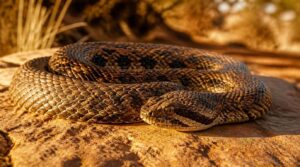
Snakes don’t absorb heat passively — they work for it, using specific behaviors and body mechanics that are worth understanding if you’re keeping one in captivity. The methods vary depending on the environment and the individual snake, but each one fulfills a distinct thermoregulatory purpose. Here’s how that process actually works.
Heliothermy From Sunlight
Sunlight isn’t just warmth — it delivers solar radiation absorption through both visible light and infrared wavelengths, raising a snake’s body temperature far faster than ambient air alone. This diurnal basking cycle peaks around solar peak, when radiant input is strongest.
UVB exposure during heliothermy also helps UVB vitamin synthesis, aiding calcium metabolism — a biological benefit artificial heat sources simply can’t replicate.
Thigmothermy From Surfaces
Where sunlight isn’t available, snakes turn to substrate heat conduction — drawing warmth directly through contact with warm surfaces like rocks, logs, or ceramic tiles. The rate of heat transfer depends on surface contact area and substrate conductivity, so a snake pressing its ventral scales flat against a textured rock gains heat faster than one resting on smooth glass.
Surfaces between 32–34°C allow controlled, gradual warming without tissue damage risk.
Flattening for Heat Gain
Contact with a warm surface only gets you so far — what amplifies it is posture. When a snake presses its body flat against the substrate, it dramatically increases thermal contact area, pulling heat into its center faster than any coiled position allows.
Three reasons flattening works so effectively:
- Reduces air gaps between scales and surface
- Maximizes surface conductivity transfer rate
- Accelerates internal body temperature rise after feeding
Shuttling Between Temperatures
Flattening maximizes heat intake, but snakes don’t simply absorb until satisfied — they actively manage thermal load by cycling between warm and cool zones throughout the day.
This thermoregulatory shuttling isn’t random. Ectotherms time each movement precisely, using temperature oscillation to drive efficient heat exchange and hold their body near the Preferred Body Temperature without overloading their system.
Cooling Through Hiding
Shuttling only works when a cool retreat is genuinely accessible. Once a snake exits the basking zone, it needs a hide that creates a thermal microclimate — a localized drop in ambient temperature driven by substrate moisture, shaded air, and convective cooling through ventilation.
Ceramic or sealed hides with damp coconut fiber dissipate heat efficiently, letting the snake complete its thermoregulatory cycle without chronic overheating.
Safe Basking Setup for Pet Snakes
Getting your snake’s enclosure right isn’t complicated, but the details genuinely matter. A few key elements work together to give your snake the thermal control it needs to thrive. Here’s what your setup should include:
Warm Basking Zone

The warm basking zone is your enclosure’s thermal engine. Ectotherms can’t generate heat internally, so this hotspot — 85–95°F — drives digestion and metabolism.
Functional zone requirements:
- Radiant heat source above a defined surface
- Thermostat holding a stable temperature range
- Clear, unobstructed access for easy retreat
- UVB lamp paired for vitamin D synthesis
- Digital thermometer verifying surface readings
Without it, thermoregulation collapses.
Cool Side Temperatures

The cool side — 75 to 82°F — isn’t passive space; it’s what makes the warm zone meaningful. Without a distinct drop, the thermal gradient collapses and your snake loses the ability to self-regulate.
Keep airflow consistent here. Stagnant air traps humidity, promoting bacterial growth in the substrate. A calibrated digital thermometer at animal level confirms the gradient is working exactly as intended.
Thermostats Prevent Burns

A thermostat isn’t optional — it’s the mechanism standing between your heat source and a potentially fatal burn. Without one, even a quality basking lamp can spike far beyond the 88–95°F target range, leaving your snake unable to escape tissue damage it can’t detect quickly enough.
Proportional thermostats modulate output continuously, preventing dangerous surges. A safety shutoff adds a second line of defense if temperatures drift outside preset limits.
Avoid Dangerous Heat Rocks

Heat rocks are deceptively simple devices that create localized unregulated hotspots your snake can’t detect until tissue damage has already occurred.
Four reasons to remove them immediately:
- They generate concentrated heat the substrate surface can’t distribute safely
- Trapped moisture causes sudden explosive fractures when heated
- No thermostat connection means zero thermal burn prevention
- Snakes rest directly on them, maximizing contact injury risk
Discard them entirely.
Check Temperatures Accurately
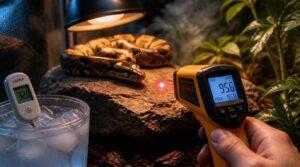
Your thermometer is only as reliable as its calibration. Before trusting any reading, verify the device against a known reference — ice-point calibration at 0°C confirms baseline accuracy. An infrared gun must be set to the correct emissivity value for the surface being measured, or readings will skew dangerously low.
Position sensors at basking zone height, and read displays at eye level to eliminate parallax error.
What Basking Behavior Reveals

Your snake’s basking habits are one of the most readable windows into its health and wellbeing.
Small shifts in how long it spends on the warm side, whether it avoids the basking zone entirely, or how its behavior changes before a shed can each point to something specific worth paying attention to. Here’s what those patterns actually mean.
Normal Basking Patterns
A snake basking without distress is, in most cases, a snake in good health. You’ll see regular, predictable sessions during daylight hours — often 20 minutes to several hours — after which your snake retreats to a cooler microhabitat.
This shuttling between thermal zones is normal thermoregulation. Consistent posture, alert eyes, and stable daily basking duration all confirm your ectotherm is successfully maintaining its Preferred Body Temperature.
Excessive Warm-side Use
When that predictable rhythm breaks — when your snake lingers on the warm side far longer than digestion demands — chronic overheating risks become real. Flattened thermal gradients, particularly when the cool side drops below 22°C, eliminate the escape route your snake depends on.
Watch for these heat stress indicators:
- Decreased or irregular appetite
- Prolonged daytime lethargy
- Delayed or disrupted shedding
- Gaping mouth or tucked tail
Corrective husbandry strategies — adjusting heat source placement and restoring temperature control across both zones — directly address metabolic efficiency loss before lasting harm sets in.
Avoiding The Basking Area
When a snake consistently avoids the basking area, the enclosure is signaling failure.
| Cause | Sign | Fix |
|---|---|---|
| Thermal injury history | Flinches near warm zones | Lower surface to 28°C |
| Habitat stress | Hides on cool side | Add visual barriers |
| Improper heat sources | Erratic movement | Use thermostat control |
Substrate temperature issues and poor enclosure design make the basking zone feel threatening rather than safe.
Shedding-related Basking Changes
Ecdysis changes the rules of basking entirely. Metabolic heat needs spike pre-shed, driving longer sessions on the warm end as your snake works to loosen old skin and balance shedding hydration.
Watch for:
- Extended basking duration before visible shed signs
- Closer positioning near the heat source
- Reduced activity, conserving energy for skin separation
- Appetite pause, resolving within 1–3 days post-shed
Stress or Illness Signs
When basking patterns shift without a shed cycle approaching, illness may be the cause. Mouth breathing or gaping, audible wheezing, and mucus near the nostrils all signal respiratory distress requiring veterinary attention.
| Sign | Possible Cause | Action |
|---|---|---|
| Behavioral fever | Infection | Confirm temperatures; consult a vet |
| Feeding refusal | Systemic illness | Monitor weight; seek evaluation |
| Neurological movement | Neurological problem | Immediate veterinary care |
Lethargy and abnormal positioning confirm something is wrong.
Frequently Asked Questions (FAQs)
Why do snakes bask?
A corn snake placed in a cool enclosure after feeding will often refuse to move for days. That stillness isn’t laziness — without external heat sources, metabolic enzyme activation stalls, digestion fails, and essential life functions collapse.
What is basking in animals?
Animals rely on ectothermic energy regulation, absorbing external heat to drive metabolism.
This thermal absorption mechanism—sunlight, warm rocks, heated surfaces—raises body temperature enough for digestion, immune function, and movement, since internal heat production alone can’t sustain these biological thermoregulation processes.
Are basking snakes ectotherms?
Yes — snakes are classic ectotherms. Their bodies produce insufficient metabolic heat to regulate body temperature independently, so they depend entirely on external heat sources to drive thermoregulatory mechanisms and sustain basic metabolism.
How do snakes gain heat?
Snakes don’t generate their own warmth — they pull it from the world around them. Through radiant energy transfer from sunlight and conductive substrate warming from sun-baked rock or soil, ectotherms raise body temperature without internal combustion.
What does it mean when a snake basks?
When your snake basks, it’s engaging in purposeful heat seeking, raising its internal temperature to fuel metabolic activity, support digestion after feeding, and maintain the thermal regulation its ectothermic body depends on for every essential function.
How does basking differ between ball pythons and corn snakes?
Both species bask, but their styles differ sharply. Ball pythons favor hidden, tucked heat zones, while corn snakes stretch openly across exposed basking surfaces, making their thermoregulation far more visible and direct.
Do juvenile snakes bask more often than adults?
No — juveniles actually bask less frequently than adults. Predation risk from diurnal birds drives them toward cover, limiting sun exposure. They rely more on microhabitat thermal buffering than prolonged basking to maintain body temperature.
Does basking frequency change with the seasons?
Picture a thermostat dial turning with the seasons, sliding higher when cold sets in. Yes — ambient temperature fluctuations drive it.
Cooler months demand longer basking to offset slower metabolism management, while brumation and seasonal metabolic shifts ease demand once true winter dormancy begins.
Why do lamp guards matter for snake enclosures?
Guards matter because they’re preventing thermal burns, blocking direct bulb contact while maintaining stable gradients.
This protects enclosure materials, ensures airflow safety, and reduces snake anxiety—giving you reliable thermal safety within smart enclosure design for responsible captive animal care.
Why do snake species need different basking temperatures?
Different strokes for different folks" — and snakes are no exception. Habitat origins drive thermal needs: desert species require 90–100°F, while temperate species thrive around 70–85°F, each matching the metabolic rate evolution shaped them for.
Conclusion
A keeper once noticed their ball python pressing flat against the basking tile for three straight days post-feeding—not laziness, but active thermoregulation doing exactly what it should. That image captures what snake basking behavior explained correctly looks like in practice: purposeful, silent, and essential.
Every degree of warmth your snake absorbs is borrowed time for digestion, immunity, and cellular repair. Build the gradient right, read the signals honestly, and you’ve given your animal the conditions it was built for.