This site is supported by our readers. We may earn a commission, at no cost to you, if you purchase through links.

Watch a snake press its lower jaw against still water and you’ll witness something most people completely misread. It looks passive, almost accidental—but that contact triggers a clever capillary absorption system built into the tissue lining its mouth, drawing water upward through specialized grooves without a single lap of the tongue.
Snakes can’t lap. Their tongue geometry and jaw structure make it anatomically impossible. What they do instead works on the same principle as a sponge pressed against a wet surface—negative pressure and capillary action pulling fluid in steadily.
Knowing this changes how you set up a water dish—the material, depth, placement, and cleanliness all matter more than most keepers realize.
Table Of Contents
- Key Takeaways
- Yes, Snakes Can Drink From Dishes
- Best Water Dish Setup
- Keeping Dish Water Clean
- Species Drinking Differences
- Hydration Problems to Watch
- Frequently Asked Questions (FAQs)
- Do all snakes drink the same way?
- Do snakes drink water?
- Do corn snakes drink water?
- How do rattlesnakes collect water?
- Do snakes drink from water bowls?
- Can snakes drink too much water at once?
- How long can a snake survive without water?
- Do snakes drink more water during breeding season?
- Should water dishes be removed during feeding days?
- Can tap water make snakes sick over time?
- Conclusion
Key Takeaways
- Snakes drink by pressing their lower jaw against still water and using capillary action through specialized mouth tissue—not by lapping like mammals—making a flat, clean water surface essential rather than optional.
- Bowl material, depth, and placement matter significantly: heavy ceramic or stainless steel dishes on the cool side of the enclosure, filled to just below shoulder height, provide the safest and most accessible hydration setup.
- Daily water changes and proper disinfection aren’t just good hygiene—they’re your frontline defense against pathogens like Salmonella and Pseudomonas that thrive rapidly in stagnant reptile water dishes.
- Wrinkled skin, sunken eyes, and dry chalky urates are your snake’s clearest early warnings of dehydration, and catching them before they escalate keeps kidney stress and shedding problems from turning serious.
Yes, Snakes Can Drink From Dishes

Snakes are more than capable of drinking from standing water dishes, as long as the setup meets their needs. Choosing the right type of bowl and placement makes all the difference for their health and safety. Let’s walk through the best options you can use in your enclosure.
For a deeper look at sizing, material, and positioning, these snake feeding bowl recommendations cover everything you need to create a safe, stress-free setup.
How Snakes Drink Water
Snakes use a mix of jaw sealing techniques and capillary action tissue to drink, not relying on their tongues. By pressing their lower jaw to the water bowl, they create negative pressure suction and draw fluid upward. Specialized mouth grooves work like a sponge, pulling water into the throat. This buccal pump mechanism ensures steady hydration from standing water.
Using spring water for reptiles is often safer than using tap water.
Why Tongues Do Not Lap
Unlike mammals that use rapid tongue lapping to pull water up in a column, snakes lack the tongue geometry and incomplete cheeks needed for this method. Their tongues are too slender and not rough enough for efficient surface tension-driven columns. Instead, snakes rely on jaw sealing and buccal pumping. Here’s why lapping doesn’t work for them:
- No full cheek seal
- Thin, forked tongue
- Low surface tension
- Inefficient column formation
- Mechanical transport needed
Standing Water Versus Droplets
Think about the difference between a pond and morning dew. Standing water bowls offer a flat, continuous surface, while water droplets stay rounded due to surface tension physics and high contact angles. Droplets evaporate faster, merge or separate depending on coalescence mechanics, and behave differently based on the bowl’s wettability. Here’s a quick comparison:
| Feature | Standing Water | Droplets |
|---|---|---|
| Surface Tension | Flat, gentle slope | Rounded, cap shape |
| Evaporation Rate | Moderate | High (small size) |
| Coalescence | Pools merge easily | Merge, rebound, split |
Normal Drinking Behaviors
After a few days without fresh water, you might spot your snake lingering near the bowl or moving more than usual—these are thirst cues. Drinking isn’t rushed; most snakes sip slowly, sometimes pausing mid-drink.
Warmer temperatures and post-shedding periods often spark extra interest in water, while some will soak or explore the dish when humidity rises or after basking.
Best Water Dish Setup
Choosing the right water dish makes a big difference in your snake’s health and daily comfort. There are a few important features to keep in mind as you set up their enclosure. Let’s look at which options work best and why.
Placement matters just as much as the dish itself — learning how to position a snake water dish in its enclosure helps you balance heat gradients and humidity without guesswork.
Heavy Ceramic Bowls

Looking for a stable water bowl in your snake enclosure? Heavy ceramic water bowls are a smart pick. Their dense stoneware construction resists tipping, holds heat longer, and withstands chips from daily reptile care. Food-safe glazes prevent bacteria, while thick walls moderate temperature. For practical upkeep, keep these bowls:
- Clean with reptile-safe disinfectants
- Dried thoroughly
- Placed securely
Stainless Steel Options
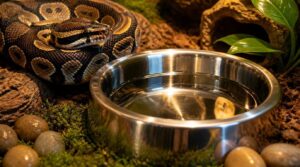
A stainless steel bowl is a top contender for reptile care. Choose 304 or 316 grades for solid corrosion resistance and food safety. Polished or brushed finishes hide scratches and make cleaning easier.
Unlike ceramic, steel resists chips, and heavier models won’t tip easily. Non-reactive surfaces prevent metal leaching into water, maintaining quality and safety in your snake enclosure.
Cool-side Placement

On the cool side of the enclosure, your water bowl stays shaded from heat lamps, helping stabilize temperature gradients and control evaporation rates. This placement also reduces spillage risk when snakes move quickly.
Keeping the dish at least six inches from the wall means easier cleaning access and better odor management, making daily maintenance smoother and supporting consistent hydration and water quality in your snake habitat.
Safe Water Depth
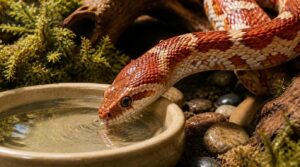
Think of safe water depth like a tightrope—too shallow and your snake can’t drink easily, too deep and you risk drowning hazards. Aim for water bowl depth just below the snake’s shoulder height, supporting ideal water clearance. Consistent depth lets your snake stretch its neck without snout submersion.
For juveniles, use shallow dishes to avoid accidental slips or amphibious safety concerns.
Hatchling Bowl Safety
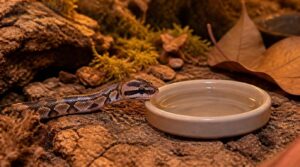
Imagine a hatchling snake faced with a giant bowl—it’s a recipe for trouble. You want shallow containers like eight-ounce cups, which offer small scale hydration and keep the water level below shoulder height.
Non-slip bases prevent tipping, and wide, shallow designs help avoid drowning hazards. For juveniles, sticking to these safety measures means they won’t slip or get submerged.
Keeping Dish Water Clean
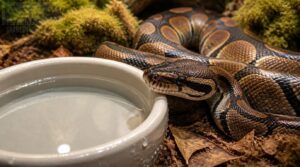
Clean water is just as important as the right dish setup for your snake’s health. If you’re unsure where to start, a few simple habits can make all the difference. Here’s what you’ll want to keep in mind for safe and sanitary water dishes.
Daily Water Changes
Changing your snake’s water every day isn’t just about keeping things tidy—it’s your best defense against bacterial contamination.
Fresh water helps block the growth of pathogens like Salmonella and Pseudomonas, which thrive in stagnant bowls. Daily water changes flush away invisible contaminants, giving your snake a safer, cleaner drink and reducing the risk of illness from waterborne germs.
Removing Waste Quickly
Dirty water dishes can quickly become breeding grounds for waterborne pathogens if waste isn’t removed fast. Use color-coded bins to sort organic debris from recyclables, and leak-proof containers for transport. Train yourself in rapid bagging techniques—it speeds up the process and keeps things sanitary. Here’s how to make things easier:
- Pre-sort waste at the source
- Compact debris for fewer trips
- Schedule same-day disposal
Safe Bowl Disinfecting
After removing debris, focus on disinfecting bowls to shut down bacteria and viruses before they multiply. Ceramic and stainless steel tolerate boiling, steam, or a 1:10 bleach solution—just rinse until all traces are gone. Vinegar works for milder cases, while porous materials need gentle cleaning and full air drying. Here’s a quick table for reference:
| Material | Disinfection Method | Residue Removal |
|---|---|---|
| Ceramic | Boil, Bleach, Steam | Rinse, Dry |
| Stainless Steel | Bleach, Steam | Rinse, Dry |
| Plastic | Vinegar, Soap | Rinse, Dry |
| Wood/Bamboo | Warm water, Air dry | Wipe, Dry |
| Glass | Boil, Steam | Rinse, Dry |
Filtered Water Benefits
Once your bowls are disinfected, filtered water gives you a clean slate. It pulls out chlorine, heavy metals, and microplastics that can build up in your snake’s body and harm the kidneys.
With fewer contaminants, you’re also cutting down on bacterial growth and strange aftertastes, supporting safe, consistent hydration—all while keeping those standing dishes truly fresh.
Water Types to Avoid
Filtered water keeps things simple, but some options can backfire. Distilled water is stripped of minerals, risking dehydration and electrolyte imbalance. Tap water may hide contaminants like lead or excess chlorine. Softened water brings sodium, which snakes can’t handle. Saline water dehydrates.
Anything untreated, stagnant, or from unknown sources risks bacterial contamination and waterborne disease. Keep your choices reptile-safe.
Species Drinking Differences

Not all snakes drink water the same way, and their preferences can surprise you. Each species has unique habits that shape how you’ll set up their enclosure. Let’s look at what works best for some of the most common snakes.
Water preferences aside, it’s worth noting that an active, well-hydrated snake also tends to have the muscle tone behind surprising feats like how far a snake can actually jump.
Ball Python Habits
Ball pythons aren’t just quiet—they’re experts at slow, crepuscular movement. When dusk falls, you’ll see them glide out for water, dipping their heads to gulp from a shallow bowl. They favor solitary hides, avoid stress by retreating, and show healthy hydration with smooth skin and moist urates. Here’s a quick guide:
| Behavior | Hydration Indicator |
|---|---|
| Slow exploration | Supple skin |
| Retreats when stressed | Soft, moist urates |
| Drinks at dusk | Clear eyes |
| Ambush predator | Normal bowel movement |
| Soaks post-feed | Complete sheds |
Boa Constrictor Drinking
How do boa constrictors actually drink? They rely on a buccal pump mechanism, using rhythmic throat expansions and synchronized tongue movements. The snout dips into the water bowl, and negative pressure pulls water into the oropharyngeal cavity. Drinking takes several cycles, not a single gulp.
For healthy hydration, a heavy ceramic dish with filtered water meets their unique drinking needs and prevents dehydration.
Corn Snake Needs
Corn snakes are straightforward drinkers — they’ll readily use a standing water dish without much fuss. Keep a heavy ceramic bowl on the cool side of the enclosure, filled with filtered water and changed every one to two days.
Watch for wrinkled skin or dry urates, both early signs of dehydration. Ambient humidity around 30–40 percent helps with healthy shedding and overall comfort.
Arboreal Snake Preferences
Tree-dwelling snakes like emerald tree boas live at vertical perch heights of 2–8 meters, where standing water dishes are simply out of reach.
Instead, they drink from dew and epiphyte moisture — droplets pooled in bromeliads, leaf axils, or moss pockets along branch surfaces. A water bowl matters less here; light canopy misting replicates their natural hydration far more effectively.
Mist-loving Species
Some mist-loving snakes won’t touch a standing dish — they need rainforest humidity mimicry to drink comfortably. Three signs your setup is working:
- Skin sheds in one clean piece
- Eyes stay clear and bright
- Feeding behavior stays consistent
Misting system automation holds humidity between 80–90%, supporting respiratory health. Watch for fungal buildup — microclimate control means balancing moisture carefully with proper airflow.
Hydration Problems to Watch
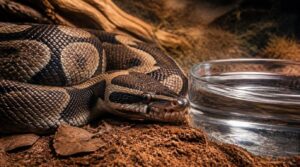
Even the most well-cared-for snake can show signs of dehydration if something small slips through the cracks. Catching these warning signs early makes all the difference between a quick fix and a serious health issue. Here’s what to watch for so you can act before it becomes a problem.
Wrinkled or Dull Skin
Wrinkled or dull skin is one of the earliest warning signs your snake isn’t getting enough water. When hydration drops, the epidermis loses its natural sheen, taking on a chalky, matte appearance instead of its usual gloss. You might also notice scales feeling rougher during handling.
Dehydration disrupts healthy shedding cycles, leaving behind dull patches that signal trouble beneath the surface.
Sunken Eyes
Skin changes often appear first, but sunken eyes can follow quickly. When a snake loses significant body water, the orbital fat and supporting tissues shrink, pulling the eyes inward into a noticeably hollow look. That’s why dehydrated snake eyes look dull and recessed rather than round and bright.
Caught early, restoring clean water access usually reverses it before kidney stress sets in.
Dry, Hard Urates
Sunken eyes are a warning, but urates tell an even clearer story. When your snake is well-hydrated, urates come out soft and white. When they’re dry and chalky, uric acid has crystallized — a direct sign of concentrated urine from too little water intake.
Dry, chalky urates mean uric acid has crystallized — your snake’s clearest sign of dehydration
Watch for:
- Hard, gritty deposits instead of a paste-like texture
- Urates shifting toward yellow or orange tones
- Recurrent dryness linked to kidney function decline
Refresh that water bowl daily.
Shedding Trouble
Hydration and shedding are more connected than most keepers realize. When your snake doesn’t drink enough, skin elasticity drops, making ecdysis harder — old skin clings instead of sliding free. Low humidity compounds this fast.
Watch for patchy, incomplete molts or retained eye caps, which signal both moisture and nutritional gaps. Stress from handling mid-shed slows the process too. Keep humidity steady and water fresh.
When Soaking Helps
Sometimes a warm soak does more than a water bowl can. If your snake’s stuck shed won’t budge, 15–20 minutes in shallow, lukewarm water loosens stubborn skin without stress. It also helps during overheating, giving the body a gentle reset.
Just remember — snakes can’t absorb moisture through skin, so soaking helps with shedding mechanically, not by rehydrating tissue directly.
Frequently Asked Questions (FAQs)
Do all snakes drink the same way?
No, snakes don’t all drink the same way. Some rely on capillary action through jaw folds, others use buccal pump suction, and arboreal species collect droplets from leaves rather than drinking from standing water.
Do snakes drink water?
Yes, snakes drink water. They rely on buccal pumping — a sponge-like jaw tissue draws liquid toward the throat through capillary action. The tongue plays no role; it’s purely a chemosensory organ.
Do corn snakes drink water?
Corn snakes drink water straight from a water bowl. Their natural drinking patterns include sipping from standing water in the wild, and they’ll do the same in captivity — making fresh water daily a non-negotiable.
How do rattlesnakes collect water?
Rattlesnakes harvest rain directly from their own bodies. Tiny channels in their dorsal scales pin falling droplets using surface tension, then the snake drinks the accumulated water straight from its skin — no bowl needed.
Do snakes drink from water bowls?
Your snake will absolutely use a water bowl to drink. They seal their lower jaw against the surface, using suction and capillary action to pull water inward — no lapping required, just quiet, efficient hydration.
Can snakes drink too much water at once?
Overhydration in snakes is genuinely rare. Their hydration regulation is efficient, and swallowing mechanics naturally limit intake. Under normal conditions, a healthy snake stops drinking once replenished.
How long can a snake survive without water?
That depends on the species. Pet snakes may show dehydration within one to two weeks, while some wild species endure months by extracting moisture from prey and slowing their metabolism in heat.
Do snakes drink more water during breeding season?
Yes, breeding females tend to drink more. Reproductive metabolic shifts drive higher water needs, supporting egg development and maternal fluid reserves. Gravid snakes often visit the water dish more frequently as gestation demands rise.
Should water dishes be removed during feeding days?
No, keep the dish in place. Your snake may want water before or after a meal. Simply rinse it if debris lands inside, and restore fresh water promptly.
Can tap water make snakes sick over time?
Tap water can irritate snakes over time. Chlorine and chloramine linger in the bowl, causing mild skin or digestive stress. Use a reptile-safe water conditioner or let water sit 24 hours before refilling.
Conclusion
The simplest care task is often the most overlooked. Can snakes drink from standing water dishes? Yes—effortlessly, through a system so efficient it needs almost nothing from you except consistency. A clean bowl, placed correctly, filled regularly: that’s the entire formula.
The paradox is that such a small detail carries such significant weight. Get the basics right, and your snake’s hydration, shedding, and long-term health quietly take care of themselves.