This site is supported by our readers. We may earn a commission, at no cost to you, if you purchase through links.
A ball python coiled in the open, under bright glass walls, isn’t relaxing. It’s panicking, quietly, in the way snakes do: refusing food, pacing the enclosure, pressing into corners. Glass terrariums give you gorgeous visibility, but they strip away the one thing a ball python craves most—darkness pressing in on all sides.
That’s where the right hide earns its keep. A snug, opaque burrow does more than end the stress pacing; it helps with proper sheds, stable humidity, and confident thermoregulation between warm and cool zones.
Picking ball python hides for glass terrariums means balancing security with practicality, and the options below cover every angle, from bargain resin caves to humidity-trapping rock lairs built for serious shed support.
Table Of Contents
- Key Takeaways
- Top 9 Ball Python Hides
- 1. Exo Terra Snake Cave Large Hideout
- 2. Exo Terra Reptile Cave Extra Large
- 3. Zilla Reptile Bark Bend Terrarium Hideout
- 4. Zilla Vertical Rock Cave Decor
- 5. Zilla Rock Den Naturalistic Reptile Hideaway
- 6. Zilla Rock Lair Naturalistic Humid Hide
- 7. Zilla Herp Hotel Reptile Basking Hide
- 8. Pangea Medium Reptile Hide Box Black
- 9. Zoo Med Reptile Shelter 3 in 1 Cave Large
- Choosing The Right Hide
- Hide Placement in Glass Terrariums
- Setting Up a Humid Hide
- Cleaning and Inspecting Hides
- Frequently Asked Questions (FAQs)
- Are glass enclosures good for ball pythons?
- What hides are good for ball pythons?
- What snake is worth $100,000?
- What do ball pythons like in their terrarium?
- How many hides does a ball python actually need?
- Can a ball python have too many hides?
- What happens if a ball python has no hide?
- Can I use a cardboard box as a temporary hide?
- Conclusion
Key Takeaways
- Glass terrariums give you great visibility but strip away the darkness ball pythons need, so a snug, opaque hide is essential for reducing stress and supporting healthy sheds.
- Set up two hides on opposite sides of the tank, one over the warm zone and one on the cool side, so your snake can move freely along its thermal gradient.
- A dedicated humid hide, packed with damp sphagnum moss and kept free of standing water, makes a huge difference during shedding by holding humidity between 70-90%.
- Regular upkeep matters just as much as the hide itself, so stick to weekly spot-cleaning and monthly deep cleaning while checking for cracks, sharp edges, or wear that could hurt your snake.
Top 9 Ball Python Hides
As stewards of a beloved but famously shy species, you know a good hide can make or break your ball python’s sense of security. Not every hide box on the shelf holds up to daily coiling, shedding, and cleaning, so picking the right one matters more than it might seem.
If you’re weighing your options, this breakdown of humid hides versus dry hides for ball pythons can help you choose based on shedding cycles and humidity needs.
Here are nine options worth considering for your glass terrarium setup.
1. Exo Terra Snake Cave Large Hideout
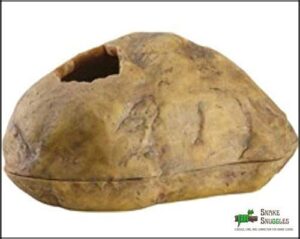
Picture a stone crevice you’d actually want to curl up in—that’s the vibe here. This cave ships with natural moss you can dampen for shedding season, and its wide, tip-resistant base aids even a chunky adult’s shuffling without budging.
Smooth interior walls mean no snagged skin during molts, and the removable top lets you peek in or clean house without dragging your snake out of its safe zone. Simple, sturdy, and genuinely functional.
| Best For | Owners of small to mid-sized snakes and lizards—like corn snakes, king snakes, leopard geckos, and ball pythons—who want a secure, stone-like hideout for stress relief and easy shedding support. |
|---|---|
| Material | Plastic |
| Color | Brown |
| Weight | 3.15 lbs |
| Model Number | PT2847 |
| Ease Of Cleaning | Removable Top |
| Stress Reduction | Secure Enclosed Retreat |
| Additional Features |
|
- Fully enclosed design gives reptiles a safe, burrow-like retreat that helps reduce stress
- Removable top makes it simple to observe, clean, or check on your pet without disturbing them
- Stable, tip-resistant base holds steady even with larger reptiles moving around inside
- Entrance hole may be too small for larger adult snakes (over 4 ft) or bulkier bodies
- Solid plastic base isn’t suited for burrowing species that need to dig into substrate
- Included moss may arrive dry or brittle and often needs cleaning before use
2. Exo Terra Reptile Cave Extra Large
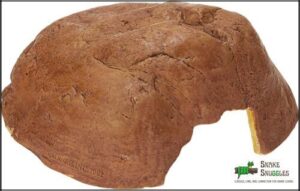
If your ball python has outgrown that smaller cave, this is the next step up. The Extra Large model measures roughly 27 x 25 x 11 cm, giving mid to larger snakes real room to coil without feeling cramped.
Its pebble-textured resin mimics weathered stone, and the flat base won’t wobble against glass. Inside, smooth walls protect delicate skin, while the enclosed crevice-style entry keeps your snake feeling tucked away and secure.
| Best For | ball pythons and other mid to large-sized snakes that have outgrown smaller hides and need extra room to coil comfortably. |
|---|---|
| Material | Resin |
| Color | Black |
| Weight | 2.09 lbs |
| Model Number | PT2854 |
| Ease Of Cleaning | Smooth Resin Surface |
| Stress Reduction | Secure Hiding Place |
| Additional Features |
|
- Pebble-textured resin gives a natural, weathered-stone look that blends right into any terrarium
- Flat, stable base sits securely on glass without wobbling
- Smooth interior walls protect delicate snake skin while offering a secure, tucked-away feel
- Interior edges may be sharp and could need filing before use
- Some units may arrive damaged or with casting imperfections, so inspection is recommended
- Ventilation holes in the top may impact humidity retention depending on your setup
3. Zilla Reptile Bark Bend Terrarium Hideout
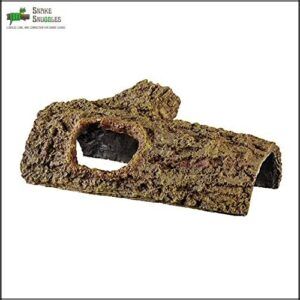
Stone caves aren’t the only route to a snug hide, and this Zilla piece proves it. Its curved bark design mimics a fallen log, with open ends letting your snake pick an entry point based on temperature.
The non-porous exterior wipes clean with soap and water, resisting bacteria buildup. Interior surfaces stay smooth for safe shedding, and realistic grooves add texture your python can explore during cleaning and rearranging without fuss.
| Best For | This hideout is best for owners of medium-sized reptiles like bearded dragons, leopard geckos, and young snakes who want a shelter that works in both terrestrial and semi-aquatic setups. |
|---|---|
| Material | Plastic |
| Color | Brown |
| Weight | 14.72 oz |
| Model Number | 100111851 |
| Ease Of Cleaning | Non-Porous Exterior |
| Stress Reduction | Private Burrowing Space |
| Additional Features |
|
- Naturalistic bark look blends easily into any terrarium while open ends let you watch burrowing and shedding behavior
- Non-porous plastic construction resists bacteria and wipes clean with just mild soap and water
- Smooth interior surfaces make it comfortable and safe for reptiles during shedding
- Some units ship with sharp or jagged edges that need sanding or sealing before use
- Packaging inconsistencies have led to breakage in shipping for some buyers
- Actual size may run smaller than listed, and the top opening can be too narrow for certain species
4. Zilla Vertical Rock Cave Decor
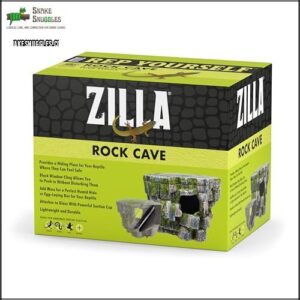
Not every python wants to hunker down at floor level, and that’s where this piece earns its spot. The Zilla Vertical Rock Cave uses strong suction cups to mount on glass, giving your snake an elevated shelter with a painted rock texture that looks right at home.
The polyurethane foam stays smooth inside, so shedding skin won’t snag, and rounded edges protect curious noses. A window cling adds extra privacy from outside eyes.
| Best For | This hide is best for arboreal reptiles and amphibians, like geckos and frogs, that appreciate an elevated basking spot and a secure place to retreat from stress. |
|---|---|
| Material | Hard Foam |
| Color | Grey |
| Weight | 1.09 lbs |
| Model Number | 100531598 |
| Ease Of Cleaning | Painted Foam Surface |
| Stress Reduction | Elevated Hiding Shelter |
| Additional Features |
|
- Strong suction cups keep it firmly attached to glass terrarium walls
- Painted organic texture gives a natural, realistic rock-like appearance
- Doubles as both a basking platform and a hiding shelter
- The roughly 2 x 2 inch opening may be too small for larger reptiles
- Suction cup grip can weaken if the glass surface isn’t clean
- Some pets may take time to warm up to using the hide
5. Zilla Rock Den Naturalistic Reptile Hideaway
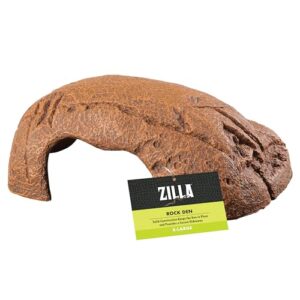
Cobblestone texture and natural color accents give this hideaway a convincing stone look, and it’s heavy enough to stay put when your snake brushes past. The Large size runs roughly 5 by 9.5 by 4 inches, fitting 20-40 gallon terrariums while giving adults room to coil with proper head positioning.
Pair this sturdy stone hideaway with a properly sized snake water dish for soaking to help your snake stay hydrated and shed more comfortably.
The non-porous resin construction resists mold and wipes clean easily. Interior contours stay smooth, protecting scales during entry and exit, and it doubles as a basking or climbing surface for extra enrichment.
| Best For | Snake owners who want a sturdy, natural-looking hideaway that supports thermoregulation while doubling as a basking or climbing surface. |
|---|---|
| Material | Plastic |
| Color | Orange |
| Weight | Not Listed |
| Model Number | Not Listed |
| Ease Of Cleaning | Non-Porous Surface |
| Stress Reduction | Dark Secure Retreat |
| Additional Features |
|
- Realistic cobblestone texture and stone-like coloring blend seamlessly into naturalistic terrarium setups
- Heavy, non-porous resin construction stays put and resists mold while wiping clean with ease
- Smooth interior contours protect scales during entry and exit, ideal for snakes coiling comfortably
- Large size may be too bulky for smaller terrariums under 20 gallons
- Limited size options could leave very large adult snakes without enough coiling room
- Resin material, while sturdy, may be heavier and harder to reposition than plastic alternatives
6. Zilla Rock Lair Naturalistic Humid Hide
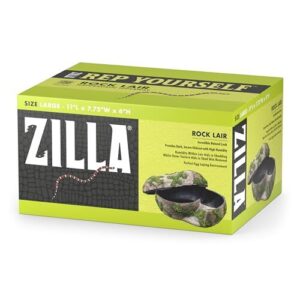
Shedding season calls for something that traps moisture, and this rock-textured hide does exactly that with its solid top and large side entrance. At 11L x 8W x 6H inches, it suits mid to large adults without hogging floor space.
The textured interior helps snakes rub off stuck shed, while heavy resin construction keeps it planted against glass walls. Pair it with damp moss inside for a genuine humid micro-environment that aids both shedding and, in breeding setups, egg-laying.
| Best For | This hide is best for snake, gecko, and other egg-laying reptile owners who need a reliable humid retreat to support shedding and egg-laying in mid to large enclosures. |
|---|---|
| Material | Plastic Resin |
| Color | Grey |
| Weight | Not Listed |
| Model Number | Not Listed |
| Ease Of Cleaning | Smooth Plastic Surface |
| Stress Reduction | Secure Resting Space |
| Additional Features |
|
- Traps and maintains humidity effectively, making shedding easier and supporting egg-laying
- Textured, mossy exterior helps reptiles slough off stuck shed naturally
- Heavy-duty resin construction stays put against glass and holds up to regular use
- Takes up a fair amount of floor space, which may be tough in smaller enclosures
- Its weight makes cleaning a bit more of a hassle
- May have a mild odor out of the box until it’s rinsed off
7. Zilla Herp Hotel Reptile Basking Hide
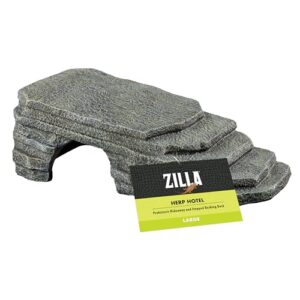
If your ball python loves perching up top, this rock-look basking hide gives it a flat platform to spread out fully while soaking up warmth. Beveled edges keep resting spots comfortable, and holes beneath the surface open into hiding tunnels below.
The non-porous plastic wipes clean fast and resists bacterial buildup. Interior cavities even help retain a bit of humidity near the heat source, making sheds a little easier when paired with a proper damp hide elsewhere.
| Best For | Owners of small to medium ground-dwelling or perching reptiles, like young bearded dragons, geckos, or ball pythons, who want a low-stress basking and hiding spot for a desert or tropical terrarium. |
|---|---|
| Material | Plastic |
| Color | Natural Rock Tone |
| Weight | 1.7 lbs |
| Model Number | 100111741 |
| Ease Of Cleaning | Non-Porous Surface |
| Stress Reduction | Secure Hiding Spots |
| Additional Features |
|
- Flat basking platform gives reptiles a comfortable, stable spot to fully stretch out under heat
- Non-porous plastic resists bacteria and wipes clean easily with mild soap and water
- Interior holes double as hiding tunnels, helping reduce stress in shy or ground-dwelling species
- Some units have rough or sharp edges that could pose a minor injury risk
- Paint may chip or fade over time, especially with frequent cleaning or high heat
- Not sized for adult bearded dragons or larger reptiles, and may wear down under intense basking heat (130°F)
8. Pangea Medium Reptile Hide Box Black
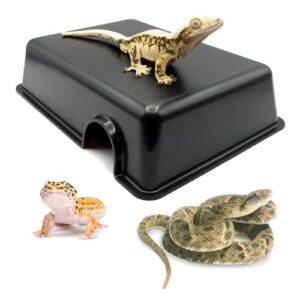
Rack systems benefit from a hide that’s compact, and this box fits the bill perfectly. Built from 1/8-inch heavy duty plastic, it measures 10x7x2.25 inches, snug enough for most standard 28-32 quart tubs.
The off-center door gives your snake a sense of security without sacrificing easy entry, and rounded edges protect delicate skin during sheds. Lightweight yet scratch-resistant, it’s a practical, no-fuss pick for keepers managing multiple enclosures.
| Best For | Keepers of snakes, terrestrial geckos, and other reptiles who need a compact, secure hide for rack systems or standard enclosures. |
|---|---|
| Material | Plastic |
| Color | Black |
| Weight | 4.96 oz |
| Model Number | s-hide-med |
| Ease Of Cleaning | Smooth Plastic Surface |
| Stress Reduction | Secure Private Hide |
| Additional Features |
|
- Durable, crack-resistant 1/8" thick ABV plastic construction
- Offset door design offers enhanced privacy and security for reptiles
- Smooth, non-porous surface makes cleaning and sanitizing quick and easy
- Lightweight build may shift or tip without added weight
- Requires a snug fit to be effective, so sizing must be precise
- Basic design lacks the naturalistic look of rock-style hides
9. Zoo Med Reptile Shelter 3 in 1 Cave Large
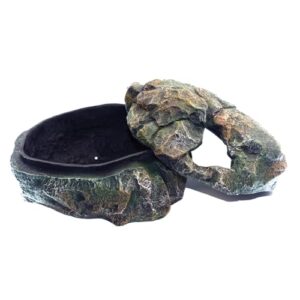
Three jobs, one hide: that’s the pitch behind this 3-in-1 ceramic shelter. It controls hiding, shedding, and even egg-laying for breeders. At roughly 6x12x11 inches, it’s built for larger juveniles and adults needing real coiling room.
The removable lid makes spot-checks painless, and the smooth ceramic surface resists odor while wiping clean fast. Some keepers note it feels lighter than older ceramic runs, so avoid placing it directly on heat sources to prevent cracking.
| Best For | reptile keepers with larger juveniles or adult reptiles who want a multi-purpose hide for security, shedding support, and egg-laying in one enclosure fixture. |
|---|---|
| Material | Plastic |
| Color | Black |
| Weight | 7.35 lbs |
| Model Number | RC32 |
| Ease Of Cleaning | Removable Lid |
| Stress Reduction | Secure Hiding Space |
| Additional Features |
|
- Multi-functional design covers hiding, shedding, and nesting needs in a single accessory
- Removable lid makes cleaning and spot-checking quick and easy
- Smooth, non-porous surface resists odor and is simple to sterilize
- Prone to cracking if placed near heat sources or exposed to temperature swings
- Feels more lightweight or plastic-like compared to earlier ceramic versions
- Lid can be dislodged by larger or more active reptiles if not secured
Choosing The Right Hide
Not every hide on the market earns a spot in your ball python’s tank, so knowing what to look for saves you money and stress down the road.
A good hide checks several boxes at once, from entry design to material safety, and skipping any of them can turn a "cozy retreat" into a source of anxiety.
Here’s what actually matters when you’re picking one out.
Secure Single-entry Design
A single doorway isn’t a limitation—it’s the whole point. Single-entry security mimics the tight burrows ball pythons seek in the wild, cutting exposure and stress.
Look for a beveled entry threshold that eases movement without snagging skin, plus a weighted base so the hide won’t tip. Quality builds add entry seal integrity through tight, gap-free construction and a magnetic latch, giving you genuinely tamper-resistant peace of mind.
Snug Sizing by Life Stage
A door that locks tight only helps if the room behind it fits right.
Hatchling hide dimensions run 4–6 inches deep; juveniles need 3.5–5 inches, with growth checks every 1–2 months.
Sub adults want a snug fit matching body width, adults need room for 6–8 inch girths, and seniors deserve extra space for tired joints.
Safe, Durable Materials
Fit means nothing if the material can’t hold up to daily coiling and pushing. Look for nontoxic material that’s strong and solid, like nonporous plastic or sealed hardwood, built to pass real impact resistance testing without cracking.
- Nonporous plastic or FRP resists mold
- Non-toxic finishes prevent chemical exposure
- Tip-resistant design keeps the hide stable
Smooth Interior Surfaces
Strong material sets the foundation, but what your snake actually touches matters just as much. Smooth interior surfaces prevent snags during shedding and keep bacteria from colonizing rough patches.
| Surface Type | Benefit |
|---|---|
| Nonporous plastic | Resists moisture, easy to clean |
| Rounded edges | Prevents scale injury |
| Consistent texture | Reduces stress, natural look |
Easy-clean Construction
A hide that looks great means little if you dread cleaning it. Look for quick-release lids and non-porous materials that wipe clean fast, with drainage grooves keeping moisture from pooling.
Smooth interiors and rounded edges resist grime buildup, giving you a hide that’s safe, secure, and easy to clean without breaking down your whole setup for a natural look.
Hide Placement in Glass Terrariums
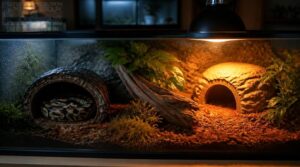
Buying the right hide is only half the job; where you put it matters just as much. Glass terrariums pose their own challenges, from visibility stress to uneven heat, and placement decisions can make or break your setup. Here’s exactly where each hide needs to go.
If you’re working with limited square footage, this guide to snake hide boxes for small apartments breaks down which shapes and setups save the most space without sacrificing your snake’s sense of security.
For snakes that are already stressed, quarantine-safe hide box setups can make a real difference in helping them feel secure while you monitor their health.
Warm-side Hide Placement
Think of the warm-side hide as your snake’s basking headquarters. Position it directly over the heat source, keeping it accessible without lifting the body off warm surfaces. Choose a snug cave matching your snake’s girth, entry facing away from the front. This preserves thermal gradient access, prevents dead spots, and gives your ball python secure warm-side positioning for proper thermoregulation.
Proper temperature management involves creating a suitable thermal gradient zone for your snake.
Cool-side Hide Placement
On the far end of the enclosure, away from any heat spill, sits your cool retreat—your snake’s cooldown zone.
Keep it directly opposite the warm hide for easy thermal gradient access, sized snug with a secure single-entry design.
Confirm cool-zone temps with a thermometer inside, and keep placement low and observation-friendly for easy viewing.
Maintaining Thermal Gradients
Picture your terrarium split into two honest halves: a warm side running 28–32°C and a cool side holding 22–26°C. Verify both zones with calibrated temperature sensors, checking readings at the same time daily.
Keep the heat source anchored on one end, watch substrate conduction, and limit airflow near the warm zone so your gradient never drifts or bleeds.
Adding Cover Around Hides
A bare hide sitting alone on open substrate still reads as exposed to a snake wired for burrows. Layer naturalistic decor like cork bark or slate around the entrance, using:
- Non-slip, wedge-fit bases for secure cover installation
- Smooth, non-toxic materials for cover material safety
- Varied textures for behavioral enrichment covers, rotated occasionally
This boosts visual privacy without trapping heat or moisture.
Blocking Transparent Terrarium Walls
Glass walls make your snake feel like it’s on display, which spikes stress fast.
Cover three sides with opaque wall barriers—blackout film, matte acrylic, or contact paper all work and stay easy to clean. External shields or internal concealment panels add extra privacy.
Manage lighting and glare too, so no clear silhouette shows through—just secure, natural-looking coverage on all sides.
Setting Up a Humid Hide
A humid hide isn’t optional in a dry glass terrarium—it’s your snake’s built-in insurance policy for smooth sheds and healthy respiration. Getting one set up right takes more than tossing in some moss and hoping for the best.
A humid hide is your snake’s built-in insurance policy for smooth sheds and healthy respiration
Here’s exactly what you need to know, from picking the hide to keeping that moss fresh.
Choosing a Humid Hide
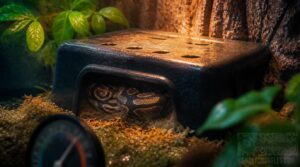
A humid hide isn’t optional—it’s shed insurance. Pick a damp hide box made from non-porous, chemically inert material like resin or hard plastic, with subtle vents for airflow.
Size it for your snake’s current length, leaving coiling room. Place it on the warm side, where the temperature gradient boosts evaporation and keeps moisture consistent for shedding assistance.
Adding Damp Sphagnum Moss
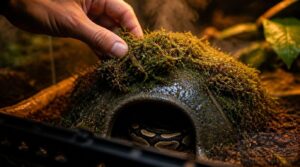
Once you’ve got a proper size humid hide sitting on the warm side, it’s time to fill it.
Gently moisten sphagnum moss and squeeze out excess water, then pack it loosely inside, this creates air pockets for airflow inside hide while keeping texture soft for secure shelter.
Rehydrate every 1–2 weeks, watching moss moisture balance closely.
Preventing Standing Water
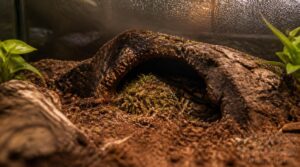
That damp texture only helps if it stays damp, not soggy. Squeeze moss until no water drips out; standing water invites mold and skin issues fast.
Check your humid hide during weekly drainage path checks. Skip water bowls inside the hide itself, and let ambient humidity control, not pooled moisture, keep substrate balance safe.
Supporting Healthy Sheds
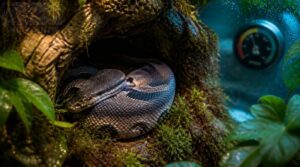
With drainage sorted, your snake’s skin gets what it actually needs: consistent moisture. A properly humid hide, holding 70-90% relative humidity, gives stuck sheds less chance to happen.
Watch for these signs of a smooth shedding process:
- Increased time spent inside the humid hide
- Duller, grayish skin before shedding
- Clear eye caps once complete
Good skin hydration here beats any thermal gradient trick alone.
Replacing Moss Regularly
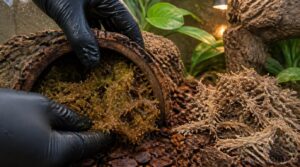
Even great moss breaks down eventually. Swap it out every 6 to 12 months, sooner if it dries, discolors, or smells off. Rinse fresh sphagnum moss first, then pack it 1.5–2 cm deep.
| Sign | Action | Timeframe |
|---|---|---|
| Dry/discolored | Replace | 1–2 weeks |
| Mold/odor | Replace | Immediately |
| Normal wear | Replace | 6–12 months |
Cleaning and Inspecting Hides
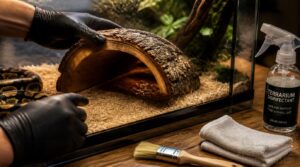
A clean hide isn’t just tidy, it’s a health checkpoint for your snake. Bacteria, mites, and hidden damage build up quietly if you skip regular upkeep. Here’s exactly what your cleaning routine should cover, from quick weekly checks to deeper monthly work.
Weekly Hide Spot-cleaning
Once a week, wipe each hide down with a damp microfiber cloth and reptile-safe cleaner—no harsh chemicals needed. Clear entry ports of debris, swap soiled substrate nearby, and check for odor persistence, a red flag for deeper buildup. Wear nitrile gloves, keep dedicated wipes handy, and log the date.
This simple cleaning routine keeps easy to clean reptile hides truly hygienic between deep cleans.
Monthly Deep-cleaning Routine
Once a month, pick a fixed sanitization day and log it—consistency matters for pet snake care.
Remove hides, disinfect with a 1:30 bleach solution, rinse well, and dry fully. Reset substrate, check humidity systems, wipe glass with a lint-free cloth, and note weight or behavior changes.
A removable lid design makes this deep clean far easier.
Checking Cracks and Edges
Battle-worn hides deserve a hands-on once-over during every deep clean. Run your fingers along seams for hairline cracks, check corners for chipped, sharp points, and press edges to test structural integrity.
- Feel underside seams for looseness
- Check corners for splinters
- Press edges for give
- Watch for dark, moisture-stained cracks
Discard anything warped or crumbling—your snake’s safety isn’t worth the risk.
Preventing Mites and Bacteria
Mites love tight seams and neglected corners, so seal every crack you find with reptile-safe silicone.
Skip fabric-lined hides, since tightly woven fabric traps moisture and debris.
Stick to weekly disinfecting, fresh substrate, and steady humidity control—not too damp, not bone-dry—to keep mold and bacteria from ever gaining a foothold.
Replacing Damaged Hides
Even a beloved Exo Terra Snake Cave won’t last forever. Once you spot cracks, warping, or persistent odor, replace it promptly—don’t wait for shed problems to force your hand.
Choose like-for-like materials for camouflage, whether that’s a Leoterra Ball Python Hide or plastic resin. Confirm smooth interiors, secure mounting, and a removable lid for easy access, then give it a full cleaning before your ball python moves in.
Frequently Asked Questions (FAQs)
Are glass enclosures good for ball pythons?
Yes, with the right setup. Glass terrariums offer great visibility and front-opening access, but you’ll need overhead heat, insulation on three sides, and secure hides to fight heat loss and reduce visibility-induced stress.
What hides are good for ball pythons?
Look for single-entry, snug-fitting hides in solid materials like resin or cork, such as the Exo Terra Snake Cave, Exo Terra Reptile Cave, or Zilla Bark Bends Hideout, sized right for thermoregulation and stress-free hiding.
What snake is worth $100,000?
Rare recessive breeding can push a ball python into six figures—extreme co-dom traits, showpiece exhibition pedigree, and lineage documentation drive it. Lavender albino, paradox, and pied morphs fetch big money too.
A secure Hagen Exo Terra Snake Cave keeps any prized snake safe and stress-free.
What do ball pythons like in their terrarium?
Do snakes really crave a "cozy cave"? Truth is yes: ball pythons want secure hiding spots of proper size, a strong thermal gradient, deep substrate, humid hide moss for sheds, and enrichment placed for natural exploration.
How many hides does a ball python actually need?
Two hides cover the basics: one warm, one cool, so your snake can chase its temperature gradient comfortably. Add a humid hide during shedding, and size each one properly as growth demands, for real stress reduction.
Can a ball python have too many hides?
More isn’t always better. As long as enclosure space stays navigable, extra hiding spots won’t harm your snake—just avoid crowding airflow or heaters, and keep the thermal gradient intact for natural behavior.
What happens if a ball python has no hide?
Without a secure retreat, expect pacing, poor appetite, and thermoregulation issues as your snake struggles to settle. Shedding problems and skittish behavioral shifts often follow, since chronic stress strips away the natural habitat cues that keep digestion, hydration, and confidence in check.
Can I use a cardboard box as a temporary hide?
Funny enough, that cereal box in your recycling could double as a quick fix. Yes, but only short-term: check for smooth interior surfaces, add ventilation slits, and swap it out fast once humidity or wear threatens your snake’s safety.
Conclusion
Studies on captive ball pythons show over 80% spend most of their time hidden when given the choice, proof that darkness isn’t a preference isn’t a preference, it’s biology. Choosing the right ball python hides for glass terrariums honors that instinct, turning a preference, it’s biology.
Choosing the right ball python hides for glass terrariums honors that instinct, turning a display tank into a den your snake trusts. Get the placement, materials, and humidity right, and you’ll see it: steady eating, clean sheds, a calmer coil in the corner. That’s the real reward—a snake that finally feels safe enough to relax.