This site is supported by our readers. We may earn a commission, at no cost to you, if you purchase through links.
A boa constrictor can outlive your car, your marriage, and possibly your mortgage. Given proper care, these animals regularly reach 20 to 30 years old, with some hitting 40. That’s a serious commitment, not an impulse buy from a reptile expo.
Most health problems I see in clinic trace back to one thing: owners guessing instead of measuring. Thermal gradients set by feel, humidity estimated instead of monitored, enclosures sized for a hatchling long after the snake outgrew it.
This boa constrictor care sheet replaces guesswork with exact numbers, the same ones I use when clients bring their snakes in for checkups. You’ll get real temperatures, real timelines, and real answers, so your boa thrives instead of just surviving.
Table Of Contents
- Key Takeaways
- Boa Constrictor Care Basics and Commitment
- Set Up a Boa Constrictor Enclosure
- Set Temperature, Humidity, and Lighting
- Feed and Maintain Your Boa
- Monitor Health, Handling, and Safety
- Frequently Asked Questions (FAQs)
- Are boas hard to take care of?
- What is the best bedding for a boa constrictor?
- What is too hot for a boa constrictor?
- How big should a 3 year old boa be?
- How to care for a boa constrictor?
- What equipment do I need for a boa constrictor?
- What are boa constrictors?
- Do boa constrictors have health problems?
- How often should I clean my boas enclosure?
- Can boa constrictors be housed together?
- Conclusion
Key Takeaways
- A boa constrictor can live 20 to 30 years (sometimes 40), so you’re signing up for a decades-long commitment, not a casual pet.
- Your snake’s health depends on exact numbers, not guesswork: keep the warm side at 88-92°F, the cool side at 78-82°F, and humidity between 40-60% (bumped to 70-90% during shedding).
- Enclosures need to grow with your boa, from a 20-gallon tank for hatchlings up to 75-125 gallons for adults, always secured with fine mesh and sturdy clamps to prevent escapes.
- Feeding, handling, and cleaning all follow strict schedules, from prey sized to your snake’s girth to annual vet checkups, since consistency is what keeps your boa thriving instead of just surviving.
Before committing, it’s worth reading through a practical guide to boa constrictor pros and cons so you know exactly what those decades will actually look like.
Boa Constrictor Care Basics and Commitment
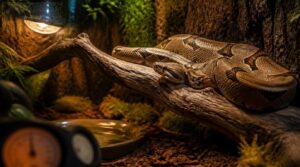
A boa constrictor isn’t a starter pet you set up once and forget. This snake can live 20 to 30 years, and your commitment needs to match that timeline. Before you buy a single supply, here’s what you need to know about the animal you’re bringing home.
Before making any purchase, it’s worth checking permits and species restrictions in your state so you’re not caught off guard later.
Species, Size, and Lifespan
A boa constrictor is a long-term commitment, not a starter pet. Expect 6 to 10 feet in captivity, with females outweighing males at 20 to 40 pounds. Growth is fastest in the first 2 to 3 years.
- Hatchlings: 12–18 inches
- Sexual maturity: 3–5 years
- Adult lifespan: 20 to 30 years
- Best care: up to 40 years
Natural Range and Behavior
Geographic origin spans northern Argentina to southern Mexico, across rainforests, savannas, and scrub forests below 1,000 meters elevation.
Understanding wild behavior helps you replicate it at home. Boas are nocturnal and crepuscular, relying on ambush hunting rather than pursuit. They favor dense cover, shelter selection near hollow logs, and access to water sources for drinking, cooling, and shedding support. Public understanding of wildlife needs remains inconsistent, as a recent human-wildlife interaction survey found many respondents lack clarity on proper animal care responsibilities.
Juvenile Versus Adult Care
Ambush instincts translate straight into care changes as your snake matures. Juveniles need smaller 20-gallon enclosures, weekly feedings, and gentle handling sessions.
Adults demand 75+ gallons, meals every 2-3 weeks, and firmer support during handling. Enclosure size, feeding frequency, and shedding cycles all shift as growth slows after year three. Watch weight weekly and adjust accordingly.
Essential Boa Supplies Checklist
Before bringing your snake home, gather the right gear. Setting Up Your Habitat starts with this Pet Boa Constrictor Supply Checklist:
- Tank with secure lid
- Substrate (aspen or cypress)
- Water dish, large and shallow
- Hide box for security
- Thermostat and heat source
Skip any item, and your Boa Constrictor Habitat falls short of proper husbandry standards.
Choosing a Healthy Boa
Before money changes hands, look closely. Check for bright, clear eyes, smooth skin with no lumps, and a clean vent. Watch alertness and tongue flicking. Ask for feeding records covering the last three meals. A responsible seller documents everything and welcomes your questions, since transparency signals a snake worth bringing home.
Set Up a Boa Constrictor Enclosure
Your boa’s enclosure is the foundation of good husbandry, not an afterthought. Get the size, ventilation, and setup wrong, and health problems follow close behind. Here’s what you need to know before you buy a tank or build a cage.
For a deeper dive into airflow and enclosure sizing, this guide on boa constrictor enclosure ventilation breaks down exactly what your snake needs to stay healthy.
Enclosure Size by Life Stage
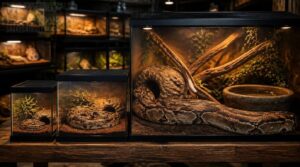
Your boa outgrows its home fast, so buy for the snake it’ll become, not the one you have now.
- Hatchlings: 20-40 gallon, 24x12x6 inches
- Subadults: 40-75 gallon, 36x18x12 inches
- Adults: 75-125 gallon, or a 6×3 feet enclosure
- Large adults: consider an 8×4 feet setup
Enclosure size should always exceed 1.5 times your boa’s length.
Ventilation and Escape Prevention
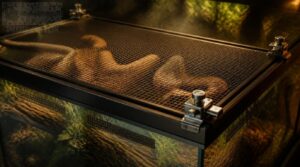
Given a boa’s strength, escape prevention starts with mesh lid security, not luck. Use fine mesh (1/8 inch or smaller) with four corner clamps and child-proof, corrosion-resistant locks. Never use tape.
| Feature | Requirement | Risk if Ignored |
|---|---|---|
| Mesh size | 1/8 inch or smaller | Head protrusion |
| Clamps | 4, evenly tightened | Lid displacement |
| Vent placement | High side walls | Poor airflow |
Safe Substrate Options
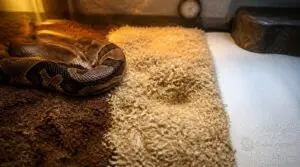
What lines the enclosure floor matters as much as the walls around it. Coconut fiber and aspen shavings both retain humidity without turning slimy, while paper towels suit quarantine setups needing daily changes.
Avoid pine, cedar, or dusty play sand entirely, toxicity and impaction risks run high.
Depth matters too: aspen needs 2-4 inches for adults, supporting natural digging without entrapment.
Hides, Branches, and Enrichment

A boa without a hide is a boa on edge, always exposed, never settling.
Without a hide, a boa stays exposed and on edge, never fully able to settle
Place one hide on the warm end and one on the cool end, each sized 2 to 3 times body width. Cork bark works well; it holds shape and resists mold. Add a sturdy branch for climbing enrichment, and rotate hides monthly for freshness.
Water Bowl Size and Placement
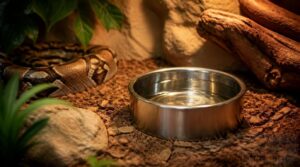
A boa’s water dish does more than quench thirst; it helps with shedding and hydration daily.
Use 4 to 6 inch bowls for juveniles, 6 to 8 inches for adults, in ceramic or stainless steel. Place it warm-side, away from corners and hides. Keep substrate dry nearby, rinse daily, and replace bowls every 6 to 12 months.
Set Temperature, Humidity, and Lighting
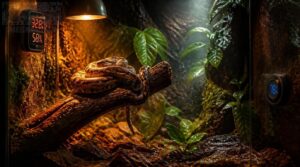
Your enclosure setup means nothing if the climate inside it is wrong. Boas rely on precise heat, humidity, and light to digest food, shed properly, and stay healthy. Here’s exactly what your thermal gradient, moisture levels, and lighting schedule need to look like.
Warm and Cool Side Temperatures
For your boa’s enclosure, temperature isn’t a detail, it’s the foundation. Keep the warm side between 88-92°F and the cool side at 78-82°F, creating a thermal gradient your snake can navigate freely.
- Place probes at head height
- Avoid drafts near the basking spot
- Check readings daily
- Keep cool side stable within 2-3°F
Thermostats and Safe Heat Sources
A thermostat is non-negotiable, not optional gear. Pair an under tank heater with a probe at basking height, set 88-92°F.
| Heat Source | Safe Use | Risk If Unregulated |
|---|---|---|
| Heat mat | With thermostat | Burns, no supervision |
| Ceramic heater | Rheostat/thermostat | Overheating |
| Ambient backup | Cooler rooms | Never exceed 95°F |
Humidity Targets and Monitoring
Once heat is dialed in, moisture control matters just as much. Keep enclosure humidity range between 40-60%, checked with a digital hygrometer at chest height, not near vents. Calibrate monthly.
Watch for swings past 10% RH in 24 hours, this signals poor ventilation control or a leaky lid, and can trigger respiratory issues or incomplete sheds down the line.
Shedding Humidity and Humid Hides
Everything shifts once your boa enters a shed cycle. Cloudy eyes and dull skin signal it’s time to boost the humid hide to 70-90% RH, checked by a dedicated hygrometer. Line it with damp sphagnum moss or coconut fiber, positioned on the warm side.
Minimize handling, then inspect the shed for full removal, including eye caps.
Lighting Schedule and UVB
Since boas can’t regulate their own internal clock, you need a consistent light cycle of 12-14 hours daily. Put your lighting on a timer, mimicking natural dawn/dusk transitions.
UVB isn’t optional, but it won’t replace heat. Position bulbs 12-18 inches above the basking spot, running alongside your regulated heat source for 10-12 hours.
Feed and Maintain Your Boa
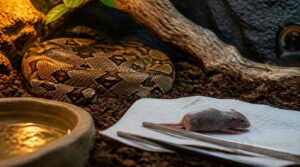
Feeding your boa correctly takes more than tossing in a mouse and walking away. Prey size, timing, and cleanliness all affect your snake’s digestion and long-term health. Here’s what you need to know to feed and maintain your boa the right way.
As a general guide, neonates typically do best eating every 7–10 days while juveniles can stretch to 10–14, though this juvenile boa constrictor feeding schedule should always bend to your snake’s actual weight gain and appetite.
Prey Size by Snake Size
Match prey width to your boa’s mid-body girth, never its length. Gape-limited sizing prevents choking and regurgitation.
- Juveniles: prey 10-15% of body weight, rat pups or hamsters
- Subadults: items 15-40% of girth
- Prey mobility and hardness affect swallowing safety
- Gradual prey size progression matches jaw strength
- Undersized meals stunt metabolic growth
Feeding Schedule by Age
Age drives appetite more than any other factor. Hatchlings eat every 5-7 days, juveniles every 10-14 days, and subadults shift to 2-3 week intervals. Adults settle into 30-37 day meals, sometimes pausing during brumation.
Track growth rate and body condition monthly, if ribs show or weight dips, adjust portions before your boa’s next scheduled meal.
Thawing and Offering Prey Safely
Frozen rodents need a slow, controlled thaw, never a quick shortcut. Refrigerator thawing is safest: place prey on a clean platter, bottom shelf, until fully thawed.
- Cold water thawing works faster (bag submerged, water changed periodically)
- Never thaw on the counter, bacteria activate as temperature rises
- Feed immediately after thawing using tongs, in a separate enclosure
Clean tools after each feeding to prevent contamination.
Spot Cleaning and Water Changes
A dirty enclosure breeds bacteria fast. Remove feces and shed skin within 24 hours using a paper towel, then wipe nearby walls with a damp cloth.
Change water every 1 to 3 days in humid setups, every 3 to 4 days in dry ones. Scrub the bowl weekly with mild reptile-safe cleaner, rinse fully, and dry before refilling.
Deep Cleaning and Disinfection
Full substrate replacement every 4 to 6 weeks calls for a real reptile cleaning protocol, not just a wipe-down. Remove your boa and all décor first.
Scrub surfaces with detergent, rinse, then disinfect at 1000 ppm available chlorine, allowing proper contact time. Clean top to bottom, never repeating spots. Toss porous items; use dedicated tools per enclosure to prevent recontamination.
Monitor Health, Handling, and Safety
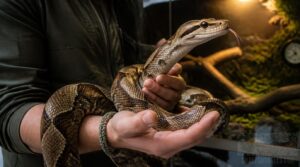
A healthy boa tells you a lot just by how it moves, eats, and feels in your hands. Knowing what’s normal makes it much easier to catch trouble early and handle your snake with confidence. Here’s what to watch for, from daily health checks to safe handling and knowing when it’s time to call the vet.
Signs of a Healthy Boa
Run your hands along your boa’s body and check for firm muscle tone, clear eyes, and steady tongue flicking. Healthy scales stay smooth, the vent stays clean, and skin sheds in one piece.
These daily observations build the baseline every reptile veterinarian relies on during annual exams, so learn them now.
Common Illness Warning Signs
Once you know healthy looks like, illness stands out fast.
Watch for wheezing or clicking sounds, nasal discharge, or open-mouth breathing, all signs of respiratory infection.
Star-gazing behavior points to inclusion body disease.
White mouth discharge signals mouth rot.
Tiny black dots mean mites.
No droppings for two weeks suggests impaction.
Any of these warrants a vet call.
Safe Handling Step by Step
Health checks catch problems early, but handling done right prevents stress in the first place.
Wash your hands first, removing scents that trigger feeding responses. Tap the snake gently with a hook, signaling handling time. Watch for slow tongue flicks, your green light to proceed.
Support the body fully, one hand near the head, one under the back half. Start sessions at 5 minutes, extending gradually as trust builds.
Stress, Bites, and Feeding Safety
Trust builds slowly, and rushing it invites bites. Cap sessions at once daily, 1-2 times weekly, and wait 48 hours after feeding.
Cover three enclosure sides to cut visibility stress. Feed only in a separate container with tongs, never bare hands.
Chronic stress causes regurgitation and appetite loss. Log every meal, watching for feeding changes signaling trouble ahead.
Veterinary Care and Quarantine
Schedule annual health checks including blood work, radiographs, and Doppler heart exams.
New boas need quarantine:
- 30-90 days isolation
- Weekly weigh-ins
- Disease screening tests (Cryptosporidium, Nidovirus)
- Four successful meals before joining the group
Watch for bubbly saliva or rattling breath, common illness signs demanding a vet call. Never attempt home treatment.
Frequently Asked Questions (FAQs)
Are boas hard to take care of?
Slow and steady wins the race, and that’s boa care, simply put. It’s not hard, but it demands real commitment level and consistent time investment: proper temperature gradient, a feeding schedule, and steady health monitoring.
What is the best bedding for a boa constrictor?
Coconut fiber and cypress mulch are your best substrate choices, holding 60-70% humidity for healthy shedding. Keep a 2-4 inch depth for burrowing. Avoid pine or cedar, and spot clean weekly for safety.
What is too hot for a boa constrictor?
Picture a basking spot creeping past 95°F with no thermostat backup. That’s when trouble starts. Anything above 90°F basking or 32°C ambient risks burns and heat stress, so monitor every zone daily.
How big should a 3 year old boa be?
By age three, expect 5 to 6 feet, with males near 5-5 feet and females reaching 5-6 feet. Genetics, diet, and overall health drive this variation, and growth rate usually slows noticeably after year three.
How to care for a boa constrictor?
Funny how a snake that can crush prey to death is, in captivity, mostly at the mercy of your thermostat. Real care means dialing in temperature, humidity, substrate, and a feeding schedule your boa can count on.
What equipment do I need for a boa constrictor?
You’ll need a front-opening enclosure sized to your boa’s length, a thermostat-controlled heat source, two hides, sturdy branches, a large water bowl, humidity tools, and digital thermometers, all working together to keep your snake healthy.
What are boa constrictors?
Do boas really live 40 years? Some do. Boa constrictors are nonvenomous, muscular predators native to Central and South America, ambushing prey by scent and heat, then constricting it before swallowing whole. Their size, patterns, and calm temperament make them popular, manageable pets.
Do boa constrictors have health problems?
Yes. Common problems include respiratory infections, parasites, mouth rot, and regurgitation, mostly linked to poor husbandry. Watch for wheezing, mites, or refusal to eat. Most conditions respond well to prompt veterinary care and corrected enclosure conditions.
How often should I clean my boas enclosure?
Check for feces daily and spot clean right away. Do a partial substrate refresh every couple of soiled spots, then a full deep clean with bleach disinfection every few weeks, housing your snake temporarily during the process.
Can boa constrictors be housed together?
Solitary housing is the safer route. Boas don’t form social bonds, and shared enclosures raise territorial behavior risks, resource competition, and stress. Keeping one snake per enclosure makes feeding time separation easier and allows for individual health monitoring.
Conclusion
A hatchling fits in your palm. An adult can stretch eight feet and outweigh your cat. That contrast is exactly why a boa constrictor care sheet matters more than instinct ever will.
Guesswork shortens lives. Precise temperatures, measured humidity, and correctly sized enclosures lengthen them, sometimes by decades.
You’re not just housing a snake. You’re managing a multi-decade commitment with exact numbers instead of assumptions.
Get the fundamentals right, and your boa won’t just survive your care. It will thrive under it.