This site is supported by our readers. We may earn a commission, at no cost to you, if you purchase through links.

A boa constrictor can outlive a dog, a cat, and your current address. That 30-year lifespan is what most prospective owners discover too late, after the enclosure is built and the first rodent is thawed.
Owning boa constrictors as pets carries real rewards. The setup costs, space demands, and legal landscape tell a different story.
Knowing both sides before you commit separates successful ownership from a rehomed snake posted online two years in. The pros and cons ahead will help you make that call clearly.
Table Of Contents
- Key Takeaways
- Are Boa Constrictors Good Pets?
- 5 Pros of Boa Constrictors as Pets
- 5 Cons of Boa Constrictors as Pets
- Boa Constrictor Care Requirements to Consider
- Should You Get a Boa Constrictor?
- Frequently Asked Questions (FAQs)
- What is the friendliest snake to own as a pet?
- Do boa constrictors like to be held?
- Which is more aggressive, python or boa?
- Do boa constrictors bond with humans?
- Do boa constrictors make good pets?
- Are boa constrictors friendly to humans?
- What is the friendliest boa constrictor?
- How do boa constrictors behave during breeding season?
- What signs indicate a boa is shedding?
- Are boa constrictors safe for homes with children?
- Conclusion
Key Takeaways
- Boa constrictors can live up to 30 years, so you’re not just picking a pet — you’re making a commitment that will outlast most of your current life plans.
- Adults need a minimum 6×3-foot enclosure with precise temperature and humidity control, making space and ongoing costs a genuine barrier for many households.
- Captive-bred boas with regular, patient handling develop reliably calm temperaments, but beginners are better served starting with a ball python or corn snake.
- Legal restrictions, limited exotic vet access, and disease risks like IBD require serious research and local verification before you ever set up an enclosure.
Are Boa Constrictors Good Pets?
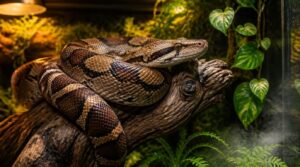
Boa constrictors can make excellent pets, but they’re not the right fit for everyone. Below, you’ll find a quick breakdown of the key pros and cons to set realistic expectations before committing. From there, you’ll see who boas suit best and when a different species might be the smarter choice.
If your boa regularly strikes or refuses handling, these signs of aggression in boa constrictors can help you tell stress from temperament before drawing any conclusions.
Quick Pros and Cons Snapshot
A boa’s docile temperament and low maintenance feeding schedule make it genuinely rewarding for prepared keepers. Their long life expectancy can stretch well past 25 years.
But the downsides are real. Adults demand secure housing with ample space and consistent climate control. Costs run high, and conditions like inclusion body disease require your ongoing vigilance. Before committing to ownership, carefully weighing pros and cons can help you organize your thoughts and make a more confident, long-term decision. Know both sides well first.
Who Boas Suit Best
Knowing both sides puts you ahead of most beginners. Boas suit intermediate to experienced handlers who can commit to secure housing and steady daily routines. Their docile temperament and low maintenance feeding schedule reward patience far more than impulse.
If you have real household space, a realistic budget, and time, a boa’s long life expectancy makes every year worthwhile.
When Another Snake Fits Better
Not everyone has that space or that timeline. If your apartment runs small, your budget is tight, or you’re building confidence as a first-time keeper, ball pythons and corn snakes are worth a closer look. Both stay manageable in size, eat reliably, and need smaller enclosures.
Veterinary networks and community support are also far stronger for these widely kept species.
5 Pros of Boa Constrictors as Pets
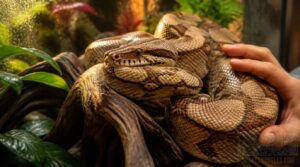
Boa constrictors offer genuine advantages that set them apart from most reptile pets. Before you decide, it helps to know exactly what’s working in their favor. Here are five real pros that committed owners consistently point to.
Generally Calm Adult Temperament
Think of adult boas as the slow-burn professionals of the snake world. Once mature, their docile temperament shows in every deliberate movement.
Defensive behavior and stress indicators like gaping or tail whipping rarely appear in settled animals. During routine handling, a gentle touch meets calm, steady posture rather than resistance, which makes their daily care predictable and manageable for you.
Regular Handling With Acclimation
Most boas don’t warm up overnight, but regular daily handling steadily builds trust. Start with 5-minute sessions, watching body language cues like head turning or rapid breathing as signals to pause.
As stress indicators fade, extend contact gradually. A gentle touch and controlled lift keep each session calm, reinforcing the routine while maintaining enclosure security between interactions.
Quiet, Low-Odor Companions
Unlike dogs or parrots, a well-kept boa is remarkably quiet and low-odor when you stay consistent with substrate hygiene. Regular waste removal and proper enclosure ventilation prevent the musty buildup that catches new owners off guard.
Of course, before committing to those decades of care, it’s worth reviewing boa constrictor ownership laws and requirements by state to make sure you’re set up legally before your first enclosure cleaning routine begins.
Handling safety also plays a role. A calm, acclimated boa releases fewer stress-driven secretions, keeping the air around its enclosure neutral throughout the day.
Infrequent Adult Feeding Schedule
Adult boas eat far less than most people expect. Once mature, a feeding schedule every 4-6 weeks keeps them healthy without overloading their metabolism.
Match prey size to your snake’s widest point using frozen-thawed rodents. Respecting the digestion period also matters for handling safety. Wait 48 hours post-meal before any interaction.
Long Lifespan for Committed Owners
A boa’s lifespan can reach 30 years, making this a longterm commitment most owners underestimate.
Key longevity factors for responsible ownership:
- Annual vet checkups catch metabolic issues early
- Maintain 80–85°F on the warm side for digestion
- Mist daily to prevent dehydration
- Feed frozen-thawed prey for steady nutrition
- Track weight and shed cycles each year
5 Cons of Boa Constrictors as Pets
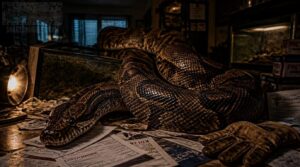
Boa constrictors reward dedicated keepers, but the challenges are real and worth taking seriously. Before committing, you need to understand the demands they place on your space, budget, and daily life. These five cons aren’t dealbreakers for everyone, but they matter more than most beginners expect.
Large Adult Size and Strength
Sixty pounds of coiled muscle moves faster than you’d expect. Two trained handlers are the minimum for routine checks, since a large adult’s muscular coils can apply real pressure quickly.
Regular handling acclimation builds predictable behavior and reduces stress on both ends. Reinforced latches matched to your enclosure size are non-negotiable for escape prevention as your boa’s size and strength grow.
Substantial Enclosure Space Needs
A snake reaching ten feet needs serious room to move, thermoregulate, and feel secure. Your enclosure must support a full thermal gradient from warm to cool side, meaning length matters as much as height.
Space needs grow with your boa. A well-ventilated build with proper dimensions isn’t a luxury; it’s what keeps a large snake physically and behaviorally healthy for decades.
High Setup and Ongoing Costs
That space comes with a real price tag. A proper terrarium setup runs $300 to $900 for the enclosure alone, plus $60 to $200 per climate control unit. Substrate selection, a reliable heat source, and cage accessories add $150 to $400 upfront.
Monthly costs for substrate, electricity, and prey usually reach $45 to $150. The cost of ownership climbs fast.
Decades-Long Ownership Commitment
Those costs don’t stop at setup. A decades-long ownership commitment means planning for a lifespan that can reach 20 years or beyond.
Long-term care includes:
- Replacing heating systems and lighting as they age
- Upgrading enclosures as your boa grows larger
- Budgeting for annual veterinary checkups
- Locating vets experienced with large constrictors
The cost of ownership compounds quietly across those decades.
Veterinary, Legal, and Safety Challenges
The long-term commitment extends beyond money. Finding a qualified reptile veterinarian nearby isn’t guaranteed, and the stress of locating emergency care after hours is real.
Legal considerations add complexity. Many jurisdictions require permits, and some ban boas outright. Salmonella poses a zoonotic disease risk, particularly around children and elderly household members.
A proper quarantine protocol also protects your existing collection.
Boa Constrictor Care Requirements to Consider
Owning a boa constrictor means meeting a specific set of care requirements before your snake ever arrives home. Get these right, and you’ll have a healthy, manageable animal for decades. Here’s what every prospective owner needs to have in place.
Secure Adult-Sized Enclosure
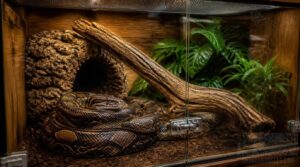
A grown boa needs room to actually live, not just survive. Your adult-sized enclosure should measure at least 6 feet long by 3 feet wide, with secure locking latches — boas are notorious escape artists.
Include hides and sturdy climbing branches for enrichment. A well-ventilated build allows airflow without sacrificing security, creating the foundation for stable temperature regulation and humidity control.
Temperature and Humidity Control
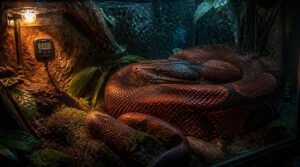
Because boas can’t regulate their own body heat, temperature regulation falls entirely on you. Keep the basking spot at 86 to 90°F and the cool side around 78 to 82°F, using digital probes to confirm both. A dedicated thermostat prevents dangerous overheating.
For humidity control, stay between 50 and 70 percent, nudging it higher during shedding.
If you’re ever unsure whether your setup is working, the signs of a healthy ball python—like clear eyes and a clean, complete shed—will tell you quickly.
Frozen-Thawed Prey Feeding
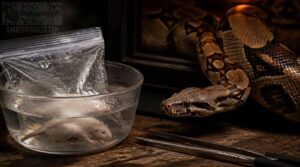
Although live rodents are an option, frozen-thawed prey eliminates injury risk and is far easier to manage.
Seal it in a heavy-duty plastic bag and submerge in water held at 100 to 110°F. Water above 122°F can partially cook outer tissue and cause oral burns.
Match prey size to your boa’s girth, and feed adults every 10 to 14 days.
Cleaning and Health Monitoring
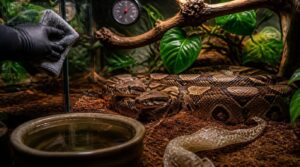
Keeping your boa’s enclosure clean is key to its overall health. Remove feces and soiled substrate daily, refresh the water bowl, and clear shed skin promptly to avoid complications. Choosing the right reptile enclosure substrate bedding — like coconut fiber or cypress mulch — makes daily spot-cleaning much easier while helping maintain healthy humidity levels.
During cleaning, check urates for abnormal coloration and examine skin for mites or lesions. Unexplained weight loss or behavioral stress often signals early illness.
Schedule an annual vet checkup with a reptile specialist.
Quarantine and IBD Prevention
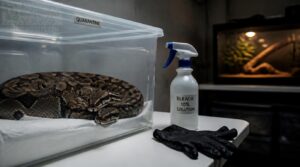
IBD is a fatal, contagious disease with no cure. Any new boa needs strict isolation before it joins your collection.
- Quarantine for 3–6 months minimum in a separate room
- Test for reptarenaviruses with a reptile veterinarian at the start and end
- Use paper towels and bleach-based cleaning to detect mites early
Restart the clock if any new animals arrive mid-quarantine.
Should You Get a Boa Constrictor?
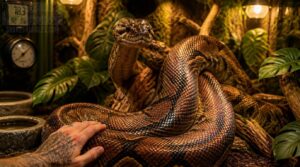
Choosing a boa constrictor is less about wanting one and more about whether your life genuinely fits one. Before you commit, five key factors will help you decide honestly. Work through each one carefully.
Boa Versus Ball Python
Knowing the pros and cons of each species helps you pick the right snake.
| Boa Constrictor | Ball Python |
|---|---|
| Grows 6–10 feet | Stays 3–5 feet |
| Needs gradual acclimation | Tolerates frequent handling |
| Feeds less often | Feeds every 7–14 days |
| Requires large enclosure | Fits standard terrarium |
| Lives 20–30 years | Lives 20–30+ years |
Ball pythons suit beginners best; boa constrictors reward experienced, committed handlers.
Captive-Bred Versus Wild-Caught
The source of your boa matters. Captive-bred boas arrive with health records, lower parasite loads, and calmer temperaments. Wild-caught individuals offer genetic diversity but often carry parasites requiring costly quarantine.
Legal compliance matters here too. Wild-caught snakes need import permits most buyers can’t get. Captive-bred is the safer, smarter choice for exotic pet ownership.
Home Space and Household Safety
A boa’s adult size demands deliberate home planning long before you bring one home. Adults need at least a six-by-two-foot enclosure base with secure latching to prevent escape.
Place the enclosure in a low-traffic area, away from young children and curious pets. Persistent stress from constant household disruption makes handling far less predictable and raises real safety concerns over time.
Lifetime Budget and Vet Access
Space planning sets the stage, but boa care costs run much deeper than first-time owners expect.
Food, substrate, electricity, and vet visits accumulate steadily over a 20-30 year lifespan, pushing lifetime expenses to $3,000-$8,000+. Budget $75-$150 for annual exams and keep $100-$300 in an emergency health fund. Most importantly, locate an exotic reptile vet before you bring your boa home.
Boa ownership costs $3,000–$8,000+ over decades—budget carefully and find your exotic vet first
Pre-Purchase Readiness Checklist
Before bringing home a boa constrictor, confirm these:
- Set your budget and include a 10% contingency.
- Verify local laws and secure any required permits.
- Prepare the enclosure with lockable doors before arrival.
- Locate a reptile vet within 30 miles.
- Draft a daily plan covering feeding, handling, and cleaning.
Checking these off reduces stress and prevents costly surprises.
Frequently Asked Questions (FAQs)
What is the friendliest snake to own as a pet?
What is the friendliest snake to own as a pet? Like a calm river, the ball python rarely rushes or startles. Its docile temperament, manageable size, and steady tolerance for regular handling suit most beginners.
Do boa constrictors like to be held?
Do boa constrictors like to be held? They tolerate gentle, consistent handling well but don’t actively seek it out. Watch their body language closely—stress signs like tail flicking mean it’s time to back off.
Which is more aggressive, python or boa?
Pythons didn’t exactly get the "gentle giant" memo. Large python species show higher aggression and bite force during handling. Boas usually display calmer temperament, though individual behavior and history always matter more than genus alone.
Do boa constrictors bond with humans?
Do boa constrictors bond with their humans? Not like a dog would, but repeated calm handling builds genuine trust over time. A well-socialized boa stays relaxed, tolerates routine care, and may approach your open hands.
Do boa constrictors make good pets?
Do boa constrictors make good pets? Yes — absolutely for the right owner. They’re docile and genuinely fascinating, but their long lifespan, large enclosure size, consistent handling requirements, and ongoing cost make serious preparation entirely non-negotiable.
Are boa constrictors friendly to humans?
Are boa constrictors friendly to humans? Most captive adults are genuinely docile with regular socialization. Patient, deliberate handling keeps stress low and reduces defensive strikes. They won’t seek conflict, but calm, consistent contact always matters.
What is the friendliest boa constrictor?
The Colombian boa (Boa imperator) consistently earns top marks for calm temperament. Regular, gentle handling from an early age builds its docile, stress-tolerant nature, making it a practical choice for beginner and experienced keepers alike.
How do boa constrictors behave during breeding season?
During breeding season, males grow restless and actively pursue females. Behavioral observation reveals courtship wrestling, tail coiling, and extended mating. Females signal readiness through noticeable preovulatory swelling.
What signs indicate a boa is shedding?
Cloudy, bluish eyes signal your boa’s shedding cycle has started. Skin dulls, appetite drops, and hiding increases noticeably. Your snake will rub against rough surfaces to loosen the old skin before it fully peels away.
Are boa constrictors safe for homes with children?
Yes, with strict rules. Think of a boa as a locked pool: safe only when supervised. Never leave children alone during handling or feeding, since adults coil powerfully and bites can lacerate. Secure enclosures, handwashing, and constant adult supervision keep safety manageable.
Conclusion
A boa constrictor could outlive your mortgage, your next car, and maybe your enthusiasm for exotic pets. That’s the reality hiding behind every glossy enclosure photo.
Weighing boa constrictors as pets pros and cons honestly means looking past the novelty at the decades of feeding, heating, and vet bills waiting ahead. The snake doesn’t care about your excitement. It only needs your commitment. Get that right, and you’ll share your home with something genuinely impressive.