This site is supported by our readers. We may earn a commission, at no cost to you, if you purchase through links.

Something looks off. Your ball python is breathing with its mouth open, and you can hear a faint wheeze from across the room. That sound alone can send any keeper’s heart racing.
Ball pythons are remarkably quiet animals. Normal breathing is so subtle you could miss it entirely, which is exactly why anything audible feels alarming. Ball python labored breathing symptoms range from harmless pre-shed changes to signs of a respiratory infection that needs a vet the same day.
Knowing the difference starts with understanding what normal actually looks like.
Table Of Contents
Key Takeaways
- Healthy ball pythons breathe silently with their mouths closed at 4–8 breaths per minute, so any audible sound—wheezing, clicking, or gurgling—is your first clear signal that something’s wrong.
- Open-mouth breathing, exaggerated rib movement, or a persistently raised head aren’t just quirks; they’re signs of active respiratory distress that warrant a same-day vet call if they don’t resolve within 48–72 hours of fixing enclosure conditions.
- Most breathing problems trace back to poor husbandry—temperatures below 75°F suppress your snake’s immune system, while humidity above 60% with poor airflow creates the perfect environment for respiratory infections to take hold.
- Colored nasal or oral discharge, lethargy, and unexplained weight loss don’t happen in isolation—treat them together as an emergency, because your snake is burning reserves it can’t replace.
What Normal Ball Python Breathing Looks Like

A healthy ball python’s breathing is easy to miss because it’s usually quiet and subtle. Knowing what’s normal makes it much easier to spot a real change. Here’s what you should expect to see and hear.
A healthy ball python breathes with its mouth closed and makes no sound — learn what else to look for when choosing a healthy ball python from the start.
Normal Resting Respiration Rate
A relaxed ball python usually takes 4 to 8 breaths per minute. Watch while it is asleep or completely still, then count body rises for 15 seconds and multiply by four.
Warmer temperatures may raise the rate slightly; cooler temperatures may lower it. Stable temperature gradients and humidity control help. Quiet, regular breathing without effort helps normal respiration, not labored breathing or respiratory infection.
Subtle Rib Cage Movement
After counting breaths, watch the mid-body for subtle rib cage expansion. Each inhale creates a smooth, slight widening, sometimes with faint scale separation, then returns evenly as the snake exhales.
Normal breathing should preserve postural stability:
- No visible heaving
- No jerky movement
- No changing body position
A relaxed snake usually shows steady breathing and loose coiling while resting.
The visibility threshold is low. Good temperature control, humidity management, and ventilation systems support a regular breathing rhythm without respiratory distress.
Closed-mouth, Quiet Breathing
With the body movement remaining slight, a healthy ball python should keep its mouth fully closed and breathe silently through clear nostrils. Quiet breathing is regular, deep, and unforced, with stable pauses between breaths.
The glottis closes between breaths, preventing air leakage. Proper humidity helps nasal passage function. Wheezing sounds, nasal discharge, or lethargy are not normal and can suggest a respiratory infection.
Brief Handling Hisses
A brief handling hiss is usually a normal warning, not illness. It often lasts 1 to 3 seconds when you first touch your snake, move suddenly, approach from above, or carry strong odors on your hands.
Your ball python may flatten slightly, retreat into a loose coil, or tongue-flick more. It should stop once handling ends. Unlike respiratory infection, it doesn’t cause open-mouth breathing, wheezing sounds, or persistent noise.
Pre-shed Breathing Changes
During the shedding cycle, a slightly faster Pre-shed respiration rate can be normal, especially in the Eye cloudiness phase.
Watch for:
- Subtle Visible rib movement
- Soft Audible wheezing sounds only before shed
- Closed-mouth, unlabored rest
- Breathing afterward
Humidity influence breathing: keep humidity between 5060, verify digital hygrometer accuracy, and seek care if shedding complications or noise persist.
If your eggs start looking sunken or wrinkled despite stable humidity, deflated ball python egg causes and fixes walks you through the warning signs and what to do before mold becomes the bigger problem.
What Labored Breathing Looks Like
When a ball python is struggling to breathe, the signs are usually hard to miss once you know what you’re looking for. These aren’t subtle shifts — they’re visible changes in posture, movement, and effort that stand out clearly against normal, quiet breathing. Here are the key warning signs to watch for.
Open-mouth Breathing at Rest

A ball python with its mouth hanging open at rest is sending you a clear signal. Unlike a quick yawn, persistent open-mouth breathing means your snake is working hard just to breathe. You’ll often notice reduced activity and food refusal alongside it.
If the symptom lasts beyond 48–72 hours after correcting your husbandry, a respiratory infection requires prompt veterinary attention.
Exaggerated Rib Cage Movement
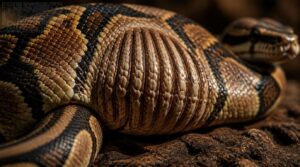
Each breath tells a story. Normal rib cage expansion is subtle. When breathing effort increases with respiratory distress, chest volume fluctuation turns dramatic, sides visibly heaving.
Watch for:
- Ribs visibly pushing outward
- Exaggerated rib cage movement at rest
- Open-mouth breathing with labored effort
- Visible rib motion amplification
This thoracic pressure change well beyond normal is a clear sign of active respiratory distress.
Rapid, Shallow Breaths
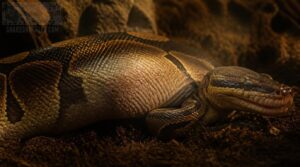
Normal resting rate is 4-8 breaths per minute. Rapid, shallow breathing pushes that above 20, with minimal chest expansion between each cycle.
| Trigger | Effect on Breathing |
|---|---|
| Stress or enclosure change | Acute tachypnea |
| Temperatures above 90°F | Heat-driven rapid breaths |
| Handling after feeding | Metabolic discomfort |
| Poor ventilation | Oxygen-depleted hyperventilation |
Persistent rapid breathing alongside open-mouth breathing or wheezing signals respiratory distress needing veterinary attention.
Elevated Head or Neck

When your snake holds its head persistently elevated in what’s called stargazing posture, that’s a serious warning sign.
Abnormal neck positioning has several distinct causes:
- Respiratory distress forcing the head up to improve airflow
- Neurological damage from IBD or a viral infection
- Toxin or chemical exposure
- Head trauma
- Extreme temperature fluctuations stressing the nervous system
Persistent Breathing After Handling
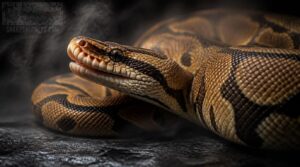
After handling, some elevated breathing is normal. Your python usually needs 10 to 25 minutes to work through its stress recovery timeline. Rapid, shallow breathing past 30 minutes signals respiratory distress, not routine stress.
Captive-bred snakes recover faster than wild-caught ones. Washing your hands with unscented soap reduces the chemical residue that keeps some pythons in a prolonged alert state.
Which Symptoms Suggest Respiratory Infection?

Labored breathing alone doesn’t always mean infection — but certain symptoms cross a clear line. If your ball python is showing any of the following signs, a respiratory infection is likely the cause. Here’s what to watch for.
Wheezing, Clicking, or Gurgling
Unusual sounds are your first clue something is wrong. Wheezing, clicking, or gurgling during breathing often signals mucus buildup or airway obstruction from a respiratory infection.
Three sounds to recognize:
- Wheezing: a high-pitched whistle as air pushes through narrowed airways
- Clicking: a sharp, interrupted sound during inhalation
- Gurgling: a wet, rattling noise from secretions in the airway
Nasal or Oral Bubbles
Those sounds often come paired with something you can see. Nasal bubbles form when excess mucus shifts through the upper airway during breathing. Oral foaming appears when saliva mixes with air during labored breaths. Bubbles that persist at rest, or worsen over days, point to active respiratory inflammation, not just a brief stress response.
| Location | What You See | Concern Level |
|---|---|---|
| Nostrils | Clear to cloudy bubbles during inhale | Moderate to high |
| Mouth corners | Frothy or foamy saliva at rest | High |
| Both sites | Sticky residue, repeated clearing attempts | Urgent |
Thick, Colored Discharge
When bubbles progress to something thicker, colored discharge is the clearer warning sign. Normal oral secretions are thin, clear, and barely visible.
Yellow or green mucus signals active bacterial infection. Brown or blood-tinged material suggests tissue damage.
The consistency shift from watery to opaque, cheesy exudate reflects accumulating white blood cells and bacteria. Any colored discharge warrants prompt veterinary evaluation.
Red, Swollen Mouth Tissue
Discharge isn’t always the most visible clue. Sometimes the tissue itself tells the whole story.
Red, swollen mouth tissue is a hallmark of infectious stomatitis, commonly called mouth rot. The oral mucosa may appear inflamed, puffed, or deep red along the gum line. That reddened, swollen tissue signals bacterial invasion and needs prompt veterinary evaluation before the infection spreads further.
Lethargy, Appetite Loss, Weight Loss
When a ball python stops eating and grows sluggish, those changes rarely happen alone. A respiratory infection taxes the whole body, driving lethargy and appetite loss that quickly leads to unexplained weight loss. Your snake burns through reserves it simply can’t replace, and dehydration risk climbs fast. Treat these signs together as an emergency warning sign and call your vet.
When a ball python stops eating and wastes away, treat lethargy, appetite loss, and weight loss as one emergency
How Husbandry Affects Ball Python Breathing
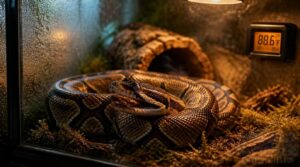
Your ball python’s breathing often reflects what’s happening inside its enclosure before any other symptom appears. Poor temperatures, humidity imbalances, and handling stress can each push breathing off course in different ways. Here’s how specific husbandry factors connect to what you’re observing.
Low Temperatures and Immune Suppression
Your snake can’t regulate its own body heat without your help. Low temperatures below 75°F directly suppress immune defenses through metabolic slowdown, leaving white blood cells sluggish and slow to respond.
Chronic cold exposure from poor temperature control creates ongoing thermoregulation stress that compounds over time. That’s why even mild respiratory pathogens can escalate into labored breathing and serious infection.
Excess Humidity and Stagnant Air
When humidity climbs above 60% RH and air stops moving, condensation settles on cool surfaces and wet bedding stays wet. That trapped moisture slows evaporation, keeping your enclosure damp long enough to irritate respiratory tissue.
Stagnant, moist air is the real issue. Aim for 50-60%, monitor with a digital hygrometer, and make sure proper airflow so surfaces dry between mistings.
Poor Ventilation or Mold Exposure
Poor ventilation does more than trap moisture. When airflow is inadequate, mold spores accumulate in substrate layers and enclosure corners, right where your python breathes closest to the ground.
A musty smell or visible mold means spores are already airborne. Remove mold with diluted chlorhexidine, replace the substrate, and add ventilation openings until fresh air moves through freely.
Handling Stress Versus Illness
Handling can trigger brief, deep breaths or hissing that looks alarming but isn’t. This is a normal stress response, not illness.
The key difference is timing. Stress-related breathing resolves within 30 to 60 minutes after you return your python to its enclosure. If heavy breathing persists well beyond that window, don’t wait. That’s when you call your vet.
Pre-shed Wheezing Versus Infection
Pre-shed wheezing is faint and intermittent and stops once your python sheds. Infection affects the respiratory system differently: persistent crackling or gurgling that lingers for weeks. Low humidity worsens pre-shed breathing but won’t trigger discharge.
Watch for infection signs:
- Mucus or bubbles from the nose or mouth
- Nasal discharge outlasting the shed
- Labored breathing that worsens
- Lethargy and appetite loss
What to Do About Labored Breathing
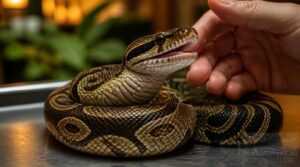
Noticing labored breathing in your ball python is understandably unsettling, but staying calm and acting methodically makes all the difference. There are a few practical steps you can take right away — before you even call the vet — that can help stabilize your snake and give you clearer answers. Here’s what to do, in order:
Stop Handling and Reduce Stress
When your ball python shows stress signals like tight coiling or labored breathing, stop all handling immediately. Continued contact only strains the respiratory system further. Reduce handling frequency, minimize environmental stress, and let your snake rest quietly inside a secure hide. Resume only gentle contact and allow self-paced exploration once breathing normalizes. Forcing interaction can worsen stress-related deep breathing a lot.
Correct Enclosure Conditions Safely
Once your snake is calm and resting, check the enclosure conditions and fix what’s off. These three areas matter most:
- Temperature gradient: Warm side at 88-92°F, cool side at 78-80°F
- Humidity: Keep it at 50-60% and confirm accuracy with a hygrometer
- Substrate and airflow: Swap damp bedding for dry cypress mulch and clear any blocked vents
Isolate and Monitor Symptoms
Once conditions are corrected, move your snake to a separate quarantine enclosure away from all other reptiles. Plan for a minimum of 30 to 45 days of isolation.
Paper towel substrate makes it easy to spot any discharge or fecal changes quickly. Check daily for respiratory sounds, nasal discharge, and weight shifts. Log everything, including temperatures, humidity, and feeding responses.
Emergency Veterinary Warning Signs
Monitoring tells you when to wait and when to act. If you spot open-mouth breathing at rest, blue-tinged gums, or visible strain with every breath, don’t wait 24 hours. Call a reptile veterinarian the same day.
Stargazing or corkscrewing movements alongside labored breathing signal neurological involvement, which means respiratory failure may be close. These are life-threatening symptoms.
Veterinary Diagnosis and Treatment
When your reptile veterinarian examines your ball python, expect more than a quick look.
Key diagnostic and treatment steps:
- Respiratory system check: breathing sounds, discharge, and mouth tissue
- Diagnostic tools: X-rays, bloodwork, tracheal swabs, and PCR testing
- Antibiotic treatment by injection, usually 30 days minimum
- Supportive fluids, nebulization, and properly corrected temperatures for recovery
Regular recheck exams confirm full recovery.
Frequently Asked Questions (FAQs)
How to tell if a ball python has respiratory issues?
The quieter your ball python breathes, the healthier it is. Watch for open-mouth breathing, wheezing, bubbles around the nostrils, nasal discharge, or a head held high at rest. Visible rib strain confirms something is wrong.
What are the signs that a ball python is dying?
Blue-tinged gums, severe unexplained weight loss, extreme lethargy, and poor coordination are the clearest end-of-life indicators in a ball python. When these signs appear together, systemic failure is likely and urgent veterinary care is needed.
What does labored breathing look like in a snake?
Think of a car engine straining uphill: the effort is obvious. Open-mouth breathing, exaggerated rib movement, a raised head posture, audible wheezing, and visible nasal discharge all signal a snake working too hard to breathe.
My ball python is breathing heavy. Should I be worried?
Sometimes, yes. Heavy breathing right after handling often signals temporary stress, and it should settle soon. But if you’re seeing open-mouth breathing, wheezing, or bubbles around the nostrils at rest, that warrants a vet call.
Can respiratory infections spread between ball pythons?
Yes. Respiratory infections spread between ball pythons through nasal discharge, mucus production, and shared airspace. Viral shedding risk exists even before visible symptoms appear. That’s why quarantine protocols and biosecurity measures always matter.
Conclusion
A snake that breathes quietly at rest is a healthy snake. One that wheezes, gapes, or labors through each breath is actively asking for help.
Recognizing ball python labored breathing symptoms early is what separates a simple husbandry fix from a same-day vet visit.
Trust your instincts as a keeper. If something sounds or looks wrong, it usually is. Your ball python can’t tell you it’s struggling. But now, you know exactly how to listen.
- https://www.spah.la/blog/ball-python-health
- https://reptifiles.com/ball-python-care-guide/ball-python-diseases-health/ball-python-respiratory-infection
- https://www.justanswer.com/pet-reptile/mu8yf-ball-python-keeps-opening-mouth-breathe.html
- https://www.wilbanksreptiles.com/blogs/ball-pythons/common-ball-python-health-issues-and-how-to-prevent-them
- https://pubmed.ncbi.nlm.nih.gov/28192243