This site is supported by our readers. We may earn a commission, at no cost to you, if you purchase through links.

Most corn snake health issues don’t start with bad husbandry. They start at feeding time.
Corn snakes are obligate carnivores, which means whole prey isn’t a preference. It’s a requirement. Every mouse you offer either delivers balanced protein, correct calcium ratios, and natural moisture, or it doesn’t. The gap between a quality feeder and a poor one shows up slowly, then all at once in a vet visit you didn’t plan for.
Choosing from the best corn snake food brands means understanding what separates a nutritionally complete feeder from one that falls short where it counts.
Table Of Contents
- Key Takeaways
- Top 3 Best Corn Snake Food Brands
- How to Compare Corn Snake Food
- Best Corn Snake Food by Age
- Safe Frozen-Thawed Food Preparation
- Feeding Schedules and Food Troubleshooting
- Frequently Asked Questions (FAQs)
- What is the best diet for corn snakes?
- Where can I buy a corn snake?
- Are corn snakes good pets?
- Can corn snakes eat live prey?
- How to feed corn snakes frozen food?
- What do Captive corn snakes eat?
- What should I feed my corn snake?
- What is the best snake food?
- What can I feed my corn snake if I don’t have mice?
- What to avoid with corn snakes?
- Conclusion
Key Takeaways
- Frozen-thawed whole prey — not supplements or alternatives — is the only way to give your corn snake the complete nutrition it actually needs.
- Match prey width to your snake’s midsection (about 8–12% of body width for adults) and you’ll avoid the two most common feeding problems: refusals and regurgitation.
- Where your feeders come from matters as much as what they are — purpose-bred, parasite-free rodents shipped frozen on dry ice are the only safe bet.
- After every feeding, leave your snake alone for at least 24 hours; handling too soon is one of the fastest ways to trigger stress and regurgitation.
Top 3 Best Corn Snake Food Brands
Not all frozen feeders are created equal, and the brand you choose matters more than you might think. These three options have earned their spots based on quality, sizing consistency, and real-world reliability for corn snake keepers. Here’s what made the cut.
If you’re weighing the overall investment, understanding the full cost of corn snake ownership puts feeder pricing into helpful perspective.
1. Chlorhexidine 2 Percent Antiseptic Solution

Keeping a corn snake healthy isn’t just about food. Cuts, scrapes, and minor skin irritations happen, and having a solid antiseptic on hand really does matter. Durvet’s Chlorhexidine 2% Solution covers that gap cleanly.
This antibacterial formula works against both gram-positive and gram-negative bacteria, with a residual effect lasting up to 2 days after one application. That’s a solid protection window. One gallon also goes a long way, since most applications only need about two tablespoons per gallon of water.
Beyond wound care, you can use it to disinfect your reptile enclosure between deep cleans. Just keep it far from eyes, ears, and the mouth, and never apply it internally. The strong smell and blue color can both be a nuisance, so handle it with care around your snake’s habitat and bedding.
| Best For | Pet owners caring for horses, dogs, or reptiles who need a reliable, long-lasting antiseptic solution for wound care and habitat hygiene. |
|---|---|
| Pack Size | 1 gallon |
| Primary Use | Wound & habitat care |
| Target Species | Reptiles, horses, dogs |
| Storage Method | Room temperature |
| Prep Required | Dilute before use |
| Key Ingredient | 2% chlorhexidine solution |
| Additional Features |
|
- Fights both gram-positive and gram-negative bacteria with residual protection lasting up to 2 days
- One gallon provides excellent value, lasting months with most applications requiring just two tablespoons per gallon of water
- Versatile enough for wound care, hot spots, skin irritations, and disinfecting enclosures or reptile habitats
- Strong medicinal odor can be unpleasant during use
- Blue dye can stain fabrics, bedding, and surfaces if you’re not careful
- Requires dilution for most applications and must be kept away from eyes, ears, and mouth
2. Frozen Mice Feeders for Juvenile Snakes
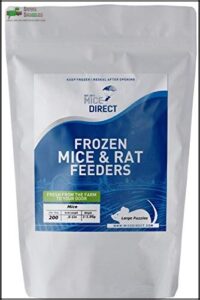
Once your snake’s health basics are covered, food becomes the real priority. For juvenile corn snakes, MiceDirect frozen feeder mice are a reliable choice.
Raised in Cleveland, GA, and fed Mazuri zoological-grade feed with no artificial ingredients, these mice deliver the balanced whole-prey nutrition growing snakes need. Juveniles require 55-62% protein in their diet, and whole frozen prey hits that naturally. Fat content stays in the right range too, supporting your snake’s energy without tipping it toward obesity.
Each mouse is humanely euthanized using CO2 and ships frozen on dry ice, usually arriving within a week of processing. You’re getting fresh, disease-free feeders delivered to your door, without any of the risks that come with live prey.
Stocking up is simple with the 200-count pack, and helps you stay consistent with feedings during your snake’s fastest growth phase.
| Best For | Reptile owners raising juvenile corn snakes, hognose snakes, milk snakes, or baby ball pythons who want a consistent, ethically sourced whole-prey feeder they can stock up on. |
|---|---|
| Pack Size | 200-count |
| Primary Use | Juvenile snake feeding |
| Target Species | Juvenile corn snakes & similar |
| Storage Method | Frozen |
| Prep Required | Thaw before feeding |
| Key Ingredient | Mazuri-fed whole prey |
| Additional Features |
|
- Fed Mazuri zoological-grade feed with no artificial ingredients, so you’re getting clean, nutritious whole prey that supports healthy growth in juvenile snakes
- Humanely euthanized with CO2 and shipped frozen on dry ice, typically arriving within a week — fresh, disease-free, and ready to use
- 200-count bulk pack makes it easy to maintain a reliable feeding schedule without constantly reordering
- Some mice arrive smaller than expected, which may mean feeding multiple per meal and burning through your supply faster
- Higher price point than competing feeder brands, which adds up with a 200-count order
- Not a good fit for adult or larger snake species that need bigger prey — this one’s strictly for juveniles
3. Frozen Mice Pinkie Feeders for Reptiles
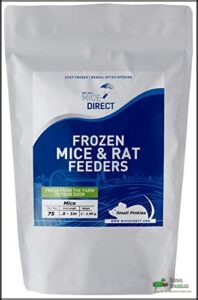
For the youngest corn snakes, MiceDirect also offers frozen pinkie feeders, sized right for hatchlings just getting started. Each pinkie weighs just 1-2 grams, making them a safe, properly sized match for tiny jaws and even tinier digestive systems.
Like the juvenile feeders, these are raised on Mazuri zoological-grade feed and humanely euthanized with CO2 before being flash-frozen and shipped on dry ice. You get 75 per pack, and orders placed before 1pm EST ship within one business day.
Store them frozen until needed, thaw properly before feeding, and you’ve got a reliable, disease-free meal option that takes the guesswork out of early hatchling care.
Buying in bulk keeps costs low, and you can find a range of affordable frozen feeder options for snakes that make stocking up practical without breaking the bank.
| Best For | Hatchling and juvenile corn snakes, baby reptiles, amphibians, and small lizards that need appropriately sized, nutritionally complete prey during their earliest stages of development. |
|---|---|
| Pack Size | 75-count |
| Primary Use | Baby snake feeding |
| Target Species | Baby snakes & small reptiles |
| Storage Method | Frozen |
| Prep Required | Thaw before feeding |
| Key Ingredient | Mazuri-fed whole prey |
| Additional Features |
|
- Each pinkie is raised on Mazuri zoological-grade feed and humanely euthanized with CO2, so you’re offering a clean, high-quality meal every time
- Flash-frozen and shipped on dry ice, with same-day shipping on orders before 1pm EST — freshness and convenience in one
- A pack of 75 gives you a solid supply on hand, taking the stress out of sourcing consistent, properly sized feeders for tiny hatchlings
- Must stay frozen until use and be thawed correctly before feeding, which adds a step compared to live feeders
- Only suitable for very small reptiles — adult or large-bodied snakes will need to graduate to bigger prey quickly
- Packaging seal integrity can be inconsistent, so using secondary containment in your freezer is a smart precaution
How to Compare Corn Snake Food

Not all frozen feeders are created equal, and the differences matter more than you’d think. Before you settle on a brand, there are a few key factors worth sizing up. Here’s what to look for when comparing corn snake food.
Whole-Prey Nutritional Completeness
Whole prey gives your corn snake nutritional completeness you simply can’t replicate with supplements.
- Balanced protein, fat, and essential vitamins in every meal
- Correct calcium-to-phosphorus ratio for healthy bone development
- Calcium and vitamin D3 delivered naturally through bone content
- Moisture and amino acids bundled into one complete item
That’s why whole prey remains the best choice for corn snake diets.
Feeder Health and Sourcing
Not all feeders are created equal.
| Factor | What to Look For | Why It Matters |
|---|---|---|
| Origin | Purpose-bred rodents | Parasite-free nutrition |
| Cold chain | Shipped at 0°F or below | Stops bacteria growth |
| Health docs | Lot numbers and expiry dates | Helps with recalls |
| Source type | Specialty retailers | Better standards |
| Transparency | Disease testing records | Protects your snake |
Buy from specialty retailers with verified, parasite-free sourcing.
Consistent Prey Sizing
Getting prey size right matters more than most people expect. Match prey width to your snake’s midsection body width: aim for 8 to 12 percent for adults, 6 to 8 for juveniles. Too big causes regurgitation; too small gets refused.
Measure consistently, keep records, and adjust after growth spurts. Stick to your regular feeding schedule to spot sizing problems early. Surprisingly, research on predator-prey activity patterns shows that prey movement and timing play a key role in predation risk, reinforcing why consistent feeding routines help you observe your snake’s natural behavior closely.
Packaging and Cold-Chain Quality
Quality cold-chain shipping matters because frozen mice feeders can partially thaw in transit without you knowing. Good suppliers pack with insulated boxes, dry ice, and temperature data logs you can actually check.
Once your purposebred, parasite-free rodents arrive sealed and solidly frozen, move them straight into freezer storage at 0°F or below. Any sign of thaw-and-refreeze? Toss it.
Price and Shipping Value
Price and shipping value matter more than most keepers expect. Buying frozen mice feeders in bulk or via subscription almost always drops your cost-per-feeder by a lot. That’s real money saved over a year.
Watch for free shipping thresholds. Many suppliers offer flat-rate or free shipping once you hit a minimum order, so a bulk buy often pays for itself twice over.
Best Corn Snake Food by Age

Corn snakes eat differently depending on where they are in life, and getting that wrong can cause real problems. What works for a hatchling will leave an adult hungry — and vice versa. Here’s how to match the right food to your snake’s age and size.
Pinky Mice for Hatchlings
Hatchling corn snakes are tiny, and their first meals need to match. Pinky mice are the right call here, specifically ones in the 1.0 to 2.0 gram range. That’s small enough to pass safely without stress.
Source your frozen mice feeders from reputable breeders. Sanitary handling and accurate age verification matter more than price when hatchling care is this precise.
Feeder Mice for Juveniles
Once your corn snake clears the hatchling stage, prey size needs to keep pace. Juveniles do best on frozen mice feeders weighing 12 to 16 grams, roughly 1.0 to 1.5 inches in body length.
Match the prey width to your snake’s widest body point. Too wide and they’ll refuse. Consistent prey sizing also cuts down on feeding refusals, so stick to a reliable size category batch to batch.
If sizing alone isn’t solving the problem, feeding tools designed for nervous or reluctant snakes can make a real difference in getting consistent meals accepted.
For an easy-care companion, explore low-maintenance corn snake morphs with similarly straightforward feeding needs.
Adult Mice for Adults
Once your snake hits adulthood, the adult mouse becomes your go-to prey type. These weigh in at 25 to 40 grams, giving your snake the solid nutrition it needs. You’re well past Frozen Mice Pinkie Feeders now. Stocking up on frozen adult mice in bulk means you’ll always have the right size on hand for those consistent biweekly feedings.
Feeding frequency drops to every 10 to 14 days at this stage. Good prey size selection keeps things consistent and helps prevent overfeeding.
Prey Size by Body Width
Getting prey size right comes down to prey girth matching. The prey’s widest point should be no more than one-third your snake’s body width at its thickest. Too wide and swallowing becomes a struggle.
Measure your snake regularly, then choose your prey type accordingly. Always use feeding tongs to offer it, and stick to a consistent feeding location each time.
Adjusting Food During Growth
As your snake grows, so should the prey. Growth rate spikes during the juvenile stage, so prey size selection needs to keep pace with each shed.
Watch for these cues before upsizing:
- Swallowing completes quickly and easily
- No refusals at the current feeding frequency
- Girth noticeably widens between sheds
- Steady weight gain signals a balanced reptile diet
Safe Frozen-Thawed Food Preparation
Getting frozen prey from the freezer to your snake’s mouth takes more steps than most people expect — and each one matters. Done right, it keeps your corn snake safe, healthy, and actually interested in eating. Here’s what you need to do at every stage.
Choosing The Correct Prey Size

Right prey size matters more than most new keepers expect. A prey item should be roughly 80 to 100 percent of your snake’s widest body girth. Too big and regurgitation risk climbs fast.
Frozen mice pinkie feeders suit hatchlings perfectly, while juveniles need slightly larger feeder rodents. As growth rate increases, bump up the prey size to match.
Thawing Prey in Warm Water

Once your frozen feeder is ready, a warm water bath beats any shortcut. Keep it between 40 and 60°F, not close to your enclosure temperature.
- Seal prey in a leak-proof bag
- Swap the water every 5 to 10 minutes
- Keep sessions under 15 minutes
- Dry lightly before offering
- Avoid room temperature thawing
Your prey should feel fully pliable before offering.
Checking Prey Core Temperature

After your warm water bath finishes, check body temperature before you do anything else. Insert a digital probe thermometer into the prey’s belly center, away from fur or the tail. Prey size matters: smaller frozen rodents cool down faster. Aim for 34-40°C. Anything outside that window often triggers feeding refusals.
| Age Stage | Target Temp (°C) | Target Temp (°F) |
|---|---|---|
| Hatchling | ~38°C | ~100.4°F |
| Juvenile | 37-39°C | 98.6-102.2°F |
| Adult | 36-38°C | 96.8-100.4°F |
Hold for 2-3 seconds to get a stable read.
Offering Food With Tongs
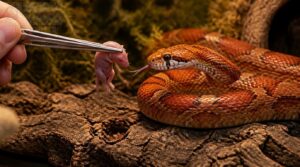
Once your prey hits the right temp, reach for your stainless steel or silicone-tipped tongs. Grip the frozen mice near the head, then hold them 1 to 2 inches from your snake’s face. Move slowly, mimicking natural prey movement. Smooth, gentle motions reduce stress and encourage a clean strike. That’s exactly the calm technique every good snake feeding guide recommends.
Safe After-Feeding Care
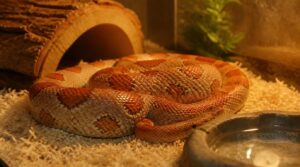
After the strike, your job isn’t done. Leave your snake alone for at least 24 hours. Handling after feeding is one of the top causes of regurgitation and stress-induced refusal at the next meal.
Discard uneaten prey within two hours, wipe down enclosure surfaces, and wash your hands thoroughly. Good after-feeding care keeps your snake calm and your routine clean.
Feeding Schedules and Food Troubleshooting

Getting your corn snake’s feeding schedule right is one of the most important things you can do for its long-term health. But even with the best intentions, it’s easy to overfeed, underfeed, or hit a wall when your snake suddenly stops eating.
Here’s what you need to know to stay on track and troubleshoot the most common feeding hiccups.
Age-Based Feeding Intervals
Your corn snake’s age sets the pace for its feeding schedule. Hatchlings eat every 5 to 7 days, juveniles every 7 to 10, and sub-adults roughly every 10 to 14. Full adults need frozen mice every 14 to 21 days, sized right for their body.
If you’re branching out beyond corn snakes, our rainbow boa care guide covers how feeding routines differ for these striking Boidae constrictors.
Slower growth means fewer meals. When your snake is growing fast, you can shorten the gap.
Preventing Overfeeding and Obesity
A chubby snake isn’t a happy snake. Three signs of overfeeding to watch for:
- Visible fat rolls along the sides
- Rounded, pear-shaped body instead of a loaf shape
- Scale separation when your snake isn’t digesting
Weigh your snake monthly and keep prey under 10% of body weight per meal. If weight creeps up, extend feeding intervals to every 21-35 days.
Transitioning to Frozen-Thawed Food
Switching from live to frozen mice takes patience. Most snakes resist frozen-thawed mice at first, but that’s completely normal.
Scent-load the thawed prey by rubbing it against a previously used live item, then offer it with tongs. Use the cold water thawing method for 20-30 minutes, check the temperature hits 5°C, and keep your feeding schedule and prey size consistent.
Troubleshooting Feeding Refusals
Your snake skipping a meal isn’t panic-worthy. Most feeding refusals trace back to a fixable cause.
- Warm side temp below 85°F slows digestion and appetite
- Prey temperature must reach 98-100°F before offering
- Handling too soon after meals triggers stress refusals
- Feeding schedule timing matters, try evenings instead
Three missed meals in a row? See a vet.
Avoiding Wild-Caught Prey
Wild mice carry parasites, bacteria, and internal worms your snake can’t easily fight off. That’s why frozen feeder options from reputable suppliers are the safer call.
These purpose-bred rodents are raised in controlled environments, tested for pathogens, and kept parasite-free before freezing. You get peace of mind, and your snake gets a meal that won’t make it sick.
Purpose-bred, parasite-free frozen feeders give your snake a safe meal and you peace of mind
Frequently Asked Questions (FAQs)
What is the best diet for corn snakes?
Get the diet wrong and everything else falls apart. Frozen-thawed feeder rodents supply the protein, fat, and essential vitamins your corn snake needs, and supplementing with calcium and vitamin D3 keeps them truly healthy long-term.
Where can I buy a corn snake?
You can buy corn snakes at local reptile stores, online breeders, expos, or through classifieds. Check pet store availability for same-day pickup, and consider an autoship program to manage your cost per feeder long-term.
Are corn snakes good pets?
Yes, corn snakes make excellent pets. They’re docile and calm with regular handling, rarely bite, and adapt well to captivity. Even juveniles settle down quickly once they trust you.
Can corn snakes eat live prey?
Corn snakes can eat live prey, but frozen-thawed rodents are much safer. Live animals can scratch or bite your snake during feeding, causing real injuries. Pre-killed prey protects your snake and simplifies feeding.
How to feed corn snakes frozen food?
Switching your snake to frozen-thawed mice takes a little patience. Thaw the prey in cool water for 30 to 60 minutes, match prey size to your snake’s midbody width, then offer it warm with tongs.
What do Captive corn snakes eat?
The best meal your snake eats is one it never hunted. Captive corn snakes do great on a rodent-based diet of frozen-thawed mice or rats, which delivers the nutritional value they need to grow well.
What should I feed my corn snake?
Mice and rats cover your corn snake’s main nutritional needs. Frozen-thawed mice suit younger snakes, while adults do better on frozen-thawed rats. Always match prey size to body width, and follow a consistent feeding schedule.
What is the best snake food?
Ironically, the very best food for your corn snake is also the least exciting option.
Frozen-thawed mice deliver the nutritional value a rodent-based diet demands. No bells, no whistles, just consistent, safe, and healthy feeding.
What can I feed my corn snake if I don’t have mice?
Running low on mice? Frozen rat pups, quail chicks, or Reptilinks Mini Sausage Links can all fill the gap. Quail eggs work as occasional treats too. Just keep prey sized to your snake’s body width.
What to avoid with corn snakes?
Skip wild-caught rodents entirely, as they often carry parasites and disease. Feeder insects like mealworms and crickets won’t cut it either, since they lack the nutrients your corn snake needs. Stick to quality, appropriately-sized prey.
Conclusion
Like an old apothecary carefully measuring every single gram before dispensing a remedy, corn snake feeding rewards precision over guesswork. The best corn snake food brands take the hard work out of that equation, delivering whole prey that’s correctly sized, well-sourced, and properly handled.
Thaw it completely. Offer it with tongs. Stick to your schedule. Your snake can’t tell you when something’s off, but its health absolutely will. Feed well, and everything else gets easier.