This site is supported by our readers. We may earn a commission, at no cost to you, if you purchase through links.

A 1,100-gram female ball python can look ready to breed. She isn’t. Egg binding kills underweight females, and no clutch is worth that loss.
I’ve treated the aftermath in my exam room, and it’s almost always preventable. Success starts months before pairing: a female at 1,400 to 1,600 grams, a clean fecal exam, a 30-day quarantine, and a pedigree with no relatives. Skip one, and you gamble with her life and every hatchling’s future.
Ball python breeding health considerations run from the first weigh-in to the first pinky. Here’s how to protect your animals at every stage.
Table Of Contents
- Key Takeaways
- Selecting Healthy Ball Pythons for Breeding
- Preparing Ball Pythons for Breeding: Nutrition, Veterinary Checks, and Quarantine
- Creating a Low-Stress Ball Python Breeding Environment
- Protecting Ball Python Health During Breeding and Incubation
- Caring for Ball Python Hatchlings: Shedding, Feeding, and Health Monitoring
- Frequently Asked Questions (FAQs)
- Are ball pythons hard to breed?
- What are some health concerns ball pythons have?
- Is it ethical to breed snakes?
- How do you safely transport breeding ball pythons?
- What to do if breeding attempts repeatedly fail?
- Can ball pythons breed year-round or seasonally?
- How to manage aggression between breeding pairs?
- What are signs of successful fertilization in females?
- How often can a female be bred?
- Do ball pythons need breeding records kept?
- Conclusion
Key Takeaways
- Don’t breed your female until she weighs 1,400 to 1,600 grams, because underweight snakes risk fatal egg binding, and a pairing that looks ready can still cost her life.
- Before any pairing, quarantine new snakes for at least 30 days, run a fecal exam, and never pair relatives, since skipping one of these steps puts both your female and her hatchlings at risk.
- Choose health over color by skipping morphs linked to problems like wobble, keeping pedigree records, and giving your female a calm setup with steady temperatures, humidity, and snug hides.
- Call your vet right away if she strains without producing eggs, bleeds, swells, or collapses, and give her recovery time after laying, since most complications are preventable when you act early.
Selecting Healthy Ball Pythons for Breeding

Great hatchlings start with healthy parents. Before you pair a single snake, you need to know which of yours are truly ready to breed. Here’s what to check, from age, weight, and body condition to genetics and ethical morph choices.
Once your pair passes those checks, our snake reproduction and care guide walks you through gestation, laying or birth, and keeping hatchlings healthy afterward.
Great hatchlings start with healthy parents, so know which of your snakes are truly ready to breed before you pair them
Age, Weight, and Body Condition
A female’s size matters more than her birthday. Minimum weight for breeding is 1,200 to 1,500 grams, but recommended weight is 1,400 to 1,600 grams or more. Minimum age is two to three years, and recommended age is three to five.
Check your body condition score too. You want plump, not skinny. Underweight females risk egg binding. Don’t rush it. Once she’s ready, watch for increased appetite and soaking, which are common signs that a female is building follicles.
Genetic Health and Ethical Morph Selection
Size isn’t the only thing you’re breeding for. Genes count too. Start with genetic screening and carrier identification, so you know which recessive traits your pair carries. Study genetic disorder prevalence in popular genetic morphs, and skip spiders, which risk wobble. Ethical morph selection means health beats color. Rarity never proves good health. Keep pedigree records. Never pair related animals.
Preparing Ball Pythons for Breeding: Nutrition, Veterinary Checks, and Quarantine
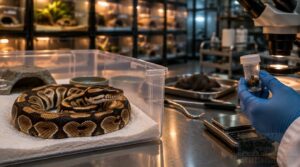
Healthy parents don’t happen by accident. Start your prebreeding exams early.
Pairing a healthy weight check with a look at ball python genetic mutations and health helps you spot morph-related risks before they affect your clutch.
Check your body condition score first. Females should reach 1,200 to 1,500 grams, and males should top 700 grams and still be eating. Raise your feeding frequency to every 5 to 7 days, and offer prey that matches mid-body width. Females do well on small-medium rats, around 90 to 95 grams.
Any new snake needs quarantine protocols before it meets your collection. Give it 30 days minimum, 60 to 90 if it came from an expo. Use paper towels, a separate room, and dedicated tools. Don’t handle it for the first week. Schedule parasite screening with a fecal exam, and watch for mites, wheezing, or discharge. Clear snakes graduate.
Creating a Low-Stress Ball Python Breeding Environment
Your quarantined snakes are cleared. Now give them a home that keeps them calm. Stress reduction starts with enclosure setup, because a stressed female won’t feed or cycle well.
Build it around these basics:
- Use a 4x2x2 foot enclosure with three opaque sides.
- Keep the warm side at 88-92°F and the cool side at 76-80°F, thermostat controlled.
- Offer two snug hides, one on each side.
- Choose coco husk or cypress mulch for substrate choice, and hold humidity at 50-60%.
- Run a steady 12-hour light cycle.
Good ventilation systems prevent stale, soggy air without dropping humidity. A digital thermostat hygrometer combo lets you track humidity and temperature together, so you can spot airflow problems before your snake feels them.
Balanced airflow also matters for reptile enclosures, since lingering dampness can invite problems, so it helps to know how to treat a snake skin infection before one starts.
Watch for behavioral stress indicators: glass surfing, refusing food, constant hiding, or defensive strikes. Fix the setup before blaming the snake, then recheck temperatures daily.
Protecting Ball Python Health During Breeding and Incubation
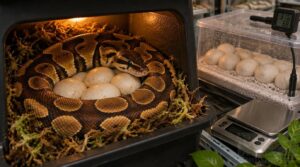
Breeding season puts real strain on your ball pythons, so your job doesn’t end once the pair is together. Next, you’ll work through four areas that keep both animals safe: pairing and monitoring, egg-laying warning signs, post-laying recovery, and incubation conditions. Know each one well, and you’ll protect your animals and your clutch.
Safe Sexing, Pairing, and Monitoring
Safe sexing comes first. Use a lubricated, blunt-tipped probe and gentle, controlled insertion. Females probe 2-4 scales deep, males 8 or more. Never force it.
Pairing starts only when both snakes hit target weight, so introduce the male briefly and watch for tongue flicking.
Monitoring matters most: separate them at once if you see biting, blebs, or a lock past 48 hours.
Egg-Laying Complications and Veterinary Warning Signs
A laying female can hide egg retention until she’s critically ill. Call for veterinary care if you see:
- Straining without producing an egg
- Tissue or an egg protruding
- Bleeding or foul discharge
- Abdominal swelling
- Weakness, regurgitation, collapse
Prebreeding exams catch risks early, and respiratory infections or yolk sac infection can follow. Don’t wait it out. Early action saves your snake.
Post-Laying Recovery and Maternal Care
Your 1,400-gram female finishes laying, and she’s down 300 grams.
Post-Laying Recovery and Maternal Care are critical phases because her health determines how well she heals after oviposition and rebreeds later. Give her a lukewarm 29–31°C bath for 15–20 minutes. Hydration, rest, and patience come first.
Clean her enclosure with F10, replace everything, then offer smaller prey within two days.
Incubation Conditions and Egg Viability
Picture a warm, humid darkness where each pale egg rests like a pearl in damp incubation medium. Hold incubation temperature at 88°F to 90°F and humidity near 90%.
- Never rotate eggs.
- Dimpling means low humidity.
- Try egg candling around day 12.
Firm, plump eggs signal clutch viability. Isolate moldy ones, then prepare for hatchling care after 55 to 60 days.
Caring for Ball Python Hatchlings: Shedding, Feeding, and Health Monitoring
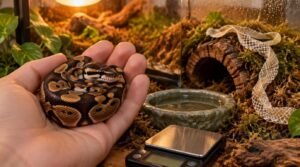
Hatchlings are tiny, and small mistakes compound fast. Good hatchling care comes down to three habits: tracking sheds, feeding on schedule, and checking health weekly.
Offer a pinky 7 to 10 days after hatching, then keep feeding frequency at every 5 to 7 days. Expect the first shed within two weeks of that meal. Hold humidity at 60 to 70 percent, and check each shed for retained eye caps. Spot one? Call your vet immediately.
Weigh weekly on a gram scale. Neonate health monitoring also means a fecal exam within 30 days. Track shedding frequency as well. Know your weight management thresholds: stagnation or loss demands a feeding reassessment. Open-mouth breathing, wheezing, or nasal discharge means an urgent vet visit.
Frequently Asked Questions (FAQs)
Are ball pythons hard to breed?
Not really, but they’re unforgiving of shortcuts. The pairing process is simple. The hard part is raising a female with real fat reserves, since a thin one won’t survive egg incubation or support healthy hatchling care.
What are some health concerns ball pythons have?
Watch for respiratory infections first: wheezing, clicking, nasal mucus. Wobble syndrome and other morph-linked disorders cause head tremors. Fatal IBD shows stargazing. Prioritize subclinical health detection and dystocia risk reduction in breeders.
Is it ethical to breed snakes?
It can be, but only if you take ethical breeding considerations seriously. Use genetic screening, follow quarantine protocols, and place every hatchling. Ball python breeding health considerations come first. Skip it if you truly can’t.
How do you safely transport breeding ball pythons?
Wondering how to move breeding pythons safely? Use snug transport containers with secure locking mechanisms, steady 75-85°F, and gentle handling.
Record moves in biosecurity logs, follow quarantine protocols, and apply enclosure security design at arrival.
What to do if breeding attempts repeatedly fail?
Stop pairing and run a failure analysis. Check your male’s weight and your female’s health with a fertility assessment. Add temperature cycling, rotate males, and consider genetic screening. Keep biosecurity logs so you’ll spot patterns.
Can ball pythons breed year-round or seasonally?
Most females lay between April and June, yet some lay anytime. You can breed ball pythons year-round, but temperature cycling and breeding season conditioning support hormonal cycling. Watch for ovulation signs, follow your snake’s timing.
How to manage aggression between breeding pairs?
Separate aggressive pairs at the first tail whipping or thrashing, but never pull a locked pair apart. Rest both snakes, recheck enclosure setup, and keep male competition out entirely. Reintroduce only after calm compatibility testing.
What are signs of successful fertilization in females?
Watch for the ovulation bulge, a football-like swelling lasting about 24 hours. Your prelay shed follows roughly 16 days later, anchoring the gravid timeline. Track follicle development by ultrasound, confirm fertile eggs through egg candling.
How often can a female be bred?
Ever wonder how much your female can really handle? Most thrive on one year on, one year off. Rebuild weight after laying, then rebreed once she’s regained her body condition and the next breeding season arrives.
Do ball pythons need breeding records kept?
Yes. Studbook management protects your animals. Log pairings, lock dates, clutch data, and weights. Strong lineage tracking preserves genetic diversity, flags health decline early, and proves morph claims. No records, no verified genetics.
Conclusion
A breeding season is a relay race, and every handoff counts. The female’s weight, the fecal exam, the quarantine, the incubator: miss one, and the baton drops.
Treat ball python breeding health considerations as your checklist, not your suggestion box. Weigh often. Watch closely. Call your vet at the first sign of straining or a stalled clutch.
You’re not chasing a record clutch. You’re raising healthy snakes, one careful decision at a time, starting today.