This site is supported by our readers. We may earn a commission, at no cost to you, if you purchase through links.

Wild corn snakes hunt leaf litter and rocky outcrops from New Jersey to Texas, climbing trees one moment and burrowing underground the next. That dual life, part climber, part digger, shapes everything a good keeper needs to know. Get the setup wrong, and you’re fighting the snake’s instincts every day.
Understanding corn snake natural habitat and care starts with respecting where this species actually comes from. Your enclosure isn’t just a box, it’s a stand-in for floodplains, savannas, and thermal gradients this animal evolved to read. Master that connection, and feeding schedules, humidity spikes, and handling routines start making sense on their own terms.
Table Of Contents
- Key Takeaways
- Corn Snake Natural Habitat
- Corn Snake Biology and Behavior
- Corn Snake Enclosure Setup
- Temperature, Lighting, and Humidity
- Feeding, Health, and Handling Care
- Frequently Asked Questions (FAQs)
- What to avoid with corn snakes?
- What is the natural habitat for a corn snake?
- How to make a corn snake habitat?
- What does a corn snake need to thrive?
- What is the habitat of the corn snake?
- How do corn snakes reproduce?
- Are corn snakes venomous?
- Can corn snakes live with other reptiles?
- How much do corn snakes cost?
- Do corn snakes hibernate in captivity?
- Conclusion
Key Takeaways
- Replicate a corn snake’s wild dual life by building a thermal gradient with an 88–92°F basking zone and a 70–78°F cool side, plus 3–4 inches of burrow-friendly substrate and secure climbing branches.
- Feed appropriately sized frozen-thawed rodents on an age-based schedule—every 5–7 days for hatchlings, stretching to every 14–21 days for adults—to prevent regurgitation and support healthy growth.
- Keep corn snakes housed alone, since they’re naturally solitary animals, and cohabitation raises the risk of stress, disease transmission, and injury.
- Maintain secure, well-ventilated enclosures with reliable locking lids and calibrated thermostats, since good husbandry lets captive corn snakes live 15–20 years, far longer than their wild counterparts.
Corn Snake Natural Habitat
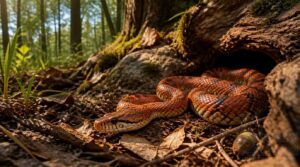
Before you can build a good home for your corn snake, you need to know where it actually comes from. Its wild habits shape almost every choice you’ll make in captivity, from temperature to hiding spots. Here’s what its natural world looks like, piece by piece.
This corn snake habitat setup guide breaks down exactly how to translate those wild instincts into a tank your snake will thrive in.
Native Range
From southern New Jersey down to the Florida Keys and west into Texas and Oklahoma — that’s the native range corn snakes call home. This geographic distribution favors the southern Atlantic coastal plain.
- Georgia, Florida, Alabama, Carolinas: peak abundance
- Elevations up to 1,000 meters
- Mississippi River Valley pockets
- Coastal plain ecology dominates
- Habitat fragmentation threatens edges
Regional climates shape survival, driving ongoing species conservation concerns.
Preferred Wild Environments
Beyond that coastal range, corn snakes thrive across varied terrain: woodland leaf litter, grassland hunting grounds, and savanna ambush points among scattered shrubs.
| Habitat | Key Feature | Prey Access |
|---|---|---|
| Grassland | Open basking sites | Rodents, lizards |
| River floodplain | Seasonal moisture | Amphibians |
| Rocky outcrop | Cool microhabitats | Shelter, thermoregulation |
This diversity explains their adaptability—each microclimate management strategy in captivity should mirror one of these zones.
Nocturnal Hiding Habits
Once dusk falls, corn snakes shift into gear, showing crepuscular activity peaks as they emerge to hunt.
Daylight hours are spent tucked into rodent burrows, rock crevices, or loose bark, using vomeronasal sensing to locate safe, humid pockets.
These hides support microhabitat humidity and reduce predator exposure—key reasons captive owners must prioritize habitat replication and microclimate management through thoughtful, naturalistic enclosure design. Understanding nocturnal wildlife behaviors can help owners better simulate these essential natural cycles.
Climbing and Burrowing Behavior
Corn snakes are true semiarboreal species, splitting time between branches and burrows.
Grasping bark with jaw and body coils, they climb using efficient vertical techniques for grip and control.
- Wraps for vertical climbing
- Digs for security
- Tests substrate texture for grip
- Retreats after feeding
Substrate depth of 3-4 inches allows for safe burrowing, reinforcing naturalistic enclosure design and habitat enrichment for captive comfort.
Seasonal Activity Patterns
Watch a corn snake through the year and you’ll see clear temperature-driven movement. Once daytime highs hit 75–82°F, activity spikes—snakes bask and hunt during warm afternoons.
Even during these active periods, it’s worth remembering that corn snakes generally prefer living alone rather than sharing an enclosure, since cohabitation can quietly stress them out.
Cold snaps trigger brumation, tucking snakes into burrows for months. Spring thaws above 68°F restart daily rhythms, aligning with seasonal prey cycles and breeding season cues as days lengthen and hormones shift.
Corn Snake Biology and Behavior
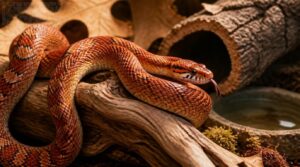
Before you set up a tank or plan a feeding schedule, you need to understand what kind of animal you’re actually caring for. Corn snakes have their own growth patterns, lifespan, and temperament that shape every decision you’ll make as an owner. Here’s what you should know about their biology and behavior.
Size and Growth
A hatchling corn snake, barely a pencil’s length at 10–12 inches, can grow into a 4–6 foot adult—genetics and lineage decide the ceiling.
Growth speeds through three phases:
- Rapid hatchling growth (0–12 months)
- Steady juvenile gains (year two)
- Maturity plateau (2–3 years)
Track weight and body condition scoring, not just length, to confirm healthy metabolic progress.
Lifespan in Captivity
Rarely does a captive reptile outlive its wild counterpart by nearly a decade, but that’s exactly what good husbandry buys a corn snake—15 to 20 years, sometimes into the 20s.
| Longevity Factor | Impact |
|---|---|
| Diet & Hydration | Steady growth, kidney health |
| Enclosure Quality | Lowers stress, prevents infection |
| Vet Checkups | Catches illness early |
Nutrition, stress management, and consistent health monitoring aren’t optional extras—they’re the biological needs driving lifespan itself.
Temperament and Handling Readiness
Gentle, consistent contact turns a corn snake into a calm, predictable companion—a big reason it’s the top pick for beginner snake hobbyists.
- Handle 5–10 minutes daily
- Watch for hissing or retreating (stress signs)
- Avoid handling 24 hours post-feeding
- Support the full body when lifting
- Skip handling during shedding
Read tongue-flicking and body tension to gauge comfort. Respecting these cues builds trust and reflects genuine animal welfare in exotic pet ownership.
Solitary Snake Behavior
Your corn snake isn’t ignoring you out of spite—it’s just wired to live alone. In the wild, conspecific avoidance keeps individuals spaced across their own foraging range, using scent marking and chemical cues instead of face-to-face contact.
A corn snake isn’t ignoring you out of spite—solitude is simply how it’s wired to live
This solitary instinct shapes captive behavior too: ambush hunting and independent territory-seeking are hardwired traits, not quirks, and respecting them is essential to responsible reptile husbandry and animal welfare.
Common Color Patterns
No two corn snakes ever look quite alike, and that’s the fun of it.
From striped amelanistics to speckled anerythristics, this guide to corn snake morph genetics helps you understand the traits behind each unique pattern.
Wild-type saddle patterns show brown or red blotches on tan or orange, but decades of captive breeding produced striking morphs: zebra morphs with crossbands, spotted variations, hypomelanistic color effects with muted borders, and lace patterns with feathered edges.
This genetic diversity is exactly why morph breeding fascinates so many keepers.
Corn Snake Enclosure Setup
A corn snake’s enclosure is its whole world, so getting the setup right matters more than most owners realize. Every choice, from tank size to lid design, either suits your snake’s natural habits or works against them. Here’s what you need to know before you buy anything.
Minimum Tank Size
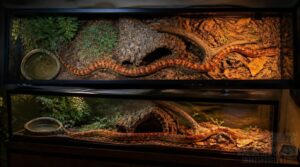
Size drives everything else in this hobby. Hatchlings start small, but adults need a 40-gallon breeder tank or 4x2x2 PVC enclosure minimum:
- Juveniles: 20–40 gallon terrarium
- Adults: 40–60 gallon long vivarium
- Breeders: 75–120 gallons
- Always prioritize floor space over height for thermal gradient room
Plan upgrades early—your snake’s footprint requirements only grow.
Secure Ventilated Lids
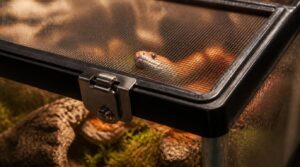
Escape prevention starts at the top, not the sides. Once you’ve picked your tank size, the lid needs a secure locking edge, fine mesh venting, and gasket seals for airflow moisture balance.
Corn snakes push relentlessly against weak points, so thermoplastic durability matters—cheap lids crack under repeated pressure. Check gasket integrity monthly; a compromised seal invites both escapes and humidity swings.
Naturalistic Substrate Choices
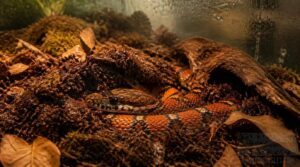
Ground layer matters as much as the lid above it. Pick substrate that mirrors natural habitat: coconut fiber or soil blends for humidity retention, never sand, which risks impaction.
- Coconut fiber: moisture-friendly
- Bioactive soil: microbial cleanup
- Leaf litter: texture variety
Managing mold risks means turning substrate weekly—compacted layers trap moisture and starve airflow in your vivarium.
Hides, Branches, and Rocks
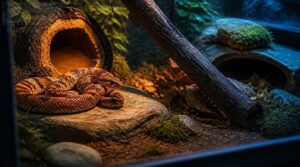
Once substrate’s settled, layer in structure. Give your corn snake at least two hides with smooth interiors—one warm side, one cool—to avoid scale snags.
Anchor branches securely, 1–4 inches thick, for safe climbing. Add nonporous rocks in the basking zone for radiant heat and mold resistance.
Together, these create naturalistic microhabitats mimicking wild terrain—true environmental enrichment for your vivarium.
Escape Prevention Tips
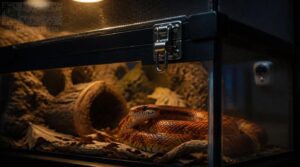
Ever wonder how a snake escapes a "secure" tank overnight? Usually it’s a gap no wider than a pencil.
Locking mechanisms matter most—use hasp latches, not clip lids. Add internal bumpers, seal seams with fish-safe silicone, and anchor decor firmly.
Check hinges every 6–12 months. A camera or vibration sensor adds monitoring technology for peace of mind, protecting your vivarium’s structural integrity and your snake’s safe transfer.
Temperature, Lighting, and Humidity
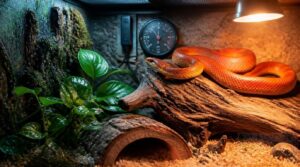
Your corn snake can’t regulate its own body heat, so you have to build that system for it. Getting the temperature, lighting, and humidity right isn’t optional—it’s what keeps your snake healthy and shedding properly. Here’s what you need to set up in the enclosure to get it right.
Aim for a warm side of 88-92°F and a cool side of 75-80°F using a quality thermostat, and check out this guide to reptile heating and enclosure setup for more on choosing the right equipment.
Warm Basking Zone
Think of the basking zone as your snake’s digestive engine room. The basking surface—a stable slate rock or thick branch—should hit 88–92°F for best digestion heat.
Mount your heat lamp securely overhead, wired to a calibrated thermostat for safety. Choose non-slippery, non-toxic materials only.
Proper thermoregulation here keeps your corn snake healthy, active, and eating well.
Cool Side Temperatures
Once your basking zone runs hot, the cool side must offer real relief, holding steady between 70 and 78°F. This gradient lets your snake self-regulate digestion and activity.
- Verify readings with a digital probe thermometer
- Keep humidity 40–60%
- Provide a dry hide
- Avoid direct heat sources
- Allow passive ambient cooling
Stable thermal gradient placement helps natural thermoregulation without stressing your corn snake.
Thermostat Safety
A faulty thermostat can burn your snake alive—so treat wiring like a safety system, not an accessory.
Match voltage correctly, use dedicated circuit loading, and check wiring integrity often. Verify sensor placement away from heat sources.
| Component | Function | Safety Check |
|---|---|---|
| Undertank heater | Temperature regulation | Thermostat-controlled |
| Digital probe thermometer | Verify accuracy | Weekly readings |
| Terrarium maintenance | Prevent corrosion | Monthly inspection |
UVB Lighting Basics
Skip the guesswork: your corn snake needs UVB lighting for calcium metabolism, even as a "low-light" species. Compact and T5 fluorescent bulbs work well; mercury vapor runs hotter.
Mount fixtures 6–12 inches above the basking spot (Ferguson Zone 1), avoiding mesh interference. Use a UV Index meter to confirm accurate dosing.
Replace bulbs every 6 months—UVB output fades before visible light does.
Shedding Humidity Needs
Getting shedding right isn’t about cranking up humidity full-time—it’s about timing. Keep baseline humidity at 40-50%, then allow brief spikes to 55-60% during pre-shed. A humid hide with damp sphagnum moss gives your snake a personal microclimate for stuck shed prevention.
Calibrate your hygrometer regularly, and place a second one near the hide. Skipping this step is how dysecdysis sneaks up on you.
Feeding, Health, and Handling Care
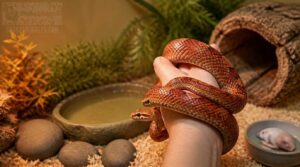
Feeding your corn snake properly keeps it healthy, but health care doesn’t stop at the food bowl. You’ll also need to know how to handle your snake safely and keep its home clean. Here’s what you need to master each of these routines.
Frozen-Thawed Rodent Diet
Ditch live prey altogether—frozen-thawed rodents are safer and just as nutritious. Thaw gradually at room temperature or in warm water until fully pliable, never refreeze.
- Protein: 20-25%
- Fat: 10-20%
- Moisture: 60-70%
- Source reputable suppliers
- Rotate prey types occasionally
Feed promptly, discard leftovers, and wash hands after handling to prevent bacterial growth.
Prey Size Guidelines
Width matters more than length. Prey should measure 25-33% of your snake’s girth at its widest point—roughly 1.5 times head width for juveniles.
| Age Stage | Prey Guideline |
|---|---|
| Hatchling | 1-2g pinkies |
| Juvenile | 1.5x head width |
| Adult | 10-15% body length |
Gape size limits cause regurgitation when exceeded. Monitor body condition monthly—track weight gain for a paddle-shaped midsection, not roundness.
Feeding Schedule by Age
Metabolism drives the schedule: hatchlings eat every 5-7 days, taking single pinkies sized to body width.
Juveniles shift as growth slows. Adults stretch to once every 14-21 days on thawed frozen rodents—mice or small rats.
Moving to different prey types happens gradually; always match dietary requirements to current girth, not age alone, keeping nutrient intake balanced without overfeeding.
Safe Handling Practices
Once that 48-hour post-feeding window closes, check handling readiness cues first: relaxed movement, no coiling or air-striking.
Wash hands, support the full body when lifting. Keep sessions to 5-15 minutes in a quiet space. Watch for hissing or gaping—stress signals mean it’s time to stop.
For transport, use a secure, ventilated container.
Cleaning and Health Checks
Regularly, cleaning does double duty as a health screen. Move your snake to a temporary container, then check its vent, mouth, and eyes for discharge or swelling—early signs of mouth rot.
- Scrub the water bowl daily
- Spot-clean feces immediately
- Check for stuck shed
- Assess waste for abnormal color
- Use reptile-safe disinfectant only
Monitor shedding issues closely, and schedule preventative veterinary care if anything looks off.
Frequently Asked Questions (FAQs)
What to avoid with corn snakes?
Skip live prey (bite risk, sepsis), toxic pine/cedar substrate, wrong prey sizing, and unstable temperatures. Always wash hands to avoid Salmonella, watch for stuck shed and mouth rot, and never release unwanted snakes outdoors.
What is the natural habitat for a corn snake?
Home is where the heart is, and for this species, that’s the southeastern United States—from New Jersey to Louisiana. They favor native ecosystems like woodlands, grasslands, and suburban shelter in barns, thriving across varied regional elevation up to 1800 meters.
How to make a corn snake habitat?
Set up a 40-gallon vivarium with a thermogradient from 88–92°F basking to 75°F cool side, 2–4 inches of substrate, secure hides, climbing branches, and 40–60% humidity through evaporative water dishes.
What does a corn snake need to thrive?
A thriving corn snake needs a proper thermal gradient (85–90°F basking, 70–75°F cool side), good humidity management (40–60%), safe substrate, fresh water, hides, UVB lighting, and appropriately sized frozen-thawed prey on a consistent schedule.
What is the habitat of the corn snake?
Elevations up to 6,000 feet shape their range. Corn snakes inhabit southeastern grasslands, pine flatwoods, and rocky hillsides from New Jersey to the Florida Keys, using leaf litter, logs, and human-altered landscapes like barns for shelter and thermoregulation.
How do corn snakes reproduce?
Males track mating pheromones and perform courtship behaviors before cloacal pairing. Females lay clutch sizes of 10–30 eggs, incubated 55–65 days. Hatchlings emerge fully independent, showing how these ectothermic animals time reproduction around seasonal biological rhythms.
Are corn snakes venomous?
No, corn snakes aren’t venomous. They’re constrictors, subduing prey through pressure, not toxin. Misidentification with copperheads causes needless fear—check head shape and pupils. Defensive bites are harmless but can carry bacteria, so wash thoroughly afterward.
Can corn snakes live with other reptiles?
Best practice keeps them solitary. Herpetology research links shared vivariums to cohabitation stress, disease transmission, and resource competition—hides, basking spots, food.
Predatory behavior patterns between species also raise real injury risks, so separate enclosures with proper terrarium size remain the safest, most enriching setup.
How much do corn snakes cost?
Expect $20 to $100 for common morphs, while rare color patterns can top $ Adoption often costs $50 or less. Add $200-$470 for initial terrarium setup, plus $150-$300 yearly for ongoing exotic pet care.
Do corn snakes hibernate in captivity?
Yes, but it’s brumation, not true hibernation. When temps dip below 65°F, your corn snake slows down, eats less, and rests more—an instinctive seasonal pause tied to breeding cycles, not deep mammalian sleep.
Conclusion
A shed skin left in the hide isn’t waste; it’s proof of growth done right. That’s the real measure of corn snake natural habitat and care: not a perfect enclosure, but a snake that thrives enough to outgrow itself again and again.
Get the gradient right, respect the climb-and-burrow instinct, and feeding falls into place.
Your terrarium will never be New Jersey woodland or Texas scrub. Built with precision, it doesn’t need to be.