This site is supported by our readers. We may earn a commission, at no cost to you, if you purchase through links.
Fewer than 20 St. Lucian racers remain on a single rocky islet, guarded around the clock from the mongooses that nearly erased them. That’s the reality for dozens of serpents clinging to existence on isolated coastlines and mountain ledges worldwide.
Rarity breeds ingenuity. Some species evolved sensory pits precise enough to detect temperature shifts of 0.05°C, while others glide between trees or vanish into leaf litter through camouflage alone.
This rare snake species information guide walks you through the world’s most endangered serpents, their impressive adaptations, and the conservation efforts working to keep them from vanishing entirely.
Table Of Contents
- Key Takeaways
- 5 of The World’s Rarest Snake Species
- Rare Island Snakes Found Nowhere Else
- Rare Snakes With Extraordinary Adaptations
- How Rare Snakes Hunt and Defend
- Why Rare Snake Species Need Protection
- Frequently Asked Questions (FAQs)
- What snake has 69 species?
- How do snakes digest prey after swallowing whole?
- What evolutionary advantages do blind snakes possess?
- Can rare snakes be kept as pets legally?
- How long do endangered snake species typically live?
- What role do snakes play in their ecosystems?
- How do rare snakes reproduce in captivity?
- What do rare burrowing snake species eat?
- Which rare snakes are found in freshwater habitats?
- How long do rare snake species typically live?
- Conclusion
Key Takeaways
- Many of the world’s rarest snakes, like the St. Lucian racer and Aruban rattlesnake, survive with fewer than 250 individuals left, often confined to a single island or region.
- These species have evolved remarkable survival tools, from heat-sensing pits accurate to 0.05°C to gliding ribs and leaf-shaped camouflage, that took millions of years to develop.
- Habitat destruction, invasive predators like rats and mongooses, illegal wildlife trafficking, and climate change are the main forces pushing these snakes toward extinction.
- Conservation success stories like the Antiguan racer, which grew from under 50 to over 1,000 individuals, show that captive breeding and habitat restoration can reverse population decline when done together.
5 of The World’s Rarest Snake Species
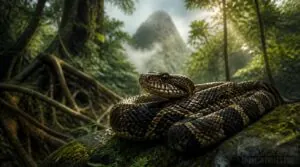
Some snakes exist on the edge of disappearing entirely, known only from a handful of sightings or a single island. You won’t find these species in your backyard, but understanding them matters for conservation and safety alike. Here are five of the rarest snakes left on the planet, each holding on in its own precarious way.
For a deeper dive into what’s pushing these species toward the brink, this complete list of the world’s rarest snake species breaks down their habitats, threats, and current population estimates.
St. Lucian Racer
When you picture an endangered species, the St. Lucian Racer fits the bill with startling clarity, down to 20-40 adults left in the wild.
Habitat destruction and invasive mongoose predation drove this slender constrictor from Saint Lucia’s mainland long ago, leaving:
- Small lizards and rodents as primary prey
- Egg-laying reproduction in isolated leaf litter
- Ongoing captive breeding and genetic monitoring
Wildlife preservation teams remain cautiously hopeful, but habitat fragmentation still threatens any real recovery.
Albany Adder
If the St. Lucian racer teaches you how close a species can slip to the edge, the Albany adder shows how easily one can vanish without anyone noticing. This small viper, found only in South Africa’s Eastern Cape, was documented just 13 times since 1937, and one of those records was a 2016 roadkill. Indeed, the species went with no confirmed sightings for 60 years before its surprise rediscovery in 2009.
Rarely longer than 30 centimeters, its reddish brown body and dark blotches merge seamlessly into loose soil and leaf litter. Folded front fangs deliver venom potent enough to subdue small rodents and lizards, though juveniles start on smaller prey before graduating to adult-sized meals.
Females give birth to live young in late summer rather than laying eggs. Habitat fragmentation from farming and development remains the biggest threat, and population monitoring is agonizingly slow given how rarely this snake is even seen. Conservation efforts now hinge on habitat protection and careful, patient tracking.
Orlov’s Viper
Where the Albany adder hides in plain sight, Orlov’s viper hides through geographic isolation, fewer than 50 adults surviving in one remote range. This venomous ambush predator wears dark ventral markings against a lighter dorsal pattern, its triangular head unmistakable.
It favors rocky outcrops and grassland at 400-900 meters, breeding every two years, litters of 6-12. Its venom causes severe local tissue damage.
Aruban Rattlesnake
Orlov’s viper survives through isolation. The Aruban Rattlesnake, or Crotalus unicolor, survives through sheer precision, fewer than 230 individuals clinging to rocky limestone and scrubland across Aruba’s arid interior.
Its diamond-patterned scales match seamlessly into sunbaked terrain, textbook camouflage for an ambush predator waiting under cover. This venomous pit viper relies on heat sensing pits to detect small mammals, lizards, and birds, striking fast and letting venom do the rest.
- Endemic solely to Aruba, found nowhere else on Earth
- Averages 1.0 to 1.5 meters in length
- Mates each spring, with courtship involving coiling and tongue flicks
- Gives birth to live young, independent within hours
- Supported by captive breeding programs alongside wild habitat protection
Roughly 100 more exist in captivity. Combined with ongoing conservation efforts, that population may be this species’ best insurance against disappearing entirely.
Short-Nosed Sea Snake
Where coral reefs meet open water, you’ll find one of the ocean’s quietest survivors. The Short-Nosed Sea Snake grows only to about 60 centimeters, its slender body and small pointed head suited for hunting within tight reef crevices off northern Western Australia.
This venomous species relies on salt excretion glands to manage life in seawater, and it must surface regularly for air despite staying submerged for long stretches. Its brown to purple brown coloring, marked with faint cross bands, offers subtle camouflage against reef structures.
- Sheds skin every two to six weeks
- Hunts small reef fish in crevices
- Faces marine habitat decline from coastal development
- Gives birth to live young at sea
- Represents notable evolutionary adaptation to reef life
Conservation efforts remain limited, given how difficult this elusive species is to study.
Establishing well-planned wildlife corridors for snake habitat protection can offset this challenge, giving scattered populations the connectivity they need to thrive.
Rare Island Snakes Found Nowhere Else
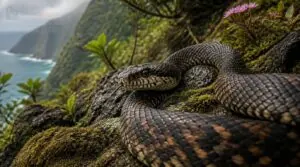
Islands have a way of shaping life you won’t find anywhere else, and snakes are no exception. Isolation breeds specialists, animals so finely tuned to one patch of ground that they simply can’t survive elsewhere. Here are five island-bound species that prove just how narrow, and how fragile, a home range can be.
Antiguan Racer Recovery
Fewer than 50 Antiguan racers survived in 1995. Today, over 1,000 slither across island forests, a true species recovery achievement in conservation biology.
From fewer than 50 survivors to over 1,000, the Antiguan racer stands as a landmark triumph in conservation biology
Three forces drove this turnaround:
- Invasive species control eliminated rats and mongooses
- Habitat restoration rebuilt native shelter
- Community outreach trained local guardians
Population stabilization followed steady captive breeding, proving that reversing habitat destruction and invasive predators isn’t just hopeful, it’s achievable.
Barbados Threadsnake
Picture an earthworm with scales, and you’ve nearly got the Barbados threadsnake, the world’s smallest snake at just 10 centimeters. Endemic to Barbados, this blind snake burrows through moist soil, feasting on termite larvae.
It lays a single egg, a modest reproduction cycle matching its size. Critically endangered, its survival hinges on protecting tiny, overlooked underground habitats.
Santa Catalina Island Rattlesnake
A rattlesnake that can’t rattle? Crotalus catalinensis lost its warning buzz through island endemism, its tail button shedding loose each molt.
Found only on Mexico’s Santa Catalina Island, it shows:
- Rocky habitat adaptation among canyon crevices
- Nocturnal activity patterns avoiding daytime heat
- Venomous ambush hunting of lizards and rodents
Habitat destruction threatens this genetically distinct population, making conservation genetics essential to its survival.
Golden Lancehead on Snake Island
An island entirely ruled by one venomous predator? That’s Snake Island, Brazil’s Ilha da Queimada Grande, home to the Golden Lancehead.
| Trait | Detail |
|---|---|
| Range | Single island only |
| Venom | Extremely potent |
| Status | Critically endangered |
Island endemism shaped its biology completely. Isolated for millennia, this isolated environment demands genetic monitoring, since limited dispersal threatens conservation genetics and long-term survival prospects here.
Malagasy Leaf-Nosed Snake
Nature rarely disguises a predator as convincingly as it does here. The Malagasy Leaf-Nosed Snake (Langaha madagascariensis) is a Madagascar endemic species, its snout shaped like a curling leaf for near-perfect leaf camouflage adaptation among dry and humid forest canopies alike.
You’ll find males with slender pointed snouts and females bearing flattened, mottled leaf-noses, both suited to an arboreal habitat preference and quiet, nocturnal ambush hunting of frogs and lizards.
Sadly, forest fragmentation keeps shrinking its canopy niche, pushing this impressive, camouflage-dependent snake toward greater vulnerability across its native range.
Rare Snakes With Extraordinary Adaptations
Evolution has handed some snakes truly impressive tools for survival, and you’re about to meet five standouts. Each species on this list solves a different problem, whether it’s sensing prey, gliding through air, or blending into bark. Here’s what makes their bodies so uniquely built for the job.
Long-Nosed Vine Snake Snout
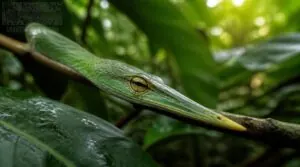
An arrowhead-shaped head sets the Longnosed Vine Snake apart in arboreal canopies. Its tapered snout reduces resistance while gliding through branches, aiding stealth movement and ambush hunting. Sensory receptors detect light shifts among leaves, while camouflage coloration blends the snout into foliage.
- Elongated tip
- Smooth scales
- Forward-set eyes
- Yellowish nose flecks
- Age-lengthened growth
Snout length increases with maturity, reflecting adaptive radiation within arboreal habitats.
Spiny Bush Viper Scales
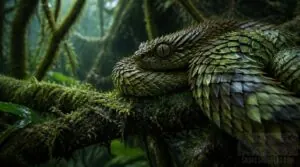
Where the vine snake relies on shape, the Spiny Bush Viper relies on texture. Its keeled scales create a bristly, pinecone-like coat that aids camouflage among mossy branches. This rough surface improves grip during arboreal locomotion and startles predators on contact.
Shedding periodically refreshes its iridescent scales, keeping this rare species cryptic within Africa’s dense forest canopies.
Tentacled Snake Sensory Organs
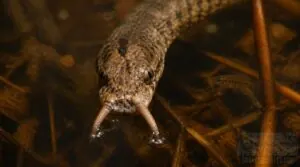
Camouflage keeps predators away, but the Tentacled Snake catches prey by feel. Its paired snout appendages hold dense mechanoreceptors, wired through trigeminal nerve branches, that register water ripples from nearby fish. This aquatic adaptation lets it sense prey in murky water, favoring touch over sight or olfactory senses, a rare sensory strategy among snakes worldwide.
Banded Flying Snake Gliding
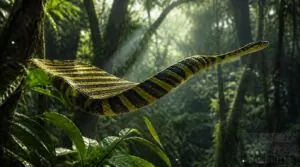
Sensing water is one trick; the Banded Flying Snake performs a stranger feat, gliding between rainforest trees across Southeast Asia. It launches from branches, flattens its ribs into a triangular airfoil, and undulates its body mid-air to steer.
This arboreal gliding locomotion, an impressive evolutionary adaptation, can stabilize glides spanning nearly 100 meters.
Elephant Trunk Snake Skin
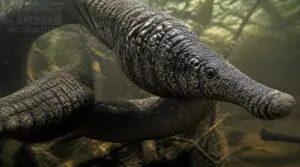
A living hydrostat, the Elephant Trunk Snake wears skin built for water first. Its wrinkled, loose texture aids camouflage and grip, while mucous layers support hydration and deter parasites.
Elastic fibers and dense nerve endings grant both flexibility and sensitivity, letting this aquatic specialist ambush prey by feel alone, no iridescent scales needed for stealth in murky Southeast Asian rivers.
How Rare Snakes Hunt and Defend
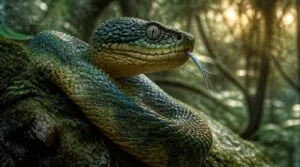
Survival in the wild depends on more than just staying hidden. Rare snakes rely on venom, heat sensors, and sharp instincts to catch prey and fend off danger. Here’s a closer look at five species and the hunting or defense strategies that set them apart.
Blue Coral Snake Venom
Few bites move as fast as the blue coral snake’s. Its neurotoxins jam nicotinic receptors, blocking acetylcholine and causing rapid paralysis. Symptoms like ptosis and breathing trouble can hit within hours.
Venom composition shifts geographically, complicating antivenom effectiveness across Southeast Asia’s populations. It’s a clear reminder: even rare, secretive snakes carry evolutionary weapons built for speed.
Sri Lankan Pit Viper Senses
What lets this snake strike blind in total darkness? Its facial heat-sensing pits detect temperature shifts as fine as 0.05°C, building a thermal picture of warm prey.
Vertical pupils and rod-rich eyes sharpen nocturnal foraging, while jaw-transmitted vibrations and tongue-flicked scent complete a remarkably layered reptile sensory system built for ambush hunting.
Black-Headed Python Reptile Hunting
Why hunt other snakes when rodents will do? The black-headed python answers by doing both, using patient ambush tactics near burrows for nocturnal prey detection.
- Strikes venomous species without harm
- Uses constriction feeding after capture
- Hunts arid Australian scrubland
- Relies on stealth over speed
- Reflects Australia’s reptile biodiversity
Tentacled Snake Aquatic Ambushes
What if a fish swam toward its own predator, thinking it safe? Tentacled snakes exploit this, coiling into a J-shaped ambush posture and using body flicks to trigger fish escape reflexes, right into striking range.
| Sense Organ | Function |
|---|---|
| Snout tentacles | Detect water vibrations |
| Rear fangs | Deliver venom on strike |
| High-set eyes | Track prey underwater |
African Bush Viper Strikes
Speed defines the African bush viper’s ambush. Its strike velocity stays under 0.2 seconds, powered by a laterally compressed body coiling from cryptic camouflage in rainforest foliage.
Hemotoxic venom disrupts clotting fast, causing swelling and tissue damage. Cornering the snake triggers defensive strikes, so keep several meters distance. Ambush accuracy peaks in a low crouch, striking prey or threats within one meter.
Its venom may be potent, but as our guide to venomous snakes explains, the deadliest species is often the one closest to home.
California’s most dangerous species, from the Mojave green to the Western diamondback, each show these traits in different ways.
Since coloration alone can’t confirm a species, checking a detailed green and yellow snake identification guide helps you tell a harmless morph from one with hemotoxic venom before getting too close.
If you’re travelling in Japan, this guide to snakes in Japan explains which native species are harmless and which, like the mamushi and habu, deserve real caution.
Neurotoxic venom, by contrast, targets the nervous system rather than the blood, and understanding this split, as explained in this guide to the world’s most venomous snakes, helps explain why snakebite symptoms vary so widely.
Why Rare Snake Species Need Protection
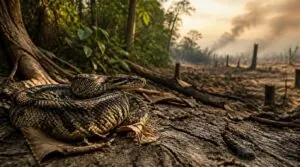
You’ve seen how these snakes hunt, defend themselves, and thrive in some of the planet’s most specialized niches. That same specialization, though, makes them fragile when their world starts changing fast. Here’s a closer look at the pressures pushing rare snakes toward the edge, and what’s being done to pull them back.
Habitat Loss and Fragmentation
A snake’s world shrinks quietly, one cleared acre at a time. Habitat fragmentation isolates populations, weakening genetic exchange and corridor effectiveness.
Wetlands have dropped roughly 50% since 1900, grasslands fragment by up to 40% in places, and edge microclimates run 10-20°C hotter.
Stepping stone habitats and thoughtful conservation planning offer real hope, especially across vulnerable island ecosystems.
Invasive Island Predators
Lost habitat is one threat; arriving predators are another. Rats, cats, and feral dogs, often ship-borne, devastate island reptiles with no natural defenses.
Eradication programs using rodenticide baits and predator-free fencing show real promise. Where predators are removed, native species recovery follows, easing biodiversity loss and rippling positively through fragile island ecosystems.
Illegal Wildlife Trade
Predators arrive by ship; poachers arrive by design. Illegal wildlife trafficking targets rarities like the Aruban rattlesnake, fewer than 230 left, for exotic pet markets worth billions globally.
Poaching networks span hunters to retailers. Combating this means cross-border enforcement, surveillance technology, closing legal trade loopholes, and demand reduction campaigns, paired with community conservation programs protecting what little wild population remains.
Climate Change Pressures
Trafficking isn’t the only threat closing in. Climate change pressures now compound everything else these species face, often in ways population monitoring struggles to catch early.
Global temperatures have climbed roughly 0.2 to 0.3 degrees Celsius per decade, pushing habitat migration toward cooler ground many rare snakes can’t reach. Sea level rise, up to 10 inches since 1900, erodes island nesting zones, while shifting rainfall patterns disrupt prey cycles.
- Ocean acidification weakens coral reef prey bases
- Warmer soils skew incubation sex ratios
- Droughts fragment remaining habitat corridors
- Floods destroy low-lying nesting sites
- Range shifts strand isolated populations
Ecological restoration efforts help, but climate outpaces recovery for species already this rare.
Captive Breeding and Reintroduction
When wild populations dip into double digits, captive breeding becomes the last real safety net. Facilities pair animals using studbooks for genetic diversity management, then run predator avoidance training and health screening before any soft release protocols begin.
Post-release monitoring success stories, like Antigua’s racer, prove species reintroduction works when habitat restoration and wildlife conservation move together, not separately.
Frequently Asked Questions (FAQs)
What snake has 69 species?
Picture a forest floor rippling with countless small, secretive bodies: that’s Atractus. This ground snake genus reaches 69 recognized species, though ongoing reclassification and monitoring near Colubridae relatives suggest true diversity, much like Bothrops, remains undercounted across suitable habitats.
How do snakes digest prey after swallowing whole?
Your snake relies on jaw elasticity to swallow prey whole, then powerful stomach acid and enzymes break down tissue. Organ hypertrophy boosts digestive capacity, while the entire digestion timeline stretches across days as nutrients absorb gradually.
What evolutionary advantages do blind snakes possess?
Like a compass needing no light, evolution rewired their senses. Chemosensation replaces sight, guiding these burrowers through soil via scent trails. Smooth scales cut resistance, while efficient energy use and rapid maturity favor survival underground.
Can rare snakes be kept as pets legally?
Legally, it’s rarely simple. You’ll need verified permits, proof of captive-bred sourcing, and secure enclosures meeting state standards, since wildlife trafficking pressures make wild-caught rare snakes both ethically fraught and often outright illegal to own.
How long do endangered snake species typically live?
Beneath a coiled body barely stirring in the leaf litter, time moves slowly for these survivors. In the wild, most endangered snakes live 5 to 15 years, but captive breeding and steady care can push that toward 20 or more.
What role do snakes play in their ecosystems?
You’ll find their fingerprints everywhere in a healthy habitat. Through prey population control and pest regulation, they shape biodiversity, link food webs across trophic levels, cycle nutrients via predator-prey relationships, and fill niches other predators simply can’t.
How do rare snakes reproduce in captivity?
Egg incubation isn’t guesswork. Keepers hold temperature near 28-30°C and humidity between 70-90%, using damp sphagnum or vermiculite. Clutches of 2-10 eggs hatch in 50-70 days, and hatchlings need immediate heat and hydration.
What do rare burrowing snake species eat?
Underground hunters favor earthworm specialists and soft-bodied invertebrates, but many take subterranean salamanders, burrowing frogs, and small lizards too. Prey size stays proportionate to the snake’s own length, letting easy passage through tight burrow chambers.
Which rare snakes are found in freshwater habitats?
Freshwater endemic species like the Tentacled Snake and Elephant Trunk Snake thrive in Southeast Asia’s rivers, using aquatic adaptation traits such as valved nostrils. Riparian zones and wetland breeding migrations sustain these rare, water-dependent lineages.
How long do rare snake species typically live?
Good things come to those who wait, and that’s true here too. Lifespan in the wild varies widely, from 6 to 25 years, with captive care and conservation often adding extra years to endangered populations.
Conclusion
Down to their final few breaths as a species, these serpents aren’t gone yet. That distinction matters.
Every fact within this rare snake species information guide points toward one truth: extinction isn’t inevitable, it’s a choice we’re still making.
Thermal pits, gliding ribs, camouflaged scales, these adaptations took millions of years to build and mere decades to undo.
Protecting them isn’t sentimental. It’s a debt owed to evolution’s patience, and yours to help repay.