This site is supported by our readers. We may earn a commission, at no cost to you, if you purchase through links.

A calm rat snake will drape across your arm like a piece of rope, barely flicking its tongue. That’s the payoff. Getting there takes patience, and knowing what you’re signing up for first.
Rat snakes as pets rank among the most forgiving reptiles you can own, but "forgiving" doesn’t mean "no work." You’re looking at a 15 to 25 year commitment, an adult that could stretch past 5 feet, and legal rules that shift depending on your zip code.
Get the fundamentals right early, and you’ll spend decades with a snake that trusts your hands instead of fearing them.
Table Of Contents
- Key Takeaways
- Are Rat Snakes Good Pets?
- Choosing The Best Rat Snake
- Rat Snake Enclosure Setup
- Feeding and Routine Care
- Health, Handling, and Long-Term Ownership
- Frequently Asked Questions (FAQs)
- Would a rat snake make a good pet?
- What is the friendliest snake as a pet?
- Will a rat snake bite a person?
- What is the lifespan of a rat snake?
- Will a rat snake bite you?
- How long do pet rat snakes live?
- Can rat snakes be aggressive?
- Are rat snakes good to have around?
- Are rat snakes good for beginners?
- Can rat snakes be kept together?
- Conclusion
Key Takeaways
- Rat snakes make forgiving, low-maintenance pets, but you’re committing to 15–25 years of care and an adult that can grow past 5 feet, so think it through before bringing one home.
- Your snake’s enclosure needs to nail three things at once: a 40-gallon minimum size, a temperature gradient of 88–92°F basking down to 70–75°F cool side, and humidity between 40–60% (bumped to 60–70% during sheds).
- Feed frozen-thawed rodents sized to your snake’s girth, every 5–10 days as a juvenile and every 10–14 days as an adult, and always thaw safely in the fridge or cold water, never the microwave.
- Regular gentle handling builds real trust over time, but you’ll still want annual vet checkups to catch issues like mites, respiratory infections, or mouth rot before they become emergencies.
Are Rat Snakes Good Pets?

Rat snakes make excellent pets for the right owner, but "right owner" is the key phrase here. You’ll need to weigh temperament, size, and a commitment measured in decades before bringing one home. Let’s break down exactly what you’re signing up for.
If you’re still weighing your options, this guide to small, docile snake species for first-time owners can help you see how rat snakes stack up against other beginner-friendly picks.
Temperament and Handling Tolerance
Pick up a rat snake and you’ll likely feel calm muscle, not panic. Most are docile and easy to handle, though juveniles startle faster and need slower approaches.
- Handle 2–3x weekly, brief sessions
- Cooler temps reduce reactivity
- Ease off during shedding
Steady handling builds trust—defensive coiling fades as your snake learns your grip means safety, not threat.
Beginner-Friendliness
That trust you’re building carries into everyday care, too. Rat snakes earn their reputation as beginner pets through genuinely straightforward care needs.
| Beginner Perk | Why It Works |
|---|---|
| Simple Setup | Secure lid, basic heat gradient |
| Low Cost | Affordable hides, substrate, bowls |
| Routine Care | Weekly cleaning, minimal fuss |
Honestly? They’re the golden retrievers of snakes—low-maintenance, adaptable, and forgiving of rookie mistakes.
Adult Size Expectations
That golden retriever energy fades fast once you factor in size. Most adults reach 3 to 6 feet, with females often outgrowing males by 6-12 inches.
If you’re picturing something leash-friendly and compact, check out this boa constrictor growth chart by age to see how quickly that “cute and small” phase disappears.
Corn snakes average 3-5 feet; black rat snakes hit 4-6 feet. Full growth takes 4-6 years.
Plan enclosures at least 6 feet long—your snake needs room to stretch out fully.
15–25 Year Commitment
That size math matters, but here’s the bigger question: will you still be feeding this snake in 2046? Rat snakes live 15–25 years in captivity. This isn’t a two-year hamster commitment.
A rat snake can live 15 to 25 years, so bringing one home means committing to decades, not just a season
Budget for enclosure upgrades, heating costs, and vet visits every 1–3 years. Housing stability matters too—moving homes or losing interest doesn’t work for a decades-long relationship.
Legal Ownership Checks
Before you buy, check your state’s exotic pet ownership rules. Permit requirements vary wildly: Texas needs no permit, Utah demands a Certificate of Registration, and Pennsylvania often bars pet possession entirely.
Watch for species registration quirks, capture restrictions on wild-caught snakes, and local ordinances that override state law. Your reptile veterinarian can’t fix a legal problem, so verify everything first. Always confirm your state’s reptile ownership regulations before acquiring a pet snake.
Choosing The Best Rat Snake

With over 30 subspecies out there, picking the right one matters more than you’d think. Your snake’s temperament, adult size, and your local climate all play a role in this decision. Here’s what you need to weigh before bringing one home.
Once you’ve settled on a subspecies, choosing the right substrate for your reptile’s indoor terrarium makes those regular cleanings faster and keeps humidity levels where your snake needs them.
Popular Pet Species
Over 30 subspecies exist, but a few stand out for beginners. Black Rat Snakes and Yellow Rat Snakes reach 4-5 feet with calm dispositions, while Gray Rat Snakes run smaller and bluish-toned. Color morphs range brown, gray, and striped patterns.
For comparison, Pantherophis guttatus (corn snake) fits similar handling ease. Match temperament and regional subspecies to your climate before committing.
Corn Snakes Vs Rat Snakes
Here’s a question worth asking: is a Corn Snake really "just" a rat snake with better marketing? Sort of. Corn Snakes stay smaller, milder, and easier for first-timers.
- Calmer temperament, less defensive
- Compact 3-5 ft adult size
- Checkerboard belly for easy ID
- Vivid color morphs galore
Handling ease favors corn snakes; feeding frequency and temperature gradient needs stay nearly identical across both.
Juveniles Vs Hatchlings
A tiny hatchling isn’t just a small juvenile—it’s a different care puzzle entirely. Hatchlings need feeding every 5-7 days, gentler handling, and closer monitoring.
| Trait | Hatchling |
|---|---|
| Growth | 1-2 in/month |
| Feeding | Every 5-7 days |
Juveniles grow slower, handle better, and shed less often. Choose based on your comfort with fragile beginners.
Temperament and Climate Match
A calm snake starts with a calm setup. Stable temperature range and consistent humidity keep your rat snake docile and easy to handle, while mismatched climates cause bracing, thrashing, or feeding refusal.
Match species climate tolerance to your home. Predictable light cycles and a calm handling routine build trust—species suited to your conditions stay noticeably steadier under care.
Breeders, Rescues, Ethics
Where you buy matters as much as what you buy. Reputable breeders verify lineage, health-test breeding stock, and back every sale with a written contract—proof of ethical sourcing you can trust.
Rescue adoption deserves equal consideration; many surrendered rat snakes just need a stable home. Whichever route you choose, confirm legal compliance in your area before committing to years of responsible ownership.
Rat Snake Enclosure Setup
Your snake’s enclosure isn’t just a tank, it’s a life-support system. Get the size, temperature, and humidity wrong, and you’re inviting health problems down the road. Here’s exactly what your setup needs to get right.
Minimum Enclosure Size

Size matters more than most new owners expect. Your rat snake needs a 40-gallon enclosure minimum as an adult, roughly 2×3×4 feet. Footprint area matters most:
- Full-length stretching room
- 4x body length floor space
- Vertical climbing structures
- Room to grow with your snake
Start juveniles smaller, then upgrade. Cramped enclosure design causes stress, poor shedding, and stunted activity levels.
Temperature Gradient

Once the tank’s roomy enough, heat becomes the next variable to nail down. Aim for a basking spot temp of 88–92°F and a cool side retreat near 70–75°F. Place ceramic heat emitters overhead, never touching glass, and run gradient stability checks weekly with a digital probe. Your snake regulates itself—give it the range.
Humidity and Shedding

Moisture matters as much as heat. Keep ambient humidity between 40–60%, bumping to 60–70% during sheds. A humid hide on the warm side softens old skin for a clean, one-piece peel.
Skipping this invites stuck shed, especially at the tail. Watch for dulling eyes and dull color—that’s your cue to raise moisture before trouble starts.
Substrate and Cleaning
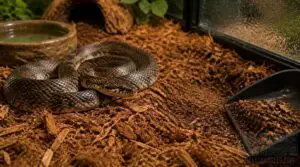
What’s under your snake matters as much as what’s above it. Aspen or cypress mulch absorbs moisture and controls odor with minimal dust.
Spot clean daily, removing waste and leftover prey. Swap substrate fully every 2–4 weeks. This routine curbs mold, grips odor, and keeps humidity stable—protecting the shed cycle you just worked to support.
Hides, Climbing, Enrichment

Because bare tanks breed boredom, your snake needs a habitat that feels alive. Give it two hides at opposite temperature zones, sturdy branches for climbing, and rotating enrichment weekly.
- Escape-proof lids, no gaps
- Rough, secured climbing branches
- Non-toxic puzzles and scent trails
This stimulates natural exploration and cuts stress during handling.
Feeding and Routine Care

Feeding your rat snake right isn’t complicated, but it does follow a schedule. You’ll need to know what to feed, how much, and how often, from hatchling to full adult. Here’s what your snake’s feeding routine should actually look like.
Frozen-Thawed Rodents
Live prey isn’t worth the risk. Frozen-thawed rodents cut injury and disease risk while keeping nutrition consistent.
| Step | Practice |
|---|---|
| Storage | –18°C freezer |
| Thawing | Warm water bath |
| Never | Microwave |
| Check | Inspect for spoilage |
| Supplement | Dust calcium monthly |
You’ll want prey fully thawed, never rushed, before offering it—your snake’s health depends on it.
Prey Size Guidelines
A simple rule guides every meal: prey width should match your snake’s girth, not exceed it.
- Hatchlings: prey half the snake’s widest point
- Juveniles: 0.8–1.2 times body width
- Adults: prey matching jaw gape without forcing
If swallowing looks strained, drop back a size. Prey sizing isn’t guesswork—it’s steady, gradual adaptation for a thriving snake diet.
Juvenile Feeding Schedule
Growing fast means eating often. Your juvenile needs frozen-thawed mice every 5–7 days, dropping to 7–10 days by 6–8 months.
| Age | Feeding Frequency |
|---|---|
| Under 3 months | 4–5 days |
| 3–6 months | 5–7 days |
| 6–8 months | 7–10 days |
| 8+ months | moving to adult schedule |
Track weekly weight gain (2–5 grams) and keep water fresh post-meal.
Adult Feeding Schedule
Your adult rat snake settles into a slower rhythm now. Feed every 10–14 days, offering one frozen-thawed rodent sized to the snake’s thickest girth.
Appetite dips in cooler months or before shedding—that’s normal, not illness. Skip handling for 24–48 hours post-feeding to protect digestion.
Refusals over 2–3 feedings warrant a vet call.
Safe Thawing Practices
How you thaw matters as much as what you feed. The refrigerator thawing method is safest: 24+ hours, tray underneath for drips.
Rushing the process or skipping steps is exactly how feeding goes wrong, so it’s worth reviewing these common snake feeding mistakes to avoid before your next mealtime.
Short on time? Cold water thawing works—sealed bag, changed every 30 minutes, roughly 30 minutes per pound.
Skip room temperature entirely. Microwave thawing safety means defrost-only, immediate feeding.
Store thawed prey separately, refrigerated, used within 24 hours. Wash hands after handling.
Health, Handling, and Long-Term Ownership

A healthy rat snake is a happy pet, and you’re the one keeping watch. You’ll need to spot trouble early, handle your snake with confidence, and know when a vet visit isn’t optional. Here’s what long-term ownership really looks like, day to day.
Common Health Problems
When something’s off with your snake, it rarely announces itself loudly at first.
- Mouth rot: drooling, mouth swelling, pus
- Intestinal parasites: diarrhea, weight loss
- Crypto infection: regurgitation, mid-body bulge
- Skin infections: fluid-filled blisters
- Metabolic bone disease: from calcium neglect
Annual checkups catch these early, before they become emergencies.
Mites and Respiratory Signs
Two threats deserve extra vigilance: mites and respiratory infections, which affect nearly 30% of snakes in poor setups.
Spot mites as tiny moving dots on skin; treat immediately.
| Warning Sign | Likely Cause |
|---|---|
| Open-mouth breathing | Respiratory infection |
| Wheezing, nasal discharge | Mites or infection |
| Low humidity | Shedding trouble |
| Cool-side temp drop | Gradient failure |
Stress worsens symptoms. See your reptile vet promptly for treatment.
Safe Handling Basics
Once your snake’s healthy, handling comes next. Wash your hands first, always.
Use two-hand support under the body, never gripping near the head or tail. Keep the body fully cradled to prevent spinal strain.
When you’re done, return your snake to its enclosure slowly and calmly, minimizing stress with every gentle motion.
Shedding Support
Handling gets paused during shedding, since your snake’s vision is cloudy and stress delays the molt.
Bump humidity to 60–70%, add damp sphagnum moss to hides, and check daily for retained shed on toes or tail tips.
A rough branch offers gentle friction, helping skin release fully and evenly.
Reptile Vet Checkups
Book an annual checkup even when your snake looks fine. Reptiles hide illness well, so a reptile veterinarian should run fecal parasite testing, bloodwork, and physical exams yearly.
Between those vet visits, staying on top of humidity, temperature, and enclosure cleanliness makes a real difference, so check out this snake habitat maintenance guide for keeping conditions healthy year-round.
Older snakes benefit from visits every six months. New snakes need a baseline exam within two weeks of arrival. Preventive care catches problems before they become emergencies.
Frequently Asked Questions (FAQs)
Would a rat snake make a good pet?
Roughly 30% of snakes in poor setups develop respiratory infections — proof that success hinges on proper setup, not luck. With a docile temperament and 15–25 year commitment, a rat snake makes a genuinely good, low-maintenance pet for prepared beginners.
What is the friendliest snake as a pet?
Corn snakes consistently rank friendliest, tolerating handling well. Rat snakes come close though—nonvenomous, docile, and low-maintenance with regular gentle interaction.
Watch for calm, curious behavior during handling; that’s your bonding signal, and it’s a strong sign of beginner suitability.
Will a rat snake bite a person?
Yes, but rarely. Bites are defensive strikes, not aggression, triggered when a snake feels cornered or startled. Juveniles nip more while learning. Stay calm, clean any wound, and watch for infection over 24–48 hours.
In cluttered or overcrowded enclosures, fast defensive strikes can even lead a snake to mistake its own tail for a threat, a self-inflicted mix-up explained in why do snakes attack themselves.
If swelling and redness set in fast, this guide on what a rattlesnake bite looks like as it develops can help you recognize normal reaction from a true emergency.
What is the lifespan of a rat snake?
You’re looking at 15–25 years with proper care, sometimes longer. Species variation matters too, corn snakes often hit 20, while consistent temps, annual checkups, and solid husbandry directly boost longevity. Long-term responsibility is real, so plan ahead.
Will a rat snake bite you?
Funny thing: the same threat response that makes them flee also triggers bites when cornered. Rat snakes bite only as a last resort—docile by nature, they’d rather retreat than fight when you’re handling them calmly.
How long do pet rat snakes live?
With attentive care, you’ll usually see 20 to 25 years of life, sometimes longer. Consistent temperature gradients, proper enclosure setup, and steady feeding schedules directly support this captive longevity, while species genetics create natural lifespan variation.
Can rat snakes be aggressive?
True aggression is rare. Rat snakes prefer fleeing over fighting, striking only as a last resort when cornered or grabbed. Stress-induced biting happens more in juveniles; consistent, gentle handling builds trust and calms defensive reflexes over time.
Are rat snakes good to have around?
Like a natural pest-control service older than any exterminator’s truck, rat snakes earn their keep. They’re non-venomous, docile, low-maintenance neighbors that curb rodent populations, protect crops, and support backyard biodiversity, all while staying wild and mostly out of sight.
Are rat snakes good for beginners?
Yes, they’re excellent beginner pets. Docile, low-maintenance, and hardy, rat snakes rarely bite and tolerate gentle handling well. With straightforward feeding, heating, and cleaning routines, you’ll build confidence fast through consistent, low-stress handling techniques.
Can rat snakes be kept together?
Forcing two snakes into one tank is like locking strangers in a studio apartment forever. Skip it. Rat snakes stay solitary by nature, and cohabitation breeds stress, territorial fights, and feeding injuries—so house them separately for safety.
Conclusion
A rope doesn’t trust the hand that holds it—your snake will, if you earn it. That’s the quiet reward hiding inside rat snakes as pets: patient repetition builds a bond most reptiles never offer.
You’ll master feeding schedules, humidity swings, and shedding cycles, but the real skill is consistency. Twenty years from now, you won’t remember the mite treatments. You’ll remember a calm body draped across your arm, tongue flicking once, then settling. That trust is earned, not given.