This site is supported by our readers. We may earn a commission, at no cost to you, if you purchase through links.

A rattlesnake that swallows a rabbit can spike its oxygen consumption 44-fold above baseline. Its heart and intestines physically enlarge to handle the workload, then shrink back down when the meal is gone. No mammal survives that cycle. Snakes run on it.
Understanding snake digestion after feeding means watching an entire physiology reorganize itself around one meal: jaws that walk prey backward, stomach acid strong enough to dissolve bone, and guts that rebuild on demand. Whether you keep a ball python or study vipers, this process dictates everything from cage temperatures to when it’s safe to pick your snake up. Here’s what happens after the swallow.
Table Of Contents
- Key Takeaways
- Snake Digestive Anatomy and Whole-Prey Adaptations
- How Snake Digestion Works After Feeding
- Metabolic and Organ Changes During Digestion
- How Temperature and Meal Size Affect Digestion
- Post-Feeding Behavior and Safe Handling
- Frequently Asked Questions (FAQs)
- How long does it take for a snake to poop after feeding?
- How long does it take for a snake to digest its meal?
- Do snakes remember who feeds them?
- How does a snake’s digestive process work?
- What do snakes excrete after digestion is complete?
- How does temperature affect snake digestion speed?
- Can illness disrupt a snake’s digestive process?
- Do all snakes digest fur, feathers, or scales?
- What happens if a snake regurgitates its meal?
- Do snakes drink water while digesting a meal?
- Conclusion
Key Takeaways
- After a large meal, a snake’s metabolic rate can spike up to 44-fold above baseline, and organs like the heart, liver, and intestines physically enlarge to handle digestion—then shrink back down afterward, a build-and-breakdown cycle no mammal could survive.
- Digestion proceeds in four stages—jaw-driven prey transport, acid breakdown in the stomach (pH 1.5–2.5), intestinal nutrient absorption via expanding villi, and waste elimination through the cloaca—and typically takes 3 to 14 days depending on meal size and temperature.
- Temperature is critical: below about 24°C, enzyme activity slows and digestion can stall for days, so keep enclosure warmth stable and provide a warm hide for 24–72 hours after feeding to avoid regurgitation.
- Skip handling for 48–72 hours post-feeding, keep sessions short and supportive of the body, and don’t mistake post-meal stillness for illness—snakes naturally stay sluggish and vulnerable while digesting.
Snake Digestive Anatomy and Whole-Prey Adaptations
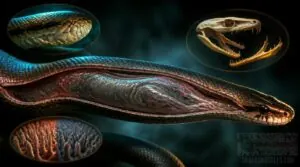
A snake’s digestive anatomy is basically one long specialized tube, built to process prey whole, sometimes larger than the animal’s own head. Every structure, from jaw to cloaca, reflects whole-prey adaptations refined over millions of years.
If you’ve ever wondered how a snake manages to dissolve bones and fur, how snakes digest their food breaks the whole process down step by step.
Expandable jaws make the feat possible. Flexible ligaments and kinematic skull joints let each jaw half move independently, allowing the mouth to stretch around prey wider than the snake’s resting head. Stretchy skin along the throat and torso controls the rest, accommodating meals up to 40-60% of the body mass without tearing tissue.
Because the jaw never actually dislocates, a snake’s flexible bones and ligaments stay intact, and this internal anatomy of snakes guide shows how the skull, spine, and organs adapt to big meals.
This intricate balance of bone and elasticity is part of what makes snake skeletal structure and flexibility such a compelling subject for anyone curious about how serpents move and feed.
Deeper in, intestinal villi expansion dramatically increases the gut’s absorptive surface area exactly when it’s needed most. Between meals, those same villi contract back down, conserving energy until feeding begins again.
How Snake Digestion Works After Feeding
Your snake just swallowed a meal that could double its head width. Now the real work begins, and it happens in four distinct stages. Here’s what unfolds inside, from first swallow to final waste.
Esophageal Transport
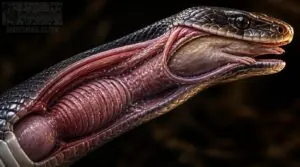
The journey from mouth to stomach is a marvel of esophageal peristalsis. Watch closely and you’ll see it unfold in stages:
This wave-like muscle action is so effective that it works even against gravity, though problems can arise—as seen in difficulty swallowing prey for snakes, where the same basic mechanism faces far bigger challenges.
- Cranial kinesis lets jaws walk the prey backward.
- Mucus glands provide prey lubrication.
- The swallowing mechanism orients prey head-first.
- Muscle waves grip and push, no jaw dislocation required.
- The cricopharyngeal sphincter relaxes, then seals shut.
Stomach Breakdown
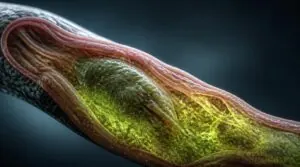
Once prey lands in the stomach, your snake’s real chemistry begins. Stomach acidification drops digestive pH to 1.5–2.5, converting pepsinogen into pepsin, one of the key protein breakdown enzymes.
Gastric acid secretion ramps up within hours, softening muscle and collagen while peristaltic waves grind prey into fragments. Fattier, larger meals linger longer, extending acid exposure before digestive enzymes finish the job downstream.
Intestinal Nutrient Absorption
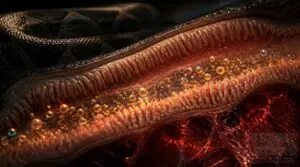
What leaves the stomach isn’t finished. In the small intestine, pancreatic enzymes and bile finish the job, then enterocytes take over.
The duodenum kicks things off with neutralizing bile, and this breakdown of how snake digestion works walks through each intestinal stage in detail.
Nutrient absorption efficiency climbs as microvilli lengthen and transporter density rises, part of the metabolic upregulation postfeeding. This organ hypertrophy and atrophy cycle means your snake absorbs amino acids, fats, and sugars fast, but only while the gut stays warm and working.
Waste Elimination
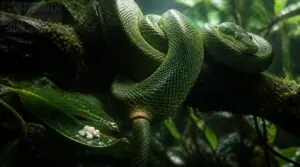
When digestion wraps up, waste elimination begins. Here’s what to expect:
- One exit route: the cloaca controls everything.
- First flush: days to weeks after eating.
- Stool shrinks as water gets reabsorbed.
Your snake’s cloaca function combines feces and urine into a single vent. Urinary waste excretion arrives as uric acid crystals, not liquid. Defecation timing tracks meal size, and high nutrient absorption efficiency means surprisingly little waste comes out.
Metabolic and Organ Changes During Digestion

Within hours of swallowing a meal, your snake’s body launches one of nature’s most dramatic physiological transformations. Its metabolic rate surge can spike oxygen consumption several-fold above baseline, the reptilian equivalent of running a marathon while lying still.
The changes go deeper than chemistry. Organ mass changes are real and measurable: the small intestine, liver, pancreas, and even heart enlarge as blood flow floods the gut and tissues rebuild themselves for the workload. This intestinal remodeling includes new transporter proteins and lengthened villi to absorb every calorie from that whole-prey meal.
Here’s the impressive part: when digestion finishes, everything reverses. Reversible organ atrophy shrinks these tissues back down, conserving energy between feeds. It’s a built-up, torn-down cycle no mammal could survive.
How Temperature and Meal Size Affect Digestion
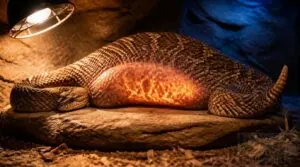
Here’s a number that should stop you cold: a rattlesnake’s metabolic rate can climb 44-fold after a big meal, the largest post-feeding surge recorded in any animal. Your snake’s gut transforms into a furnace, but only if you keep it warm enough to burn.
A rattlesnake’s metabolic rate can surge 44-fold after a big meal—but only if warmth fuels the furnace
Temperature affects digestion speed dramatically. Below about 24°C, enzymatic activity slows, gastric emptying stalls for days, and that 44-fold surge fizzles. Warmth isn’t optional; it’s fuel. A reliable reptile thermostat heat mat controller keeps that warm zone steady, even when your room temperature swings overnight.
Watch for these regurgitation risks:
- Cold rooms after feeding
- Oversized prey straining gut transit
- Sudden nighttime temperature drops
- No warm hide for 24–72 hours
- Handling during peak digestion
Digestive efficiency can hit 99 percent when conditions align, but meal size matters too. Larger prey extends transit time by 20–50 percent, so scale meals to your snake’s midbody width and give the furnace time to finish its work.
A pair of long snake feeding tongs lets you offer properly sized frozen-thawed mice without ever reaching into the enclosure during digestion.
Post-Feeding Behavior and Safe Handling
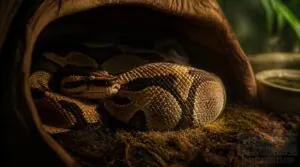
Picture your snake coiled in its warm hide, mid-meal bulge fading, eyes half-lidded. It looks asleep, but its body is running a furnace.
This is classic postfeeding behavior: reduced activity and alertness for 24 to 72 hours while digestion proceeds. Finding a Safe Haven matters here, so give your snake secure, escape-proof hides that encourage calm habitat selection postfeeding instead of stress-driven wandering.
Understand the predator vulnerability window. A distended, sluggish snake can’t defend itself well, so hunger cues stay suppressed for 5 to 14 days. Don’t read stillness as illness.
Your handling rules: skip handling for 48–72 hours post-feeding, keep sessions under five minutes, support the body, and never squeeze the abdomen. Maintain stable temperatures, since thermoregulation strategies fail when fluctuations spike regurgitation risk. Watch for vomiting, and let digestion finish. A reliable reptile thermostat controller takes the guesswork out of keeping that warm zone steady, so digestion never stalls.
Frequently Asked Questions (FAQs)
How long does it take for a snake to poop after feeding?
How long does it take for a snake to poop after feeding? Usually 48 to 72 hours. Larger meals stretch that window, and cooler enclosures slow things further, sometimes delaying defecation by days.
How long does it take for a snake to digest its meal?
How long does a snake digest its meal? Usually 3 to 14 days, depending on meal size and warmth. At 28–32°C, digestion accelerates; cooler enclosures slow it 2–4x, so provide proper heat.
Do snakes remember who feeds them?
Yes, many can. Captive snakes often recognize familiar feeders through scent and routine, especially with consistent, calm handling. Recognition fades without reinforcement, and irregular handling can trigger stress-induced regurgitation during the predator vulnerability window.
How does a snake’s digestive process work?
How does a snake’s digestive process work? Imagine a living conveyor belt. Your snake swallows whole prey, stomach acidification floods in, digestive enzymes dissolve tissue, then intestinal absorption efficiency delivers nutrients while its metabolic rate surge powers everything.
What do snakes excrete after digestion is complete?
What do snakes excrete after digestion is complete? A single compact pellet through the cloaca. It blends feces with paste-like urates, plus fur, feathers, and bone fragments. No separate liquid urine. This pellet analysis reveals prey type, hydration, and gut health.
How does temperature affect snake digestion speed?
Warmth is fuel. Higher temperatures drive metabolic rate increases 44-fold after feeding, and digestive enzyme temperature dependence means enzymes work faster. That’s why snakes rely on thermoregulation strategies, like post-meal basking, to digest efficiently.
Can illness disrupt a snake’s digestive process?
Can illness disrupt a snake’s digestive process? Absolutely. Infections and stress can cut digestive efficiency dramatically, slowing enzyme activity, raising regurgitation risks, and stalling metabolic processes. Watch appetite, hydration, and stool timing closely.
Do all snakes digest fur, feathers, or scales?
Do all snakes digest fur, feathers, or scales? No. Keratin resists digestive enzymes, so fur, feathers, and scales often pass through undigested. Your snake’s digestive efficiency depends on prey type and species-specific adaptations.
What happens if a snake regurgitates its meal?
Picture a furnace shut down mid-burn: regurgitation halts the digestive process, slashes nutrient absorption, and wastes the metabolic cost already spent. Skip handling, rest your snake 24–48 hours, and investigate stress-induced regurgitation causes.
Do snakes drink water while digesting a meal?
Yes, they can. Your snake may sip from a shallow dish during digestion, though intake stays minimal. Hydration aids gastric motility and osmoregulation, while the cloaca reabsorbs water, so keep fresh water available.
Conclusion
Picture it: a coiled snake in the warm corner of its enclosure, eyes clouded, body swollen with a meal it will carry for days. That quiet stillness is the visible edge of understanding snake digestion after feeding, a process where organs rebuild, acid burns through bone, and every calorie fuels complete transformation.
Respect the cycle. Keep the heat right, wait patiently, and let your snake do what evolution perfected.