This site is supported by our readers. We may earn a commission, at no cost to you, if you purchase through links.
Crack open a clutch of corn snake eggs and you’ll find something wild: siblings hatching in caramel, snow white, and jet black patterns, all from the same two parents. That’s not paint or photoshop. That’s genetics doing exactly what it’s designed to do.
Every morph you’ve admired at a reptile expo started as a single mutation, a tiny glitch in pigment production that some sharp-eyed breeder noticed and decided to chase. Understanding how corn snake morphs are created means getting comfortable with dominant alleles, recessive traits, and the patient art of pairing the right snakes together.
Once you see the code behind the colors, you’ll never look at a corn snake the same way again.
Table Of Contents
- Key Takeaways
- What Are Corn Snake Morphs?
- Corn Snake Morphs Are Created Through Selective Breeding
- How Are Corn Snake Morph Genes Inherited?
- How Do Mutations Change Color and Pattern?
- How Do Breeders Establish New Morphs?
- Frequently Asked Questions (FAQs)
- How to tell what morph your corn snake is?
- What is the rarest morph of corn snake?
- How are snake morphs created?
- How many morphs do corn snakes have?
- How long does breeding a new morph take?
- Can morphs breed with wild-type corn snakes?
- What permits are needed for breeding corn snakes?
- How do environmental conditions influence morph development?
- How much do corn snake morphs typically cost?
- Why do light-colored morphs need shaded enclosures?
- Conclusion
Key Takeaways
- Every corn snake morph traces back to a single spontaneous genetic mutation that a breeder noticed and then deliberately bred to make permanent.
- Whether a trait shows up depends on dominant versus recessive genetics, so two normal-looking carrier snakes can still produce colorful hatchlings when a recessive gene resurfaces.
- Turning a one-off mutation into a recognized morph takes three to five generations (roughly five to eight years) of test breeding, stabilizing, and careful pedigree tracking.
- Breeders combine line breeding to lock in traits with outcrossing to unrelated snakes, balancing predictable genetics against the need for healthy genetic diversity.
What Are Corn Snake Morphs?
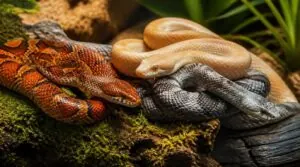
When you picture a corn snake, you’re probably thinking of the classic orange-and-black wild type, but breeders have pushed that genetic template in some wild directions. Morphs are the result, and no two categories look quite alike. Here’s what actually separates one from another.
Since these mutations affect color and pattern genes that pass reliably to offspring, learning to spot them early makes a real difference—this guide to identifying baby corn snake morphs breaks down the subtle traits that show up before a snake reaches full color.
Wild-Type Versus Designer Morphs
Pick up a corn snake in the wild and you’d see brown, saddled, and built for camouflage, a wildtype shaped purely by natural selection. Designer morphs come from selective breeding around genetic mutations, then stabilizing them over generations.
Three things separate them:
- Origin (natural vs. engineered)
- Stability (wild-fixed vs. bred-fixed)
- Purpose (survival vs. aesthetics)
Ethical breeders balance genetic diversity while chasing new traits, since genetic diversity within populations can shift a lot depending on how selective breeding programs are managed.
Color and Pattern Variations
Once you understand genetic origin, the real fun starts: color and pattern. Amelanistic snakes swap black for red and cream. Lavender brings pale purple-gray tones. Motley scatters splotches, stripe runs lines neck to tail. Chromatophores drive it all, pigment pathway mutations reshaping dorsal banding, belly contrast, and facial masks into something wild-type snakes never show.
Single-Gene and Combination Morphs
That amelanistic look? One gene, one tyrosinase mutation, dominant or recessive depending on the trait.
Stack two or three mutations, though, and you get combination morphs like Coral Snow. Predicting outcomes means running Punnett squares, tracking how each allele pair interacts before hatchlings ever pip their eggs.
Genetic Versus Temporary Color Changes
Before you chase a new morph, run a pigment permanence test: does the color hold through a molt? Genetic changes stem from mutations in pigment cells and melanin production, staying fixed for life. Temporary shifts come from stress or shedding hormones and fade.
Three checks matter:
- Molting trait check
- Baseline vs surface color
- Temporary shift causes
Corn Snake Morphs Are Created Through Selective Breeding
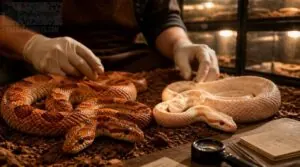
Every morph you see today started with a single snake that looked a little different from the rest. Breeders noticed those differences, then made deliberate choices to turn a one-off oddity into something predictable. Here’s how that process actually unfolds, step by step.
Naturally Occurring Genetic Mutations
Every morph starts as a copy error. During DNA replication, tiny mistakes create new alleles, sometimes triggered by environmental mutagens like radiation. A single point mutation can swap one amino acid, while frameshift mutations scramble entire proteins downstream.
Once that mutated allele settles into the gene pool, breeders rely on a guide to identifying rare ball python morphs to trace how the change expresses itself in pattern and color.
That’s how amelanistic and anerythristic traits first appeared, both recessive, both requiring two copies, eventually stacking together to produce the striking Snow morph.
Selecting Snakes With Desired Traits
Once a mutation shows up, picking the right hatchlings matters. Run a trait consistency check across siblings, verify lineage, and confirm expression stability over generations. Track growth rate and temperament too.
Recessive genes need two copies, so Punnett squares help predict which pairings actually produce visible traits, not just carriers.
Pairing Compatible Morph Genetics
Matchmaking, snake-style, comes down to compatible alleles. Pair two carriers of the same recessive gene, and roughly 25% of offspring show the trait, per Punnett square math.
- Confirm carrier snake selection through pedigree
- Test for hidden recessive alleles
- Watch for linked gene inheritance
- Aim for homozygous trait fixation
- Predict offspring ratios before breeding
Combining Traits Through Gene Stacking
Want a Coral Snow or Blizzard? That’s gene stacking: layering amelanism onto anerythrism, or motley onto lavender, until one line carries it all.
Trait compatibility testing matters first, since some mutations clash.
Track genotype prediction through pedigree records, watch for polygenic traits and trait interaction quirks, and expect stabilizing stacked traits to take a few generations before novel morph combinations breed true.
Repeating Crosses Across Generations
One clutch rarely tells the whole story. Generational trait stabilization means breeding the same pair repeatedly, tracking hatchlings, and using crossbreeding consistency analysis to separate reliable genes from flukes.
- Watching a trait finally "click" across three generations
- Spotting a surprise recessive gene hiding in the lineage
- Building confidence through lineage trait inheritance tracking
- Seeing multi-generational morph expression stay consistent
- Confirming repeated pairing outcome evaluation before locking in a new line
How Are Corn Snake Morph Genes Inherited?
Once you know why morphs show up, the next question is how they actually get passed down. That comes down to a handful of genetic rules working together in every clutch you hatch. Here’s what’s happening under the hood every time two snakes pair up.
Dominant and Recessive Traits
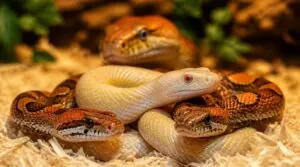
Genetics decides which morphs show up in your clutch, not luck. Dominant alleles mask recessives with just one copy, while recessive traits need two matching copies to appear. That’s why two normal-looking carriers can produce amelanistic hatchlings, the recessive trait resurfacing after skipping a generation. Punnett squares predict these odds mathematically, turning genetic mutations into breeding decisions you can actually plan around.
Understanding how dominant and recessive alleles interact becomes much clearer when you explore the full spectrum of common genetic mutations in snakes, from amelanism to axanthism and beyond.
Two normal-looking carriers can still produce amelanistic hatchlings when a recessive trait resurfaces after skipping a generation
Homozygous and Heterozygous Snakes
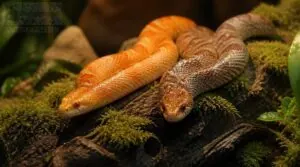
Every trait rides on two alleles, one from each parent, and those two copies decide everything.
Homozygous snakes carry identical alleles, giving rock-solid, predictable offspring generation after generation.
Heterozygous snakes carry mismatched alleles, often masking the recessive one entirely. That carrier status matters, since genotype doesn’t always match phenotype until you pair the right recessives together.
Punnett Square Offspring Predictions
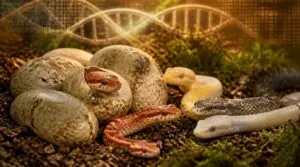
So how do you turn carrier status into real predictions? Punnett squares map every possible allele pairing between two parents, letting you calculate genotype ratios before eggs even hatch.
An Aa x Aa cross yields 1 AA, 2 Aa, 1 aa, roughly 75% showing the dominant trait. That’s genotype prediction turning gamete combinations into hatchling odds you can actually plan around.
Single-Trait Versus Multi-Trait Crosses
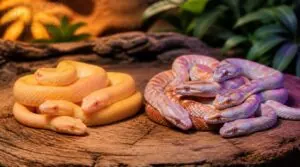
Simple amelanistic x amelanistic crosses give you clean 3:1 ratios fast. Stack in hypomelanism or motley, though, and you’re running dihybrid crosses with 9:3:3:1 splits, sometimes incomplete dominance blending things further.
More genes mean more allele pairing combinations, so multi-trait crosses need bigger clutches to confirm real ratios. Your breeding goals decide which complexity level actually pays off.
Genetic Linkage Between Traits
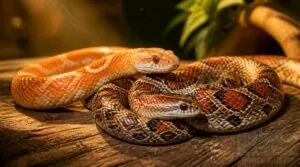
Beyond dihybrid math, some genes just refuse to assort independently. That’s genetic linkage, traits sitting close on the same chromosome, inherited as a unit unless crossing over splits them.
Corn snake breeders rarely need chromosome mapping or LOD scores, but recombination frequency still explains those "shouldn’t happen" ratios in your hatchling counts, when parental combos show up more than pure Mendelian math predicts.
How Do Mutations Change Color and Pattern?
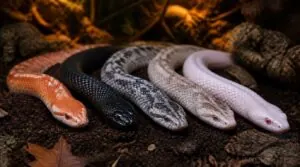
Every morph starts at the cellular level, where mutations rewrite the instructions your snake’s skin cells follow. Some mutations knock out pigment entirely, while others just shift how and where color shows up. Here’s how five key mutations reshape color and pattern in corn snakes.
Chromatophores and Pigment Production
Every morph starts at the cellular level, inside chromatophores, the pigment cells packed with melanin, carotenoids, and pteridines. Melanophores drive melanin synthesis through the tyrosinase enzyme pathway, while xanthophores handle carotenoid absorption and pteridine pigment production. Melanosome transport shifts granules within cells, triggering chromatophore color change.
Once you grasp this system, every morph mutation makes sense.
Amelanistic and Anerythristic Mutations
When tyrosinase stops working, melanophores can’t make melanin, and you get amelanistic snakes: pale bodies, vivid reds and oranges, pinkish eyes. Anerythristic mutations hit the opposite pathway, stripping red and yellow pigment for grayscale tones.
Both trace back to recessive inheritance, needing two copies of the allele. Disrupted pathways, dramatic results.
Hypomelanistic and Lavender Coloration
Delicacy has its own charm. Hypomelanistic snakes show melanin reduction, cutting black density 40-60%, while lavender brings pinkish-purple hues from muted pigment.
Together, hypo lavender interaction softens contrast dramatically. Since this isn’t true incomplete dominance, both genes segregate independently.
Color stability depends on genetics and shedding care, so keep humidity steady, avoid rough sheds, and pattern softening stays consistent across molts.
Motley, Stripe, and Diffused Patterns
Blotches, stripes, or haze, these three genes rewrite pattern from the ground up. Motley softens blotch edges into rounded, mottled chaos. Stripe locks pigment into clean dorsal bands, width varying by lineage. Diffused blurs everything, ghosting checkers into smooth gradients.
Pair any two, and inheritance gets interesting fast, since blotch definition and scale transitions shift with each genetic combination.
Tessera and Zigzag Patterning
Ever notice tiled floors? That’s tessera on a corn snake: small blocks aligned to scale boundaries, with melanin edge concentration darkening each border.
Zigzag brings dorsal symmetry, chevrons mirroring the spine.
- Tessera density (subtle to bold)
- Zigzag chevron spacing
- Hue shift variation at borders
Codominant genes and allele pairing drive pattern stability across generations.
How Do Breeders Establish New Morphs?
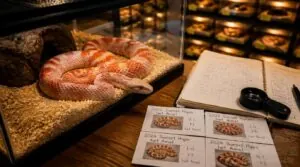
Spotting a cool mutation is one thing, turning it into a recognized morph is another. That takes patience, careful record-keeping, and a handful of deliberate steps most breeders follow in order. Here’s how you take a single odd hatchling and build it into something the whole hobby recognizes.
Evaluating Hatchling Trait Expression
Fresh out of the egg, a hatchling already tells you plenty. Head blotch intensity, scale edge contrast, and body pattern density hint at adult expression, while eye color development often mirrors the morph.
Incubation temperature effects can shift saturation too. Chromatophore development is ongoing, so genotype prediction beats judging phenotype expression too early.
Test Breeding New Mutations
Spotting a promising hatchling is one thing. Proving the mutation breeds true takes controlled pairing. Test breeding pairs related snakes, tracks litters, and confirms heritability through repeated results.
- Paired snakes in a quiet, dim rack
- Clutch cards logged with dates and parents
- Hatchlings compared side by side under light
- Molt-by-molt color notes in a binder
- Genetic stability confirmed across two clutches
Stabilizing Traits Across Generations
Two clean clutches confirming the mutation isn’t the finish line. Trait fixation demands three-plus generations of consistent expression before you call it stable.
Line breeding gets you there fastest, but it’s risky: shrink the gene pool too far and hatch rates drop, vigor suffers. Pedigree tracking keeps you honest, verifying genetic stability instead of guessing.
Outcrossing for Genetic Diversity
Line breeding fixes traits fast, but that tight gene pool invites trouble. Outcrossing counters it, pairing your line with unrelated stock for heterozygosity enhancement and real genetic bottleneck prevention.
You’re protecting founder gene preservation while adding adaptive trait introduction. Smart pairings reduce inbreeding depression, manage genetic complexity, and build breeder reputation through vigorous, diverse hatchlings.
Pedigree Tracking and Morph Naming
Once your outcross pays off, pedigree tracking turns those hatchlings into provable lineage. Each snake gets a unique ID linking parents to offspring for genetic purity assurance.
Good records include:
- Hatch dates and codes
- Ownership history
- Trait inheritance tracking
Morph naming standards keep terms like Amelanistic or Motley Tessera consistent, so lineage documentation actually means something when you’re selling breeding pedigrees.
Frequently Asked Questions (FAQs)
How to tell what morph your corn snake is?
One glance won’t cut it. Check ground color, saddle borders, and eye color together: black-bordered orange screams okeetee, no black means amelanistic, and red or pink eyes on white skin points straight to snow.
What is the rarest morph of corn snake?
Hands down, the Scaleless morph takes the crown, prized for its velvety, scale-free body. Tessera, Amelanistic-Lavender combos, and rare line bred experimental variants trail close behind, each shaped by tricky genetic mutations and years of patient selective breeding.
How are snake morphs created?
Think mutations alone build a morph? Not quite. It starts with a spontaneous genetic mutation, then selective breeding pairs carriers together, stacking dominant and recessive genes across generations until the trait stabilizes reliably.
How many morphs do corn snakes have?
Over 800 documented morphs exist today, built from wild-type baselines through selective breeding and compound combinations. That count keeps climbing as breeders stabilize fresh mutations and hobbyists quietly log undocumented variants nobody’s officially named yet.
If you’re trying to sort a true morph from a locality look or hybrid cross, a solid corn snake morph guide breaks down exactly which traits are genetic and which aren’t.
How long does breeding a new morph take?
Funny enough, patience pays like genetics itself: trait stabilization takes three to five generations, roughly five to eight years. Selective breeding cycles, generation length, and genetic complexity all factor in, especially when outcrossing extends timelines for multi-trait morphs.
Can morphs breed with wild-type corn snakes?
Yes, absolutely. Morphs and wild types cross successfully, producing hybrid offspring with blended traits. Genetic compatibility drives outcomes, wild-type alleles can resurface later, and pedigree documentation keeps lineage clear while breeders monitor hybrid health closely.
What permits are needed for breeding corn snakes?
Permits vary by state: a state breeding license, sometimes a commercial propagation permit, plus identification requirements like PIT tags. Check local municipal permits too, and keep interstate transport documentation ready if shipping across state lines.
How do environmental conditions influence morph development?
Here’s the paradox: your snake’s genetics are fixed, yet its environment still shapes the outcome. Humidity boxes and temperature gradients don’t rewrite genes, but during incubation, they fine-tune pigment maturation and pattern contrast in every hatchling.
How much do corn snake morphs typically cost?
Budget-wise, expect $30–$300 for common morphs, under $100 for wild-types. Rare, mutation-stacked morphs hit $150–$600, with limited-edition genetics topping $1, Adoption runs under $50, though enclosure costs and breeder reputation still shape your real investment.
Why do light-colored morphs need shaded enclosures?
With reduced tyrosinase activity, light morphs lack melanosome protection against light absorption, causing heat stress and skin damage. Shade balances humidity, eases behavioral comfort, and protects pigment cells from sun-driven stress.
Conclusion
Like shuffling a deck stacked with hidden aces, every clutch holds combinations no breeder can fully predict. That unpredictability is the whole point.
Once you understand how corn snake morphs are created, you stop seeing random luck and start seeing genetic code expressed as color. Alleles pair, mutations surface, and patient breeders shape the outcome one cross at a time.
Your next hatchling isn’t just a snake. It’s generations of careful selection looking back at you.