This site is supported by our readers. We may earn a commission, at no cost to you, if you purchase through links.

Most ball pythons don’t bite because they’re aggressive—they bite because owner moved too fast, smelled like prey, or reached in from above.
These are mistakes that ereode trust before it ever has a chance to form.
Ball pythons are wired to survive, not to socialize, which means every interaction either deposits into or withdraws from a behavioral account you’re building over weeks.
The good news: they respond predictably to consistent, low-pressure handling.
Master the right ball python trust building methods, and even a defensive hatchling can become a snake that drapes calmly across your hand without a second thought.
Table Of Contents
- Key Takeaways
- Start With a Settling Period
- Create a Low-Stress Routine
- Pick Up Your Ball Python Safely
- Watch Body Language Closely
- Calm Tongue Flicks and Loose Movement Show Comfort
- Tight Curling Often Signals Fear
- Tail Vibration and Body Rigidity Mean Stress
- Hissing, Jerky Movement, or Striking Need an Immediate Stop
- An S-curve Neck Signals Defensive Escalation
- Return The Snake Calmly at The First Warning Sign
- Learn Individual Preferences and Tolerance Levels
- Avoid Trust-Breaking Handling Mistakes
- Do Not Handle Within 48 Hours After Feeding
- Skip Handling During Shedding or Blue Eyes
- Avoid Handling When The Snake is Ill or Stressed
- Never Grab The Head or Tail
- Do Not Chase a Hiding Snake Around The Enclosure
- Avoid Sudden Movements, Loud Noise, and Overhandling
- Use a Snake Hook for Shy or Defensive Individuals
- Try Tap Training to Separate Feeding From Handling
- Top 10 Ball Python Trust-Building Tools
- 1. V-CHEETONG Aluminum Alloy Telescopic Snake Hook
- 2. GXSTWU Digital Reptile Hygrometer Thermometer
- 3. Ball Python Care Guide Complete Ownership Book
- 4. Ball Python Manual CompanionHouse Guide
- 5. Python Passion Ball Python Encyclopedia
- 6. Ball Python Owners Guide Complete Caring Breeding
- 7. Ball Python Care Logbook
- 8. Ball Python Care Guide for Beginners
- 9. Ball Pythons Breeding Guide Handbook
- 10. Ball Python Captivity Guide
- Frequently Asked Questions (FAQs)
- Conclusion
Key Takeaways
- Ball pythons don’t bite out of aggression — they bite because you moved too fast, smelled like food, or reached in from above, so fixing your approach fixes most bite risk immediately.
- Every interaction either builds or drains trust, which means a consistent routine of short, calm, predictably timed sessions compounds into a snake that actually feels safe around you.
- Your snake’s body language is a real-time feedback system — loose movement and slow tongue flicks mean keep going, while tight coiling, tail vibration, or an S-curve neck mean stop now, no exceptions.
- Skipping handling during the first 1–2 weeks, after feeding, and through shedding isn’t patience for its own sake — it’s protecting the biological conditions that make trust-building even possible.
Start With a Settling Period
When you bring a ball python home, the instinct to hold it right away is completely understandable — but the snake needs time to decompress first.
Give it at least a week to settle in before handling, since rushing that process can set back trust-building for months — ball python handling frequency guidelines explain exactly why that initial patience pays off long-term.
Those first two weeks set the foundation for everything that comes after.
Here’s what that settling period actually looks like in practice.
Leave a New Ball Python Undisturbed for 7–14 Days
When a new ball python arrives home, the instinct to handle it immediately is understandable — but resist it.
That first 7–14 day settling period is non‑negotiable for trust building. Environmental consistency matters most here:
- Maintain temperature stability (78–92°F gradient)
- Prioritize noise reduction near the enclosure
- Make sure proper hide placement on both thermal sides
Your gradual acclimation starts with simply leaving them alone.
Wait Until It is Eating Reliably Before Handling
Consistent feeding is your clearest signal that a ball python has settled.
Before touching it, confirm it’s eating reliably — that means several scheduled meals in a row, not just one.
A proper enclosure should meet the minimum enclosure volume guidelines for healthy growth.
| Feeding Consistency Checks | Meal Frequency Tracking | Post‑Meal Digestion Window |
|---|---|---|
| Appetite Monitoring Signs | Juveniles: every 5–7 days | Wait 48–72 hours minimum |
| Regurgitation Prevention Strategies | Adults: every 10–14 days | Resume only after full digestion |
Postfeeding handling restrictions exist for good reason — rushing disrupts digestion and undermines gradual acclimation.
Let The Snake Observe You Near The Enclosure
Once your ball python is eating reliably, passive observation becomes your next tool.
Stand or sit near the enclosure in a consistent spot — same location, same quiet breathing, same steady light levels. Your side view position reduces perceived threat. Wear scent-free clothing to keep signals clean.
- Move with slow movements only
- Let the snake watch without reaching in
- Avoid staring directly at it
- Keep the room free of sudden noise
Build Familiarity Through Calm Daily Presence
Passive observation builds on itself. Once your snake sees you regularly — same predictable observation spot, same gentle voice, same routine temperature checks each evening — your presence starts to register as safe.
A consistent light cycle helps this, because predictable rhythm reduces stress.
Scent familiarity develops quietly over days.
You don’t need contact yet. Just show up.
Avoid Forcing Contact During Early Acclimation
Reaching in too soon undoes everything you’ve quietly built. Forcing contact spikes stress signals and teaches your snake that Observer Presence means danger, not safety.
Instead, lean on Noncontact Cue Training — sit nearby, speak softly, let Scent Management and Visual Disturbance Reduction do the work. Patience Timing matters here. The gradual acclimation process earns trust; grabbing never does.
Create a Low-Stress Routine

Once your ball python has settled in, the next step is giving it something it can count on: a predictable routine.
Ball pythons are creatures of habit, and a consistent schedule does more for trust than any single handling session ever could. Here’s how to build one that keeps stress low and comfort high.
Handle During Evening or Dawn Activity Periods
Your ball python is wired for dawn and dusk — that’s its crepuscular activity pattern at work. Scheduling handling during these low-light windows aligns with natural alertness, making quiet interaction far easier.
Maintain temperature consistency in the enclosure beforehand, plan around feeding gap timing, and respect quiet environment setup principles.
Watch for stress signal monitoring cues, keep slow movements throughout, and hold the snake at handling height low.
Keep Sessions Short and Predictable
Predictability is what your ball python craves — not long sessions, but reliable ones. A consistent handling routine teaches the snake what to expect, which is the foundation of stress‑free handling.
- Timing Consistency — Same window, same days weekly
- Session Length Limits — End before stress signals appear
- Cue-Based Endings — Return the snake calmly, every time
Start With 3–10 Minute Sessions
Three to ten minutes isn’t a limitation — it’s your foundation. Short handling sessions work because they end before stress has a chance to build.
During this observation period, watch comfort indicators like relaxed movement and calm tongue flicks.
Consistent handling at this brief duration builds gradual habituation naturally.
Think of each session as a small deposit of trust, not a withdrawal.
Every handling session is a small deposit of trust, not a withdrawal
Remember to wait 48 hours after feeding before handling to avoid regurgitation.
Increase Time Only When The Snake Stays Calm
Calm behavior is your green light — not the clock. Once your ball python moves loosely and explores without tight curling, gradually increase session length by 2–3 minutes. Trust building depends on reading stress signals accurately, not guessing.
Use timer tracking to stay consistent:
- Observe stress signals before extending time
- Reward calm behavior by ending sessions positively
- Adjust session length based on that day’s mood
Limit Handling to 1–3 Times Weekly
More isn’t better here — it’s actually the opposite. Sticking to a weekly cap of 1–3 sessions protects your snake’s rest cycles, digestion, and natural behavior.
Think of rest day benefits as compounding: each undisturbed day lowers baseline stress before the next session.
| Handling Schedule | Session Frequency | Overhandling Risk |
|---|---|---|
| 1x weekly | Low disruption | Minimal |
| 2–3x weekly | Balanced trust building | Low |
| 4+ times | Chronic stress | High |
Use Consistency to Build Familiarity and Security
Frequency alone doesn’t build trust — predictability does. Your snake learns that scheduled interaction follows a pattern, not a threat. Consistent environment, routine timing, and predictable touch signal safety over time.
- Same time of day, every session
- Gradual increase in handling time as comfort grows
- Daily presence near the enclosure builds familiarity
- Patient, consistent handling routine reduces baseline stress
- Patience and consistency in snake bonding outlast any shortcut
Keep The Room Quiet and Low Traffic
Your routine means little if the room itself is chaos. Ball pythons respond to environmental noise, movement, and scent as threat signals.
| Stressor | Quiet Room Fix |
|---|---|
| Foot Traffic Management | Close the door; post a "don’t disturb" sign |
| Noise Reduction Strategies | Soft furnishings absorb sound; silence appliances |
| Ambient Light Control | Use steady, low-level lighting only |
| Scent‑Free Environment | Avoid perfumes and scented cleaners nearby |
Quiet interaction in a calm approach environment — with Door Closure Protocol in place and no sudden movements — makes every session a stress‑free environment that your snake can trust.
Pick Up Your Ball Python Safely
pick up your ball python matters more than most people realize — one wrong move can undo weeks of trust-building.
The good news is that safe handling comes down to a few simple habits you can nail from day one.
Here’s exactly what to do before and during every pickup.
Wash Hands to Remove Food Scent

wash your hands before picking up your ball python — this isn’t optional.
ball pythons strike based on scent, not sight, so prey scent avoidance starts with proper hand hygiene and scent management.
unscented soap for soap selection, scrub 20 seconds using solid rinsing technique, then apply a careful drying method.
Timing before handling matters too — wash last, then pick up immediately.
Approach From The Side, Never Above

Once your hands are clean, how you reach matters just as much as when.
A top-down grab mimics a predator strike — ball pythons are hardwired to fear it. Instead, use a side angle and low approach: a slow, horizontal reach at enclosure level. Lateral entry from the side gives the snake a clear view of what’s coming.
Follow this sequence:
- Position yourself at the snake’s side — never directly above
- Lower your hand to the substrate level (Horizontal Reach)
- Pause briefly before contact so the snake registers your presence
- Slide your hand in using a calm, Lateral Entry motion
- Keep your Side‑First Position consistent every single time
Slow is always better than fast here. Consistency builds the association: side angle equals safety.
Move Slowly and Stay Within Line of Sight

Once you’re positioned at the side, every movement after that should be deliberate. Visual Tracking works both ways — your calm approach lets the snake register your Hand Visibility before contact happens.
Predictable Path, stay within line of sight, and use relaxed body movement throughout. Avoid sudden movements entirely. Slow is always better than fast, because abrupt motion triggers body language signals that undo every second of trust you’ve built.
Use The Scoop-and-support Method

Slide one hand smoothly beneath the snake’s midsection — this is your Lift Technique. That single motion, palm up and steady, signals safety before your second hand arrives.
Once you’ve mastered that lift, honestly assess your comfort level before choosing a snake, since this guide to beginner-friendly snake species for safe handling can help match your skills to the right animal.
Hand Positioning matters here: one point of contact about a third of the way from the head, the other cradling the lower body. Gentle support during handling keeps Stress Signals quiet before they even start.
Support The Full Body With Both Hands

Spreading your support across the full length is what separates confident handling from nervous guessing. Two-point lift mechanics work like a bridge — even weight distribution prevents any section from sagging or triggering a defensive flinch.
- Midsection first support stabilizes the heaviest point
- Tail end stabilization stops downward whipping
- Continuous contact motion prevents free-fall panic
- Gentle support during handling keeps muscle tone relaxed
Keep The Snake Close to Your Body

Keeping the snake in close proximity to your chest isn’t just about secure grip — it’s about thermal contact.
Your body heat transfer creates a warm, stable surface the snake can brace against, which directly bolsters its entire body and reduces the need to wriggle.
That proximity comfort signals safety through body language alone.
Think of it as passive trust building — no handling tools required.
Let The Snake Explore Instead of Restraining It

Think of your hands as a free movement zone, not a cage. Place the snake on a non-slip surface and let it lead.
Voluntary contact builds far more trust than forced restraint ever will. Choice-based landing gives the snake control, and that autonomy accelerates gradual snake acclimation techniques naturally.
Exploration incentives — open paths, no blocking hands — invite habituation to human presence on the snake’s own terms.
Watch Body Language Closely

Your ball python is always talking to you — just not with words.
Every flick of the tongue, shift in posture, and curl of the body carries a clear message about how it’s feeling in that moment.
Learning to read these signals is what separates a frustrating handling session from one that builds real, lasting trust.
Calm Tongue Flicks and Loose Movement Show Comfort
slow tongue cues are your clearest green light. When a ball python sends out slow, steady tongue flicks, it’s calmly reading its environment through scent — gentle scent familiarity in action. Fluid body flow follows naturally: the snake drapes loosely over your hands, calm visual scanning replacing any tension.
- Exploratory draping signals security, not escape
- Slow tongueflicks mean low stress, not confusion
- Loose body language confirms your gentle handling is building trust
Tight Curling Often Signals Fear
Not every curl is relaxation. When your ball python tightens into a compact, locked coil — head tucked, body resisting gentle support — that’s defensive posture, not comfort.
Coil tension indicators like approach reactivity, head position cues pulled inward, and cloacal body tension signal active fear. A tight curl that won’t loosen even after you stop moving means the snake still feels threatened. Ease off. Building trust starts with respecting that boundary.
Tail Vibration and Body Rigidity Mean Stress
Beyond tight curling, two early warning signals deserve your full attention: tail vibrating against the substrate and sudden body rigidity. Both are stress signs rooted in environmental triggers — overhead approach, unfamiliar scent, nearby vibrations.
When you notice either, apply handling pause techniques immediately. Don’t push forward. That stiffness is behavioral conditioning in reverse — every forced interaction teaches your ball python that handling means threat.
Hissing, Jerky Movement, or Striking Need an Immediate Stop
Hissing, jerky movement, or a strike attempt aren’t negotiable — they’re your signal to stop immediately. Each behavior is a Defensive Behavior Indicator your ball python can’t make clearer. Applying the Immediate Stop Protocol protects against a defensive bite and reinforces trust long‑term.
- Return the snake calmly to a familiar surface inside its enclosure
- Postpone the next session until calm behavior returns without stress signals
- Never continue handling after these Handling Abort Criteria appear
An S-curve Neck Signals Defensive Escalation
One step beyond hissing is the S-curve neck — a Pre-Strike Posture that means the snake is actively loading for a defensive bite. You’ll notice Neck Tension Indicators immediately: the body pulls tight, and the Head Fixed Tracking locks onto you.
This Triggering Approach response signals handling induced stress reaching its limit. Use Hook Intervention instead of reaching forward — never ignore this prestrike posture.
Return The Snake Calmly at The First Warning Sign
The moment a stress signal appears, that session is over — no exceptions. Use a Supportive Scoop Transfer: slide both hands beneath the body, support its entire body, and lower it into the enclosure using slow movements.
This Quiet Placement prevents handling‑induced stress from escalating into a defensive bite.
Post-Return Pause matters too. Walk away. Let the snake settle completely before your next Signal-Based End-informed, Immediate Return session.
Learn Individual Preferences and Tolerance Levels
No two ball pythons are wired the same way. Temperament assessment starts the moment you pick one up — some snakes move fluidly across your hands, while others coil tightly within seconds.
That gap between those two reactions is your tolerance testing baseline. Track it. Preference mapping, behavioral profiling, and noting individual stress thresholds over repeated sessions build the clearest picture of what your specific snake actually needs.
Avoid Trust-Breaking Handling Mistakes

Even the most well-meaning keeper can quietly undo weeks of trust-building without realizing it.
A few common mistakes — things that seem harmless in the moment — can push a ball python back to square one.
Here’s what to stop doing if you want that trust to stick.
Do Not Handle Within 48 Hours After Feeding
That food bump you see after feeding isn’t just visible — it’s a biological "don’t disturb" sign.
The digestion timeline runs roughly 48 hours minimum, with enzyme activity peaking between days two and four.
Handling within that window creates serious regurgitation risk, wasting the meal entirely and damaging your snake’s esophageal lining.
Watch the food bump indicator: if it’s still prominent, wait.
Post‑feeding recovery protects trust long-term.
Skip Handling During Shedding or Blue Eyes
Blue or cloudy eyes signal the Blue Eye Phase — your snake is mid-cycle, vulnerable, and asking to be left alone. Fluid building between old and new skin layers makes the snake more sensitive and jumpier than usual.
Handling during shedding adds unnecessary Shedding Stress Management pressure.
Support Pre-shed Hydration instead, and consider Alternative Soak Care if skin release looks incomplete.
Wait until Post-shed Recovery is fully done.
Avoid Handling When The Snake is Ill or Stressed
A sick snake can’t tell you it needs rest — but its body will.
Lethargy, mucus near the mouth, abnormal stools, or refusing food are all Illness Signs that demand you step back.
Stress Indicators like repeated striking or tight curling compound the problem.
Handling-induced stress suppresses immune function.
Follow Quarantine Protocol, log symptoms, pursue Vet Consultation, and keep Recovery Handling minimal until eating resumes.
Never Grab The Head or Tail
Grabbing the head or tail doesn’t just startle your ball python — it breaks something harder to rebuild than a bone: trust.
- Full-body support distributes weight evenly across both hands
- Side approach prevents the defensive overhead-threat response
- Hook cue signals handling time without forcing contact
- Tail injury risk is real — spinal stress from dangling is cumulative
Avoid head grip entirely. Always.
Do Not Chase a Hiding Snake Around The Enclosure
Chasing a hiding snake turns its safe space into a threat zone. Respect hide locations — when your ball python retreats, it’s communicating, not hiding out of spite.
Observe from distance, use visual cues like relaxed posture before approaching, and minimize enclosure disturbance. Patience over pursuit is the rule here.
| Mistake | Better Approach |
|---|---|
| Reaching into the hide | Wait for the snake to emerge |
| Repeated daily attempts | Allow 1–3 sessions weekly |
Avoid Sudden Movements, Loud Noise, and Overhandling
Patience already brought you this far — don’t undo it with poor handling habits. Sudden head jabs, jerky grips, or loud slamming doors spike your snake’s alertness quickly.
Acoustic Environment and Predictable Approach every session. Gradual Motion and Stress Signal Monitoring keep overhandling in check.
stress-free handling: short, consistent windows build trust far better than long, chaotic ones.
Use a Snake Hook for Shy or Defensive Individuals
A snake hook isn’t a capture device — it’s a communication tool. For shy or defensive individuals, Visual Hook Introduction matters: keep the hook visible before you lift so the snake recognizes it.
Use a Side Angle Approach, practice Hook Cue Consistency, and apply the Gentle Lift Technique. Hook Safety Timing — guiding before grabbing — is what separates stress from trust.
Try Tap Training to Separate Feeding From Handling
Tap training works by teaching your ball python that a gentle, consistent tap means food is coming — not hands. This Feeding Signal separates the feeding response from handling entirely.
Use Cue Consistency: same tap, same person, same timing. Reinforcement Timing matters — the food follows immediately.
That Stress-Free Cue builds trust, building over time, reducing stress and keeping handling frequency comfortable for both of you.
Top 10 Ball Python Trust-Building Tools
The right tools make trust-building easier, faster, and less stressful for both you and your snake.
From snake hooks to care guides, a few well-chosen items can genuinely change how your handling sessions go.
Here are ten tools worth having in your corner.
1. V-CHEETONG Aluminum Alloy Telescopic Snake Hook

V-CHEETONG telescopic snake hook gives you exactly what distance and calm need: distance and calm. Extending to 53 inches, it lets you guide a defensive animal without triggering the overhead‑approach fear response.
The duckbill tip holds body weight gently, and the sponge‑grip handle keeps your hand steady during longer sessions.
At $23.99, it’s built from aluminum alloy and rated up to 5.5 lb — solid for most ball pythons.
Don’t underestimate how much a hook reduces stress for both of you.
| Best For | Reptile keepers who handle small to medium snakes regularly and want a lightweight, affordable hook that keeps both handler and animal calm. |
|---|---|
| Primary Use | Safe snake handling |
| Format | Physical tool |
| Price | $23.99 |
| Skill Level | All levels |
| Language | N/A |
| Handling Coverage | Core function |
| Additional Features |
|
- Extends to 53 inches, giving you real distance from defensive or feeding-response snakes
- Comfortable sponge grip cuts down on hand fatigue during longer handling sessions
- Lightweight and collapsible — easy to toss in a bag for vet trips or reptile shows
- The twist-lock sleeve feels unintuitive at first, and you have to make sure it’s fully engaged every time
- No inner pole stopper, so you’ll want to pay attention when extending it
- Not built for big snakes — anything over 5.5 lb is pushing it
2. GXSTWU Digital Reptile Hygrometer Thermometer

Stress lives in the numbers.
If your ball python’s enclosure runs too hot, too dry, or too unpredictable, trust-building stalls before you even pick the animal up.
The GXSTWU Digital Reptile Hygrometer Thermometer gives you a real-time dual readout — temperature and humidity on one compact LCD screen.
Aim for 88–92 °F on the warm side and 50–60 % humidity.
The 2-pack lets you monitor both thermal zones simultaneously.
At under $15, it’s one of the cheapest trust-building investments you can make.
| Best For | Reptile keepers who want an easy, affordable way to track temperature and humidity in their enclosures without overcomplicating things. |
|---|---|
| Primary Use | Enclosure monitoring |
| Format | Electronic device |
| Price | Not specified |
| Skill Level | All levels |
| Language | N/A |
| Handling Coverage | Indirect support |
| Additional Features |
|
- Shows temp and humidity at the same time on one clear LCD screen — no guessing
- Comes as a 2-pack, so you can cover both the warm and cool sides of a tank
- Tiny footprint fits in tight spots without getting in your animal’s way
- Humidity readings can drift up to ±5%, so it’s not the best pick for species that need super precise conditions
- The built-in mounting hooks don’t always play nice with certain enclosure materials
- Not waterproof, so regular misting can wear it down over time
3. Ball Python Care Guide Complete Ownership Book

Every confident keeper started somewhere — usually with a solid reference in hand. The Ball Python Care Guide Complete Ownership Book covers the five core areas you actually need: species basics, habitat setup, feeding, handling, and health monitoring. At 101 pages and $19.95, it’s a practical quick-reference, not a textbook.
New owners can use it to build reliable routines from day one. Experienced keepers get a concise refresher on best practices. It won’t replace your vet, but it’ll sharpen your instincts.
| Best For | New ball python owners who want a practical, no-fluff starting point — and experienced keepers who want a quick refresher without digging through a 400-page manual. |
|---|---|
| Primary Use | Beginner care guide |
| Format | Paperback book |
| Price | $19.95 |
| Skill Level | Beginner to experienced |
| Language | English |
| Handling Coverage | Dedicated section |
| Additional Features |
|
- Covers all the essentials in one place — habitat, feeding, handling, and health — so you’re not hunting across five different websites
- At $19.95, it’s an easy buy that pays for itself the first time it helps you catch a health issue early
- Ranked #14 in Reptile & Amphibian Care on Amazon, so it’s clearly resonating with real keepers
- 101 pages is pretty lean — advanced topics like genetics and specialist breeding barely get a mention
- Paperback isn’t the most durable format for a hobby that involves dirty hands and humid enclosures
- Shouldn’t be your only resource for serious health concerns — a real vet is still irreplaceable
4. Ball Python Manual CompanionHouse Guide
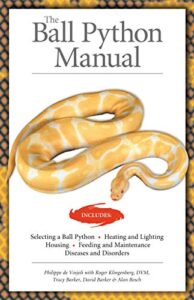
Written by internationally respected herpetologists, the Ball Python Manual from CompanionHouse Books packs selection, acclimation, handling and housing, and morph information into just 88 pages. It’s a focused beginner’s reference — not overwhelming, but genuinely useful when you’re figuring out the basics of husbandry and captive care.
New owners benefit most from its practical structure. Just know it won’t cover shedding phases in depth, and experienced keepers may find it light on behavioral detail.
Think of it as a solid foundation, not a final answer.
| Best For | New ball python owners who want a straightforward, no-fluff guide to get started with the basics of care and housing. |
|---|---|
| Primary Use | Beginner care guide |
| Format | Paperback book |
| Price | Not specified |
| Skill Level | Beginner focused |
| Language | English |
| Handling Coverage | Dedicated section |
| Additional Features |
|
- Written by respected herpetologists, so the info you’re getting is legit
- Covers all the essentials — selection, handling, housing, and even morphs — in one compact read
- Great starting point for understanding husbandry and captive reproduction
- Zero coverage on shedding phases, which is a pretty big gap for new owners
- Light on behavioral detail, so experienced keepers will likely outgrow it fast
- At 88 pages, it can feel thin on topics like health care and troubleshooting
5. Python Passion Ball Python Encyclopedia

If you want genetics explained clearly — not just what morphs look like, but why they look that way — the Python Passion Ball Python Encyclopedia earns its spot on your shelf.
At $15.99, it covers husbandry, anatomy, health, and breeding in an encyclopedia format built for quick reference. The genetics section receives consistent praise for its depth and clarity.
Fair warning: everyday care topics like shedding and feeding get less page time, so cross‑check with other sources for those specifics.
| Best For | Hobbyist breeders and curious keepers who want a solid grasp of ball python genetics and breeding — all in one handy reference. |
|---|---|
| Primary Use | Breeding reference guide |
| Format | Paperback book |
| Price | $15.99 |
| Skill Level | Beginner to experienced |
| Language | English |
| Handling Coverage | Brief mention |
| Additional Features |
|
- The genetics section is genuinely praised for being clear and easy to follow, even for beginners.
- Encyclopedia format makes it easy to flip to what you need without reading cover to cover.
- Covers a wide range of topics — husbandry, anatomy, health, and incubation — in a single book.
- Everyday care topics like feeding and shedding get pretty thin coverage, so you’ll need other sources to fill the gaps.
- Some readers have flagged accuracy concerns, so it’s worth cross-checking key advice.
- At $15.99, it can feel pricey given how much of the content is freely available online.
6. Ball Python Owners Guide Complete Caring Breeding

At just $12.97, the Ball Python Owners Guide Complete Caring Breeding packs a surprising amount of ground into 56 pages.
It’s built for beginners — clear language, short chapters, and end‑of‑chapter summaries that reinforce key points without overwhelming you.
Handling, housing, diet, and basic breeding are all covered.
It won’t replace deeper resources, and a few reviewers flag minor factual disagreements, but as a portable starting point you can consult during enclosure setup or routine care, it’s genuinely hard to beat.
| Best For | Beginners who want a simple, affordable intro to ball python care without getting buried in technical detail. |
|---|---|
| Primary Use | Beginner care guide |
| Format | Paperback book |
| Price | $12.97 |
| Skill Level | Beginner focused |
| Language | English |
| Handling Coverage | Included |
| Additional Features |
|
- Easy to follow — short chapters and summaries make it genuinely beginner-friendly
- Covers all the basics in one place: housing, diet, handling, and breeding
- Portable and cheap at $12.97, so it’s handy to flip through during actual care tasks
- At 56 pages, it only scratches the surface on most topics
- A few reviewers disagree with some of the care recommendations, like minimum tank size
- Has some typos and grammar issues that can break the flow a bit
7. Ball Python Care Logbook

Deeper reading helps, but the real picture of your snake’s health lives in the details you collect yourself.
Ball Python Care Logbook gives you 120 pages to track exactly that — feeding dates, weight trends, shed quality, medication records, and routine care checklists.
Weighing before versus after a meal can shift readings by 50–200 grams, so that context matters.
6×9 inches, it’s easy to keep near the enclosure and update right after each session.
| Best For | New and experienced ball python owners who want a simple, reliable way to track their snake’s health, feeding, and care over time. |
|---|---|
| Primary Use | Pet record keeping |
| Format | Paperback logbook |
| Price | Not specified |
| Skill Level | All levels |
| Language | English |
| Handling Coverage | Checklist included |
| Additional Features |
|
- Covers all the essentials — feeding logs, weight tracking, shed records, and medication history all in one place
- The 6×9 size is easy to keep right next to the enclosure so updates take seconds
- Works for any experience level, whether you just brought home your first snake or you’ve kept reptiles for years
- 120 pages will run out eventually, which makes it less practical for long-term record-keeping
- No care tips or guidance included — it’s purely a logbook, so beginners will need resources elsewhere
- A physical book won’t suit everyone, especially if you prefer tracking things on your phone or computer
8. Ball Python Care Guide for Beginners

Personal logs keep your records sharp, but a solid foundation of knowledge shapes how you use them.
Ball Python Care Guide for Beginners, published by NRB Publishing, packs 132 pages of core husbandry into a format that’s easy to follow whether you’ve never owned a snake or you’re still filling gaps.
It walks you through temperament, feeding, handling, and habitat setup — the exact pillars that determine whether your snake thrives or stays permanently stressed.
| Best For | New snake owners who want a straightforward, no-fluff starting point for Ball Python care. |
|---|---|
| Primary Use | Comprehensive care guide |
| Format | Paperback book |
| Price | Not specified |
| Skill Level | Beginner to experienced |
| Language | English |
| Handling Coverage | Dedicated section |
| Additional Features |
|
- Covers all the basics in one place — temperament, feeding, handling, and habitat setup
- Short and easy to read at 132 pages, so it doesn’t feel overwhelming
- Works for both kids and adults who are just getting curious about snakes
- Experienced owners will likely find it too basic to be useful
- Some readers have spotted spelling mistakes and editing slip-ups throughout
- Most of the information can be found free online if you’re willing to dig
9. Ball Pythons Breeding Guide Handbook

Once you’ve got the basics down, breeding adds a whole new layer of responsibility — and the Ball Pythons Breeding Guide Handbook helps you step into it prepared.
At $7.99 for 103 pages, it covers pairing protocols, incubation management, and basic genetics for morph planning.
It’s best used as a starting checklist rather than a specialized manual, since some readers note repetitive content.
Still, for a first-time breeder mapping out the sequence from pairing to hatch, it gives you a workable framework.
| Best For | First-time ball python breeders who want a simple, step-by-step framework to follow from pairing all the way through hatching. |
|---|---|
| Primary Use | Breeding protocol guide |
| Format | Paperback book |
| Price | $7.99 |
| Skill Level | Beginner to intermediate |
| Language | English |
| Handling Coverage | Breeding context only |
| Additional Features |
|
- Covers the full breeding cycle in one place — housing, pairing, incubation, and basic morph genetics
- At $7.99, it’s a low-risk starting point before investing in pricier resources
- Procedural checklists help cut down on guesswork during mating and incubation
- Multiple readers flag large fonts and heavy spacing — the 103 pages feel thinner than they look
- Content gets repetitive and stays at a surface level, not quite living up to "ultimate guide" billing
- Experienced breeders will likely get more value from detailed video tutorials or dedicated morph manuals
10. Ball Python Captivity Guide
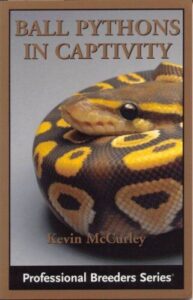
Ball Python Captivity Guide — a used softcover that punches above its $6.27 price tag.
At 101 pages with 114 full‑color photographs, it walks first‑time owners through housing, feeding, basic health monitoring, and beginner breeding concepts in plain, accessible language.
The photos alone make it worth keeping on the shelf for quick visual reference.
It’s not exhaustive on humidity or morph genetics, but as a starting foundation, it covers what new keepers actually need first.
| Best For | First-time ball python owners who want a no-fluff, visual guide to get their setup right without spending much. |
|---|---|
| Primary Use | Beginner care guide |
| Format | Paperback book |
| Price | $6.27 |
| Skill Level | Beginner focused |
| Language | English |
| Handling Coverage | Introductory coverage |
| Additional Features |
|
- 114 full-color photos make it easy to spot issues and understand care at a glance
- Covers all the basics — housing, feeding, health, and beginner breeding — in plain language
- At $6.27, it’s hard to beat the value for a solid starting reference
- Thin on humidity management and morph genetics, so experienced keepers will outgrow it fast
- Some sections feel disorganized and have typos that break the flow
- Being a used copy, wear and tear may be more noticeable than the "good condition" label suggests
Frequently Asked Questions (FAQs)
Do ball pythons bond differently with multiple handlers?
Think of a ball python less like a loyal dog and more like a careful neighbor — it reads patterns, not faces.
Ball pythons don’t bond, but they do learn that certain scents, movements, and handling styles feel safe.
Can music or TV sounds stress ball pythons out?
Yes, they can. Ball pythons don’t hear like you do — they sense vibrations. Heavy bass and loud subwoofers travel through surfaces directly into their bodies, triggering real stress responses.
How does age affect a ball pythons tameness?
Age plays a role, but it’s not the whole story. Juveniles tend to be more defensive, while adults are usually calmer. Consistent, gentle handling matters more than age alone.
Do female ball pythons behave differently than males?
Females tend to run larger — 4 to 5 feet — and often feel calmer during routine handling once acclimated. That said, expect more defensiveness during shedding, egg laying, or breeding cycles.
Can handling improve a ball pythons appetite over time?
It can, indirectly. A calmer snake manages stress better, and reduced stress promotes a steadier appetite. Consistent, low-pressure handling builds that calm over time — but only when done correctly.
Conclusion
Picture a ball python draped loosely across your forearm, tongue flicking with calm curiosity—not a single muscle braced for escape.
That moment isn’t luck. It’s the direct result of applying the right ball python trust building methods, consistently, over time.
Every slow approach, every session ended on a calm note, every skipped handling day during a shed—it all compounds.
You’re not taming a snake. You’re becoming someone it genuinely has no reason to fear.