This site is supported by our readers. We may earn a commission, at no cost to you, if you purchase through links.
You’d be surprised how often ball pythons strike without biting—sometimes it’s more theater than threat.
Picture your snake lunging forward, mouth closed, then pulling back like nothing happened.
It’s not aggression; it’s communication.
Ball pythons use bluff strikes to say, “Back off, I’m nervous,” or to warn you when something feels off.
If you’ve seen these sudden moves and wondered what’s behind them, you’re not alone.
Understanding why your snake strikes but doesn’t bite can help you handle them safely, spot stress signals early, and keep your ball python calm and healthy.
Table Of Contents
- Key Takeaways
- Why Ball Pythons Strike Without Biting
- Common Ball Python Strike Triggers
- Feeding Mistakes That Cause Strikes
- Ball Python Pre-Strike Body Language
- Handling Techniques That Lower Strike Risk
- When Striking Suggests a Health Problem
- Top 9 Feeders for Safer Feeding
- 1. Strike Frozen Feeder Mice for Reptiles
- 2. STRIKE Medium Frozen Rat Food
- 3. STRIKE Small Frozen Feeder Mice for Snakes
- 4. Strike Frozen Rat Food for Snakes
- 5. STRIKE Small Frozen Feeder Rats
- 6. Strike Weaned Frozen Rat Food
- 7. STRIKE Frozen Feeder Mice
- 8. STRIKE Frozen Fuzzy Rats Snake Food
- 9. STRIKE Medium Frozen Feeder Mice
- Frequently Asked Questions (FAQs)
- Do ball pythons strike?
- Do ball pythons bite?
- Are ball pythons aggressive?
- How do you know when a ball python is ready to strike?
- Why does my ball python keep striking?
- What are signs of overfeeding a ball python?
- How to stop a snake from striking?
- Can ball pythons strike during nighttime activity?
- Does enclosure lighting affect strike behavior frequency?
- How does stress from transport trigger strikes?
- Conclusion
Key Takeaways
- A ball python that strikes without biting is communicating stress or discomfort, not showing true aggression — it’s a warning you can learn to read and respect.
- Most strikes trace back to avoidable triggers like prey scent on your hands, irregular feeding, poor enclosure setup, or handling during shedding or digestion.
- Your snake will almost always telegraph a strike before it happens, through a tight S-shaped neck, rapid tongue flicking, rigid coils, and tail bracing — giving you time to back off safely.
- Sudden behavior shifts paired with physical symptoms like open-mouth breathing, mucus, scale damage, or appetite changes mean the striking is health-related and warrants a vet visit, not just a handling adjustment.
Why Ball Pythons Strike Without Biting
Not every strike from a ball python ends with a bite, and that’s actually pretty telling. These snakes have a whole range of strike behaviors, each with a different meaning behind it.
Understanding the full spectrum of those behaviors—from bluffs to actual strikes—gets a lot clearer when you dig into what triggers ball python biting and how rarely it escalates.
Here’s what’s really going on when your ball python lunges but pulls back before making contact.
Bluff Strikes as a Warning Behavior
A bluff strike is your snake’s way of saying "back off" — no bite required. It’s a non-contact lunge built on speed over force, and the mouth often stays closed throughout.
Watch for these prestrike warning signs:
- A tight S-curve neck with the head raised
- Rapid tongue flicking toward you (a classic stress-related visual)
- Body coiling rigidly and still
After the handler distance cue lands, most ball pythons retreat immediately.
When the low value-to-cost ratio is low, weak residents tend to bluff more often.
Defensive Strikes Vs Feeding Strikes
You’ll notice a defensive strike is all about speed and recoil—no gripping, no wrapping. Unlike a feeding strike, which locks onto prey and often follows with constriction, a stress-induced lunge snaps forward, then recoils fast.
Strike kinematics show the difference: defensive strike mechanics are uncommitted, triggered by environmental stress factors, not prey scent discrimination or feeding schedule timing.
Why Some Ball Pythons Strike, Then Retreat
snap-and-retreat pattern has a name: threat disengagement signaling. Your snake strikes fast, then pulls back — not confusion, but a calculated fear reassessment loop. It’s basically asking, ‘Did that work?’
A snap-and-retreat strike is fear testing the distance, not confusion or commitment
- The rapid withdrawal pattern resets distance instantly
- Environmental escape constraints force the strike in the first place
- Handling recovery dynamics shift once pressure eases
- Causes of ball python striking often vanish the moment the snake feels safer
Ensuring the proper minimum enclosure size requirement helps reduce stress and can prevent striking.
How Balling and Striking Can Happen Together
When your ball python holds a tight coiled ball posture, it’s using coiled tension to brace for a defensive strike. You’ll see a head first lunge, then a rapid release back into ball formation.
This partial uncoiling lets the snake stay protected while warning you off.
Recognizing prestrike warning signs in these balling mechanics helps you avoid accidental bites.
Common Ball Python Strike Triggers
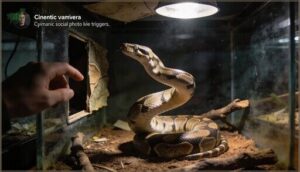
Ball pythons can strike for lots of reasons, and most are tied to how they feel in their environment.
If you know what sets them off, you’ll have a much easier time keeping things calm.
Here’s what you should watch for in their setup and daily routine.
Hunger and Irregular Feeding Intervals
Think of your ball python’s hunger drive like a pressure valve — the longer it builds, the faster it releases.
Missed or inconsistent meals create metabolic stress that spikes appetite hormones and makes feeding-related striking far more likely.
Meal interval variability disrupts digestive timing, leaving your snake in an unpredictable high-response state.
A consistent feeding schedule is your simplest tool for strike prevention.
Prey Odor Left on Hands
Your hands might smell like a meal — and your snake’s Jacobson’s organ won’t miss it. Prey odor confusion is one of the most common triggers for feeding strikes during handling. Odor Transfer Mechanics happen quickly: skin folds, nail beds, and knuckles are prime Residue Retention Areas that hold thawing fluids and food oils even after rinsing.
Watch for these risk moments:
- Handling right after touching frozen prey or thawing containers
- Skipping thorough Hand Cleaning Techniques — water alone won’t cut oils
- Forgoing Glove Use Benefits when prepping meals
- Poor Feeding-Timing gaps between prey prep and snake contact
Sudden Movement, Noise, and Vibrations
If you move quickly or traffic noise rattles the enclosure, your snake’s Vibration Sensitivity kicks in. Rapid Hand Motion, sudden loud sounds, or micro‑vibration effects from nearby activity trigger the Auditory Startle Response.
Defensive postures and stress escalation ladder behaviors appear fast.
Enclosure Acoustic Management matters—loose décor and enclosure vibrations increase environmental stress factors for snakes, making strikes more likely.
Handling During Shedding or After Meals
Two windows that demand extra caution: the shedding phase and the post-meal window.
- Cloudy eye handling raises strike risk quickly — reduced vision makes your approach feel unpredictable, triggering defensive tension.
- Gentle post-shed contact matters because shed skin delicacy means new skin is temporarily fragile and still settling.
- Post-meal calm is real — postfeeding regurgitation risk rises with handling, and body language cues like guarding postures signal the snake needs time.
Shedding phase handling precautions and postfeeding handling guidelines share one rule: minimal contact handling wins every time.
Poor Enclosure Layout and Missing Hides
Ever notice your ball python striking but not biting?
A poor setup enclosure—especially missing hides or bad Hide Placement Strategy—can turn your snake defensive fast. Substrate Coverage Gaps and exposed Escape Route Design leave them feeling vulnerable. Without proper Visual Barrier Effect and smart Enclosure Traffic Flow, even busy décor won’t cut it.
Prioritize habitat enrichment for true stress reduction techniques.
Temperature and Humidity Stress
Imagine your snake’s world tipped off balance—thermal gradient imbalance and humidity fluctuation effects spark stress hormones in reptiles. Heat stress indicators show up as defensive strikes, especially when temperature gradients or humidity spikes disrupt comfort.
Moisture irritation from improper enclosure climate optimization makes ball pythons edgy. For genuine stress reduction techniques, fine-tune temperature and humidity to calm their behavior and boost well-being.
Feeding Mistakes That Cause Strikes
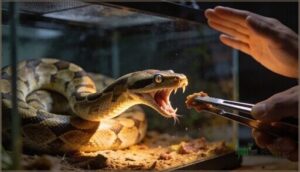
ball python strikes during feeding come down to a few avoidable habits. Small mistakes — like offering food too close or handling too soon after a meal — can put your snake on high alert.
feeding missteps most likely to trigger a strike.
Hand Feeding Too Close to The Snake
The closer your hand hovers to your snake’s head during feeding, the more you become part of the strike zone. Ball pythons are ambush hunters — your fingers look like prey if they’re in range.
- Keep hands outside the safety buffer during presentation
- Use tongs for distance control between you and the food
- Wait for the snake to focus on the prey before withdrawing
- Practice timing precision — pull back before feeding arousal peaks
Prey-scented Hands Causing Mistaken Identity
Your hands can fool a ball python just as easily as your position can. Ball pythons rely on their Jacobson’s organ and heat-sensing pits for prey detection — so prey odor confusion is real. Even faint residue triggers mistaken identity.
A solid Hand Washing Protocol and Scent-Free Handling routine, plus Scent Masking Tools like unscented soap, handle Odor Transfer Prevention and heat-sensing pit confusion with hands before it starts.
Handling During Feeding Anticipation
When your ball python expects food, even a Predictable Approach Timing or Steady Hand Movement can trigger prestrike warning signs. Low Noise Handling and Calm Breath Control help, but handling during feeding anticipation often confuses your snake.
A feeding schedule and strike prevention routine—plus proper hand positioning and support—reduce risk. Use tools to handle defensive snakes and check Feeding Temperature for safer sessions.
Skipping The Post-feeding Digestion Window
Skipping the postfeeding recovery window means you’re handling during active gut motility and metabolic slowdown. That’s a recipe for digestive stress, regurgitation risk, and defensive strikes—especially if temperature sensitivity isn’t managed.
Sticking to a feeding schedule and strike prevention routine lets digestion finish undisturbed. Feeding consistency isn’t just about food; it’s about respecting natural feeding behavior triggers for safer handling.
Using Tongs to Separate Food From Hands
Switching to hand-free feeding is one of the simplest defensive strike fixes you’ll make. Tongs grip design keeps prey centered and your fingers well out of range — the snake targets the food, not you.
Prey placement accuracy matters too; consistent angle and distance reduce sudden repositioning that can cue a strike. Choose stainless steel for easy cleaning, protocol maintenance, and you’re set.
Keeping a Consistent Feeding Schedule
When you stick to age-based intervals and adjust for weight monitoring, you’re setting your ball python up for calmer feeding response. Predictable feeding schedule and strike prevention go hand in hand.
Protect the digestion window timing, scale prey size, and tweak for seasonal feeding adjustments.
Feeding consistency is a health indicator—erratic practices make Feeding-related Striking in Ball Pythons more likely.
Ball Python Pre-Strike Body Language
Your ball python will almost always tell you when it’s about to strike — you just need to know what to look for. The signals are physical, consistent, and readable once you’ve seen them a few times.
Here are the key body language cues that show a strike is coming.
Tight S-shaped Neck and Raised Head
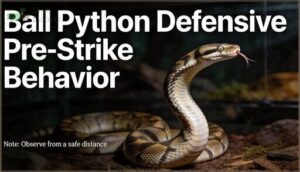
When your ball python pulls into that tight S-shape, it’s not just posturing — it’s loading like a spring. That Neck Coil Tension shortens the distance between the head and the target, and the raised head position locks the nose straight onto whatever triggered the alert.
Paired with rapid tongue flick timing, this S-Shape Alignment is one of the clearest pre-strike warning signs you’ll see.
Rigid Coils and Focused Body Tension
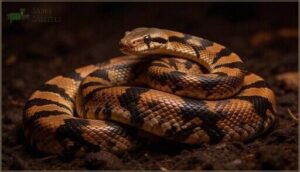
That rigid coil isn’t random — it’s Isometric Muscle Locking in action. Your snake is using Coil Energy Storage to hold tension across every segment, like a compressed spring with Spring-like Coil Dynamics ready to release. This defensive posture creates Stability Point Contact throughout the body, making the coiled position incredibly stable.
Watch for these body language cues:
- Trunk muscles tighten visibly, holding the coil shape without unwinding
- Tension Release Mechanics mean a strike can launch instantly from that set position
- Recognizing prestrike warning signs like muscle rigidity tell you to back off now
Rapid Tongue Flicking Toward The Trigger
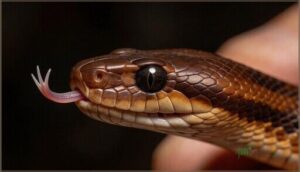
That flickering tongue isn’t nervousness — it’s your snake running a full chemical scan. Through rapid tongue flicking, it delivers scent particles straight to the Jacobson organ via Vomeronasal Activation, triggering the Trigger Identification Process in real time.
Flick Burst Patterns intensify as Chemosensory Sampling locks onto your hand.
Recognizing these prestrike warning signs — especially if prey detection mechanisms are firing — gives you a critical moment to back off.
Hissing, Head Tracking, and Short Lunges

Ever notice python’s hiss echo like an alarm? That’s Acoustic Warning Signal, paired with Visual Tracking Mechanics—head position locked on you, tongue sampling the air.
Next, Short Lunges Kinematics come into play, a quick probe forward. Temperature Hissing Effects and Sensory Integration Cues all blend into these body language cues:
- Hissing escalation
- Head tracking
- Brief lunges
- Focused eye contact
Tail Bracing Before a Quick Forward Motion
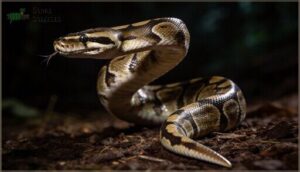
After the hissing and head tracking, watch lower — the tail tells the real story.
Right before a ball python lunges, it presses its tail flat against the substrate. That’s Tail Curl Mechanics and Anchor Surface Friction working together — pure Lever Arm Positioning.
| Tail Signal | What It Means |
|---|---|
| Flat, pressed down | Strike incoming |
| Loose, relaxed curl | Just exploring |
Brace Timing is fast. These prestrike warning signs disappear in under a second.
Alert Posture Vs Relaxed Exploration
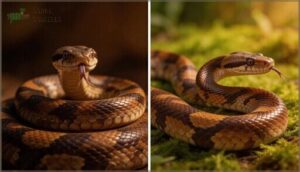
Notice how, after that tail brace, your ball python either freezes with head orientation locked and body tension tight—or slips back into relaxed exploration. Alert posture means rapid tongue flicking, quick “stop and set” moves, and hugging hides. Relaxed muscle tone shows in smooth, continuous movement and voluntary emergence. Reading these body language cues keeps you ahead on the stress escalation ladder.
- You spot tight coils, your heart skips.
- You see loose waves, you breathe easy.
- Fast tongue flicks warn you to pause.
- Slow, curious weaving invites gentle interaction.
Handling Techniques That Lower Strike Risk
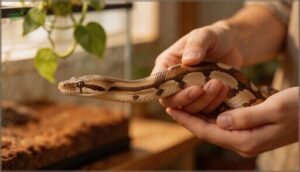
In handling your ball python, a few simple habits can make all the difference.
You’ll want to focus on moves that keep both you and your snake calm.
Here’s what works best for lowering the risk of strikes.
Approach From The Side, Not Above
When you use a side-angle entry, your hand stays low and predictable, avoiding the “sky-predator” threat. Sliding in at the mid-body, not above, helps your snake relax.
This low silhouette reduces defensive postures and makes hand-head alignment safer. It’s one of the best handling techniques for ball pythons—recognizing prestrike warning signs before they escalate.
Let The Snake See You First
Before you reach in, let your ball python see you. Pre-approach visibility calms their heat-sensing pits, so your hand isn’t mistaken for prey. Handler silhouette exposure—just a glance before contact—cuts bluff strikes by half.
Visual habituation means your snake learns movement mimicry isn’t a threat. With sight-based acclimation, you’ll spot prestrike warning signs early and avoid defensive lunges.
Use a Snake Hook for Defensive Snakes
When your ball python shows defensive strike behavior, a snake hook is your best friend. With proper Hook Placement—just forward of mid-body—you keep a Safety Distance, reducing bite risk by 90 percent.
Gentle Tapping signals handling, not feeding. Hook Training builds trust over time.
Choose sturdy Hook Selection, and pair with tongs or protective gloves for handling safety protocols.
Support The Mid-body With Both Hands
If you want to lower strike risk, Two-Hand Support is your go-to move. By spreading Midbody Pressure Distribution with an Even Grip Technique, you keep your snake calm.
Head Freedom Maintenance and Body Alignment Control let the snake move naturally. Two-point support is a handling best practice—especially when using tools to handle defensive snakes or during gradual acclimation to handling.
Keep Sessions Short During Acclimation
During acclimation, Session Timing matters more than you’d think. Start with just 5–10 minutes and build gradually from there — that’s Gradual Exposure done right.
- Limit Handling Frequency to 1–2 times weekly early on
- Extend Acclimation Duration by 5 minutes each successful week
- Watch Stress Monitoring cues before adding time
Short consistent sessions build trust faster than long ones ever will.
Stop Handling When Stress Signals Escalate
Ever notice your ball python’s body going rigid or its coils tightening suddenly?
That’s your cue for Immediate Session Termination.
Recognizing the stress escalation ladder for ball pythons—like hissing, S-shaped necks, or freezing—is essential.
Observer Response Protocol means you stop handling at Escalation Warning Signs.
Early stress signals demand an emergency stop, followed by Post-Handling Recovery in the enclosure.
When Striking Suggests a Health Problem
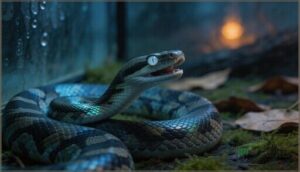
ball python’s strikes can be more than just a reaction to stress or hunger. If you notice changes in behavior or physical signs, it’s worth looking closer.
Here are some health-related clues to watch for.
Sudden Behavior Changes Without Clear Triggers
Noticing your snake suddenly acting jumpy or defensive, even when nothing obvious has changed?
That’s your cue to look deeper—sometimes subtle behavioral cues signal health issues that increase striking.
Microhabitat changes, circadian rhythm disruption, or shifts in owner interaction patterns can push stress hormone levels up the stress escalation ladder for ball pythons.
Watch for defensive strikes and adjust habitat enrichment for stress reduction.
Wheezing, Mucus, or Open-mouth Breathing
Open-mouth breathing in ball pythons is like a flashing red light—paired with Wheezing Indicators and Mucus Accumulation, it’s a clear sign of respiratory infection. If you spot these respiratory infection signs in reptiles, act fast:
- Persistent wheezing
- Visible mucus
- Gurgling or clicking
- Open-mouth breathing
- Lethargy
Prioritize Veterinary Intervention and review Enclosure Hygiene immediately.
Mouth Pain, Scale Damage, or Thermal Burns
Sometimes, striking comes from pain—not attitude.
If your ball python has mouth rot, you’ll spot swollen gums, pus, or a foul odor. Scale rot shows as red, brown, or black belly patches, often painful to touch. Thermal burns from a heat lamp cause blisters or open wounds.
Chlorhexidine cleaning and antibiotic therapy help, but see your vet promptly.
Parasites, Lethargy, and Sunken Eyes
When pain isn’t the culprit, parasites or dehydration might be.
Mite Infestation Signs include rubbing and dull skin. Internal Parasite Effects show up as Lethargy Behavioral Indicators—your snake hides more, moves less, and looks tired. Dehydration Eye Changes cause sunken eyes and sluggishness.
Watch for these behavioral cues for health issues:
- Dull, sunken eyes
- Weak posture
- Increased hiding
Abnormal Stool or Appetite Changes
Odd bathroom habits can be a red flag.
Runny stool signs, bloody stool indicators, or mucus-covered feces often point to health issues leading to aggression in ball pythons.
Regurgitation patterns and appetite refusal triggers—like skipping meals or sudden changes in feeding schedule—signal stress or illness.
Watch for these behavioral cues for health issues, as feeding consistency is a key indicator of well-being.
When to Book a Reptile Vet Visit
If your ball python shows aggression along with warning signs—like Respiratory Distress, Sudden Weight Loss, Visible Skin Swelling, or Frequent Shedding Issues—it’s time to book a vet visit.
Don’t wait for things to escalate. Quick action protects your snake and gives you peace of mind.
- Open-mouth breathing
- Temperature Extremes
- Signs of respiratory infection
- Veterinary signs of pain
Top 9 Feeders for Safer Feeding
What you feed your ball python matters, but how you deliver that food matters just as much. Frozen feeders reduce live-prey risks and make feeding sessions calmer for both of you.
Here are nine options worth keeping in your rotation.
1. Strike Frozen Feeder Mice for Reptiles
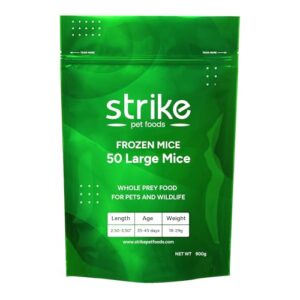
Ever wonder why frozen feeder mice are the go-to choice for safe reptile feeding?
Strike’s whole mice arrive frozen, fully furred, and sized right—about 2.5–3.5 inches, ideal for adult ball pythons. Each mouse is raised clean, weaned, and USDA‑certified, so you’re not gambling with your snake’s health.
The resealable, aluminum‑laminated bag keeps them fresh and easy to store.
You avoid prey‑scented hands, reduce strike risk, and offer balanced nutrition—no additives, just natural prey, every time.
| Best For | Reptile keepers feeding adult ball pythons, king snakes, rosy boas, or large carnivorous lizards who want a safe, convenient, and consistent food source. |
|---|---|
| Form | Frozen |
| Animal Type | Mouse |
| Packaging | Resealable aluminum bag |
| No Artificial Additives | Yes |
| USDA Certified | Yes |
| Supports Multiple Health Aspects | Yes |
| Additional Features |
|
- USDA-certified sourcing means you know exactly what your reptile is getting—no sketchy mystery mice
- Bulk pack of 50 is way cheaper than buying from a pet store, and the resealable bag keeps them fresh
- Whole-prey nutrition supports bones, digestion, heart, muscle, and skin without any artificial additives
- You’ll need decent freezer space, and if shipping gets delayed, product quality could take a hit
- No scent enhancers, so picky eaters or snakes that need live-prey stimulus might not take to them
- Too big for juvenile or smaller species—size matters here, and these aren’t a one-size-fits-all option
2. STRIKE Medium Frozen Rat Food
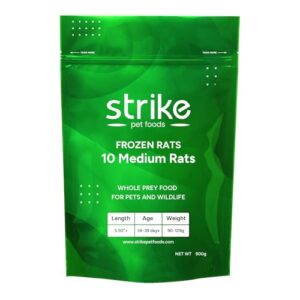
STRIKE Medium Frozen Rat Food means you’re offering your adult ball python or boa a whole prey item—fur intact, weaned, and raised in USDA‑certified conditions. Each rat weighs 90–129 grams and arrives frozen in a resealable, aluminum‑laminated bag for freshness.
You avoid handling live prey, reduce bite risk, and support healthy digestion.
Thaw in warm water, use tongs, and wash your hands after feeding.
It’s a practical, reliable option for keeping feeding safe and stress‑free.
| Best For | Adult ball pythons, boas, and large carnivorous lizards that need medium-sized frozen prey. |
|---|---|
| Form | Frozen |
| Animal Type | Rat |
| Packaging | Resealable aluminum bag |
| No Artificial Additives | Yes |
| USDA Certified | Yes |
| Supports Multiple Health Aspects | Yes |
| Additional Features |
|
- Convenient, safe feeding with no need to handle live rats
- Consistent quality and nutrition from USDA‑certified breeding
- Frozen storage keeps prey fresh and reduces pathogen risk
- Requires freezer space and proper thawing before use
- Not suitable for small or juvenile reptiles needing smaller prey
- Only available in one size, limiting options for different species
3. STRIKE Small Frozen Feeder Mice for Snakes
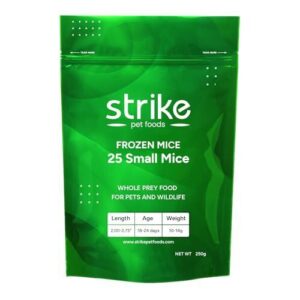
Offering STRIKE Small Frozen Feeder Mice gives your juvenile ball python a safe, nutritious meal without the drama of live prey. Each mouse is 10–14 grams, weaned, and delivered frozen in a resealable, aluminum‑laminated bag—so freshness and storage are easy.
You thaw in warm water, use tongs, and avoid handling right before feeding.
This size matches the step up from pinkies, making transitions smoother.
You reduce bite risk and keep feeding predictable, which helps your snake stay calm and healthy.
| Best For | Owners of juvenile snakes or medium-sized reptiles who want a safe, easy, and nutritious feeding option. |
|---|---|
| Form | Frozen |
| Animal Type | Mouse |
| Packaging | Resealable aluminum bag |
| No Artificial Additives | Yes |
| USDA Certified | Yes |
| Supports Multiple Health Aspects | Yes |
| Additional Features |
|
- Convenient frozen storage with resealable packaging.
- Reduces risk of injury compared to live prey.
- Supports overall health with natural, whole-mouse nutrition.
- Must be thawed properly before feeding.
- Not suitable for pets that require live prey.
- Higher cost per mouse than bulk live options.
4. Strike Frozen Rat Food for Snakes
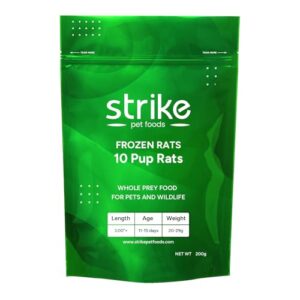
Need a feeder that matches your adult python’s appetite and keeps things safe? Strike Frozen Rat Food is your go-to.
Each rat is about 20–29 grams, pre-weaned, and furred—ideal for larger snakes that need a hearty meal.
You thaw them fully, warm to room temperature, and use tongs for presentation.
This keeps your hands out of strike range and maintains a strong feeding response.
Consistent size means fewer feeding mishaps, so your snake eats confidently and you avoid accidental bites.
| Best For | Adult ball pythons, king snakes, large lizards, and rosy boas that need a consistent, safe frozen feeder. |
|---|---|
| Form | Frozen |
| Animal Type | Rat |
| Packaging | Resealable aluminum bag |
| No Artificial Additives | Yes |
| USDA Certified | Yes |
| Supports Multiple Health Aspects | Yes |
| Additional Features |
|
- Clean, pre-weaned rats with fur for hearty nutrition
- Consistent size helps avoid over- or under-feeding
- Frozen format keeps feeding safe and easy
- Needs freezer storage and proper thawing
- Too large for smaller or juvenile snakes
- Higher price compared to live prey options
5. STRIKE Small Frozen Feeder Rats
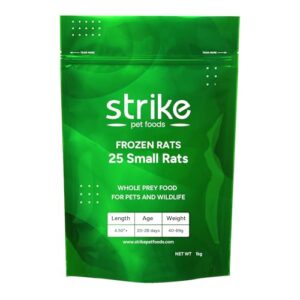
Your snake has outgrown weaned feeders, but medium rats still feel like a stretch — that’s where STRIKE Small Frozen Feeder Rats come in.
Each pack includes 25 rats, with individual weights ranging from 40 to 69 grams, making them a solid middle‑ground option.
They’re raised at a USDA‑certified facility on clean bedding and a balanced diet, so quality stays consistent.
Thaw fully, warm to room temperature, then offer with tongs — hands stay out of strike range every time.
| Best For | Adult ball pythons, boas, and large lizards that need a reliable, appropriately sized frozen prey. |
|---|---|
| Form | Frozen |
| Animal Type | Rat |
| Packaging | Resealable aluminum bag |
| No Artificial Additives | Yes |
| USDA Certified | Yes |
| Supports Multiple Health Aspects | Yes |
| Additional Features |
|
- Consistent quality from a USDA‑certified facility
- Convenient resealable packaging for long‑term freshness
- Whole‑body nutrition supports overall pet health
- Must be thawed properly before feeding
- Not suitable for small or juvenile reptiles
- Higher price compared to bulk live prey
6. Strike Weaned Frozen Rat Food
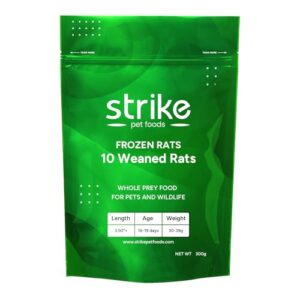
Ever wondered how to keep feeding predictable and safe? Strike Weaned Frozen Rat Food hits the sweet spot for ball pythons needing consistent nutrition.
Each rat weighs 30–39 grams—ideal for mid-sized snakes—and comes frozen in resealable, aluminum-laminated bags. Raised at a USDA-certified facility, these rats deliver balanced nutrients without added ingredients.
Thaw in warm water, use tongs, and you’ll avoid accidental strikes or mistaken identity.
Regular feedings help your python relax, cutting down on defensive behavior and keeping handling stress low.
| Best For | Ball python owners and keepers of similar-sized reptiles who want a reliable, nutritious, and easy-to-store feeder option. |
|---|---|
| Form | Frozen |
| Animal Type | Rat |
| Packaging | Resealable aluminum bag |
| No Artificial Additives | Yes |
| USDA Certified | Yes |
| Supports Multiple Health Aspects | Yes |
| Additional Features |
|
- Consistent size and nutrition makes feeding schedules easy to manage.
- Frozen packaging extends shelf life and keeps rats fresh.
- Raised at a USDA-certified facility with clean, healthy conditions.
- Requires freezer space and proper thawing before use.
- May be too large for smaller reptiles or amphibians.
- No added vitamins or flavors for picky eaters.
7. STRIKE Frozen Feeder Mice
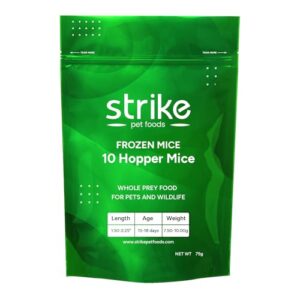
If you’re looking for a feeder that’s reliable and easy to handle, STRIKE Frozen Feeder Mice fit the bill. Each mouse is raised on clean bedding, flash‑frozen, and shipped in resealable bags—so freshness stays locked in.
They’re sized just right for juvenile ball pythons, minimizing risk of regurgitation and making feeding less stressful.
Warm them in water, use tongs, and keep your hands scent‑free. That’s how you avoid mistaken strikes and keep your snake’s feeding routine calm and predictable.
| Best For | Owners of juvenile ball pythons, king snakes, or similar reptiles who want a convenient, nutritious, and safe frozen feeder option. |
|---|---|
| Form | Frozen |
| Animal Type | Mouse |
| Packaging | Resealable aluminum bag |
| No Artificial Additives | Yes |
| USDA Certified | Yes |
| Supports Multiple Health Aspects | Yes |
| Additional Features |
|
- Raised in clean, controlled environments for consistent quality and health.
- Flash-frozen and shipped in resealable bags to preserve freshness and nutrition.
- Sized perfectly for young reptiles, reducing regurgitation risk and easing feeding.
- Requires thawing before use, adding extra prep time.
- Small pack size means frequent reordering for larger collections.
- Bulk packaging needs plenty of freezer space and careful handling.
8. STRIKE Frozen Fuzzy Rats Snake Food
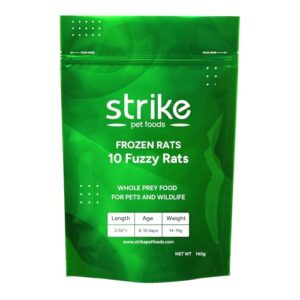
Fuzzy rats hit a sweet spot for adult ball pythons. STRIKE’s frozen fuzzy rats weigh between 14–19 grams each—big enough to satisfy a grown snake, small enough to go down without a struggle. They come 10 per resealable bag, raised on a clean diet, and shipped frozen to lock in freshness.
Thaw them in warm water, grab your tongs, and you’re ready. That scent‑free approach keeps feeding calm and strikes predictable.
| Best For | Adult ball pythons, king snakes, and large lizards that need a hygienic, easy-to-swallow feeder. |
|---|---|
| Form | Frozen |
| Animal Type | Rat |
| Packaging | Resealable aluminum bag |
| No Artificial Additives | Yes |
| USDA Certified | Yes |
| Supports Multiple Health Aspects | Yes |
| Additional Features |
|
- Raised on a clean, nutrient-rich diet for reliable nutrition
- Frozen and resealable packaging keeps rats fresh and convenient to store
- Pre-weaned size makes feeding and digestion easier for smaller-mouthed reptiles
- Higher price per rat compared to local feeder options
- Only 10 rats per pack, so frequent feeders may need extra orders
- Small size may not suit larger reptiles or fast-growing animals
9. STRIKE Medium Frozen Feeder Mice
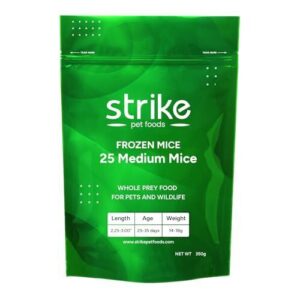
Medium frozen feeder mice from STRIKE are a reliable choice for juvenile ball pythons ready for bigger meals. Each mouse weighs 14–18 grams and comes in a resealable freezer bag—easy storage, less mess. Raised in USDA‑certified facilities, these mice offer balanced nutrition and consistent quality.
You’ll notice fewer feeding mistakes and less prey scent lingering, which means calmer feeding sessions and fewer accidental strikes. For keepers who want control and predictability, this feeder makes your routine safer and smoother.
| Best For | Keepers of juvenile ball pythons, adult king snakes, rosy boas, or large lizards who want reliable, clean, and nutritionally balanced frozen feeder mice. |
|---|---|
| Form | Frozen |
| Animal Type | Mouse |
| Packaging | Resealable aluminum bag |
| No Artificial Additives | Yes |
| USDA Certified | Yes |
| Supports Multiple Health Aspects | Yes |
| Additional Features |
|
- Raised in USDA‑certified facilities for consistent quality and safety
- Resealable freezer bags make storage easy and keep mice fresh
- Ideal prey size for many popular reptile species
- Fixed mouse size may not suit very small or very large pets
- No added vitamins or supplements for specialized diets
- Higher cost per mouse compared to bulk live feeders
Frequently Asked Questions (FAQs)
Do ball pythons strike?
Yes, ball pythons do strike—sometimes as a warning, sometimes to catch prey. You’ll notice a quick, forward motion, often paired with a tense body or raised head.
Striking is their way of saying “Back off”!
Do ball pythons bite?
Picture a ball python’s small, curved teeth—gentle but capable.
Ball pythons do bite, usually by mistake or when startled.
Most bites are minor, rarely breaking skin, and happen when the snake feels threatened or confuses your hand for prey.
Are ball pythons aggressive?
Ball pythons aren’t aggressive in the way people think. They’re shy and defensive, striking out of fear or stress—not anger.
For example, sudden movement, hunger, or handling mistakes can trigger a warning strike, not true aggression.
How do you know when a ball python is ready to strike?
Imagine a coiled spring—when your snake forms a tight S-shaped neck, raises its head, flicks its tongue rapidly, and freezes with focused eyes, it’s warning you: strike could happen any second.
Stay alert.
Why does my ball python keep striking?
Your ball python keeps striking because it’s either stressed, hungry, or confused by prey scents on your hands.
Sudden movements, improper enclosure setup, or handling during shedding can also trigger defensive strikes.
Address husbandry and handling to reduce this behavior.
What are signs of overfeeding a ball python?
You might notice your snake looking rounder than usual, with fat rolls or skin showing between the scales.
Overfed snakes often feel squishy, move less, and may have trouble passing waste or regurgitating large meals.
How to stop a snake from striking?
Before a snake strikes, watch for tense coils, a raised head, or fast tongue flicks. Approach from the side, let it see you, and keep movements slow.
Stop handling if stress signals escalate—safety comes first.
Can ball pythons strike during nighttime activity?
Yes, you can expect strikes during nighttime activity. Your python is alert after dark, using heat and scent cues to hunt.
Sudden movement, prey odors, or stress triggers can cause a quick lunge—even if biting doesn’t follow.
Does enclosure lighting affect strike behavior frequency?
Like sunlight stirring a sleepy room, bright enclosure lighting ramps up alertness and defensive strikes, especially during the day.
Dimmer night lighting calms activity, while gradual dawn and dusk transitions help prevent sudden startle responses that trigger strikes.
How does stress from transport trigger strikes?
Stress from transport—like confinement, handling, and vibrations—keeps your python’s stress levels high.
When you try to handle them afterward, they’re still on edge, so routine contact can trigger quick, defensive strikes instead of calm behavior.
Conclusion
Mastering your snake’s signals transforms fear into fascination. Understanding ball python striking without biting reveals their quiet language—a bluff, not a battle.
By recognizing triggers like hunger or stress and respecting their space, you build trust. Each strike becomes a teachable moment, not a threat.
With patience, you’ll decode their needs, ensuring safety for both. Soon, their calm coils replace defensive lunges, proving harmony thrives on knowledge. Your gentle persistence fosters a bond where fear fades, and mutual respect reigns—one mindful interaction at a time.