This site is supported by our readers. We may earn a commission, at no cost to you, if you purchase through links.
The floor of a reptile enclosure does more biological work than most keepers realize. Moisture cycles, microbial communities, burrowing behavior, plant root systems—all of it starts at ground level. Get the substrate wrong and nothing else you do quite compensates: humidity swings, odor builds, animals stress, plants fail.
Choosing the right reptile substrate beddings for naturalistic vivariums means thinking in layers, not just materials. Drainage, soil composition, leaf litter coverage, and cleanup crew compatibility all interact. The options below break down what each substrate actually does—and which setups it belongs in.
Table Of Contents
- Key Takeaways
- Best Substrates for Naturalistic Vivariums
- 1. Zilla Jungle Mix Terrarium Substrate
- 2. Josh Frogs ABG Tropical Substrate
- 3. BugzyBugs Bioactive Isopod Substrate Mix
- 4. Bio Dude Sahara Desert Substrate
- 5. Finns Frog Farm ABG Substrate
- 6. Bugzy Bugs Bioactive Terrarium Substrate
- 7. Riare Coconut Husk Reptile Bedding
- 8. Tender Tropicals Indian Almond Leaf Litter
- 9. Rural365 Hemp Chicken Bedding
- 10. Durvet Chlorhexidine Antiseptic for Pets
- Choosing Species-Safe Vivarium Bedding
- Building Bioactive Substrate Layers
- Managing Humidity and Odor
- Preventing Impaction and Health Risks
- Frequently Asked Questions (FAQs)
- Conclusion
Key Takeaways
- Your substrate isn’t just bedding — it drives humidity, burrowing behavior, and cleanup crew health, so getting it wrong undermines everything else in your vivarium.
- Bioactive setups need distinct layers — drainage at the base, a nutrient-rich soil blend in the middle, and leaf litter on top — because each layer does a different job that the others can’t cover.
- Species requirements vary sharply: tropical animals need moisture-retaining mixes like coconut coir or ABG blends, while desert species require dry, well-draining substrates that still hold burrow shape.
- Impaction, mold, and respiratory issues are largely preventable — feed outside the enclosure, keep particle size under 2mm for small animals, maintain airflow, and replace substrate on a consistent schedule.
Best Substrates for Naturalistic Vivariums
The right substrate can make or break a naturalistic vivarium — get it wrong, and even the best setup falls apart. Whether you’re housing a tropical tree frog or a desert lizard, your bedding choice shapes humidity, burrowing behavior, and long-term animal health.
For deeper guidance on matching bedding to your snake’s natural habitat, snake enclosure sizing and health essentials covers how substrate choices tie directly into overall well-being.
The substrate beneath your animal shapes everything — humidity, instinct, and long-term health
Here are ten substrates worth considering for your next build.
1. Zilla Jungle Mix Terrarium Substrate
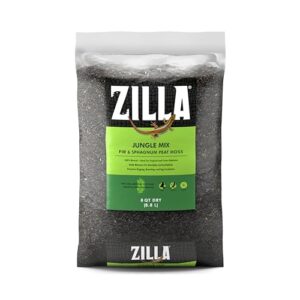
Zilla Jungle Mix is a solid starting point for tropical and forest vivariums. It blends sphagnum moss with fir wood shavings into a soft, absorbent bedding that holds moisture well — useful for frogs, rainforest geckos, and humidity-loving snakes.
Pack it 1–2 inches deep to support digging and nesting. Check it daily; it can dry out within 24–30 hours without misting.
Watch for sharp wood particles if you’re housing delicate amphibians like salamanders.
| Best For | Hobbyists setting up tropical or forest terrariums for frogs, rainforest geckos, snakes, or other humidity-loving reptiles. |
|---|---|
| Primary Material | Industrial hemp fiber |
| Odor Control | Yes – ammonia trapping |
| Bioactive Support | Limited |
| Humidity Impact | Absorbs moisture |
| Suitable Habitat | Poultry, small animals, reptiles |
| Eco-Friendly | Yes – biodegradable hemp |
| Additional Features |
|
- Holds moisture really well, cutting down on how often you need to mist
- Soft, natural texture that lets reptiles dig, burrow, and nest comfortably
- Works great in bio-active setups and as a growing medium for live vivarium plants
- Can dry out in as little as 24 hours, so daily humidity checks are a must
- Small sharp wood particles can be rough on delicate amphibians like salamanders
- Packaging is prone to tearing during shipping, which can mean a messy unboxing
2. Josh Frogs ABG Tropical Substrate
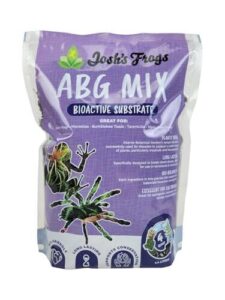
If Zilla Jungle Mix is your entry-level option, Josh’s Frogs ABG Tropical Substrate is the step up. Developed with Atlanta Botanical Gardens, it’s a slow-degrading blend of tree fern fiber, charcoal, bark, and peat — built for long-term bioactive setups housing dart frogs, tree frogs, anoles, and geckos.
At $24.99 for 4 quarts, it nourishes springtails and isopods well. Don’t dilute it with coco fiber — that weakens performance. Not suitable for hermit crabs or Pac-Man frogs.
| Best For | Hobbyists running bioactive terrariums with dart frogs, tree frogs, geckos, or anoles who want a long-lasting substrate that basically manages itself. |
|---|---|
| Primary Material | Chlorhexidine gluconate solution |
| Odor Control | Yes – antimicrobial residual |
| Bioactive Support | No |
| Humidity Impact | Neutral – topical use |
| Suitable Habitat | Wounds, enclosure sanitation |
| Eco-Friendly | No – synthetic disinfectant |
| Additional Features |
|
- Developed with Atlanta Botanical Gardens — it’s a recipe that actually works, not just marketing
- Supports springtails and isopods, so your cleanup crew thrives and you do less maintenance
- Slow-degrading mix means you won’t be tearing down and replacing substrate every few months
- Don’t mix it with coco fiber — doing so chips away at what makes it effective
- Larger tanks (over 15 gallons) will need extra layers like a false bottom and leaf litter to get the most out of it
- Not a fit for hermit crabs or Pac-Man frogs, so it’s pretty niche if you keep a variety of species
3. BugzyBugs Bioactive Isopod Substrate Mix
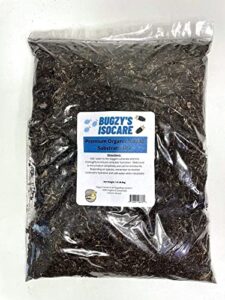
BugzyBugs Bioactive Isopod Substrate Mix takes a different approach than ABG blends — it’s built around the cleanup crew first. The peat moss, bat guano, and earthworm castings base creates a nutrient-rich environment where isopods and springtails genuinely thrive.
At $19.99 for 4 quarts, it’s good value. Expect visible fungal growth — that’s normal and healthy. One bag won’t go far in larger enclosures, so stock up. Best for tropical and temperate terrariums needing stable humidity.
| Best For | Hobbyists setting up tropical or temperate terrariums who want a ready-to-go substrate that supports isopod colonies and natural cleanup crew behavior right out of the bag. |
|---|---|
| Primary Material | Douglas-fir bark & peat moss |
| Odor Control | Moderate – natural scent |
| Bioactive Support | Partial – plant layer use |
| Humidity Impact | High retention |
| Suitable Habitat | Tropical & forest terrariums |
| Eco-Friendly | Yes – organic blend |
| Additional Features |
|
- Nutrient-rich blend of bat guano, earthworm castings, and peat moss gives isopods and springtails exactly what they need to thrive
- Holds humidity well with just light misting — great for tropical setups that need consistent moisture
- Encourages natural behaviors like burrowing and reproduction, and the fungal growth it produces is a feature, not a bug
- At 4 quarts per bag, one unit won’t cut it for larger enclosures — you’ll likely need to buy several
- Shipping bags can get punctured in transit, so don’t be surprised if your order arrives a little messy
- $19.99 per bag is on the pricier side compared to generic soil mixes, especially when you’re buying in bulk
4. Bio Dude Sahara Desert Substrate
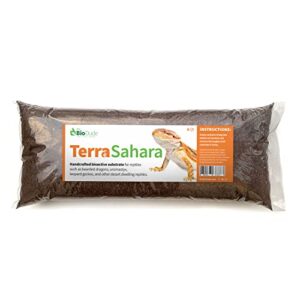
Desert builds need a different mindset — and Bio Dude Sahara delivers exactly that. Where BugzyBugs leans humid and lush, Terra Sahara stays dry on top while holding just enough moisture below to keep burrows intact.
At $24.95 for 6 quarts, it’s purpose-built for bearded dragons, leopard geckos, and sand boas. The bio-balanced blend nourishes isopods and springtails, but skip it for small hatchlings — larger rock fragments pose impaction risk.
| Best For | Desert reptile keepers — especially bearded dragons, leopard geckos, and sand boas — who want a bioactive setup that stays dry on top without sacrificing burrow stability. |
|---|---|
| Primary Material | Proprietary organic blend |
| Odor Control | Yes – bioactive breakdown |
| Bioactive Support | Yes – isopods & springtails |
| Humidity Impact | High retention |
| Suitable Habitat | Tropical terrariums & vivariums |
| Eco-Friendly | Yes – slow-degrading organic |
| Additional Features |
|
- Keeps surface humidity low while still supporting a self-cleaning ecosystem with isopods and springtails
- Great drainage and aeration mean no soggy spots or stagnant water building up
- Works double duty as a substrate for succulents and cacti if you’re going full bioactive
- Larger rock and twig pieces are a real impaction risk for small hatchlings or delicate species
- Not the right fit for any animal that needs consistently high humidity
- Returns aren’t prepaid — you’re covering UPS shipping costs out of pocket
5. Finns Frog Farm ABG Substrate
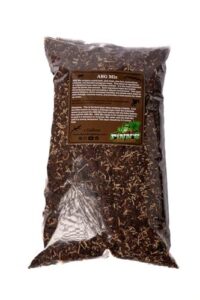
If your setup revolves around tropical frogs or moisture-loving reptiles, Finns Frog Farm ABG Substrate is built for exactly that. This 1-gallon mix follows the classic ABG recipe — tree fern fiber, orchid bark, peat, charcoal, and sphagnum moss — creating a breathable yet moisture‑holding base at $22.99.
It pairs especially well with the humidity-loving plants covered in this tropical bioactive terrarium buying guide, where substrate choice can make or break your setup.
It accommodates isopods, springtails, and live plants without waterlogging. Just moisten it evenly before use, lay it over a drainage layer, and your bioactive system is ready to go.
| Best For | Hobbyists running bioactive tropical terrariums with frogs, moisture-loving reptiles, or amphibians that need stable humidity and a living ecosystem. |
|---|---|
| Primary Material | Peat & hardwood blend |
| Odor Control | Yes – organic decomposition |
| Bioactive Support | Yes – isopod colonies |
| Humidity Impact | Moderate retention |
| Suitable Habitat | Tropical & temperate terrariums |
| Eco-Friendly | Yes – natural ingredients |
| Additional Features |
|
- Holds moisture well without waterlogging, so your cleanup crew and live plants actually thrive
- Decomposes slowly, meaning you won’t need to swap it out every few months
- Follows the proven ABG recipe, so it’s a trusted choice for bioactive setups
- One gallon goes fast — larger enclosures will need multiple bags
- Needs a proper drainage layer underneath, so it’s not quite plug-and-play
- The brown color is pretty standard; if you want something that pops visually, it might fall flat
6. Bugzy Bugs Bioactive Terrarium Substrate
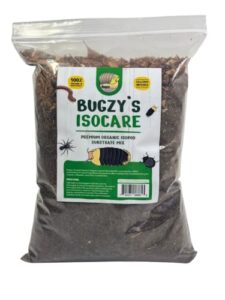
Bugzy Bugs Bioactive Terrarium Substrate comes pre-mixed with leaf mulch, peat, bark, and charcoal — so there’s no measuring or blending on your end. At 4 qt and 2 lb, it’s compact but ready to use straight from the bag.
The mix benefits isopods and springtails well, breaking down waste through steady microbial activity. Just add a drainage layer underneath, top it with leaf litter, and your cleanup crew has everything it needs to thrive.
| Best For | Hobbyists setting up bioactive terrariums, paludariums, or vivariums who want a ready-to-use substrate without the hassle of sourcing and mixing ingredients separately. |
|---|---|
| Primary Material | Multi-ingredient desert mix |
| Odor Control | Yes – bioactive ecosystem |
| Bioactive Support | Yes – clean-up crew ready |
| Humidity Impact | Low – desert formula |
| Suitable Habitat | Desert terrariums |
| Eco-Friendly | Yes – organic desert mix |
| Additional Features |
|
- Comes pre-mixed with leaf mulch, peat, bark, and charcoal — no prep work needed, just open and use
- Supports a full cleanup crew (isopods, springtails) with built-in microbial activity and natural odor control
- Works across a range of setups, from reptile and amphibian enclosures to planted vivariums
- Pricier than buying raw components and mixing your own substrate from scratch
- The 4-quart size can run short for larger enclosures, so you may need to grab multiple bags
- Leaving the bag sealed with trapped moisture can lead to mold issues before you even use it
7. Riare Coconut Husk Reptile Bedding
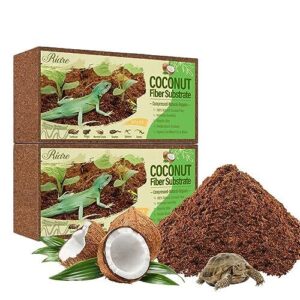
Riare Coconut Husk Reptile Bedding starts as two compact bricks — 7.8 × 3.9 × 1.97 inches each — and expands into a fluffy, breathable substrate once hydrated. That’s a lot of coverage from a small package.
It’s made from 100% natural coconut fiber, so there are no dyes, fragrances, or synthetic additives to worry about. It holds moisture well without going soggy, making it a reliable pick for ball pythons, frogs, and turtles that need stable ambient humidity.
| Best For | Reptile and amphibian owners who need a natural, humidity-friendly substrate for species like ball pythons, frogs, or burrowing invertebrates. |
|---|---|
| Primary Material | Organic forest substrate |
| Odor Control | Moderate – organic base |
| Bioactive Support | Yes – isopods & springtails |
| Humidity Impact | Moderate retention |
| Suitable Habitat | Tropical terrariums |
| Eco-Friendly | Yes – organic substrate |
| Additional Features |
|
- Expands from two small bricks into a fluffy, breathable substrate — solid value for the $12.99 price tag.
- Made from 100% natural coconut fiber with no dyes or fragrances, so it’s safe for sensitive animals.
- Biodegradable and compostable — toss it in the garden when you’re done instead of the trash.
- Two bricks might not be enough for larger enclosures, so you may need to buy extra packs.
- It expands fast when wet, which means overwatering a brick can flood your tank if you’re not careful.
- Packages sometimes arrive damaged and without instructions, so first-timers may need to figure out the hydration process on their own.
8. Tender Tropicals Indian Almond Leaf Litter
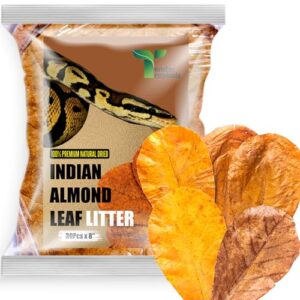
Leaf litter might seem like a finishing touch, but it pulls real weight in a naturalistic build. Tender Tropicals’ Indian Almond Leaf Litter includes 30 dried Catappa leaves — each around 8 inches long — that decompose gradually over weeks, releasing tannins and humic acids that tint the substrate a warm amber tone.
That slow breakdown feeds isopods and springtails, promotes beneficial bacteria, and gives snakes, frogs, and small reptiles natural hiding and foraging zones right at floor level.
| Best For | Reptile and amphibian keepers building bioactive or naturalistic enclosures who want a functional, forest-floor substrate layer that supports live cleanup crews and natural behaviors. |
|---|---|
| Primary Material | Leaf mulch, peat & bark |
| Odor Control | Yes – natural odor agents |
| Bioactive Support | Yes – full ecosystem support |
| Humidity Impact | Optimal moisture balance |
| Suitable Habitat | Terrariums & paludariums |
| Eco-Friendly | Yes – natural compostable |
| Additional Features |
|
- Feeds isopods and springtails while slowly breaking down, helping your bioactive setup actually sustain itself over time
- Gives snakes, frogs, and small reptiles real places to hide, dig, and forage — not just something that looks nice
- Works across reptile, amphibian, and freshwater aquarium setups, so it’s easy to use across multiple tanks
- Leaves break down in weeks to months, so you’ll need to top them off regularly to keep humidity consistent
- Tannins will tint your water, which is great for some setups but a headache if you want crystal-clear aquarium water
- Without good ventilation and moisture monitoring, the damp environment they create can turn into a mold problem
9. Rural365 Hemp Chicken Bedding
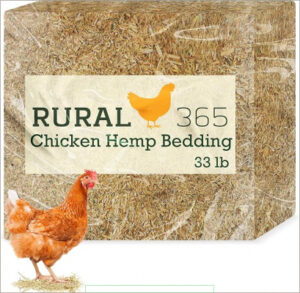
Not every substrate on this list was made for reptiles — and Rural365 Hemp Chicken Bedding is proof that cross-category materials can surprise you.
Originally designed for coops, this 100% industrial hemp bedding absorbs up to four times its weight, keeping enclosure floors dry and ammonia‑free. It’s low-dust and chemical-free, with no dyes or additives.
For burrowing species or tropical builds needing stable moisture without mold risk, it’s a practical, biodegradable option worth considering.
| Best For | Backyard chicken keepers and small-animal owners who want a natural, high-absorbency bedding that cuts down on odors and cleaning time. |
|---|---|
| Primary Material | Coconut fiber |
| Odor Control | Yes – absorbs waste odors |
| Bioactive Support | Partial – mix compatible |
| Humidity Impact | High retention |
| Suitable Habitat | General terrariums |
| Eco-Friendly | Yes – compostable coco fiber |
| Additional Features |
|
- Absorbs up to 4x its weight — seriously impressive compared to pine shavings or straw, so you’re changing it out less often.
- 100% industrial hemp with no chemicals, dyes, or additives, making it a cleaner choice for your animals and your lungs.
- Works as light insulation too, which is a nice bonus when temps drop in winter.
- The 33 lb bag is heavy and a bit awkward to handle — some buyers have also dealt with torn packaging on arrival.
- It costs more upfront than traditional bedding options like pine shavings or straw.
- You’ll need to mist and flip it before use to get the full absorbency, which adds a small but real extra step to setup.
10. Durvet Chlorhexidine Antiseptic for Pets
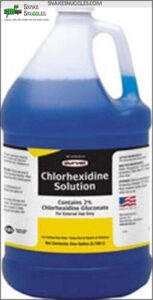
Chlorhexidine isn’t a substrate — but it belongs in every vivarium keeper’s kit. Durvet’s 2% chlorhexidine gluconate solution disinfects enclosure surfaces, spot‑cleans walls and hides, and sanitizes tools between uses.
Diluted properly, it won’t harm your animals. It’s also been used by keepers to treat early‑stage mouth rot in reptiles.
The 1‑gallon container gives you a long‑term supply without constant restocking — practical for anyone managing multiple enclosures.
| Best For | Reptile keepers, horse owners, and multi-pet households who want a reliable, long-lasting antiseptic for wound care and enclosure sanitation. |
|---|---|
| Primary Material | Dried catappa leaves |
| Odor Control | Moderate – tannin release |
| Bioactive Support | Yes – micro-fauna support |
| Humidity Impact | Moderate – insulating layer |
| Suitable Habitat | Reptile & amphibian vivariums |
| Eco-Friendly | Yes – natural dried leaves |
| Additional Features |
|
- A single gallon goes a long way — great for farms, breeders, or anyone running multiple enclosures without constant restocking
- Kills both gram-positive and gram-negative bacteria and keeps working for up to two days after application
- Versatile enough to clean wounds, sanitize surfaces, and even treat early-stage mouth rot in reptiles when diluted correctly
- Has to be diluted before most uses — skipping that step can cause skin irritation
- The blue dye can stain fur, fabric, or surfaces if it sits too long
- The medicinal smell is pretty strong and not everyone loves it
Choosing Species-Safe Vivarium Bedding
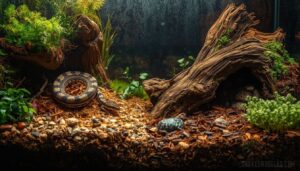
Not every substrate works for every animal, and picking the wrong one can cause real problems fast. What’s safe for a corn snake might stress out a chameleon, and what a burrowing skink needs looks nothing like what a desert tortoise wants. Here’s what to look for before you commit to a bedding.
Snake-safe Substrate Priorities
Not every substrate is safe for snakes. Your first priority is dust-free bedding — fine particles irritate airways fast.
Choose non-toxic substrates like aspen shavings or coconut husk, which carry zero risk of impaction.
Follow safe depth guidelines: 2–4 inches for most snakes, 4–6 inches for burrowing species. Stick to a regular replacement schedule every 3–4 months.
Coconut fiber retains moisture and releases it gradually, offering coconut fiber humidity benefits for tropical species.
Tropical Versus Arid Needs
Tropical and arid species have opposite needs. Tropical humidity balance matters most in a tropical terrarium — use coconut coir or cypress mulch to hold moisture without waterlogging.
For a desert terrarium, arid drainage efficiency keeps mold away. Sand and clay offer strong heat conductivity contrast, warming surface zones fast for desert lizards.
Match your substrate to your animal’s natural climate first.
Burrowing and Nesting Behavior
Matching your climate sets the stage — but your animal’s instincts go deeper than humidity.
Burrowing behavior drives substrate choice for many species. Reptiles excavate with forelimbs and claws, building tunnels toward central nesting chambers. Without the right burrowing substrate, those instincts go unmet.
- Burrow Depth Variation — Loose substrates like sand or peat allow deeper tunnels than compacted mixes.
- Tunnel Construction Techniques — Soft, movable materials let animals shape stable walls without collapse risk.
- Nest Material Selection — Fibers, bark, and moss create insulated chambers for maternal nest care.
- Entrance Defense Strategies — Deep substrate lets animals conceal openings naturally.
Maintain substrate depth guidelines of 4–5 inches minimum. For egg laying substrate, 5–6 inches allow natural digging behavior without tunnel failure.
Hatchlings and Breeding Setups
Once tunnels are built, the next question is: what happens when eggs arrive?
Egg laying substrate needs 5–6 inches of depth so females can dig naturally without disturbing clutches. A semi-moist mix holds egg hydration for up to a month. Keep hatchling quarantine tubs small — 6×6×6 inches — for the first 14 days, and log every breeding pair for clean clutch management.
Substrates to Avoid
Some substrates look harmless but cause real damage.
Pine and cedar shavings are the worst offenders — cedar releases toxic terpenes that attack your reptile’s liver and lungs, while respiratory risk from pine comes from aromatic oils that irritate airways fast. Skip both entirely.
Untreated sand and gravel cause impaction and abrasion injuries, and loose bark chips accumulate dust that triggers chronic health problems.
Building Bioactive Substrate Layers
A bioactive vivarium isn’t just substrate — it’s a living system built in layers, and each one has a job to do. Getting the structure right from the bottom up means your cleanup crew thrives, your plants root properly, and your animal stays healthier for longer. Here’s how each layer works and what to put in it.
Drainage Layer Basics
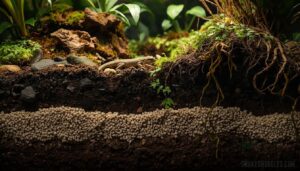
Think of the drainage layer as your vivarium’s foundation — get it wrong, and everything above it suffers. Use expanded clay LECA or coarse gravel as your drainage media, keeping the layer 20–40 mm deep.
Place a geotextile liner on top to block substrate intrusion. Position your outlet at the lowest point so water flows out, not in.
Soil and Bark Blends
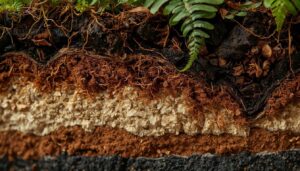
Once your drainage layer is set, the soil mix is where your vivarium really comes alive. A solid tropical bark blend follows the ABG ratio: 40% organic topsoil, 30% coconut fiber, 20% orchid bark, and 10% charcoal. For desert builds, shift to a sand-and-clay desert blend — better heat transfer, stable burrows, minimal moisture retention.
Pine bark drives aeration throughout, creating pore spaces that support gas exchange and healthy root zones. As bark decomposes, it feeds nutrient cycling naturally — no additives needed.
Leaf Litter Coverage
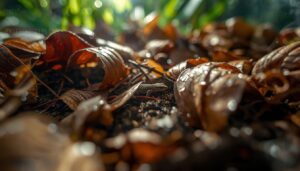
Leaf litter is the finishing touch your bioactive build actually needs. Boiled hardwood leaf litter laid on top moderates soil temperature, slows moisture loss, and buffers against the heat spikes your basking setup creates. It also breaks down into nutrients over time.
Reptile bark blends or jungle mix fragments work here too — both add natural microhabitat texture.
Cleanup Crew Support
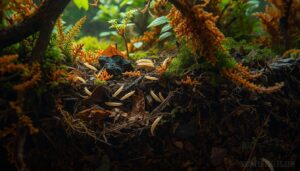
Your cleanup crew is the living engine behind a thriving bioactive enclosure. Isopods and springtails handle leaf litter breakdown, turning decay into nutrients. They control waste, suppress pests, and keep your natural substrate balanced.
Document crew activity and follow quarantine procedures before introducing new organisms — it protects both your animals and the microfauna already at work.
Live Plant Rooting
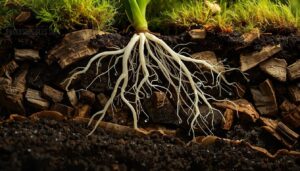
Your substrate’s soil composition directly determines whether live plants thrive or stall. A mix of organic topsoil, coconut fiber, and orchid bark gives roots the aeration and moisture they need.
Add mycorrhizal inoculation to accelerate establishment — inoculated mixes show faster root initiation.
Maintain consistent humidity control and mist three to six times daily to support new cuttings without oversaturation.
Managing Humidity and Odor
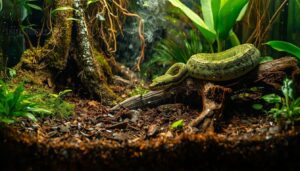
Getting humidity right is the difference between a thriving vivarium and a moldy, smelly mess. The substrate you choose does most of that heavy lifting — holding moisture, controlling odor, and keeping your animal comfortable through every shed. Here’s what to look for across five key areas.
Moisture-retaining Bedding Materials
Getting humidity right starts with picking the right bedding. Coconut Coir Retention is hard to beat — Eco Earth expands to cover roughly 4 ft² and buffers moisture swings during misting. Sphagnum Moss Hydration works deeper, pulling and holding water close to roots and burrowing zones. For bioactive terrariums, a Peat Blend Moisture mix adds stable, long-release hydration without waterlogging.
- Coir resists mold at proper airflow
- Sphagnum peat moss conditions soil naturally
- Clay Water Buffer releases moisture slowly via capillary action
- Fiber Moisture Stability reduces how often you mist
Mold Prevention Tips
Moisture-retaining bedding keeps your vivarium lush, but standing dampness invites mold fast.
Airflow management is your first defense — ventilate after every misting session. Use a digital hygrometer for humidity monitoring at multiple enclosure points, targeting 40–50% to discourage fungal growth.
Natural mold inhibitors like blueberry-infused substrates and mold-resistant coconut coir add another layer of protection without chemicals.
Shedding Humidity Support
A clean shed starts with the right humidity at the right spot.
- Sphagnum moss application near hides creates a moist microzone without soaking the whole enclosure
- Coconut coir retention keeps bedding damp longer, reducing how often you need to mist
- Leaf litter microclimates trap surface moisture, giving snakes a humid pocket to loosen stuck skin
Odor Control Strategies
Humidity sets the stage — but odor control keeps your vivarium livable long-term.
Enzyme cleaners break down organic waste at the source rather than masking it. Pair them with activated carbon filters to adsorb volatile compounds from the air. Zinc neutralizers convert sulfur-based odors into less offensive forms. Blueberry-derived inhibitors in premium substrates deliver excellent odor control passively.
| Method | How It Works | Best For |
|---|---|---|
| Enzyme Cleaners | Digest organic residue | Post-waste removal |
| Activated Carbon | Adsorbs airborne compounds | Ongoing air quality |
| Zinc Neutralizers | Converts sulfur compounds | Persistent odors |
Microfauna digestion — via isopods and springtails — processes decaying matter continuously. Good ventilation turnover every 5–10 minutes removes stale air before smells build.
Spot Cleaning Routine
Spot cleaning isn’t glamorous, but it’s your first defense against odor buildup. Blot waste outward-in — never scrub — to avoid spreading contamination into surrounding substrate.
Remove solids first, then dab with a reptile-safe cleaner. Let the area dry fully before reintroducing your animal.
In sphagnum peat moss or natural bedding mixes, replace only the soiled section to preserve beneficial microbial balance.
Preventing Impaction and Health Risks
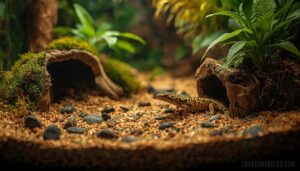
Impaction is one of the most preventable reptile health issues — and substrate choice is usually the culprit. Knowing what to watch for puts you ahead of most keepers. Here’s what you need to get it right.
Loose Substrate Safety
Particle size is the first line of defense. Keep substrate particles under 2 mm for small reptiles and hatchlings — anything larger raises real impaction risk.
Stick to dust‑free formulations to protect both your animal’s lungs and yours. Choose non‑abrasive, smooth‑textured materials to prevent scale injuries during digging.
Spot clean regularly and do a full substrate turnover every 3–6 months.
Safe Feeding Practices
Feed your reptile in a separate feeding container — not on the substrate. This one habit eliminates most ingestion risk overnight.
When prey items drag loose particles into the mouth, impaction follows. A plain tub or tile keeps feeding clean and controlled.
Tong-feed whenever possible to keep food away from the substrate entirely.
Proper Substrate Depth
Depth isn’t decorative — it’s structural.
For most adult burrowers, 4 to 6 inches of loose substrate gives them room to thermoregulate and retreat safely. Hatchlings need just 2 to 3 inches to move freely without getting trapped.
Check depth at multiple points monthly; uneven settling creates thin spots that expose enclosure liners and increase injury risk.
Heat and Digestion Links
Substrate temperature directly affects how well your reptile digests food. When basking zones run too hot or too cool, gut enzyme activity slows, meaning meals sit unprocessed longer — raising impaction risk. Keep substrate surface temps species-accurate.
Hydration heat impact compounds this: dry substrate pulls moisture from the gut, hardening waste. Mist consistently to keep substrate moisture balance stable.
Replacement Schedule Tips
Replacing substrate isn’t optional — it’s the backbone of hygienic substrate management. Follow these five tips to stay ahead of health risks:
- Replace coconut husk every 2–4 months; ABG tropical blends every 6–9 months.
- Inspect weekly for odor, mold, and compaction.
- Rotate using a two-bin batch method to limit disruption.
- Log each swap with date, type, and lot number.
- Review your replacement schedule quarterly.
Frequently Asked Questions (FAQs)
Can reptile substrates support live moss growth?
Yes — the right substrate makes all the difference. Sphagnum peat moss and coco coir blends hold enough moisture to let live moss anchor and spread, especially when humidity stays between 60–80% with indirect light.
Which substrates work best for semi-aquatic setups?
For semi-aquatic setups, coconut coir and sphagnum peat moss are your go-to choices. Both hold moisture without waterlogging roots, while a drainage layer below keeps humidity steady between 65–85% without turning the substrate anaerobic.
How do substrate choices affect enclosure aesthetics?
Your substrate sets the scene. Dark coco fiber deepens shadows and makes plants pop. Fine sand reflects light, brightening hides. Layered bark adds visual depth — turning a basic enclosure into a naturalistic habitat worth watching.
Are store-bought substrates safe straight from packaging?
Most store-bought substrates are ready to use, but always check for seal integrity first. Torn bags or moisture condensation signal possible mold or mites. When in doubt, mist lightly and let it breathe before adding animals.
Can multiple substrate types be layered together safely?
Layering works like a good sandwich — each part has a job. Keep layers distinct: drainage at the base, moisture-retentive soil in the middle, and loose organic material on top.
Conclusion
The smallest decisions carry the most weight—and nothing proves that better than what lines the bottom of a vivarium.
The right reptile substrate beddings for naturalistic vivariums don’t just sit there; they work, cycle, and breathe alongside your animals.
Nail this layer, and everything above it—humidity, plant roots, cleanup crew—falls into place. Get it wrong, and no amount of misting or lighting fixes it.
The ground is where good husbandry begins.