This site is supported by our readers. We may earn a commission, at no cost to you, if you purchase through links.

A nervous snake isn’t just skittish—it’s a snake that never fully settles. No appetite. Constant pacing. Defense strikes at feeding tongs. Most keepers try handling adjustments first, but the real fix is often sitting right inside the enclosure: the hide.
Snake hide boxes for nervous snakes do more than provide cover. They replicate the tight, dark, draft-free burrows that snakes instinctually seek when threatened. Get the fit wrong—too large, too open, wrong placement—and your snake stays on edge regardless of everything else you do right.
The ten hides below cut through the noise. Material, dimensions, placement logic—all of it covered, specific and practical.
Table Of Contents
- Key Takeaways
- Top 10 Snake Hides for Nervous Snakes
- 1. Durable Plastic Reptile Hide Cave
- 2. Leoterra Medium Reptile Hide
- 3. Pangea Large Reptile Hide Box
- 4. Black Plastic Reptile Hide Boxes
- 5. Resin Reptile Humid Hide Cave
- 6. Reptile Humidity Hide with Sensor
- 7. Large Black Reptile Hide Cave
- 8. Durable Small Reptile Hide Box
- 9. Black Reptile and Gecko Hides
- 10. Leoterra Plastic Ball Python Hide
- Choosing The Safest Hide Material
- Sizing Hides for Security
- Best Hide Placement Strategies
- Stress-Reducing Hide Features
- Frequently Asked Questions (FAQs)
- Conclusion
Key Takeaways
- A hide that fits snugly — touching your snake on multiple sides — does more to calm a nervous snake than any other single enclosure change.
- Offset or angled entrances block direct sightlines and reduce drafts, triggering your snake’s instinct to feel hidden before it’s even fully inside.
- Plastic and resin outperform wood in nearly every way: they’re nonporous, easy to sanitize, and won’t introduce mold, splinters, or toxic compounds.
- Two hides placed at opposite ends of the enclosure — one warm, one cool — give your snake full thermal access without ever forcing it into open space.
Top 10 Snake Hides for Nervous Snakes
Not every snake settles in quickly, and the right hide makes a real difference. These ten options cover a solid range of sizes, materials, and features worth knowing about. Here’s what stands out.
If you’re narrowing it down for a ball python specifically, this guide to best hide types for ball pythons breaks down exactly what works for that species.
1. Durable Plastic Reptile Hide Cave
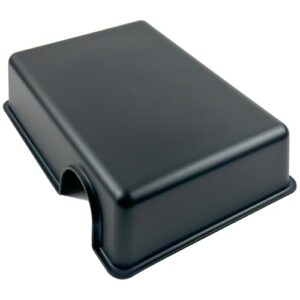
At just 9.45" x 6.89" x 2.17", this hide fits snugly inside a 10-gallon tank without crowding the space. The dense plastic construction resists moisture, won’t crack under pressure, and cleans up fast with isopropyl alcohol or mild soap. Smooth interior walls mean no snagged scales during shedding.
It also doubles as a humid hide — pack damp sphagnum moss inside and it becomes a shedding station. Chunky or larger reptiles may find the entrance tight, so measure your snake’s girth first.
| Best For | Reptile owners with small to mid-sized species like ball pythons, leopard geckos, or bearded dragons who want a functional, easy-to-clean hide that works for both dry and humid setups. |
|---|---|
| Material | Plastic |
| Dimensions | 9.45 x 6.89 x 2.17 in |
| Easy to Clean | Yes |
| Humid Hide Use | Yes |
| Stress Reduction | Yes |
| Multi-Species Use | Pythons, geckos, dragons |
| Additional Features |
|
- Doubles as a humid hide — just pack it with damp moss for a ready-made shedding station
- Smooth plastic interior is quick to clean and won’t snag scales
- Compact size fits neatly in a 10-gallon tank without eating up floor space
- The entrance may be too tight for larger or chunkier reptiles, so measuring your pet’s girth beforehand is a must
- Purely functional design — it won’t blend in with naturalistic or bioactive setups
- At just over 2 inches tall, headroom inside is limited for bigger species
2. Leoterra Medium Reptile Hide
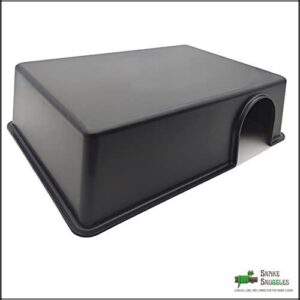
The Leoterra steps up where smaller hides leave off. At 10.23" × 7.48" × 2.75", it gives juvenile-to-adult small snakes enough room to coil fully without feeling exposed. The 2.75" entrance opening is wide enough for a well-fed corn or ball python to slip in without a struggle.
Smooth interior walls protect skin during shedding, and the top-seal design traps ambient humidity inside. Light enough to reposition easily, though active snakes may nudge it — a piece of slate underneath fixes that fast.
| Best For | Owners of juvenile-to-adult corn snakes, ball pythons, milk snakes, or similar small-to-medium reptiles who want a roomy, humidity-retaining hide that’s quick to clean and easy to reposition. |
|---|---|
| Material | Molded Plastic |
| Dimensions | 9.45 x 7.09 x 2.36 in |
| Easy to Clean | Yes |
| Humid Hide Use | Yes |
| Stress Reduction | Yes |
| Multi-Species Use | Snakes, lizards, mammals |
| Additional Features |
|
- Generous entrance opening (2.75") lets well-fed snakes enter and exit without squeezing
- Top-seal design keeps humidity locked in, supporting healthy shedding
- Smooth, rounded interior walls protect delicate skin and make sanitizing a breeze
- Lightweight build means active snakes can nudge or flip it — may need a slate slab or rock to weigh it down
- Plain black plastic look won’t suit owners going for a natural or bioactive aesthetic
- Entrance size caps out around 150 g snakes; larger animals will need an L or XL upgrade
3. Pangea Large Reptile Hide Box
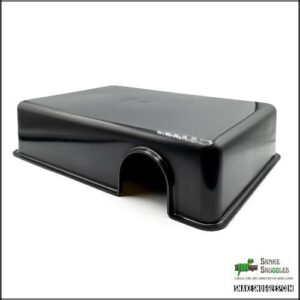
When your snake outgrows that medium-sized space, the Pangea Large steps in cleanly. Its 13.25" × 9" × 3.25" interior fits small adult ball pythons and similarly sized boas without crowding them. The 1/8" ABS plastic construction stays rigid, cleans fast, and won’t splinter or scratch.
The offset door placement is the standout feature — it gives nervous snakes a tucked-in entry that reduces startle responses and encourages consistent sheltering. Drops straight into 28–41 qt rack tubs. No adhesives, no modification needed.
| Best For | Snake keepers with small adult ball pythons, boas, or similarly sized reptiles who need a reliable, no-fuss hide that fits standard rack systems. |
|---|---|
| Material | ABV Plastic |
| Dimensions | 13.25 x 9 x 3.25 in |
| Easy to Clean | Yes |
| Humid Hide Use | Yes |
| Stress Reduction | Yes |
| Multi-Species Use | Pythons, boas, geckos |
| Additional Features |
|
- Offset door design helps nervous snakes feel secure and encourages them to actually use the hide
- ABS plastic is easy to disinfect and won’t harbor bacteria, splinter, or scratch your animals
- Drops straight into 28–41 qt rack tubs with zero modification needed
- Very lightweight, so it may tip unless placed against the enclosure wall or weighted down
- Interior size can feel too roomy for juveniles or smaller snakes without added dividers
- Utilitarian black plastic look won’t blend well into naturalistic or decorative setups
4. Black Plastic Reptile Hide Boxes
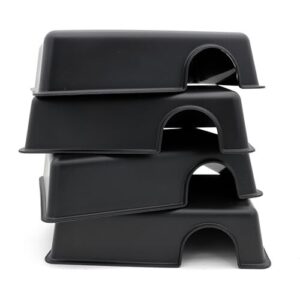
Where the Pangea Large focuses on precision fit, these black plastic hide boxes keep things simple and affordable. Dimensions run 9.5" × 6.7" × 2.3" with a 2.1" × 1.5" entrance — snug enough for small snakes and geckos, but not roomy enough for a 400g ball python.
The flat top doubles as a basking tile platform, which saves enclosure real estate. Smooth interior surfaces wipe clean in seconds. One caveat: verify measurements before ordering, as size labeling doesn’t always match industry standards.
| Best For | Small reptile owners — especially those keeping geckos or small snakes — who want an affordable, easy-to-clean hide that can double as a basking platform. |
|---|---|
| Material | Plastic |
| Dimensions | 9.5 x 6.7 x 2.3 in |
| Easy to Clean | Yes |
| Humid Hide Use | Yes |
| Stress Reduction | Yes |
| Multi-Species Use | Snakes, geckos, reptiles |
| Additional Features |
|
- Flat top works as a basking tile platform, saving space in the enclosure
- Smooth plastic surface makes cleaning quick and hassle-free
- Budget-friendly option that covers the basics for small reptiles
- Too small for larger reptiles like adult or heavier ball pythons
- Size labeling doesn’t always match industry standards, so double-check measurements before buying
- Potential confusion over how many units come per package
5. Resin Reptile Humid Hide Cave
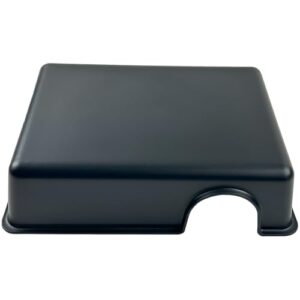
Nervous snakes need more than just a dark corner — they need moisture too. The Resin Reptile Humid Hide Cave delivers both. Its rock-textured exterior blends naturally into any setup, while the smooth interior protects scales during sheds.
For more on building the ideal setup, snake housing accessories and hide options can help you pair the right humidity hides with the rest of your enclosure.
At 9.5"L × 6.7"W × 2.2"H, the large fits most medium species comfortably. Add damp sphagnum moss inside, and humidity stays elevated for hours. Wipes clean easily — no hidden crevices, no buildup.
| Best For | Reptile and spider owners who want a natural-looking hide that doubles as a humid retreat for shedding support and stress relief. |
|---|---|
| Material | High-Density Resin |
| Dimensions | 9.5 x 6.7 x 2.2 in (Large) |
| Easy to Clean | Yes |
| Humid Hide Use | Yes |
| Stress Reduction | Yes |
| Multi-Species Use | Pythons, geckos, tarantulas |
| Additional Features |
|
- Rock-textured resin looks realistic and fits right into naturalistic or bioactive setups
- Smooth interior is gentle on scales and easy to wipe down between cleanings
- Works with damp moss to hold humidity for hours — great for ball pythons and leopard geckos during sheds
- The large size may feel too open for small juveniles that prefer a snug, secure fit
- Dimensions can look smaller in photos than they actually are, so double-check measurements before ordering
- Only two sizes available, which may not suit every species or life stage perfectly
6. Reptile Humidity Hide with Sensor
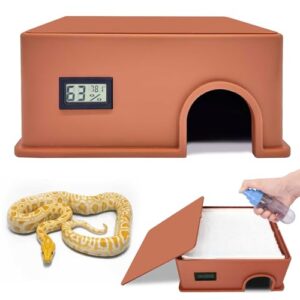
Tracking humidity inside a hide used to mean guesswork. This unit removes that entirely. The integrated digital sensor reads temperature and humidity in real time, so you know exactly what your snake experiences — not just what the room says.
At 9.8"L × 7.87"W × 4.1"H, it fits juvenile ball pythons and corn snakes well. The included spray bottle and removable cotton pad make humidity adjustments fast. PLA construction keeps the interior smooth and odor-resistant. Just watch sustained heat — PLA can soften above typical enclosure ranges.
| Best For | Reptile keepers housing juvenile ball pythons, corn snakes, king snakes, or leopard geckos who want real-time humidity monitoring without a separate hygrometer. |
|---|---|
| Material | PLA Plastic |
| Dimensions | 9.8 x 7.87 x 4.1 in |
| Easy to Clean | Yes |
| Humid Hide Use | Yes |
| Stress Reduction | Yes |
| Multi-Species Use | Pythons, corn snakes, geckos |
| Additional Features |
|
- Built-in digital sensor gives you live temperature and humidity readings right where your reptile hides — no guesswork
- Removable cotton pad and included spray bottle make humidity adjustments quick and straightforward
- Smooth PLA interior is easy to clean and resists odor buildup over time
- Active reptiles can knock the sensor loose, requiring you to reinsert it
- PLA plastic can warp or soften in enclosures running at sustained high temperatures
- Sized for juveniles and smaller species — adult or larger snakes will likely need a bigger hide
7. Large Black Reptile Hide Cave
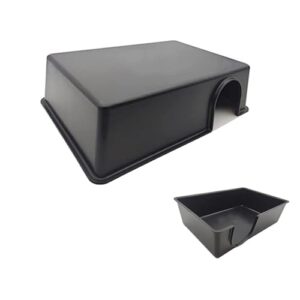
Black absorbs warmth, and that’s exactly the point. Positioned on the warm side, this cave pulls ambient heat inward, helping your snake thermoregulate without effort. The 10.2 × 7.48 × 2.75 inch interior fits juveniles and small adults comfortably — snug enough to feel secure, spacious enough to coil.
The smooth, nonporous plastic wipes clean in seconds. Entrance dimensions of 2.75 × 2.36 inches suit corn snakes, king snakes, and similarly sized species. Just avoid placing it directly under intense heat lamps — black plastic retains heat fast.
| Best For | Juvenile and small adult snakes — corn snakes, king snakes, milk snakes, and similarly sized reptiles — who need a secure, heat-retaining hide in a compact enclosure. |
|---|---|
| Material | Plastic |
| Dimensions | 10.2 x 7.48 x 2.75 in |
| Easy to Clean | Yes |
| Humid Hide Use | Yes |
| Stress Reduction | Yes |
| Multi-Species Use | Snakes, lizards, geckos |
| Additional Features |
|
- Absorbs and retains ambient heat on the warm side, helping snakes thermoregulate naturally
- Smooth, nonporous plastic is quick and easy to wipe clean
- Compact dimensions fit snugly in 10-gallon tanks without eating up floor space
- Entrance size needs to match your snake’s girth — too tight and they simply won’t use it
- Black plastic can warp or scratch during shipping, so inspect it on arrival
- Not safe to place directly under intense heat lamps — the color and material heat up fast
8. Durable Small Reptile Hide Box
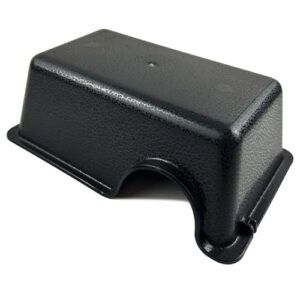
Small hides get overlooked, but they’re often the most calming option for hatchlings. This one measures 7.48" x 4.72" x 2.56" — compact enough to create that cocooned feeling nervous snakes crave.
The offset entry door blocks front exposure, so your snake feels tucked away rather than on display. Smooth plastic walls mean cleaning takes seconds, and the non-porous surface won’t harbor bacteria between wipes. A solid choice for ball python hatchlings or juvenile leopard geckos in rack setups.
| Best For | Hatchlings and juveniles — especially ball pythons, leopard geckos, and small tarantulas — that need a snug, secure hide to feel safe and reduce stress. |
|---|---|
| Material | Plastic |
| Dimensions | 7.48 x 4.72 x 2.56 in |
| Easy to Clean | Yes |
| Humid Hide Use | Yes |
| Stress Reduction | Yes |
| Multi-Species Use | Pythons, geckos, tarantulas |
| Additional Features |
|
- Smooth, non-porous plastic makes cleaning quick and prevents bacterial buildup
- Works as both a dry hide and a humid hide (just add damp moss for shedding support)
- Compact size creates that cocooned feeling that helps nervous hatchlings settle in
- May be too small for chunkier or adult-sized reptiles, so measure carefully before buying
- Plain black plastic won’t win any style points — it’s purely functional
- No offset or tunnel entry like some competing hides, so front exposure isn’t fully blocked
9. Black Reptile and Gecko Hides
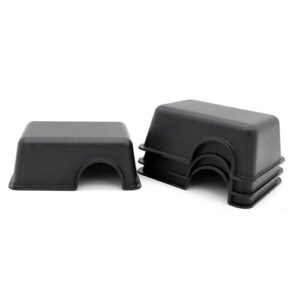
Color does more work than you’d think. Dark interiors absorb ambient light, giving nervous snakes and geckos a genuinely dim retreat — not just the illusion of one.
These hides feature smooth, non-porous plastic that wipes clean in seconds. Rounded entrances prevent corner stress when your reptile moves in or out. The flat top surface doubles as a basking shelf near a heat source, so your animal stays warm without sacrificing cover.
External dimensions run 5.5"L x 4.2"W x 2.1"H — right-sized for hatchlings and small geckos.
| Best For | Small reptiles like hatchling snakes and geckos that need a secure, snug hide to feel safe and reduce stress. |
|---|---|
| Material | Plastic |
| Dimensions | 5.5 x 4.2 x 2.1 in |
| Easy to Clean | Yes |
| Humid Hide Use | Yes |
| Stress Reduction | Yes |
| Multi-Species Use | Snakes, geckos |
| Additional Features |
|
- Dark interior genuinely blocks ambient light, giving reptiles a calming, dim retreat
- Smooth plastic surface wipes clean quickly with minimal effort
- Flat top doubles as a basking shelf, adding functionality without taking up extra space
- On the smaller side — not suitable for larger reptiles like adult or heavier ball pythons
- Sizing can be inconsistent with listed dimensions, so double-check before buying
- Limited entrance size (1.6"W x 1.1"H) may feel tight for some animals as they grow
10. Leoterra Plastic Ball Python Hide
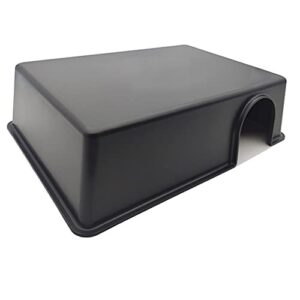
Adult ball pythons need room to coil without feeling exposed. The Leoterra measures 16.5" x 10.6" x 4.3" — spacious enough for a full-grown snake, compact enough to fit most standard terrariums cleanly.
The top seal design traps moisture inside, which matters during shedding season. Rounded interior edges mean no scale snagging on entry or exit. Plastic is lightweight, so bury the edges in substrate if your snake often tries to bulldoze hides. Easy to sanitize. Consistently dark inside. Straightforward to use.
| Best For | Adult ball python owners and keepers of other large snake species who want a functional, easy-to-clean hide that supports healthy shedding and secure resting. |
|---|---|
| Material | Plastic |
| Dimensions | 16.5 x 10.6 x 4.3 in |
| Easy to Clean | Yes |
| Humid Hide Use | Yes |
| Stress Reduction | Yes |
| Multi-Species Use | Pythons, large snakes |
| Additional Features |
|
- Top seal design retains humidity, making it especially useful during shedding season
- Spacious interior (16.5" x 10.6") comfortably fits full-grown ball pythons without crowding
- Rounded edges and lightweight construction reduce the risk of injury to your snake
- Lightweight plastic means active snakes can shift or flip the hide unless it’s buried in substrate
- Lacks a natural stone or organic look, which may not suit naturalistic enclosure setups
- Requires careful measuring of both the entrance and your snake before purchasing to ensure a proper fit
Choosing The Safest Hide Material
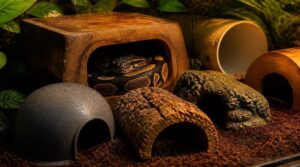
The material your snake’s hide is made from matters more than most keepers realize. Each option — plastic, resin, PVC, cork, or wood — comes with its own trade-offs in durability, hygiene, and how well your snake actually settles in. Here’s how the most common materials stack up.
Plastic Hide Benefits
Plastic stands out as the most practical choice for a snake hide box. The nonporous surface doesn’t absorb moisture or bacteria, which makes sanitation efficient — a quick wipe with a reptile-safe disinfectant and you’re done.
Durable ABS plastic withstands heat without warping, and UV-stable construction prevents cracking under bright lighting. That reliability reduces stress during routine cleanings, keeping your snake undisturbed. Using these hides helps mimic natural burrows to reduce anxiety.
Resin Cave Advantages
Resin caves bring something plastic can’t quite match: texture that feels alive. Realistic rock surfaces give anxious snakes visual cues that mirror natural crevices, which encourages instinctual hiding behavior without any safety trade-offs.
Nontoxic resin won’t harbor biofilm or mold, so routine cleaning stays simple. The smooth interior reduces stress on scales during shedding, keeping your snake calm inside a secure, cozy space.
PVC Moisture Resistance
PVC hides take moisture resistance seriously. With water absorption under 0.1%, the material stays dimensionally stable even in humid enclosures — no swelling, no warping.
UV stabilizers protect long-term barrier integrity, and the non-porous surface resists hydrolysis, meaning it won’t break down from repeated misting or damp substrate contact. For anxious snakes, that consistency matters.
Cork Hide Naturalism
Cork takes a different approach than synthetic options. Its low thermal conductivity creates a warm, stable microclimate inside the hide — no sudden temperature swings to unsettle anxious snakes.
Mold-resistant cork also regulates humidity naturally, absorbing excess moisture and releasing it gradually. That breathability keeps the interior fresh. The textured bark-like surface gives nervous snakes familiar shelter cues, making naturalistic setups feel genuinely secure.
Wood Hide Risks
Wood looks natural, but it’s one of the riskier choices for reptile hides. It traps moisture, which invites mold growth risks fast. Splinters snag scales.
Cedar oil irritation is real — cedar and pine release compounds that damage anxious snakes’ respiratory systems. Toxic wood species and chemical treatments add more danger. For terrarium hideouts, wood rarely earns its place.
Sizing Hides for Security
Size matters more than most keepers realize. A hide that’s too big won’t calm your snake — it’ll stress them out more. Here’s what to know before you buy.
Proper Girth Fit
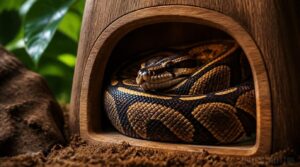
Think of it like a snug sleeve — anxious snakes need walls that press back. A hide fits correctly when it touches your snake on multiple sides at once, creating that cocooned feeling nervous animals crave.
- Measure body width at the snake’s widest point
- Match interior width to that measurement, not wider
- Confirm elbow clearance — the head should enter without forcing
- Check that pressure distribution feels even, not pinched
- Verify tension by watching how the snake settles inside
Wrong sizing unravels everything.
Hatchling Hide Sizes
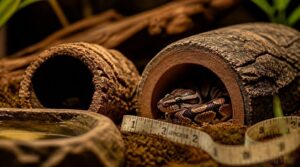
Hatchlings need surprisingly small spaces. Ideal interior floor space runs about 2.5 by 2.0 inches — just enough for a compact curl. The entrance diameter should sit between 0.9 and 1.2 inches.
Not sure which fits best? Try two-hide testing: anxious snakes pick the snugger option every time. That choice tells you everything about what makes your hatchling feel secure.
Juvenile Upgrade Timing
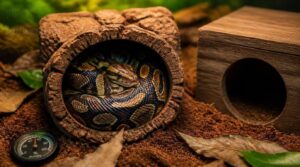
Juveniles grow fast. Upgrade timing matters more than most keepers realize.
Check your snake’s girth ratio every four to six weeks. If the hide no longer creates that snug, cocooned contact on multiple sides, it’s already too big for comfort.
- Watch for increased glass surfing — a clear stress signal
- Assess width against interior walls, not just length
- Plan habitat transitions before your snake outgrows the current fit
Don’t wait for obvious restlessness. Early upgrades keep anxious snakes calm.
Adult Snake Dimensions
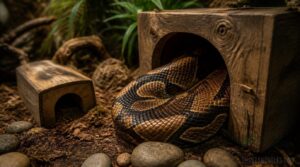
Adults demand precision. Most pet snakes reach 2 to 6 feet, but females often run 10–20% longer and noticeably heavier than males. That girth difference matters when selecting a hide.
A Large Hide Box suits small adult pythons. Bigger-bodied snakes need an Extra Large or Jumbo Hide Box — up to 20"x14"x6.5" — to maintain that secure, cozy space without excess room.
Too-large Hide Problems
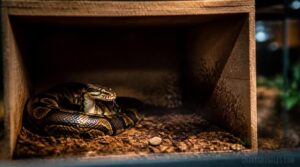
A hide that’s too roomy works against you. When there’s excess interior space, your snake can’t feel the walls on multiple sides — and that cocooned feeling disappears instantly.
Substrate gets trapped underneath, creating inconsistent humidity pockets that invite mold and respiratory irritation. Thermal gradient confusion follows. Stress levels climb rather than drop, and feeding responses suffer.
Best Hide Placement Strategies
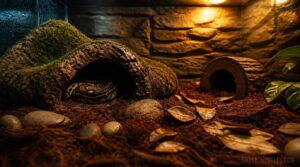
Getting a hide into your enclosure is only half the job — where you put it matters just as much. Placement directly affects whether your snake feels safe enough to settle, eat, and shed without stress. Here’s what actually works.
Warm-side Hide Placement
Position your warm-side hide directly over the heat source so your snake can digest without leaving cover. Use an infrared thermometer to confirm the interior floor hits your species’ target temperature.
If it runs too hot, raise the hide slightly on small spacers. That air gap prevents overheating and keeps the digestion microclimate stable without blocking enclosure airflow.
Cool-side Security Hide
The cool side is your snake’s temperature escape valve — the far end of the enclosure where ambient temps hold between 72 and 80°F. Place the hide there, away from any draft or vent. Match it in size to the warm-side hide.
A snug, nonporous interior keeps your snake calm, contained, and easy to clean. Check substrate stability weekly so it never wobbles.
Humid Hide Setup
A humid hide adds one more layer of security for anxious snakes, especially during shed cycles. Pack damp sphagnum moss inside — wrung out, not dripping — to hit 70–90% interior humidity. Place it on the warm side to boost evaporation.
Check moisture daily. A calibrated digital hygrometer inside catches dryness or waterlogging before mold sets in.
Angled Entrances
The entrance angle on a hide matters more than most keepers realize. An offset or angled opening blocks your snake’s direct sightline to the front glass, cutting visual stress immediately.
It also reduces drafts entering the shelter — draft reduction keeps interior microclimates stable. Snakes feel that enclosed security faster when airflow stays calm and nothing looms at the door.
Dual-hide Enclosure Layout
Two hides, placed at opposite ends of the enclosure, give your snake thermal gradient stability without forcing it into open space. The warm-side hide sits over the heat source; the cool-side anchors the far end.
Cork panels between them act as visual barriers, letting the snake move between microclimates while staying concealed. That’s genuine security through concealment — not just decoration.
Stress-Reducing Hide Features
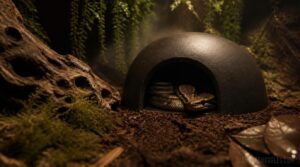
Not every hide does the job — the design details matter more than most people expect. A few key features separate hides that actually calm nervous snakes from ones that just take up space. Here’s what to look for.
Tight Enclosed Interiors
A nervous snake doesn’t want room to wander — it wants walls it can feel on all sides.
Tight enclosed interiors minimize airflow and external disturbance, creating microclimate stability inside your terrarium shelter. Curved walls eliminate sharp corners. Non-porous finishes allow fast sanitizing.
- Reduces open space around the hide cavity
- Helps coiling without excess room
- Curved corners prevent rubbing
- Discreet ventilation holes manage airflow
- Non-toxic surfaces stay hygienic between cleanings
Offset Entrance Designs
Where the door sits matters more than you’d think. An offset entrance acts as a visual anchor, blocking direct sightlines into the hide and giving your snake a stronger sense of cover.
That asymmetry isn’t decorative — it triggers instinctual security responses. Snakes feel hidden before they’re fully inside. That small geometric shift makes Reptile Hide Boxes dramatically more effective for anxious snakes.
An offset entrance isn’t decorative — it triggers instinctual security before a snake is even fully inside
Smooth Inner Surfaces
A rough interior is a hidden stressor. Smooth inner walls prevent micro-abrasions that irritate skin during shedding, and snakes move in and out without hesitation.
That non-porous finish also means wiping down with diluted bleach takes seconds. No trapped grime, no mold buildup. For snake hides for anxious snakes, a clean, continuous secure cozy space removes one more variable working against calm behavior.
Naturalistic Textures
Texture does more than look good. Stone veining, bark grain, and cork surfaces mimic the microhabitats snakes instinctively seek, triggering calmer, more settled behavior inside reptile hides.
Those irregular ridges and mineral speckles also respond to light with subtle depth, making the secure cozy space feel genuinely enclosed. For snake hides for anxious snakes, that visual realism matters.
Easy Cleaning Access
A hide that’s hard to clean gets skipped. That’s when bacteria win.
Tool-free disassembly on small, medium, large, and extra large hide boxes means you can pull them apart fast, rinse every surface, and reassemble without digging for tools. Sloped drainage design channels water out quickly. Removable liner benefits cut scrubbing time in half — keeping the enclosure genuinely easy to clean.
Frequently Asked Questions (FAQs)
Are bioactive enclosures good for snakes?
Snakes kept in bioactive enclosures often show fewer stress behaviors overall. Plant humidity regulation and microfauna waste processing sustain a thriving microclimate — encouraging natural species foraging behaviors while greatly cutting the need for deep cleans.
How often should nervous snakes be disturbed?
Every two to three days is the right rhythm. Keep early sessions to two or three minutes. Don’t skip after a rough encounter — just resume on schedule.
Can multiple snakes share a single hide box?
Solitary by species design, most snakes shouldn’t share a single hide. Competition stresses both animals, disrupts thermal access, and triggers aggression. Two snakes need two hides — minimum.
Do hide colors affect snake stress levels?
Yes. Darker, muted earth tones reduce perceived threat and help snakes settle faster. Avoid glossy or neon colors — they create visual noise. Warm amber lighting promotes relaxed postures near hides.
Should hides be secured to prevent tipping over?
Yes — a tipped hide is a stressed snake. Anchor hides with corrosion-resistant screws or non-slip pads. Check fasteners monthly. A stable hide stays quiet, and a quiet hide keeps your snake calm.
How do hides help during feeding and digestion?
A secure hide keeps your snake calm before, during, and after meals. Dark, enclosed spaces lower stress hormones, support gut motility, and reduce fear-driven regurgitation — letting digestion run its course without interruption.
Conclusion
A nervous snake doesn’t need a bigger tank—it needs a tighter hiding spot. Everything else you provide, the perfect temperatures, the careful feeding schedule, means little if the hide doesn’t fit right.
Snake hide boxes for nervous snakes work because they recreate what instinct demands: dark, snug, sealed-off safety. Pick the wrong size and you’re fighting biology. Pick the right one, and your snake stops fighting you. That shift happens faster than most keepers expect.
- https://www.housesnakemorphs.com/library-articles/the-often-understated-importance-of-hide-selection
- https://www.behavioreducation.org/post/minimizing-transition-stress-for-snakes-a-guide-to-low-stress-home-and-habitat-changes
- https://repticube.com/collections/hides
- https://www.hse.gov.uk/woodworking/hazard.htm
- https://www.wood-database.com/wood-articles/wood-allergies-and-toxicity/