This site is supported by our readers. We may earn a commission, at no cost to you, if you purchase through links.

A gravid corn snake will bail on a clutch faster than you’d think, and bad substrate is often the reason why. Pine shavings off-gas phenols that irritate her respiratory tract; sand risks impaction if she ingests it while nesting. Breeding pairs need more than a clean tank — they need substrate that maintains humidity, burrowing, and egg-laying without introducing risk.
Get the bedding wrong and you’re troubleshooting mold, stressed females, or failed clutches instead of watching healthy hatchlings pip. Get it right, and your setup practically runs itself through the whole cycle, from pre-lay shed to nesting.
Table Of Contents
- Key Takeaways
- Best Bedding for Breeding Corn Snakes
- 1. Zoo Med Aspen Snake Bedding
- 2. Premium Tropical Cypress Reptile Bedding
- 3. Zilla Organic Coconut Husk Reptile Bedding
- 4. Zoo Med Cypress Mulch Bedding
- 5. Terra Firma Bioactive Reptile Substrate
- 6. White Newsprint Packing Paper Roll
- 7. Scott Choose A Sheet Paper Towels
- 8. Sukh Sphagnum Moss Terrarium Substrate
- Choosing Safe Breeding Substrate
- Humidity for Breeding Pairs
- Nesting Box Bedding Setup
- Bedding to Avoid Breeding Corns
- Frequently Asked Questions (FAQs)
- What is the best bedding for corn snakes?
- How do I breed my corn snake?
- How many times can you breed a corn snake?
- What is the best substrate for baby corn snakes?
- How often should breeding pair bedding be fully replaced?
- Can two breeding corn snakes share the same substrate?
- Whats the best bedding depth for breeding enclosures?
- Should substrate change during copulation or breeding season?
- How do you disinfect enclosures between full substrate replacements?
- Conclusion
Key Takeaways
- Avoid pine, cedar, sand, walnut shell for breeding pairs since they cause respiratory irritation, impaction, toxicity, or bacterial buildup.
- Use low-dust, unscented substrates like kiln-dried aspen, cypress mulch, or coconut husk to support burrowing while keeping ambient humidity between 40-60%.
- Line nest boxes with damp sphagnum or vermiculite 2-4 cm deep to cushion eggs and buffer moisture without soaking them.
- Replace breeding pair bedding fully every 7 to 10 days, spot-cleaning only during copulation to preserve pheromone cues and prevent nest abandonment.
Best Bedding for Breeding Corn Snakes
Breeding pairs put extra demands on your substrate, from supporting gravid females to handling the humidity swings that come with egg-laying season. Not every bedding on the market holds up to that pressure without risking mold, impaction, or bacterial buildup.
Pairing the right substrate with well-placed boa constrictor hides for breeding pairs gives gravid females the humid, secure microclimate they need without tipping the enclosure toward mold.
Here are eight options worth stocking in your breeding setup, each suited to a different part of the process.
1. Zoo Med Aspen Snake Bedding
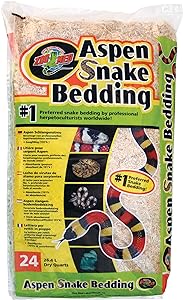
Grab a bag of this and you’ll notice the difference immediately — 99.9% dust-free, so your breeding pairs aren’t inhaling debris during those long incubation stretches. The 191% absorbency rating keeps moisture in check without turning soggy, which matters when humidity swings during shedding cycles.
At 24 quarts, it fills a standard enclosure easily. No cedar oils, no phenols — just clean, natural aspen your snakes can burrow through comfortably, egg-laying females included.
| Best For | This bedding is best for reptile and small mammal owners who want a natural, low-dust substrate that supports burrowing and nesting across all life stages. |
|---|---|
| Material Type | Aspen wood |
| Moisture Handling | High absorbency |
| Burrowing Support | Yes |
| Species Suitability | Multiple reptiles/mammals |
| Texture | Soft |
| Packaging Format | Bag, 24 qt |
| Additional Features |
|
- Made from renewable aspen wood with a high 191% absorbency rating
- Low-dust formula helps protect respiratory health, and it’s odorless with no toxic cedar oils
- Versatile enough for snakes, lizards, tortoises, turtles, birds, tarantulas, and small mammals
- Intended for indoor use only, so it’s not suited for outdoor enclosures
- May need frequent spot cleaning depending on animal activity and waste levels
- At 24 quarts, larger enclosures may require purchasing multiple bags
2. Premium Tropical Cypress Reptile Bedding
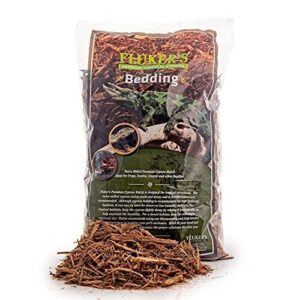
Aspen’s great for burrowing, but if you want that forest-floor look with better moisture control, twice-milled cypress mulch is worth stocking. It’s breeder tested for both humid and desert-leaning setups, so you can mix it with other substrates to dial in exact moisture needs for gravid females.
Texture stays soft enough for comfortable burrowing, and the milling process cuts dust a lot. Just know it runs dry out of the bag — plan on misting before your snakes move in.
| Best For | Snake breeders and reptile keepers housing frogs, snakes, lizards, or tortoises who want a soft, burrowable substrate that can be tuned for either humid or desert-style enclosures. |
|---|---|
| Material Type | Cypress mulch |
| Moisture Handling | Moisture retentive |
| Burrowing Support | Yes |
| Species Suitability | Frogs, snakes, lizards |
| Texture | Soft |
| Packaging Format | Bag, 160 oz |
| Additional Features |
|
- Twice-milled texture is soft and comfortable for burrowing
- Breeder-tested formula works well for both high-humidity and desert setups when mixed with other substrates
- Milling process helps cut down on dust while also supporting odor control and easy spot cleaning
- Arrives dry out of the bag, so misting is needed before use
- Not meant to be used as a standalone substrate for every species
- Some buyers have reported inconsistencies in package weight
3. Zilla Organic Coconut Husk Reptile Bedding
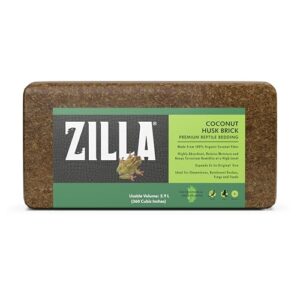
If your females are due to lay soon, coconut husk earns its shelf space. The compressed brick expands up to five times its size with hot water, giving you 100% organic coconut fiber ready for egg incubation and general humidity control.
Texture stays soft for burrowing, and moisture holds evenly without hard clumping. One brick covers a 55-gallon setup — just expect a messy rehydration process and up to 30 minutes for full absorption.
| Best For | Reptile and amphibian keepers who need reliable humidity control and a soft burrowing substrate for egg-laying species like geckos, chameleons, frogs, and toads. |
|---|---|
| Material Type | Coconut fiber |
| Moisture Handling | Highly absorbent |
| Burrowing Support | Yes |
| Species Suitability | Chameleons, geckos, frogs |
| Texture | Fine, soft |
| Packaging Format | Compressed brick |
| Additional Features |
|
- Made from 100% organic coconut fiber, expanding up to five times its size for great coverage
- Soft, fine texture supports natural burrowing behavior and is gentle for egg incubation
- Compressed brick format makes storage and transport easy until you’re ready to use it
- Rehydration requires hot water and can get messy during the process
- Full absorption can take up to 30 minutes, so it’s not an instant-prep substrate
- Stubborn clumps may need manual breaking apart before the bedding is ready to use
4. Zoo Med Cypress Mulch Bedding
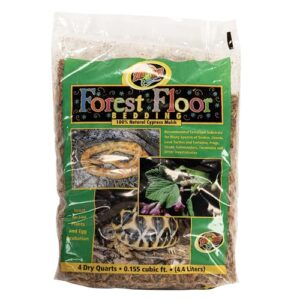
For keepers wanting a forest-floor look with real humidity punch, this substrate delivers. Sold as untreated cypress mulch, it soaks up moisture and holds it, keeping shed cycles and bioactive setups stable.
Start with a 2-3 inch layer, mist to target range, and stir weekly to stop compaction. Since it’s not heat-treated, bake it first to knock out hitchhiking pests. Costs more than aspen, but the payoff is steady, breathable humidity your breeding pairs will thank you for.
| Best For | Keepers of tropical snakes, lizards, tortoises, amphibians, and invertebrates who want a naturalistic bioactive setup with strong humidity retention. |
|---|---|
| Material Type | Cypress mulch |
| Moisture Handling | Moisture retentive |
| Burrowing Support | Yes |
| Species Suitability | Snakes, lizards, tortoises |
| Texture | Natural forest look |
| Packaging Format | Bag, 4 qt |
| Additional Features |
|
- Holds moisture well, making it easy to maintain high humidity for tropical species
- Gives terrariums a natural, forest-floor look while supporting burrowing behavior
- Works well in bioactive setups alongside live plants and cleanup crews
- Untreated material may harbor pests and needs to be baked before use
- Costs more than simpler substrates like aspen shavings
- Requires regular misting and stirring to prevent compaction
5. Terra Firma Bioactive Reptile Substrate
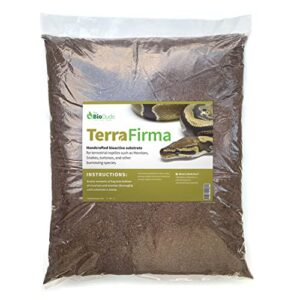
Want a substrate that outlasts a single breeding season? This is it. Terra Firma’s silty soil mix holds tunnels for burrowing pairs while feeding isopods and springtails through natural bioactive cycles.
Pair this substrate with a properly sized humid hide, since choosing the right snake enclosure hide setup makes all the difference for stress-free shedding and burrowing behavior.
No drainage layer needed — it grips 50-75% humidity spikes without waterlogging, supporting shed cycles and nesting behavior alike.
At 36 quarts per bag, it’s pricier upfront than aspen, but self-sustaining cycles mean less full-strip maintenance long-term. Solid pick for keepers running plants alongside their corns.
| Best For | keepers running bioactive, plant-filled enclosures for burrowing reptiles, amphibians, or invertebrates from savanna, semiarid, or rainforest habitats. |
|---|---|
| Material Type | Bioactive soil mix |
| Moisture Handling | High aeration/drainage |
| Burrowing Support | Yes |
| Species Suitability | Reptiles, amphibians, inverts |
| Texture | Silty soil texture |
| Packaging Format | Bag, 36 qt |
| Additional Features |
|
- Holds tunnels and burrows well, making it ideal for digging species
- Supports a self-sustaining bioactive cycle with mycorrhizae and clean-up crews, cutting down on full-strip maintenance
- Skips the need for a separate drainage layer while still managing 50-75% humidity without waterlogging
- Higher upfront cost compared to simpler substrates like aspen
- Only suited to the 50-75% humidity range, so it’s not a fit for standard dry setups
- Heavy at 35 pounds per 36-quart bag, which can make setup and cleaning more of a chore
6. White Newsprint Packing Paper Roll
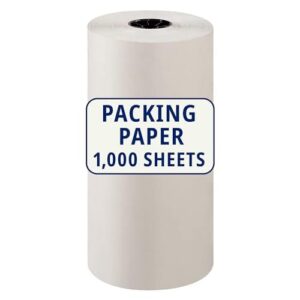
Not every substrate needs to hold a burrow — sometimes you just need something clean underneath a nesting pair. Plain white newsprint fits that role: uncoated, unprinted paper that won’t transfer ink onto eggs or hatchlings.
At 18 inches by 1,440 feet, one roll covers months of tub liners or temporary setups. It’s not perforated, so keep a box knife handy.
Cheap, dry, and low-risk during incubation watches — just don’t rely on it for humidity control.
| Best For | Reptile and small-animal keepers, movers, or shippers who need a clean, affordable liner or cushioning material for tubs, cages, or fragile items. |
|---|---|
| Material Type | Paper |
| Moisture Handling | Low absorbency |
| Burrowing Support | No |
| Species Suitability | Not species-specific |
| Texture | Crumple texture |
| Packaging Format | Continuous roll |
| Additional Features |
|
- Unprinted, uncoated paper won’t transfer ink onto eggs, hatchlings, or delicate items
- Large 1,440-foot roll provides months of use for tub liners or repeated packing needs
- Easy to crumple for cushioning and void fill, or cut to custom lengths for lining
- Not perforated, so a box knife or scissors is needed for clean tearing
- Large roll size and weight can make it awkward to move or store
- Offers no humidity control, so it shouldn’t be relied on during incubation
7. Scott Choose A Sheet Paper Towels
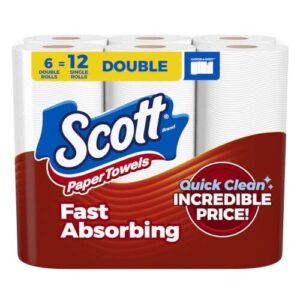
Paper towels earn a spot in the incubation kit, not the main enclosure. Choose-A-Sheet perforation lets you tear off exactly the size you need for wiping a gravid female’s tub or lining a temporary hold container.
Each sheet absorbs up to 4 teaspoons of liquid without dripping, and the deep-cleaning ridges give you fast cleanup during shedding or lay day. Lint-free, disposable, cheap — useful for mess control, not for burrowing or humidity work.
| Best For | Reptile keepers who need a handy, absorbent option for cleaning up during shedding, lay day, or setting up temporary hold containers for gravid females. |
|---|---|
| Material Type | Paper |
| Moisture Handling | High absorbency |
| Burrowing Support | No |
| Species Suitability | Not species-specific |
| Texture | Ridged texture |
| Packaging Format | Perforated rolls |
| Additional Features |
|
- Choose-A-Sheet perforation lets you tear off just the right size for quick jobs
- Deep-cleaning ridges and strong absorbency make fast work of spills and messes
- Lint-free design leaves tubs and containers spotless with no residue left behind
- Disposable and not reusable, so it adds to ongoing supply costs
- Not suited for delicate or easily scratched surfaces
- Packaging may vary from what’s shown, which can be confusing when reordering
8. Sukh Sphagnum Moss Terrarium Substrate
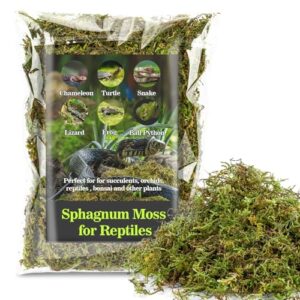
Sphagnum moss earns its keep as a nest box liner, not a floor covering. Sukh’s version holds water up to 20 times its dry weight, releasing moisture slowly to buffer humidity swings during pre-lay shedding.
Line nest boxes or damp hides with it, pair it with a drainage layer, and rehydrate as needed. It’s vacuum-sealed at 5.6 oz, dust-free when fresh. Keep it damp, not soaked — waterlogged moss breeds anaerobic pockets and mold fast.
| Best For | Reptile and amphibian keepers who need a moisture-retentive liner for nest boxes, hides, or egg-laying sites rather than a full-tank substrate. |
|---|---|
| Material Type | Sphagnum moss |
| Moisture Handling | High moisture retention |
| Burrowing Support | Yes |
| Species Suitability | Snakes, turtles, frogs |
| Texture | Soft, fibrous |
| Packaging Format | Vacuum-sealed sheet |
| Additional Features |
|
- Holds up to 20 times its dry weight in water, releasing moisture slowly to buffer humidity swings
- Vacuum-sealed for a clean, dust-free, contamination-free product when fresh
- Soft, natural texture that’s ideal for nesting, burrowing, and hiding behaviors
- Not meant to be used as a standalone primary substrate — best paired with a drainage layer
- Can turn dusty or powdery if allowed to dry out, requiring rehydration before use
- Easy to overdo it with moisture, risking mold and anaerobic pockets if kept too wet
Choosing Safe Breeding Substrate
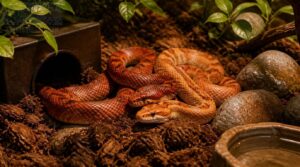
Breeding pairs put extra stress on a female’s body, so her substrate can’t be an afterthought. You need bedding that stays clean, encourages natural digging, and won’t throw off her scent cues during courtship. Here’s what actually matters when you’re picking material for a breeding setup.
Low-dust Bedding Choices
Dust kills slower than a bite, but it’s just as real. Choose kiln-dried, fine-screened aspen shavings — processing removes moisture and particles under 0.5mm, protecting respiratory health for breeding pairs housed long-term.
Dust kills slower than a bite, but for breeding pairs it’s just as real
- Kiln-dried aspen or cypress
- Fine-screened, low-dust formula
- No added fragrances or dyes
- Sourced from reputable reptile suppliers
Moisture control matters too — drier substrate resists crusting and dust flaking during humidity swings.
Burrowing Support and Comfort
Corn snakes are diggers by nature — deny that instinct and you’ll see stress behaviors fast. Aim for substrate depth of 3-4 inches, enough to support real tunnel formation without collapse.
Burrows create their own microclimate, cooler and more humid than the surface, with thermal gradients letting your pair choose comfort zones. Consistent moisture prevents compaction while keeping tunnel walls stable — that balance is what makes burrowing behavior sustainable long-term.
Scent-free Material Selection
Once tunnels are sorted, your nose becomes the next tool. Fragrance-free certification matters more than breeders admit — scented aspen shavings carry aromatic oils that trigger stress responses in breeding pairs.
Those essential oil risks mean airborne volatile organic compounds, straight respiratory irritants.
Skip anything scented, including cedar and pine shavings entirely. Check ingredient disclosure standards, and store substrate sealed to prevent odor adsorption.
Heat-treated Substrate Benefits
Once scent gets sorted, pasteurization is the next layer of protection. Heat-treated aspen cuts microbial load by up to 99%, suppressing pathogens and stabilizing moisture uptake 15-25% for shed cycles.
Structural integrity holds under humidity, resisting compaction so burrowing stays natural. That efficiency — reused batches, fewer replacements — protects respiratory health while guarding against impaction from broken-down substrate.
Female Nesting Safety
Gestation stress hits hardest with an unstable temperature gradient, so lock that down before eggs matter. Watch for feeding reluctance or restlessness as gestation monitoring signs.
Clean, dry corn snake substrate at proper depth cuts mold risk and helps with nesting anxiety prevention. A secure hide, quiet handling, and steady humidity protect egg moisture without disturbing natural burrowing behavior — substrate safety starts here.
Humidity for Breeding Pairs
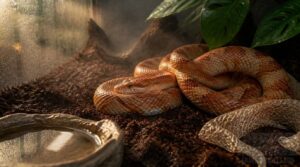
Bedding does half the job, but humidity finishes it. Breeding pairs need tighter control than your average corn snake setup, especially once shedding cycles and egg-laying come into play. Here’s what that control actually looks like in practice.
Standard Humidity Range
Get RH wrong, and you’ll see it in your eggs before you see it anywhere else.
Aim for 40 to 60 percent ambient humidity, with 50 percent as your working center. This range balances moisture retention against mold risk in damp hides.
Quick reference:
- Breeding baseline: 45–55% RH
- Winter target: 40–50%
- Summer target: 50–60%
- Calibrate hygrometers regularly
- Log readings daily for microclimate regulation
Pre-lay Shed Moisture
Watch her eyes cloud over, and it’s time to nudge humidity up toward 60-70%. This targets egg desiccation prevention during the final days before laying.
It is important to distinguish between regular sloughs and pre-lay shedding cycles when monitoring breeding females.
Test substrate by squeezing — it should hold shape without dripping.
| Sign | Action |
|---|---|
| Cloudy eyes | Raise humidity |
| Crumbly substrate | Add moisture |
| Dripping water | Back off |
| Stable texture | Maintain |
| Restlessness | Check nest box |
Damp Hide Setup
Building a damp hide is simple: pack sphagnum moss over a coco coir base for layered humidity retention, then saturate with distilled water until it holds shape.
Set it on the cool side, away from heat sources, to avoid condensation buildup.
Keep the lid vented for mold prevention and swap moss when it sours—breathability matters as much as moisture here.
Substrate-level Hygrometer Placement
Where you put the hygrometer matters more than which one you buy. Set the sensing element level with the substrate surface, at least 5 cm from openings and away from heat mats to avoid inflated readings. For accurate microclimate mapping:
- Keep probes unobstructed by substrate fibers
- Calibrate against a known reference
- Recheck after substrate changes
This validates readings across ambient humidity levels and substrate depth.
Mold Prevention Ventilation
Stale, humid air is a mold factory waiting to happen. Run mechanical ventilation tied to a humidistat, holding the room between 50-70% during breeding season, and vent exhaust outside instead of recirculating it.
Corrosion resistant fans hold up better long-term. Pair MERV 8 filtration with regular airflow pattern audits, and check your hygrometer against rising ammonia levels or microbial activity signaling trouble.
Nesting Box Bedding Setup
Once humidity’s dialed in, your gravid female still needs a proper spot to lay. That means building a nesting box that holds moisture without drowning the eggs. Here’s exactly how to line it, size it, and time it right.
Damp Sphagnum Moss Lining
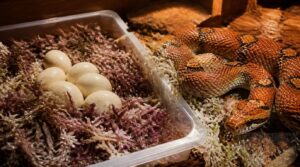
Moss cradles the eggs, cushioning them against rough tub surfaces while buffering moisture and allowing gas exchange. It insulates against temperature swings and holds humidity steady for days.
Line the box 2–4 cm deep with damp (not soaked) sphagnum—purple or white varieties work best, free of pesticides or scent additives.
Check regularly; remove any moldy patches immediately.
Vermiculite Moisture Balance
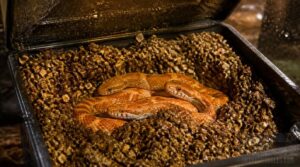
Vermiculite acts like a slow-release reservoir, soaking up four times its volume in water and giving it back as humidity drops. Fine granules hydrate fast; coarse grades hold longer.
Pre-wet it evenly before lining the box, so capillary action spreads moisture instead of leaving dry pockets. Check depth and airflow to manage evaporation and keep microclimate swings under control.
Proper Entrance Sizing
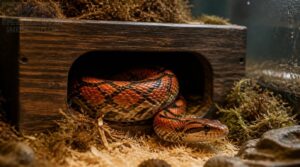
Get the box’s opening right and she’ll use it without hesitation. Entrance width should be twice her widest body diameter — too narrow, and she’ll avoid it entirely, defeating the whole nesting setup.
Skip fussy thresholds; a flush opening prevents snagging during entry and exit. This isn’t about human doorway codes, but the same logic applies: adequate clearance means better burrowing behavior and habitat replication inside your enclosure.
When to Add Nest Boxes
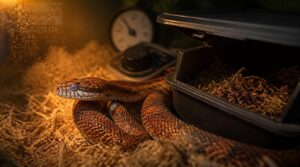
Timing matters as much as sizing. Watch for cloudy eyes signaling the pre-lay shed — that’s your cue to introduce the box immediately.
Regional cycles vary: southern setups may see readiness by February, northern colonies later. Indoor breeders without strict seasonal cues should track photoperiod and temperature instead, adjusting placement earlier if conditions mimic spring across the enclosure.
Avoiding Saturated Eggs
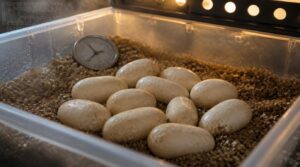
Once eggs sit in the box, moisture management becomes the real job. Egg condensation risks climb fast when substrate stays too wet against the shells, so keep depth shallow and check daily.
- Weigh eggs periodically to catch moisture gain early
- Watch hygrometer readings near the cluster
- Improve ventilation if mold appears
- Keep substrate moist, never soggy
- Limit humidity swings day to day
Bedding to Avoid Breeding Corns
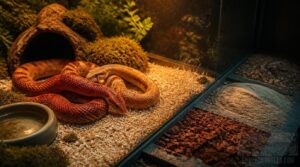
Breeding pairs are under more stress than usual, and the wrong substrate makes a bad situation worse.
Some bedding choices look harmless but carry real risks — respiratory issues, impaction, bacterial buildup — that can hit your snakes hard during a breeding cycle.
Here’s what to keep out of the enclosure, and why each one matters.
Pine and Cedar Shavings
Skip pine and cedar entirely for breeding pairs. Both release aromatic phenols and volatile oils that irritate airways, causing chronic respiratory damage with prolonged exposure. Cedar’s stronger oils mean worse irritation risk.
Ingested dust during burrowing compounds the problem. With gravid females needing stable, monitored health, don’t gamble on softwoods—choose inert substrates instead. Your snakes’ lungs and skin will thank you.
Sand and Gravel Risks
Why risk it? Sand and gravel cause intestinal impaction, a real digestive blockage danger for burrowing corn snakes.
- Gut blockage
- Sharp lacerations
- Silica dust inhalation
- Eye irritation
- Substrate ingestion
Fine grit scratches the digestive tract and irritates eyes on contact. Airborne silica poses inhalation hazards too. Not worth it—choose inert bedding instead for your breeding pairs’ safety.
Walnut Shell Hazards
Walnut shell carries hidden dangers beyond sharp lacerations to the digestive tract. Substrate ingestion risks digestive blockage too.
Nut proteins trigger allergic reactions in sensitive breeders—skin contact, inhalation, even eye irritation. Fine dust poses explosion risks near ignition sources and aggravates respiratory conditions.
If handling it, wear gloves and a dust mask. Skip it entirely for breeding enclosures.
Potting Soil Additives
Because bagged potting soil is built for houseplants, not snake enclosures, it’s a poor substrate choice. Fertilizers and chemical additives inside are toxic to breeding pairs.
Bioactive or naturalistic setups need organic topsoil instead, blended with drainage enhancers and pH adjustment agents. Skip microbial boosters and moisture retention additives meant for gardening. Save true bioactive environment maintenance for dedicated builds, not standard breeding tubs.
Reptile Carpet Bacteria
Reptile carpet looks tidy, but it’s a bacterial trap in disguise. Moisture wicks into the fibers and stays put, breeding Salmonella and biofilms that resist routine wipe-downs. Even with regular sanitizing, embedded microbes linger in older carpet.
For breeding pairs, that’s a hygiene liability you don’t need. Replace worn carpet promptly, dry it fully between uses, and disinfect enclosure floors—not just the surface—to keep waste management under control.
Frequently Asked Questions (FAQs)
What is the best bedding for corn snakes?
Get it wrong and your snake’s basically living in a dust storm. Aspen shavings win for burrowing stability and cleanliness, while coconut fiber and cypress mulch hold humidity beautifully—all solid choices for serious reptile husbandry without the guesswork.
How do I breed my corn snake?
Start with mature, healthy 2–3 year olds, then brumate 6–9 weeks at 55–60°F. Warm gradually, reintroduce males for mating, then provide nesting substrate and stable 78–80°F incubation at 75–80% humidity until hatch.
How many times can you breed a corn snake?
Once per season is the honest answer for most females. A second round is possible if recovery checks out — solid weight gain, clean post-lay shed, strong feeding — but pushing it risks reproductive burnout and shortens her breeding lifespan.
What is the best substrate for baby corn snakes?
For hatchling setups, paper-based bedding or aspen wins for hatchling respiratory health and low impaction risk.
Coconut fiber adds moisture retention benefits and natural burrowing texture, but sterile paper keeps cleaning frequency simple while you monitor young digestion closely.
How often should breeding pair bedding be fully replaced?
Think of it like resetting the clock before ammonia and mold get a foothold. Full replacement every 7 to 10 days during active breeding, sooner if odor, damp spots, or waste buildup show up first.
Can two breeding corn snakes share the same substrate?
Yes, but only with strict territory zoning, ample space, multiple hides, and constant sanitation. Shared substrate raises disease transfer and competition risks—watch for aggression, and separate immediately if stress signs or resource conflicts appear.
Whats the best bedding depth for breeding enclosures?
Picture roots pushing through soil, searching for a foothold — that’s your snake’s instinct. Give 8 to 12 inches of depth for burrowing behavior and nesting zone stability, especially near boxes, preventing substrate collapse in multi-level enclosures during active digging.
Should substrate change during copulation or breeding season?
Hold off during copulation to avoid mating disturbance risks. If cleaning is needed, do it gradually, preserving pheromone cues and preventing nest abandonment. Minimize cleaning frequency overall — spot-clean only, keeping moisture retention and habitat stability intact for your breeding pair.
How do you disinfect enclosures between full substrate replacements?
Cleaning between full swaps is like giving the enclosure a fresh slate. Scrub with reptile-safe disinfectants, respect contact time, target biofilm in seams, then rinse thoroughly until every chemical odor’s gone before refitting.
Conclusion
The safest bedding is also the plainest — aspen shavings and paper won’t win beauty contests, but they won’t cost you a clutch either.
Good corn snake bedding for breeding pairs isn’t about looking natural; it’s about controlling moisture, dust, and scent so your female never has a reason to bail.
Skip the pine, skip the sand, watch the hygrometer. Do that, and hatchlings pip on schedule, not by luck.