This site is supported by our readers. We may earn a commission, at no cost to you, if you purchase through links.

Getting feeder size wrong is one of the most common mistakes snake keepers make, and the consequences range from a stressed animal to a genuine medical emergency. Regurgitation, throat trauma, and chronic feeding refusal all trace back to prey that was too large, offered too soon, or sized by guesswork rather than measurement.
How big feeder mice should be depends on your snake’s girth, not its length. That single shift in thinking changes everything. A corn snake that’s 36 inches long but slender needs a much smaller mouse than a stocky ball python half that size.
The good news is that getting it right isn’t complicated once you know what to measure, what to look for, and when to adjust.
Table Of Contents
Key Takeaways
- Size feeder mice by your snake’s girth at its widest point, not by its length — a proper meal should leave only a modest, symmetrical bulge that fades within 15 minutes.
- When you’re unsure, always go smaller: a slightly undersized meal causes no harm, while an oversized one can trigger regurgitation, throat trauma, or a prolonged feeding setback.
- Move up one prey size at a time, only after several consecutive meals pass easily and your snake’s current feeder no longer leaves a visible bulge or supports steady weight gain.
- If regurgitation occurs, enforce a 14-day fast, drop prey size by 25–50%, and consult a reptile vet if the problem persists after correcting both prey size and husbandry conditions.
Feeder Mice Should Match Your Snake’s Girth

Choose feeder mice by your snake’s widest body point, not by age alone. A properly sized meal should pass comfortably and leave only a modest temporary bulge. Use the following checks to select the safest prey size.
For a more detailed breakdown of sizing guidelines, frozen feeder mice sizing charts for snakes can help you match prey width to your snake’s body at a glance.
Measure The Widest Body Point
Start with the feeder’s widest body point, usually just behind the shoulders at the rib cage. Use a soft flexible tape, held perpendicular to a calm, straight mouse, and average three measurements to the nearest half millimeter.
Compare that circumference with your snake’s thickest body area, not its total length. Pinkies measure about 1.5–2 mm across; hoppers commonly reach 5–8 mm.
Keep data-centered measurement habits by recording each feeder’s dimensions before selecting prey.
Allow Slightly Wider Prey
Use your measurements as a baseline, then select prey slightly wider than your snake’s widest body point, usually by a small margin rather than a dramatic jump. This helps with jaw comfort alignment and steadier passage without forcing the mouth or esophagus to overexpand.
Adjust feeder size gradually across two or three meals. Monitor feeding ease, swallowing safety, body condition, life stage, and feeding response before progressing further.
Look for a Modest Bulge
After swallowing, watch for a gentle, symmetrical bulge at your snake’s midsection. It should be noticeable but proportionate to the widest body point, without skewing the snake sideways.
A well-fitted prey item produces a bulge that narrows toward the tail and dissipates within 5 to 15 minutes, with your snake settling into a calm, relaxed posture rather than continued tension.
Size Down When Uncertain
When the bulge looks right but you’re still not sure, size down. Starting with prey that sits flat against your snake’s midbody during swallowing is always the safer call. A prey item that’s slightly too small won’t cause harm, while one that’s too large can trigger regurgitation or throat pressure that sets your feeding routine back a lot.
When uncertain, size down — a slightly small meal never harms a snake, but an oversized one can
Feeder Mouse Sizes by Weight and Age
Feeder mice are sold in clearly defined size categories based on age and weight, which makes matching prey to your snake much more straightforward than guessing by eye. Each stage reflects a different point in the mouse’s development, from hairless newborns to fully mature adults, and those differences matter for both prey size and nutritional value.
Here’s a breakdown of each category and what it means for your snake’s feeding plan.
Pinkies: 1.5–2.99 Grams
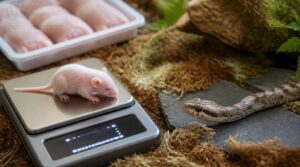
Pinkies weigh between 1.5 and 2.99 grams and measure about 1.5 to 2.5 centimeters long, making them the starting point for weight-based prey sizing with hatchling snakes.
- Extra-small pinkies (1.5–1.99 g) match the narrowest newborn snake diet needs
- Live vs frozen options both exist; frozen-thawed is generally safer
- Monitor growth rate to know when your snake outgrows this prey item
Peach Fuzzies: 3–4.49 Grams

Peach Fuzzy Mice weigh 3–4.49 grams, are 5–9 days old, and suit many hatchling snakes advancing from pinkies. Their prey width works with weight-based prey sizing, creating a modest profile that protects digestive health.
For a helpful visual on what a healthy post-feeding bulge should look like, ball python feeding size and prey selection tips can help you confirm your hatchling is progressing well on fuzzy mice.
Nutritional Value Analysis favors moderate calories, manageable bulk. Follow Feeding Frequency Guidelines. Storage tips include weight-labeled frozen stock; consistent Acceptance Behavior Traits simplify feeder size monitoring.
Fuzzies: 4.5–6.99 Grams

Standard fuzzies weigh 4.5–6.99 grams, run 3–4 inches in many breeding lines, and are 10–13 days old. Their prey width provides a reliable Fuzzy prey girth match for juvenile snakes in Fuzzy growth stages.
Fuzzy mouse nutrition allows regular Fuzzy feeding frequency under weightbased prey sizing. Use labeled frozen batches, adjusting feeder size appropriately when fuzzies leave no modest profile.
Hoppers and Weanlings: 7–17.99 Grams

When fuzzies stop producing a visible profile, move to hoppers or weanlings. Hoppers weigh 7–12.99 g at 14–19 days; weanlings weigh 13–17.99 g at 20–24 days.
- Weigh snake weekly.
- Track body-weight percentage gains.
- Advance one feeder size only.
These mid-growth prey support juvenile feeding schedules, balanced nutrition, and controlled prey size selection. Choose girth first, then confirm easy swallowing. This keeps growth tracking clear.
Adults and Breeders: 18–45+ Grams

Adults and breeders weigh 18–45+ g. Use a Weight-Based Feeding Schedule, choose prey roughly equal to girth, and increase only after repeated easy meals with a modest bulge, without swallowing difficulty or regurgitation.
| Monitoring | Source | Adjustment |
|---|---|---|
| Prey Size Monitoring | body weight percentage | Growth Rate Adjustment |
| Adult Mouse Sourcing | rodent feeder | feeder size |
| Breeding Snake Nutrition | adult ball python | prey size selection |
Choose Size by Species and Life Stage

Species and life stage help narrow the appropriate feeder size, but they don’t replace a direct assessment of your snake. Head shape, body condition, growth rate, and metabolism can shift the right choice within the same species. Use the following factors to match prey size to the individual snake in front of you.
Hatchling and Juvenile Snakes
Hatchlings need small, frequent meals because rapid growth drives a high metabolic rate. Start with pinkies sized by the girth rule, usually every 5–7 days depending on species.
As your juvenile length increases, monitor weight, sheds, and prey response. Secure hides, correct temperatures, and scent-appropriate prey support reliable feeding. Move up one feeder size only when meals leave no modest bulge.
Adult Snake Feeding Needs
Once growth slows, feeding shifts from rapid development to maintaining lean body condition. Most adult snakes eat prey every 1–2 weeks, although species, temperature, reproductive status, and metabolism can alter the interval.
Use the girth rule and weight, not length alone. An adult may take 18–45+ gram mice, but select the size that produces a modest bulge without weight gain.
Natural Head and Body Shape
Length-based prey sizing can mislead. Match prey circumference to your snake’s thickest body point, then assess head width proportions, snout length ratio, and species dietary needs.
- A rounded skull contour accommodates jaw gape flexibility.
- Forward eye socket placement influences apparent head width.
- Across snake growth stages, choose proportioned prey that helps swallowing and feeding behavior enrichment.
This avoids length-only choices.
Body Condition Over Appetite
Head shape guides safe gape, but body condition determines whether that prey size promotes health. Appetite alone is unreliable, particularly during seasonal fat shifts or periods of reduced activity.
Use weight tracking, visual fat stores, and gentle palpation feedback. An ideal body score is 3/5: rounded, firm, evenly muscled, without side bulges or abdominal sagging. Let feeding response guide a conservative prey shift strategy and metabolism tracking.
Individual Growth and Metabolism
Individual snakes mature on different schedules, even within the same species. Metabolic rate shifts with life stage, temperature, activity, hormonal influence, and energy balance regulation, so feeder size should follow body condition, feeding response, and growth monitoring rather than age alone.
Efficient mitochondrial function and nutrient utilization may support faster growth in one juvenile, while another requires longer on the same prey size. Increase conservatively only when current meals leave little bulge and weight gain slows.
When to Increase Feeder Mouse Size

Move up in feeder size when your snake’s growth and feeding response show that its current prey no longer fits well. The change should follow body condition and girth, not appetite alone. Use the following signs to decide whether it’s time to offer the next mouse size.
Prey Leaves No Visible Bulge
A meal that leaves no visible bulge may be ready for reassessment, but appearance alone can mislead. Thin-skinned or flexible prey can compress, while belly color, subcutaneous fat, and handling movement may conceal a subtle outline.
Use circumference matching rather than lengthbased prey sizing. If prey repeatedly passes without distortion, yet your snake maintains normal body condition, make a cautious feeder size change for regurgitation prevention.
Growth Outpaces Current Prey Width
During Rapid Snake Growth, a juvenile’s girth can increase faster than its prey supply, creating Prey Width Lag despite unchanged lengthbased prey sizing. Use circumference matching and growth rate monitoring, then confirm change through feeding response assessment.
- Juvenile Expansion Rate rises
- Muscle Gain Impact broadens adults
- Gape Limit Challenges emerge
- feeder size fits loosely
- Increase width gradually when needed
Healthy Weight Gain Slows
When body weight rises more slowly despite appropriate husbandry, reassess prey width before simply shortening the feeding schedule. Gradual weight progression depends on a steady calorie surplus, nutritional balance, and prey that still suits current body condition.
Track body weight and shape over several feedings, then make controlled feeder size adjustments one category at a time, preserving healthy weight pacing.
Meals Become Consistently Easy
When swallowing and recovery remain routine, feeding confidence builds. Your snake takes prey without prolonged jaw repositioning, shows consistent meal acceptance, and resumes normal behavior afterward, which suggests digestive comfort and prey size familiarity.
- Swallowing is efficient
- No distress follows
- A modest bulge remains
- Hunger returns predictably
- Growth stays steady
Use the size chart alongside body condition, not appetite alone.
Increase One Size Gradually
Increase One Size Gradually rather than making a large jump. Use growth monitoring, feeding consistency, and appetite assessment to guide each prey change strategy.
| Weight progression | Size increment | Feeding interval adjustment |
|---|---|---|
| 2.5–2.99 g pinky | 3–4.49 g peach fuzzy | Keep schedule stable |
| 4.5–6.99 g fuzzy | 7–12.99 g hopper | Review response |
For feeder mice, adjust your snake diet after several comfortable meals without forcing a larger prey item too soon.
Signs Feeder Mice Are Too Large

A feeder mouse that exceeds your snake’s safe prey width can create avoidable feeding complications. Watch your snake’s response during and after each meal rather than relying on appetite alone. The following signs indicate that you should reassess prey size.
Extreme Post-feeding Bulge
An extreme post-feeding bulge distends much of the midbody, obscures normal contours, and may remain obvious for 12 to 48 hours. Large prey can shift slightly left as the stomach expands, sometimes increasing pressure near the spine during deep respiration.
Extend the feeding interval, assess body condition, and switch down one prey size after recovery. When uncertain, undersized prey carries less risk than oversized prey.
Difficulty Swallowing Prey
Following excessive bulge, watch feeding behavior closely. Correctly sized prey advances with steady jaw-walking and purposeful forward movement, rather than repeated repositioning or prolonged pauses.
- Repeated loss of purchase
- Open-mouth gaping between efforts
- Prey fixed at throat
These signs indicate oversized prey, though temperature or stress can contribute. Stop handling, allow recovery after choking, reassess condition score, then use smaller prey.
Regurgitation After Feeding
After difficult feeding behavior, regurgitation signals an oversized prey risk or husbandry problem. Unlike vomiting, it is usually passive, with undigested prey returning soon after feeding, within two hours. Infant regurgitation analogies don’t apply to snakes.
| Cause | Picture | Prevention |
|---|---|---|
| Oversized feeder rodent sizing | Marked bulge | Review feeding frequency |
| Stress or low temperature | Prey returns | Stabilize conditions |
Document timing; seek guidance.
Restart Smaller After Recovery
Once regurgitation occurs, a minimum 14-day fast is non-negotiable before offering food again. When you do restart, reduce prey size by 25-50%, opting for live prey if your snake seems reluctant.
Keeping temperatures at the warm end of the range, around 88-92°F, helps digestion. A probiotic like Bene-Bac rolled on the first small prey item can help restore gut flora.
Seek Veterinary Care if Persistent
If regurgitation keeps recurring after you’ve restarted with smaller prey and corrected husbandry, that pattern is a clinical signal, not a sizing problem.
Persistent regurgitation, weight loss, lethargy, or abnormal stool all warrant a reptile-experienced veterinarian. Bring feeding dates, prey sizes, and any prior steps you’ve taken. Early assessment beats waiting.
Frequently Asked Questions (FAQs)
Can feeder mice carry parasites or diseases?
Yes, feeder mice can carry mites, bacteria like Salmonella, and intestinal parasites. Like an uninvited passenger, pathogens hitch a ride into your enclosure. Sourcing from reputable breeders and using frozen-thawed feeders greatly reduces this risk.
How often should juvenile snakes be fed?
Most juvenile snakes thrive on meals every five to seven days, supporting rapid growth without overloading digestion. Weigh your snake monthly to confirm steady progress and adjust intervals as needed.
Should feeder mice be frozen or live?
Frozen feeders are the safer, more practical choice for most keepers. They eliminate bite risk, store easily in bulk, and thaw quickly in warm water. Live prey suits snakes with strong refusal behavior.
Do feeding schedules change in winter months?
Yes, feeding schedules do change in winter. Reduced daylight and cooler temperatures slow your snake’s metabolism, often shifting feeding from weekly to every 10-14 days, with many species fasting naturally between October and March.
How should feeders be stored before use?
Cool, dry storage keeps feeders fresh. Use sealed containers, lift off the floor, and label with the date. Clean shelves regularly to prevent contamination and spoilage.
Conclusion
The irony is that snake keepers spend hours calibrating humidity, lighting, and substrate depth, yet the question of how big should feeder mice be often gets answered with a shrug.
Girth is your guide, not length. A modest bulge after feeding means you got it right. Size down when you’re unsure, and increase prey size gradually as your snake grows. These aren’t complicated rules. They’re the difference between a thriving animal and an avoidable emergency.
- https://www.siarfrozen.co.uk/pages/frozen-rodent-size-chart-weight-guide
- https://www.goodreptiles.com/pages/size-conversion-charts
- https://ghostconstrictors.com/blogs/news/feeding-your-ball-python-guide
- https://www.aussiepythons.com/threads/reptile-food-sizing.222223
- https://www.nth.nhs.uk/resources/dietary-advice-about-gaining-weight-in-a-healthy-way/